
Chapter 10 INTELLECTUAL PROPERTY RIGHTS AND THE INTERNET
- Slides: 15
Chapter 10 INTELLECTUAL PROPERTY RIGHTS AND THE INTERNET
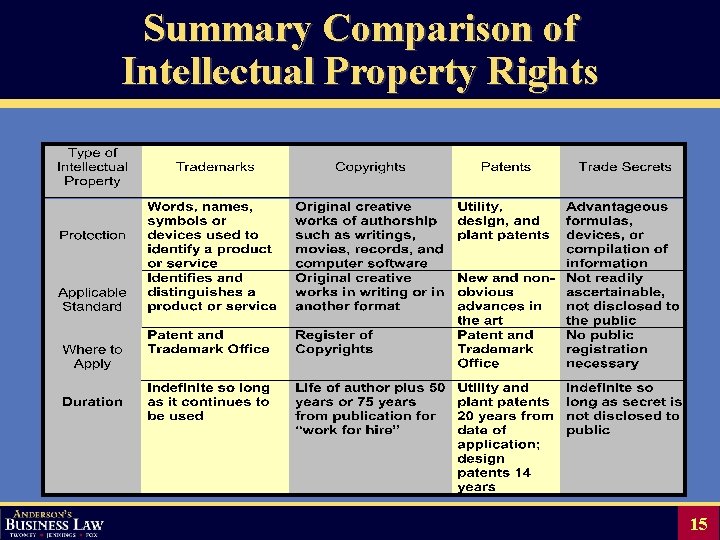
Trademarks and Service Marks üTrademark is a distinctive motto, name or symbol on a product. Service Mark applies to a service. üLanham Act grants producer the exclusive right to register and use the trademark. üOwners of marks may obtain federal protection by registering the mark with the U. S. Patent and Trademark Office (www. uspto. gov ). 2
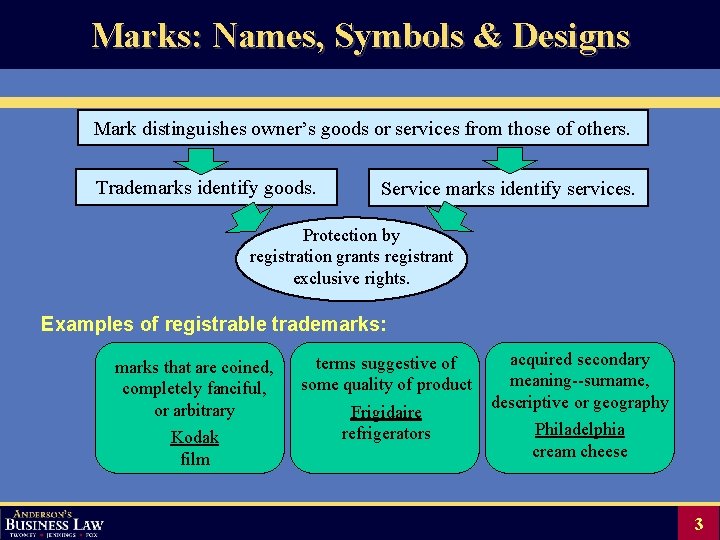
Marks: Names, Symbols & Designs Mark distinguishes owner’s goods or services from those of others. Trademarks identify goods. Service marks identify services. Protection by registration grants registrant exclusive rights. Examples of registrable trademarks: marks that are coined, completely fanciful, or arbitrary Kodak film terms suggestive of some quality of product Frigidaire refrigerators acquired secondary meaning--surname, descriptive or geography Philadelphia cream cheese 3
Trademarks and Service Marks üGeneric Terms (soap, shirts) may never be protected. üTrade Dress Protection involves a product’s total image and the overall packaging look. üLimited Lanham Act protection of product design. § Courts are now expanding trade dress to include the design of the product itself. 4
Trademarks and Service Marks üTrademark owner may obtain injunction from imitating or duplicating the mark. üA mark can be abandoned and become generic. Examples: aspirin, thermos. 5
Internet Domain Names üCybersquatters: use someone’s trademark as a domain name. § Federal Anticybersquatting Consumer Protection Act (ACPA) of 1995. § Safe harbor exists for some users. § Dispute Avoidance under ICANN and WIPO. 6
Copyrights üA copyright is the exclusive right given by federal statute to the creator of a literary or an artistic work to use, reproduce, or display the work. üCopyrights run for the life of the creator plus 70 years after the creator’s death. 7
Copyrights üCopyrights protect literary, musical, dramatic and artistic work in books, photographs. Even material on the internet. üA copyright holder has the exclusive right to: § Reproduce the work; § Prepare derivative works; § Distribute copies; § Publicly perform the work; and § Publicly display the work. 8
Copyrights ü“Fair Use” is an exception to the exclusive rights of copyright holders, depending on four factors: purpose and character; nature of the work; amount used; and the effect on the use. üDigital Millennium Copyright Act of 1998. § “Safe Harbor” provisions protect internet service providers from copyright liability. 9
Patents üA patent gives the inventor an exclusive right for 20 years from the date of application to make, use, and sell an invention that is new and useful and unique (not obvious). § Utility Patents. § Design Patents. § Plant Patents. 10
Patents üTo receive a patent, the invention must be new and not obvious. § May lead to highly technical hearings before a patent officer at the US Patent and Trademark Office. ü Internet Business Methods can be patentable. Example: Amazon. com “one click” for purchases. 11
Secret Business Information üTrade secrets are protected under state law for an unlimited period so long as they are not made public. üDefense measures include: § Non-disclosure agreements. § Injunctions. § Exit Interviews. § Criminal Sanctions under the Economic Espionage Act of 1996. 12
Protection of Computers and Mask Products üProtection of computer programs and the design of computer chips and mask works is commonly obtained, subject to certain limitations, by complying with federal statutes, by using the law of trade secrets, and by requiring restrictive licensing agreements. üMany software developers pursue all of these means to protect their proprietary interests in their programs. 13
Protection of Computers and Mask Products üPatents have also been obtained for computer programs. üSemiconductor Chip Protection Act protects the design of a computer chip. üRemedies for violation include: § Actual Damages and § Forfeit Profits to Real Owner. 14
Summary Comparison of Intellectual Property Rights 15