
CHAPTER 10 Information Systems within the Organization Announcements

- Slides: 20
CHAPTER 10 Information Systems within the Organization
Announcements Assignments: n Project 5 n n Due Today (before midnight) Quiz 2 – Weds. n Scenario Manager
Today’s Lecture Chapter 10: Focus on Inside the Organization
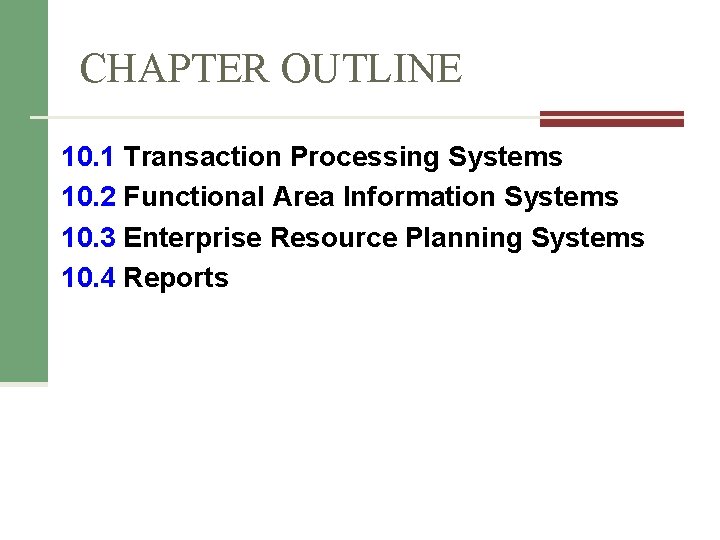
CHAPTER OUTLINE 10. 1 Transaction Processing Systems 10. 2 Functional Area Information Systems 10. 3 Enterprise Resource Planning Systems 10. 4 Reports
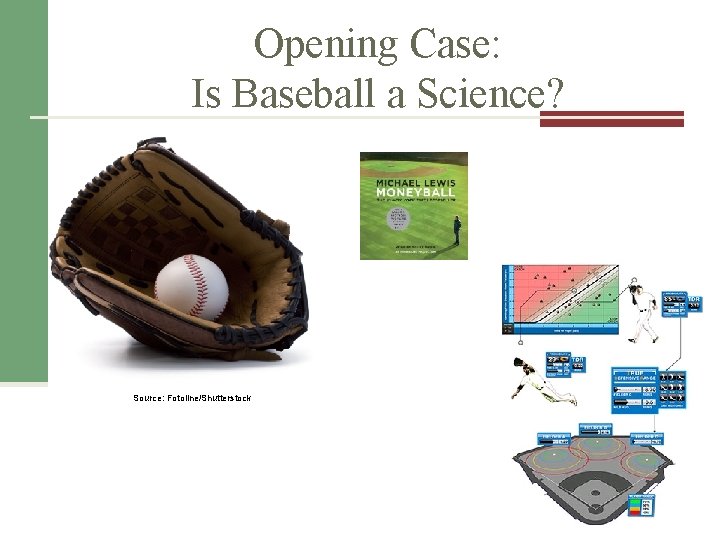
Opening Case: Is Baseball a Science? Source: Fotoline/Shutterstock
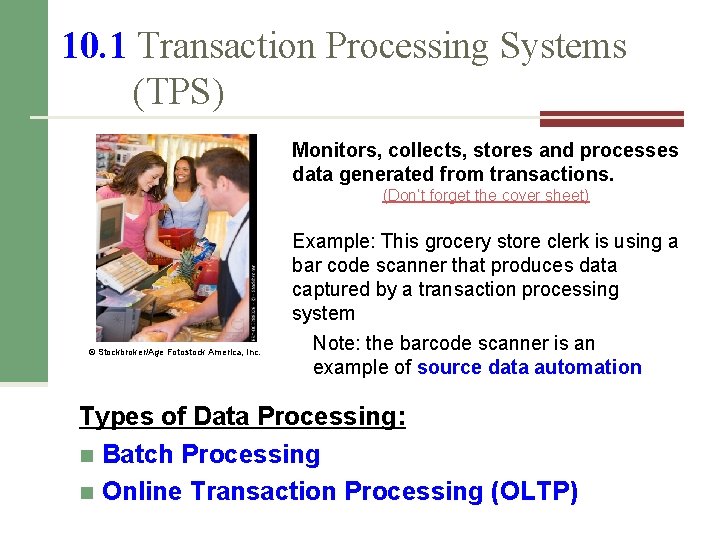
10. 1 Transaction Processing Systems (TPS) Monitors, collects, stores and processes data generated from transactions. (Don’t forget the cover sheet) Example: This grocery store clerk is using a bar code scanner that produces data captured by a transaction processing system © Stockbroker/Age Fotostock America, Inc. Note: the barcode scanner is an example of source data automation Types of Data Processing: n Batch Processing n Online Transaction Processing (OLTP)
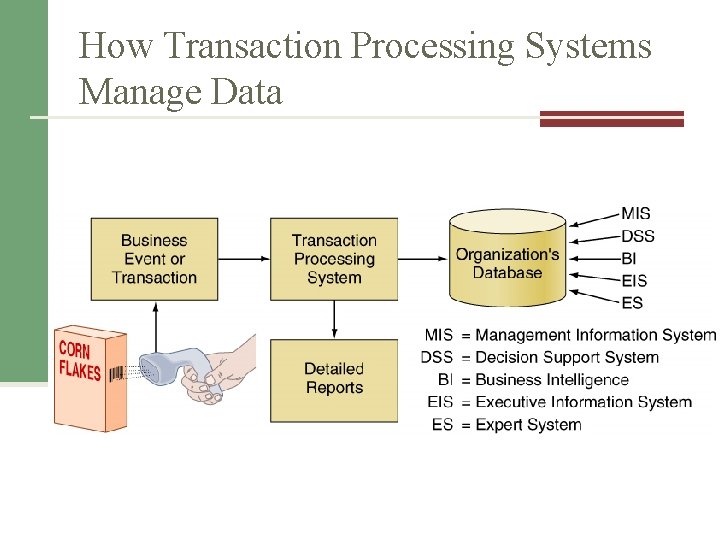
How Transaction Processing Systems Manage Data
10. 2 Functional Area Information Systems Functional Area IS are designed to support a functional area by increasing its internal effectiveness and efficiency in the following areas: Accounting n Finance n Marketing n Operations (POM) n Human Resources Management n
Examples of Information Systems Supporting the Functional Areas
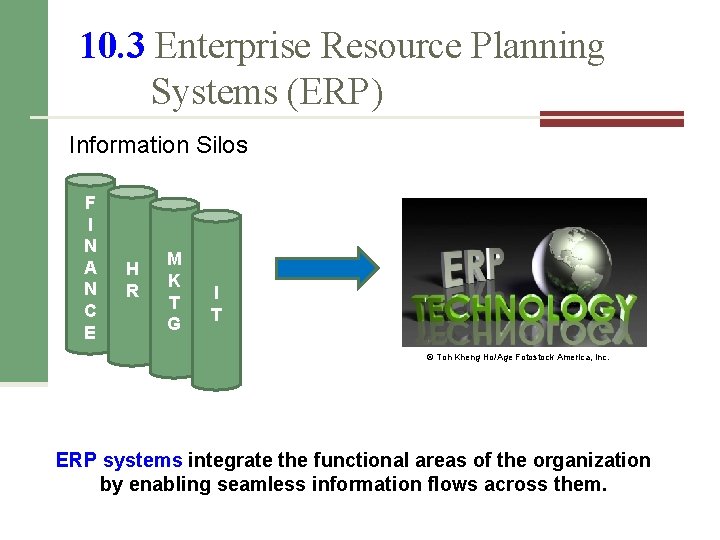
10. 3 Enterprise Resource Planning Systems (ERP) Information Silos F I N A N C E H R M K T G I T © Toh Kheng Ho/Age Fotostock America, Inc. ERP systems integrate the functional areas of the organization by enabling seamless information flows across them.
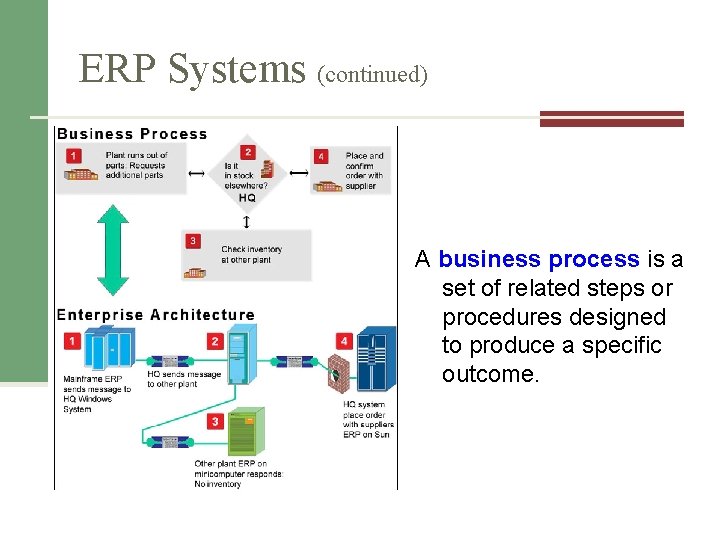
ERP Systems (continued) A business process is a set of related steps or procedures designed to produce a specific outcome.
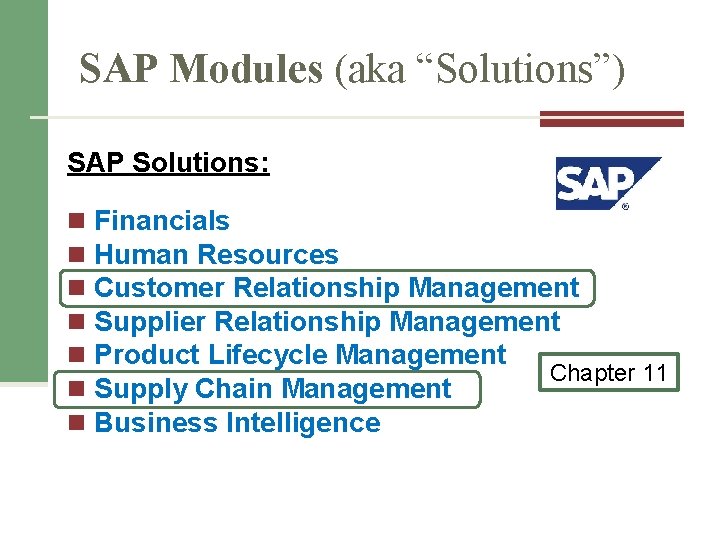
SAP Modules (aka “Solutions”) SAP Solutions: n n n n Financials Human Resources Customer Relationship Management Supplier Relationship Management Product Lifecycle Management Chapter 11 Supply Chain Management Business Intelligence
Benefits of ERP Systems n Organizational flexibility, agility, and adaptability. n Decision Support (improve managers’ ability to make better, more timely decisions) n Quality and Efficiency (improve customer service, production, and distribution)
Limitations of ERP Systems n May require customization or changes to existing business processes n Can be complex, expensive, and time consuming to implement.
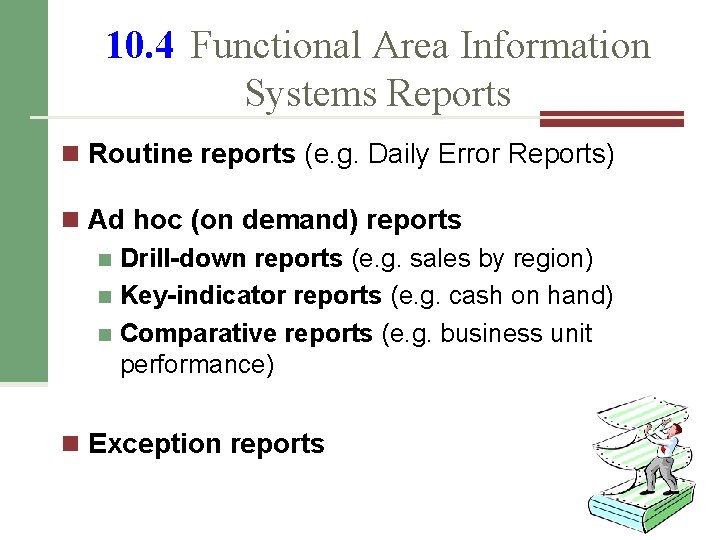
10. 4 Functional Area Information Systems Reports n Routine reports (e. g. Daily Error Reports) n Ad hoc (on demand) reports n Drill-down reports (e. g. sales by region) n Key-indicator reports (e. g. cash on hand) n Comparative reports (e. g. business unit performance) n Exception reports
Case – Managing ERP Describe what it means for an ERP system to be inflexible. Describe the pros and cons of tailoring your organization’s business processes to align with the procedures in an ERP system.
Chapter 10 Review Explain the purposes of transaction processing systems, and provide at least one example of how businesses use these systems.
Chapter 10 Review (continued) Define functional area information systems, and provide an example of the support they provide for each functional area of the organization.
Chapter 10 Review (continued) Explain the purpose of enterprise resource planning systems. Identify advantages & drawbacks to implementing an ERP system.
Chapter 10 Review (continued) Discuss the three major types of reports generated by the functional area information systems and enterprise resource planning systems.