
Chapter 10 Human Capital and the Labor Market
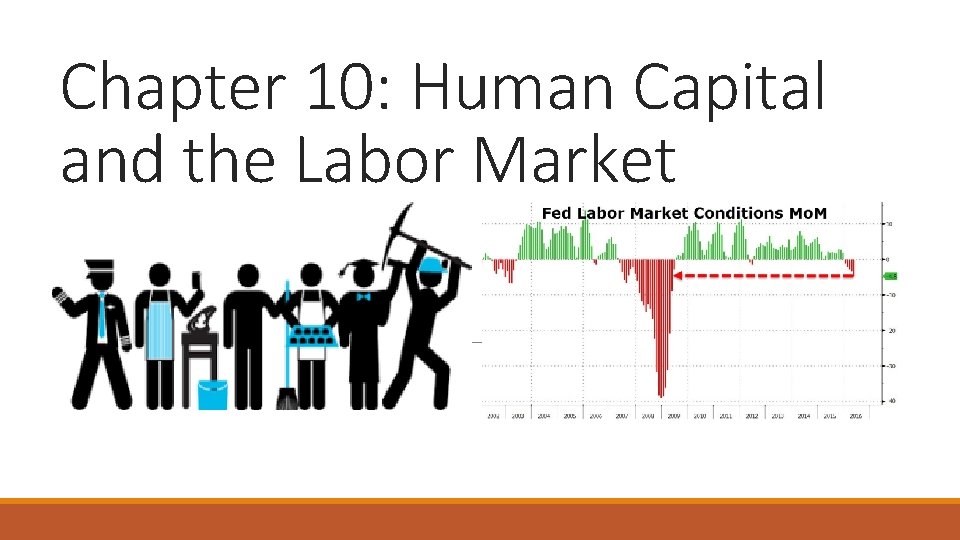
Chapter 10: Human Capital and the Labor Market
A Larger, More diverse labor force The _______consists of those people age 16 and over who have jobs or who are actively looking for work. Between 1986 and 2006, the U. S. labor force grew by 34 million people A key reason for this growth has been the increased participation of _______ in the workforce.
A Larger, More Diverse Labor Force In 1960, when many women worked as homemakers, women made up _____of the workforce. As women increasingly sought jobs outside the home, that figure rose. By 2006, women made up _____of the labor force. Today, it is about 50%
A Larger, More Diverse Labor Force Many members of the _____generation will retire during this period. But some baby boomers are expected to extend their working lives beyond the traditional retirement age of 65. In contrast, the labor force participation of younger Americans is expected to ______ by 2016. The main reason for this projected decline is increased college enrollments.
A Shift from Manufacturing to Service Jobs The number of workers involved in the production of factory goods has ______. At the same time, the number of workers who provide services has _________. This shift toward services continues a long evolution that began with the Industrial Revolution. By the late 1800 s, manufacturing was replacing farming as the nation’s most important economic activity Beginning in the latter half of the 20 th century, however, businesses that provide _______ have become the major source of jobs and economic growth. Economists expect this trend to continue

Crash Course Labor Market: https: //www. youtube. com/watch? v= m. Ww. Xm. Hn 5 Bo&index=28&list=PL 8 d. Puua. Lj. Xt. P NZwz 5_o_5 uir. J 8 g. QXnh. EO A Shift from Manufacturing to Service Jobs
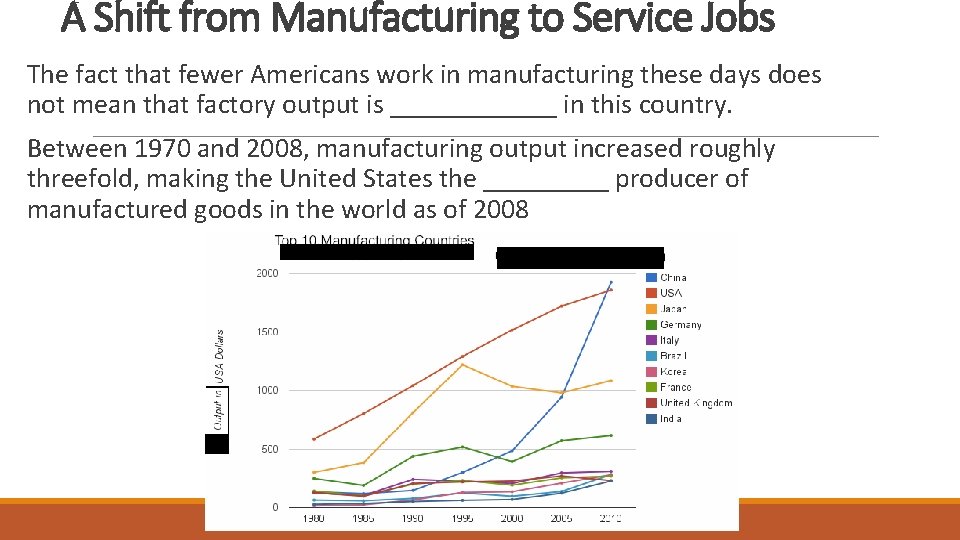
A Shift from Manufacturing to Service Jobs The fact that fewer Americans work in manufacturing these days does not mean that factory output is ______ in this country. Between 1970 and 2008, manufacturing output increased roughly threefold, making the United States the _____ producer of manufactured goods in the world as of 2008
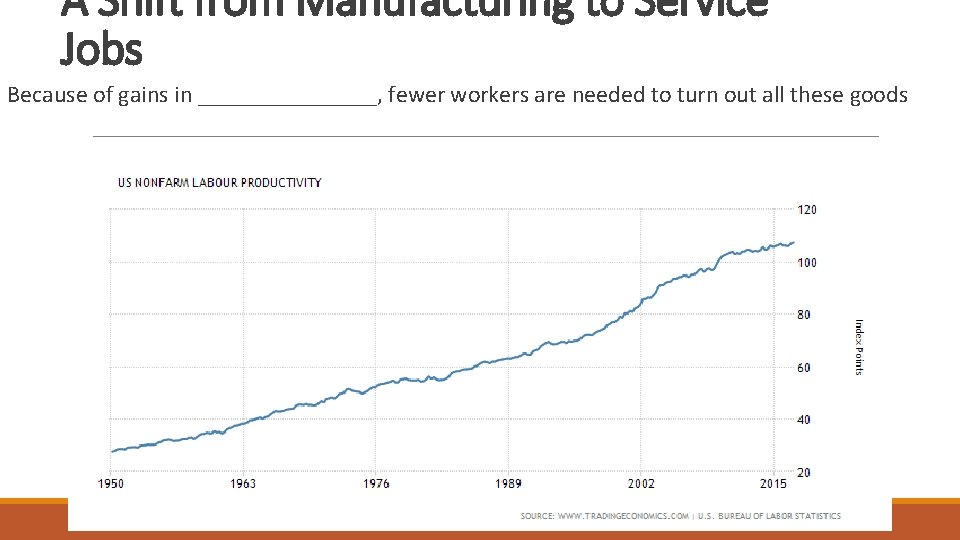
A Shift from Manufacturing to Service Jobs Because of gains in ________, fewer workers are needed to turn out all these goods
The Growing Importance of Knowledge Workers Another key trend in the labor market is the growing need for knowledge workers They include work in the information technology field, such as computer programmers and systems analysts, writers, researchers, teachers, lawyers, and scientists are also knowledge workers. The demand for knowledge workers is expected to grow as the handling of _______ becomes an increasingly important part of the economy.
Increased Outsourcing, Temping, and Telecommuting One key development in recent years is the growth of ________. This term refers to the business practice of sending work once done by company employees to outside contractors. Firms decide to outsource work when they believe an outside supplier can do the work more ______ and at a ______ than can be done within the company
The Globalization of Work: Offshoring, Inshoring, & Foreign Competition _____ is the process by which people around the world, along with their economic activities, are becoming increasingly interconnected. As globalization increases, the ______ of _____—land, labor, and capital— move across borders with greater ease than ever before One key aspect of globalization is the growing practice of _____, or relocating work and jobs to other countries. Offshoring occurs in two ways: 1. An American firm can move part of its operations to a facility it sets up in another country. 2. Or it can contract with a company in another country to handle some aspect of its operations. Firms move work offshore to _________.
The Globalization of Work: Offshoring, Inshoring, & Foreign Competition Moving work offshore _______ the cost of production of many goods. This, is turn, translates into _______ prices for American consumers. The tradeoff for that benefit, however, is a loss of jobs in some sectors of the economy. Globalization also brings jobs into the U. S. labor market. Many foreign firms have opened operations in this country. They do so to take advantage of the high levels of human capital available here. This process, known as _______, creates jobs for American workers
The Globalization of Work: Offshoring, Inshoring, & Foreign Competition As globalization increases, American businesses will face growing _______ from foreign producers. This competition may cause job losses in some U. S. industries. But it will also create _______ in others. Looking at the big picture, economists argue that foreign competition is ____ for businesses and economies. It forces producers to become more competitive by developing their own comparative advantages.
Wages Reflect the Value of What Workers Produce A number of factors influence wage rates. One has to do with the skills and training required for a job. Economists categorize jobs according to four general skill levels 1. ______. These jobs require no specialized skills or training. Most workers at this level earn a low hourly wage. 2. ______. Workers at this level have some specialized skills and training, including the ability to use simple tools or equipment. Employees are supervised, and wages are paid on an hourly basis. 3. _____. This level requires specialized skills and training. Workers need little or no supervision, but most are still paid on an hourly basis. 4. ______. This level includes “white collar” jobs that require advanced training and specialized skills. Professional workers receive a salary
How Demand Supply Work in the Labor Market Employers create the _______ for labor, and workers seeking jobs create the ____. Wages move toward equilibrium in the labor market just as prices move toward equilibrium in the market for goods and services. _______ can play a role in increasing the labor supply and lowering wage rates. In recent decades, competition for jobs from new immigrants has helped to depress wages at the lower end of the labor market. That is one reason why many less-skilled workers oppose increased immigration. Crash course Economics: Immigration: https: //www. youtube. com/watch? v=4 XQXi. CLzy. Aw&list=PL 8 d. Puua. Lj. Xt. PNZwz 5_o_5 uir. J 8 g. QXnh. EO&index=33
Other Factors that Affect Wages A number of other factors can also affect wages, including: 1 _______laws, 2. _________, 3. cost of living 4. fringe benefits: Fringe benefits are nonwage compensations offered to workers in addition to their pay. Typical benefits include health insurance, paid vacation time, and retirement plans. 5. ______ competition
The Wage Gap and Affirmative Action Gender Wage Gap: https: //www. youtube. com/watch? v=7 f. CBsug. N_g 0 Historically, wages have also been influenced by discrimination against certain groups in society. ____ discrimination occurs when some workers are paid less to do the same job as other workers because of their ethnicity, gender, or other personal characteristics.
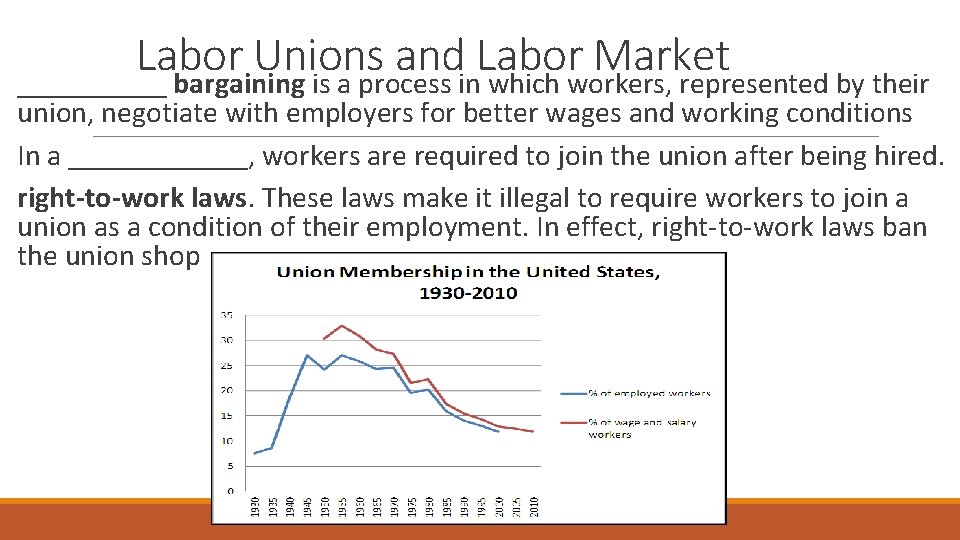
Labor Unions and Labor Market _____ bargaining is a process in which workers, represented by their union, negotiate with employers for better wages and working conditions In a ______, workers are required to join the union after being hired. right-to-work laws. These laws make it illegal to require workers to join a union as a condition of their employment. In effect, right-to-work laws ban the union shop
Labor Union Membership on the decline Economists cite a number of reasons for the drop in union membership. 1. The loss of ________ jobs and the rise of service industries. Historically, service workers have been difficult to organize 2. The government now guarantees many of the rights unions once had to fight for, such as workplace safety and an eight-hour workday. 3. Increase in ________

Wealth and Income inequality https: //www. youtube. com/watch? v=0 x. MCWr 0 O 3 Hs&index=17&list=PL 8 d. Puua. Lj. Xt. PNZwz 5_o_5 uir. J 8 g. QXnh. EO
- Slides: 20