
Chapter 10 Gene Action From DNA to Protein







- Slides: 59
Chapter 10 Gene Action: From DNA to Protein
Learning Outcomes • List the major types of RNA molecules and their functions • Explain the importance of transcription factors • List the steps of transcription • Discuss how researchers deduced the genetic code • List the steps of protein synthesis
Learning Outcomes (2) • Define the four components of a protein’s shape • Explain the importance of protein folding
Gene Expression • DNA of the human genome which encodes protein is called the exome – However, this represents only a small part of the genome • Much of the human genome controls protein synthesis – Including the time, speed, and location • Genes encode 20, 325 types of proteins
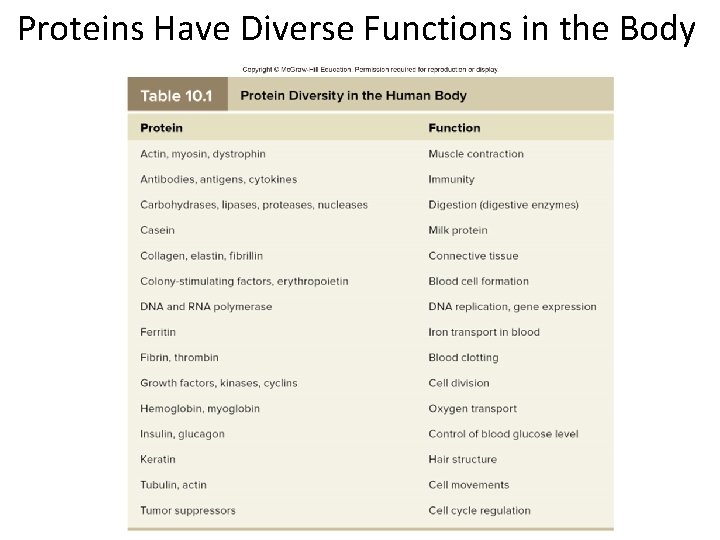
Proteins Have Diverse Functions in the Body
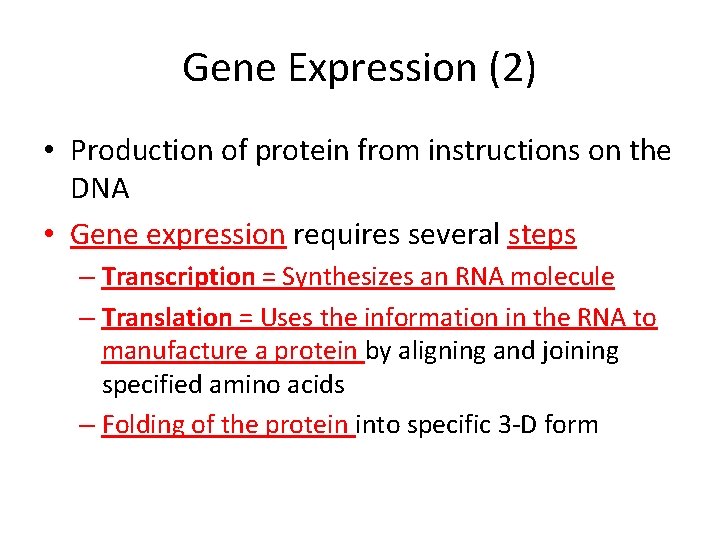
Gene Expression (2) • Production of protein from instructions on the DNA • Gene expression requires several steps – Transcription = Synthesizes an RNA molecule – Translation = Uses the information in the RNA to manufacture a protein by aligning and joining specified amino acids – Folding of the protein into specific 3 -D form
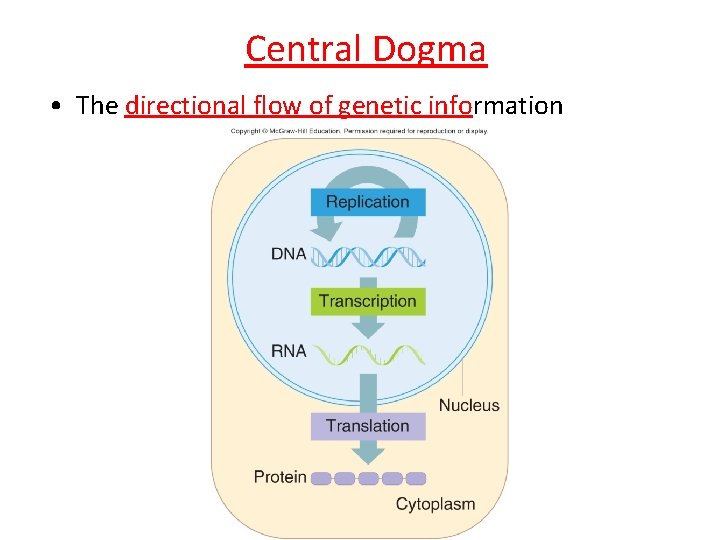
Central Dogma • The directional flow of genetic information
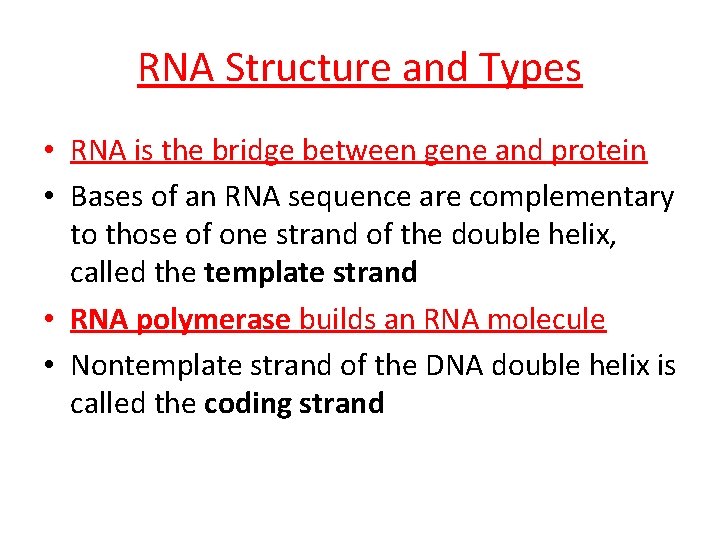
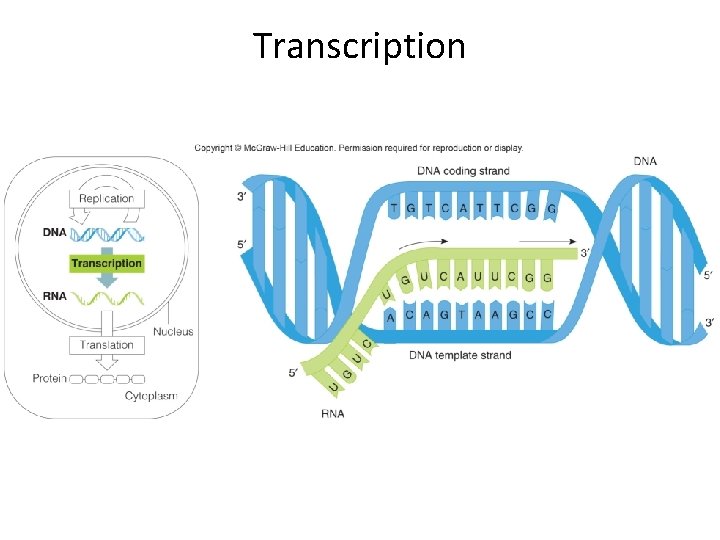
RNA Structure and Types • RNA is the bridge between gene and protein • Bases of an RNA sequence are complementary to those of one strand of the double helix, called the template strand • RNA polymerase builds an RNA molecule • Nontemplate strand of the DNA double helix is called the coding strand
Transcription 9
Nucleic Acids • There are two types of nucleic acids – RNA – DNA • Both consist of sequences of Nitrogencontaining bases joined by sugar-phosphate backbones – However, they differ in several aspects
Nucleic Acids (2): know table 10. 2
DNA and RNA Differences 12
Types of RNA • There are three major types of RNA – Messenger RNA or m. RNA – Ribosomal RNA or r. RNA – Transfer RNA or t. RNA • Other classes of RNA control gene expression
Major Types of RNA: know table 10. 3
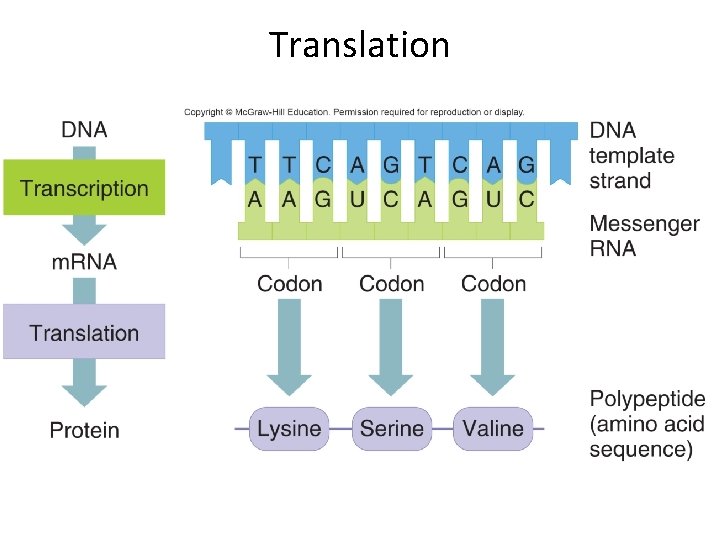
m. RNA • Carries information that specifies a particular protein • Three m. RNA bases in a row form a codon which specifies a particular amino acid • Most m. RNAs are 500 -4, 500 bases long • Differentiated cells produce certain m. RNA molecules called transcripts – Information in the transcripts is used to manufacture the encoded proteins
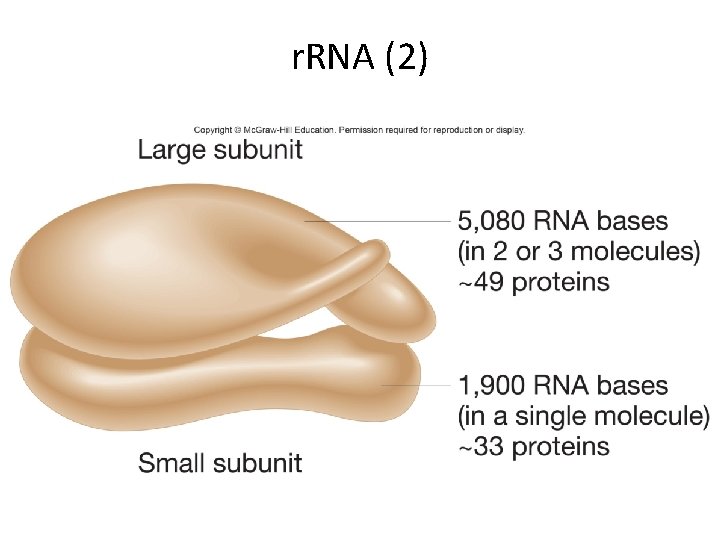
r. RNA • Most r. RNAs are from 100 -3, 000 nucleotides long • Associate with proteins to form ribosomes • Ribosomes consist of two subunits that join during protein synthesis • r. RNAs provide structural support – Some are catalysts (ribozymes) and others help align the ribosome and m. RNA
r. RNA (2)
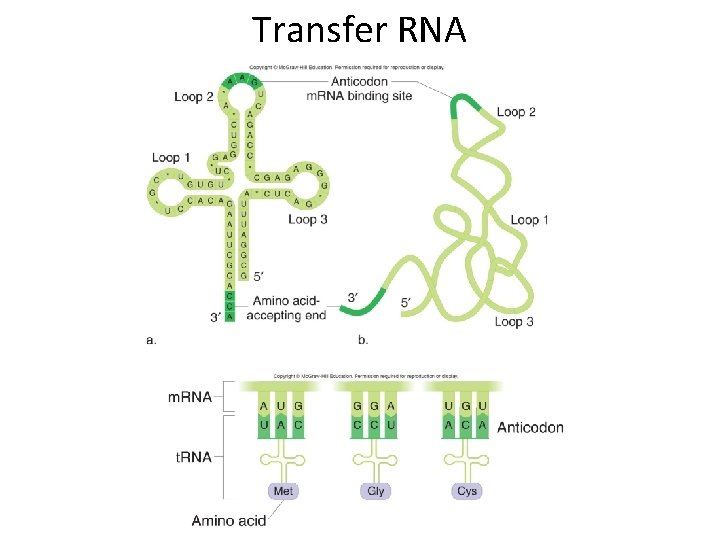
t. RNA • Binds an m. RNA codon and a specific amino acid • Only 75 -80 nucleotides long – The 2 -D shape is a cloverleaf shape – The 3 -D shape is an inverted L • Has two ends: – The anticodon is complementary to an m. RNA codon – The opposite end strongly bonds to a specific amino acid
Transfer RNA
Transcription Factors • Interact and form an apparatus that binds DNA at certain sequences • Initiates transcription at specific sites on chromosomes • Respond to signals from outside the cell • Link the genome to the environment • Mutations in transcription factors may cause a wide range of effects
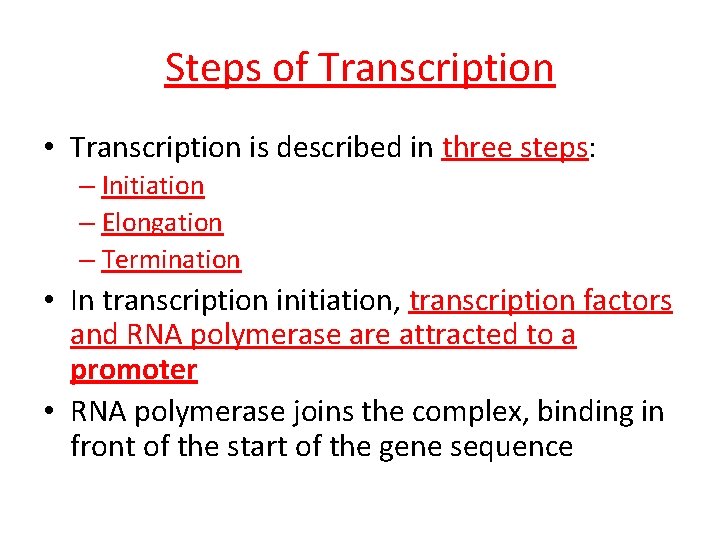
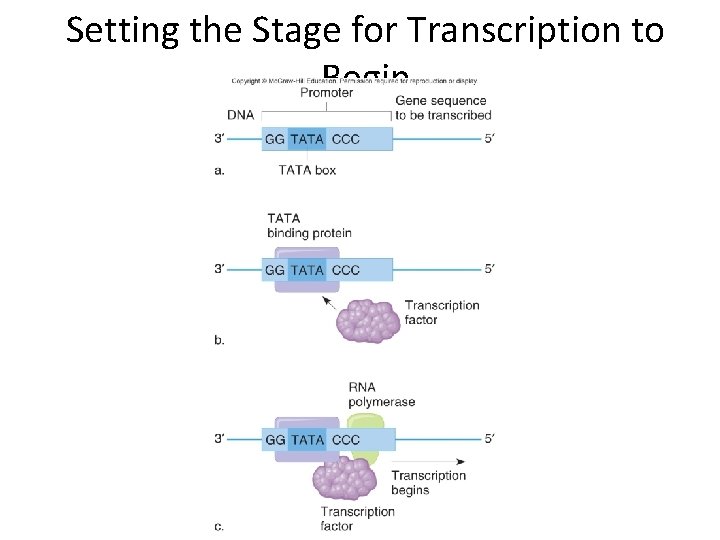
Steps of Transcription • Transcription is described in three steps: – Initiation – Elongation – Termination • In transcription initiation, transcription factors and RNA polymerase are attracted to a promoter • RNA polymerase joins the complex, binding in front of the start of the gene sequence
Setting the Stage for Transcription to Begin
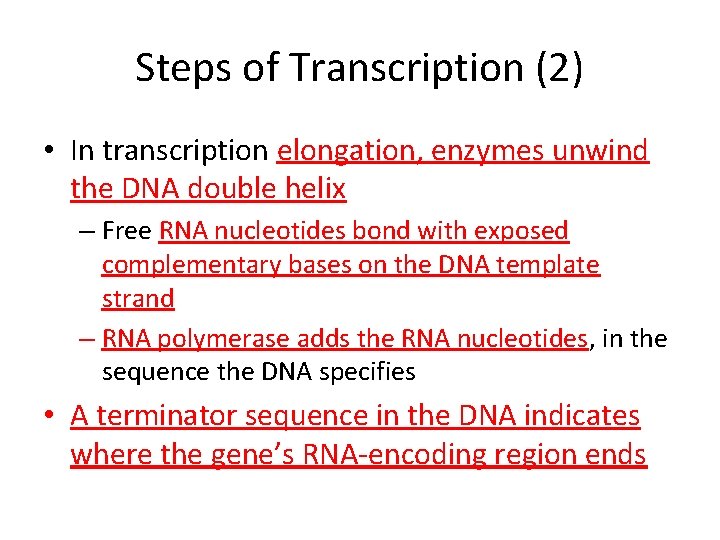
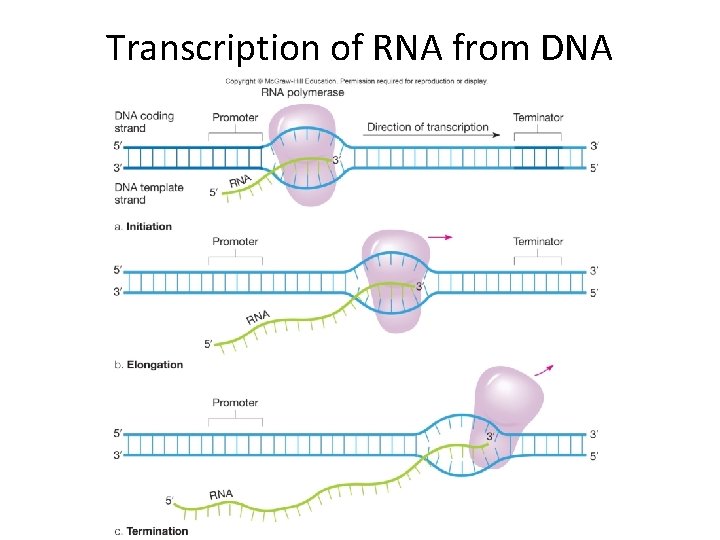
Steps of Transcription (2) • In transcription elongation, enzymes unwind the DNA double helix – Free RNA nucleotides bond with exposed complementary bases on the DNA template strand – RNA polymerase adds the RNA nucleotides, in the sequence the DNA specifies • A terminator sequence in the DNA indicates where the gene’s RNA-encoding region ends
Transcription of RNA from DNA
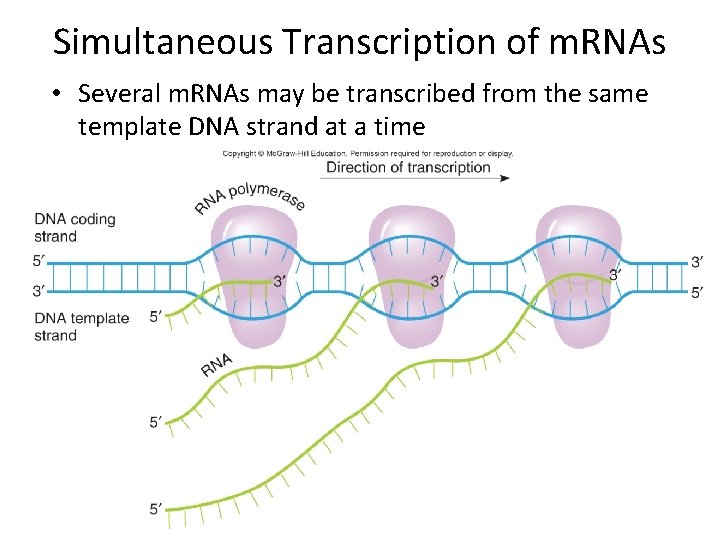
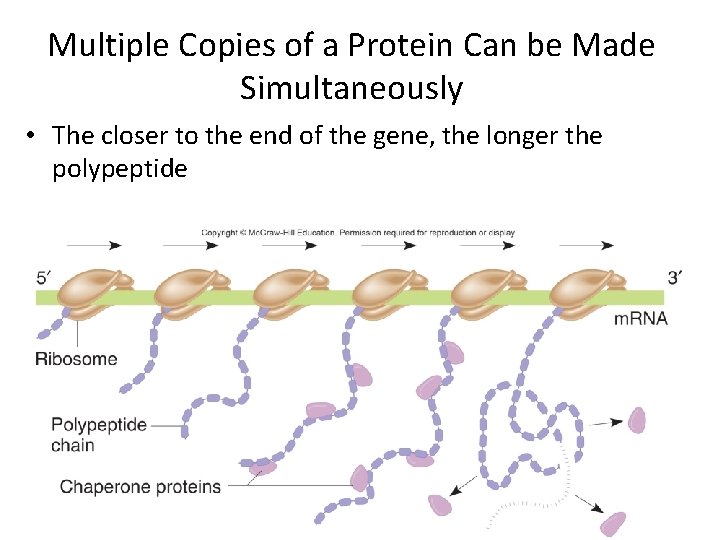
Simultaneous Transcription of m. RNAs • Several m. RNAs may be transcribed from the same template DNA strand at a time
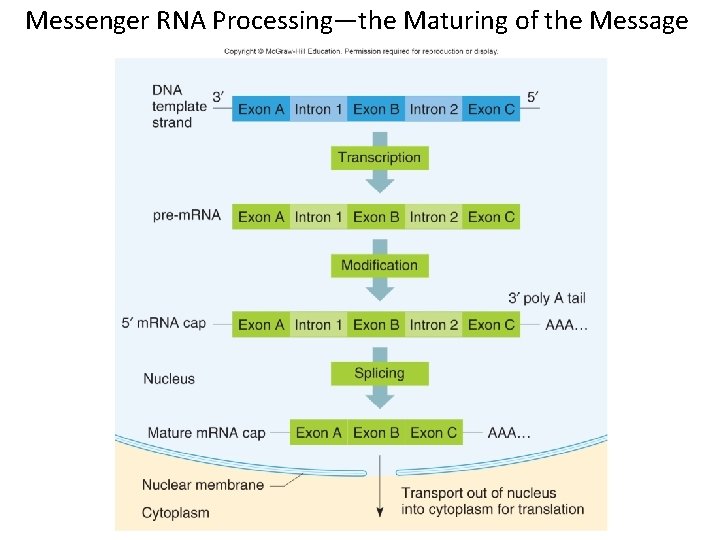
RNA Processing • In eukaryotes, m. RNA must exit the nucleus to enter the cytoplasm • Several steps process pre-m. RNA into mature m. RNA – A methylated cap is added to the 5’ end • Recognition site for protein synthesis – A poly-A tail is added to the 3’ end • Necessary for protein synthesis to begin and stabilizes the m. RNA
RNA Processing (2) – Splicing occurs • Introns (“intervening sequences”) are removed • Ends of the remaining molecule are spliced together • Exons are parts of m. RNA that remain, translated into amino acid sequences • Note that introns may outnumber and outsize exons – m. RNA is proofread and the mature m. RNA is sent out of the nucleus
Alternate Splicing • Mechanism of combining exons of a gene in different ways – Cell types can use versions of the same protein in slightly different ways in different tissues
Messenger RNA Processing—the Maturing of the Message
Translation • Assembles a protein using the information in the m. RNA sequence • Particular m. RNA codons correspond to particular amino acids • Occurs on the ribosome
Translation
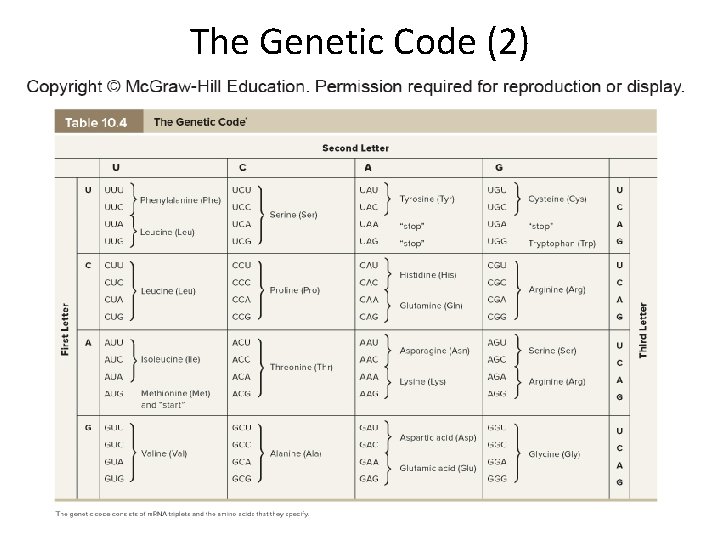
The Genetic Code • The correspondence between the chemical languages of m. RNA and proteins • In the 1960 s, researchers used logic and clever experiments on simple genetic systems to decipher the genetic code
The Genetic Code (2)
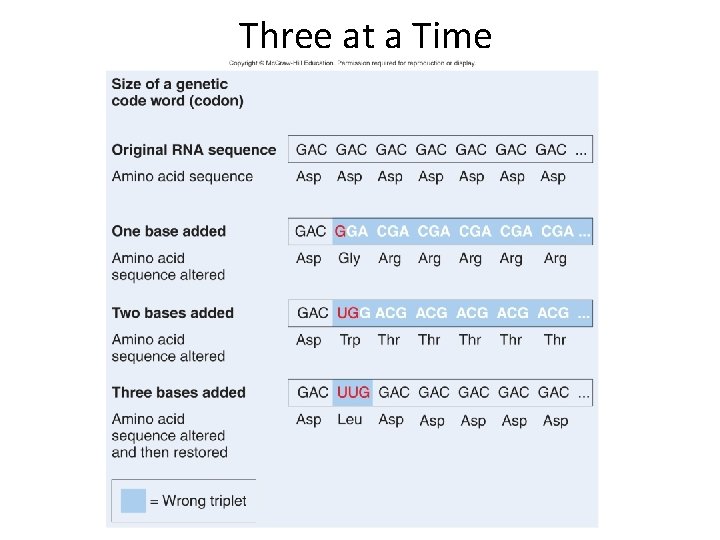
The Genetic Code (3) • It is a triplet code – Three successive m. RNA bases form a codon – There are 64 codons – Altering the DNA sequence by one or two bases produced a different amino acid sequence due to disruption in the reading frame • Adding a base at one point and deleting a base at another point disrupted the reading frame between the sites
Three at a Time
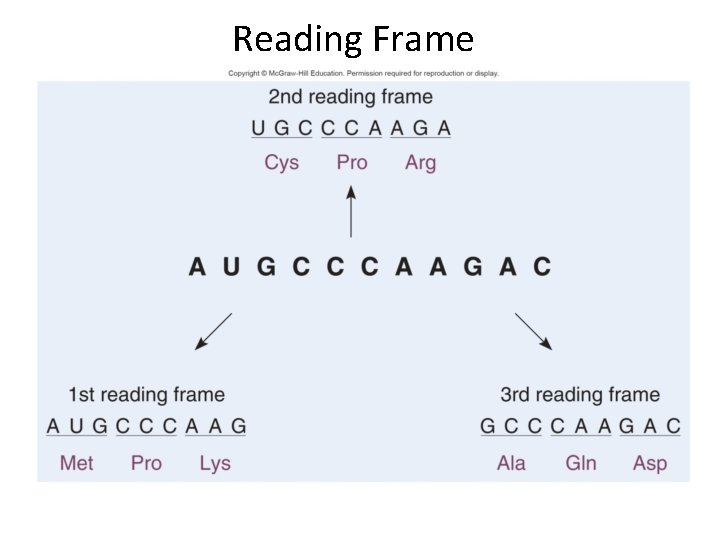
The Genetic Code (4) • It is non-overlapping – In an overlapping DNA sequence, certain amino acids would follow others, constraining protein structure • It includes controls – Includes directions for starting and stopping translation • An open reading frame does not include a stop codon
Reading Frame
The Genetic Code (5) • It is universal – Evidence that all life evolved from a common ancestor • Different codons that specify the same amino acid are termed synonymous codons • Nonsynonymous codons encode different amino acids
Translation — Building a Protein • Requires m. RNA, t. RNAs with amino acids, ribosomes, energy molecules (ATP, GTP) and protein factors • Divided into three steps: – Initiation – Elongation – Termination
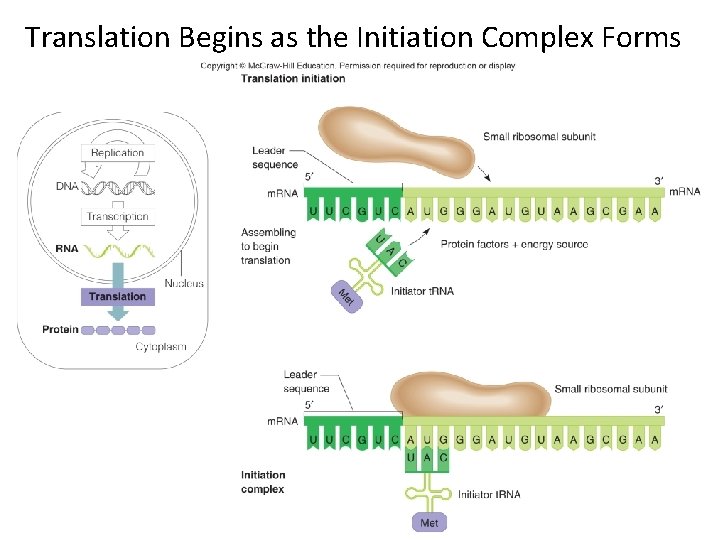
Translation Initiation • The leader sequence of the m. RNA forms Hbonds with the small ribosomal subunit • The start codon (AUG) attracts an initiator t. RNA that carries methionine • This completes the initiation complex
Translation Begins as the Initiation Complex Forms
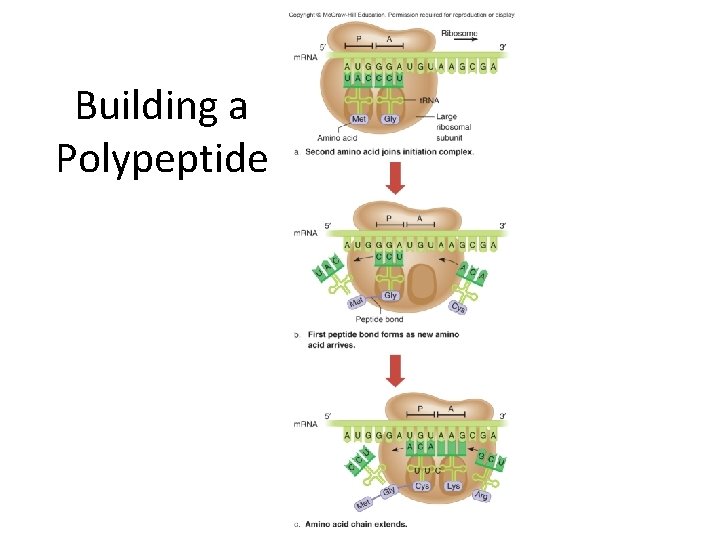
Translation Elongation • The large ribosomal subunit joins • GGA bonds to its complementary anticodon, which is part of a free t. RNA that carries the amino acid glycine – Two amino acids attached to their t. RNAs align
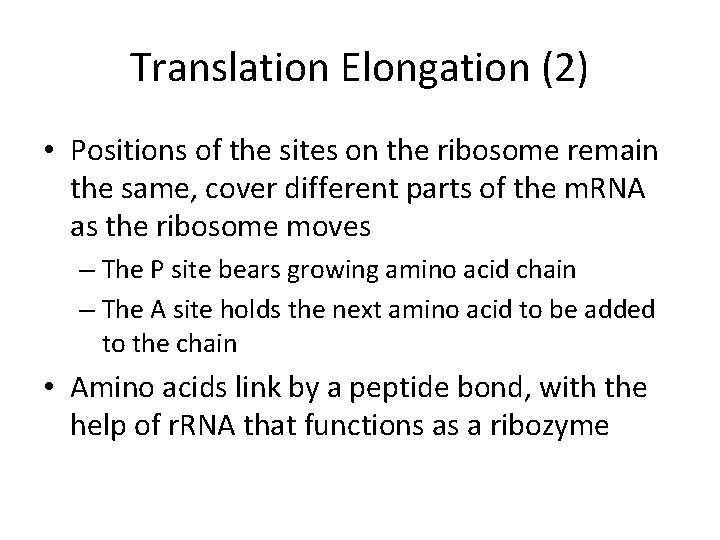
Translation Elongation (2) • Positions of the sites on the ribosome remain the same, cover different parts of the m. RNA as the ribosome moves – The P site bears growing amino acid chain – The A site holds the next amino acid to be added to the chain • Amino acids link by a peptide bond, with the help of r. RNA that functions as a ribozyme
Translation Elongation (3) • The polypeptide builds one amino acid at a time – Each piece is brought in by a t. RNA whose anticodon corresponds to a consecutive m. RNA codon as the ribosome moves down the m. RNA
Building a Polypeptide
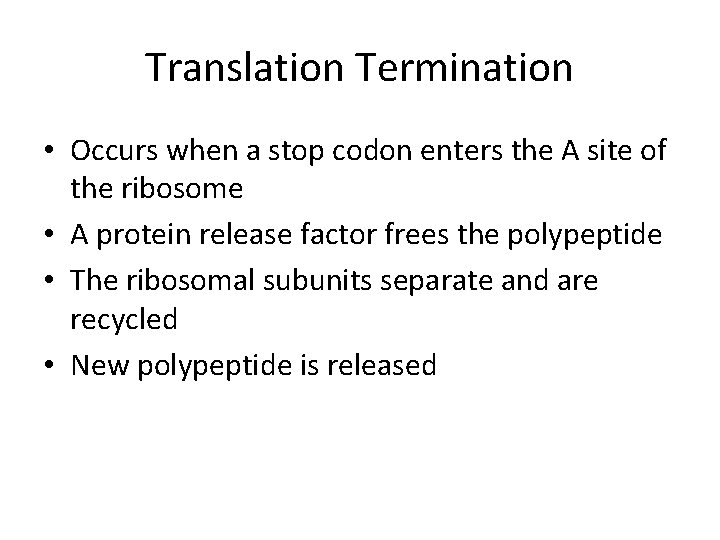
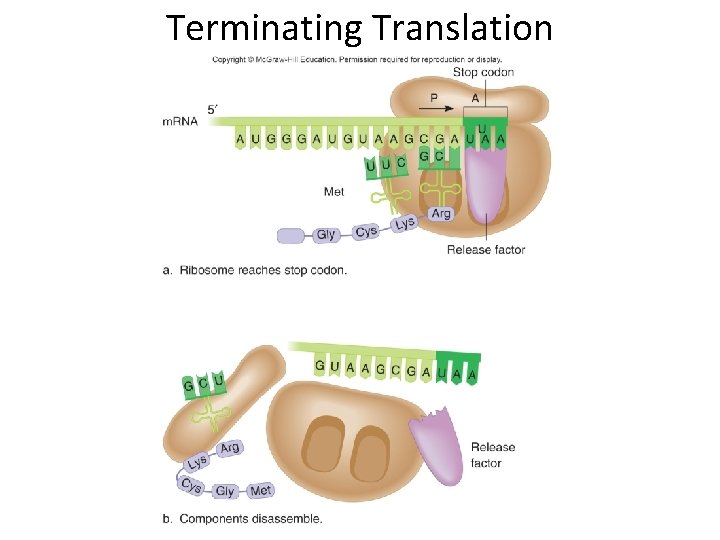
Translation Termination • Occurs when a stop codon enters the A site of the ribosome • A protein release factor frees the polypeptide • The ribosomal subunits separate and are recycled • New polypeptide is released
Terminating Translation
Multiple Copies of a Protein Can be Made Simultaneously • The closer to the end of the gene, the longer the polypeptide
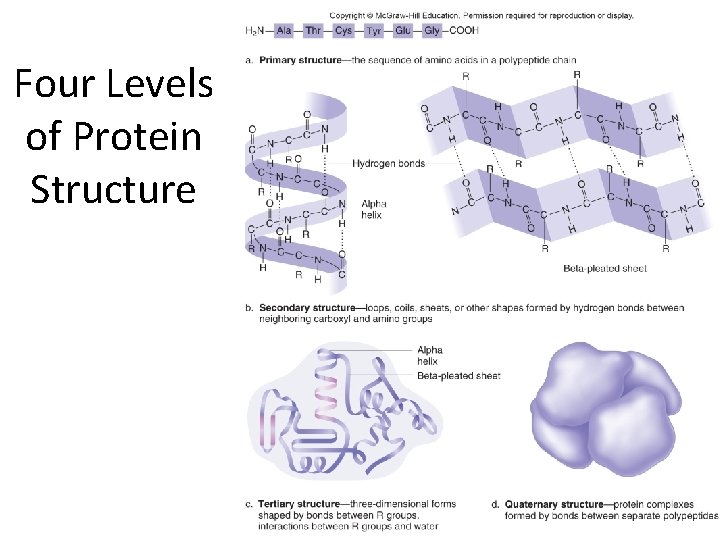
Protein Structure • Proteins fold into one or more 3 -D shapes or conformations – Based on attraction and repulsion between atoms of proteins, and interactions of proteins with chemicals in the environment • There are four levels for protein structure – Primary (1 O) structure – Secondary (2 O) structure – Tertiary (3 O) structure – Quaternary (4 O) structure
Four Levels of Protein Structure
Protein Folding • Proteins begin to fold after the amino acid chain winds away from the ribosome – First few amino acids in a protein secreted in a membrane form a “signal sequence” • Leads it and the ribosome into a pore in the ER membrane • Not found on proteins synthesized on free ribosomes
Protein Folding (2) • Chaperone proteins – Stabilize partially folded regions in their correct form – Prevent a protein from getting stuck in an intermediate form – Developed into drugs to treat diseases that result from misfolded proteins
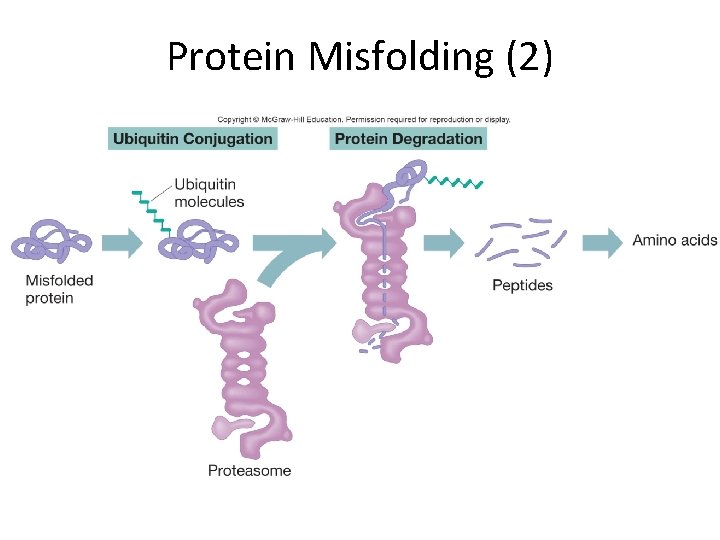
Protein Misfolding • Misfolded proteins are tagged with ubiquitin • Protein with more than one tag is taken to a proteasome, a tunnel-like multiprotein structure – As the protein moves through the tunnel, it is straightened and dismantled – Proteasomes also destroy properly-folded proteins that are in excess or no longer needed
Protein Misfolding (2)
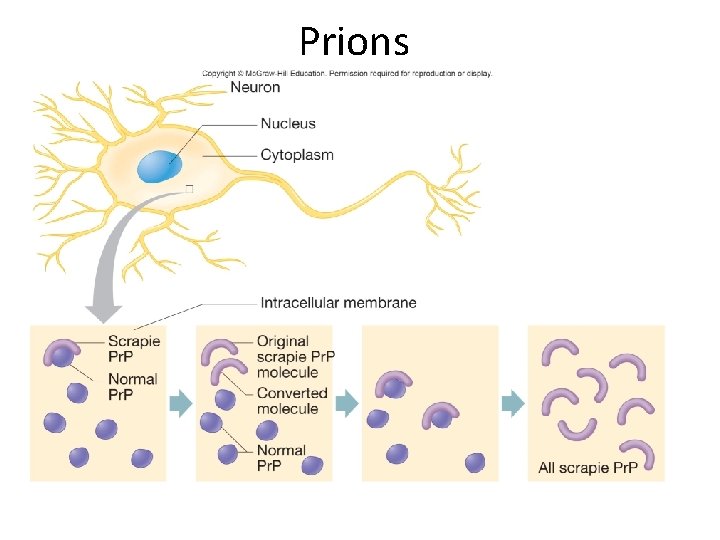
Protein Misfolding (3) • Proteins misfold from a mutation, or by having more than one conformation – A mutation alters the attractions and repulsions between parts of the protein – Prion protein can fold into any of several conformations • Moreover, it can be passed on to other proteins upon contact, propagating like an infectious agent
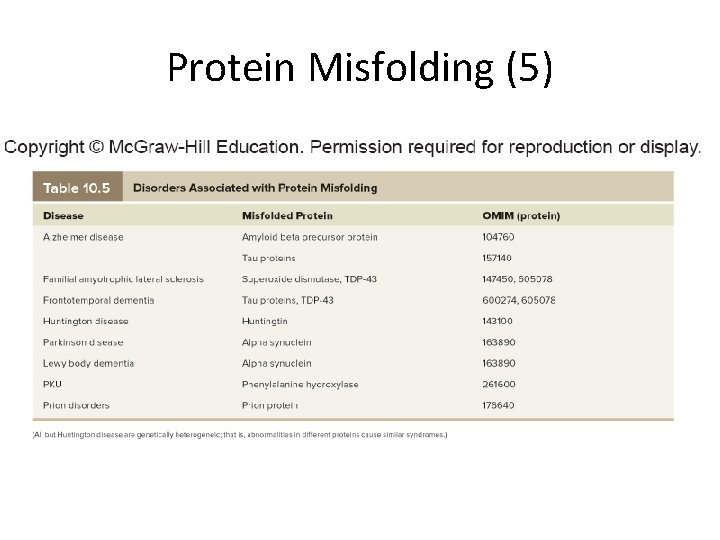
Protein Misfolding (4) • In several disorders that affect the brain, the misfolded proteins aggregate – The protein masses that form clog the proteasomes and inhibit their function • Different proteins are affected in different disorders
Protein Misfolding (5)
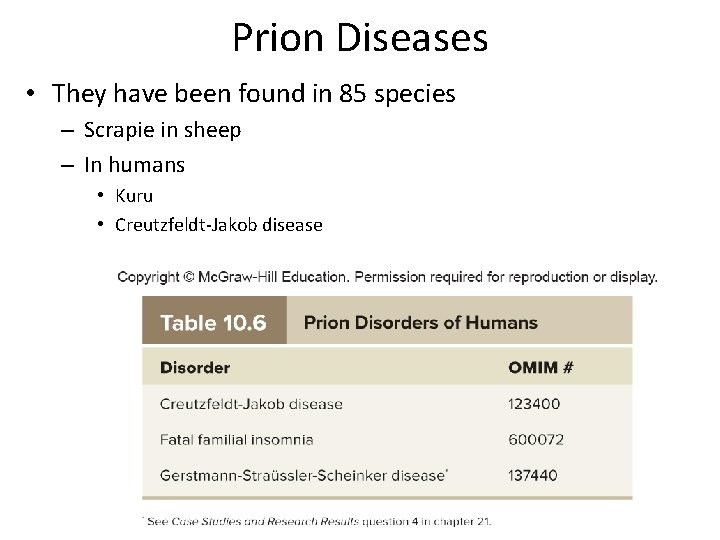
Prion Diseases • They have been found in 85 species – Scrapie in sheep – In humans • Kuru • Creutzfeldt-Jakob disease 58
Prions