
Chapter 10 Earthquakes Definitions v Earthquake the vibration
Chapter 10 Earthquakes Definitions v. Earthquake- the vibration of the ground due to the sudden release of energy accumulated in a deformed rock v. Focus (Hypocenter)- spot underground where the rock begins to break v. Epicenter- the point on the land surface directly above the focus v. Aftershock- tremors that occur as rocks adjust to their new position v. Seismology- the study of earthquake
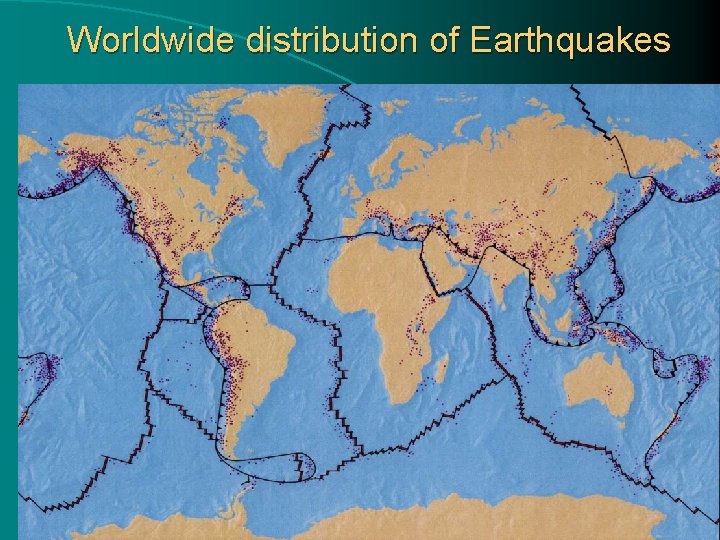
Worldwide distribution of Earthquakes
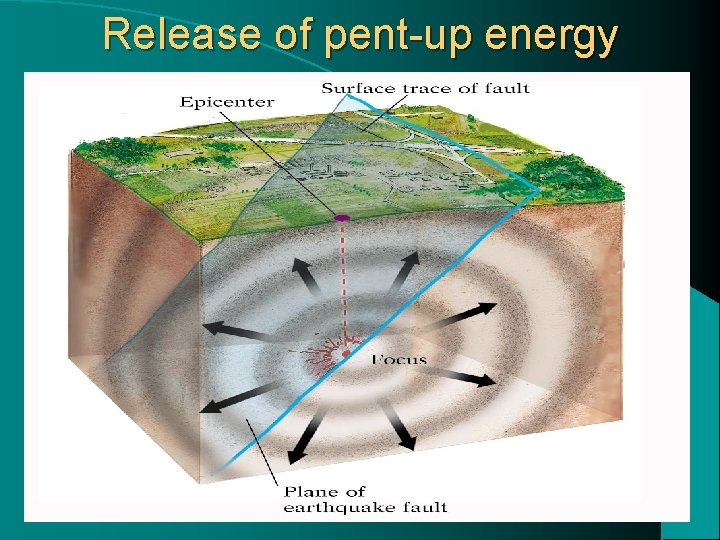
Release of pent-up energy
Causes of Earthquakes l Sudden release of accumulated strain energy – at shallow depths, stressed rocks accumulate strain energy l Creation of new faults by rupturing rocks l Shifting of rocks at preexisting faults l Sporadic recurrence of Earthquakes: Accumulation of Energy ---- Sudden release ------ Rocks lock back in place
Seismic Waves (Earthquake’s energy is transmitted through the earth as seismic waves) l Two types of seismic waves u Body waves- transmit energy through earth’s interior Primary (P) wave- rocks vibrate parallel to direction of wave t Compression and expansion (slinky example) u Secondary (S) wave- rocks move perpendicular to wave direction t Rock shearing (rope-like or ‘wave’ in a stadium) u u Surface waves- transmit energy along earth’s surface Rock moves from side to side like snake u Rolling pattern like ocean wave u

Primary Waves
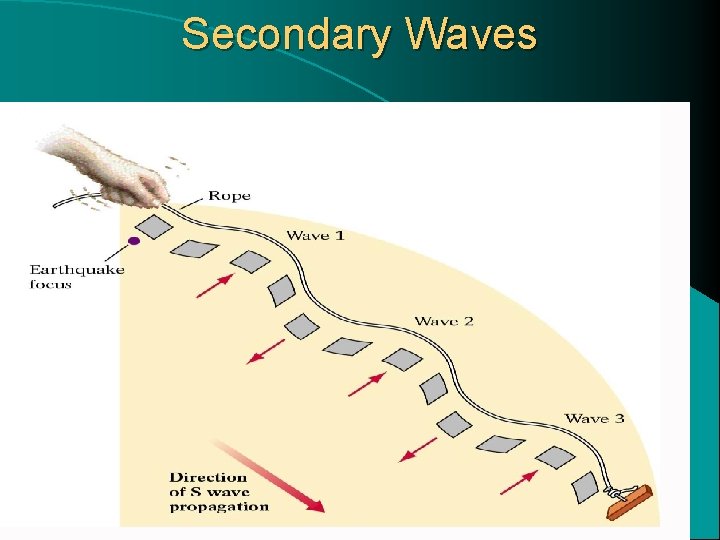
Secondary Waves
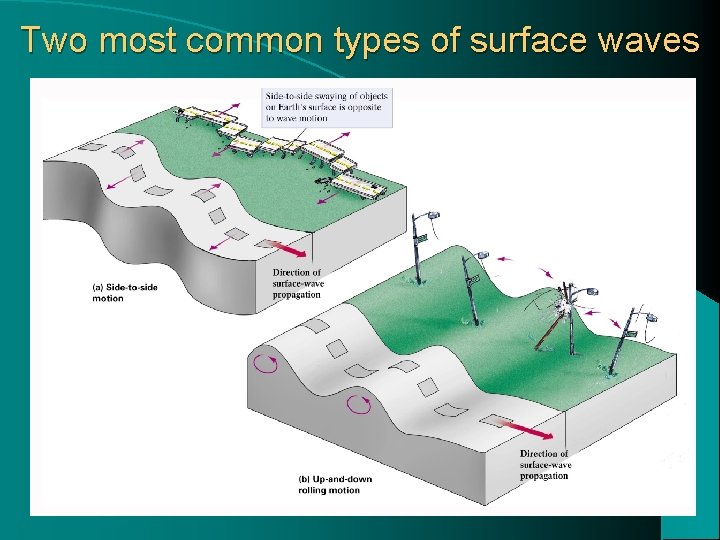
Two most common types of surface waves
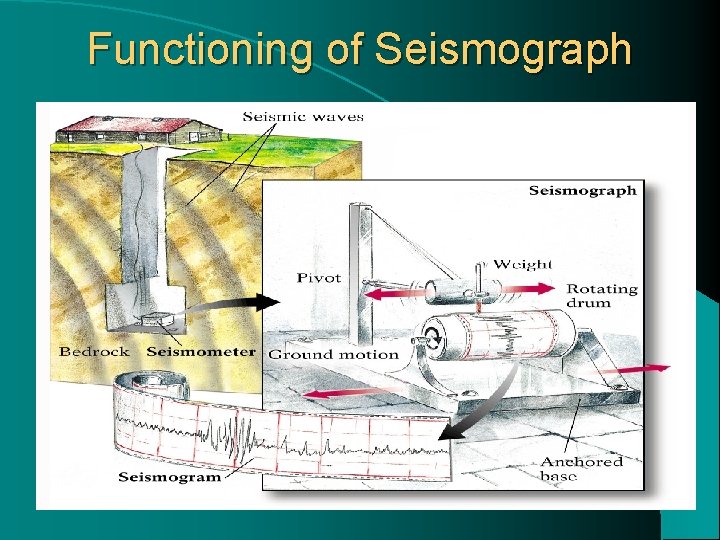
Functioning of Seismograph
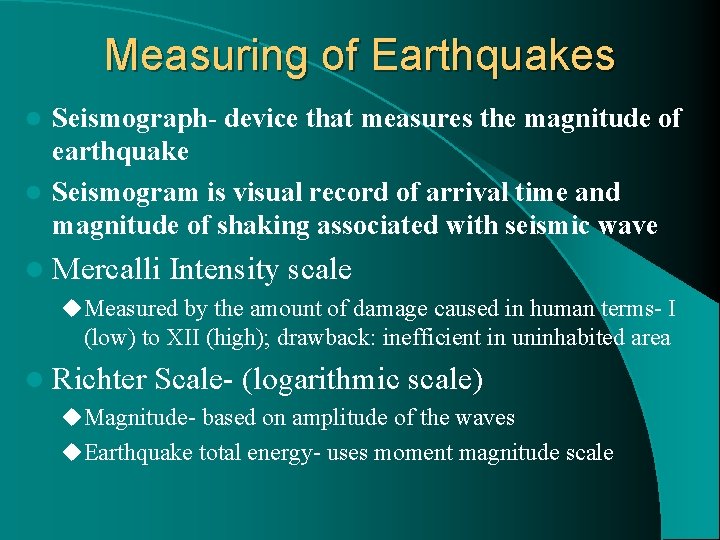
Measuring of Earthquakes Seismograph- device that measures the magnitude of earthquake l Seismogram is visual record of arrival time and magnitude of shaking associated with seismic wave l l Mercalli Intensity scale u Measured by the amount of damage caused in human terms- I (low) to XII (high); drawback: inefficient in uninhabited area l Richter Scale- (logarithmic scale) u Magnitude- based on amplitude of the waves u Earthquake total energy- uses moment magnitude scale
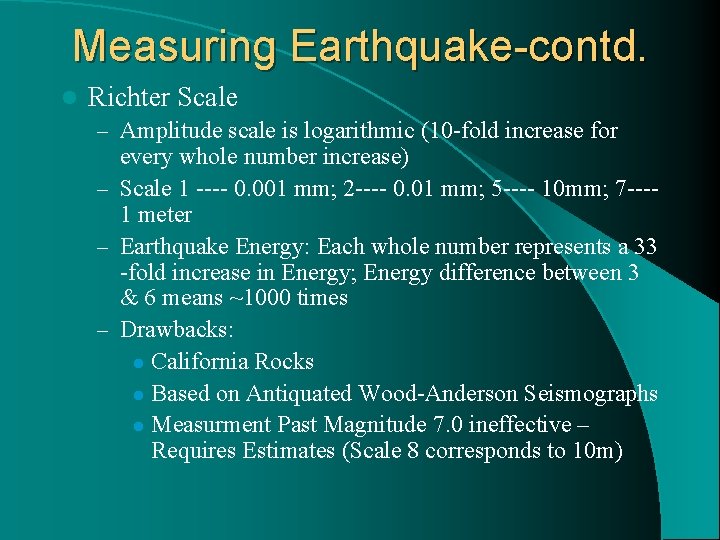
Measuring Earthquake-contd. l Richter Scale – Amplitude scale is logarithmic (10 -fold increase for every whole number increase) – Scale 1 ---- 0. 001 mm; 2 ---- 0. 01 mm; 5 ---- 10 mm; 7 ---1 meter – Earthquake Energy: Each whole number represents a 33 -fold increase in Energy; Energy difference between 3 & 6 means ~1000 times – Drawbacks: l California Rocks l Based on Antiquated Wood-Anderson Seismographs l Measurment Past Magnitude 7. 0 ineffective – Requires Estimates (Scale 8 corresponds to 10 m)
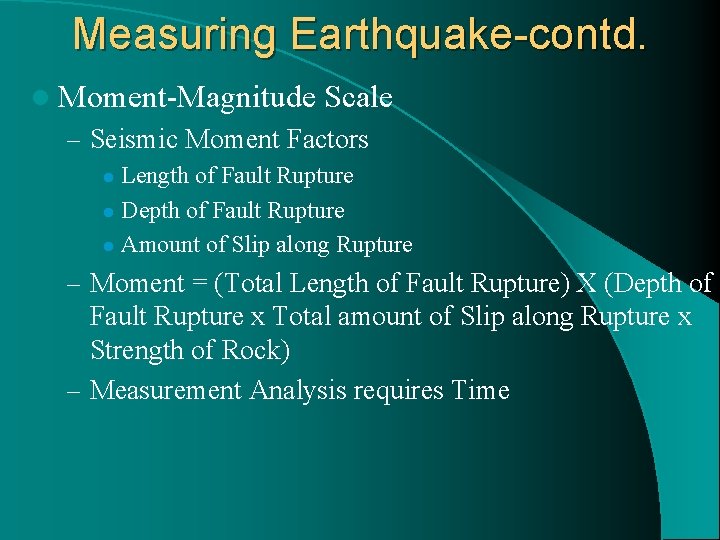
Measuring Earthquake-contd. l Moment-Magnitude Scale – Seismic Moment Factors Length of Fault Rupture l Depth of Fault Rupture l Amount of Slip along Rupture l – Moment = (Total Length of Fault Rupture) X (Depth of Fault Rupture x Total amount of Slip along Rupture x Strength of Rock) – Measurement Analysis requires Time
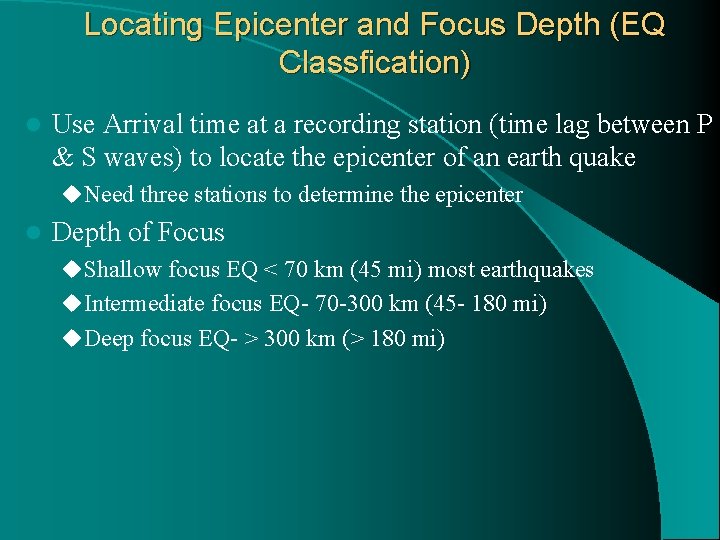
Locating Epicenter and Focus Depth (EQ Classfication) l Use Arrival time at a recording station (time lag between P & S waves) to locate the epicenter of an earth quake u Need three stations to determine the epicenter l Depth of Focus u Shallow focus EQ < 70 km (45 mi) most earthquakes u Intermediate focus EQ- 70 -300 km (45 - 180 mi) u Deep focus EQ- > 300 km (> 180 mi)
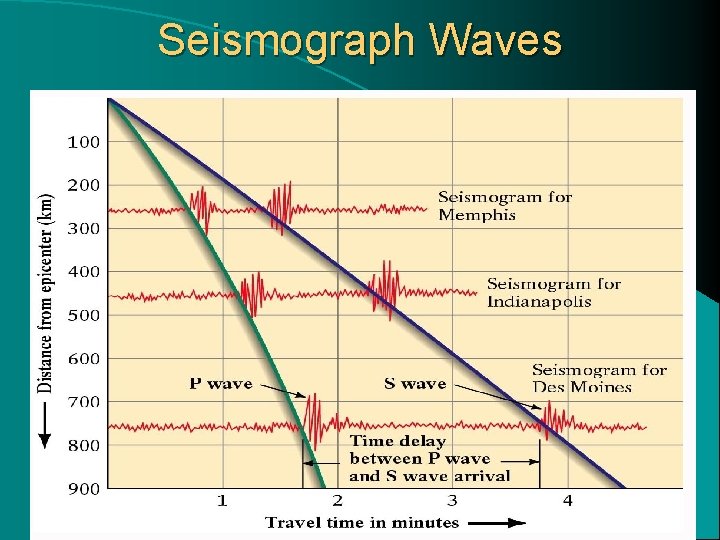
Seismograph Waves
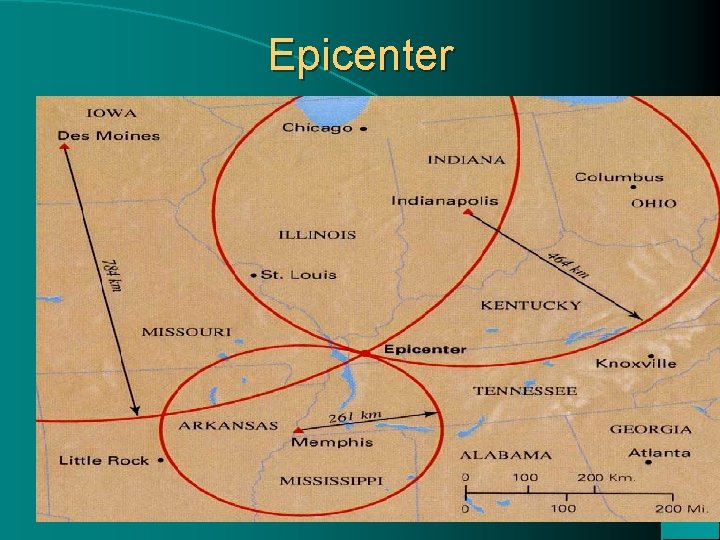
Epicenter
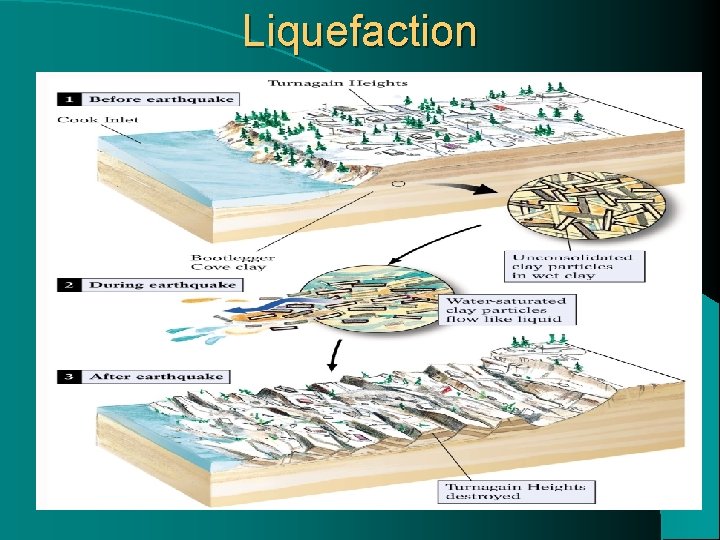
Liquefaction
Frequency vs Depths l 90% of Earthquakes occur within depths less than 100 km l Majority of Catastrophic Earthquakes occur within Depths less than 60 -km Deep – 1964 Alaska EQ ---- 33 km from surface – 1995 Kobe, Japan--- 20 km from surface Magnitude vs Depth: a) Shallow: Up to 9. 5 RM (Moment-Magnitude Scale) b) Intermediate: Up to 7. 5 RM c) Deep: Up to 6. 9 RM
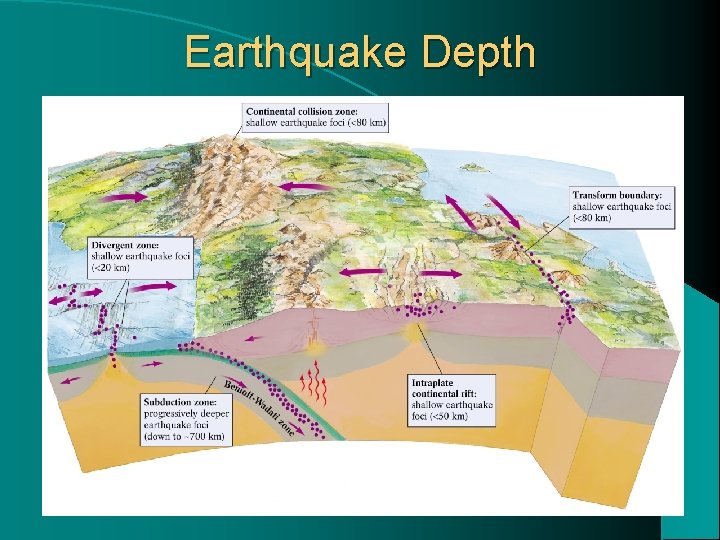
Earthquake Depth
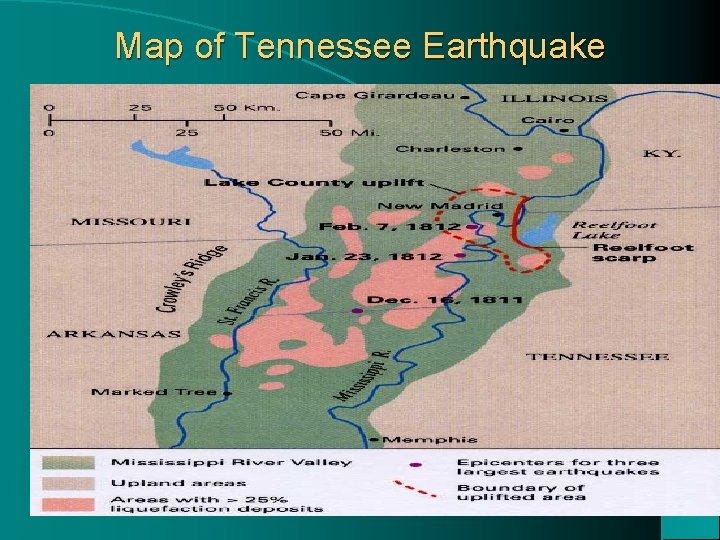
Map of Tennessee Earthquake
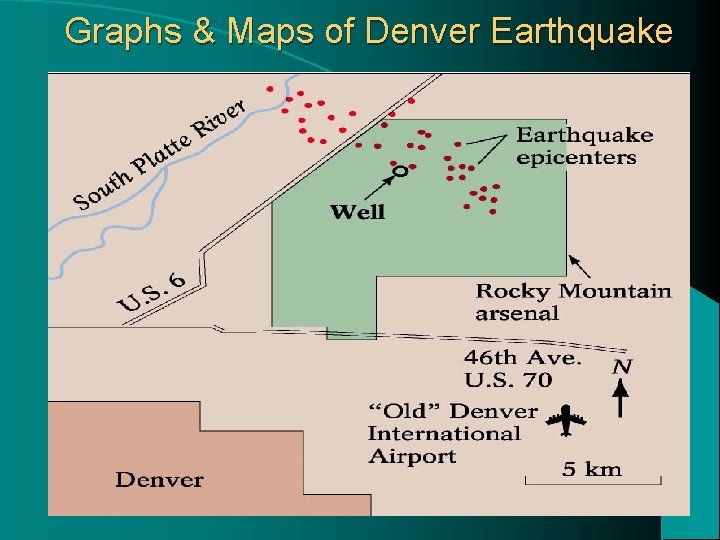
Graphs & Maps of Denver Earthquake
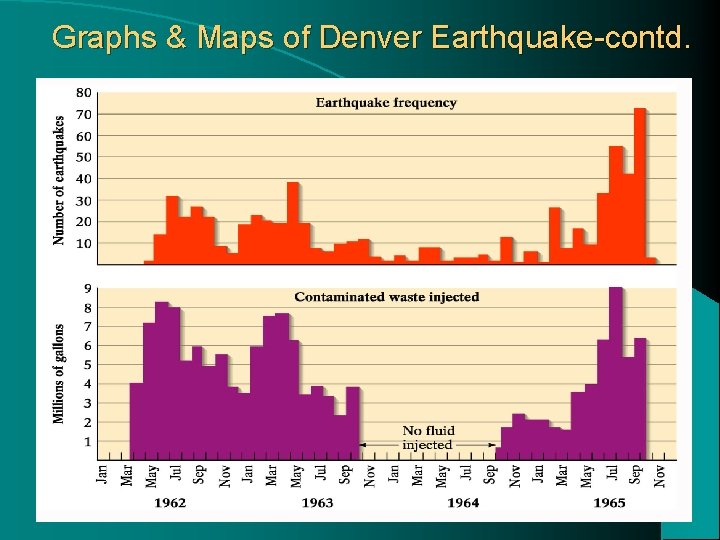
Graphs & Maps of Denver Earthquake-contd.
Effects of Earthquakes l Ground Displacement u Lateral and vertical (In 30 -Myr, Rocks & Landforms on the West Side have shifted ~560 -km toward Northwest); Vertical Displacement occur during movement along Dip-slip Faults -Landslides l Liquefaction l u Conversion of formally stable fine grain materials to a fluid mass l Seiches u The back and forth movement in a semi-closed/closed body of water- could cause flooding- Alaskan EQ in 1964 – 6000 km away felt in TX Swimming pools l Tsunamisu More from submarine landslide (Large fast-moving sea waves); Sea-floor displacement during faulting and submarine slides l Fire (Tokyo 1923; San Francisco, 1906)
Principal Earthquake zones at Plate Boundaries – Shallow Earthquakes occur at – Oceanic Divergent zones, continental rift and collision zones, and transform boundaries – Subduction-zone earthquake regions are called Benioff-Wadati zones – In subduction zones: Depth of earthquakes correspond to depth of portions of descending slab; up to 300 -km deep: strong earthquakes; 300 -700 km: weaker earthquakes; >700 km: earthquakes are rare – Magnitude of EQ ~80% of EQ Energy released in Pacific Rim Region; ~20% of world’s EQ energy released in collision Zone from Turkey to Burma
Specific Areas l Japan: Subduction of Pacific Plate beneath Eurasian Plate; Quakes occur in Tokyo every 69 yrs; 15% of world seismic energy released l Alaska: Pacific Plate subducts beneath North American and Eurasian Plates l Mid-plate Eqs are shallow, weak
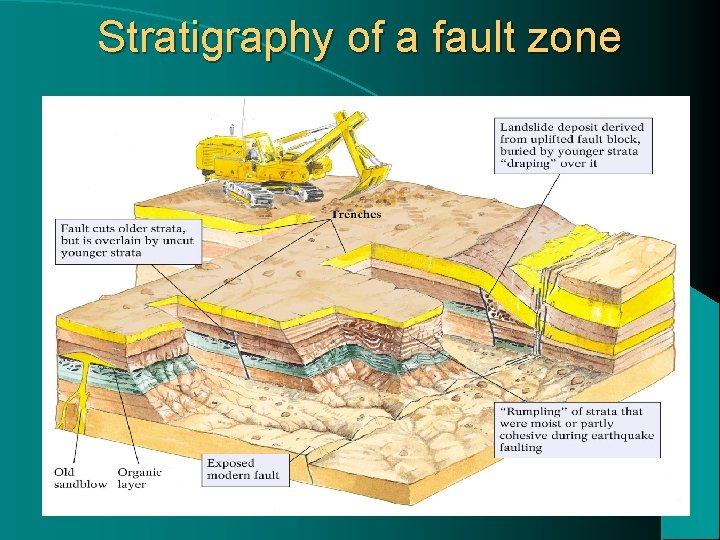
Stratigraphy of a fault zone
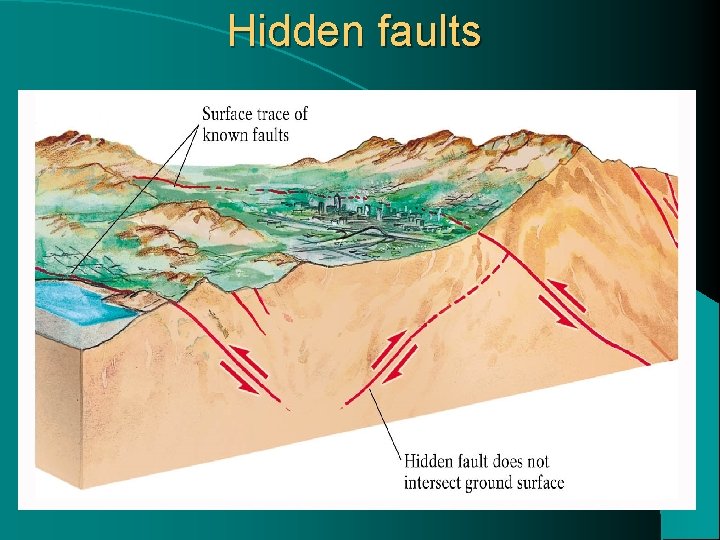
Hidden faults
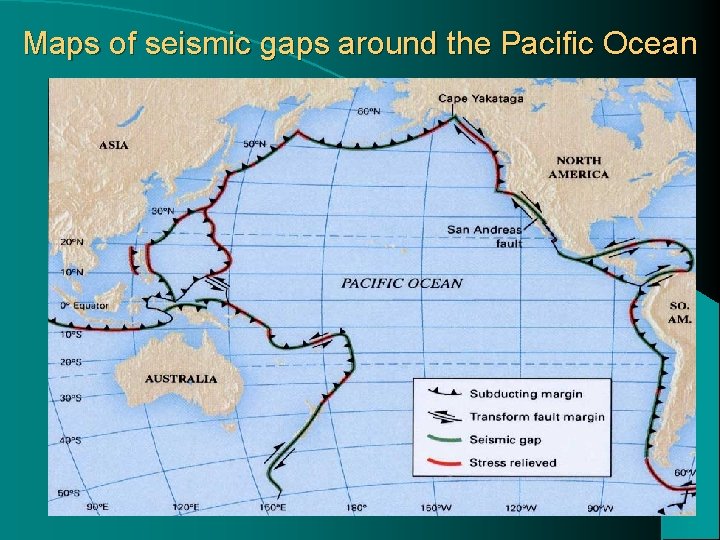
Maps of seismic gaps around the Pacific Ocean
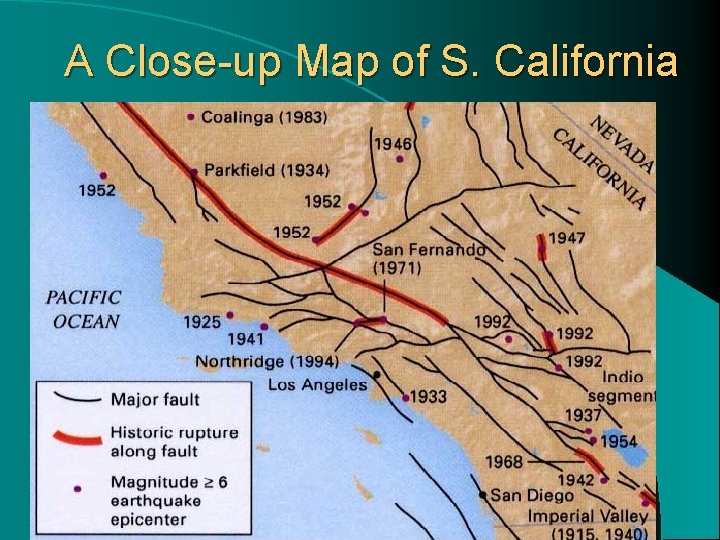
A Close-up Map of S. California
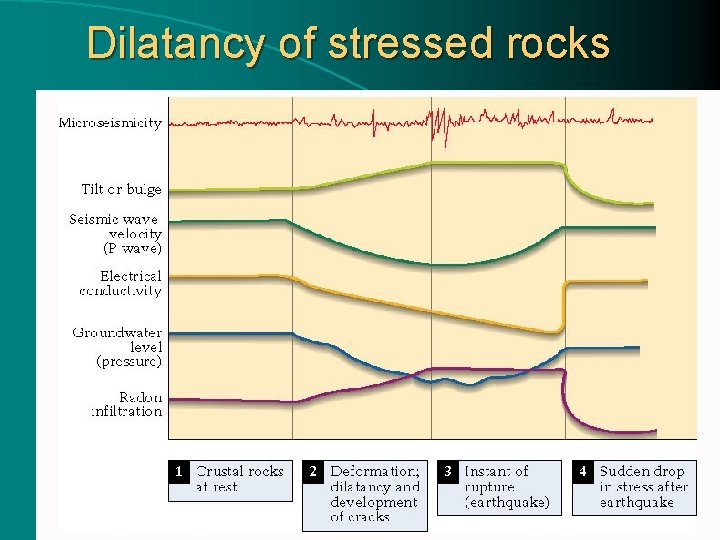
Dilatancy of stressed rocks
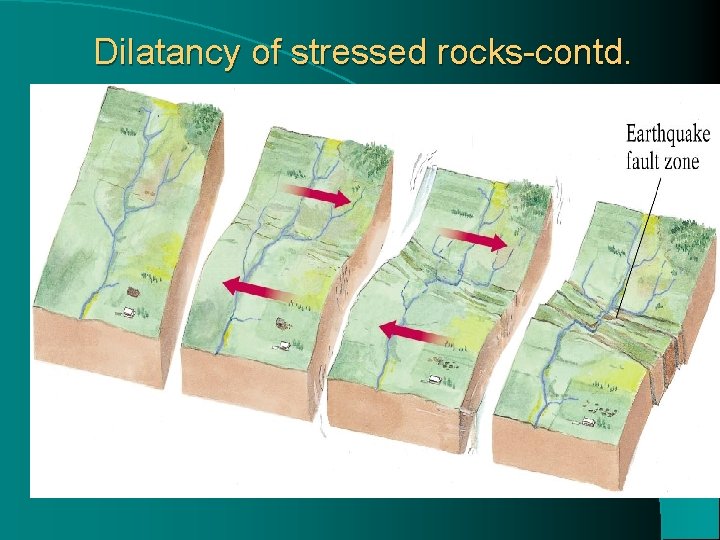
Dilatancy of stressed rocks-contd.
Coping with Earthquakes l Earthquake zone-identification l Plate boundaries l Assessing local seismic history and future risks l Land use planning-situating critical facilities l Quake reinforcement of building/structures: wood, steel, reinforced concrete are preferable (heavy masonry, unreinforced concrete, etc are not good) l Short term and Long term forecast l Contingency plan
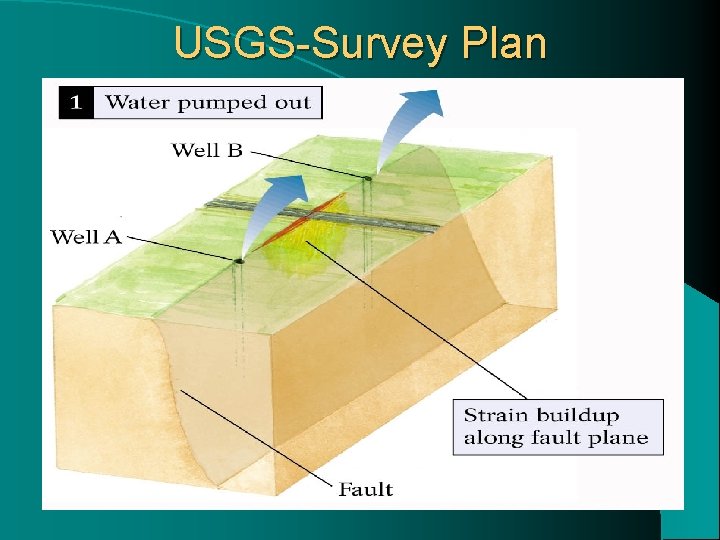
USGS-Survey Plan
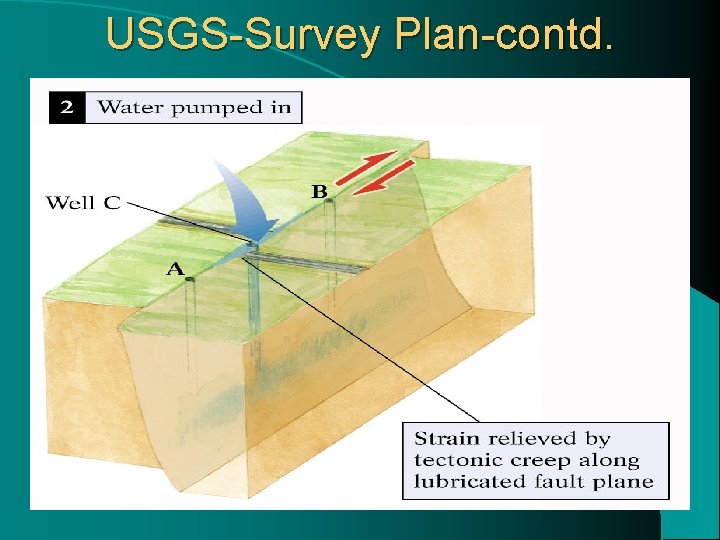
USGS-Survey Plan-contd.
Earthquake Prediction l Successful Prediction in 1975 in China, but no prediction in 1976 l Reduction of Energy build up along segments of individual faults – Plans to lubricate San Andreas Fault l Increase in Radon concentration as a precursor (and other noble gases, solubilites of these gases) l Animal Behavior? ?
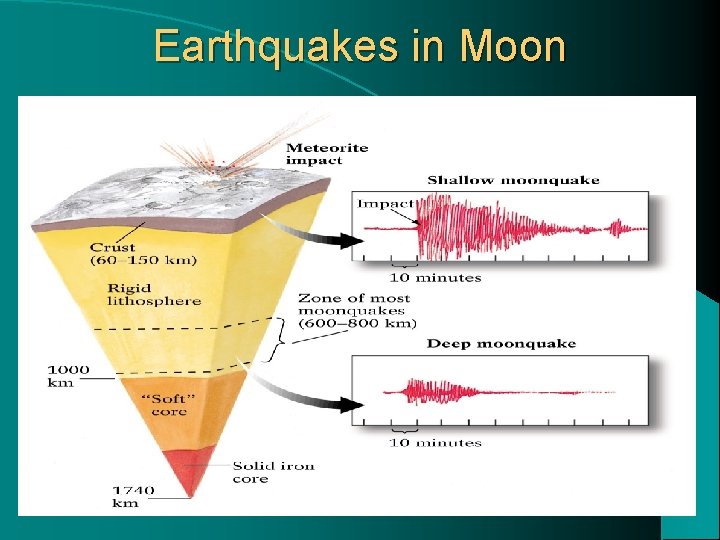
Earthquakes in Moon
- Slides: 35