
CHAPTER 10 Determining the Size of a Sample
- Slides: 35
CHAPTER 10 Determining the Size of a Sample Copyright © 2017 Pearson Education, Inc. 10 -1
Copyright © 2017 Pearson Education, Inc. 10 -2 -2
Copyright © 2017 Pearson Education, Inc. 10 -3 -3
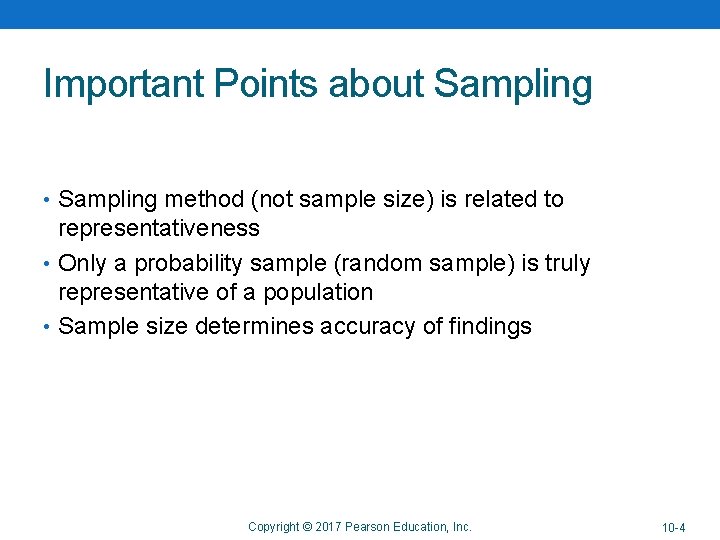
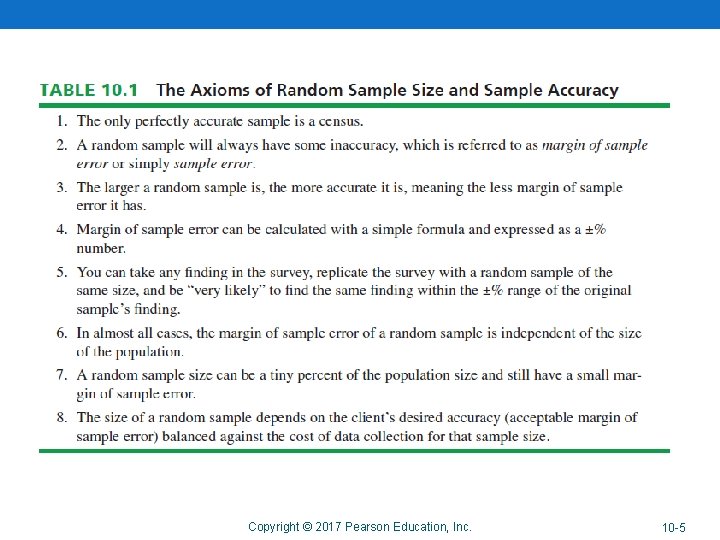
Important Points about Sampling • Sampling method (not sample size) is related to representativeness • Only a probability sample (random sample) is truly representative of a population • Sample size determines accuracy of findings Copyright © 2017 Pearson Education, Inc. 10 -4 -4
Copyright © 2017 Pearson Education, Inc. 10 -5 -5
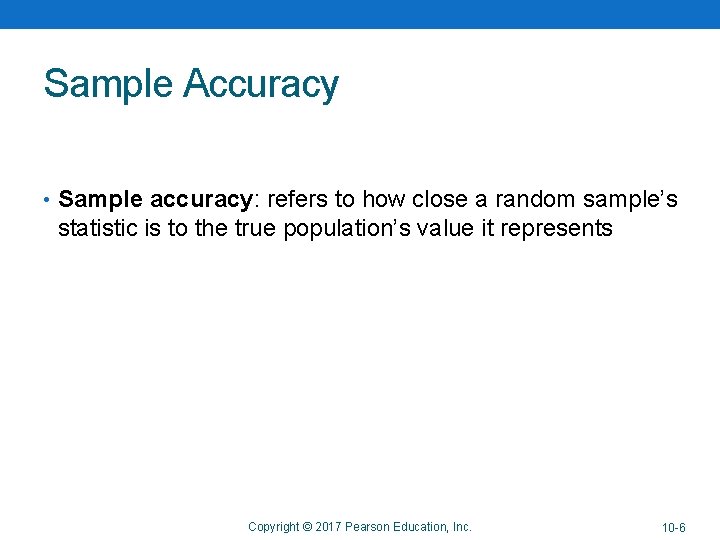
Sample Accuracy • Sample accuracy: refers to how close a random sample’s statistic is to the true population’s value it represents Copyright © 2017 Pearson Education, Inc. 10 -6 -6
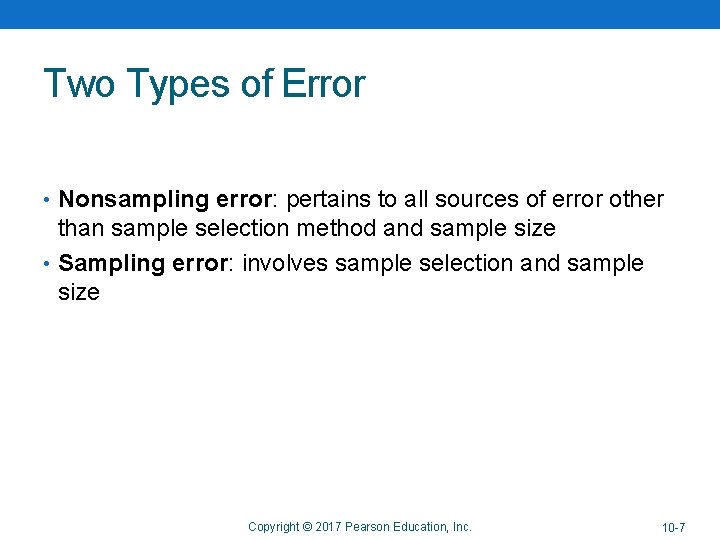
Two Types of Error • Nonsampling error: pertains to all sources of error other than sample selection method and sample size • Sampling error: involves sample selection and sample size Copyright © 2017 Pearson Education, Inc. 10 -7 -7
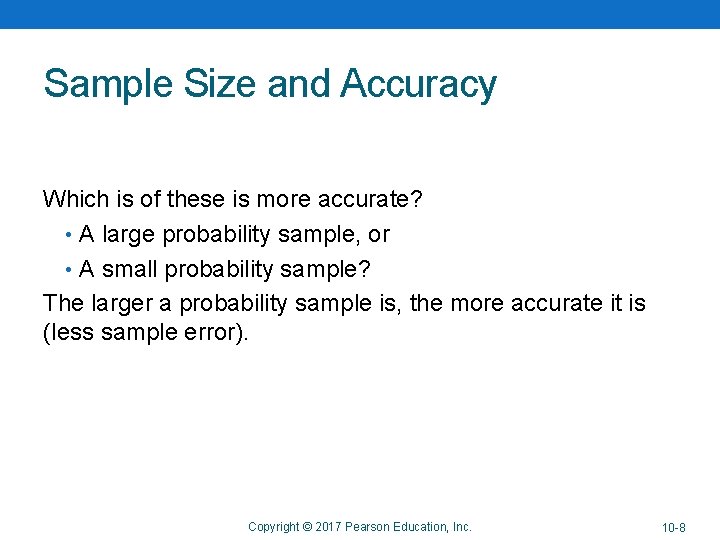
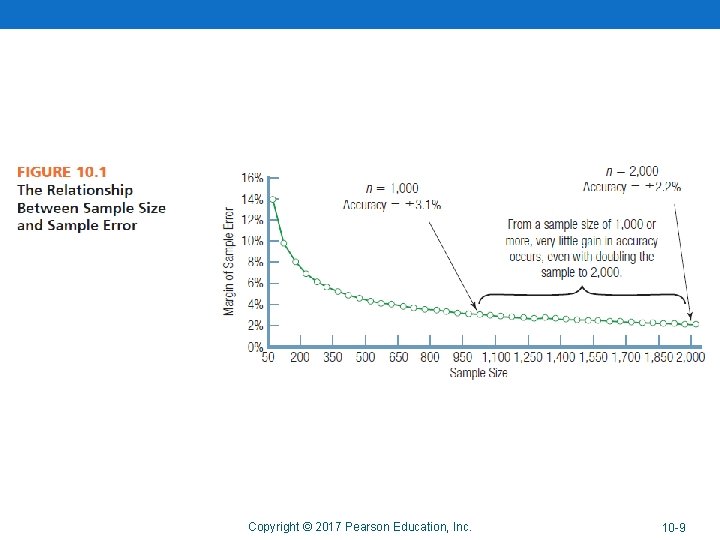
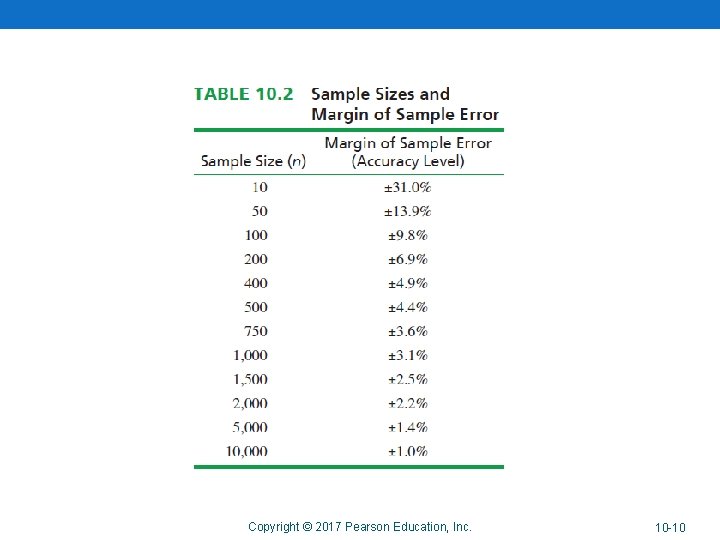
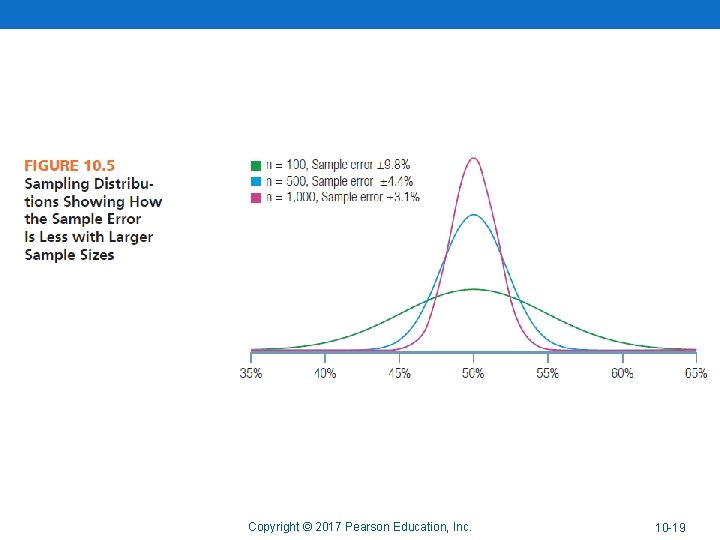
Sample Size and Accuracy Which is of these is more accurate? • A large probability sample, or • A small probability sample? The larger a probability sample is, the more accurate it is (less sample error). Copyright © 2017 Pearson Education, Inc. 10 -8 -8
Copyright © 2017 Pearson Education, Inc. 10 -9 -9
Copyright © 2017 Pearson Education, Inc. 10 -10
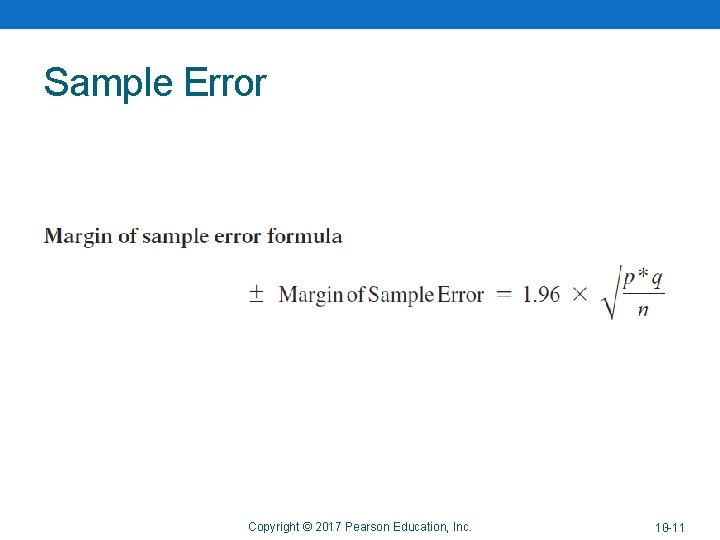
Sample Error Copyright © 2017 Pearson Education, Inc. 13 -11 10 -11
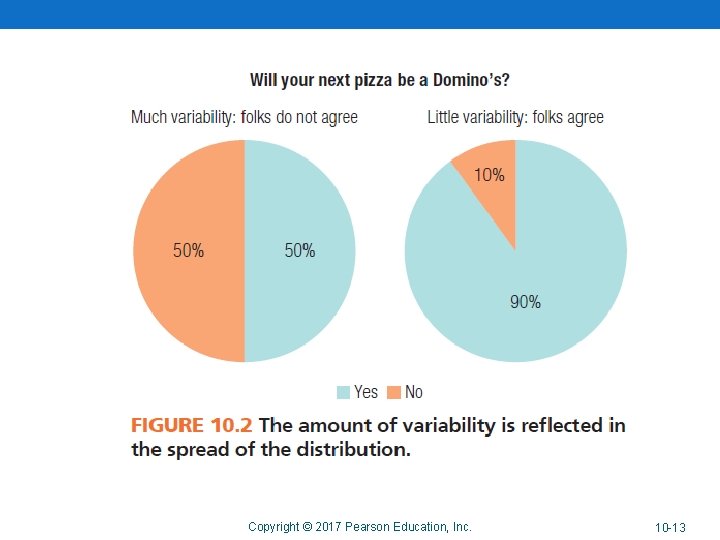
Variability • Variability refers to how similar or dissimilar responses are to a given question. Copyright © 2017 Pearson Education, Inc. 10 -12
Copyright © 2017 Pearson Education, Inc. 10 -13
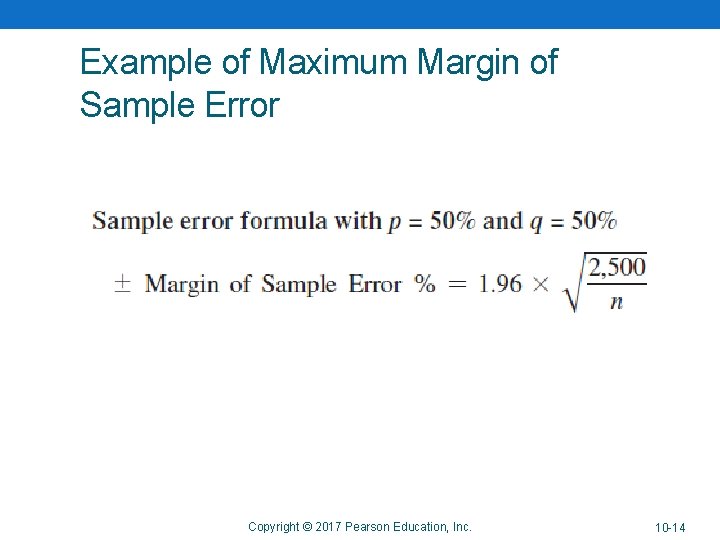
Example of Maximum Margin of Sample Error Copyright © 2017 Pearson Education, Inc. 10 -14
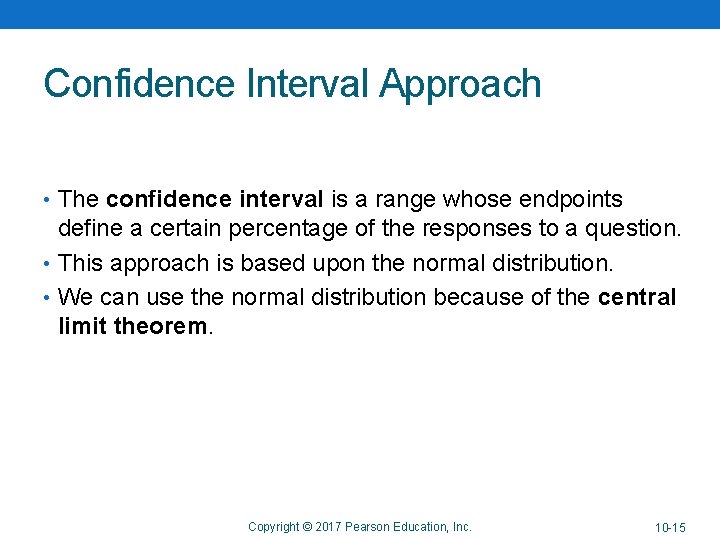
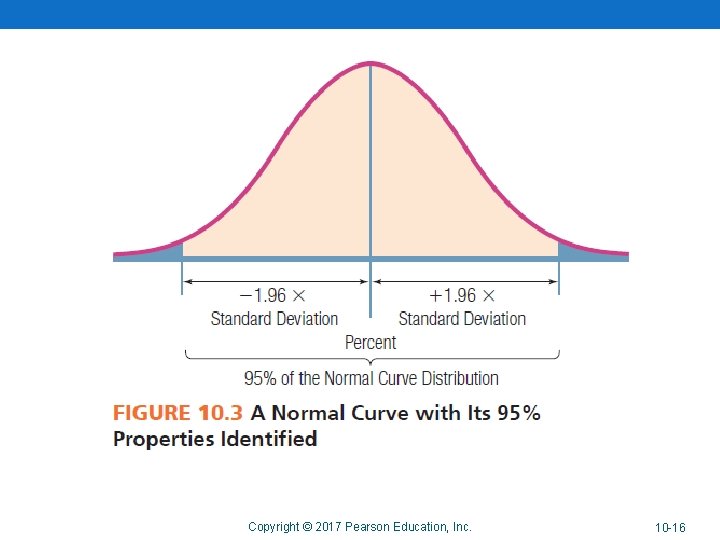
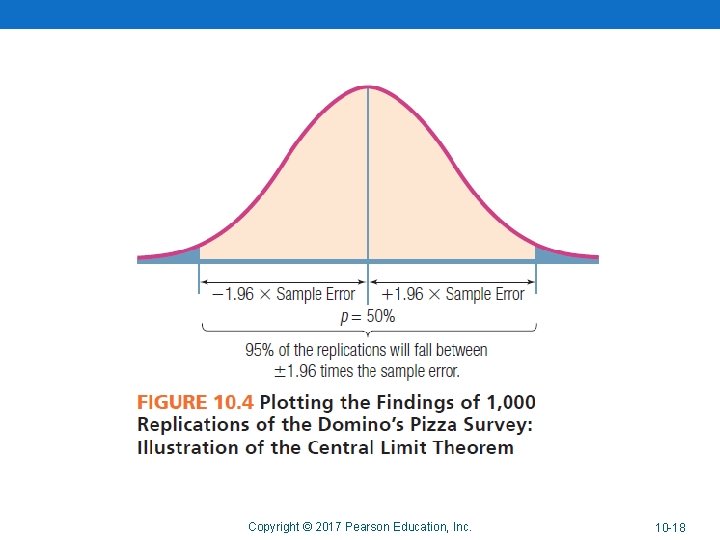
Confidence Interval Approach • The confidence interval is a range whose endpoints define a certain percentage of the responses to a question. • This approach is based upon the normal distribution. • We can use the normal distribution because of the central limit theorem. Copyright © 2017 Pearson Education, Inc. 10 -15
Copyright © 2017 Pearson Education, Inc. 10 -16
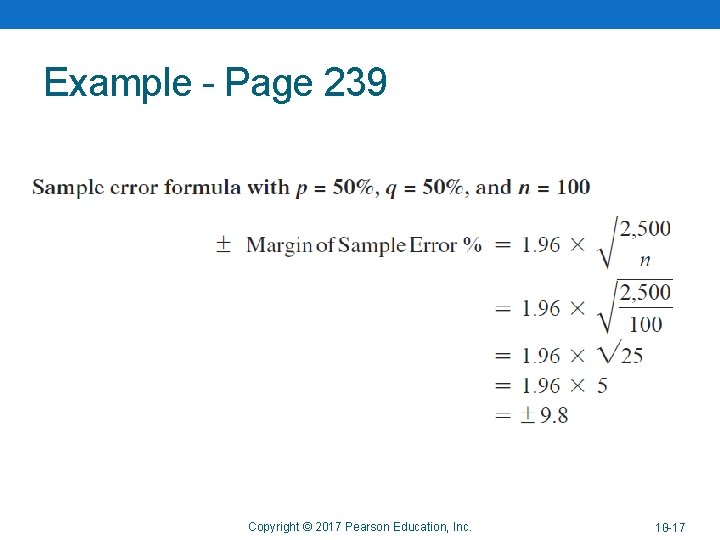
Example - Page 239 Copyright © 2017 Pearson Education, Inc. 13 -17 10 -17
Copyright © 2017 Pearson Education, Inc. 10 -18
Copyright © 2017 Pearson Education, Inc. 10 -19
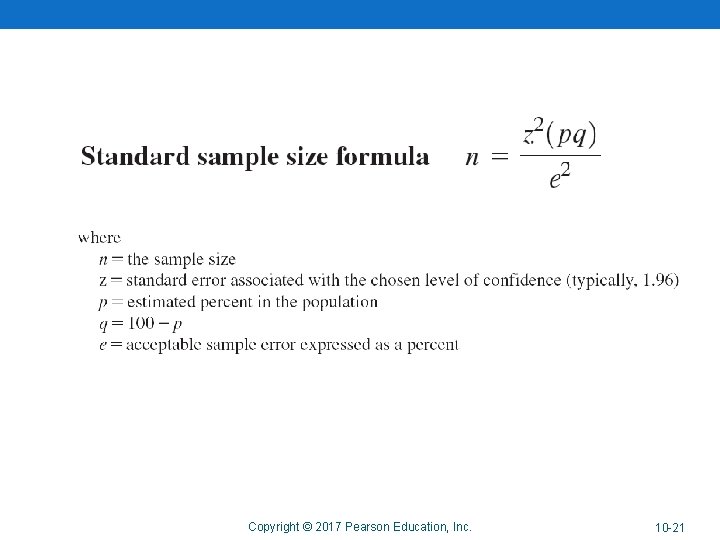
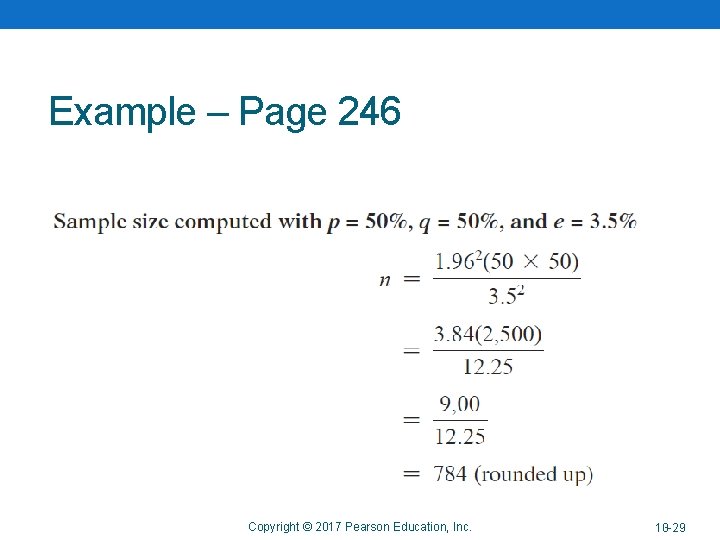
Sample Size Formula Need to know • Variability: p x q • Acceptable margin of sample error: e • Level of confidence: z Copyright © 2017 Pearson Education, Inc. 10 -20
Copyright © 2017 Pearson Education, Inc. 10 -21
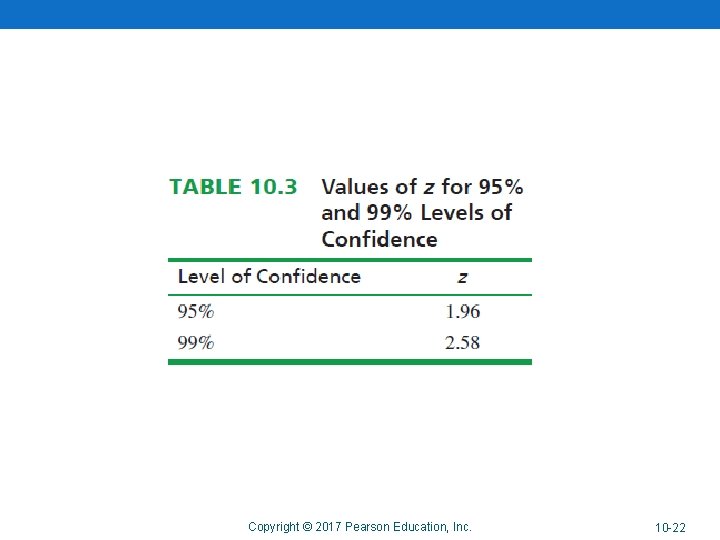
Copyright © 2017 Pearson Education, Inc. 10 -22
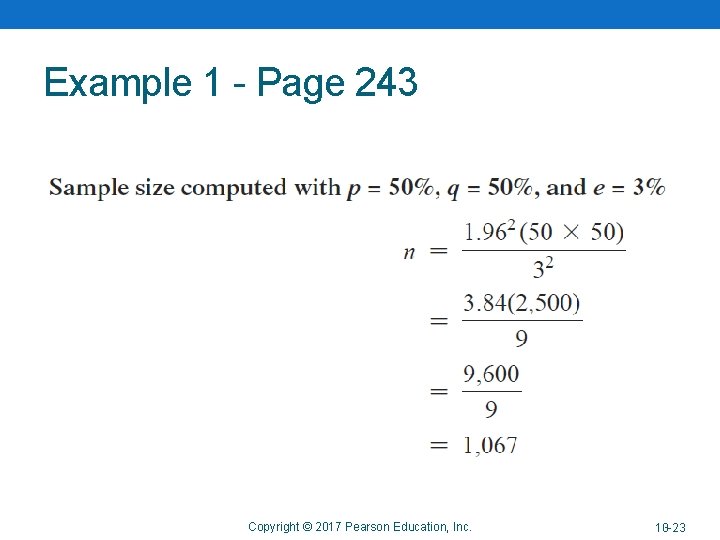
Example 1 - Page 243 Copyright © 2017 Pearson Education, Inc. 13 -23 10 -23
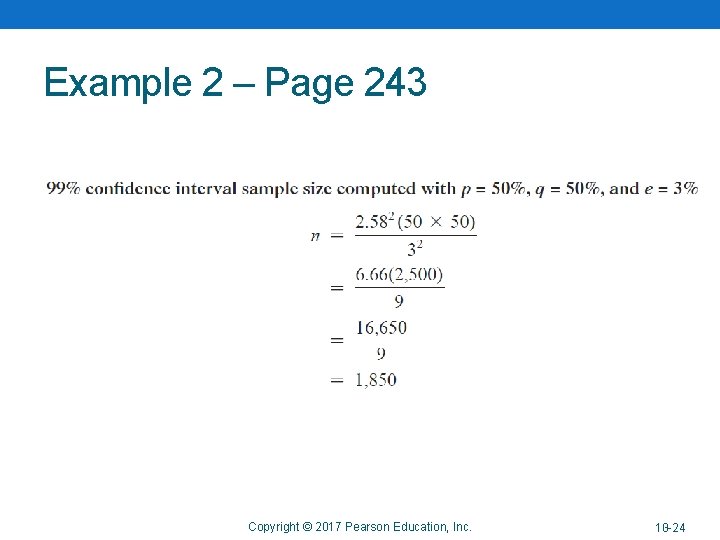
Example 2 – Page 243 Copyright © 2017 Pearson Education, Inc. 13 -24 10 -24
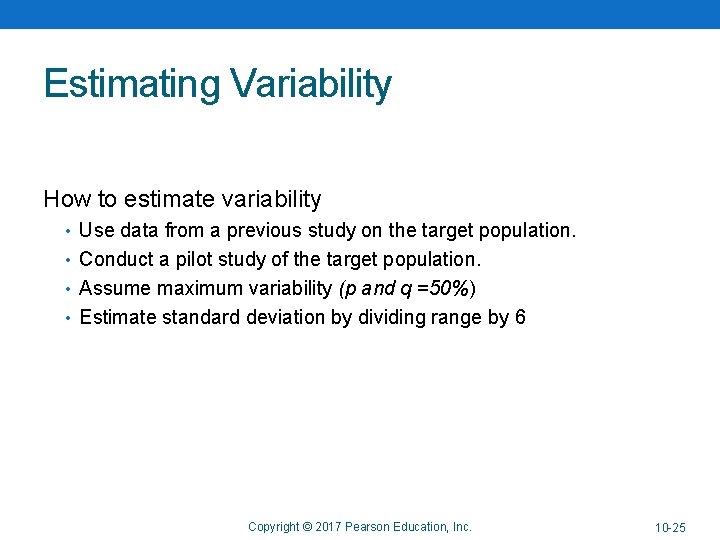
Estimating Variability How to estimate variability • Use data from a previous study on the target population. • Conduct a pilot study of the target population. • Assume maximum variability (p and q =50%) • Estimate standard deviation by dividing range by 6 Copyright © 2017 Pearson Education, Inc. 10 -25
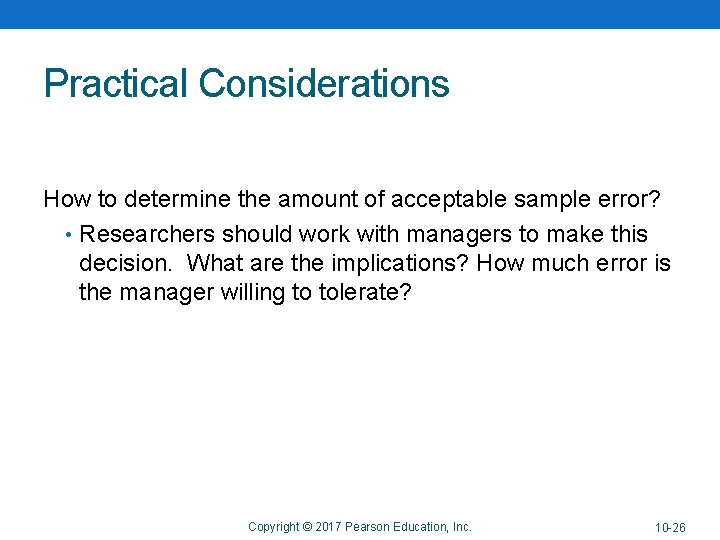
Practical Considerations How to determine the amount of acceptable sample error? • Researchers should work with managers to make this decision. What are the implications? How much error is the manager willing to tolerate? Copyright © 2017 Pearson Education, Inc. 10 -26
Practical Considerations How to decide on the level of confidence to use? • Marketing researchers typically use 95% or 99%. Copyright © 2017 Pearson Education, Inc. 10 -27
Practical Considerations How to balance sample size with cost of data collection? • Researchers should work with managers to take cost into consideration in this decision. Copyright © 2017 Pearson Education, Inc. 10 -28
Example – Page 246 Copyright © 2017 Pearson Education, Inc. 13 -29 10 -29
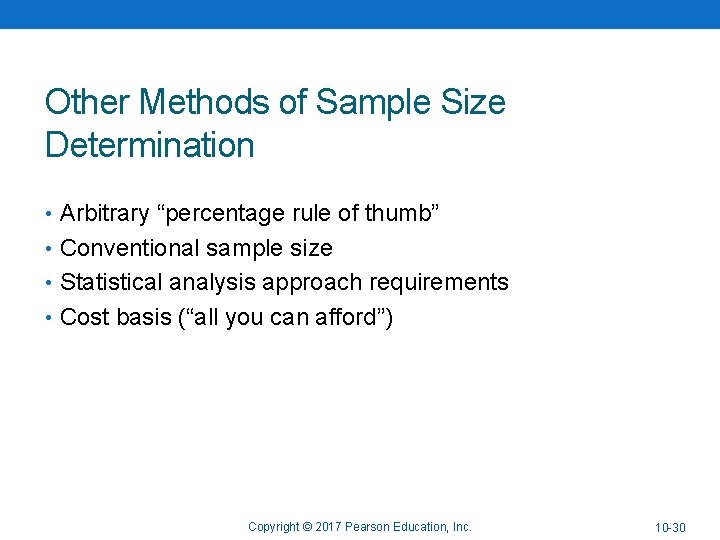
Other Methods of Sample Size Determination • Arbitrary “percentage rule of thumb” • Conventional sample size • Statistical analysis approach requirements • Cost basis (“all you can afford”) Copyright © 2017 Pearson Education, Inc. 10 -30
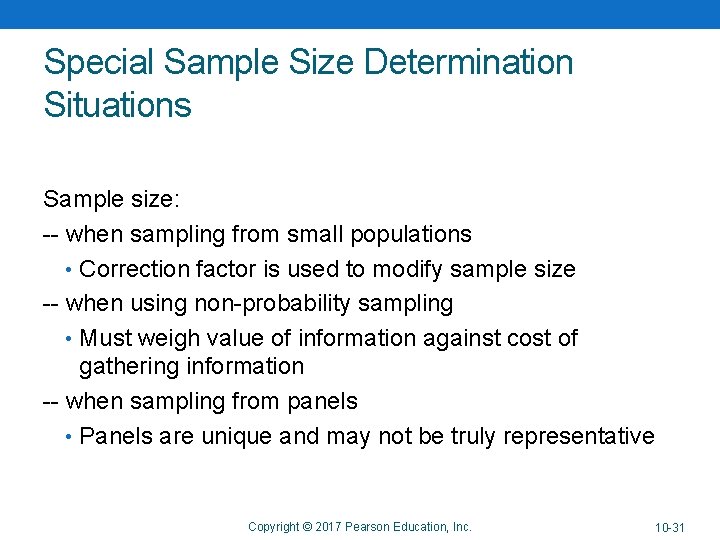
Special Sample Size Determination Situations Sample size: -- when sampling from small populations • Correction factor is used to modify sample size -- when using non-probability sampling • Must weigh value of information against cost of gathering information -- when sampling from panels • Panels are unique and may not be truly representative Copyright © 2017 Pearson Education, Inc. 10 -31
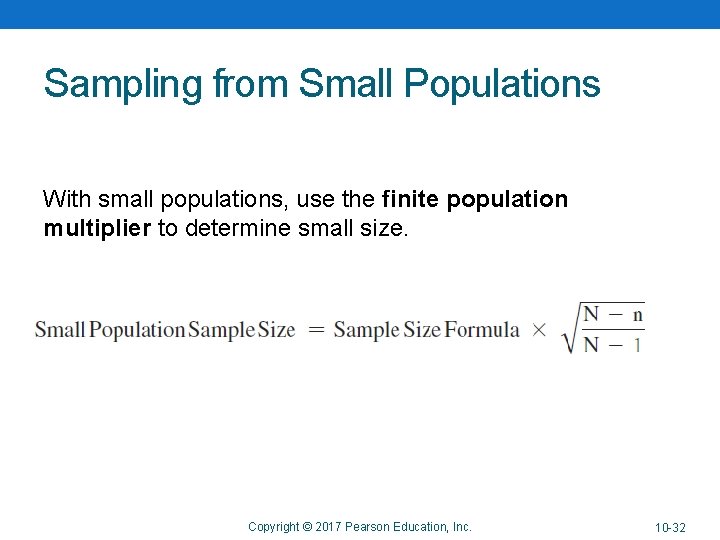
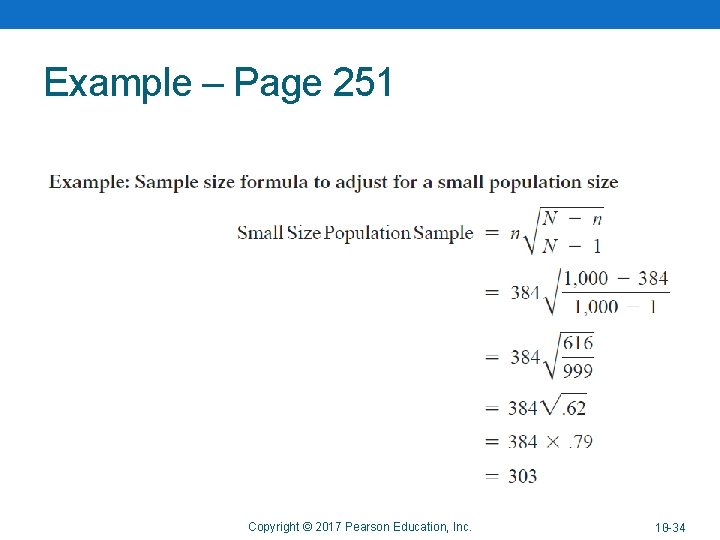
Sampling from Small Populations With small populations, use the finite population multiplier to determine small size. Copyright © 2017 Pearson Education, Inc. 10 -32
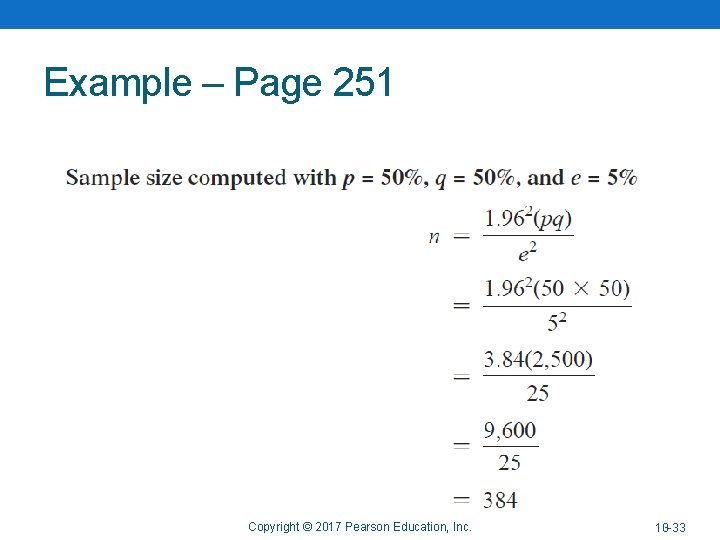
Example – Page 251 Copyright © 2017 Pearson Education, Inc. 13 -33 10 -33
Example – Page 251 Copyright © 2017 Pearson Education, Inc. 13 -34 10 -34
All rights reserved. No part of this publication may be reproduced, stored in a retrieval system, or transmitted, in any form or by any means, electronic, mechanical, photocopying, recording, or otherwise, without the prior written permission of the publisher. Printed in the United States of America. Copyright © 2017 Pearson Education, Inc. 10 -35