
CHAPTER 10 CELL REPRODUCTION Section 1 Cell Division
- Slides: 18
CHAPTER 10: CELL REPRODUCTION Section 1: Cell Division and Mitosis
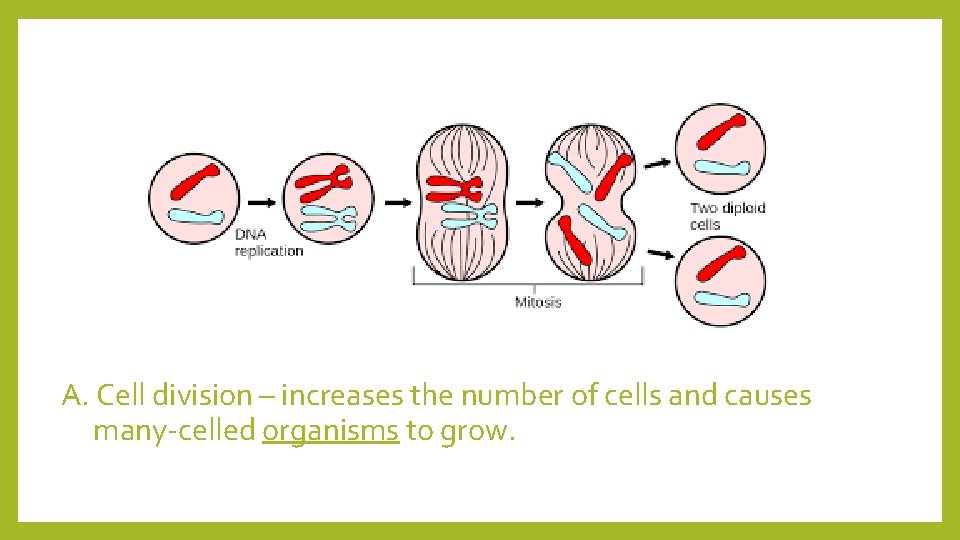
A. Cell division – increases the number of cells and causes many-celled organisms to grow.
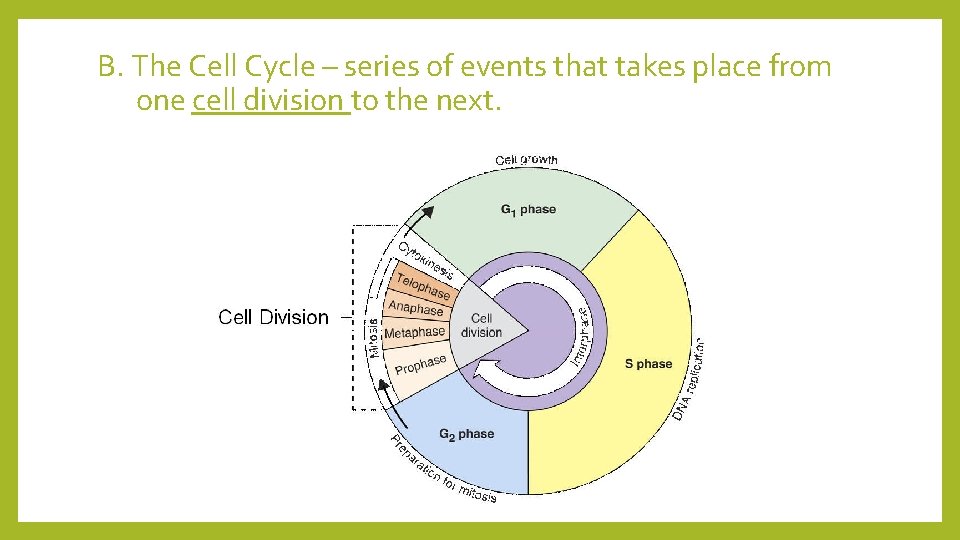
B. The Cell Cycle – series of events that takes place from one cell division to the next.
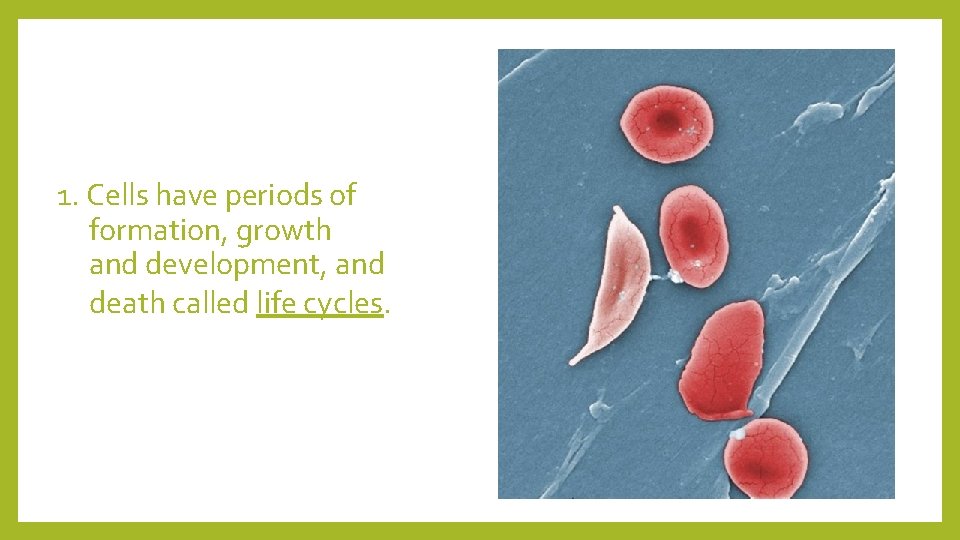
1. Cells have periods of formation, growth and development, and death called life cycles.
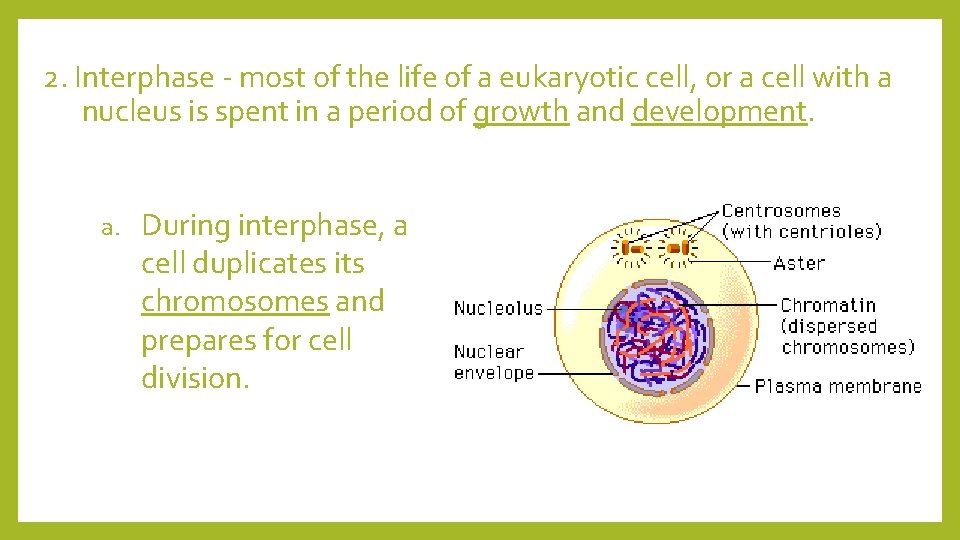
2. Interphase - most of the life of a eukaryotic cell, or a cell with a nucleus is spent in a period of growth and development. a. During interphase, a cell duplicates its chromosomes and prepares for cell division.
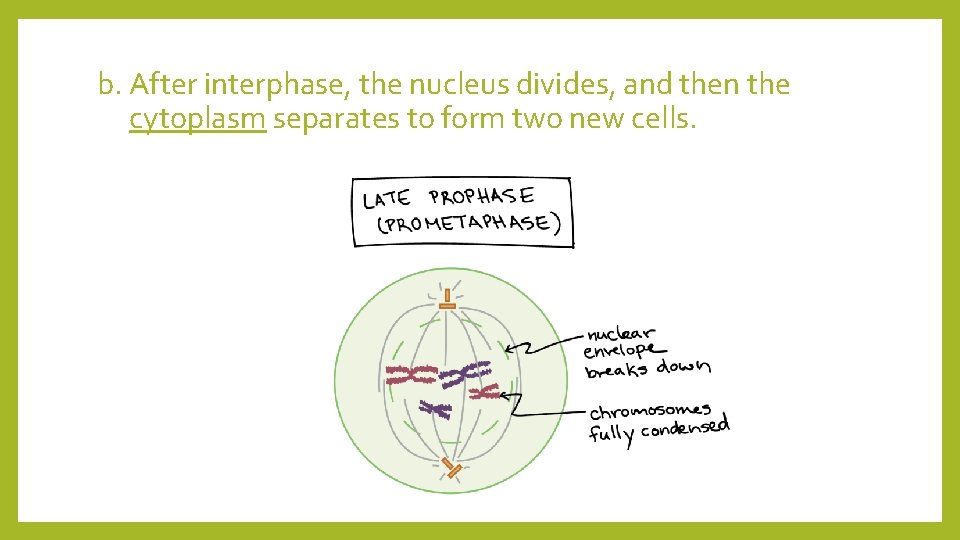
b. After interphase, the nucleus divides, and then the cytoplasm separates to form two new cells.
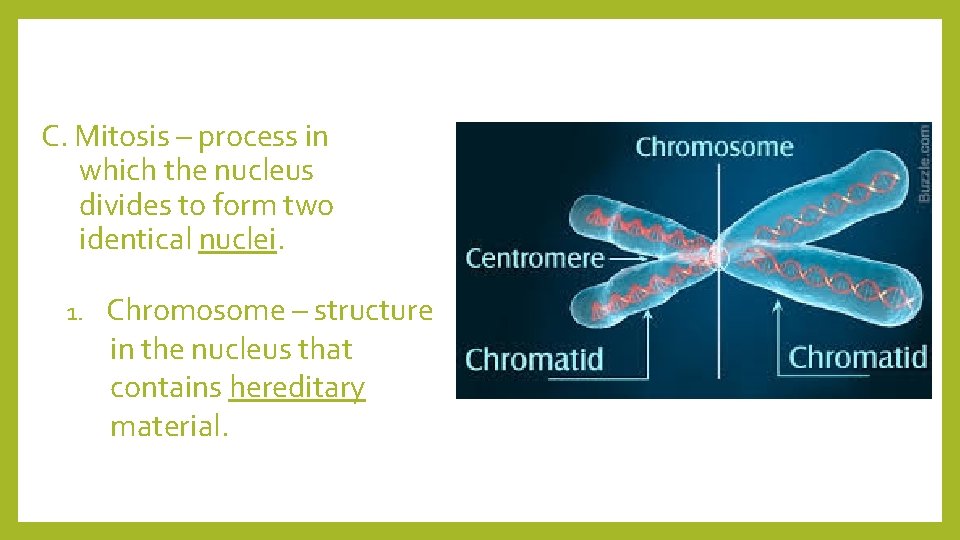
C. Mitosis – process in which the nucleus divides to form two identical nuclei. 1. Chromosome – structure in the nucleus that contains hereditary material.
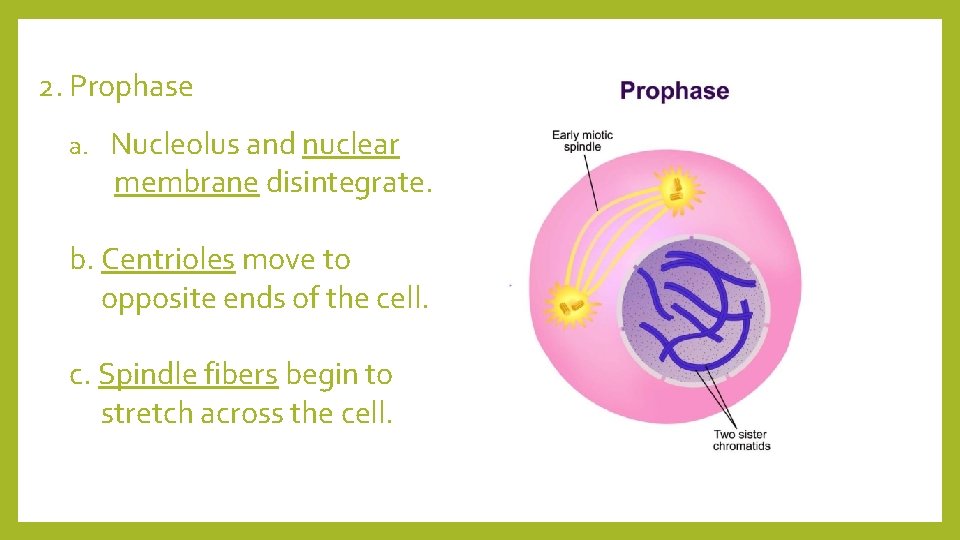
2. Prophase a. Nucleolus and nuclear membrane disintegrate. b. Centrioles move to opposite ends of the cell. c. Spindle fibers begin to stretch across the cell.
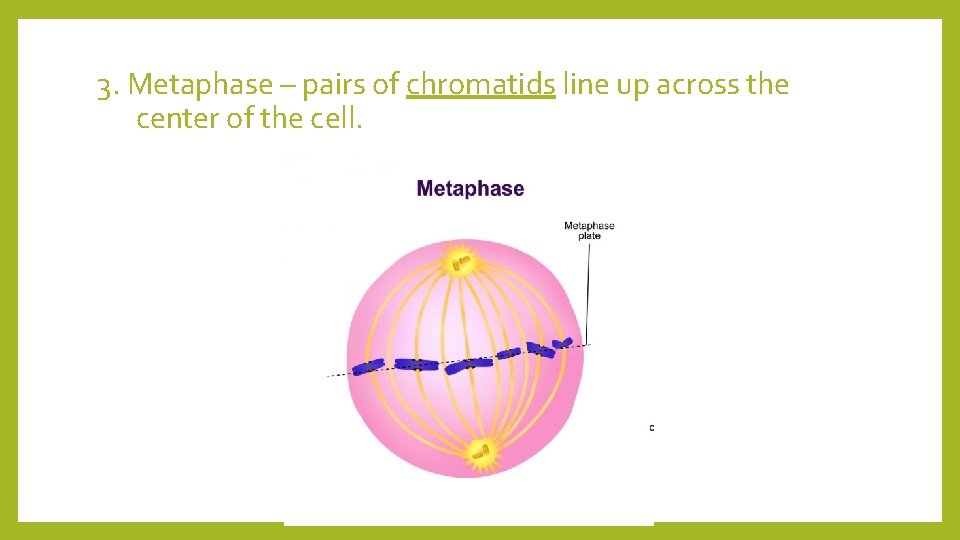
3. Metaphase – pairs of chromatids line up across the center of the cell.
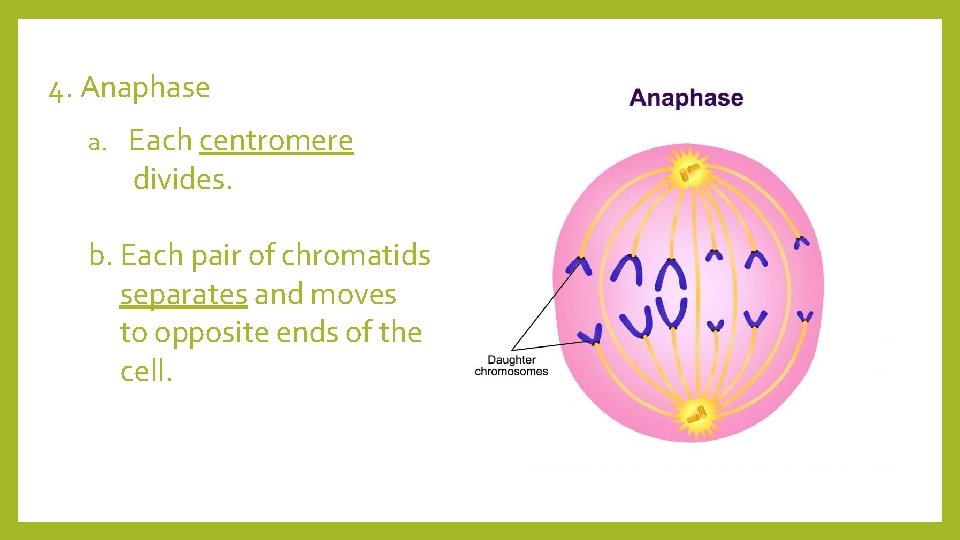
4. Anaphase a. Each centromere divides. b. Each pair of chromatids separates and moves to opposite ends of the cell.
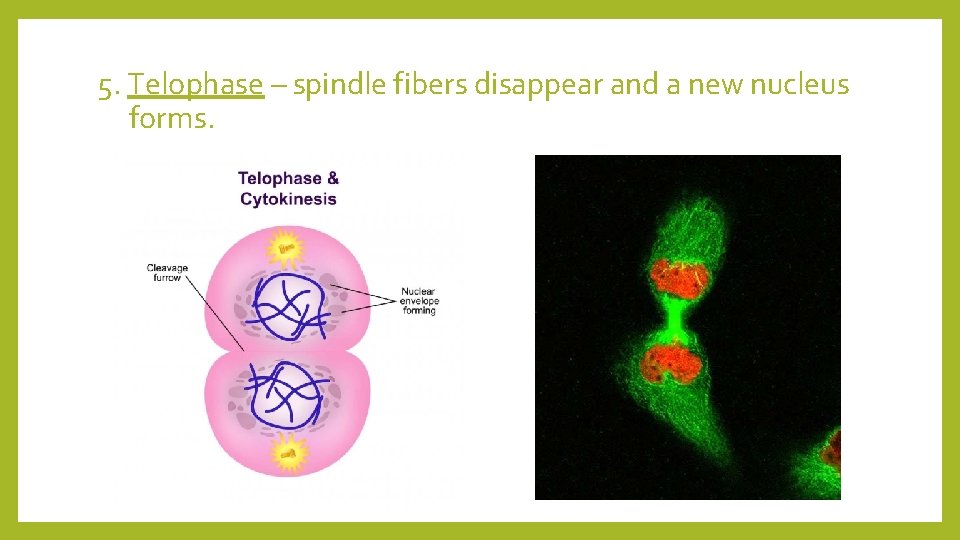
5. Telophase – spindle fibers disappear and a new nucleus forms.
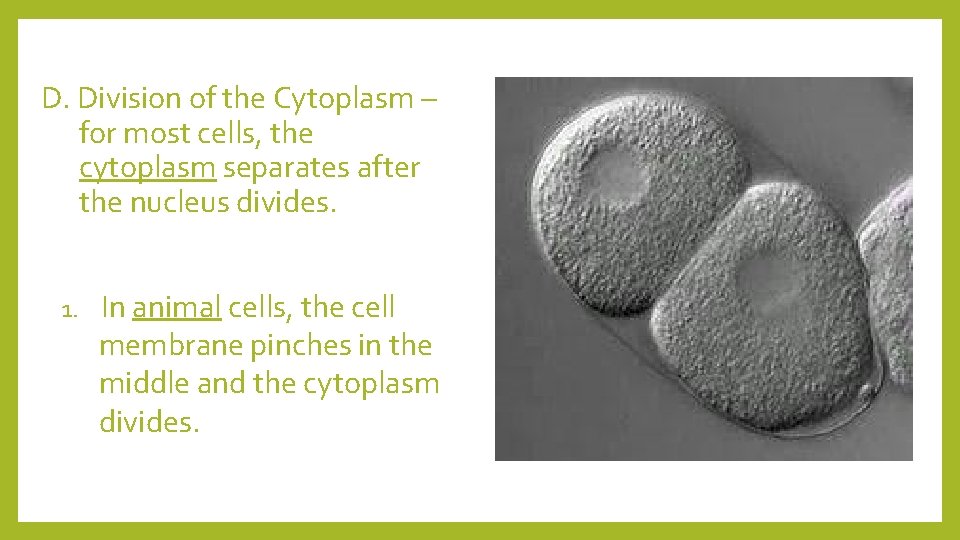
D. Division of the Cytoplasm – for most cells, the cytoplasm separates after the nucleus divides. 1. In animal cells, the cell membrane pinches in the middle and the cytoplasm divides.
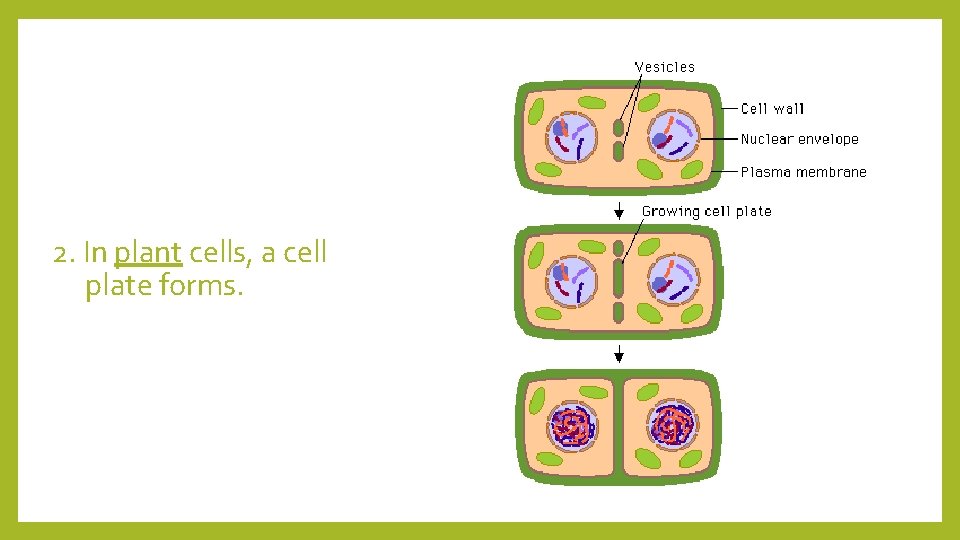
2. In plant cells, a cell plate forms.
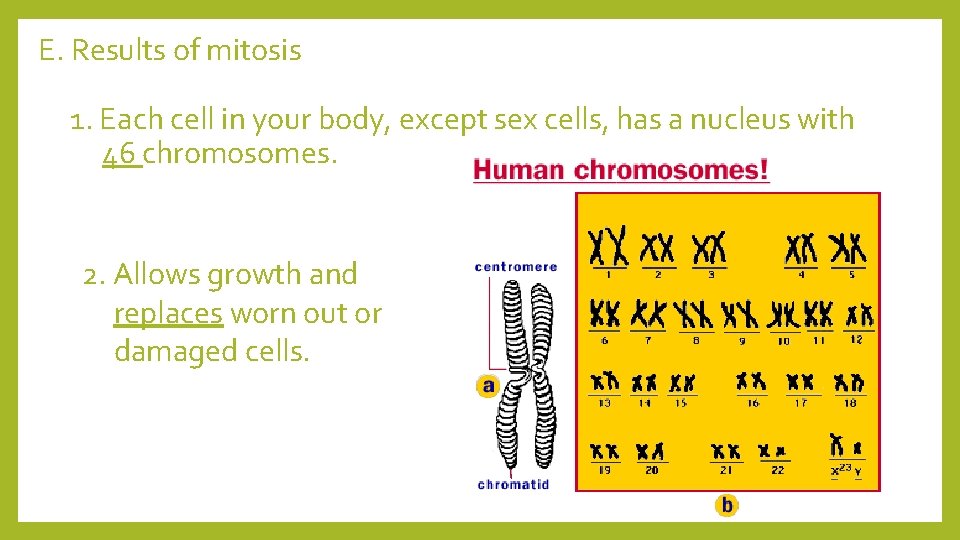
E. Results of mitosis 1. Each cell in your body, except sex cells, has a nucleus with 46 chromosomes. 2. Allows growth and replaces worn out or damaged cells.
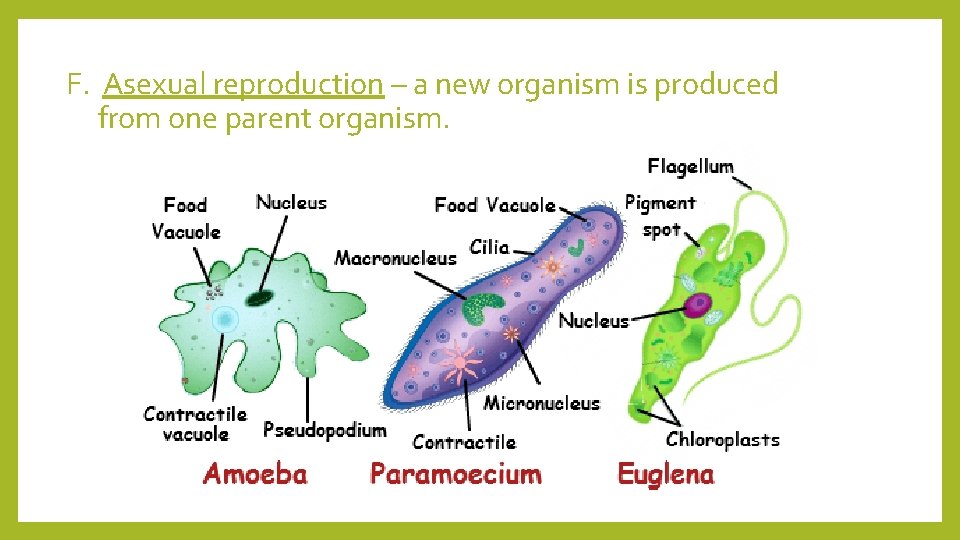
F. Asexual reproduction – a new organism is produced from one parent organism.
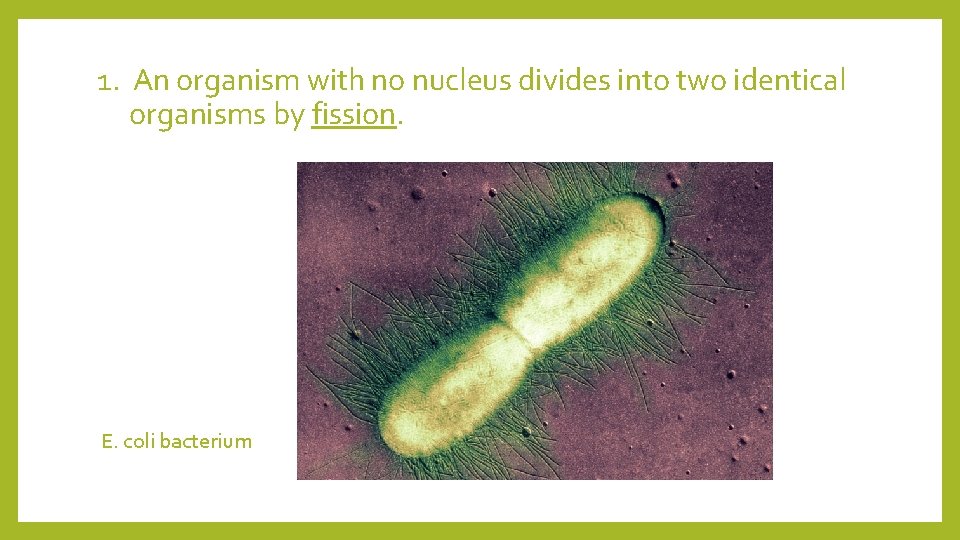
1. An organism with no nucleus divides into two identical organisms by fission. E. coli bacterium
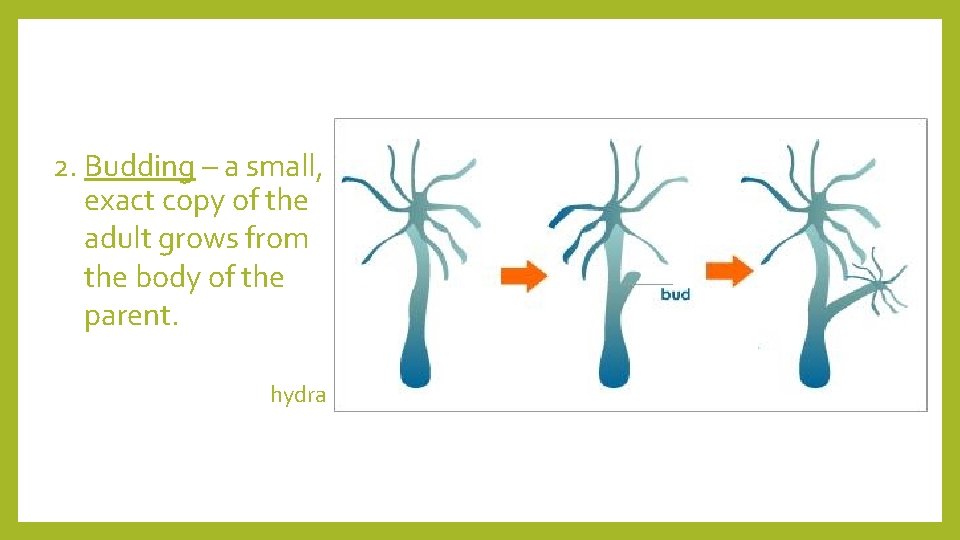
2. Budding – a small, exact copy of the adult grows from the body of the parent. hydra
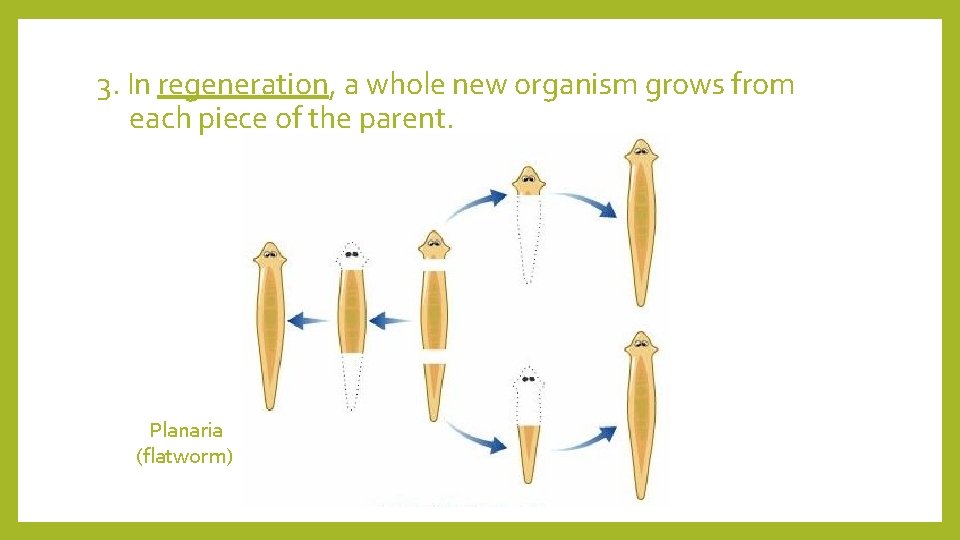
3. In regeneration, a whole new organism grows from each piece of the parent. Planaria (flatworm)