
Chapter 10 Cell Growth and Reproduction Cells are
- Slides: 34
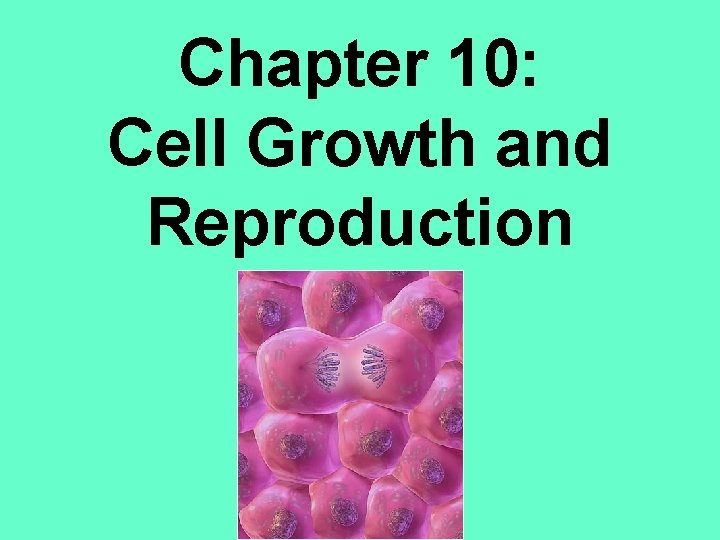
Chapter 10: Cell Growth and Reproduction
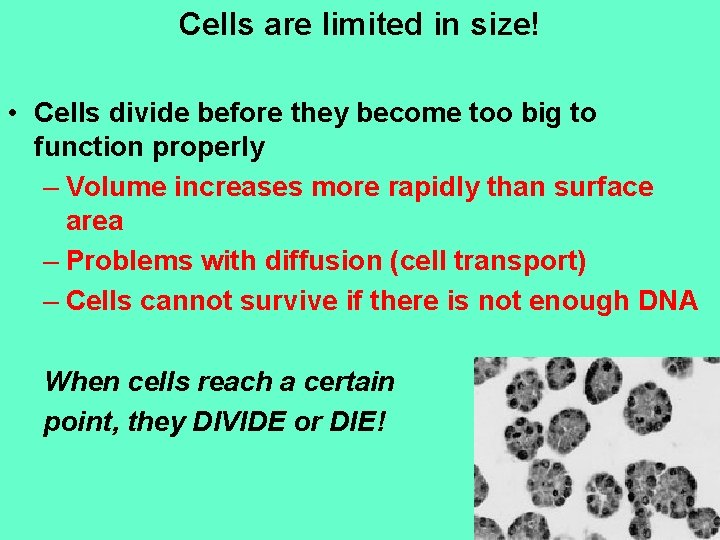
Cells are limited in size! • Cells divide before they become too big to function properly – Volume increases more rapidly than surface area – Problems with diffusion (cell transport) – Cells cannot survive if there is not enough DNA When cells reach a certain point, they DIVIDE or DIE!
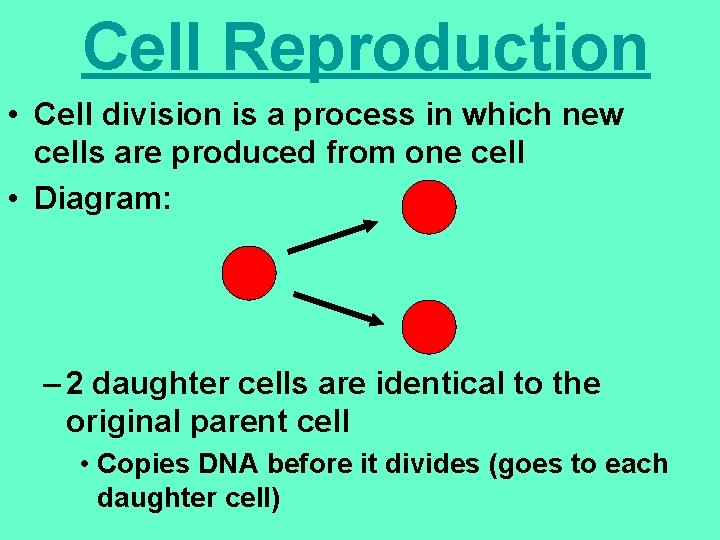
Cell Reproduction • Cell division is a process in which new cells are produced from one cell • Diagram: – 2 daughter cells are identical to the original parent cell • Copies DNA before it divides (goes to each daughter cell)
2 types of cell division: • Prokaryotic – This is called binary fission and is performed by bacteria • Binary fission is how bacteria reproduce • Eukaryotic – Known as mitosis/meiosis in eukaryotic organisms • Mitosis is for growth of multicellular organisms • Meiosis is how multicellular organisms reproduce
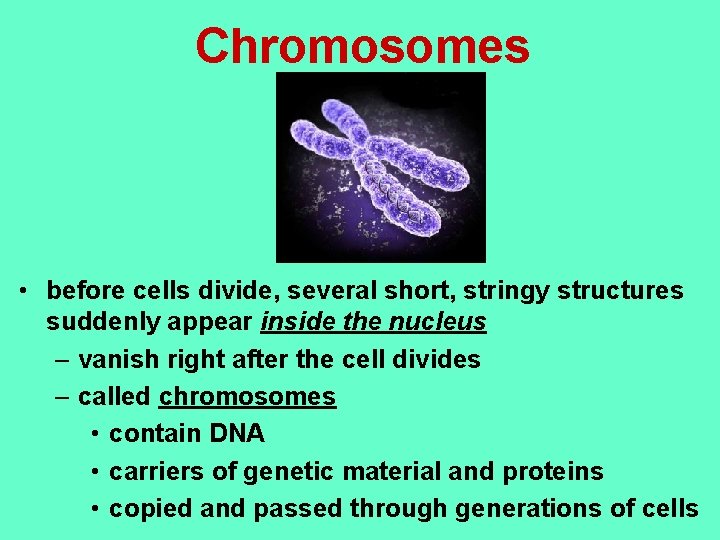
Chromosomes • before cells divide, several short, stringy structures suddenly appear inside the nucleus – vanish right after the cell divides – called chromosomes • contain DNA • carriers of genetic material and proteins • copied and passed through generations of cells
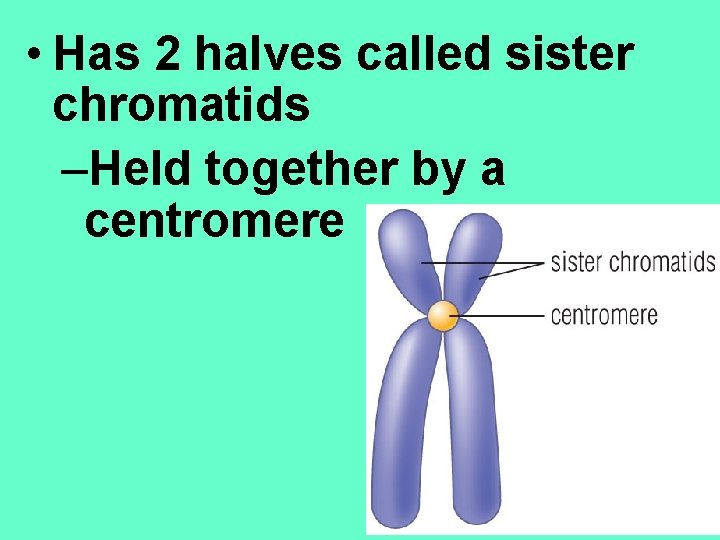
• Has 2 halves called sister chromatids –Held together by a centromere
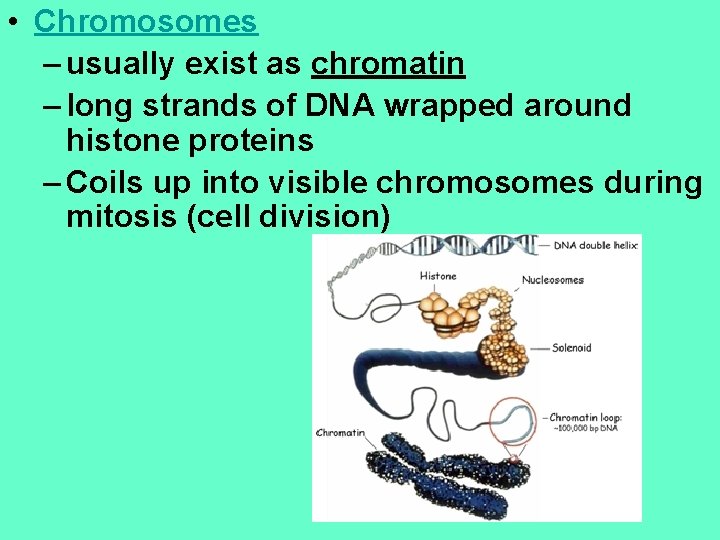
• Chromosomes – usually exist as chromatin – long strands of DNA wrapped around histone proteins – Coils up into visible chromosomes during mitosis (cell division)
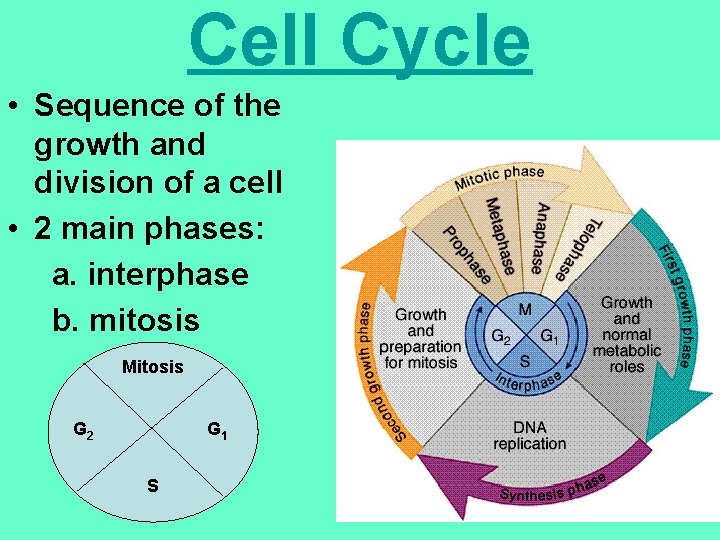
Cell Cycle • Sequence of the growth and division of a cell • 2 main phases: a. interphase b. mitosis Mitosis G 2 G 1 S
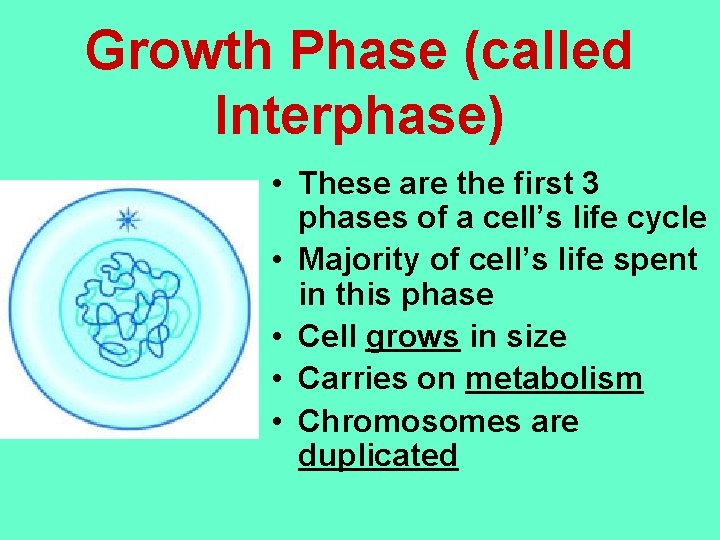
Growth Phase (called Interphase) • These are the first 3 phases of a cell’s life cycle • Majority of cell’s life spent in this phase • Cell grows in size • Carries on metabolism • Chromosomes are duplicated
Interphase • Busiest phase • Divided into 3 parts – G 1 Phase: rapid growth and metabolic activity • Cell grows in size • High production of proteins – S Phase: DNA synthesis and replication • Cell copies its chromosomes – G 2 Phase: Cell prepares for division • Organelles are made • Centrioles replicate
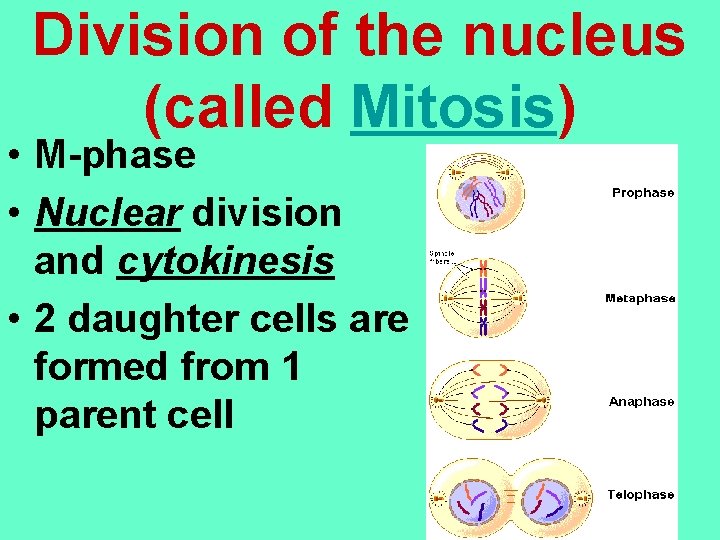
Division of the nucleus (called Mitosis) • M-phase • Nuclear division and cytokinesis • 2 daughter cells are formed from 1 parent cell
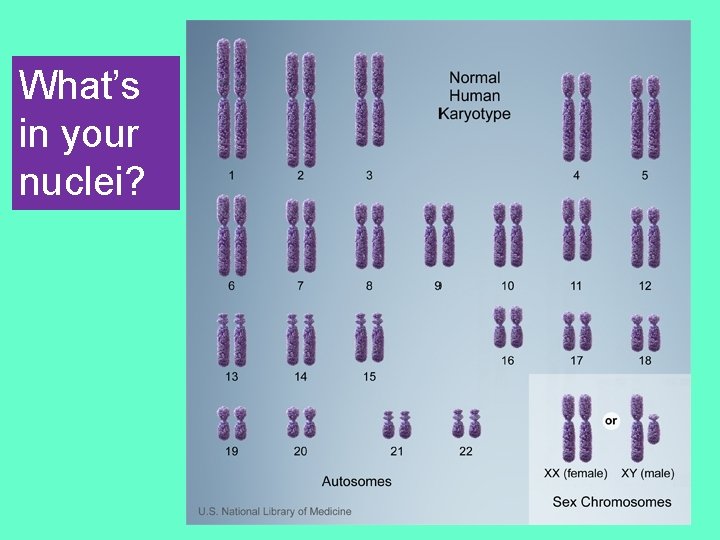
What’s in your nuclei?
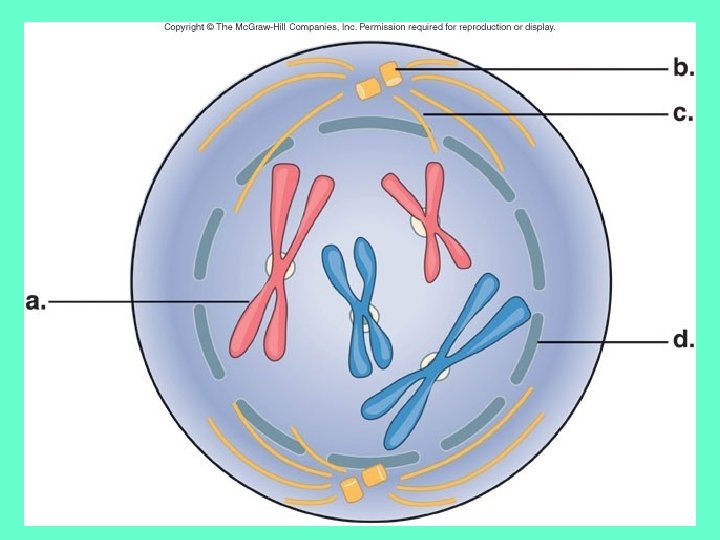
Prophase • 1 st phase (longest) • chromosomes become visible – centrioles separate to opposite sides of the nucleus (in animal cells only) • nucleus begins to disappear – nuclear envelope and nucleolus begin to disintegrate • spindle forms role in separating sister chromatids
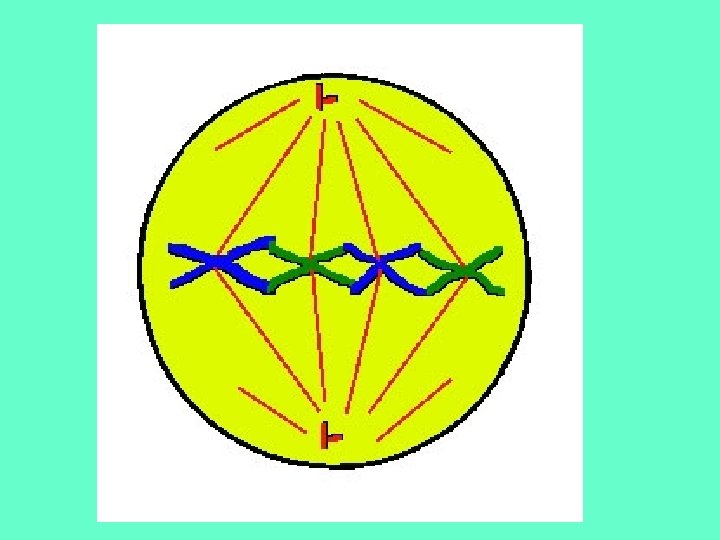
Metaphase • Chromosomes become attached to the spindle fibers by a centromere • Chromosomes begin to line up in the middle of the cell • Very short phase (lasts a few minutes)
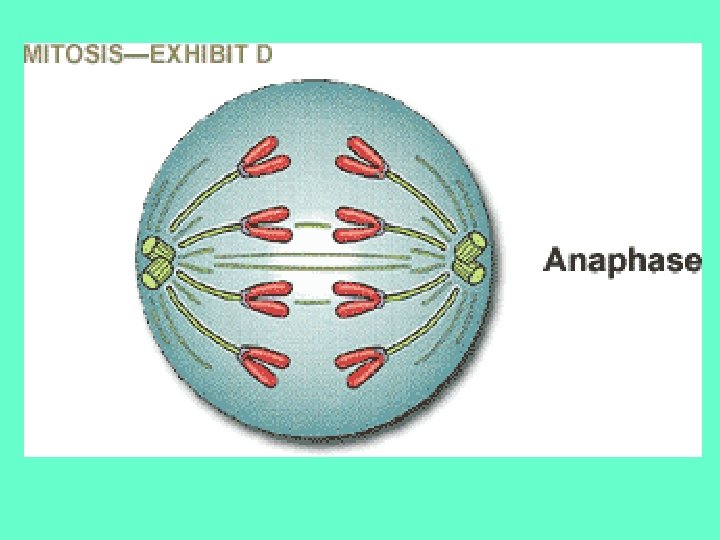
Anaphase • Centromeres split apart • Separation of sister chromatids from each other • Shortening of spindle fibers • Individual chromosomes result in 2 groups
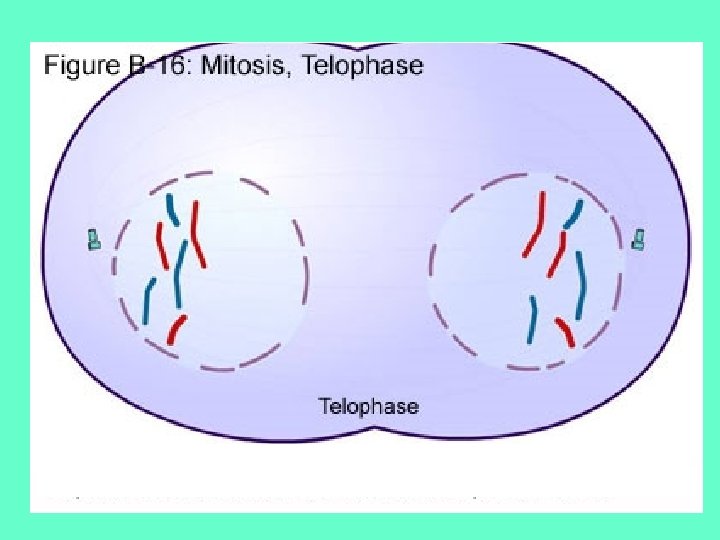
Telophase • Final phase of mitosis • Chromosomes unwind (become a tangle of material) • Spindle breaks down • Nucleolus reappears • New nuclear envelope forms around the chromosomes • Membrane forms between 2 nuclei
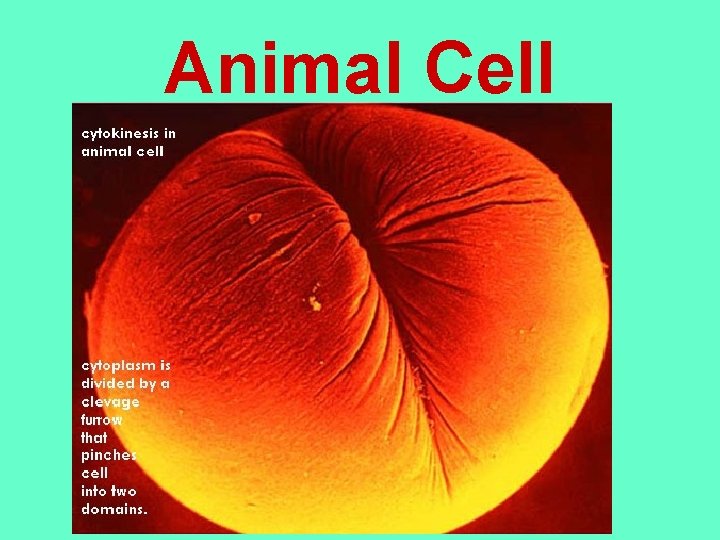
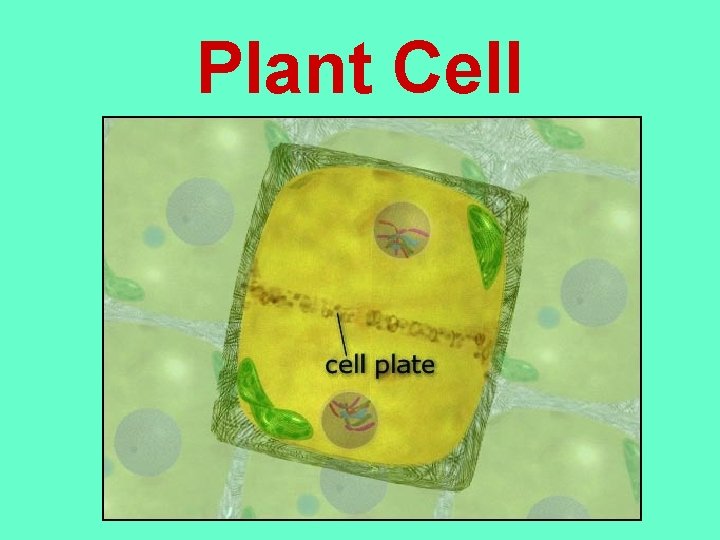
Cytokinesis • Cell’s cytoplasm divides • Usually occurs at the same time as telophase • Animal cells: plasma membrane pinches in along the middle of the cell • Plant cells: – Have rigid cell wall – Cell plate goes across the center of the cell – Cell membrane forms around each cell – New cell wall forms on each side of cell plate
Animal Cell
Plant Cell
Bell Ringer: 1. The four phases of mitosis are ______. 2. Label each event with the correct phase of mitosis: ______ The chromosomes line up across the middle of the cell ______ Chromosomes become visible ______ Two new nuclear envelopes form ______ The nucleolus disappears and the nuclear envelope breaks down ______ Each chromosome is connected to a spindle fiber ______ The individual chromosomes move apart
• Not all cells go through cell cycle at same rate – Ex: muscle and nerve cells (do not divide at all); skin, digestive, and bone marrow cells (grow and divide rapidly)
Cell Cycle Regulators • Cyclin: regulates cell cycle timing (protein) – 2 types of regulatory proteins • Internal regulators –Respond to events inside the cell –Ex: cyclins • External regulators –Respond to events outside the cell –Speeds up or slows down cell cycle
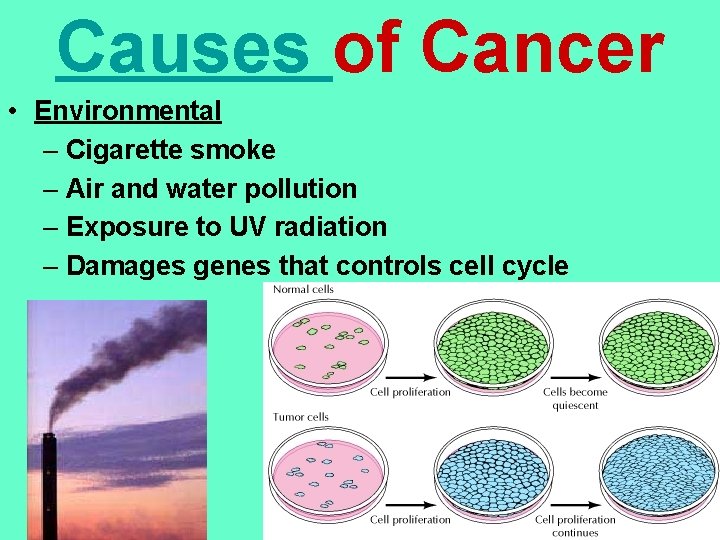
Controls on Cell Division • Cells grow when room for growth is available – Will not grow when in contact with other cells
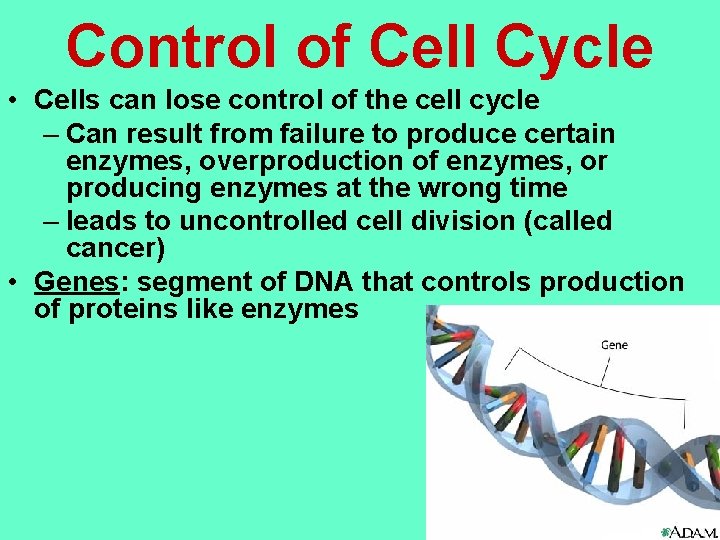
Control of Cell Cycle • Cells can lose control of the cell cycle – Can result from failure to produce certain enzymes, overproduction of enzymes, or producing enzymes at the wrong time – leads to uncontrolled cell division (called cancer) • Genes: segment of DNA that controls production of proteins like enzymes
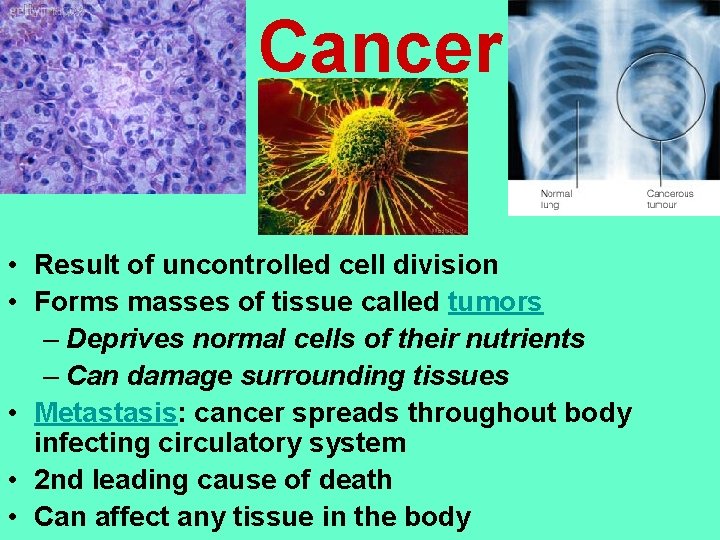
Cancer • Result of uncontrolled cell division • Forms masses of tissue called tumors – Deprives normal cells of their nutrients – Can damage surrounding tissues • Metastasis: cancer spreads throughout body infecting circulatory system • 2 nd leading cause of death • Can affect any tissue in the body
Causes of Cancer • Environmental – Cigarette smoke – Air and water pollution – Exposure to UV radiation – Damages genes that controls cell cycle
Carcinogens • A substance capable of causing cancer in living tissue is a carcinogen. • Asbestos • Alcoholic Beverages • Tobacco (smoking and smokeless) • Solar radiation • Hepatitis B, C (chronic)
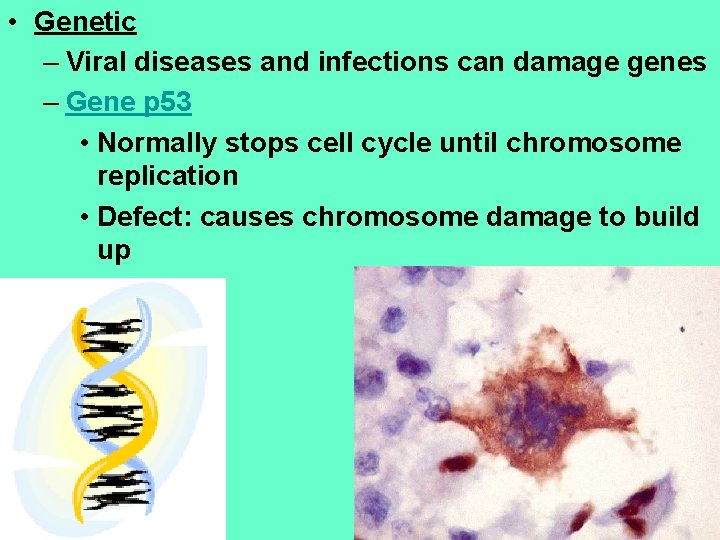
• Genetic – Viral diseases and infections can damage genes – Gene p 53 • Normally stops cell cycle until chromosome replication • Defect: causes chromosome damage to build up
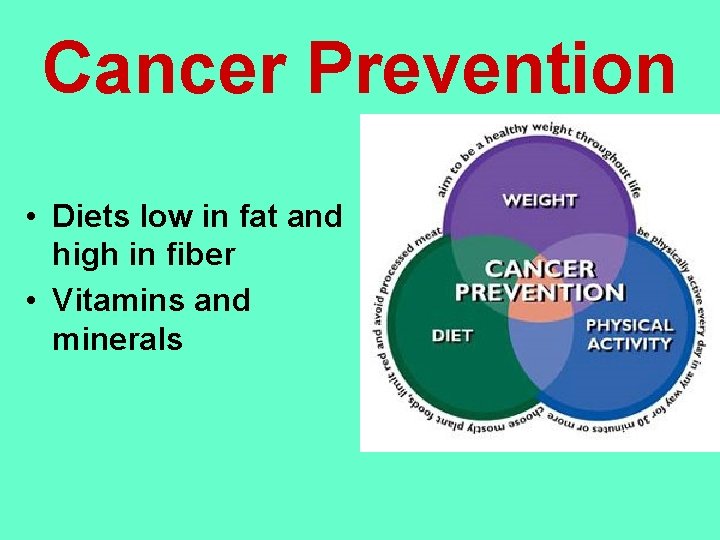
Cancer Prevention • Diets low in fat and high in fiber • Vitamins and minerals
Bell Ringer: 1. Proteins known as _____ regulate the timing of the cell cycle in eukaryotic cells. 2. ______ is a disorder in which some of the body’s own cell lose the ability to control growth. 3. What is the name for tumors that form and can cause damage to surrounding tissue? a. cyclins b. mitosis c. cytokinesis d. cancer