
Chapter 10 Cash Concentration Order Placed Order Received
- Slides: 12
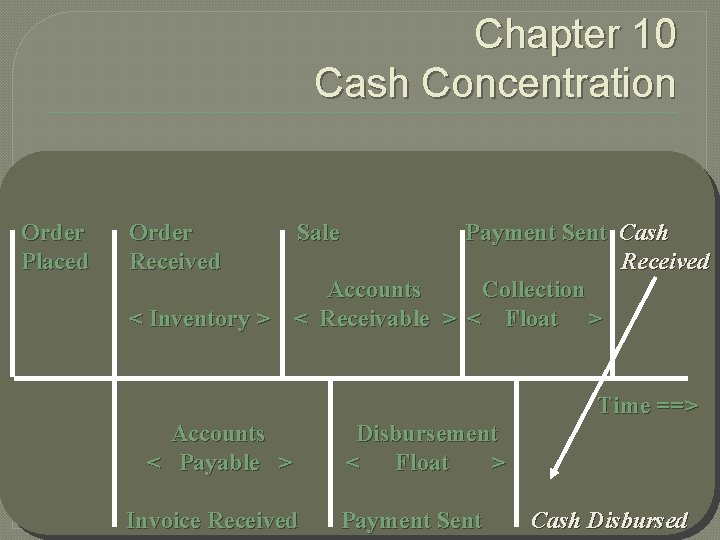
Chapter 10 Cash Concentration Order Placed Order Received Sale Payment Sent Cash Received Accounts Collection < Inventory > < Receivable > < Float > Time ==> Accounts < Payable > Invoice Received Disbursement < Float > Payment Sent Cash Disbursed
Learning Objectives �Understand the need for a cash concentration system. �Formulate a cash transfer decision model. �Understand the advantages and disadvantages of the different cash transfer tools.
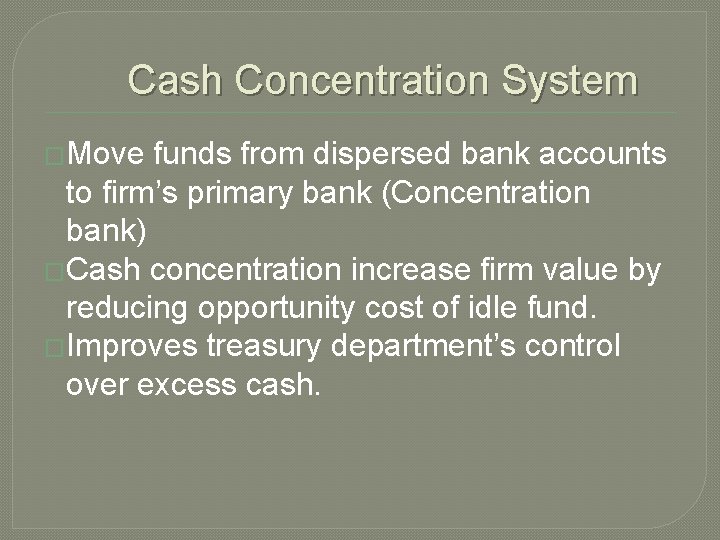
Cash Concentration System �Move funds from dispersed bank accounts to firm’s primary bank (Concentration bank) �Cash concentration increase firm value by reducing opportunity cost of idle fund. �Improves treasury department’s control over excess cash.
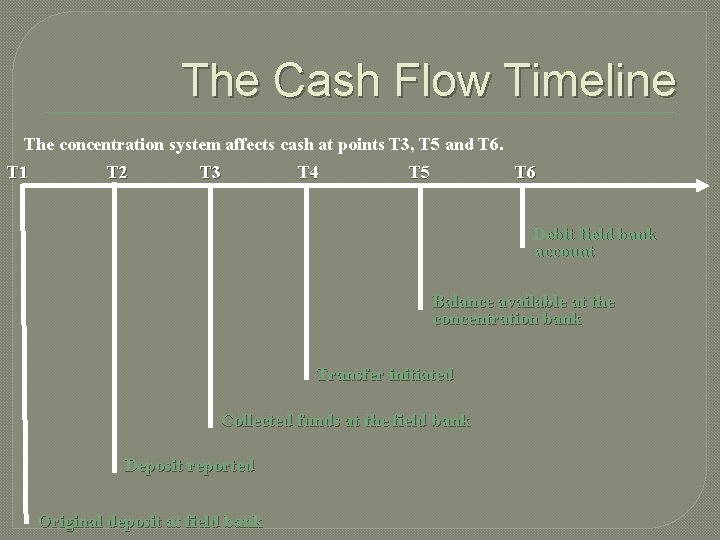
The Cash Flow Timeline The concentration system affects cash at points T 3, T 5 and T 6. T 1 T 2 T 3 T 4 T 5 T 6 Debit field bank account Balance available at the concentration bank Transfer initiated Collected funds at the field bank Deposit reported Original deposit at field bank
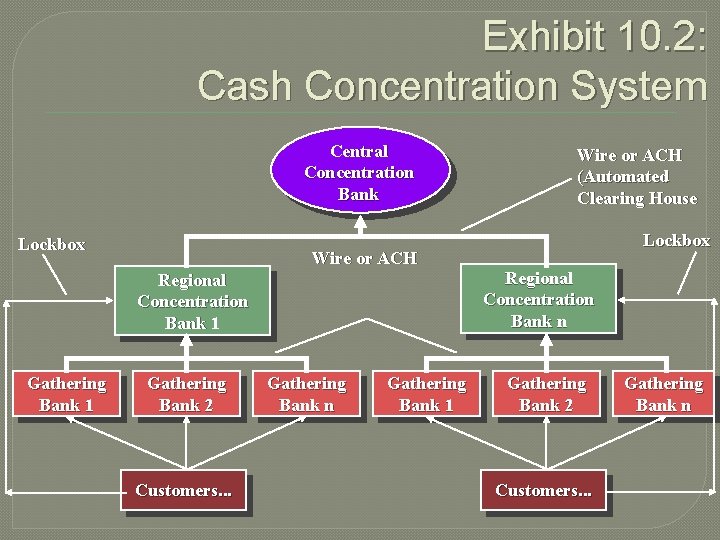
Exhibit 10. 2: Cash Concentration System Central Concentration Bank Lockbox Wire or ACH Regional Concentration Bank 1 Gathering Bank 2 Customers. . . Gathering Bank n Gathering Bank 1 Wire or ACH (Automated Clearing House Lockbox Regional Concentration Bank n Gathering Bank 2 Customers. . . Gathering Bank n
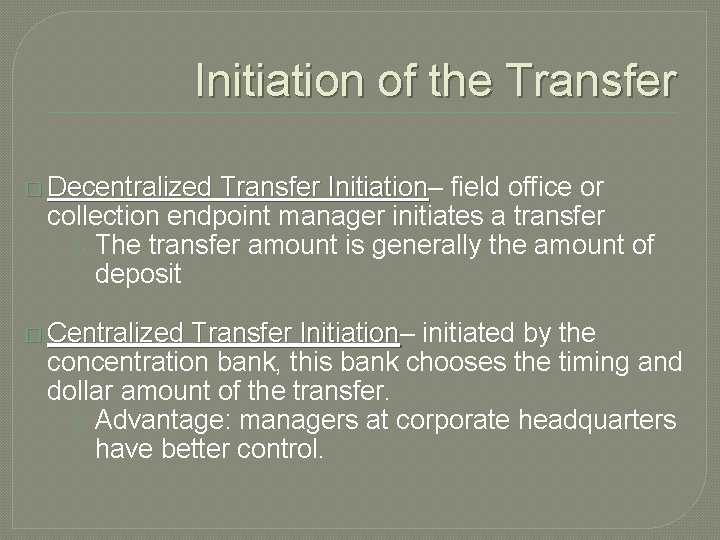
Initiation of the Transfer � Decentralized Transfer Initiation– Initiation field office or collection endpoint manager initiates a transfer o The transfer amount is generally the amount of deposit � Centralized Transfer Initiation– Initiation initiated by the concentration bank, this bank chooses the timing and dollar amount of the transfer. o Advantage: managers at corporate headquarters have better control.
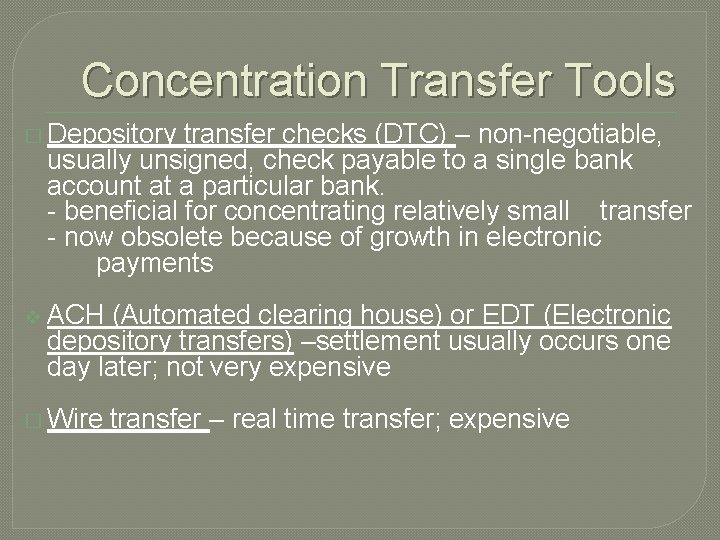
Concentration Transfer Tools � Depository transfer checks (DTC) – non-negotiable, usually unsigned, check payable to a single bank account at a particular bank. - beneficial for concentrating relatively small transfer - now obsolete because of growth in electronic payments v ACH (Automated clearing house) or EDT (Electronic depository transfers) –settlement usually occurs one day later; not very expensive � Wire transfer – real time transfer; expensive
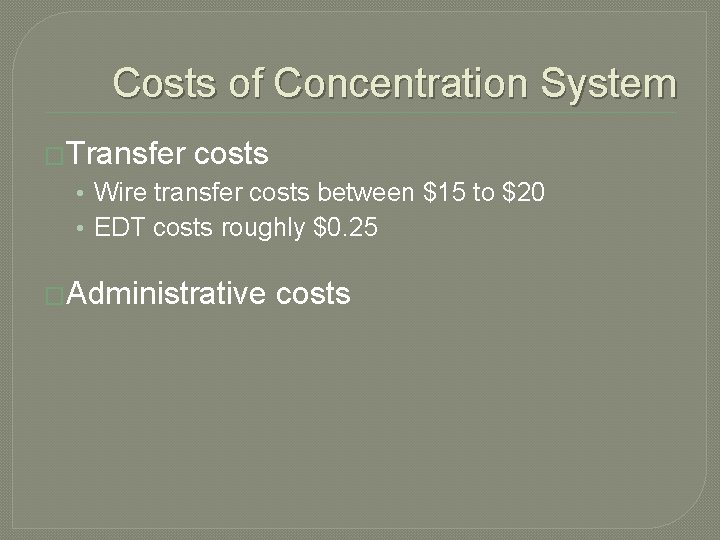
Costs of Concentration System �Transfer costs • Wire transfer costs between $15 to $20 • EDT costs roughly $0. 25 �Administrative costs
Benefits of Concentration System �Opportunity �Economies �Enhanced balances cost of idle balances of scale visibility and control over
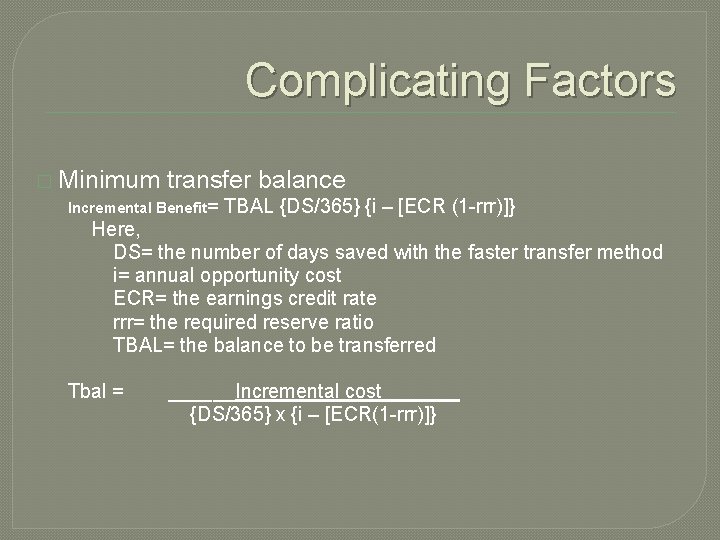
Complicating Factors � Minimum transfer balance Incremental Benefit= TBAL {DS/365} {i – [ECR (1 -rrr)]} Here, DS= the number of days saved with the faster transfer method i= annual opportunity cost ECR= the earnings credit rate rrr= the required reserve ratio TBAL= the balance to be transferred Tbal = ______Incremental cost_______ {DS/365} x {i – [ECR(1 -rrr)]}
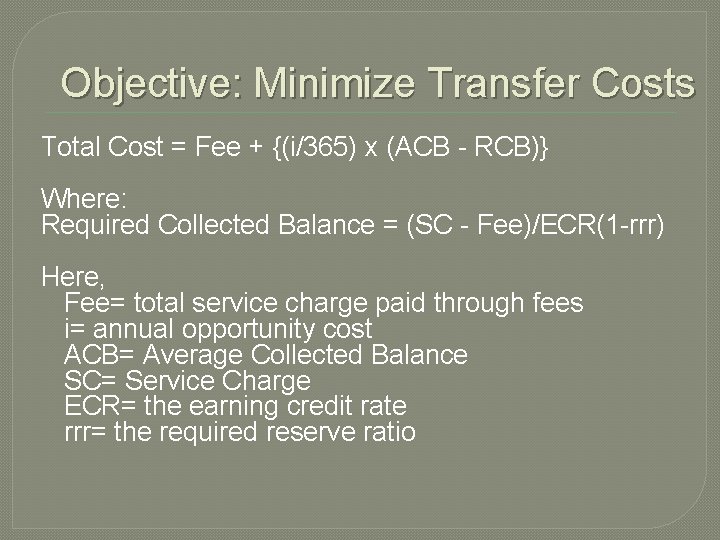
Objective: Minimize Transfer Costs Total Cost = Fee + {(i/365) x (ACB - RCB)} Where: Required Collected Balance = (SC - Fee)/ECR(1 -rrr) Here, Fee= total service charge paid through fees i= annual opportunity cost ACB= Average Collected Balance SC= Service Charge ECR= the earning credit rate rrr= the required reserve ratio
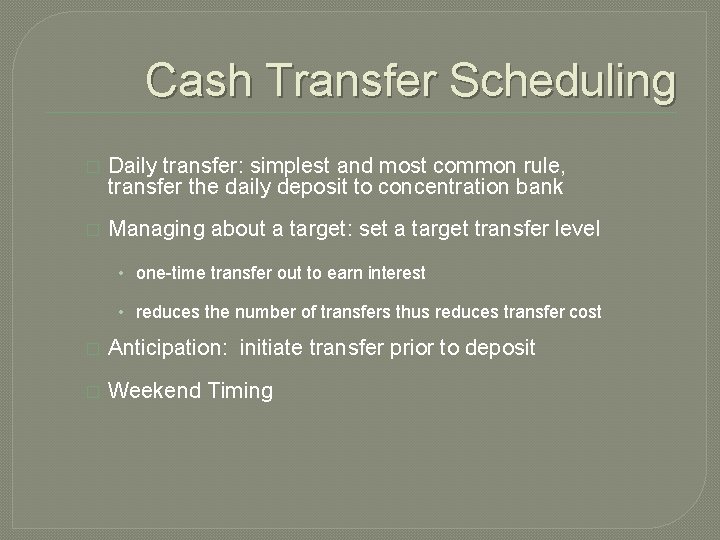
Cash Transfer Scheduling � Daily transfer: simplest and most common rule, transfer the daily deposit to concentration bank � Managing about a target: set a target transfer level • one-time transfer out to earn interest • reduces the number of transfers thus reduces transfer cost � Anticipation: initiate transfer prior to deposit � Weekend Timing