
Chapter 10 Books and the Power of Print
Chapter 10 Books and the Power of Print
Online Image Library Go to www. bedfordstmartins. com/mediaculture to access the Media & Culture, 9 th Edition Online Image Library. The library contains all your favorite images from Media & Culture, 9 th edition!
![E-books and the Publishing Industry “We had high hopes that [e-books outselling print books]](http://slidetodoc.com/presentation_image_h2/5b03f278a90609020d1b4e0b73314a91/image-3.jpg "E-books and the Publishing Industry “We had high hopes that [e-books outselling print books]")
E-books and the Publishing Industry “We had high hopes that [e-books outselling print books] would happen eventually, but we never imagined it would happen this quickly. ” —Jeff Bezos, Amazon Chief Executive, 2011
The History of Books from Papyrus to Paperback ¡ Ancient l Papyrus ¡ Used l world in Egypt as early as 2400 B. C. E. Parchment ¡ Treated animal skin ¡ Replaced papyrus in Europe l Codex ¡ First protomodern book ¡ Made of bound materials by the Romans, 4 th century
The History of Books from Papyrus to Paperback (cont. ) ¡ The development of manuscript culture Books painstakingly lettered, decorated, and bound by hand l Entrepreneurial stage of the evolution of books l Illuminated manuscripts l ¡ Use of decorative, colorful designs and illustrations ¡ Made for churches or wealthy clients
The History of Books from Papyrus to Paperback (cont. ) ¡ Block l printing and movable type Block printing ¡ Developed by Chinese printers ¡ Enabled multiple copies to be printed and bound together l Movable type ¡ Invented in China around 1000 ¡ Made creating block pages faster ¡ Developed independently in Europe in the 1400 s
The History of Books from Papyrus to Paperback (cont. ) ¡ The l Gutenberg revolution Printing press ¡ Invented by Johannes Gutenberg ¡ Inestimable influence on Western culture ¡ Helped make books cheaper ¡ Permitted information and knowledge to spread outside local jurisdictions ¡ Permitted individuals to challenge traditional wisdom and customs
The History of Books from Papyrus to Paperback (cont. ) ¡ Birth of publishing in the United States l Stephen Daye ¡ Published the first colonial book, The Whole Booke of Psalms, in 1640 l Benjamin Franklin ¡ Imported l and reprinted novels First paperback books in the 1830 s ¡ First dime novels in 1860 ¡ Sometimes identified as pulp fiction
The History of Books from Papyrus to Paperback (cont. ) l 1880 s ¡ First linotype machines and the introduction of steam-powered and high-speed rotary presses l Early 1900 s ¡ Development of offset lithography greatly reduced the cost of color and illustrations, and accelerated book production
The Formation of Publishing Houses ¡ Early “prestigious” publishing houses Tried to identify and produce the works of good writers l Oldest houses survive now as part of larger conglomerates. l ¡ Demand for books grew between 1880 and 1920 with the rise of industrialized urban culture.
The Formation of Publishing Houses (cont. ) ¡ Book industry helped assimilate European immigrants into American culture, language. ¡ Despite a decline from 1910 through the 1950 s, the book industry bounced back after World War II.
Types of Books ¡ Trade books Adult trade l Juvenile trade l Comics and graphic novels l ¡ Professional books Law l Business l Medical l Technical-scientific l

Types of Books (cont. ) ¡ Textbooks Elementary through high school (el -hi) texts l College texts l Vocational texts l ¡ Mass l market paperbacks Instant books ¡ Religious titles

Types of Books (cont. ) ¡ Reference books Dictionaries l Encyclopedias l Atlases l Almanacs l Professional or trade-specific l ¡ University l press books Scholarly works for small groups

Figure 10. 1: Estimated U. S. Book Revenue, 2010
Influences of Television and Film ¡ Two l major facets How TV can help sell books ¡ Promotion by talk-show hosts such as Oprah Winfrey l How books serve as ideas for TV shows and movies ¡ Game of Thrones on HBO and Dexter on Showtime ¡ Life of Pi by Yann Martel and J. K. Rowling’s Harry Potter series
Audio Books ¡ Also known as talking books or books on tape ¡ Generally feature actors or authors reading entire works or abridged versions ¡ Popular with the sightless and vision-impaired, as well as with commuters
Convergence: Books in the Digital Age ¡ E-books l Project Gutenberg ¡ Offers more than 40, 000 public domain books for free l Print books move online ¡ First e-readers were too heavy, expensive, and/or difficult to read ¡ Amazon produced the first popular device (Kindle) and e-book store ¡ Best-selling adult fiction book format in the United States by 2012
Convergence: Books in the Digital Age (cont. ) ¡ The l future of e-books Printing books on demand ¡ Reviving books that would otherwise go out of print ¡ Avoiding the inconvenience of carrying unsold books l Reimagining what a book can be ¡ Hosting embedded video, hyperlinks, and dynamic content ¡ Tailoring books to specific readers
Preserving and Digitizing Books ¡ Nineteenth-century books Printed on acid-based paper, which gradually deteriorates l Libraries developed preservation techniques in the 1970 s. l ¡ Acid-free paper Developed in the early 1990 s l Libraries photocopied pages onto the paper and stored the originals. l
Preserving and Digitizing Books (cont. ) ¡ Digital l imaging Google Books Library Project ¡ Partnered with the New York Public Library and university research libraries ¡ Authors Guild and Association of American Publishers Controversy l Open Content Alliance ¡ Working with the Boston Public Library, university libraries, Amazon, Microsoft, and Yahoo! to create the Digital Public Library of America
Censorship and Banned Books ¡ Censorship Imposed by various rulers and groups to maintain authority l Often prevented people from learning about the rituals and moral standards of other cultures l ¡ American l Library Association Compiles a list of the most challenged books every year
Censorship and Banned Books (cont. ) ¡ Book challenge Formal complaint for the removal of a book from a library l Common reasons for challenges l ¡ Sexually explicit passages or nudity ¡ Offensive language or racism ¡ Occult themes ¡ Violence ¡ Homosexual themes ¡ Promotion of a religious viewpoint
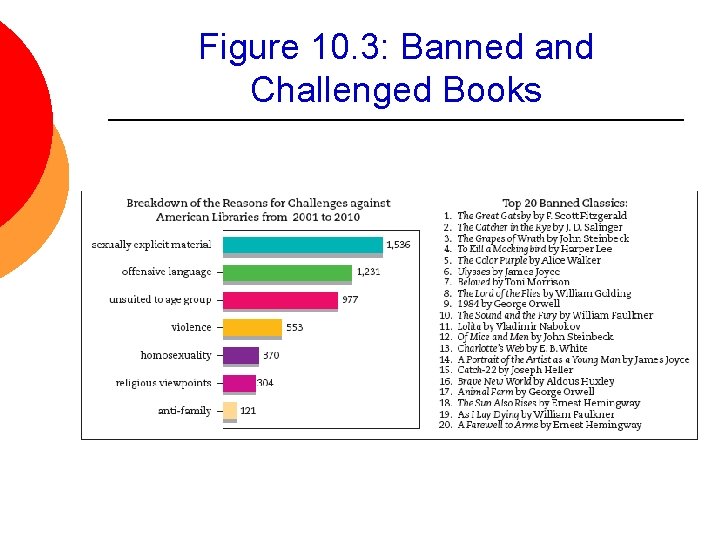
Figure 10. 3: Banned and Challenged Books
Ownership Patterns ¡ Ownership l Handful of major corporations dominate commercial publishing. ¡ Large companies can financially support smaller firms while allowing editorial ideas to remain independent. l Large trade book publishers and independents are both struggling in the digital upheaval and dominance of Amazon. com.
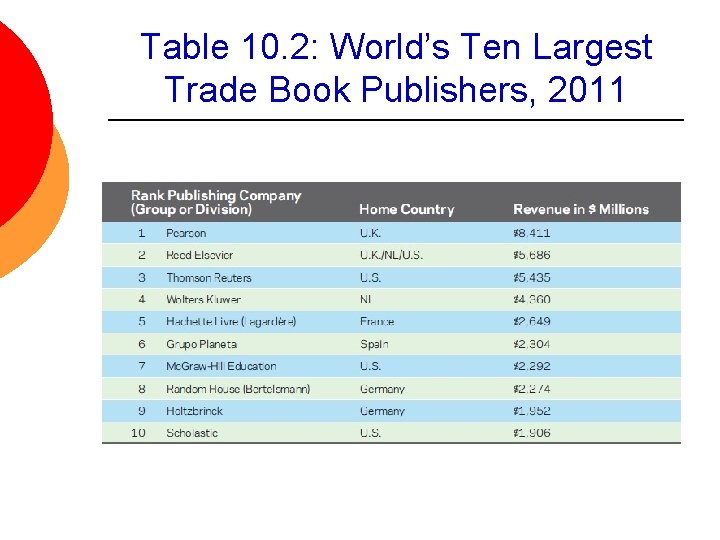
Table 10. 2: World’s Ten Largest Trade Book Publishers, 2011
The Structure of Book Publishing ¡ Editorial l Acquisitions editor ¡ Identifies rights l talent and handles subsidiary Developmental editor ¡ Handles feedback to author and makes suggestions for improvement l Copy editors ¡ Attend to issues in writing or length
The Structure of Book Publishing (cont. ) ¡ Production l Production and design managers ¡ Work on the look of the book ¡ Make decisions about type style, paper, cover design, and layout ¡ Marketing concerns Number of copies to print l How to reach potential readers l Costs for promotion and advertising l
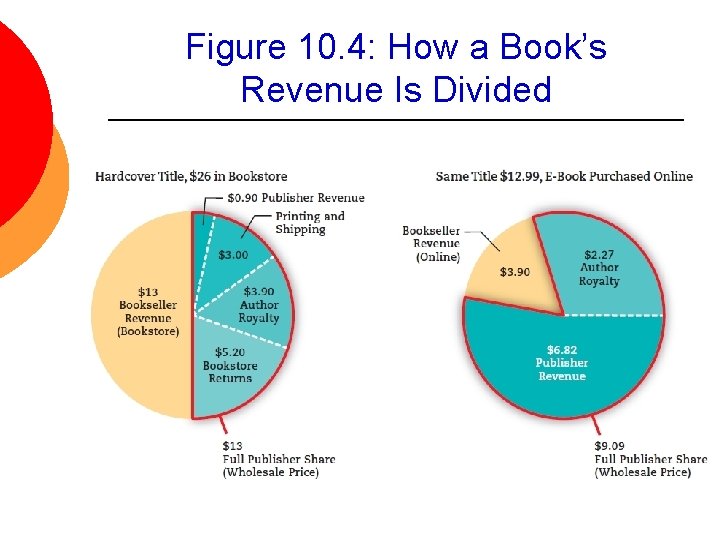
Figure 10. 4: How a Book’s Revenue Is Divided
Selling Books: Brick-and-Mortar Stores, Clubs, and Mail Order ¡ Brick-and-mortar stores Book superstores (Barnes & Noble) l Independents l Big discount retailers (Walmart) l Specialty retailers (Anthropologie) l ¡ Book clubs Originally helped the industry when local stores were rare l Consolidated into Direct Brands, Inc. l
Selling Books: Brick-and-Mortar Stores, Clubs, and Mail Order (cont. ) ¡ Mail l order Pioneered in the 1950 s by magazine publishers (Time-Life books) ¡ Sold special sets of books, one book at a time l Primarily used by trade, professional, and university press publishers today
Selling Books Online ¡ Advantages l to consumers Convenience, low prices, and access to less popular titles ¡ Amazon. com Transformed the industry l Major player in print and e-books l Established Amazon Publishing l Biggest rivals are Apple’s i. Bookstore and Google Play l
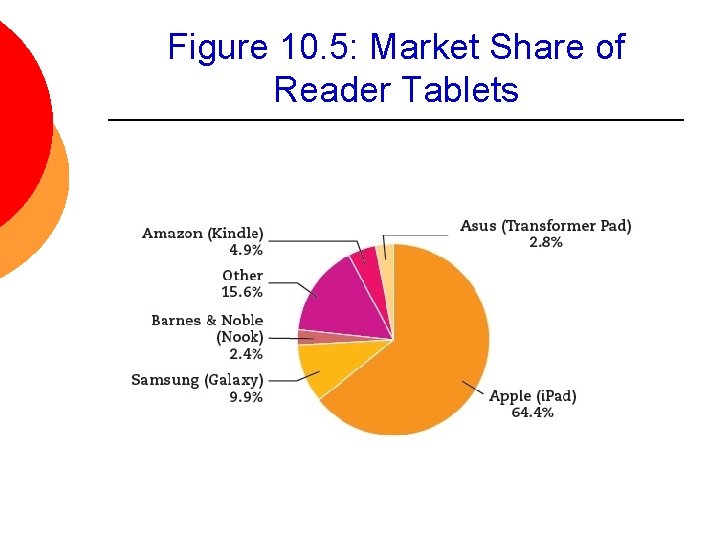
Figure 10. 5: Market Share of Reader Tablets
Alternative Voices ¡ Public libraries ¡ New. Pages. com l Trying to bring together alternative and university presses, independent bookstores, and guides to literary and alternative magazines ¡ E-publishing l Enables authors to sidestep traditional publishers
Books and the Future of Democracy ¡ Democracy l Books have played an important role in spreading democracy and connecting people to new ideas. ¡ Americans l of reading are reading more. Readers are more likely to perform volunteer and charity work. ¡ Books and reading have survived the challenge of digital culture.
- Slides: 35