
Chapter 10 Biopsychology of Emotions Stress and Health
Chapter 10 Biopsychology of Emotions, Stress, and Health
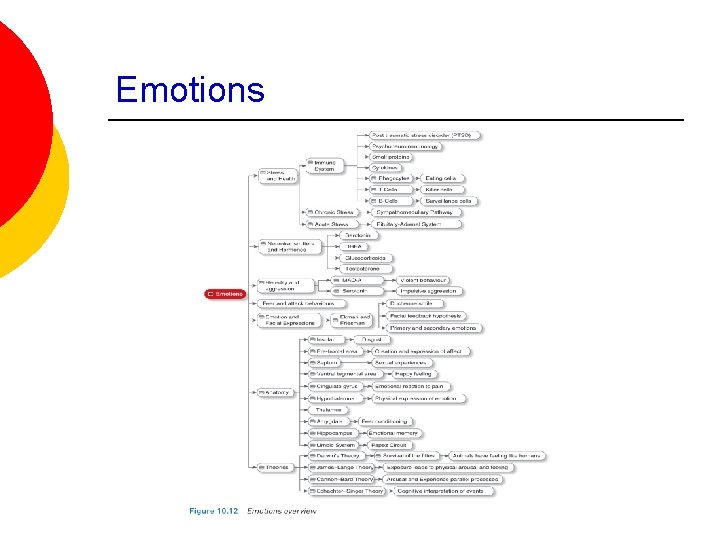
What Is Emotion? A feeling that differs from an individual's normal state ¡ 3 central features: ¡ l l l Change in physiological arousal Affective component Motivation to act or behave
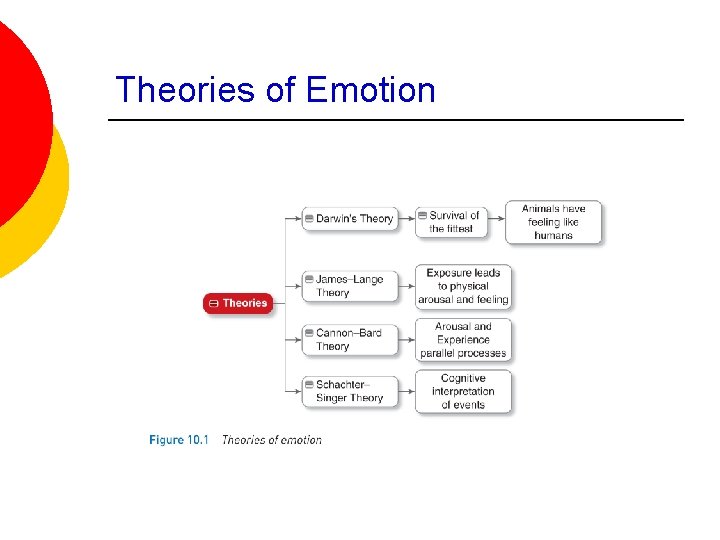
Early Research ¡ ¡ ¡ Darwin’s The Expression of Emotions in Man and Animals was the first major investigation into biological bases of emotion Emotions evolved to indicated what an animal would do next in a given situation These behaviours were advantageous to the animal
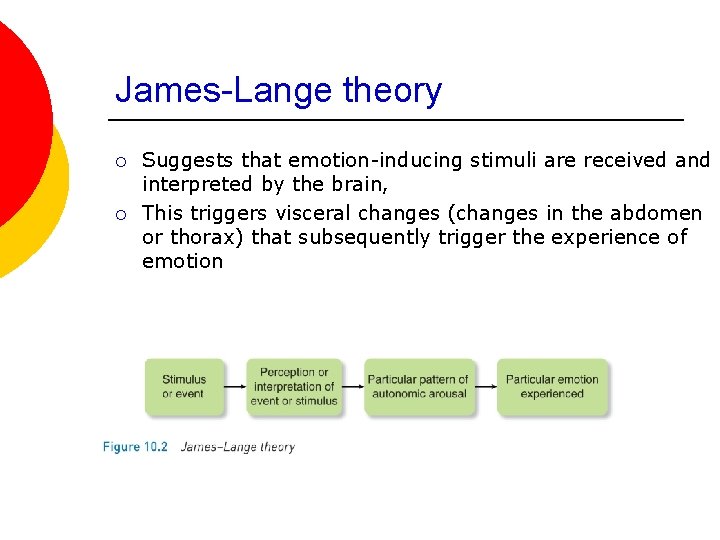
James-Lange theory ¡ ¡ Suggests that emotion-inducing stimuli are received and interpreted by the brain, This triggers visceral changes (changes in the abdomen or thorax) that subsequently trigger the experience of emotion
Problems with James-Lange theory Cannon (1927) ¡ Emotion can occur in the absence of visceral response ¡ Emotional responses often occur too quickly to be a result of visceral changes ¡ Visceral modifications cause kinds of emotional situations and slight physiological difference between emotional states cannot be sensed
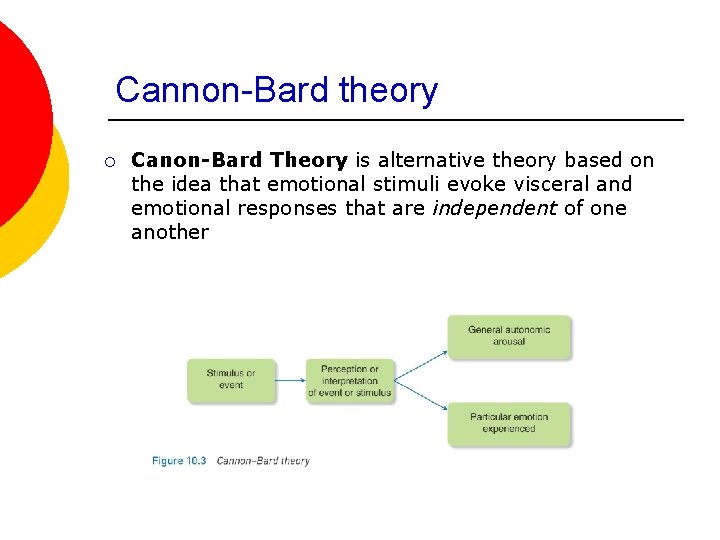
Cannon-Bard theory ¡ Canon-Bard Theory is alternative theory based on the idea that emotional stimuli evoke visceral and emotional responses that are independent of one another
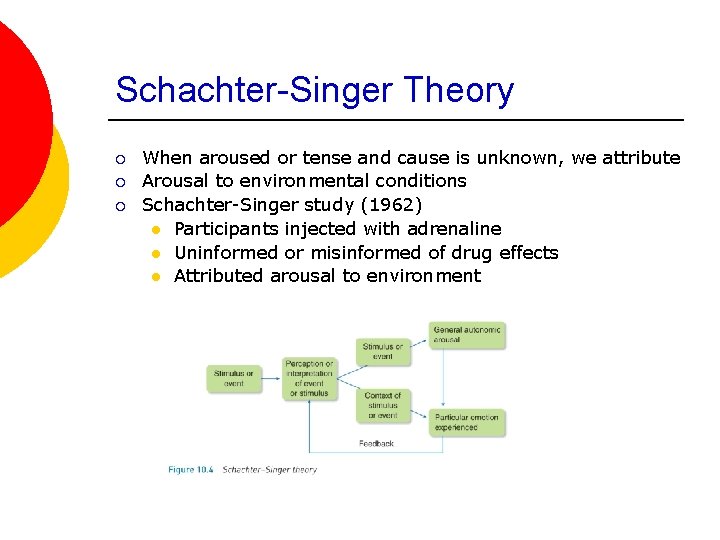
Schachter-Singer Theory ¡ ¡ ¡ When aroused or tense and cause is unknown, we attribute Arousal to environmental conditions Schachter-Singer study (1962) l Participants injected with adrenaline l Uninformed or misinformed of drug effects l Attributed arousal to environment

Sham Rage ¡ ¡ ¡ Pretend, or sham, rage is a quasi-emotional state, produced in animals by removing the cerebral cortex (decortication). Bard first recognised this occurrence when he observed that cats that no longer had a cortex would still have an aggressive reaction to stimuli (Bard, 1929) Remove the cortex down to the hypothalamus and still trigger sham rage in the cats Hypothalamus must play a role in expressing aggressive responses.
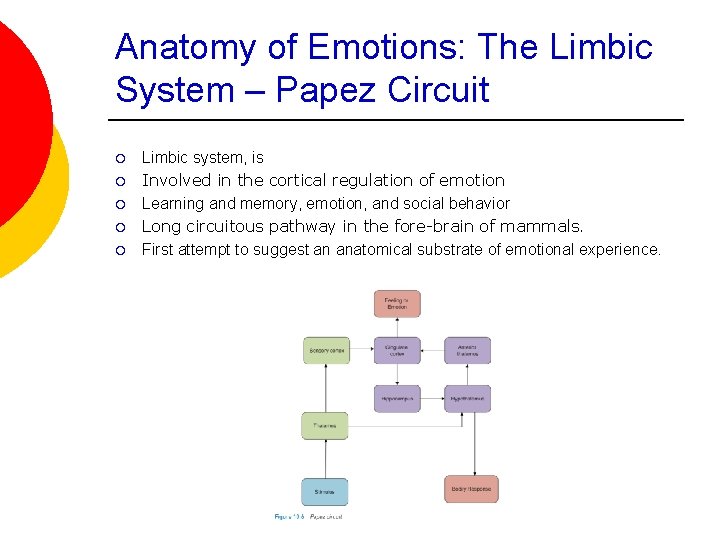
Anatomy of Emotions: The Limbic System – Papez Circuit ¡ ¡ ¡ Limbic system, is Involved in the cortical regulation of emotion Learning and memory, emotion, and social behavior Long circuitous pathway in the fore-brain of mammals. First attempt to suggest an anatomical substrate of emotional experience.

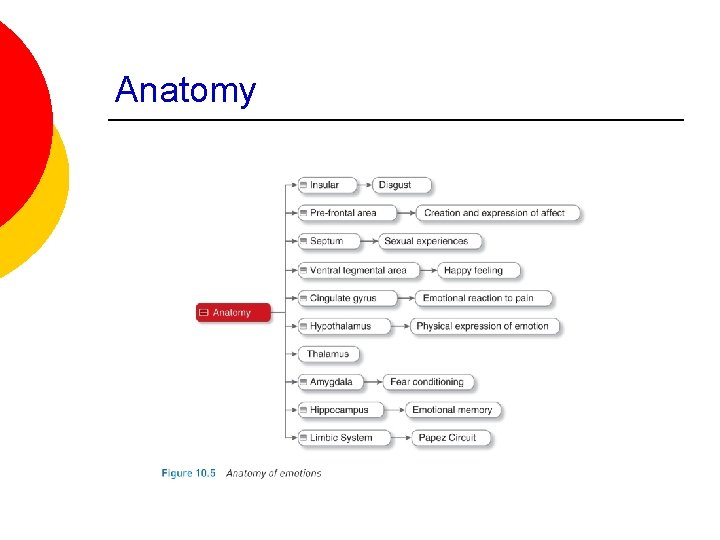
Hippocampus Role in memory formation and the process of long term potentiation ¡ The hippocampus and the amygdala are connected ¡ Hippocampal complex influences the amygdala reactions whenever emotional activities occur ¡ Emotional meaning ¡
Amygdala ¡ ¡ The structure forms connections with the hippocampus, the septal nuclei, and the prefrontal area, as wells as the medial dorsal nucleus of the thalamus. Plays a role in forming and storing memories connected with emotional occurrences Fear Conditioning Central nuclei
Thalamus ¡ Lesion or stimulation of the medial dorsal and anterior nuclei of the thalamus have been associated to altered emotional behaviour.
Hypothalamus ¡ ¡ Lesions of the hypothalamic nuclei disrupt both sleep and wakefulness along with motivational behaviours, body temperature, sexual behaviours, fight reaction, appetite, and thirst (Flament-Durand, 1980) Lateral sections appears to be associated with pleasure and anger, while the median section is believed to be associated with aversion and displeasure
Cingulate gyrus ¡ ¡ Located in the medial area of the brain in the middle of the cingulate sulcus and the corpus callosum Anterior cingulate gyrus appers to be involved in unconscious priming with pleasurable episodic memories and is involved in the emotional reaction to pain as well as the control of aggressive behaviour
Ventral Tegmental Area Located in the mesencephalic part of the brain stem ¡ This area is associated with the experience of happy feelings and intense romantic love (Xu et al. , 2011) ¡
Septum Located in a position that is anterior to the thalamus ¡ This area has been connected to various types of pleasant feelings, mainly those that have to do with sexual experiences (Chozick, 1985). ¡
Prefrontal area ¡ ¡ Even though it is not really part of the traditional limbic circuit, it is made up of links to the thalamus, amygdala, and other subcortical structures Disruption of dorsomedial prefrontal cortical -amygdala connectivity has recently been implicated in Postpartum or postnatal depression (Moses-Kolko et al. , 2010)
A Definition of Aggression Behavior motivated by the intent to harm another being ¡ Many diverse behaviors can be considered aggressive ¡
Insular ¡ This area is also responsible for processing tastes and may be pivotal to the experience of feeling disgust (Phillips et al. , 1997).
Cerebral hemispheres and Emotion ¡ ¡ ¡ Behavioural approach system (BAS) - left hemisphere is believed to regulate appetitive motives, in which the goal is to move toward something desired. Behavioural avoidance (or inhibition) system (BIS) right frontal and temporal regions, is said to regulate aversive motives, in which the goal is to move away from something unpleasant An imbalance in BIS and BAS levels is reportedly related to a variety of forms of psychopathology (Scholten, van Honk, Aleman, & Kahn, 2006).
Emotions and Facial Expressions ¡ ¡ ¡ Paul Ekman and others have been first in the undertaking of the study of feelings and their correlation to how the face looks (Ekman, 1992) Cross-cultural research on Papua New Guinea's Fore tribesmen, Ekman and Friesman formulated a menu of basic emotions (Ekman & Friesen, 1986). Anger, Disgust, Fear, Happiness, Sadness, and Surprise. The Facial Action Coding System (FACS) is a research tool that was devised to essentially measure facial expressions by defining the muscular movement underlying brief alterations in facial expression. All facial expressions can be decomposed into their constituent action units (AU). AUs appear in combinations of expressions (Ekman & Friesen, 1977).
Facial Feedback Hypothesis ¡ ¡ The idea of facial feedback is that any facial movement or expressions you make can have a direct effect on your emotional experience (Buck, 1980). Results reveal that facial feedback modulates neural processing of emotional stimuli - Botox
Duchenne Smile ¡ ¡ It appears that there are two ways to differentiate genuine facial expressions from expressions that are fake (Ekman, Davidson, & Friesen, 1990). Genuine smiles(Duchenne smiles) involve contraction of both the zygomaticus major and the orbicularis oculi, whereas false only involve the zygomaticus major
Attack Behaviours ¡ ¡ ¡ Attack or aggressive behaviours" refers to any actions that aim to cause harm or inflict pain Aggression is categorised into two general categories: hostile, affective, or retaliatory aggression; and instrumental, predatory, or goaloriented aggression (Mc. Elliskem, 2004). Animals use aggression to assist them in obtaining and maintaining territory, as well as obtaining other needs essential for survival, like food, water, and mating possibilities.
Hormones & Neurotramsmitters ¡ Testosterone l Convereted to 5 a-DHT which acts on androgen receptors l Testosterone positively correlated with aggression ¡ Glucocorticoids l Large a group of fat-soluble hormones that connect to the glucocorticoid receptor and seem to play a role in hostile behaviour and are normally released during aggressive interaction between animals. ¡ Dehydroepiandrosterone (DHEA) l DHEA is an androgen and can swiftly be metabolized into strong androgens and estrogens. ¡ Serotonin l A lack of serotonin has consistently demonstrated a relationship with impulsive aggressive behaviour over several different research paradigms
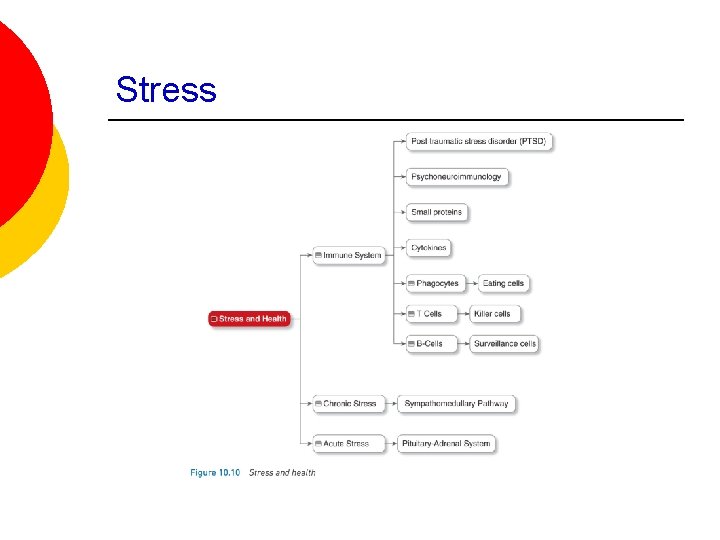
Stress ¡ ¡ ¡ Stressor: any event that either strains or overwhelms our ability to adjust to our environment Can be physiological or psychological Physiological consequences of stressor influenced by psychological processes
Our Biological Reaction to Stressors ¡ ¡ ¡ Selye (1956)…general adaptation syndrome (GAS) 3 stages Stage 1. Alarm reaction l Sympathetic nervous system arousal l Body Prepares for "fight or flight" l Reaction lasts minutes to hours l When stressor ends, parasympathetic nervous system takes over
Our Biological Reaction to Stressors ¡ Stage 2. Resistance l Release of adrenocorticotrophic-stimulating hormone (ACTH) l Triggers the release of glucocorticoid hormone leads to ¡ Conversion of nonsugars to sugars ¡ Enhancement of glycogen storage ¡ Increased effectiveness of adrenaline & noradrenaline ¡ Systems not involved in stress resistance are inhibited ¡ Suppression of inflammatory system ¡ Reduction in ability to fight illness

Our Biological Reaction to Stressors ¡ ¡ ¡ ¡ Stage 3 - Exhaustion l This stage of the general adaptation syndrome is the most hazardous to your health Depletion of physiological resources Failure of electrolyte balance Exhaustion of lipid reserves Inability to produce glucorticoids Damage to vital organs When no resources remain, death ensues
Acute stress: The sympathomedullary pathway ¡ ¡ ¡ ¡ Fight Or flight Pathway - Associated with acute stress Hypothalamus stimulates autonomic centres in the brain Signals are sent via nerve pathways to the adrenal medulla Adrenal medulla releases adrenaline and noradrenaline into the bloodstream These increase heart rate and blood pressure which supplys oxygen to the muscles Liberate energy reserves for physical activity Afterwards PNS restores body to resting state.
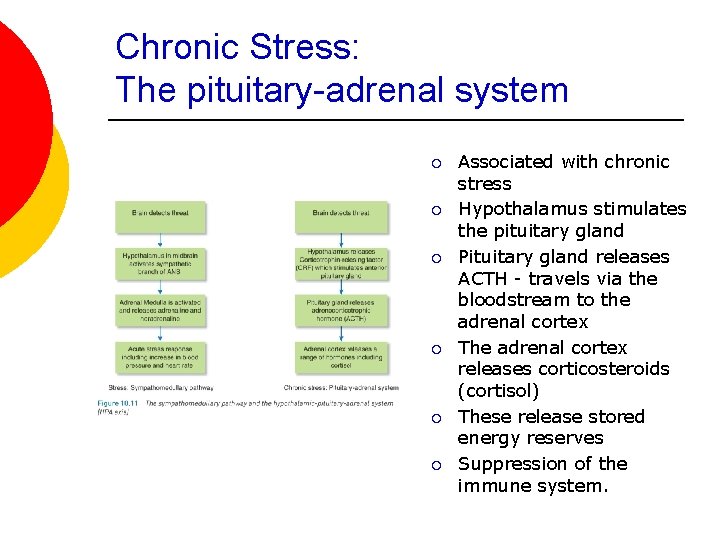
Chronic Stress: The pituitary-adrenal system ¡ ¡ ¡ Associated with chronic stress Hypothalamus stimulates the pituitary gland Pituitary gland releases ACTH - travels via the bloodstream to the adrenal cortex The adrenal cortex releases corticosteroids (cortisol) These release stored energy reserves Suppression of the immune system.
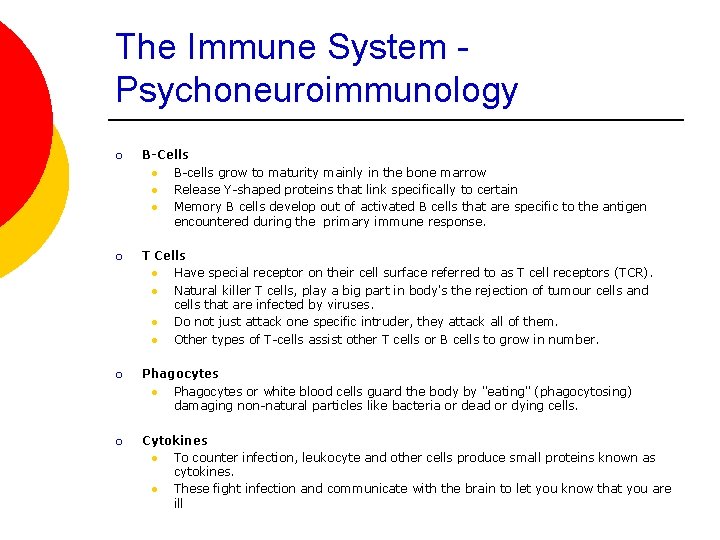
The Immune System Psychoneuroimmunology ¡ B-Cells l B-cells grow to maturity mainly in the bone marrow l Release Y-shaped proteins that link specifically to certain l Memory B cells develop out of activated B cells that are specific to the antigen encountered during the primary immune response. ¡ T Cells l Have special receptor on their cell surface referred to as T cell receptors (TCR). l Natural killer T cells, play a big part in body's the rejection of tumour cells and cells that are infected by viruses. l Do not just attack one specific intruder, they attack all of them. l Other types of T-cells assist other T cells or B cells to grow in number. ¡ Phagocytes l Phagocytes or white blood cells guard the body by "eating" (phagocytosing) damaging non-natural particles like bacteria or dead or dying cells. ¡ Cytokines l To counter infection, leukocyte and other cells produce small proteins known as cytokines. l These fight infection and communicate with the brain to let you know that you are ill
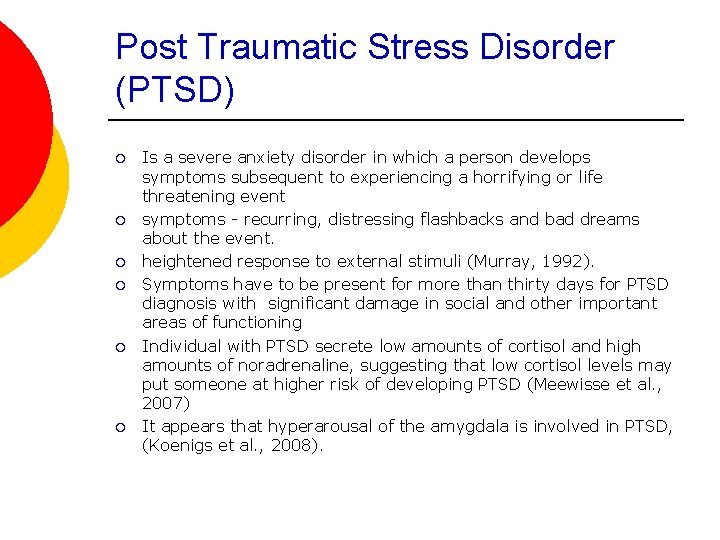
Post Traumatic Stress Disorder (PTSD) ¡ ¡ ¡ Is a severe anxiety disorder in which a person develops symptoms subsequent to experiencing a horrifying or life threatening event symptoms - recurring, distressing flashbacks and bad dreams about the event. heightened response to external stimuli (Murray, 1992). Symptoms have to be present for more than thirty days for PTSD diagnosis with significant damage in social and other important areas of functioning Individual with PTSD secrete low amounts of cortisol and high amounts of noradrenaline, suggesting that low cortisol levels may put someone at higher risk of developing PTSD (Meewisse et al. , 2007) It appears that hyperarousal of the amygdala is involved in PTSD, (Koenigs et al. , 2008).
Theories of Emotion
Anatomy
Stress
Emotions
Readings ¡ Barnes, J. (2011). Essential Biological Psychology (Chapter 10). London: Sage. ¡ The Essentials Oatley, D. , Keltner, D. & Jenkins, J. (2006) Understanding Emotions Wiley -Blackwell; 2 nd edition ¡ Next Steps Glaser, R. , & Kiecolt-Glaser, J. (2005). How stress damages immune system and health. Discov Med, 5(26), 165 -169. ¡ Delving Deeper Phelps, E. A. (2004). Human emotion and memory: interactions of the amygdala and hippocampal complex. Curr Opin Neurobiol, 14(2), 198 -202.
- Slides: 38