
Chapter 10 Basics of the Nervous System 10
Chapter 10 Basics of the Nervous System 10 -1
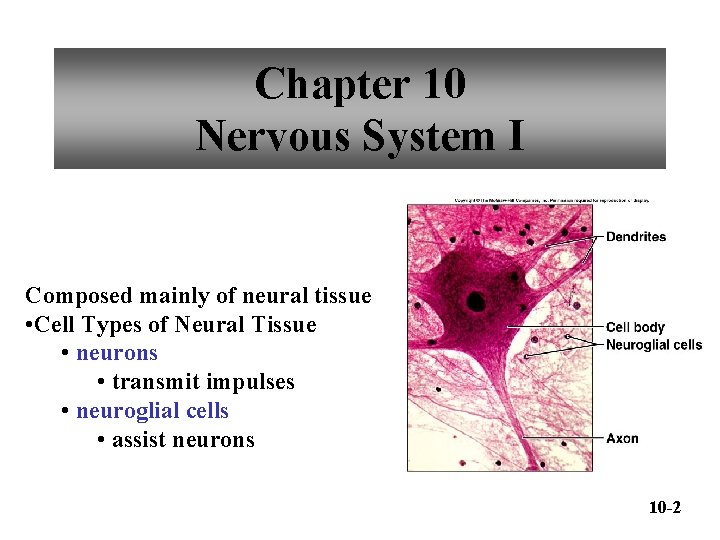
Chapter 10 Nervous System I Composed mainly of neural tissue • Cell Types of Neural Tissue • neurons • transmit impulses • neuroglial cells • assist neurons 10 -2
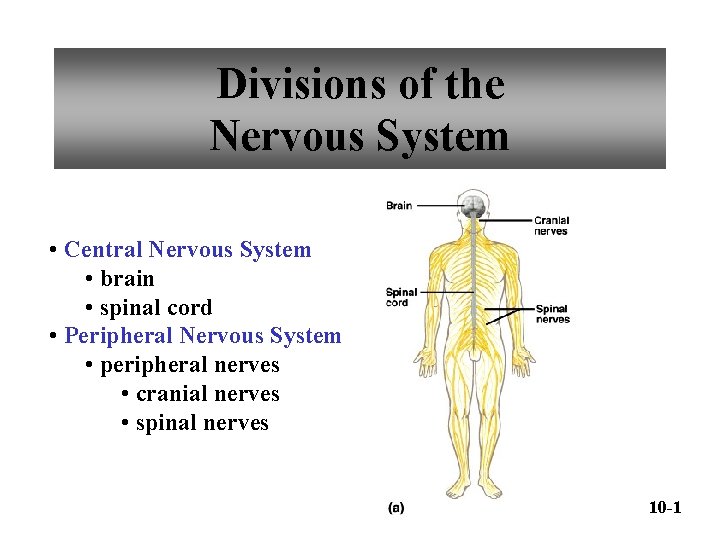
Divisions of the Nervous System • Central Nervous System • brain • spinal cord • Peripheral Nervous System • peripheral nerves • cranial nerves • spinal nerves 10 -1
Divisions of Peripheral Nervous System Sensory Division • picks up sensory information and delivers it to the CNS Motor Division • carries information to muscles and glands • Somatic – carries information to skeletal muscle • Autonomic – carries information to smooth muscle, cardiac muscle, and glands 10 -4
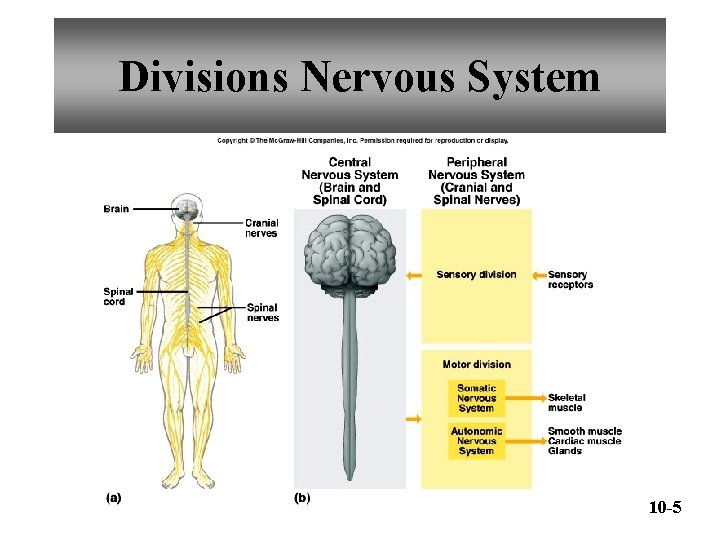
Divisions Nervous System 10 -5
Functions of Nervous System Sensory Function • sensory receptors gather information • information is carried to the CNS Integrative Function • sensory information used to create • sensations • memory • thoughts • decisions Motor Function • decisions are acted upon • impulses are carried to effectors 10 -6
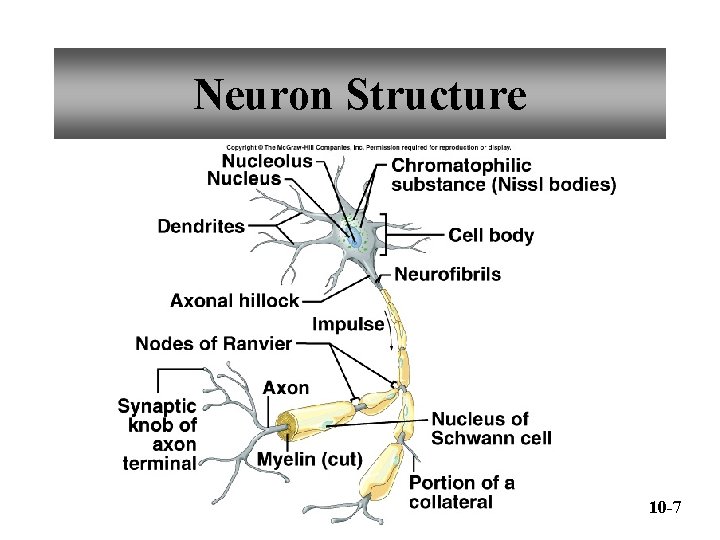
Neuron Structure 10 -7
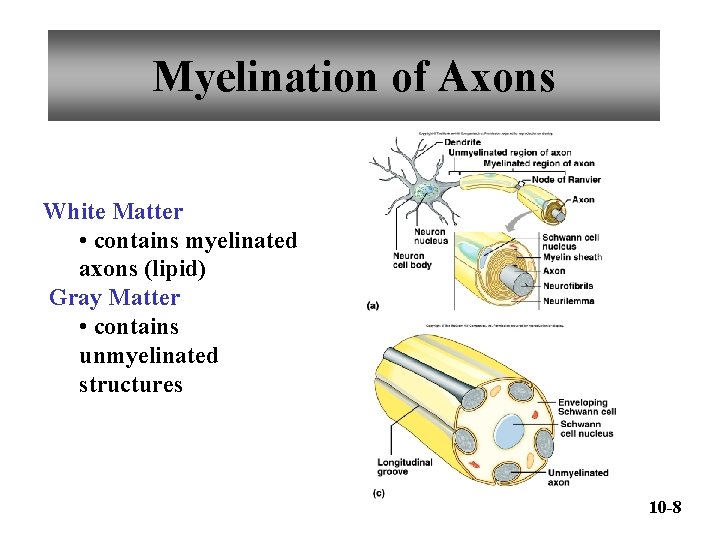
Myelination of Axons White Matter • contains myelinated axons (lipid) Gray Matter • contains unmyelinated structures 10 -8
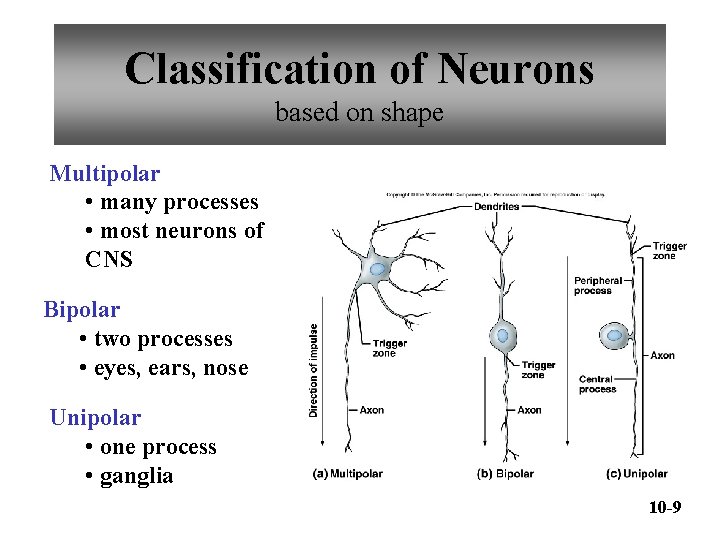
Classification of Neurons based on shape Multipolar • many processes • most neurons of CNS Bipolar • two processes • eyes, ears, nose Unipolar • one process • ganglia 10 -9
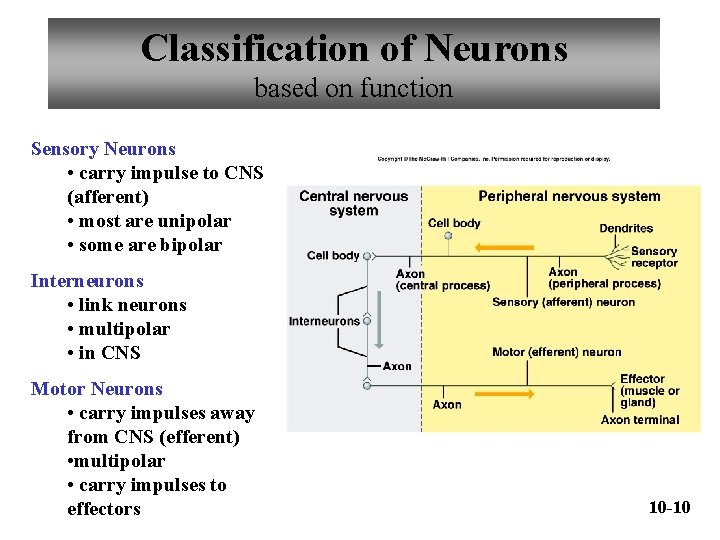
Classification of Neurons based on function Sensory Neurons • carry impulse to CNS (afferent) • most are unipolar • some are bipolar Interneurons • link neurons • multipolar • in CNS Motor Neurons • carry impulses away from CNS (efferent) • multipolar • carry impulses to effectors 10 -10
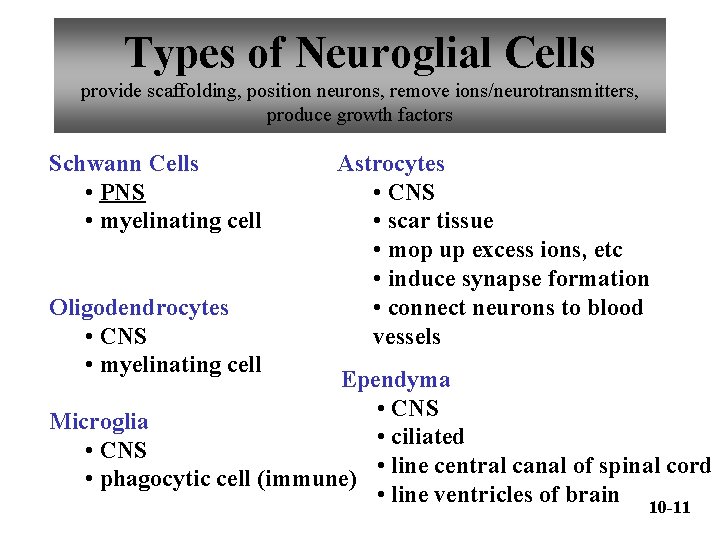
Types of Neuroglial Cells provide scaffolding, position neurons, remove ions/neurotransmitters, produce growth factors Schwann Cells • PNS • myelinating cell Oligodendrocytes • CNS • myelinating cell Astrocytes • CNS • scar tissue • mop up excess ions, etc • induce synapse formation • connect neurons to blood vessels Ependyma • CNS Microglia • ciliated • CNS • line central canal of spinal cord • phagocytic cell (immune) • line ventricles of brain 10 -11
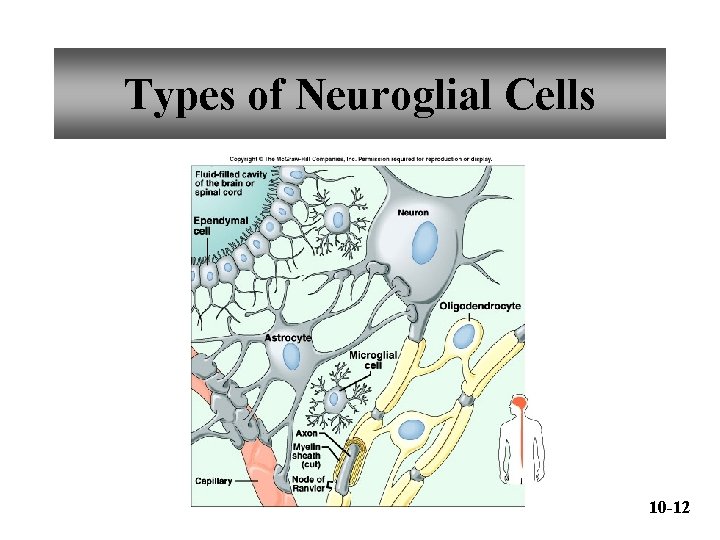
Types of Neuroglial Cells 10 -12
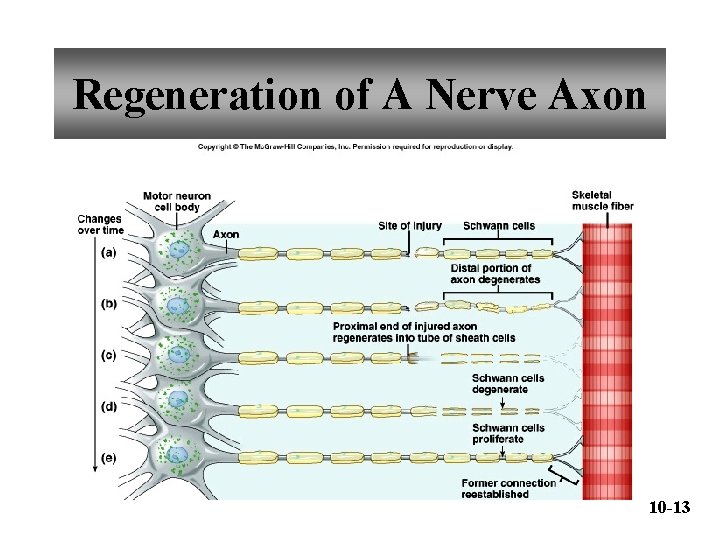
Regeneration of A Nerve Axon 10 -13
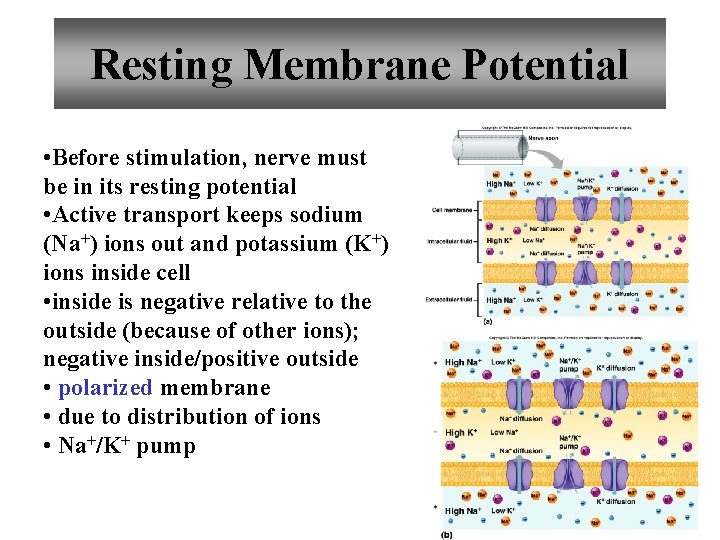
Resting Membrane Potential • Before stimulation, nerve must be in its resting potential • Active transport keeps sodium (Na+) ions out and potassium (K+) ions inside cell • inside is negative relative to the outside (because of other ions); negative inside/positive outside • polarized membrane • due to distribution of ions • Na+/K+ pump 10 -14
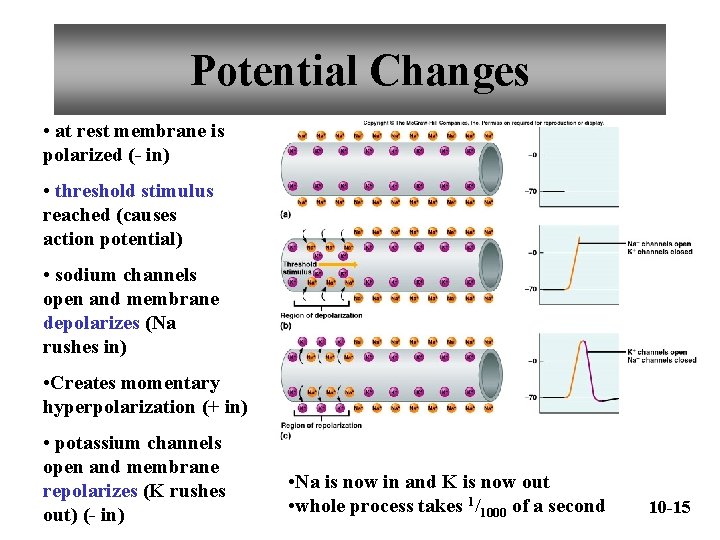
Potential Changes • at rest membrane is polarized (- in) • threshold stimulus reached (causes action potential) • sodium channels open and membrane depolarizes (Na rushes in) • Creates momentary hyperpolarization (+ in) • potassium channels open and membrane repolarizes (K rushes out) (- in) • Na is now in and K is now out • whole process takes 1/1000 of a second 10 -15
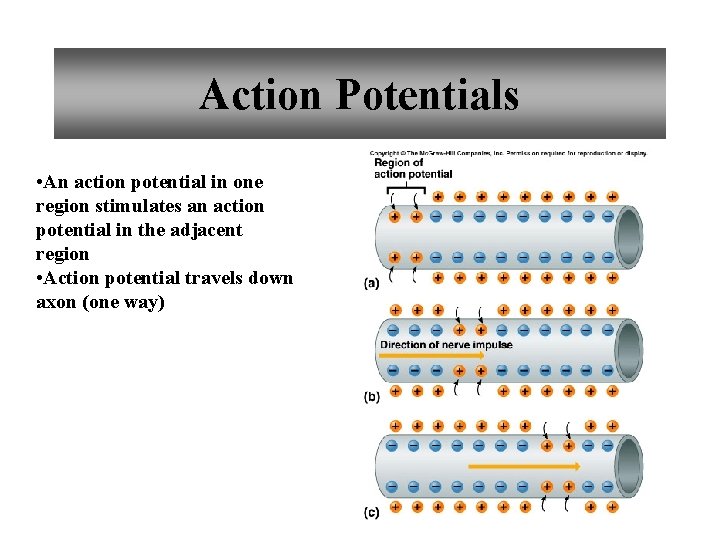
Action Potentials • An action potential in one region stimulates an action potential in the adjacent region • Action potential travels down axon (one way) 10 -18
Action Potentials/Nerve Impulse • caused by various stimuli • chemicals • temperature changes • mechanical forces • occur on dendrites, cell bodies, and axons • all-or-none • refractory period • absolute - time when threshold stimulus does not start another action potential • relative – time when stronger threshold stimulus can start another action potential 10 -17
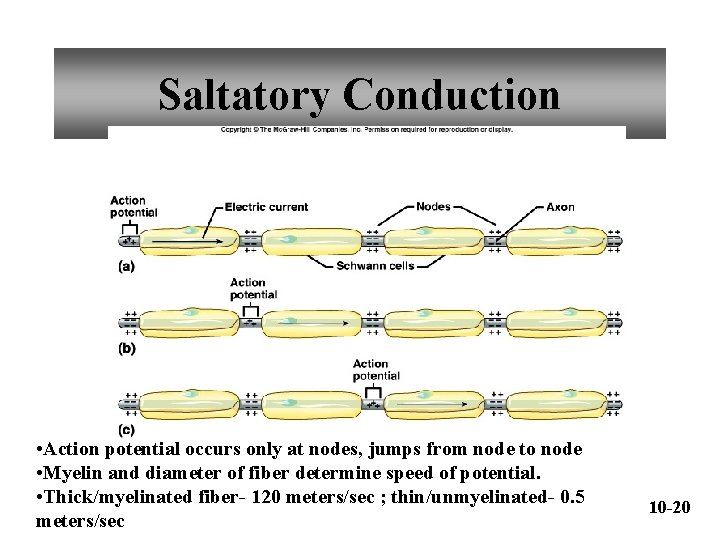
Saltatory Conduction • Action potential occurs only at nodes, jumps from node to node • Myelin and diameter of fiber determine speed of potential. • Thick/myelinated fiber- 120 meters/sec ; thin/unmyelinated- 0. 5 meters/sec 10 -20
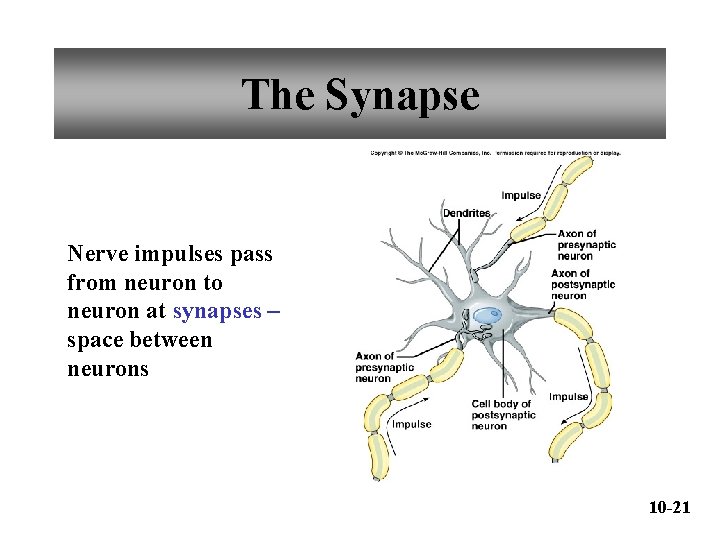
The Synapse Nerve impulses pass from neuron to neuron at synapses – space between neurons 10 -21
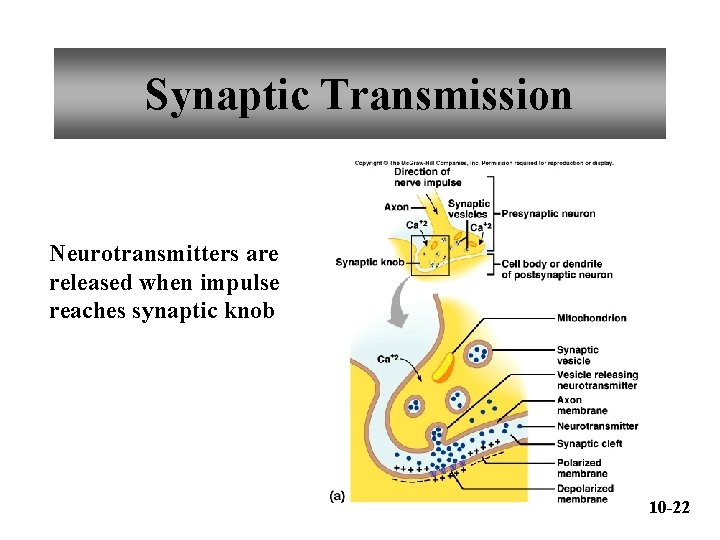
Synaptic Transmission Neurotransmitters are released when impulse reaches synaptic knob 10 -22
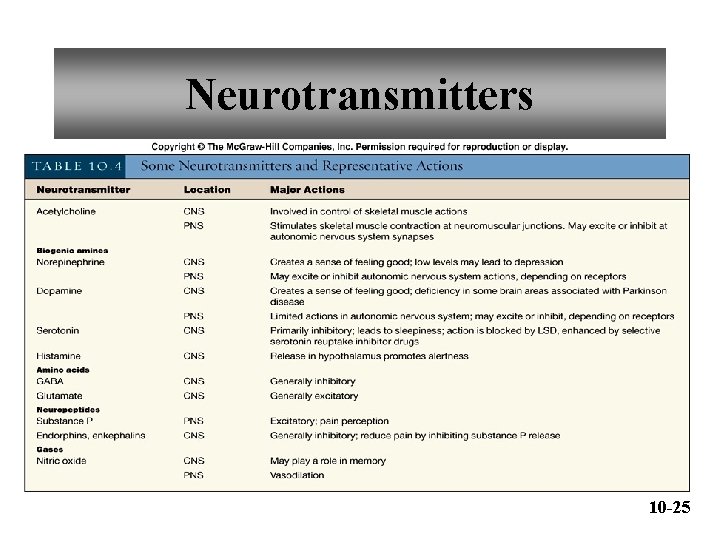
Neurotransmitters 10 -25
Impulse Processing Neuronal Pools • groups of interneurons that make synaptic connections with each other • interneurons work together to perform a common function • each pool receives input from other neurons • each pool generates output to other neurons 10 -26
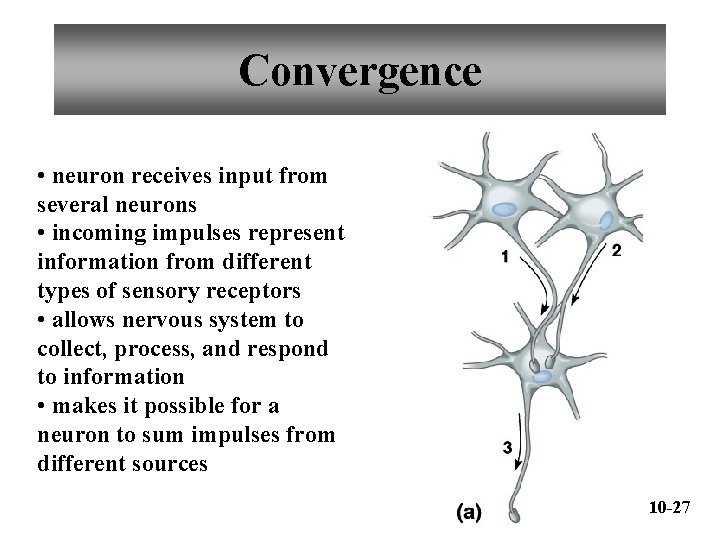
Convergence • neuron receives input from several neurons • incoming impulses represent information from different types of sensory receptors • allows nervous system to collect, process, and respond to information • makes it possible for a neuron to sum impulses from different sources 10 -27
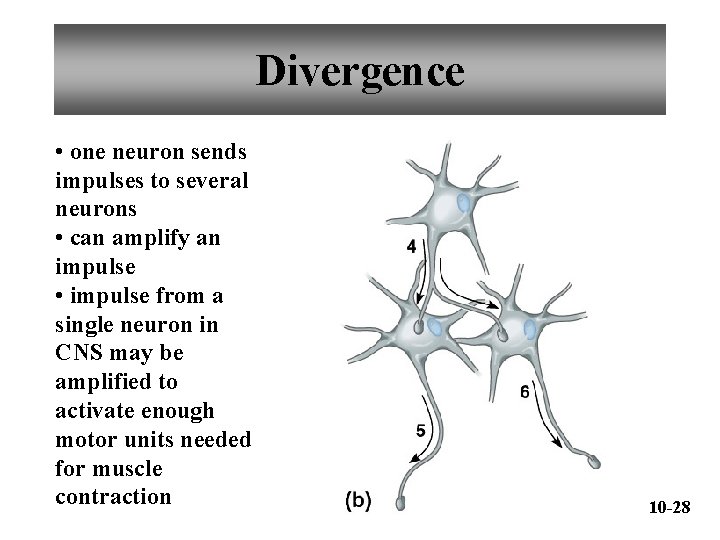
Divergence • one neuron sends impulses to several neurons • can amplify an impulse • impulse from a single neuron in CNS may be amplified to activate enough motor units needed for muscle contraction 10 -28
- Slides: 24