
Chapter 10 Assessing the Integumentary System Structures of




- Slides: 19
Chapter 10 Assessing the Integumentary System
Structures of the Integumentary System Skin layers Epidermis Dermis Subcutaneous layers Hair Nails Sweat glands Eccrine glands Apocrine glands Sebaceous glands
Interaction with Other Body Systems Respiratory system Cardiovascular system Gastrointestinal system Urinary system Neurological system Endocrine system Lymphatic system
Developmental, Cultural, and Ethnic differences Infants Adolescents Pregnant women Menopausal Women Older Adults Cultural and Ethnic differences
Lets get to the assessment! As always…ABCs. Then, the health history and the skin assessment itself. Questions to ask—Non-healing sores or ulcerations? Changes in moles? Pruritus? Rashes, seasonal disorders or changes in body hair or nails? Assess for the skin turgor.
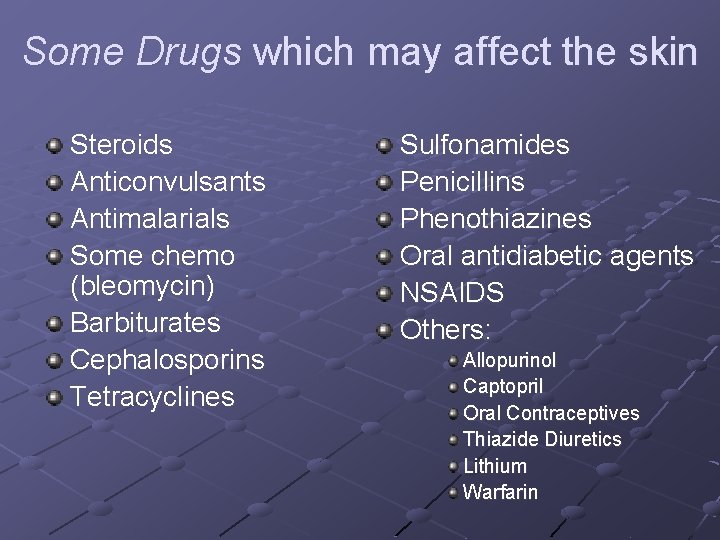
Some Drugs which may affect the skin Steroids Anticonvulsants Antimalarials Some chemo (bleomycin) Barbiturates Cephalosporins Tetracyclines Sulfonamides Penicillins Phenothiazines Oral antidiabetic agents NSAIDS Others: Allopurinol Captopril Oral Contraceptives Thiazide Diuretics Lithium Warfarin
Describing a lesion Size Shape Color Texture Surface relationship Exudate Tenderness or pain
Size What is the best way to assess the size of a lesion?
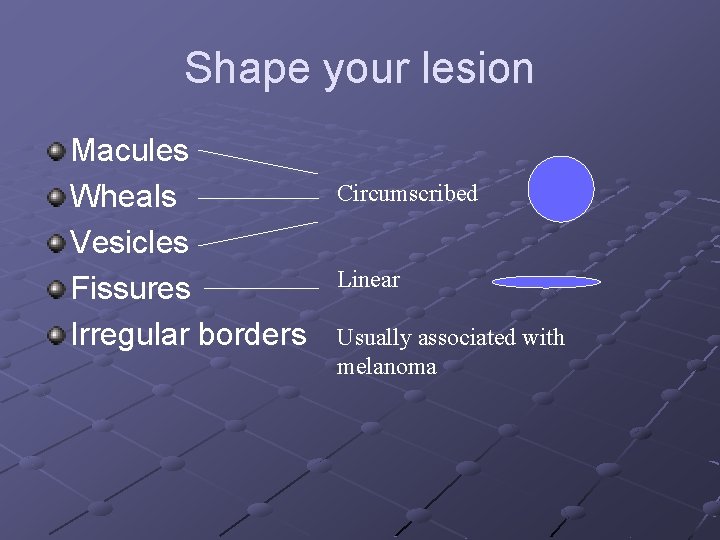
Shape your lesion Macules Wheals Vesicles Fissures Irregular borders Circumscribed Linear Usually associated with melanoma
Color Just what color does it look like? Remember, lesions can change colors throughout time. If you use a descriptive term to describe a color make sure it is a common term. Periwinkle is not a well known color. Red, rust, blue, light blue, orange, brown, dark brown. . . these terms are well known and useful for the next practitioner to relate to. Does it blanch?
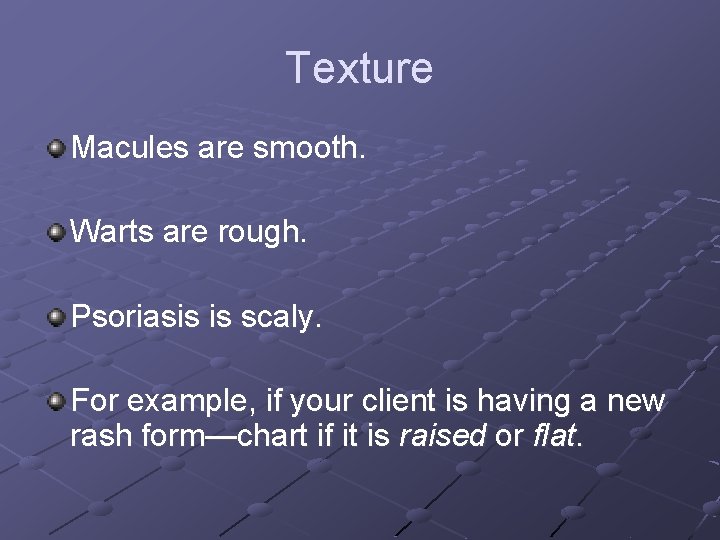
Texture Macules are smooth. Warts are rough. Psoriasis is scaly. For example, if your client is having a new rash form—chart if it is raised or flat.
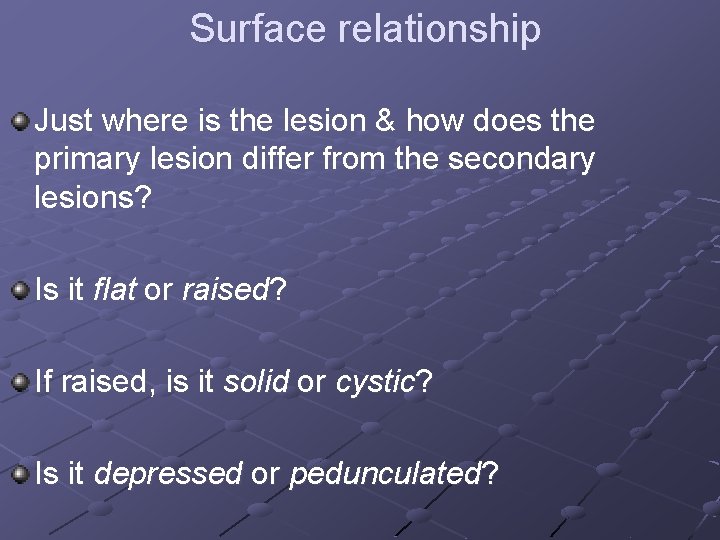
Surface relationship Just where is the lesion & how does the primary lesion differ from the secondary lesions? Is it flat or raised? If raised, is it solid or cystic? Is it depressed or pedunculated?
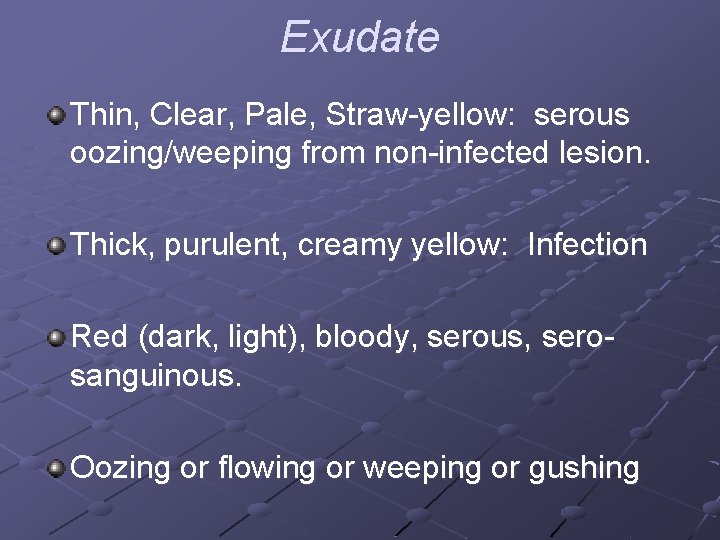
Exudate Thin, Clear, Pale, Straw-yellow: serous oozing/weeping from non-infected lesion. Thick, purulent, creamy yellow: Infection Red (dark, light), bloody, serous, serosanguinous. Oozing or flowing or weeping or gushing
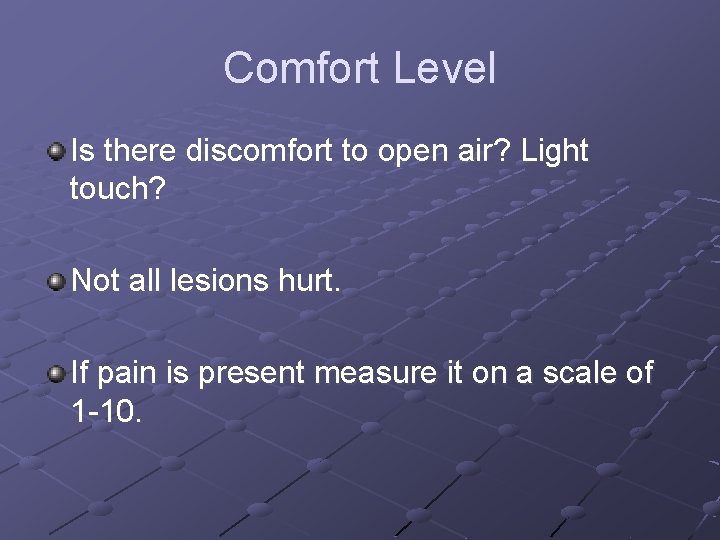
Comfort Level Is there discomfort to open air? Light touch? Not all lesions hurt. If pain is present measure it on a scale of 1 -10.
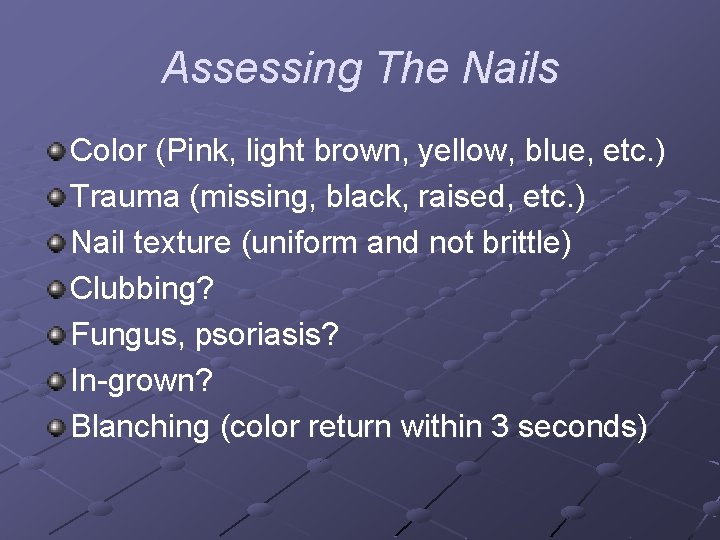
Assessing The Nails Color (Pink, light brown, yellow, blue, etc. ) Trauma (missing, black, raised, etc. ) Nail texture (uniform and not brittle) Clubbing? Fungus, psoriasis? In-grown? Blanching (color return within 3 seconds)
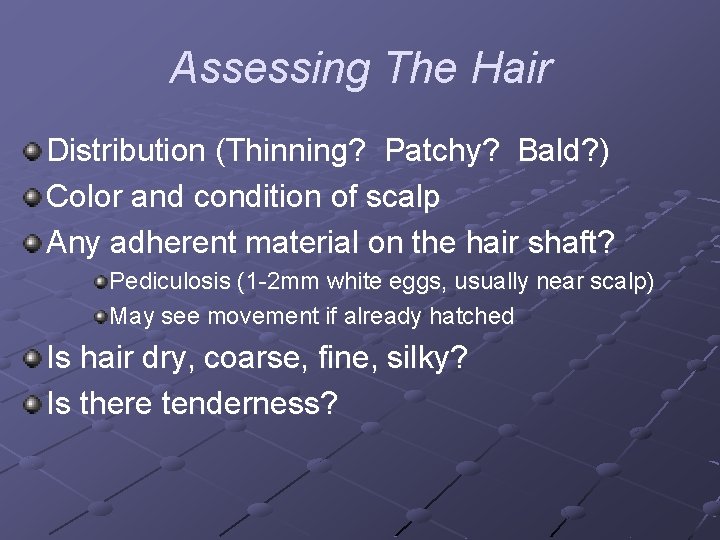
Assessing The Hair Distribution (Thinning? Patchy? Bald? ) Color and condition of scalp Any adherent material on the hair shaft? Pediculosis (1 -2 mm white eggs, usually near scalp) May see movement if already hatched Is hair dry, coarse, fine, silky? Is there tenderness?
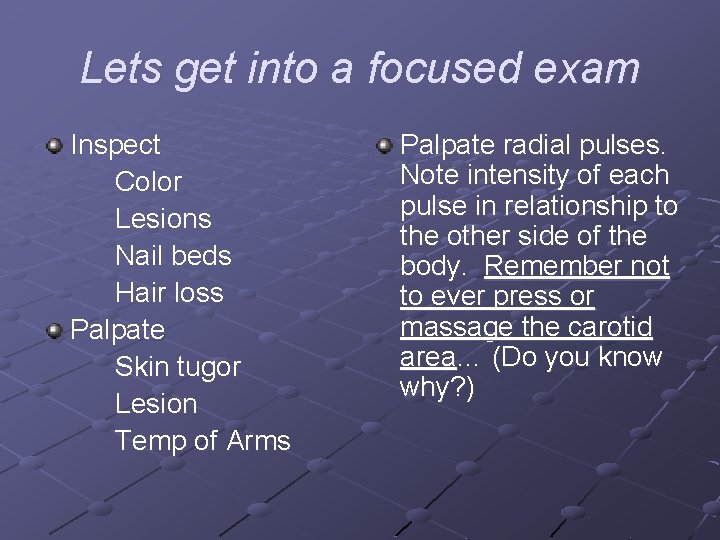
Lets get into a focused exam Inspect Color Lesions Nail beds Hair loss Palpate Skin tugor Lesion Temp of Arms Palpate radial pulses. Note intensity of each pulse in relationship to the other side of the body. Remember not to ever press or massage the carotid area… (Do you know why? )
If time permits… read Case Study starting with Biographical Data Note significant findings
1 st Quiz tomorrow - 9/26/07 For next week: Begin reading Assess of Head, Face, Neck