
Chapter 10 A Recognizing and Avoiding Addiction Objectives

Chapter 10 A: Recognizing and Avoiding Addiction
Objectives: • DEFINE ADDICTION, IDENTIFY THE SIGNS OF ADDICTION, AND DESCRIBE THE IMPACT OF ADDICTION ON FRIENDS AND FAMILY. • DISCUSS THE ADDICTIVE PROCESS, THE PHYSIOLOGY OF ADDICTION • DESCRIBE TYPES OF ADDICTIONS - • EVALUATE TREATMENT AND RECOVERY OPTIONS FOR ADDICTS
What Is Addiction? HOW WOULD YOU DESCRIBE ADDICTION? DEFINITION: A PERSISTENT, COMPULSIVE DEPENDENCE ON A BEHAVIOR OR SUBSTANCE, INCLUDING MOODALTERING BEHAVIORS OR ACTIVITIES, DESPITE ONGOING NEGATIVE CONSEQUENCES • Substance addiction refers to dependence on a specific substance. • Process addiction refers to dependence on a behavior. • Examples of Each?
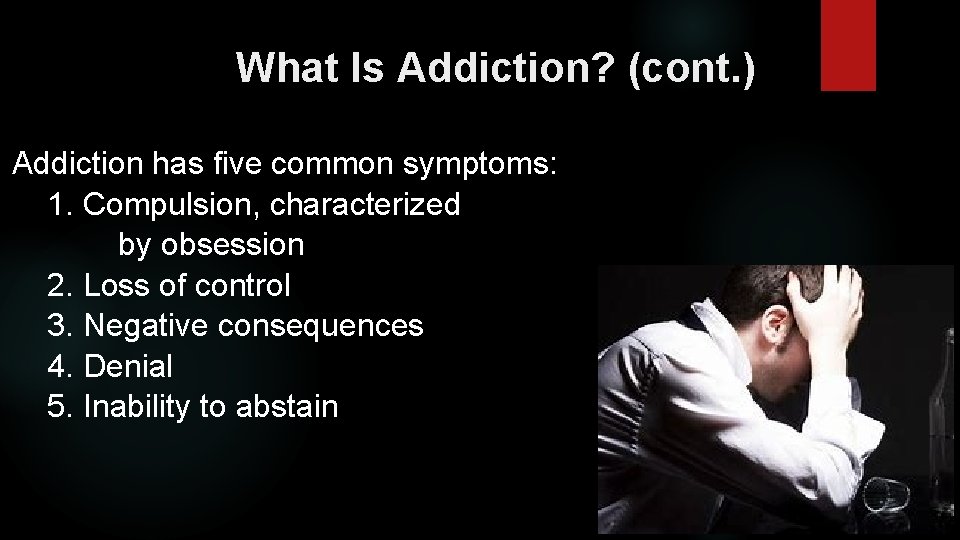
What Is Addiction? (cont. ) Addiction has five common symptoms: 1. Compulsion, characterized by obsession 2. Loss of control 3. Negative consequences 4. Denial 5. Inability to abstain
Habit Versus Addiction • Habit is a repeated behavior in which the repetition may be unconscious. • Compulsion refers to preoccupation with a behavior, an overwhelming need to perform it; • Involves experiencing discomfort if the behavior is not performed.
Addiction Affects Family and Friends • Codependence - a person becomes bound or addicted to the addict. -Codependents find it hard to set boundaries and often live in a chaotic, crisis-oriented mode. -Often assume the responsibility for meeting the addict’s needs, even at their own expense. • Enablers protect addicts from the consequences of their behaviors. • Codependents are the primary enablers of their addicted loved ones • Enablers are generally unaware that their behaviors support the addict
How Addiction Develops • Process that evolves over time. • Nurturing through avoidance happens when a person repeatedly seeks the illusion of relief by avoiding unpleasant feelings or situations. • Eventually as the addict becomes more dependent, there is deterioration in relationships, and after time, the addictive behavior is no longer pleasurable.
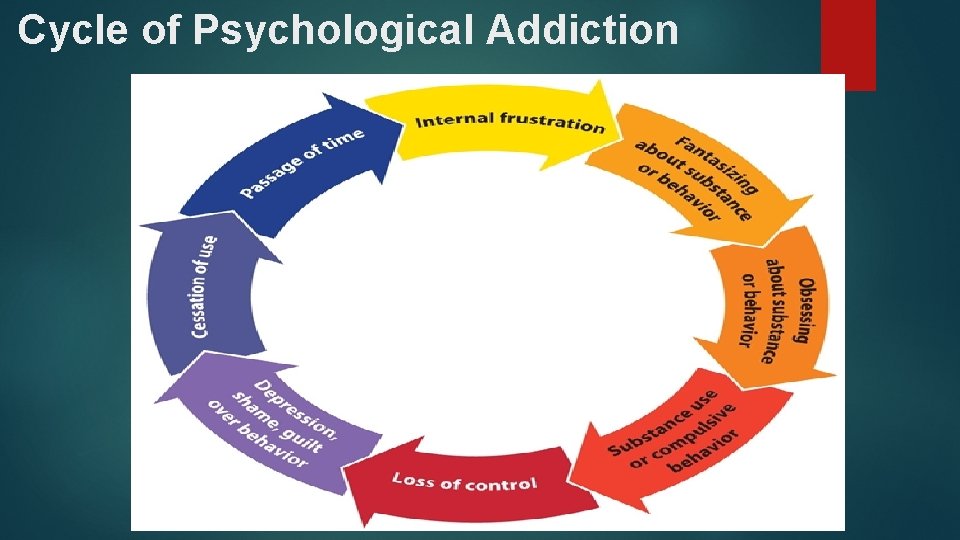
Cycle of Psychological Addiction
e Physiology of Addiction • All intellectual, emotional, and behavioral functions occur as a result of biochemical interactions between nerve cells in the body. • Neurotransmitters exert influence at specific sites on nerve cells. • Mood-altering substances and experiences produce tolerance, where ever-larger dosing is required to achieve the desired effect. • Withdrawal occurs when the drug or experience is removed.
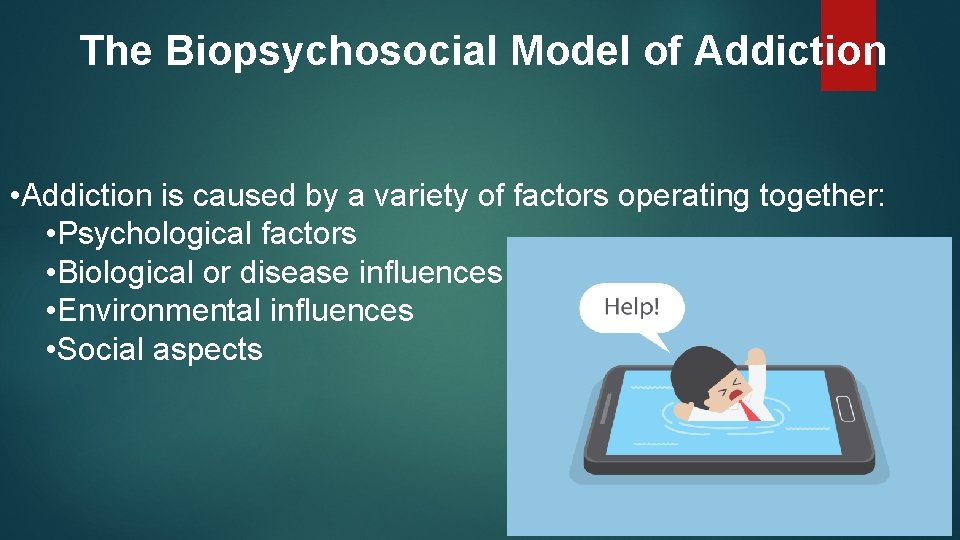
The Biopsychosocial Model of Addiction • Addiction is caused by a variety of factors operating together: • Psychological factors • Biological or disease influences • Environmental influences • Social aspects
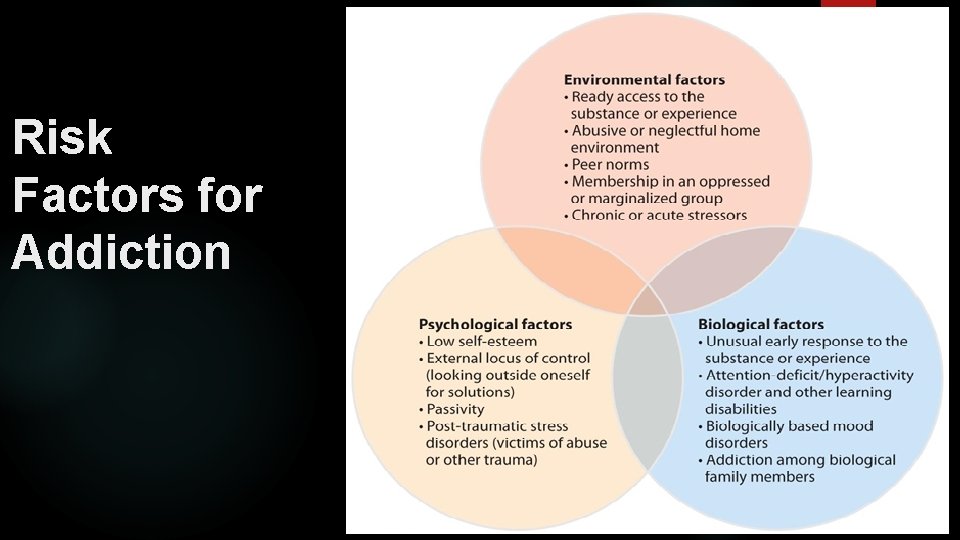
Risk Factors for Addiction
Social Learning Theory • Theory that people learn behaviors by watching role models • The effects of this modeling, imitation, and identification with behavior from early childhood is well established. • Consider which positive modeling you have been exposed to and adopted and which negative modeling you have adopted.
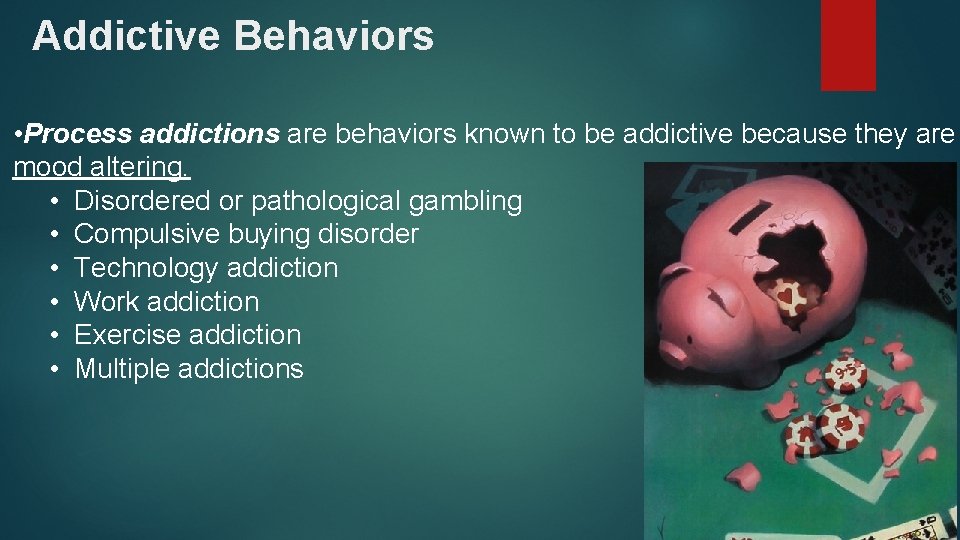
Addictive Behaviors • Process addictions are behaviors known to be addictive because they are mood altering. • Disordered or pathological gambling • Compulsive buying disorder • Technology addiction • Work addiction • Exercise addiction • Multiple addictions
Disordered or Pathological Gambling Disordered gambling is compulsive gambling that cannot be controlled. Recognized as a mental disorder by The American Psychiatric Association. 75% of college students gamble either legally or illegally. 18% of those students gamble once a week. The three most common reasons college students give for gambling are risk, excitement, and the chance to make money.
Compulsive Buying Disorder • $25, 000 is the average amount of debt that a compulsive shopper owes. • Compulsive buying can be seasonal or may occur when person is depressed or lonely. • Compulsive shoppers may borrow money repeatedly from family, friends, or institutions in spite of the problems that result from doing so.
Technology Addictions • Internet addiction includes compulsive use of the following: • Computer • E-mail • Networking websites • Games • Shopping • Blogging • Cell phones • Video games
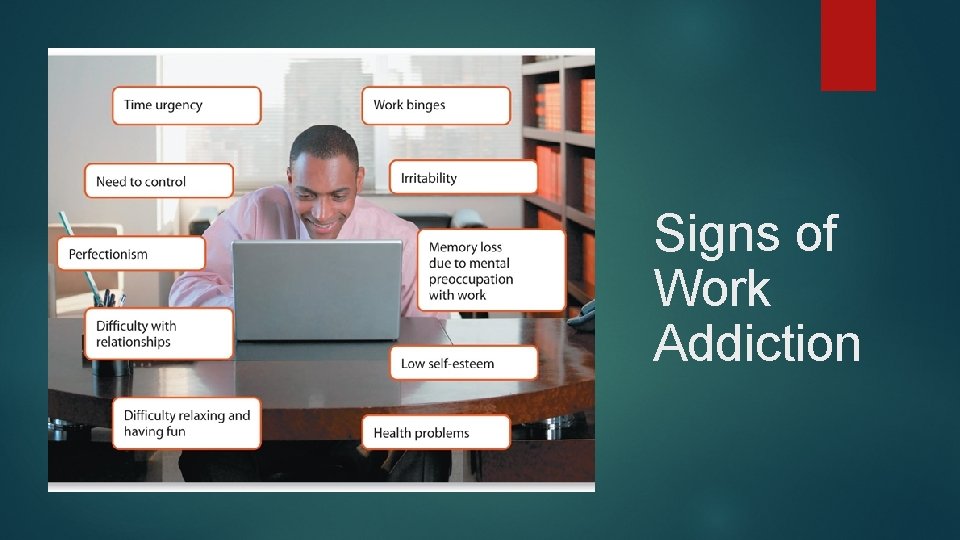
Signs of Work Addiction
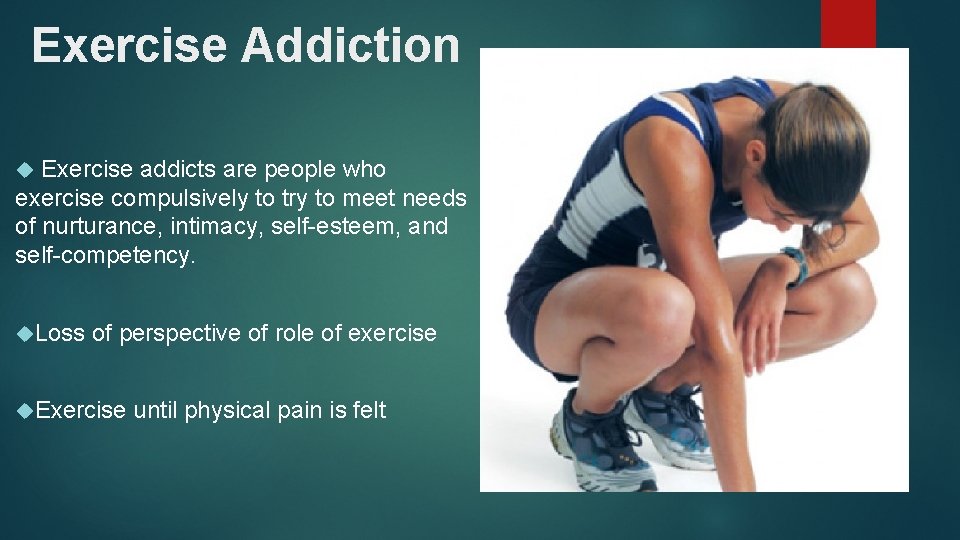
Exercise Addiction Exercise addicts are people who exercise compulsively to try to meet needs of nurturance, intimacy, self-esteem, and self-competency. Loss of perspective of role of exercise Exercise until physical pain is felt
Recovering from Addiction • Intervention - planned process of confronting the addict by people who are important to the addict • Treatment for addiction generally begins with abstinence and then detoxification. • Relapse may be an isolated occurrence or a full return to addictive behavior. • Should not be interpreted as failure • Response to remind the addict that he or she is addicted and needs to return to treatment.
- Slides: 19