
Chapter 10 1 Taking in and Storing Information












![That’s [for now] all folks. . .](https://slidetodoc.com/presentation_image_h2/41bd236146debc7b4c4594b9d3521680/image-31.jpg "That’s [for now] all folks. . .")
- Slides: 31
Chapter 10. 1 Taking in and Storing Information
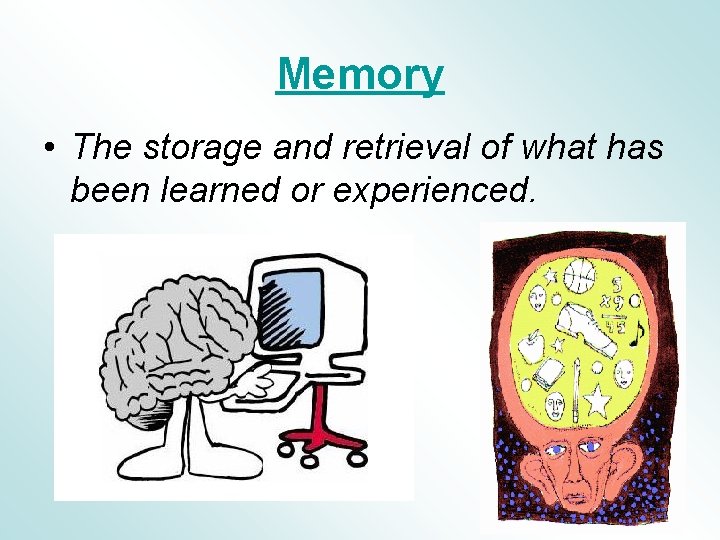
Memory • The storage and retrieval of what has been learned or experienced.
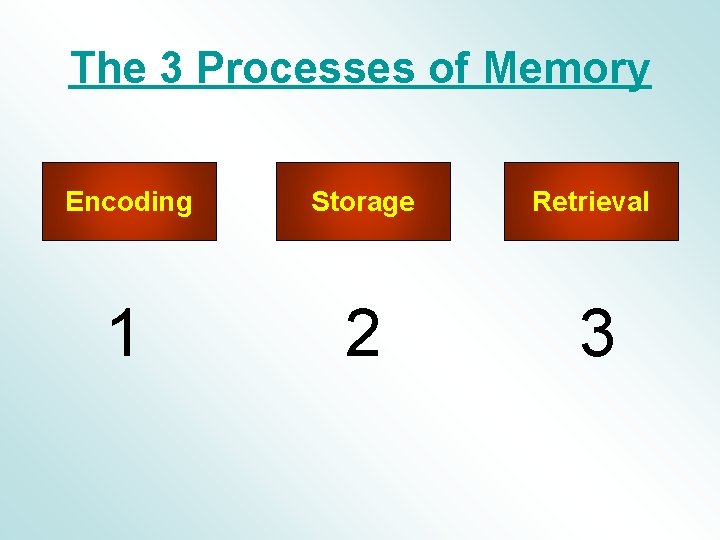
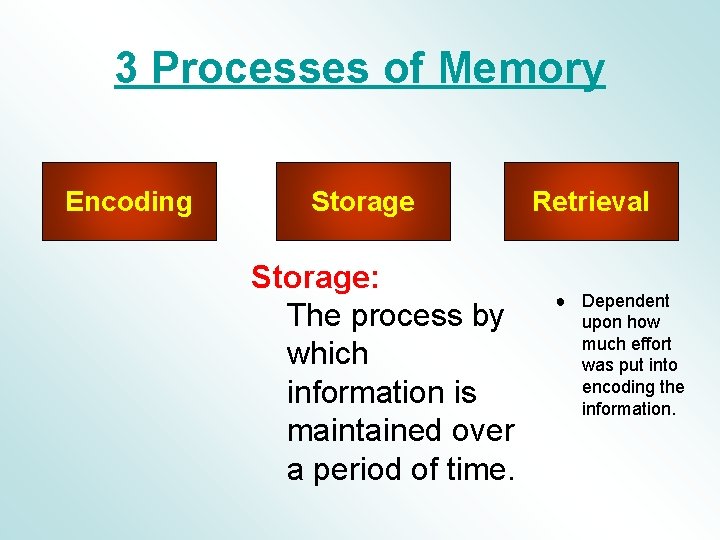
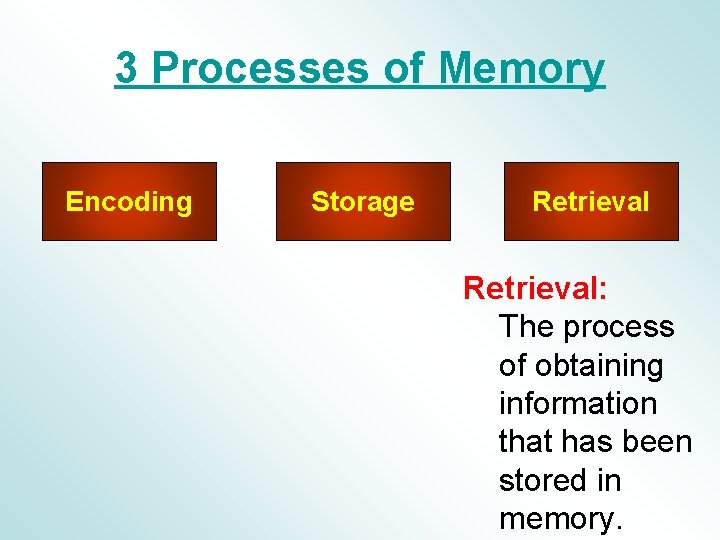
The 3 Processes of Memory Encoding Storage Retrieval 1 2 3
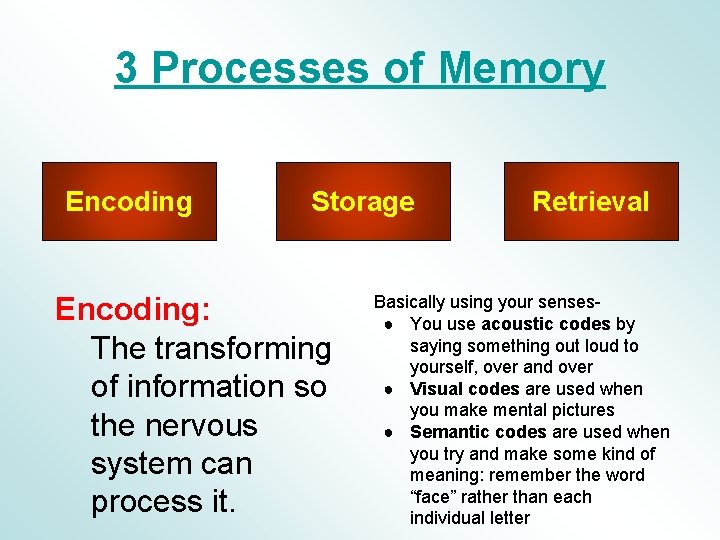
3 Processes of Memory Encoding Storage Encoding: The transforming of information so the nervous system can process it. Retrieval Basically using your senses● You use acoustic codes by saying something out loud to yourself, over and over ● Visual codes are used when you make mental pictures ● Semantic codes are used when you try and make some kind of meaning: remember the word “face” rather than each individual letter
3 Processes of Memory Encoding Storage: The process by which information is maintained over a period of time. Retrieval ● Dependent upon how much effort was put into encoding the information.
3 Processes of Memory Encoding Storage Retrieval: The process of obtaining information that has been stored in memory.
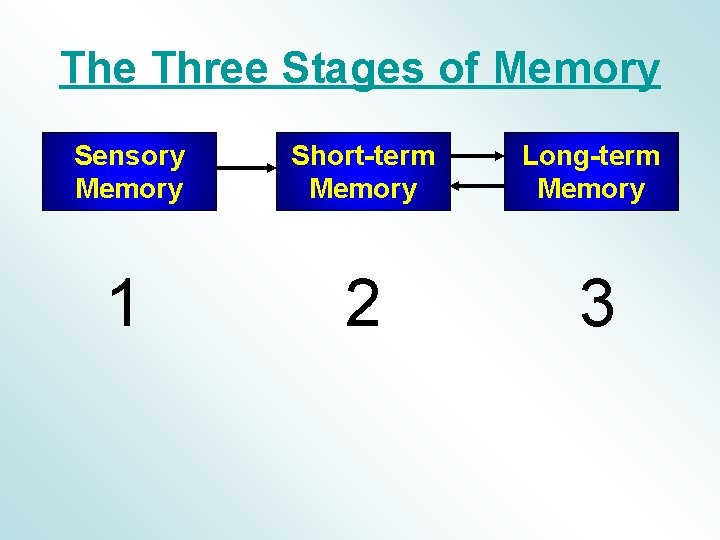
The Three Stages of Memory Sensory Memory Short-term Memory Long-term Memory 1 2 3
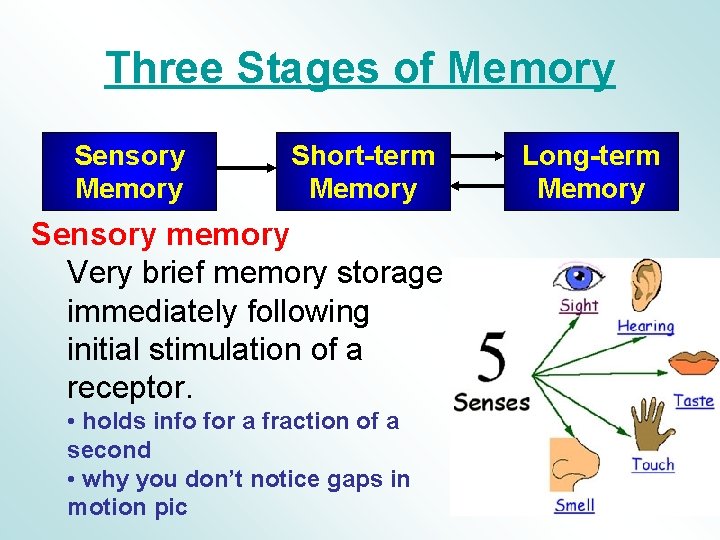
Three Stages of Memory Sensory Memory Short-term Memory Sensory memory Very brief memory storage immediately following initial stimulation of a receptor. • holds info for a fraction of a second • why you don’t notice gaps in motion pic Long-term Memory
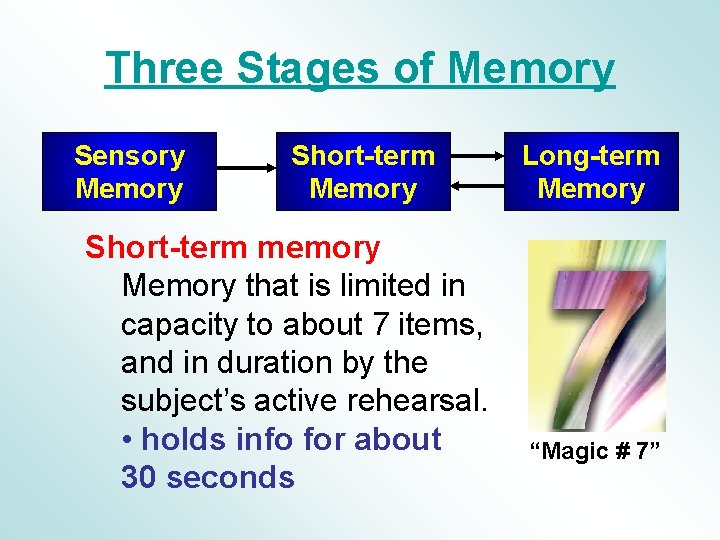
Three Stages of Memory Sensory Memory Short-term memory Memory that is limited in capacity to about 7 items, and in duration by the subject’s active rehearsal. • holds info for about 30 seconds Long-term Memory “Magic # 7”
Now… write down as many as you can remember -Let’s make a list on the board -How’d ya do? Let’s see…. . .
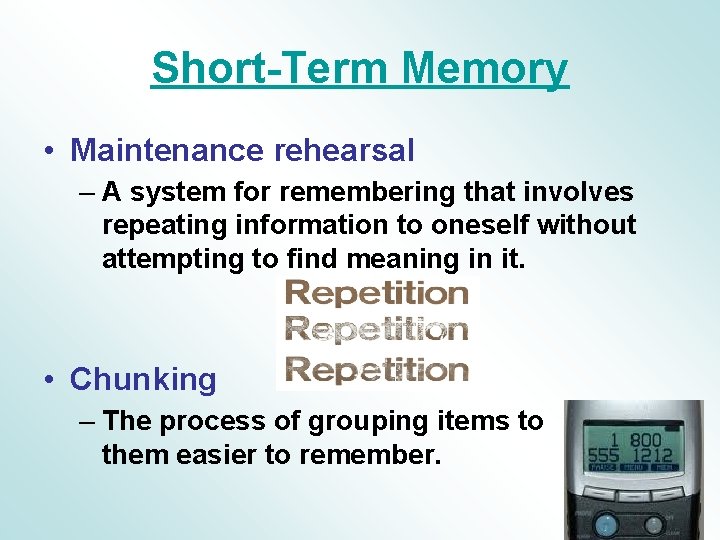
Short-Term Memory • Maintenance rehearsal – A system for remembering that involves repeating information to oneself without attempting to find meaning in it. • Chunking – The process of grouping items to them easier to remember. make
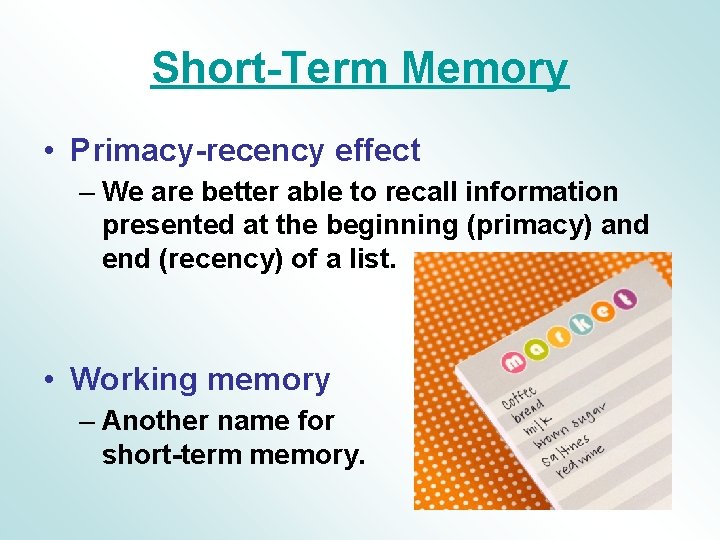
Short-Term Memory • Primacy-recency effect – We are better able to recall information presented at the beginning (primacy) and end (recency) of a list. • Working memory – Another name for short-term memory.
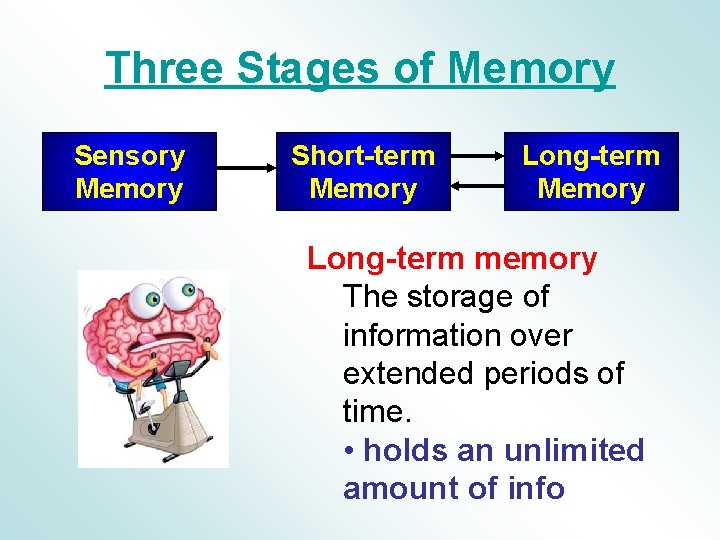
Three Stages of Memory Sensory Memory Short-term Memory Long-term memory The storage of information over extended periods of time. • holds an unlimited amount of info
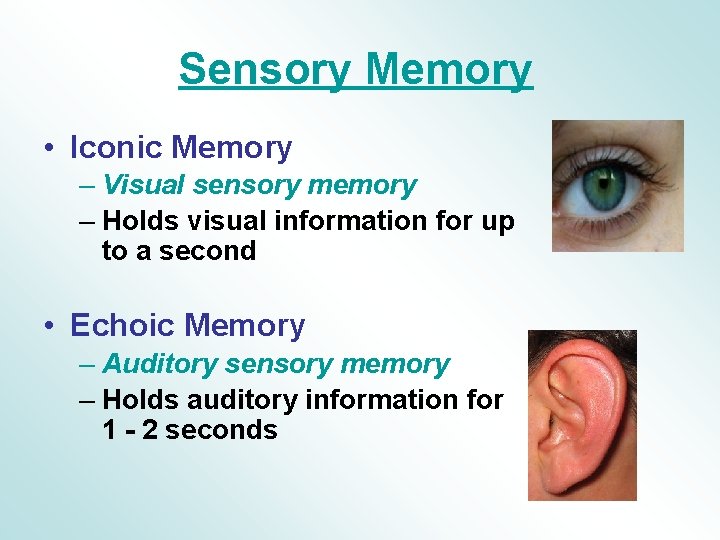
Sensory Memory • Iconic Memory – Visual sensory memory – Holds visual information for up to a second • Echoic Memory – Auditory sensory memory – Holds auditory information for 1 - 2 seconds
Types of Long-Term Memory: Semantic memory Episodic memory Declarative memory Procedural memory
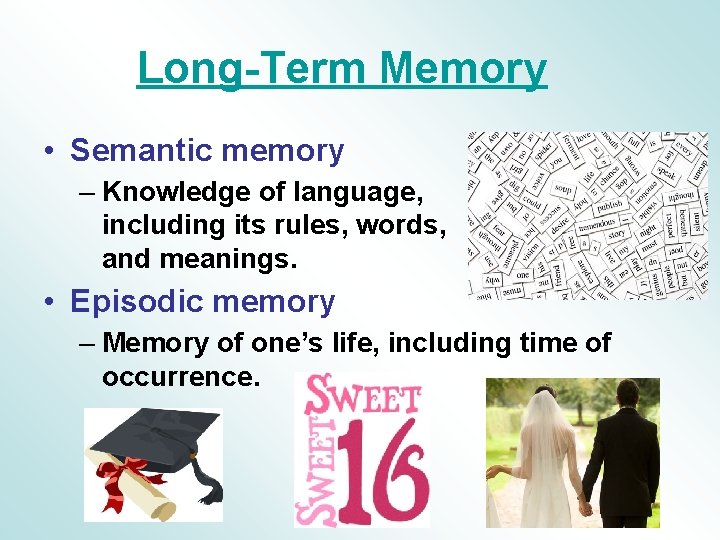
Long-Term Memory • Semantic memory – Knowledge of language, including its rules, words, and meanings. • Episodic memory – Memory of one’s life, including time of occurrence.
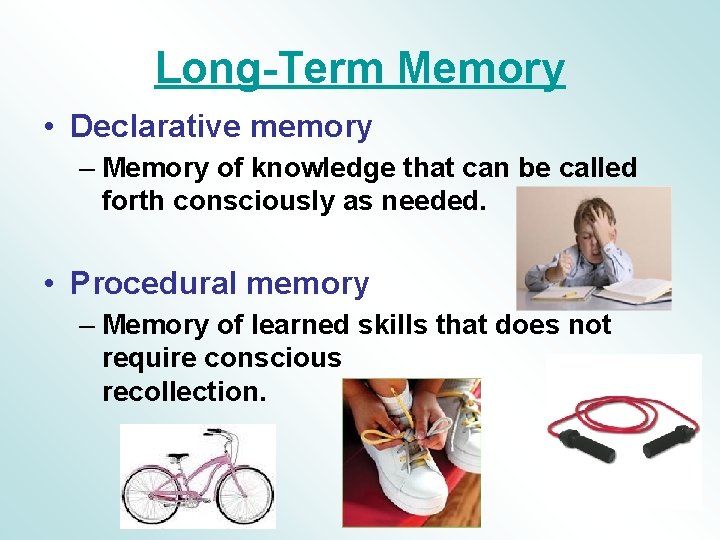
Long-Term Memory • Declarative memory – Memory of knowledge that can be called forth consciously as needed. • Procedural memory – Memory of learned skills that does not require conscious recollection.
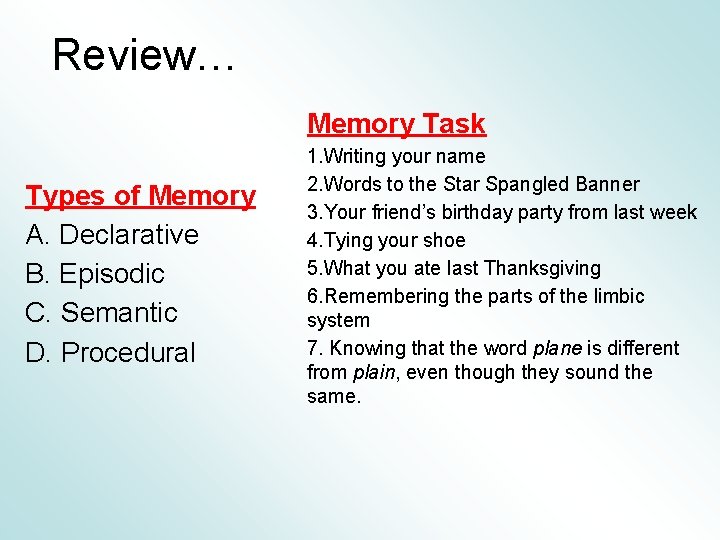
Review… Memory Task Types of Memory A. Declarative B. Episodic C. Semantic D. Procedural 1. Writing your name 2. Words to the Star Spangled Banner 3. Your friend’s birthday party from last week 4. Tying your shoe 5. What you ate last Thanksgiving 6. Remembering the parts of the limbic system 7. Knowing that the word plane is different from plain, even though they sound the same.
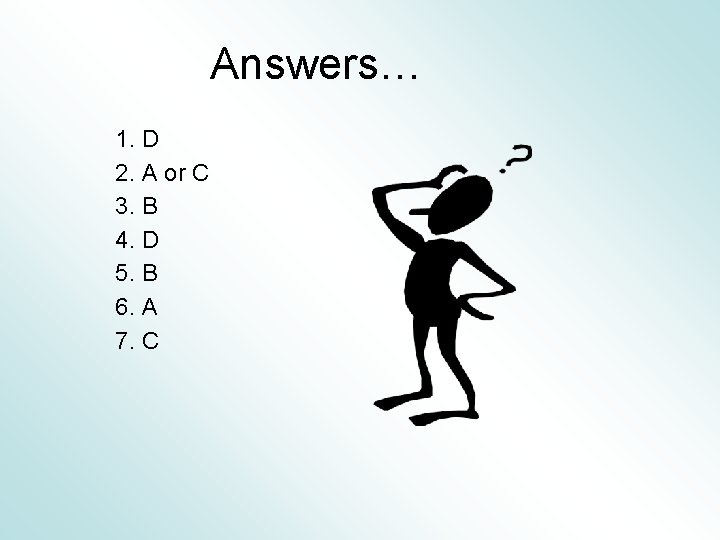
Answers… 1. D 2. A or C 3. B 4. D 5. B 6. A 7. C
That’s [for now] all folks. . .