
Chapter 1 Your Health and Wellness Key Terms



- Slides: 29
Chapter 1: Your Health and Wellness
• • • • Key Terms to define in your notes Health *Peers Wellness Lifestyle factors Prevention Health education Health literacy Heredity Environment Refusal Skills Self esteem Stress Goals Action plan *Culture *Risk factors * Values *Abstinence *health skills * communication
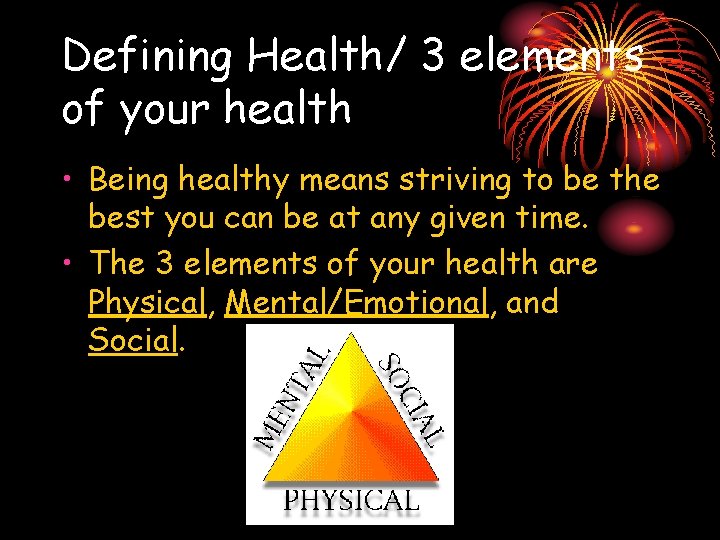
Defining Health/ 3 elements of your health • Being healthy means striving to be the best you can be at any given time. • The 3 elements of your health are Physical, Mental/Emotional, and Social.
Physical Health • Physical health is the way the parts and systems of you body work together. • Your body’s ability to cope with stress. • The strength and energy to pursue physical, mental, and social challenges and changes • To gain or maintain it you need to have proper nutrition, regular exercise, and get enough sleep.
Mental Health • Includes your feelings about yourself, how well you relate to others, how well you meet the demands of daily life. • Mental health calls for a person to use his or her mind to develop thinking skills. • See mistakes as opportunities to learn, grow, and change. • You enjoy learning and strive for information.
Emotional Health • A person with good emotional health is in touch with his or her feelings and expresses them in appropriate, healthful ways. • Avoid dwelling on negative thoughts. Use positive thoughts to move through challenges. • You are emotional healthy when the feelings you experience are appropriate responses to events. • To maintain your emotional health, you need to take time to relax and share your feelings with others or in a journal.
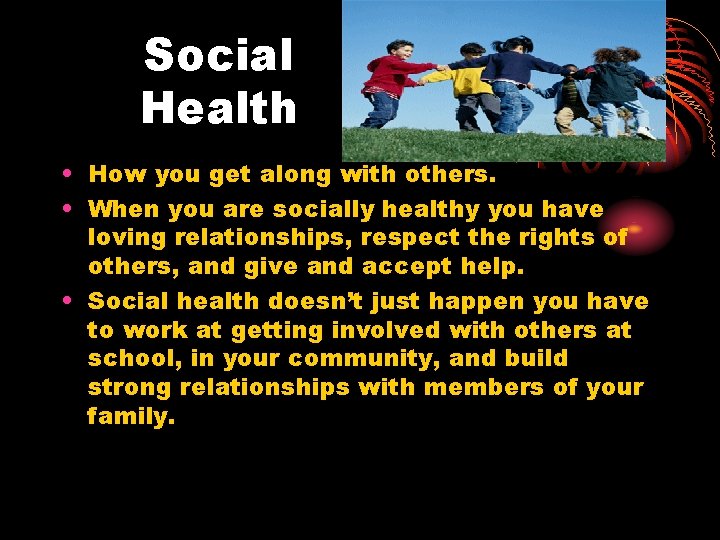
Social Health • How you get along with others. • When you are socially healthy you have loving relationships, respect the rights of others, and give and accept help. • Social health doesn’t just happen you have to work at getting involved with others at school, in your community, and build strong relationships with members of your family.
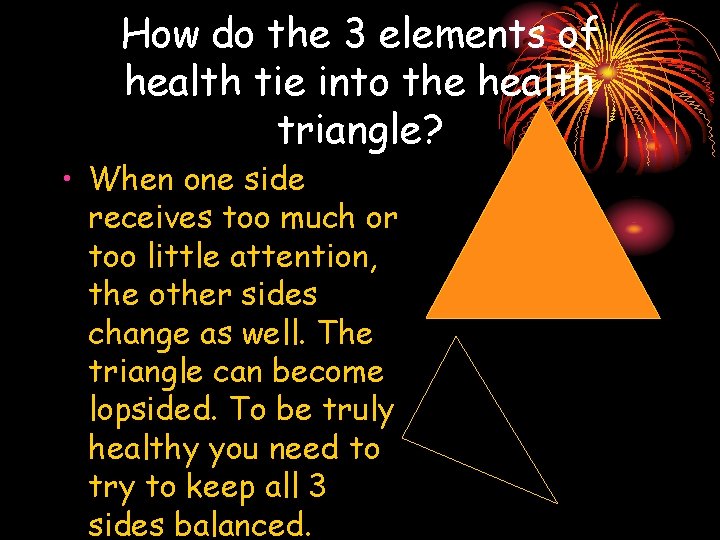
How do the 3 elements of health tie into the health triangle? • When one side receives too much or too little attention, the other sides change as well. The triangle can become lopsided. To be truly healthy you need to try to keep all 3 sides balanced.
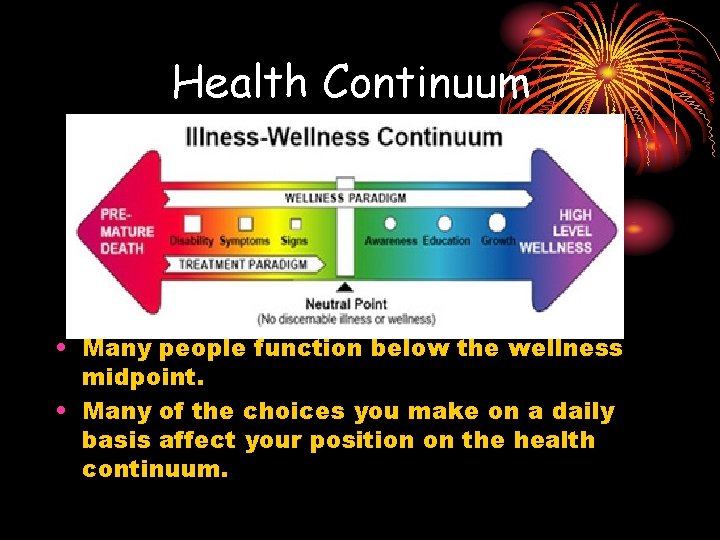
Health Continuum • Many people function below the wellness midpoint. • Many of the choices you make on a daily basis affect your position on the health continuum.
Draw a line across a sheet of paper. Put a dot at each end of the line. The beginning of the line represents birth. Place 10 year increments from birth till death. At the end of the line put the number of years you wish to live. Birth 10 20 30 40 50 60 70 80 90
Now take off the following number of years for the following habits: • Smoking 2 packs of cigarettes a day~ 8 years • Drinking alcohol 3 or more ounces a week~ 10 years • Overeating (more than 2500 calories per day)~ 5 years • Eating too much fat (pork, beef, cheese) in your diet~ 5 years • Eating lots of sugar~ 8 years • Not exercising at least 3 times a week~ 10 years • Being overweight~ 10 years • Having lots of stress in your life~ 7 years • So living to 95 suddenly changes to living to 39!!!
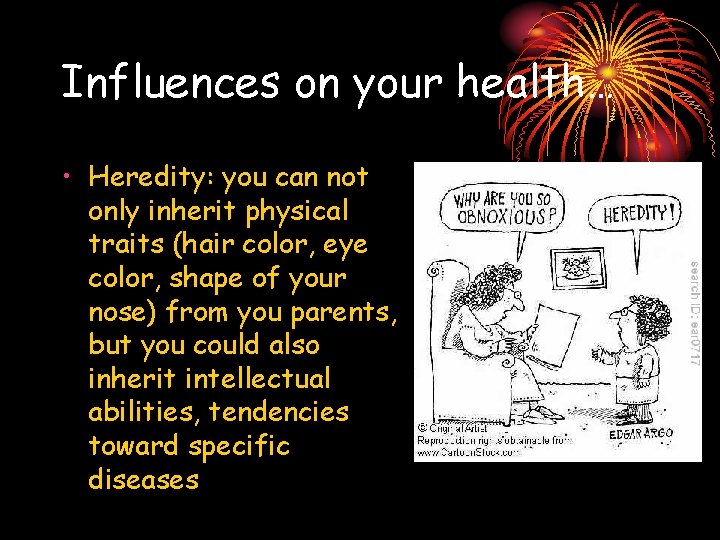
Influences on your health… • Heredity: you can not only inherit physical traits (hair color, eye color, shape of your nose) from you parents, but you could also inherit intellectual abilities, tendencies toward specific diseases
Environment: can be broken down into physical, social, and cultural. • Physical environment can affect all 3 elements of your health. • Do you live in a neighborhood where there are parks, clean and safe streets, high crime rate, hospitals near by, smog, etc. • Physical is where your house is, type of neighborhood, part of the country.
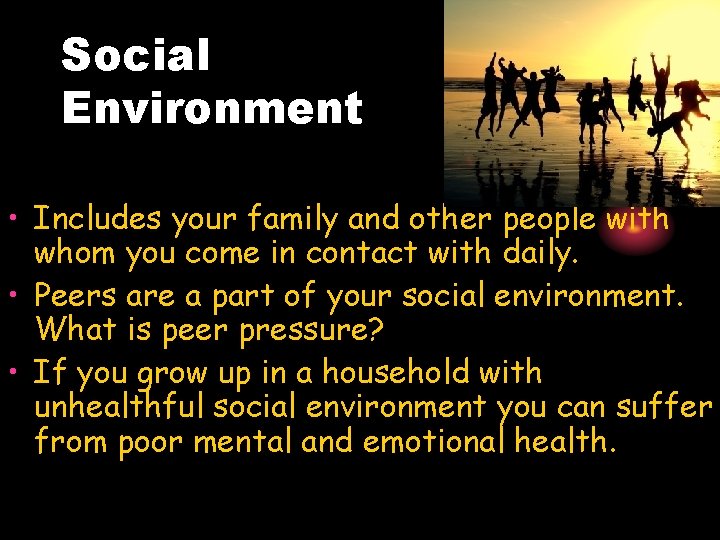
Social Environment • Includes your family and other people with whom you come in contact with daily. • Peers are a part of your social environment. What is peer pressure? • If you grow up in a household with unhealthful social environment you can suffer from poor mental and emotional health.
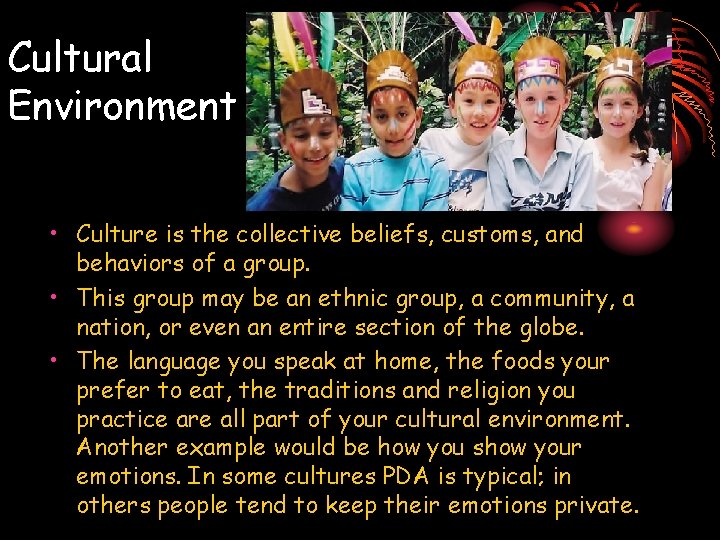
Cultural Environment • Culture is the collective beliefs, customs, and behaviors of a group. • This group may be an ethnic group, a community, a nation, or even an entire section of the globe. • The language you speak at home, the foods your prefer to eat, the traditions and religion you practice are all part of your cultural environment. Another example would be how you show your emotions. In some cultures PDA is typical; in others people tend to keep their emotions private.
Other factors that influence your health. . • Media~ tv, music, video games, movies, newspapers, magazines. An average teen spends 20 hours a week watching T. V. It can be positive because you may receive useful information from public service announcements, you might also learn about a medical issue. • How can it be negative? You are not out exercising, you are not relating to other family members or taking part in community activities.
Taking Charge of Your Health • Accepting responsibility for your own health and for the health of others is a positive step towards overall wellness • Risk Factors: • Actions or behaviors that represent a potential health threat
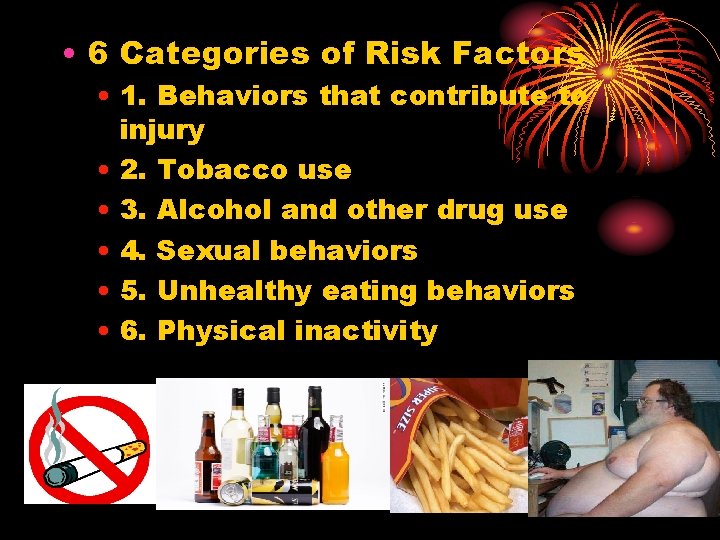
• 6 Categories of Risk Factors • 1. Behaviors that contribute to injury • 2. Tobacco use • 3. Alcohol and other drug use • 4. Sexual behaviors • 5. Unhealthy eating behaviors • 6. Physical inactivity
Cumulative Risks • Risks that increase gradually and may add up to a consequence that is worse than expected. • Example: • Driving over speed limit without a seat belt on or eating too much fast food.
Protective Factors • When certain “protective factors” are present in a teen’s life, the amount of at-risk behaviors decrease substantially. • Some protective factors include:
• Support and Encouragement from family and friends • Positive Role Models • Positive Values • Beliefs and standards of conduct that you find important • ABSTINENCE • Voluntarily choosing not to do something
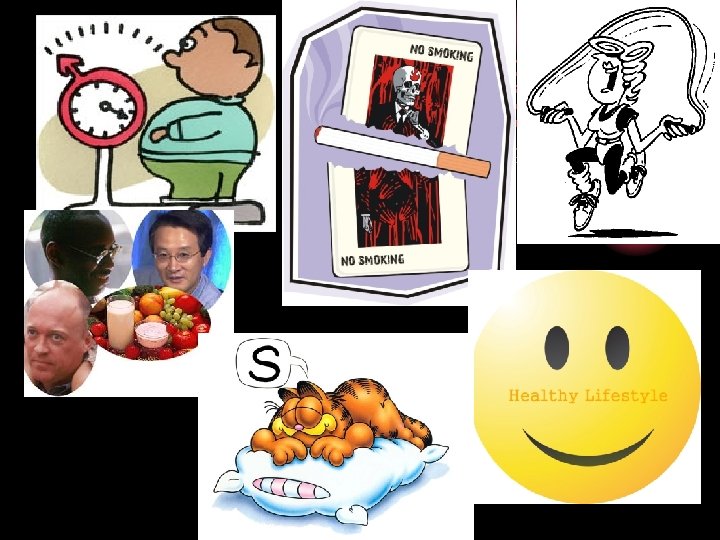
Lifestyle factors • Are the personal habits or behaviors related to the way a person life. . including: Get 8 -10 hours of sleep 2. Eat nutritious foods from various food groups 3. Refrain from smoking and using tobacco products. 4. Do 30 -60 minutes of vigorous physical activity 3 times a week. 5. Do not use drugs or alcohol. 6. Maintain recommended weight. 7. Maintain healthy relationships
Promoting Health and wellness • Achieving a higher level of wellness means achieving a higher quality of life.
Why is health education important? It’s not just learning about health facts, its goal is to give students the tools needed to achieve and maintain total well being. It’s about gaining health literacy. ** Health literacy is the capacity to obtain, interpret, and understand basic health information and services.
Healthy People • Is a nationwide health promotion and disease prevention plan designed to serve as a guide for improving the health in the United States • Goals • 1. to increase length and quality of life in all Americans • 2. reduce health disparities (disparities – the difference in health outcomes among groups)
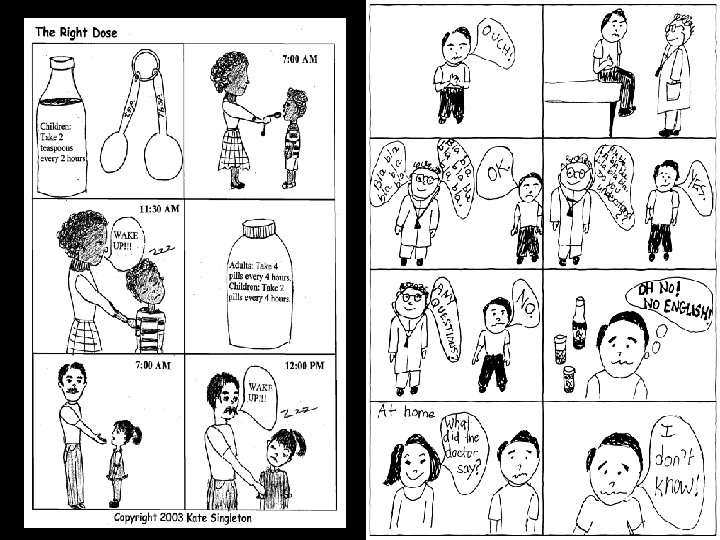
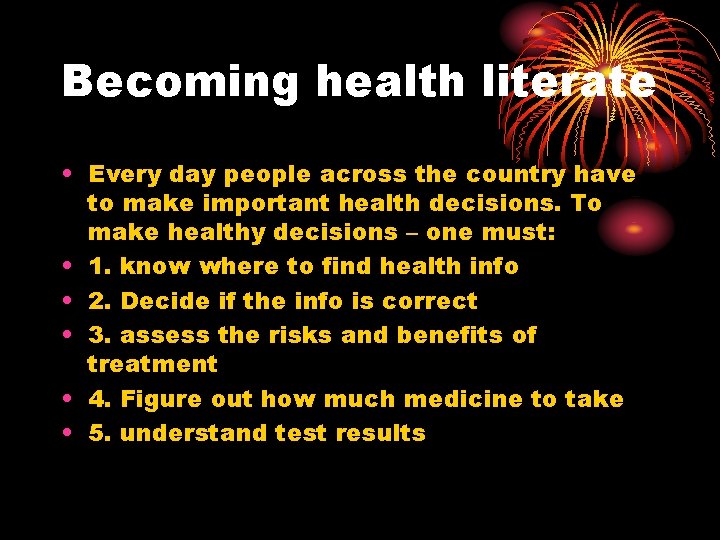
Becoming health literate • Every day people across the country have to make important health decisions. To make healthy decisions – one must: • 1. know where to find health info • 2. Decide if the info is correct • 3. assess the risks and benefits of treatment • 4. Figure out how much medicine to take • 5. understand test results
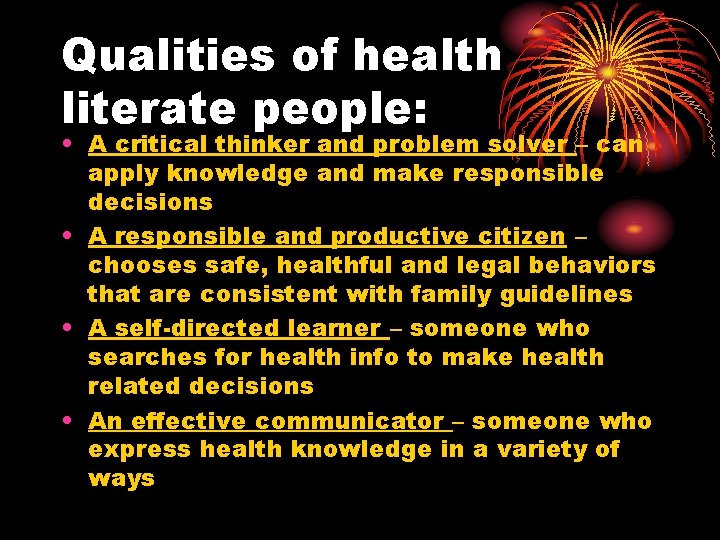
Qualities of health literate people: • A critical thinker and problem solver – can apply knowledge and make responsible decisions • A responsible and productive citizen – chooses safe, healthful and legal behaviors that are consistent with family guidelines • A self-directed learner – someone who searches for health info to make health related decisions • An effective communicator – someone who express health knowledge in a variety of ways