
Chapter 1 Why Study Money Banking and Financial
Chapter 1 Why Study Money, Banking and Financial Markets?
Preview • In this chapter, we examine how financial markets such as bond, stock and foreign exchange markets work, and examine how financial institutions such as banks, investment and insurance companies work. Meanwhile, we understand the role of money in the economy.
Learning Objectives • Recognize the importance of financial markets in the economy. • Describe how financial intermediation and financial innovation affect banking and the economy. • Identify the basic links among monetary policy, the business cycle, and economic variables.
1. Why study financial markets? 2. Why study banking and financial institutions? 3. Why study money and monetary policy? 4. How we will study money, banking, and financial markets?
1. Why study financial markets? • Financial markets are markets in which funds are transferred from people and firms who have an excess of available funds to people and firms who have a need of funds
The Bond Market and Interest Rates • A security (financial instrument) is a claim on the issuer’s future income or assets. • A bond is a debt security that promises to make payments periodically for a specified period of time. • An interest rate is the cost of borrowing or the price paid for the rental of funds.
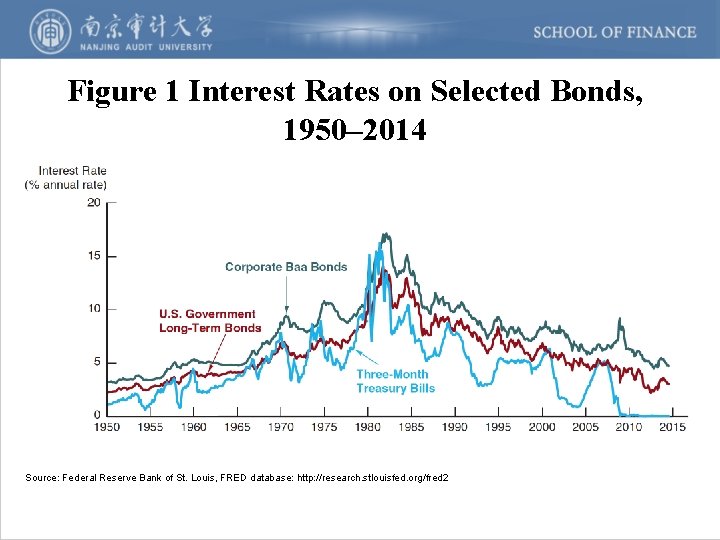
Figure 1 Interest Rates on Selected Bonds, 1950– 2014 Source: Federal Reserve Bank of St. Louis, FRED database: http: //research. stlouisfed. org/fred 2
The Stock Market • Common stock represents a share of ownership in a corporation. • A share of stock is a claim on the residual earnings and assets of the corporation.
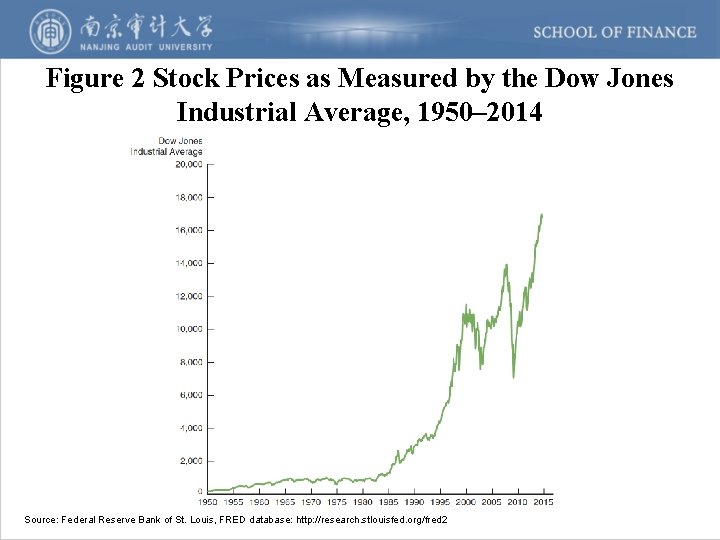
Figure 2 Stock Prices as Measured by the Dow Jones Industrial Average, 1950– 2014 Source: Federal Reserve Bank of St. Louis, FRED database: http: //research. stlouisfed. org/fred 2
2. Why Study Financial Institutions and Banking? • Financial intermediaries: institutions that borrow funds from people who have saved and in turn make loans to other people. – Banks: accept deposits and make loans – Other financial institutions: insurance companies, finance companies, pension funds, mutual funds and investment companies • Financial innovation: the development of new financial products and services – Can be an important force for good by making the financial system more efficient
2. Why Study Financial Institutions and Banking? • Financial crises: major disruptions in financial markets that are characterized by sharp declines in asset prices and the failures of many financial and nonfinancial firms.
3. Why Study Money and Monetary Policy? • Evidence suggests that money plays an important role in generating business cycles. • Recessions (unemployment) and expansions affect all of us. • Monetary theory ties changes in the money supply to changes in aggregate economic activity and the price level.
Money, Business Cycles, and Inflation • The aggregate price level is the average price of goods and services in an economy • A continual rise in the price level (inflation) affects all economic players • Data shows a connection between the money supply and the price level
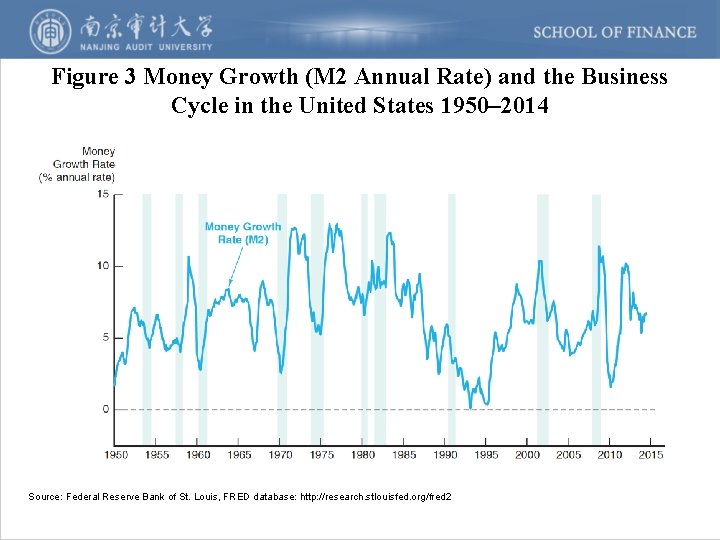
Figure 3 Money Growth (M 2 Annual Rate) and the Business Cycle in the United States 1950– 2014 Source: Federal Reserve Bank of St. Louis, FRED database: http: //research. stlouisfed. org/fred 2
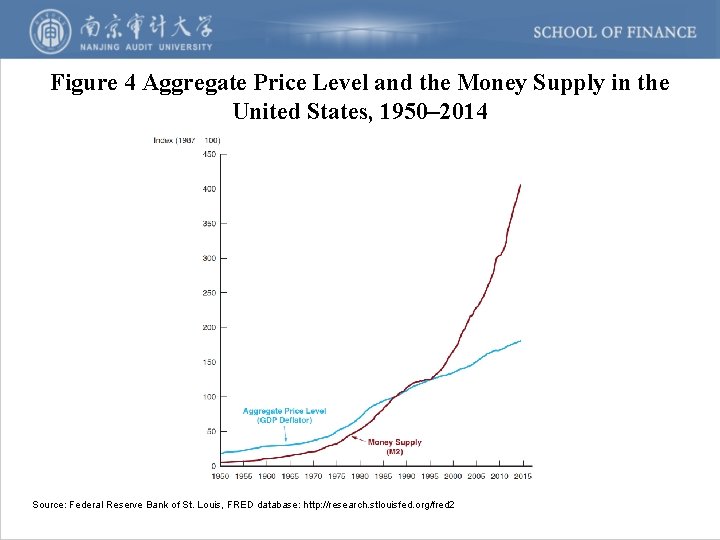
Figure 4 Aggregate Price Level and the Money Supply in the United States, 1950– 2014 Source: Federal Reserve Bank of St. Louis, FRED database: http: //research. stlouisfed. org/fred 2
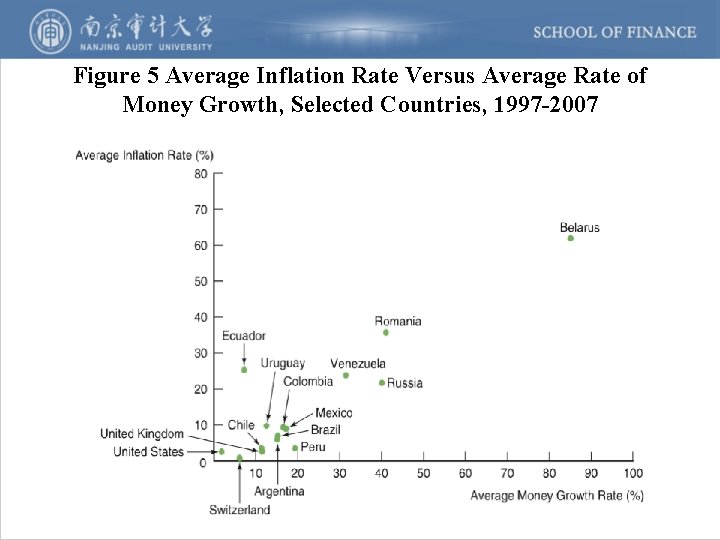
Figure 5 Average Inflation Rate Versus Average Rate of Money Growth, Selected Countries, 1997 -2007
Money and Interest Rates • Interest rates are the price of money • Prior to 1980, the rate of money growth and the interest rate on long-term Treasury bonds were closely tied • Since then, the relationship is less clear but the rate of money growth is still an important determinant of interest rates
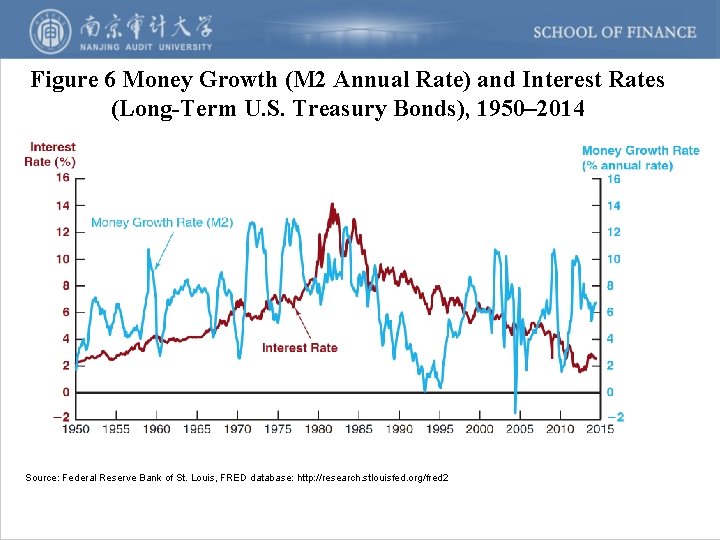
Figure 6 Money Growth (M 2 Annual Rate) and Interest Rates (Long-Term U. S. Treasury Bonds), 1950– 2014 Source: Federal Reserve Bank of St. Louis, FRED database: http: //research. stlouisfed. org/fred 2
Fiscal Policy and Monetary Policy • Monetary policy is the management of the money supply and interest rates – Conducted in the U. S. by the Federal Reserve System (Fed) • Fiscal policy deals with government spending and taxation – Budget deficit is the excess of expenditures over revenues for a particular year – Budget surplus is the excess of revenues over expenditures for a particular year – Any deficit must be financed by borrowing
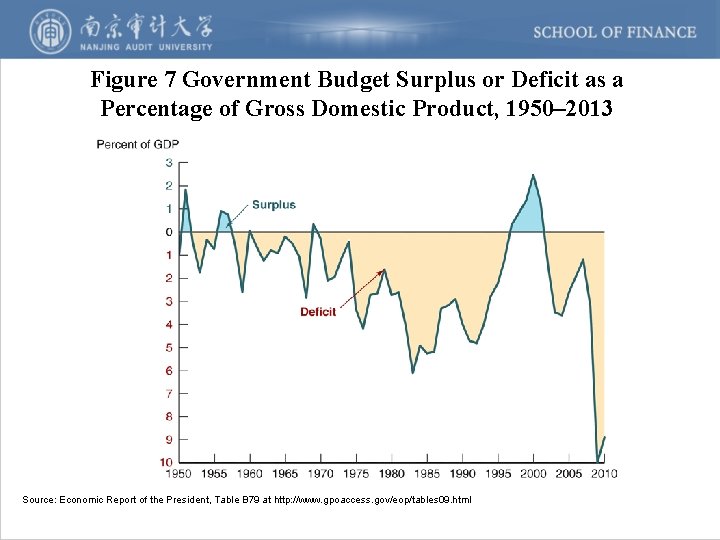
Figure 7 Government Budget Surplus or Deficit as a Percentage of Gross Domestic Product, 1950– 2013 Source: Economic Report of the President, Table B 79 at http: //www. gpoaccess. gov/eop/tables 09. html
The Foreign Exchange Market • The foreign exchange market: where funds are converted from one currency into another • The foreign exchange rate is the price of one currency in terms of another currency. • The foreign exchange market determines the foreign exchange rate.
4. Why Study International Finance • Financial markets have become increasingly integrated throughout the world. • The international financial system has tremendous impact on domestic economies: – How a country’s choice of exchange rate policy affect its monetary policy? – How capital controls impact domestic financial systems and therefore the performance of the economy? – Which should be the role of international financial institutions like the IMF?
How We Will Study Money, Banking, and Financial Markets • A simplified approach to the demand for assets • The concept of equilibrium • Basic supply and demand to explain behavior in financial markets • The search for profits • An approach to financial structure based on transaction costs and asymmetric information • Aggregate supply and demand analysis
Aggregate Price Level • The aggregate price level is a measure of average prices in the economy. • Three measures of the aggregate price level are commonly encountered in economic data: – The GDP deflator – The PCE deflator – The Consumer Price Index (CPI)
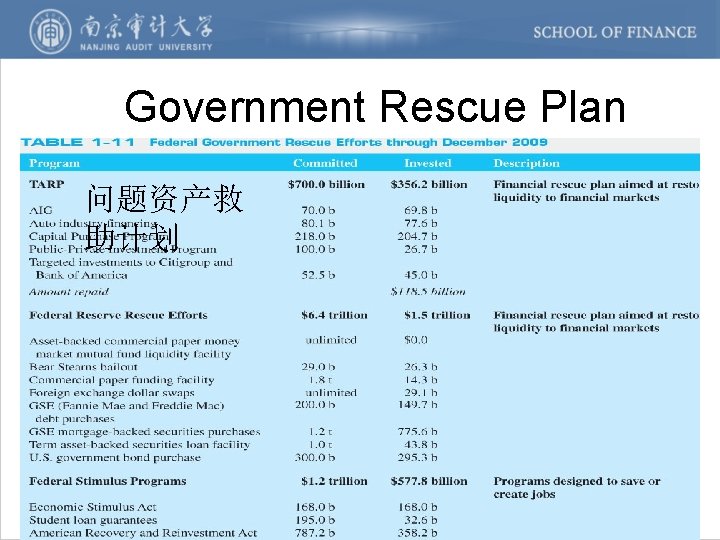
Government Rescue Plan 问题资产救 助计划
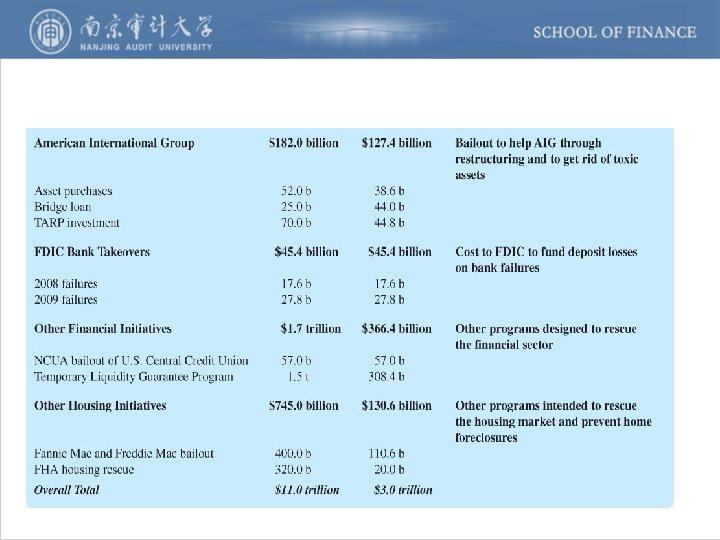
Government Rescue Plan
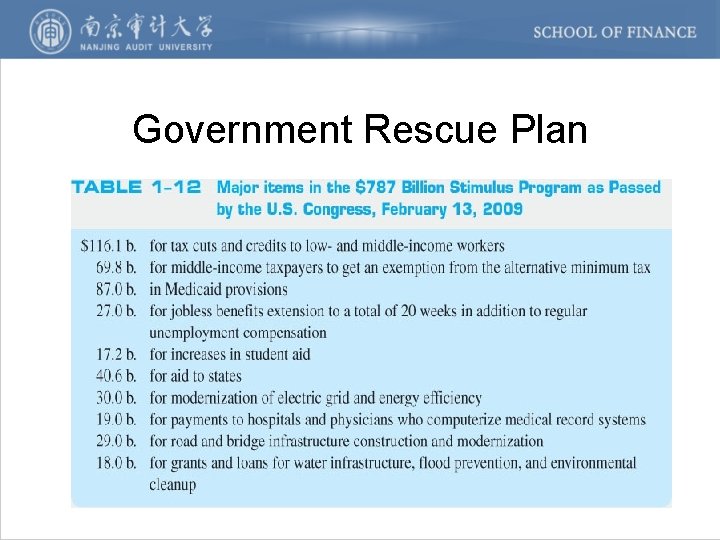
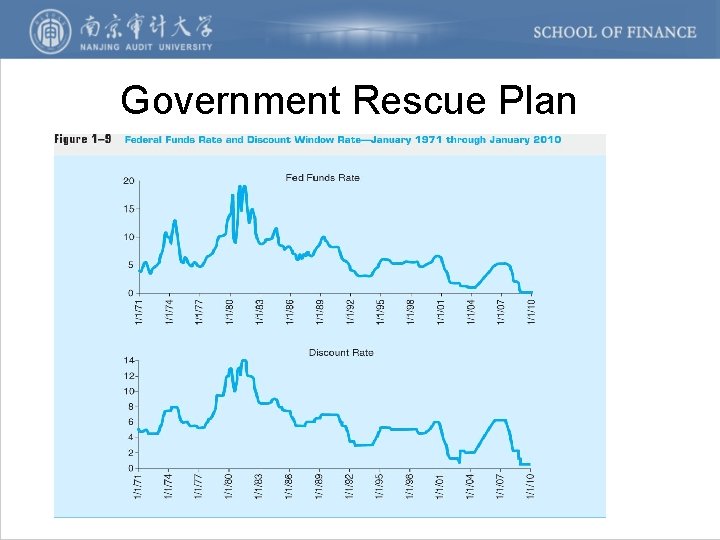
Government Rescue Plan
Moody's: There is unlikely to cut the U. S. sovereign credit rating the next two years Value 24 billions

AIG have up to $ 75 billion funding gap , self-help is hopeless.
On the 15 th in 2009, to resolve the financial difficulties of AIG, ① its headquarters in New York announced that the company allow AIG to borrow $ 20 billion assets to be used to help themselves. ② the U. S. government was not hesitate to break promises again to spend taxpayers' money to take over AIG.
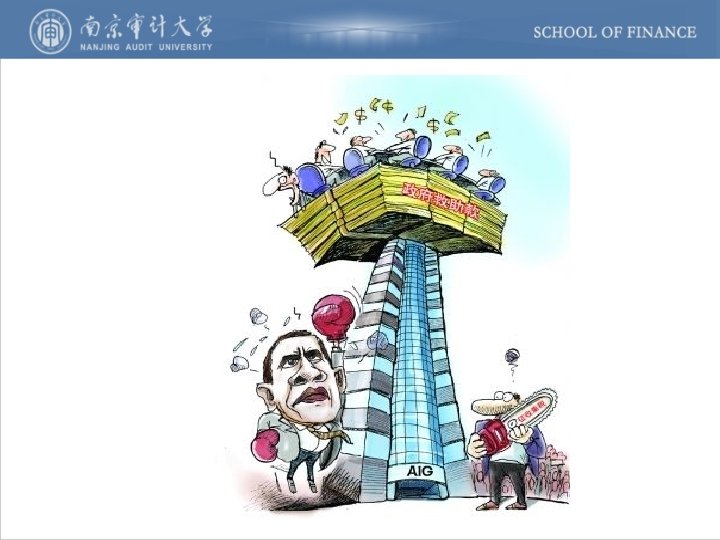
To safeguard the interests of taxpayers not to be harmed, the loan will be secured by all assets of AIG. The Fed said the loan is expected to adopt the company's asset sale proceeds to be repaid. Meanwhile, as a condition of providing loans, the U. S. government will control AIG 79. 9% of the shares, essentially took over AIG.
- Slides: 38