
chapter 1 What Is Sport and Why Do





- Slides: 24
chapter 1 What Is Sport and Why Do We Study It?
Chapter Outline • • Sport Through the Ages Definition of Sport The Study of Sport Summary
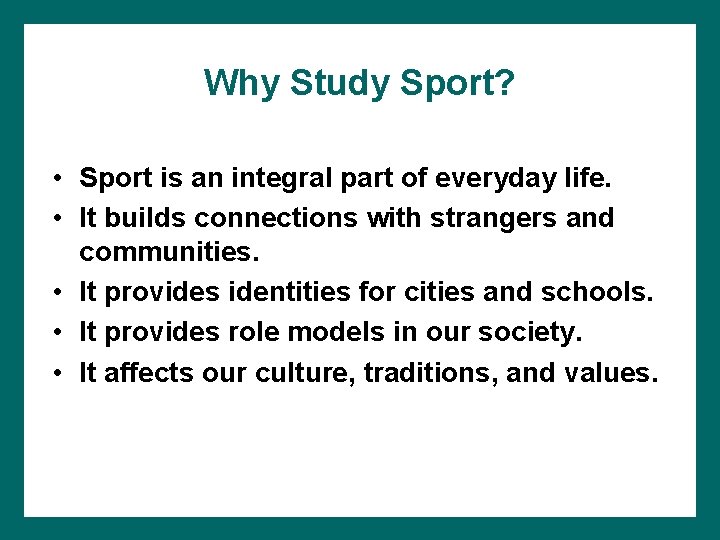
Why Study Sport? • Sport is an integral part of everyday life. • It builds connections with strangers and communities. • It provides identities for cities and schools. • It provides role models in our society. • It affects our culture, traditions, and values.
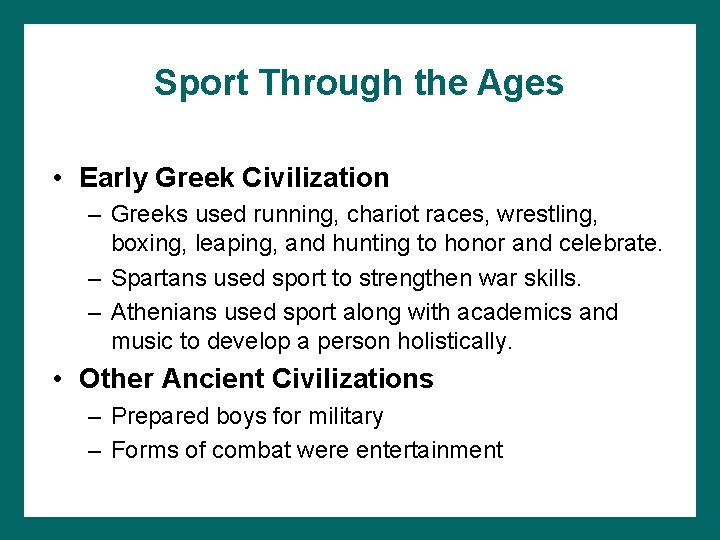
Sport Through the Ages • Early Greek Civilization – Greeks used running, chariot races, wrestling, boxing, leaping, and hunting to honor and celebrate. – Spartans used sport to strengthen war skills. – Athenians used sport along with academics and music to develop a person holistically. • Other Ancient Civilizations – Prepared boys for military – Forms of combat were entertainment
What is the difference between play, games, sport, and work?
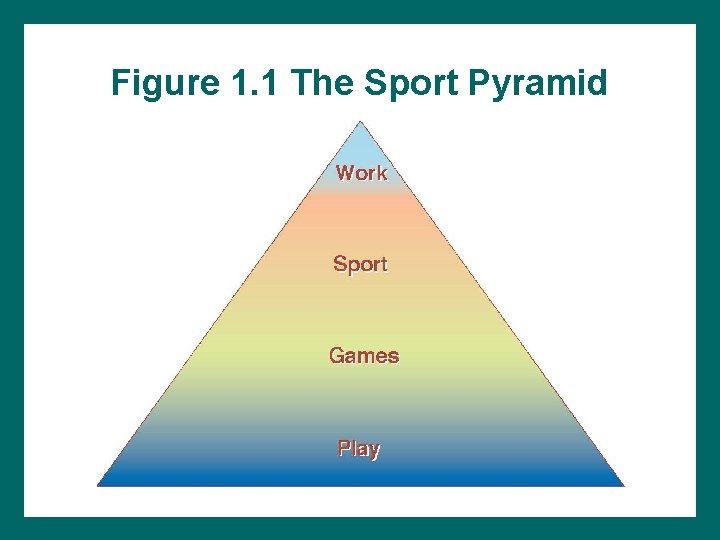
Figure 1. 1 The Sport Pyramid
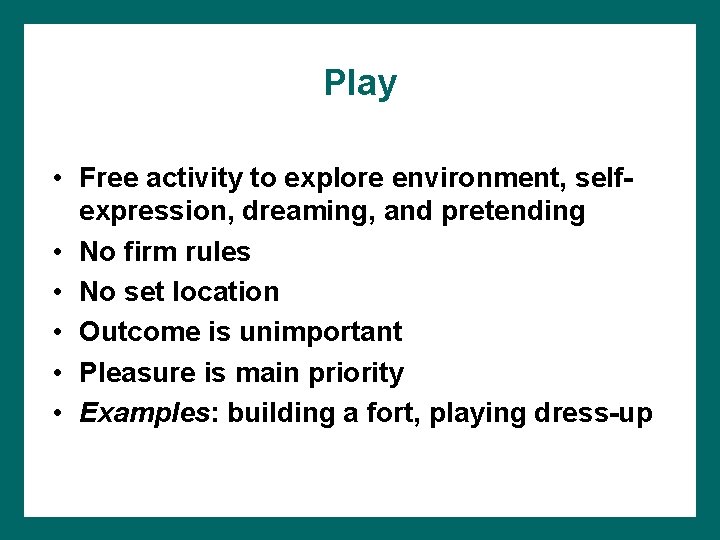
Play • Free activity to explore environment, selfexpression, dreaming, and pretending • No firm rules • No set location • Outcome is unimportant • Pleasure is main priority • Examples: building a fort, playing dress-up
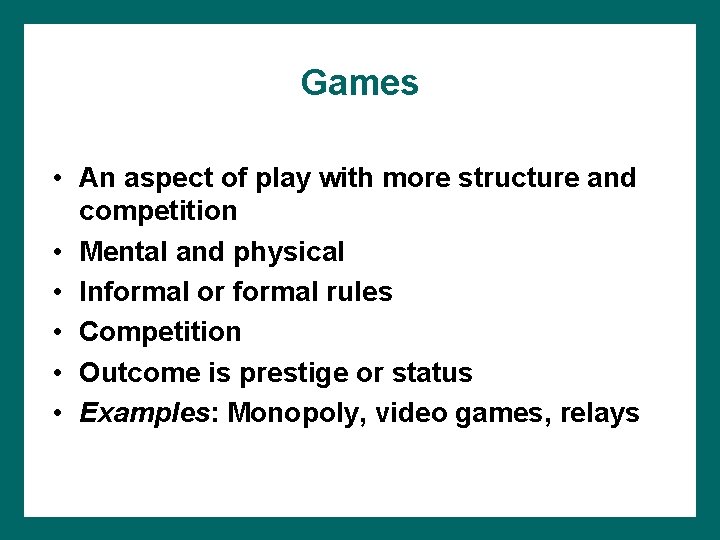
Games • An aspect of play with more structure and competition • Mental and physical • Informal or formal rules • Competition • Outcome is prestige or status • Examples: Monopoly, video games, relays
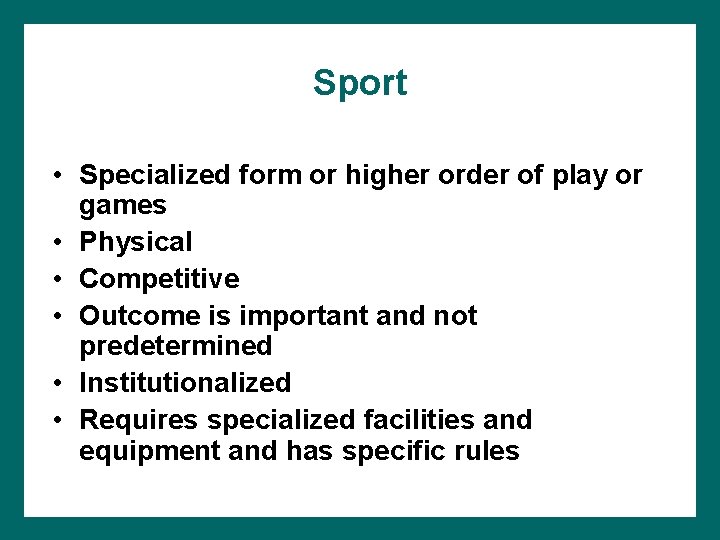
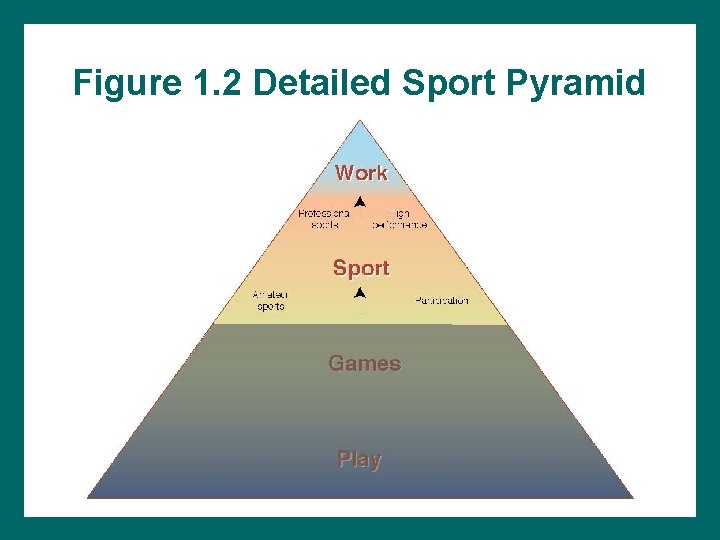
Sport • Specialized form or higher order of play or games • Physical • Competitive • Outcome is important and not predetermined • Institutionalized • Requires specialized facilities and equipment and has specific rules
Sport, then, is typically defined in North America as institutionalized competitive activity that involves physical skill and specialized facilities or equipment and is conducted according to an accepted set of rules to determine a winner.
Work • Physical or mental effort to perform a task • Often connected to earning a living and compensation • Professional athletes work when they are paid to play sport
Figure 1. 2 Detailed Sport Pyramid
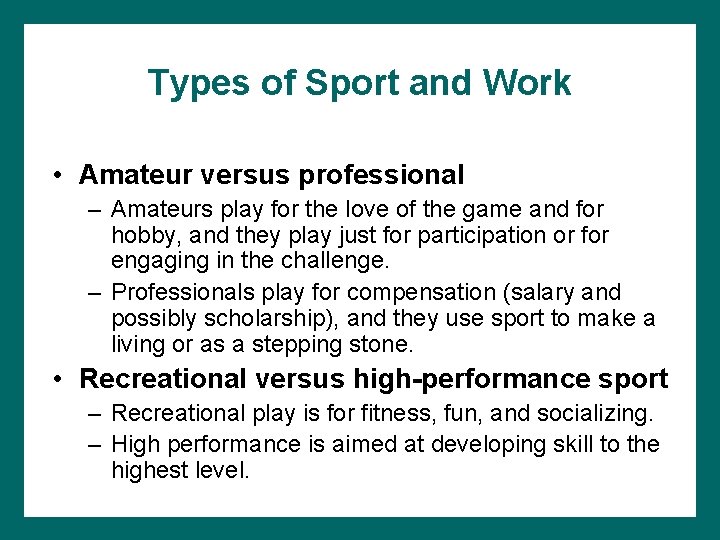
Types of Sport and Work • Amateur versus professional – Amateurs play for the love of the game and for hobby, and they play just for participation or for engaging in the challenge. – Professionals play for compensation (salary and possibly scholarship), and they use sport to make a living or as a stepping stone. • Recreational versus high-performance sport – Recreational play is for fitness, fun, and socializing. – High performance is aimed at developing skill to the highest level.
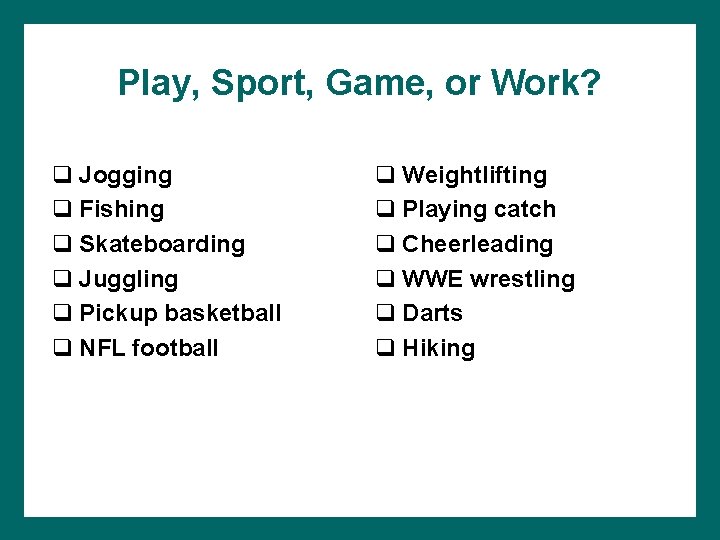
Play, Sport, Game, or Work? q Jogging q Fishing q Skateboarding q Juggling q Pickup basketball q NFL football q Weightlifting q Playing catch q Cheerleading q WWE wrestling q Darts q Hiking
Sport in American Society • Drawing the line between amateur and professional • Differences between United States and European athletic systems • Case study: Jim Thorpe
The Study of Sport Why do people study sport? – Personal development – Scholarly study – Professional practice
Key Point In any country, there are millions of sport fans and trivia experts but relatively few sport scientists.
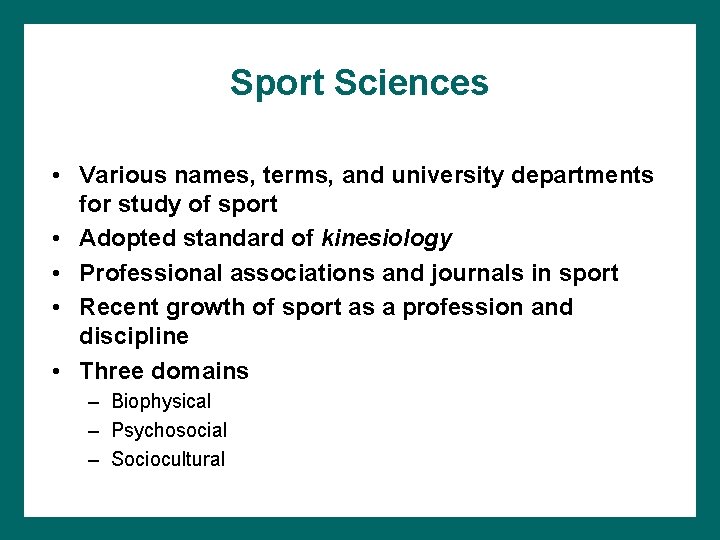
Sport Sciences • Various names, terms, and university departments for study of sport • Adopted standard of kinesiology • Professional associations and journals in sport • Recent growth of sport as a profession and discipline • Three domains – Biophysical – Psychosocial – Sociocultural
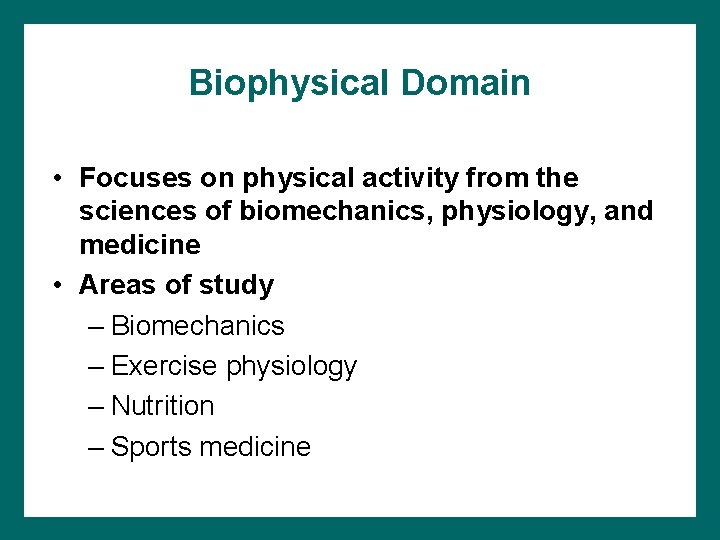
Biophysical Domain • Focuses on physical activity from the sciences of biomechanics, physiology, and medicine • Areas of study – Biomechanics – Exercise physiology – Nutrition – Sports medicine
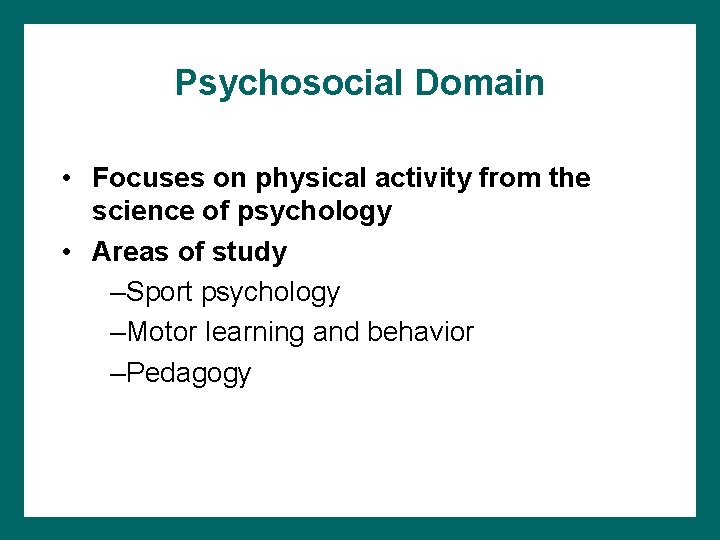
Psychosocial Domain • Focuses on physical activity from the science of psychology • Areas of study –Sport psychology –Motor learning and behavior –Pedagogy
Sociocultural Domain • Focuses on physical activity from the sciences of history, philosophy, and sociology • Areas of study – Sport history – Sport philosophy – Sport sociology
Sociology • Sociology is the study of a society, its institutions, and its relationships. • Sport sociology is the study of sport and physical activity within the context of the social conditions and culture in which people live.
Summary • Sport is found in many aspects of everyday life. • The sport pyramid is a useful way of looking at the various levels of sport. • Sport is a specialized and higher order of games. • Professional sports focus on high performance and are work for professional athletes. • The line between amateur and professional sports is not clear. • The study of sport as a science is growing. • There are multiple reasons for studying sport. • Sport sociology is the study of sport within social context.
On Deck… • Questions and comments • Assignments and readings • Next chapter: How Do We Study Sport? – Research methods – Theories