
Chapter 1 What Is Macroeconomics Copyright 2012 Pearson
- Slides: 22
Chapter 1 • What Is Macroeconomics ? Copyright © 2012 Pearson Addison-Wesley. All rights reserved.
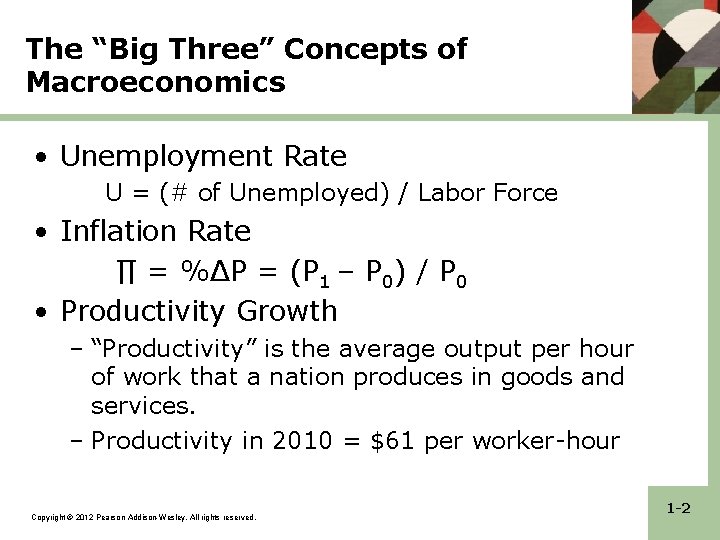
The “Big Three” Concepts of Macroeconomics • Unemployment Rate U = (# of Unemployed) / Labor Force • Inflation Rate ∏ = %ΔP = (P 1 – P 0) / P 0 • Productivity Growth – “Productivity” is the average output per hour of work that a nation produces in goods and services. – Productivity in 2010 = $61 per worker-hour Copyright © 2012 Pearson Addison-Wesley. All rights reserved. 1 -2
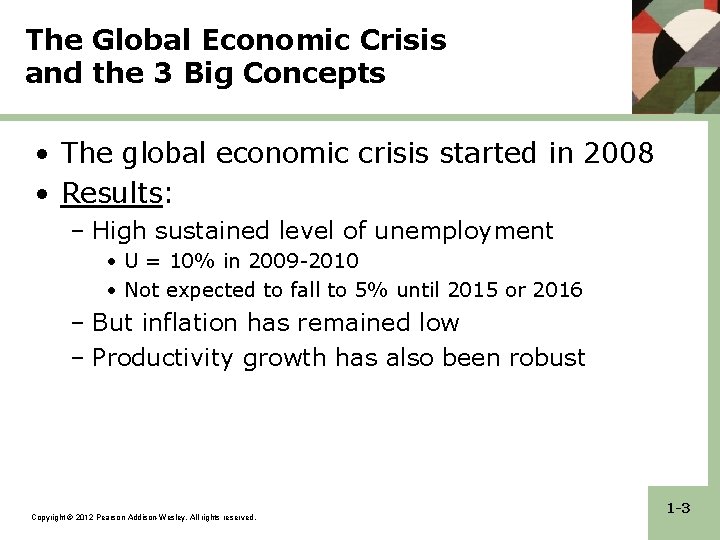
The Global Economic Crisis and the 3 Big Concepts • The global economic crisis started in 2008 • Results: – High sustained level of unemployment • U = 10% in 2009 -2010 • Not expected to fall to 5% until 2015 or 2016 – But inflation has remained low – Productivity growth has also been robust Copyright © 2012 Pearson Addison-Wesley. All rights reserved. 1 -3
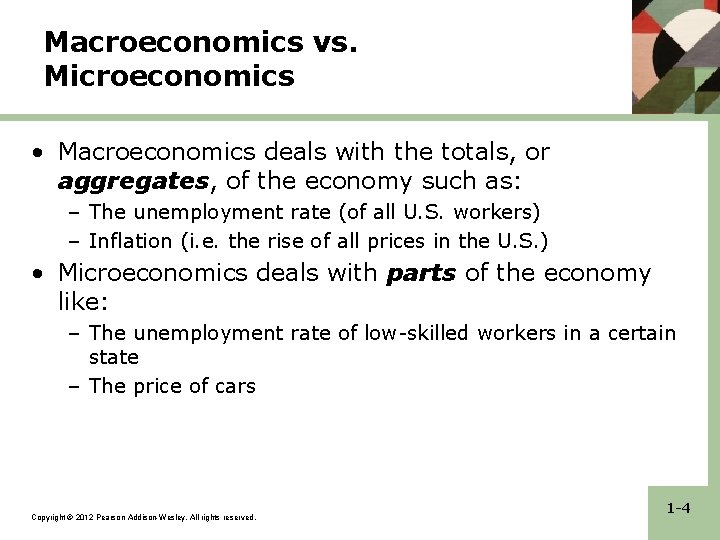
Macroeconomics vs. Microeconomics • Macroeconomics deals with the totals, or aggregates, of the economy such as: – The unemployment rate (of all U. S. workers) – Inflation (i. e. the rise of all prices in the U. S. ) • Microeconomics deals with parts of the economy like: – The unemployment rate of low-skilled workers in a certain state – The price of cars Copyright © 2012 Pearson Addison-Wesley. All rights reserved. 1 -4
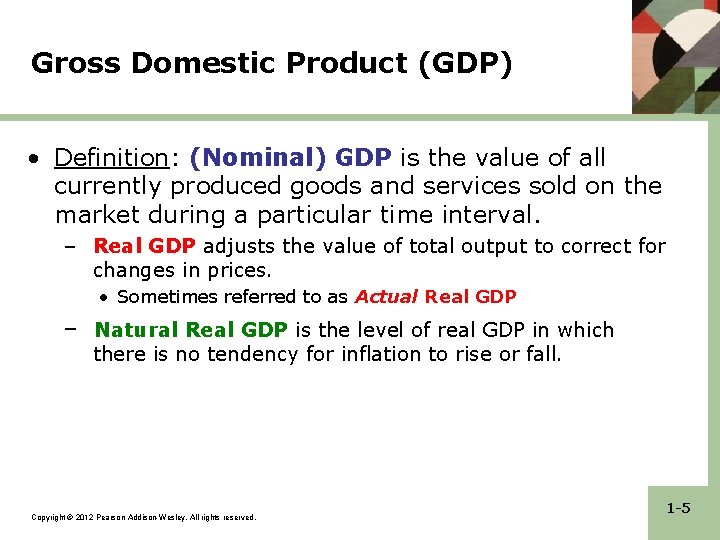
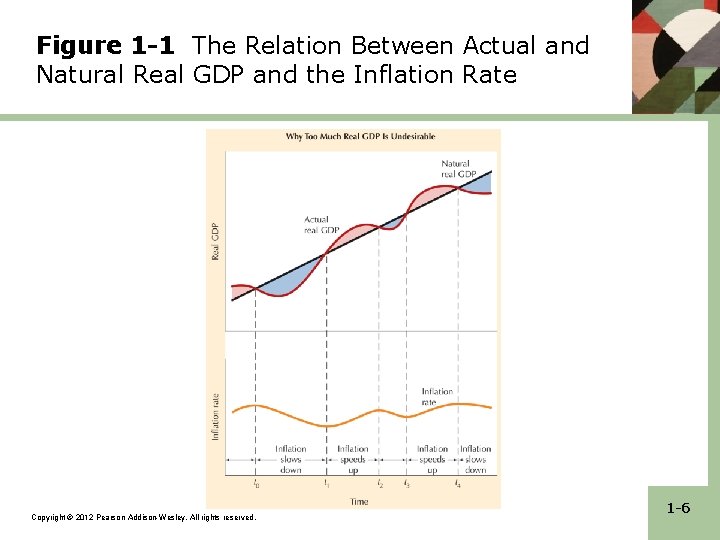
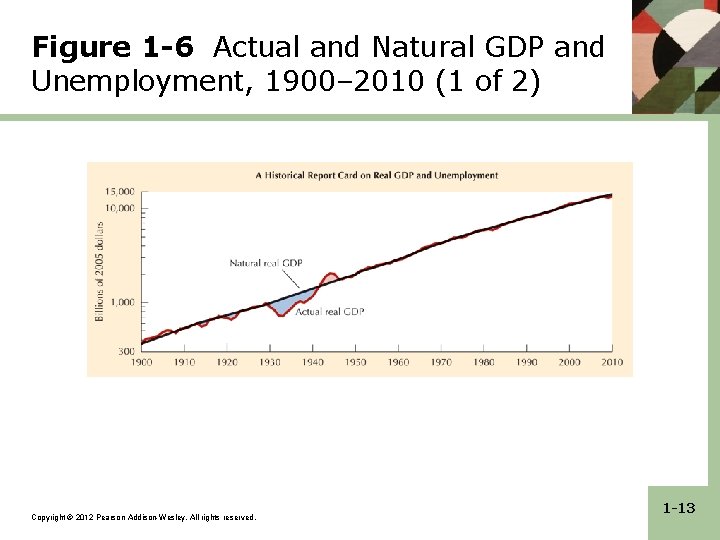
Gross Domestic Product (GDP) • Definition: (Nominal) GDP is the value of all currently produced goods and services sold on the market during a particular time interval. – Real GDP adjusts the value of total output to correct for changes in prices. • Sometimes referred to as Actual Real GDP – Natural Real GDP is the level of real GDP in which there is no tendency for inflation to rise or fall. Copyright © 2012 Pearson Addison-Wesley. All rights reserved. 1 -5
Figure 1 -1 The Relation Between Actual and Natural Real GDP and the Inflation Rate Copyright © 2012 Pearson Addison-Wesley. All rights reserved. 1 -6
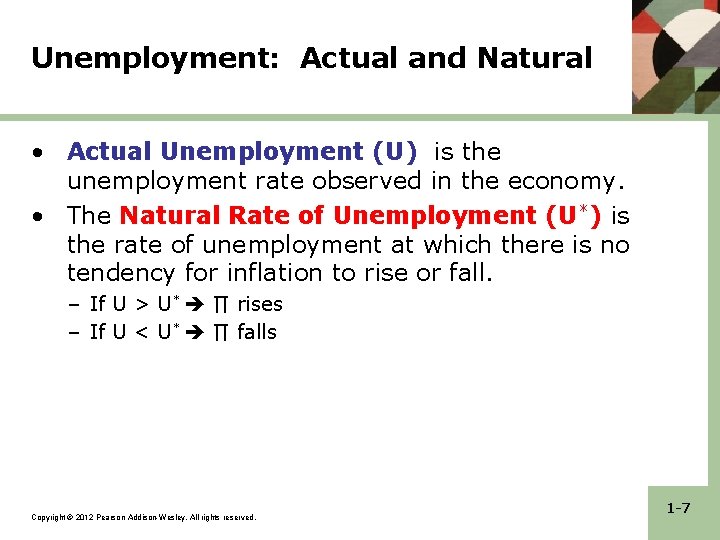
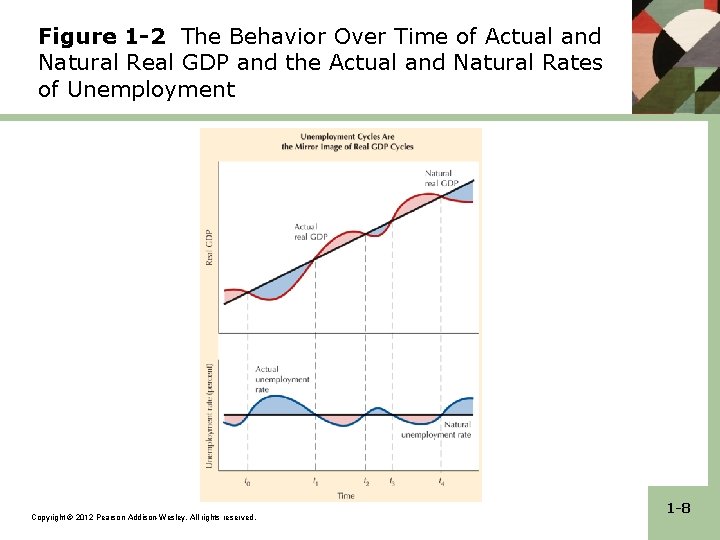
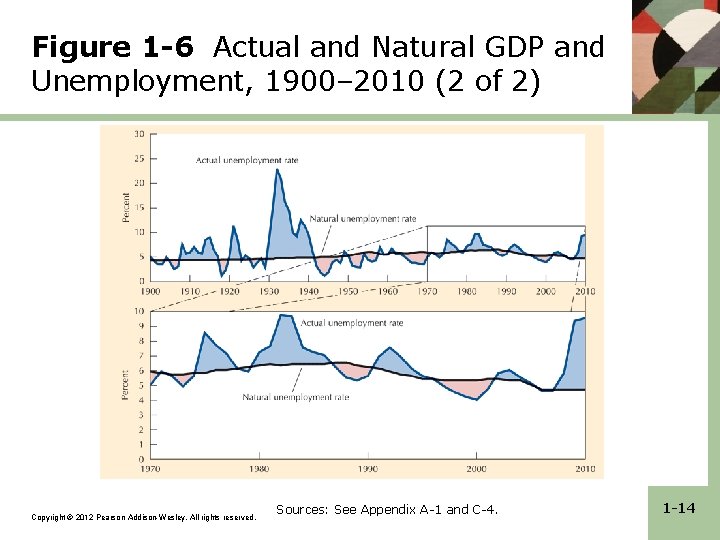
Unemployment: Actual and Natural • Actual Unemployment (U) is the unemployment rate observed in the economy. • The Natural Rate of Unemployment (U*) is the rate of unemployment at which there is no tendency for inflation to rise or fall. – If U > U* ∏ rises – If U < U* ∏ falls Copyright © 2012 Pearson Addison-Wesley. All rights reserved. 1 -7
Figure 1 -2 The Behavior Over Time of Actual and Natural Real GDP and the Actual and Natural Rates of Unemployment Copyright © 2012 Pearson Addison-Wesley. All rights reserved. 1 -8
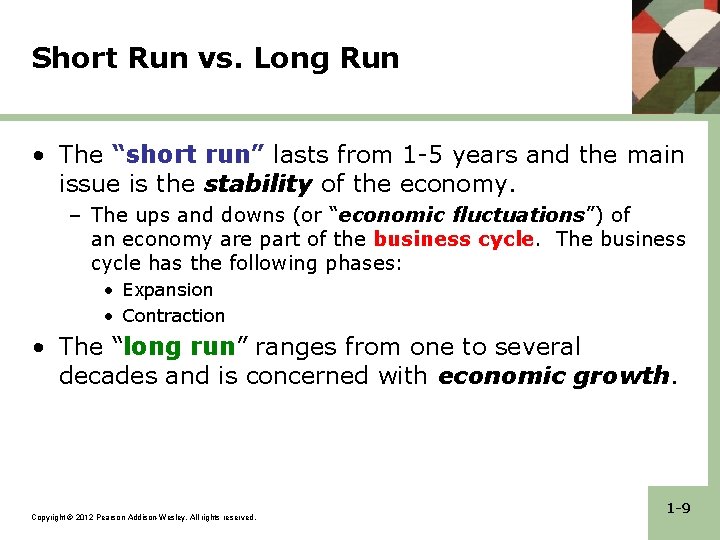
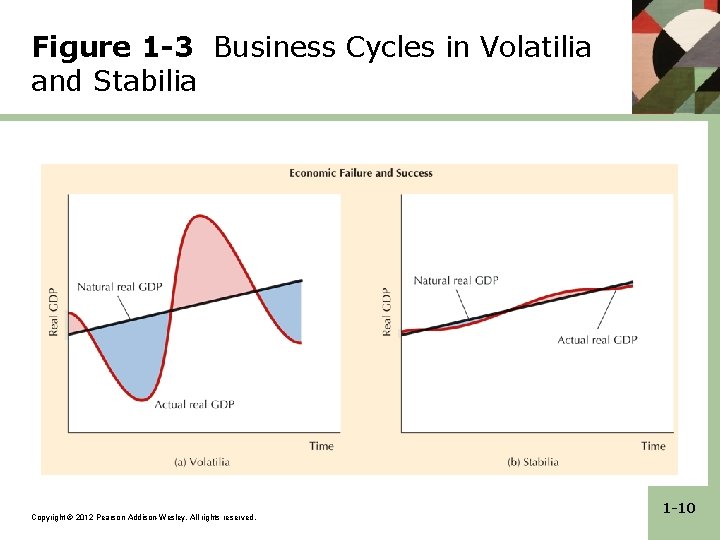
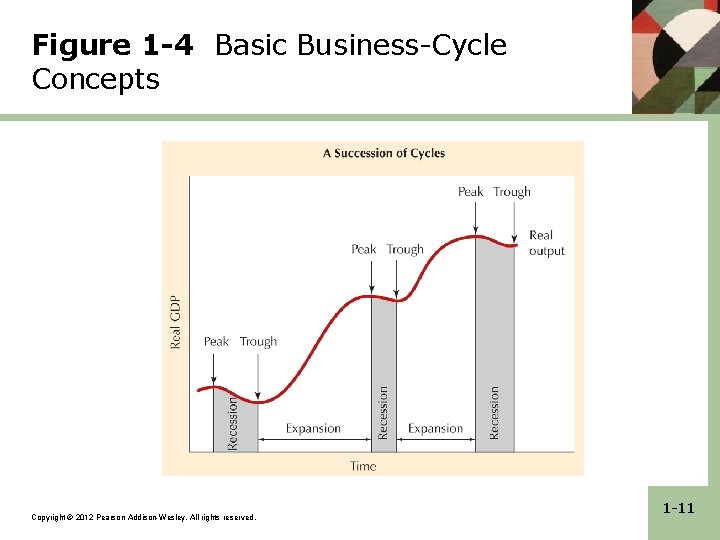
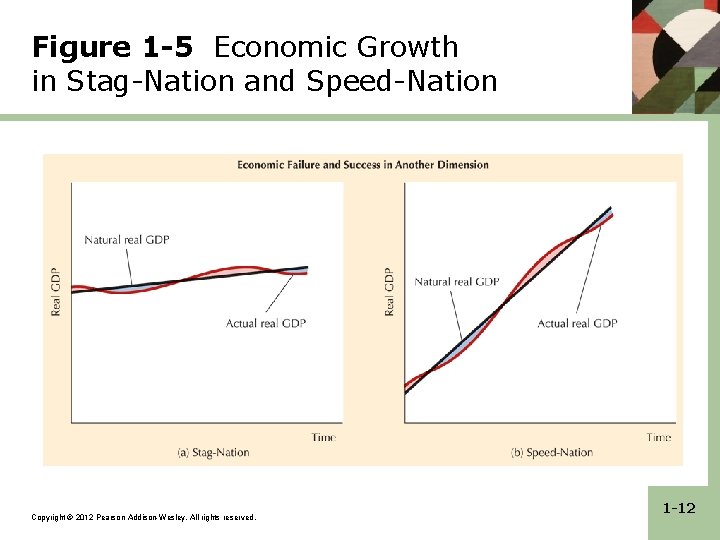
Short Run vs. Long Run • The “short run” lasts from 1 -5 years and the main issue is the stability of the economy. – The ups and downs (or “economic fluctuations”) of an economy are part of the business cycle. The business cycle has the following phases: • Expansion • Contraction • The “long run” ranges from one to several decades and is concerned with economic growth. Copyright © 2012 Pearson Addison-Wesley. All rights reserved. 1 -9
Figure 1 -3 Business Cycles in Volatilia and Stabilia Copyright © 2012 Pearson Addison-Wesley. All rights reserved. 1 -10
Figure 1 -4 Basic Business-Cycle Concepts Copyright © 2012 Pearson Addison-Wesley. All rights reserved. 1 -11
Figure 1 -5 Economic Growth in Stag-Nation and Speed-Nation Copyright © 2012 Pearson Addison-Wesley. All rights reserved. 1 -12
Figure 1 -6 Actual and Natural GDP and Unemployment, 1900– 2010 (1 of 2) Copyright © 2012 Pearson Addison-Wesley. All rights reserved. 1 -13
Figure 1 -6 Actual and Natural GDP and Unemployment, 1900– 2010 (2 of 2) Copyright © 2012 Pearson Addison-Wesley. All rights reserved. Sources: See Appendix A-1 and C-4. 1 -14
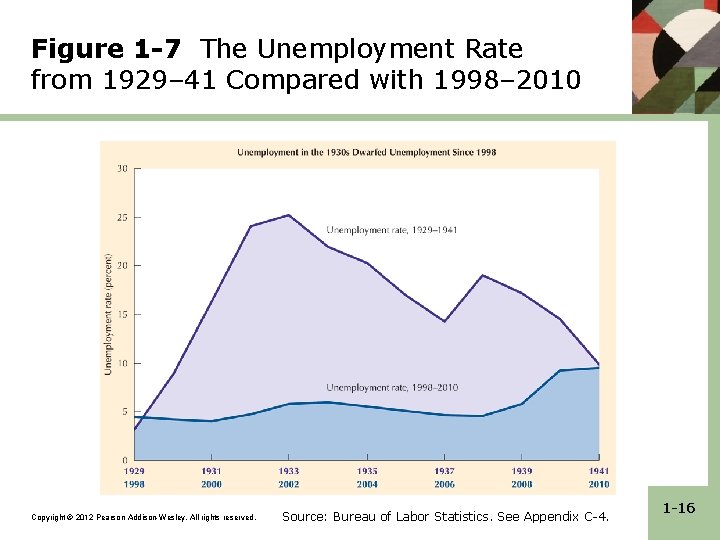
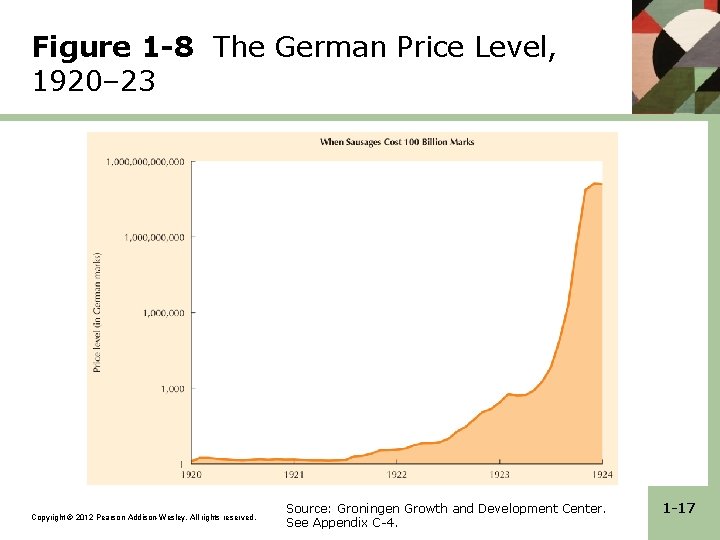
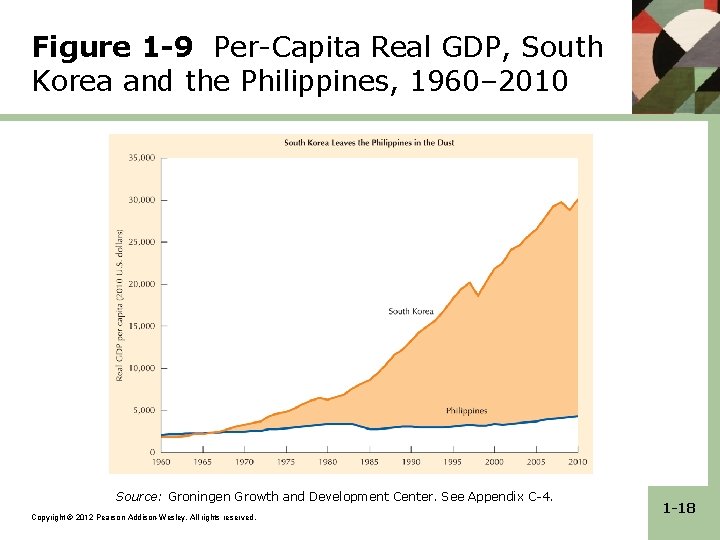
Macroeconomics at the Extremes • Three examples of the breakdown of normal macroeconomic mechanisms: – The Great Depression of the 1930 s – The German hyperinflation of 1922 -23 – South Korea vs. Philippines economic growth in the last 50 years Copyright © 2012 Pearson Addison-Wesley. All rights reserved. 1 -15
Figure 1 -7 The Unemployment Rate from 1929– 41 Compared with 1998– 2010 Copyright © 2012 Pearson Addison-Wesley. All rights reserved. Source: Bureau of Labor Statistics. See Appendix C-4. 1 -16
Figure 1 -8 The German Price Level, 1920– 23 Copyright © 2012 Pearson Addison-Wesley. All rights reserved. Source: Groningen Growth and Development Center. See Appendix C-4. 1 -17
Figure 1 -9 Per-Capita Real GDP, South Korea and the Philippines, 1960– 2010 Source: Groningen Growth and Development Center. See Appendix C-4. Copyright © 2012 Pearson Addison-Wesley. All rights reserved. 1 -18
Taming Business Cycles • Macroeconomic analysts have two main tasks: – Analyze the causes of changes in macroeconomic variables – Predict the consequences of alternative policy changes • Macroeconomic target variables important to analysts and policy makers include: – Inflation – Unemployment – Long-term growth of productivity Copyright © 2012 Pearson Addison-Wesley. All rights reserved. 1 -19
The Role of Stabilization Policy • A Stabilization Policy is any policy that seeks to influence the level of aggregate demand. – Monetary policy tries to influence aggregate demand by changing the money supply and/or interest rates. – Fiscal policy tries to influence aggregate demand by changing government spending and/or tax rates. • New Challenges: The global economic crisis has brought forth novel and controversial strategies in both monetary and fiscal policy (see Chapters 5 and 6). Copyright © 2012 Pearson Addison-Wesley. All rights reserved. 1 -20
Economic Performance of the U. S. vs. Europe • Europe outperformed the U. S. from 1960 – 1985. • But the U. S. has grown much more quickly than Europe since 1995. • Puzzle #1: Why has European unemployment risen so much? • Puzzle #2: Why has Europe not benefited from the adoption of computer and internet technology like the U. S? – During the current crisis, US productivity soared while EU productivity lagged because European workers were protected from layoffs even as EU output slumped. Copyright © 2012 Pearson Addison-Wesley. All rights reserved. 1 -21
The “Internationalization” of Macroeconomics • A closed economy has no trade in goods, services or financial assets with any other nations. – In the 1940 s and 50 s, the U. S. was relatively closed: • Trade was 5% of the U. S. economy • Exchange rates were fixed • Financial flows to and from the U. S. were restricted • An open economy exports and imports goods and services to and from other nations, and has financial flows to and from foreign nations. – Today the U. S. is increasingly open: • Imports equal 17% of U. S. GDP • Since 1973, the exchange rate of the $ has been flexible • International financial flows are massive and almost instantaneous Copyright © 2012 Pearson Addison-Wesley. All rights reserved. 1 -22