
Chapter 1 What is Economics Section 1 1
- Slides: 17
Chapter 1 What is Economics?
Section 1 -1: The Basic Problem in Economics n · What is economics? · The study of how people satisfy their unlimited wants and needs with limited resources (people have to make choices) Wants vs. Needs: · Wants are anything other than what is needed for basic survival · · New car, video games, or a stereo system Needs are things required for basic survival · Food, clothing, and shelter
· Economic Choices · Choices are a result of unlimited wants in a world of limited resources (scarcity exists) · · · Spending and production decisions involve choices Choices compete with each other · going to dinner vs. going to the movies · choices: 1. Eat steak and no movie, 2. Eat a burger and go to a budget movie, 3. Eat at home and see a new release Societies and businesses face choices about how to utilize their resources in the production of goods and services.
· Scarcity · All resources are limited. · · · Income, time, natural resources People compete for limited resources Scarcity- not being able to have all of the goods and services one wants- an item is scarce even if the store shelves are full-that is why we pay for things (different from shortages) cont.
n Scarcity always exists because of competing alternative uses for resources. (Why can’t everyone have a big house? )
· Factors of Production (p. 6 figure 1. 3) · Resources used to produce goods and servicesland, labor, capital, and entrepreneurship · Land: natural resources and surface land water · Land, water, fish, animals, forests, mineral deposits cont.
· Labor: the work people do-human effort both physical and mental · · · results in economic goods and services Goods are tangible objects that satisfy people’s wants or needs · Ex. Clothes, food, cars, etc. Services are actions that can satisfy people’s wants or needs · Ex. Seeing a doctor, watching a baseball game, getting my oil changed cont.
· · Capital: manufactured goods used to make other goods and services · Ex. Machines, buildings, and tools used to assemble automobiles · Capital increases productivity- the amount of output that results from a given level of inputs Entrepreneurship: the ability to start a new business or create new products · About 30% of new business enterprises fail · Of the 70% that survive, only a few become successful cont.
· Technology: (sometimes considered the 5 th F. O. P) the use of science to develop new products and production needs
Section 1 -2: Trade-Offs · · Trade offs: sacrificing one good or service to purchase or produce another · Trade-offs involve opportunity costs Opportunity costs are the value of the next best alternative given up for the alternative that was chosen · There is no “free lunch”- everything has a cost because you could be doing something else with your time ex. Working, studying, sleeping, watching TV (all have value)
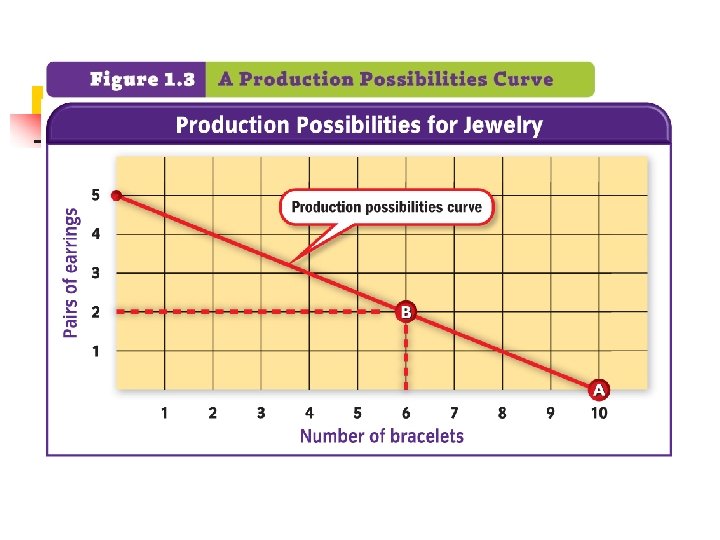
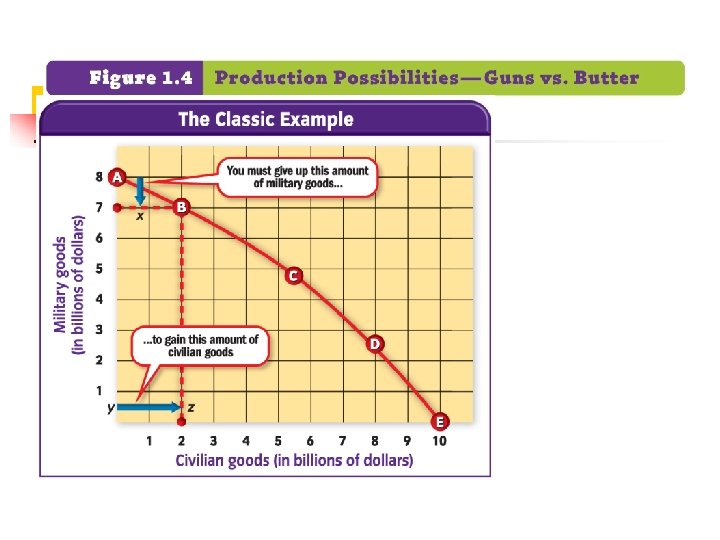
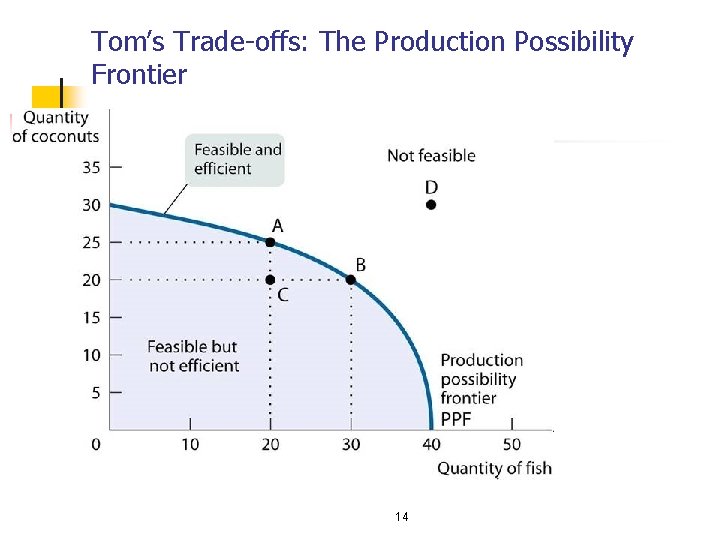
· Production Possibilities Curve · The production possibilities curve shows the maximum combination of goods and services that can be produced from a given amount of resources. · Using a production possibilities curve, a producer can decide how to use resources.
Figure 3
Figure 4
Tom’s Trade-offs: The Production Possibility Frontier 14
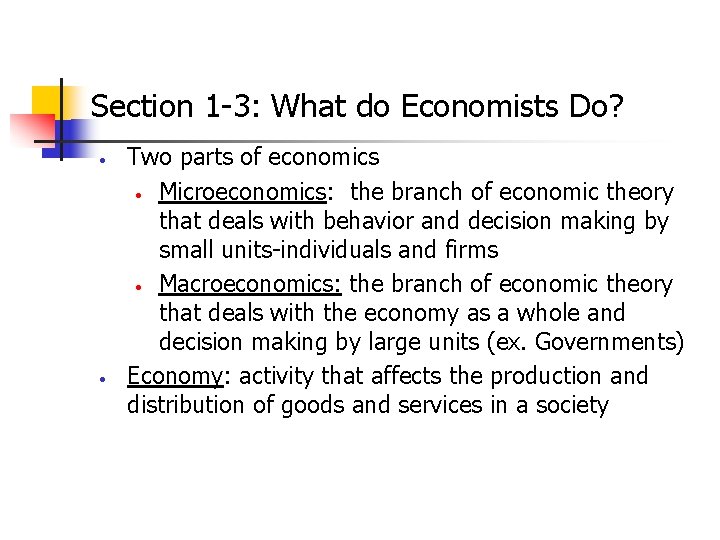
Section 1 -3: What do Economists Do? · · Two parts of economics · Microeconomics: the branch of economic theory that deals with behavior and decision making by small units-individuals and firms · Macroeconomics: the branch of economic theory that deals with the economy as a whole and decision making by large units (ex. Governments) Economy: activity that affects the production and distribution of goods and services in a society
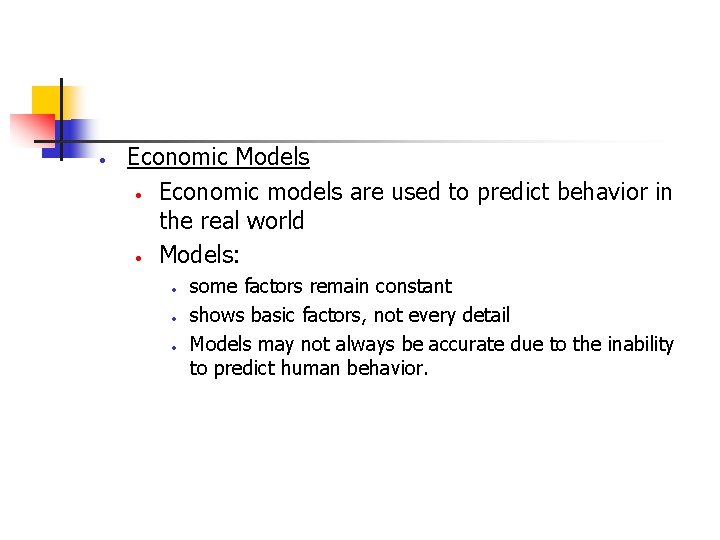
· Economic Models · Economic models are used to predict behavior in the real world · Models: · · · some factors remain constant shows basic factors, not every detail Models may not always be accurate due to the inability to predict human behavior.
· Schools of Economic Thought · Economists are influenced by personal opinions, beliefs, and the government under which they live · This leads to different economic theories · Different schools of thought can have an impact on laws and government policies. · Judgements about economic policies depend on a person’s values · Values are beliefs or characteristics that a person or group considers important · Economists inform us to the possible short and long term outcomes of policies.