
Chapter 1 Understanding Our Environment Chapter 1 Outline

- Slides: 34
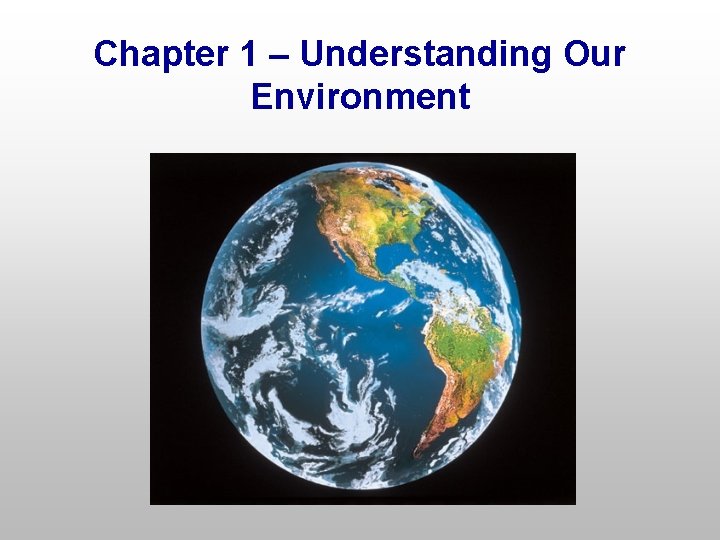
Chapter 1 – Understanding Our Environment
Chapter 1 Outline • • • Nature of science Basic statistics Define “environmental science” Historical perspectives Current environmental concerns Discuss sustainability
Science • • • Body of knowledge A process, a way of thinking Limitations Uncertainty Characteristics – Observable, Uniform, Tentative, Repeatable, Testable • What science is not – Pseudoscience and Non-science
Answered Through Science or No? • • • Is racism bad? What makes food spoil? What is your favorite soft drink? What is love? Why is the sky blue? What causes earthquakes?
Science as a Way of Thinking • Problem Solving and Critical Thinking • Roots in Greek philosophy, Arabic mathematics and astronomy, and Chinese naturalism • Really examine data and information • Look for hidden ideas and subtle meanings
Applying Critical Thinking • Identify and evaluate premises and conclusions in an argument; • Acknowledge and clarify uncertainties, vagueness, equivocation, and contradictions; • Distinguish between facts and values; • Recognize and assess assumptions; • Distinguish source reliability or unreliability; • Recognize and understand conceptual frameworks.
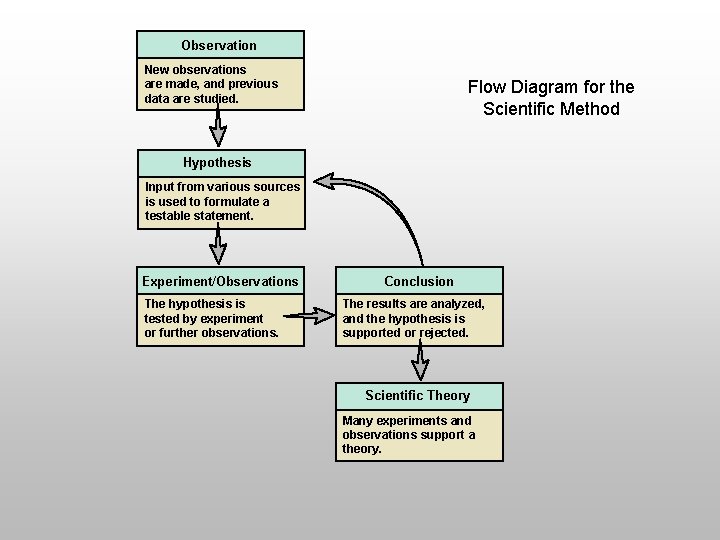
Scientific Method • • • Step 1 – Be curious and make observations Step 2 – Identify and define the problem Step 3 – Gather information Step 4 – Develop a hypothesis Step 5 – Design a testing method Step 6 – Carry out test Step 7 – Analyze data Step 8 – Draw conclusions Step 9 – Accept or reject hypothesis Step 10 – Rework hypothesis
Observation New observations are made, and previous data are studied. Flow Diagram for the Scientific Method Hypothesis Input from various sources is used to formulate a testable statement. Experiment/Observations The hypothesis is tested by experiment or further observations. Conclusion The results are analyzed, and the hypothesis is supported or rejected. Scientific Theory Many experiments and observations support a theory.
Statistics • Science of collecting, organizing, summarizing, analyzing, and making inferences from data • Descriptive • Inferential • Populations, samples, and making sense of data
Environment • All the circumstances and conditions that surround an organism or a group of organisms.
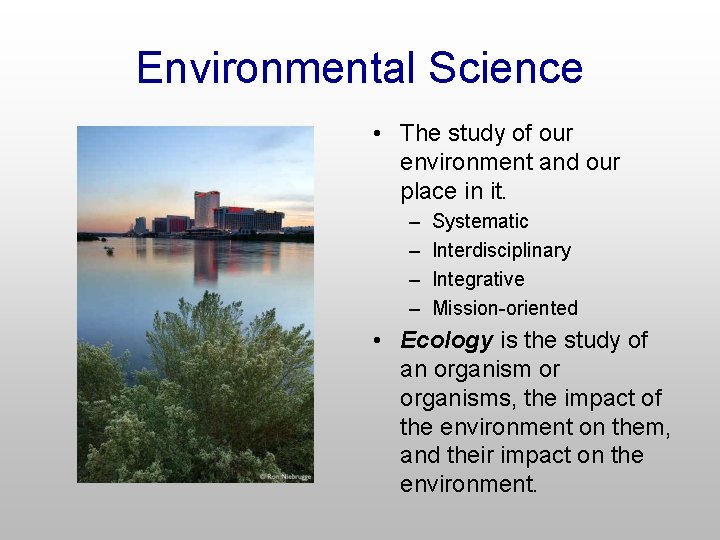
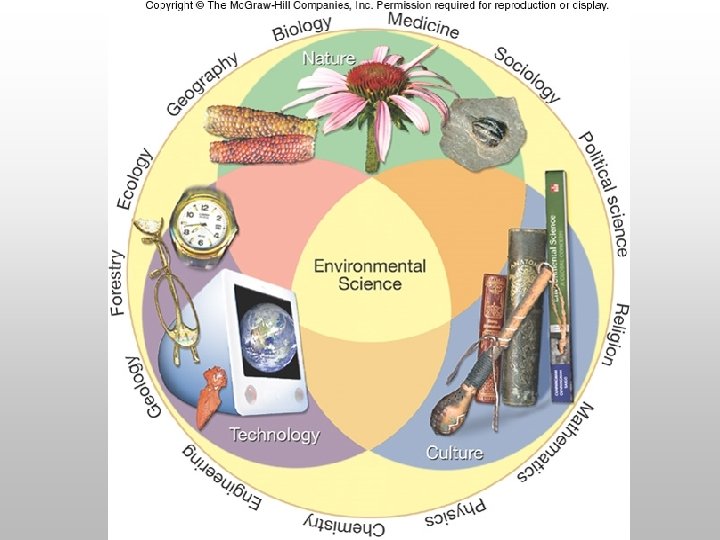
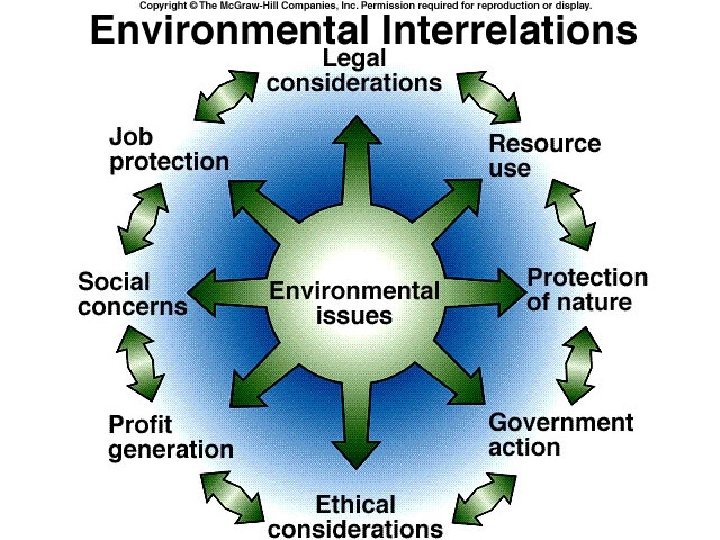
Environmental Science • The study of our environment and our place in it. – – Systematic Interdisciplinary Integrative Mission-oriented • Ecology is the study of an organism or organisms, the impact of the environment on them, and their impact on the environment.
Dynamic Nature • Knowledge constantly expanding • New discoveries • Implications in public health, lifestyle choices, resource use and consumption, technology, culture, etc. • So. . . many issues involve controversy
Why Study the Environment? • Examine conditions, draw conclusions, make decisions • Human health depends on the health of the whole environment • Achieve balance between ecological, social, and economic concerns
History of Environmental Science • Four Distinct Stages – Pragmatic Resource Conservation – Moral and Aesthetic Nature Preservation – Health and Ecological Damage – Global Environmental Citizenship
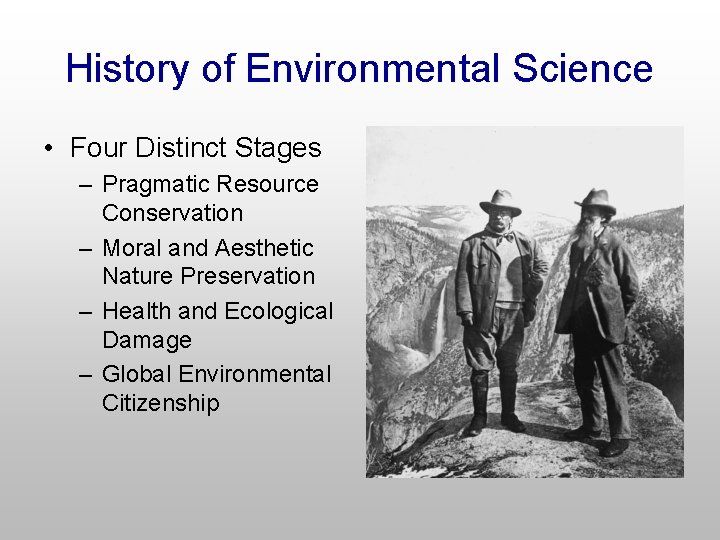
Pragmatic Resource Conservation • Develop and conserve natural resources for benefit of all people • George Perkins Marsh – Man and Nature, 1864 • Roosevelt and Pinchot – US Forest Service – Utilitarian Conservation – “Greatest good for the greatest number of people, for the longest time”
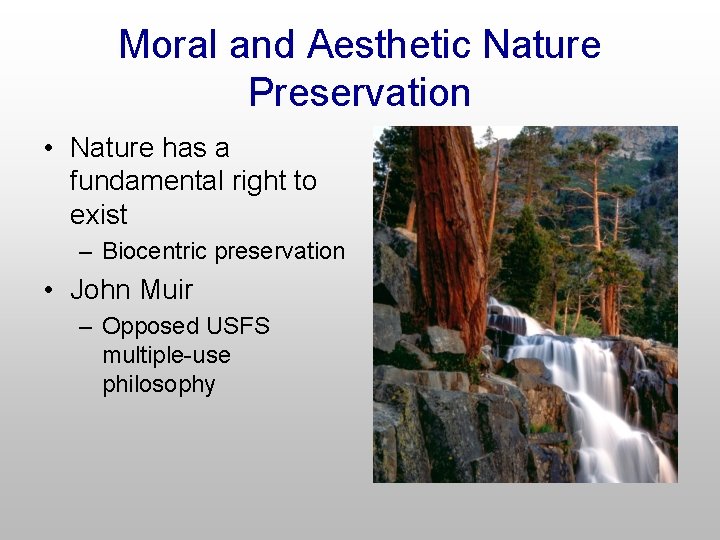
Moral and Aesthetic Nature Preservation • Nature has a fundamental right to exist – Biocentric preservation • John Muir – Opposed USFS multiple-use philosophy
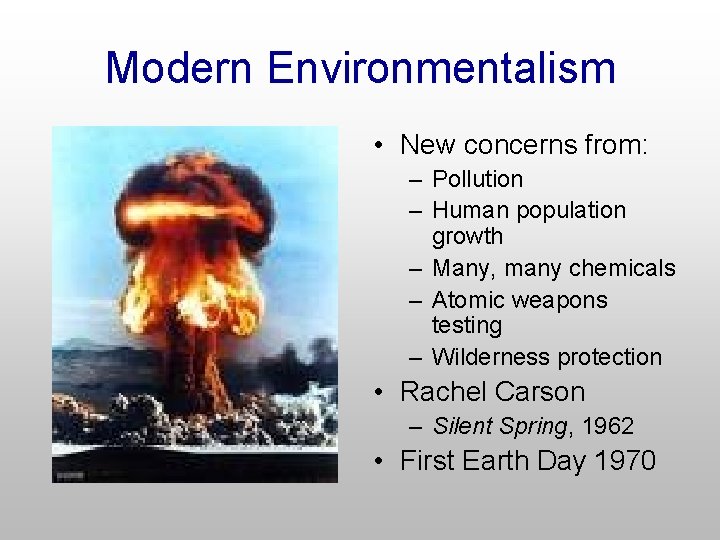
Modern Environmentalism • New concerns from: – Pollution – Human population growth – Many, many chemicals – Atomic weapons testing – Wilderness protection • Rachel Carson – Silent Spring, 1962 • First Earth Day 1970
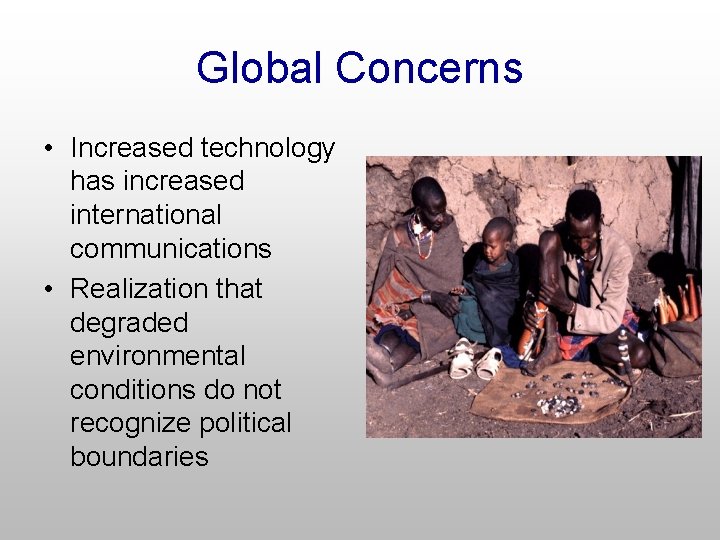
Global Concerns • Increased technology has increased international communications • Realization that degraded environmental conditions do not recognize political boundaries
Environmental Justice • Combines civil rights and environmental protection to demand a safe, health environment and resources for all people regardless of race, gender, economic status • Basis – Minorities (ethnic and financial) around the world are subjected to a disproportionately high level of environmental health risks in their neighborhood and jobs
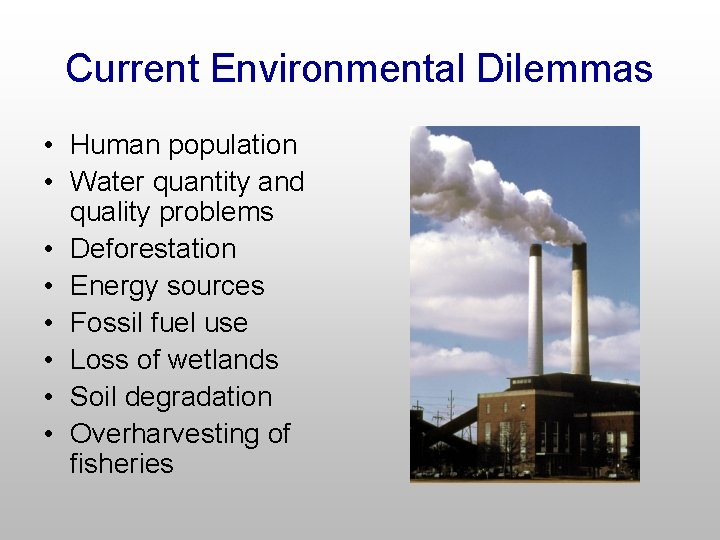
Current Environmental Dilemmas • Human population • Water quantity and quality problems • Deforestation • Energy sources • Fossil fuel use • Loss of wetlands • Soil degradation • Overharvesting of fisheries
Current Environmental Dilemmas, cont. • Air quality • Chemical pollution (DDT, PCBs, mercury, TCE, etc. ) • Environmental destruction and loss of biodiversity • Climate change • Human health?
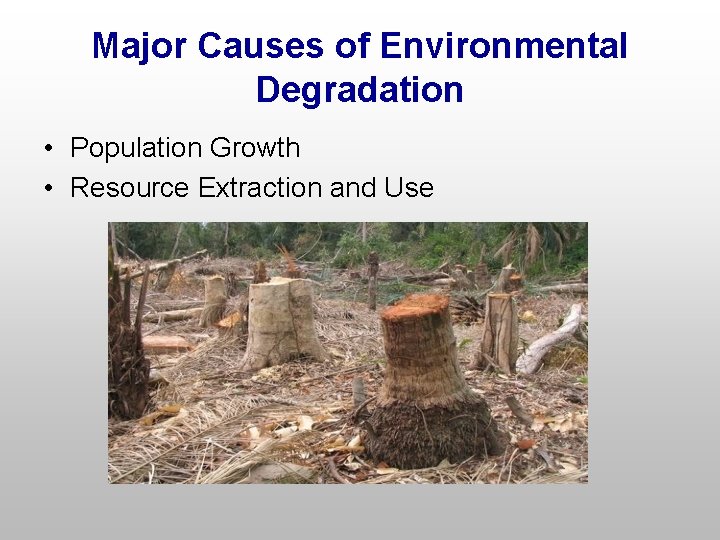
Major Causes of Environmental Degradation • Population Growth • Resource Extraction and Use
Human Dimensions of Environmental Science • 1. 4 billion people (20% of world population) in acute poverty (< US $1 a day) • 4 out of 5 people globally live in poverty (by U. S. standards) • The world's poorest people are often forced to meet short-term survival needs at the cost of long-term sustainability
Wealthier Nations • North America, Singapore, Australia, Japan, United Arab Emirates, Western Europe, Israel, New Zealand • Poor people in these countries as well – 10 million Americans do not have enough to eat • Wealthiest 200 people in the world have a combined wealth of $1 trillion - more than the total wealth of the poorest half (3 billion people) of world’s population
Resource Division • Lifestyle – Affluent lifestyles consume inordinate amounts of resources and produce larger amounts of pollutants and waste – US example: • 5% of world population • Uses 25% commercially-traded commodities • Produces 25 -50% of wastes
Population * Affluence * Technology Interaction Impacts the Environment
Sustainable Development • “Meeting the needs of the present without compromising the ability of future generations to meet their own needs. ” • How can the nations of the world produce the goods and services needed to improve life for everyone without overtaxing the environmental systems and natural resources on which we all depend? • Must benefit all people, not a privileged few
Is Sustainable Development Possible? • Many economists see continual economic growth as essential in providing more resources to more people • Many ecologists view continual growth as impossible in the long-run – non-renewable resources limits – waste-disposal limits • It’s all in the definition
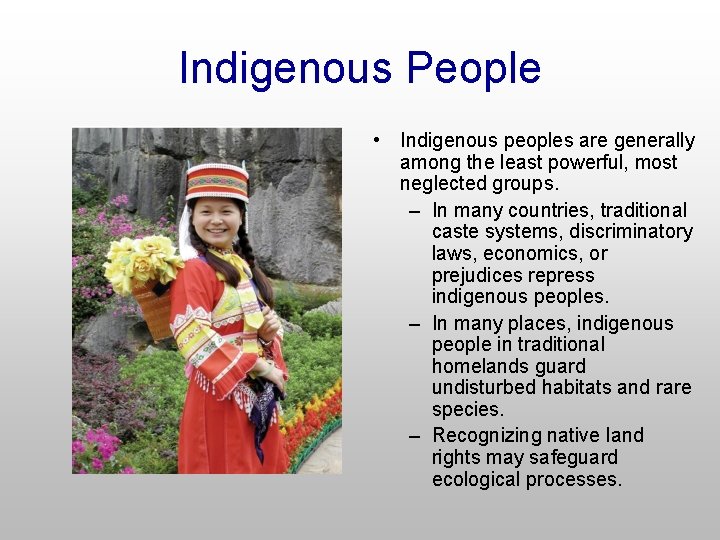
Indigenous People • Indigenous peoples are generally among the least powerful, most neglected groups. – In many countries, traditional caste systems, discriminatory laws, economics, or prejudices repress indigenous peoples. – In many places, indigenous people in traditional homelands guard undisturbed habitats and rare species. – Recognizing native land rights may safeguard ecological processes.
“The important thing is not to stop questioning. Curiosity has its own reason for existing. One cannot help but be in awe when he contemplates the mysteries of eternity, of life, of the marvelous structure of reality. It is enough if one tries merely to comprehend a little of this mystery every day. Never lose a holy curiosity. " Albert Einstein