
Chapter 1 Understanding Motor Development An Overview Gallahue
- Slides: 12
Chapter 1 Understanding Motor Development: An Overview © Gallahue, D. L. , & Ozmun, J. C. Understanding Motor Development, Mc. Graw-Hill 1
Key Concept (Figure 1. 1) Motor Development Is Continuous Change in Motor Behavior Throughout the Life Cycle, Brought About by Interaction Among the Requirements of the Movement Task, the Biology of the Individual, and the Conditions of the Environment 2
Lifespan Study of Motor Development n n Characteristics History Methods of study Age classifications 3
Characteristics of Lifespan Development n n A continuous/discontinuous process Encompasses all change over time Highly specific Highly individualized 4
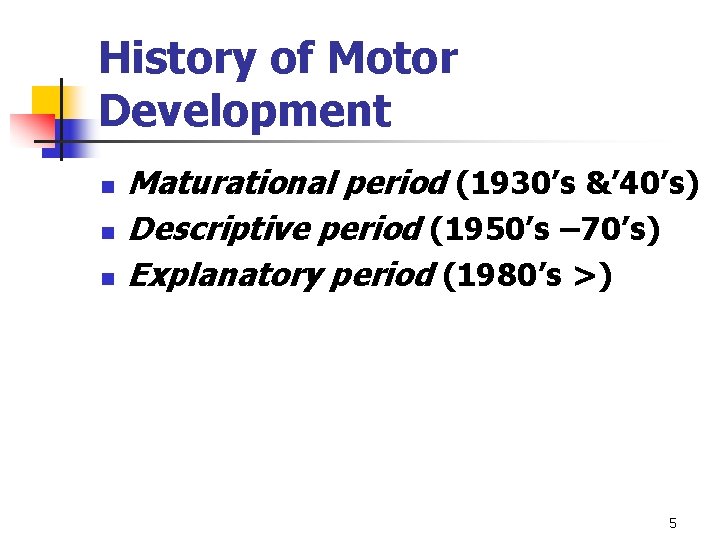
History of Motor Development n n n Maturational period (1930’s &’ 40’s) Descriptive period (1950’s – 70’s) Explanatory period (1980’s >) 5
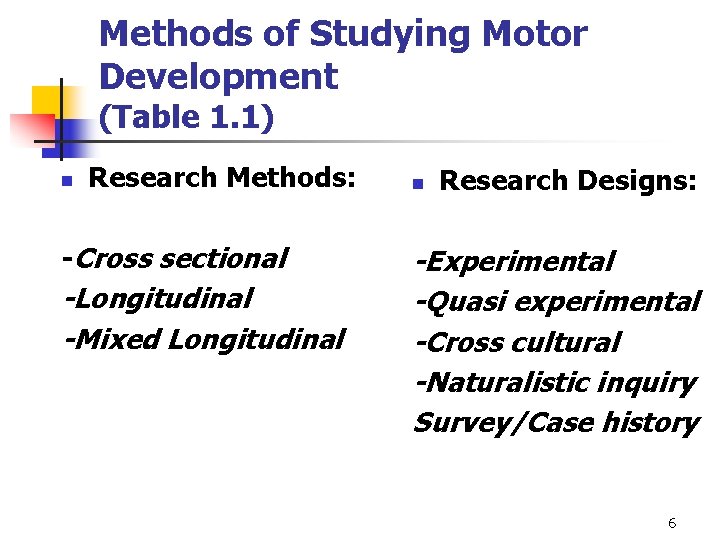
Methods of Studying Motor Development (Table 1. 1) n Research Methods: -Cross sectional -Longitudinal -Mixed Longitudinal n Research Designs: -Experimental -Quasi experimental -Cross cultural -Naturalistic inquiry Survey/Case history 6
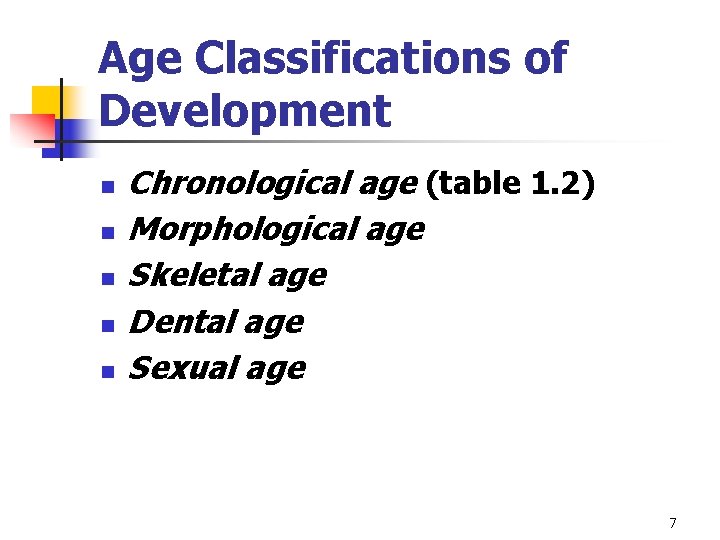
Age Classifications of Development n n n Chronological age (table 1. 2) Morphological age Skeletal age Dental age Sexual age 7
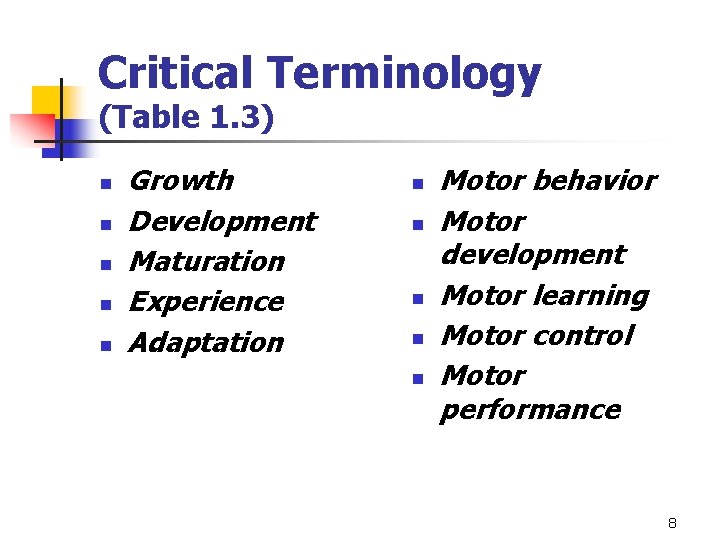
Critical Terminology (Table 1. 3) n n n Growth Development Maturation Experience Adaptation n n Motor behavior Motor development Motor learning Motor control Motor performance 8
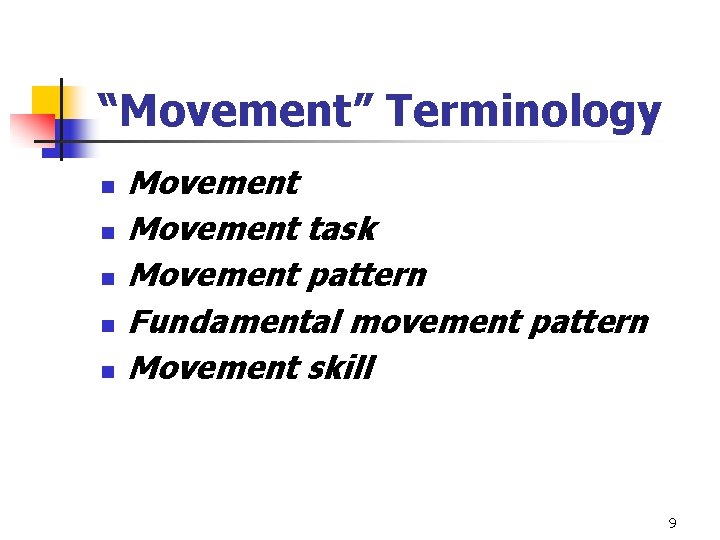
“Movement” Terminology n n n Movement task Movement pattern Fundamental movement pattern Movement skill 9
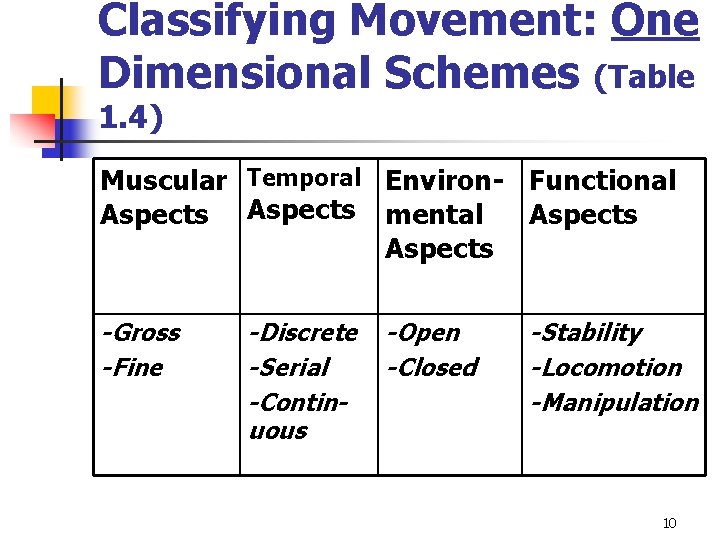
Classifying Movement: One Dimensional Schemes (Table 1. 4) Muscular Temporal Environ- Functional Aspects mental Aspects -Gross -Fine -Discrete -Serial -Continuous -Open -Closed -Stability -Locomotion -Manipulation 10
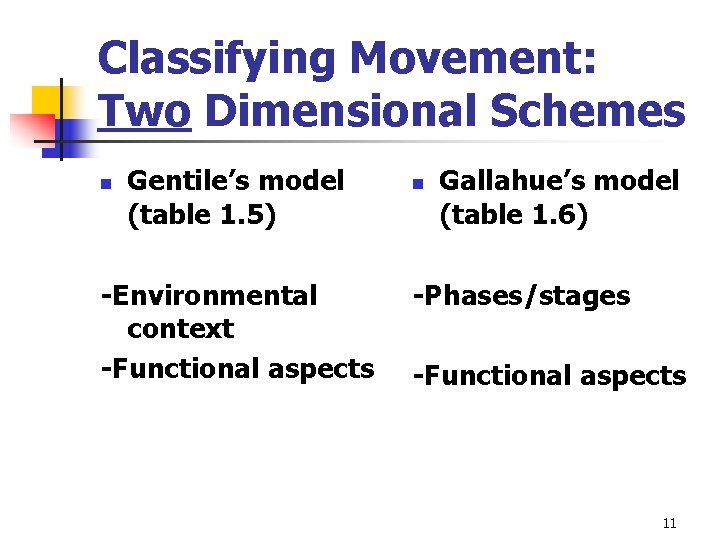
Classifying Movement: Two Dimensional Schemes n Gentile’s model (table 1. 5) -Environmental context -Functional aspects n Gallahue’s model (table 1. 6) -Phases/stages -Functional aspects 11
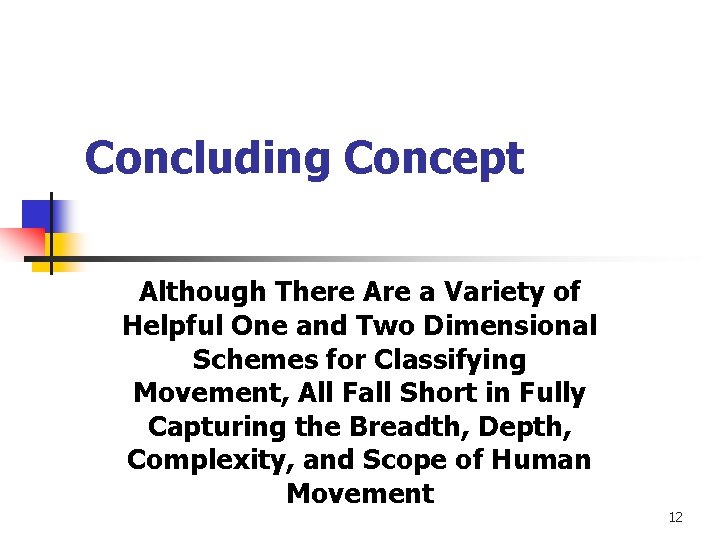
Concluding Concept Although There Are a Variety of Helpful One and Two Dimensional Schemes for Classifying Movement, All Fall Short in Fully Capturing the Breadth, Depth, Complexity, and Scope of Human Movement 12