
Chapter 1 Understanding Health What does it mean
- Slides: 22
Chapter 1: Understanding Health
What does it mean to you to be considered healthy? Is there a difference between health and wellness? Bell Ringer
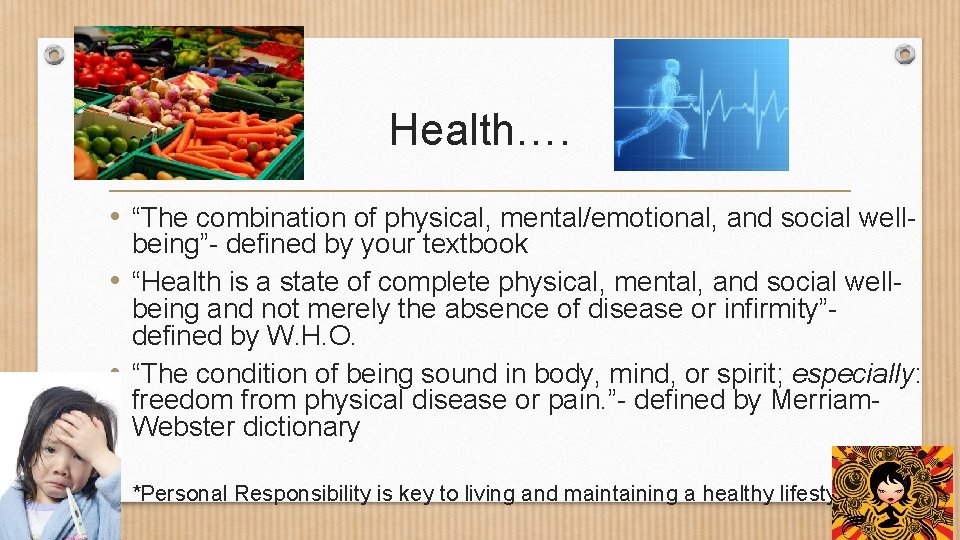
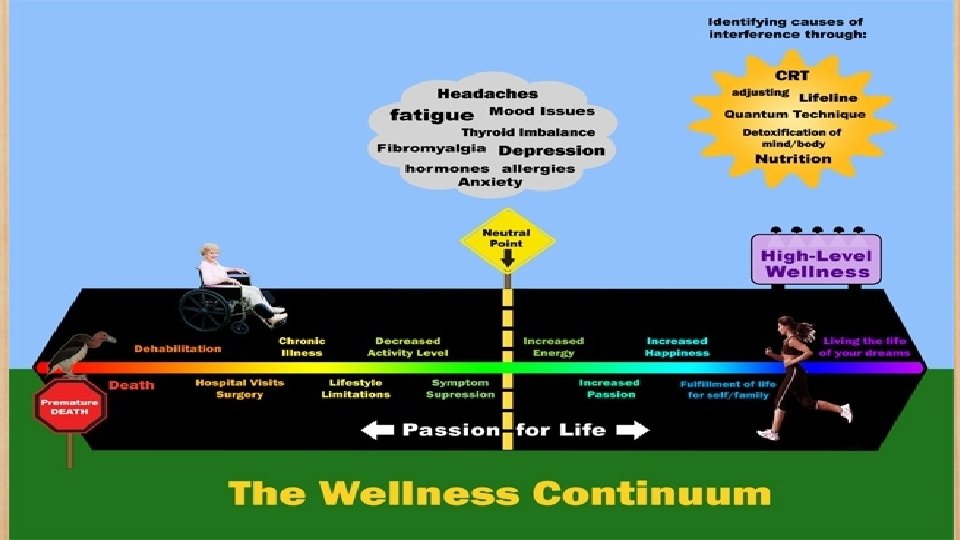
Health…. • “The combination of physical, mental/emotional, and social well- being”- defined by your textbook • “Health is a state of complete physical, mental, and social wellbeing and not merely the absence of disease or infirmity”defined by W. H. O. • “The condition of being sound in body, mind, or spirit; especially: freedom from physical disease or pain. ”- defined by Merriam. Webster dictionary • *Personal Responsibility is key to living and maintaining a healthy lifestyle**
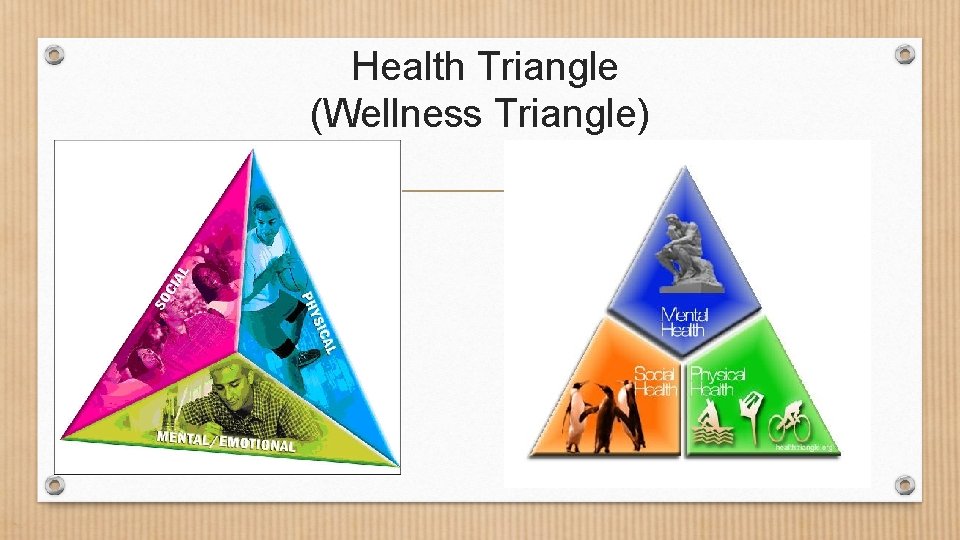
Health Triangle (Wellness Triangle)
Health Triangle (Wellness Triangle) • Physical Health • Having enough energy to perform your daily activities, deal with everyday stresses, and avoid injury. How well your body is able to function.
Key examples of keeping your body healthy • 8 -10 hours of sleep each night • Eat nutritious meals and drink 8 cups of water each day • Engage in 30 -60 minutes of physical activity each day • Avoid use of tobacco, alcohol, and other drugs • Bathe daily, floss, and brush your teeth everyday • 10, 000 steps a day
Health Triangle (Wellness Triangle) • Mental/Emotional • Your feelings and thoughts • Reflection on how you feel about yourself, how you meet the demands of your daily life, and how you cope with the problem that occur in your life • Spiritual health: a deep-seated sense of meaning and purpose in life
People that are considered mentally and emotionally healthy… • Enjoy challenges that help them grow • Accept responsibility for their actions • Have a sense of control over their lives • Can express their emotions in appropriate way • Usually can deal with life’s stresses and frustrations • Generally have a positive outlook • Make thoughtful and responsible decisions
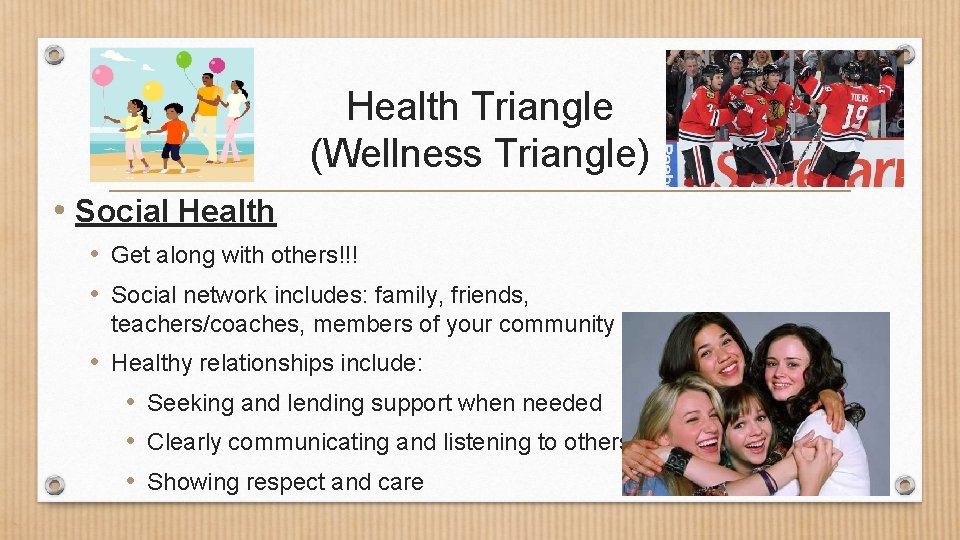
Health Triangle (Wellness Triangle) • Social Health • Get along with others!!! • Social network includes: family, friends, teachers/coaches, members of your community • Healthy relationships include: • Seeking and lending support when needed • Clearly communicating and listening to others • Showing respect and care
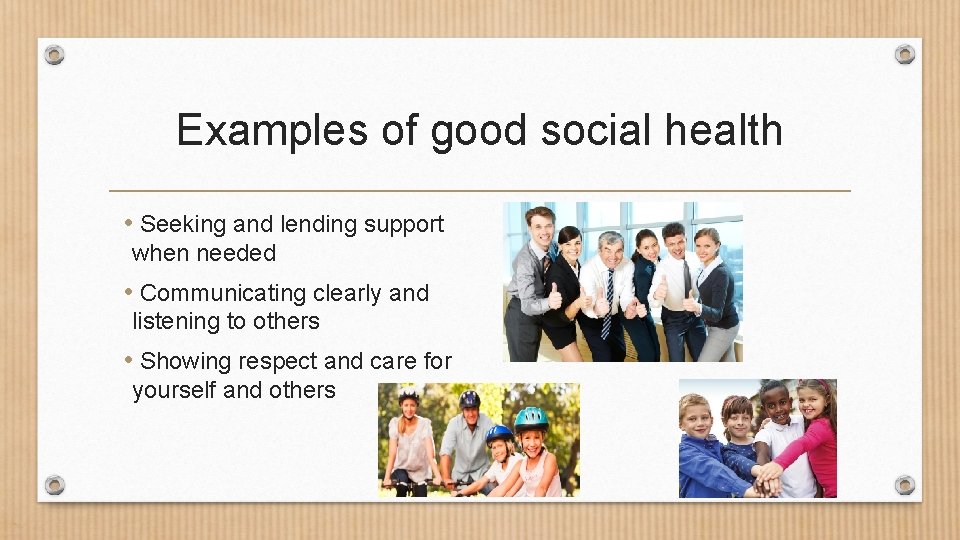
Examples of good social health • Seeking and lending support when needed • Communicating clearly and listening to others • Showing respect and care for yourself and others
Keeping a balanced triangle • When your triangle is balanced, you have a high degree of Wellness • Wellness: an overall state of well-being or total health • Wellness comes from making decisions and practicing behaviors that are based on sound health knowledge and healthful attitudes: to be “well” all three components of triangle must be balanced • Can change from day to day
Quick Activity Step 1 • Pick an area of interest within the health triangle that you may want to know more about or improve upon yourself Step 2 • Search health and wellness and try to find a local resource they may offer services for your area • Write down some notes on how these services will benefit you or your area
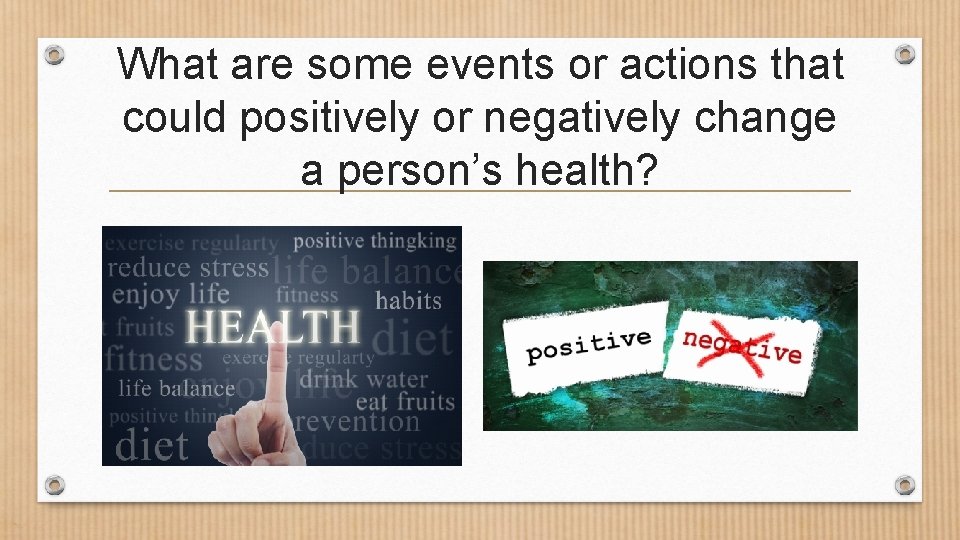
What are some events or actions that could positively or negatively change a person’s health?
Longevity/Life Expectancy • Longevity/Life Expectancy: How long you’re going to live • Your lifestyle choices influence your longevity of life.
Factor: an element that contributes to a particular result. • Think of at least 3 factors that influence your health
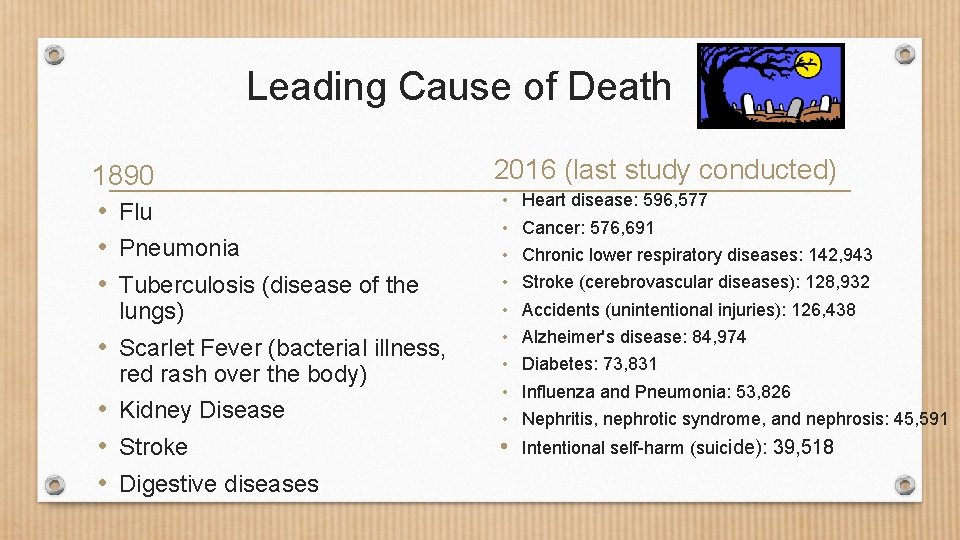
Leading Cause of Death 1890 • Flu • Pneumonia • Tuberculosis (disease of the lungs) • Scarlet Fever (bacterial illness, red rash over the body) • Kidney Disease • Stroke • Digestive diseases 2016 (last study conducted) • • • Heart disease: 596, 577 • Intentional self-harm (suicide): 39, 518 Cancer: 576, 691 Chronic lower respiratory diseases: 142, 943 Stroke (cerebrovascular diseases): 128, 932 Accidents (unintentional injuries): 126, 438 Alzheimer's disease: 84, 974 Diabetes: 73, 831 Influenza and Pneumonia: 53, 826 Nephritis, nephrotic syndrome, and nephrosis: 45, 591
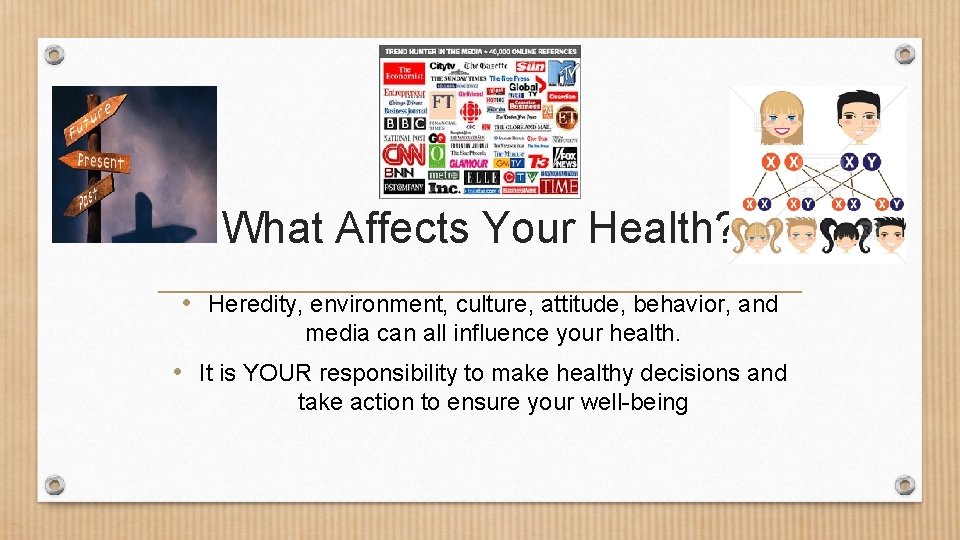
What Affects Your Health? • Heredity, environment, culture, attitude, behavior, and media can all influence your health. • It is YOUR responsibility to make healthy decisions and take action to ensure your well-being
Influences on Health • Heredity: all the traits that were biologically passed on to you from your parents • Physical features- hair color, eye color, body type • Disease/disorders- diabetes, heart disease, Alzheimer's, certain types of cancers
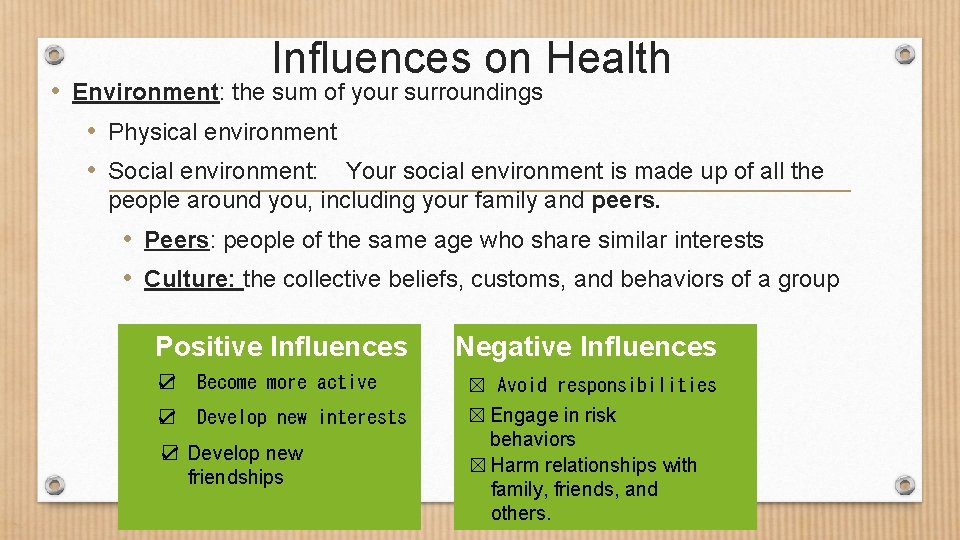
Influences on Health • Environment: the sum of your surroundings • Physical environment • Social environment: Your social environment is made up of all the people around you, including your family and peers. • Peers: people of the same age who share similar interests • Culture: the collective beliefs, customs, and behaviors of a group Positive Influences ☑ Become more active ☑ Develop new interests ☑ Develop new friendships Negative Influences ☒ Avoid responsibilities ☒ Engage in risk behaviors ☒ Harm relationships with family, friends, and others.
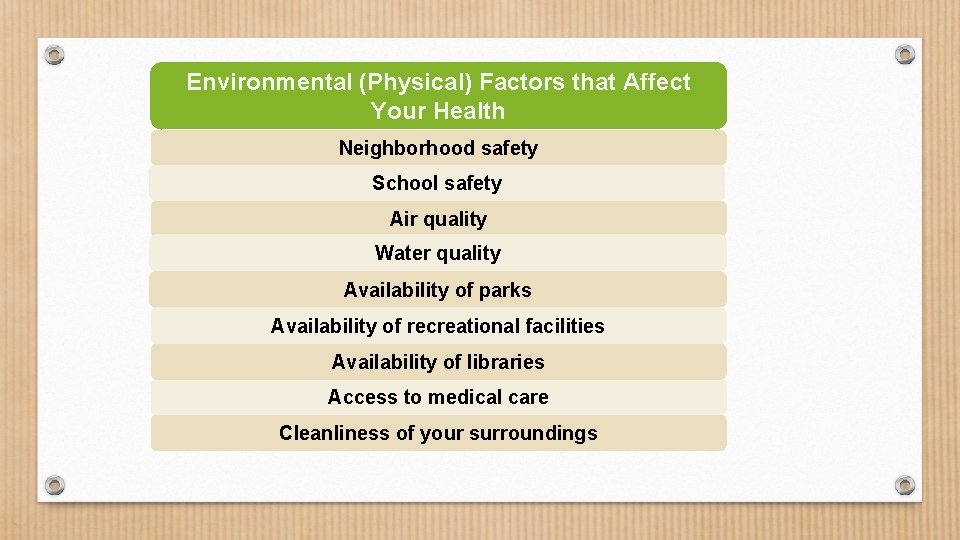
Environmental (Physical) Factors that Affect Your Health Neighborhood safety School safety Air quality Water quality Availability of parks Availability of recreational facilities Availability of libraries Access to medical care Cleanliness of your surroundings
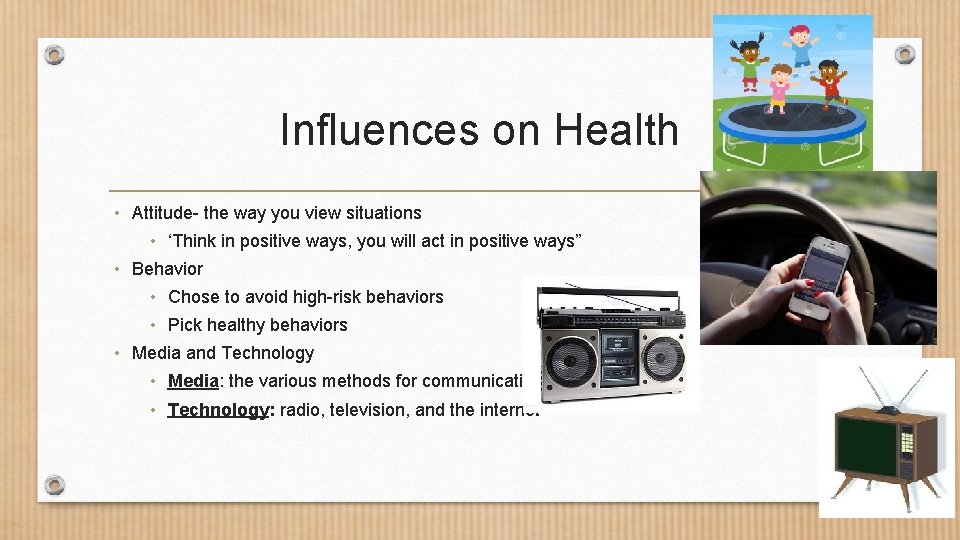
Influences on Health • Attitude- the way you view situations • ‘Think in positive ways, you will act in positive ways” • Behavior • Chose to avoid high-risk behaviors • Pick healthy behaviors • Media and Technology • Media: the various methods for communicating information • Technology: radio, television, and the internet