
Chapter 1 Understanding Business Communication in Todays Workplace
Chapter 1 Understanding Business Communication in Today’s Workplace Copyright © 2014 Pearson Education, Inc. Chapter 1 - 2

Learning Objectives 1. Learn why communication matters 2. Communicate as a professional 3. Explore the communication process 4. Commit to ethical communication 5. Communicate in a diverse world 6. Use communication technology Copyright © 2014 Pearson Education, Inc. Chapter 1 - 3
Understanding Why Communication Matters Copyright © 2014 Pearson Education, Inc. Chapter 1 - 4

For Your Career Copyright © 2014 Pearson Education, Inc. Chapter 1 - 5

For Your Company • Marketplace Ties • Conversations and Trends • Production and Problems • Financial Outcomes Copyright © 2014 Pearson Education, Inc. Chapter 1 - 6

For Your Company • Timely Information • Decision-Making • Marketing Messages • Employee Engagement Copyright © 2014 Pearson Education, Inc. Chapter 1 - 7

Effective Communication Practical Factual Concise Efficient Clear Persuasive Copyright © 2014 Pearson Education, Inc. Chapter 1 - 8

Summary of Discussion Copyright © 2014 Pearson Education, Inc. Chapter 1 - 9
Communicating as a Professional Copyright © 2014 Pearson Education, Inc. Chapter 1 - 10
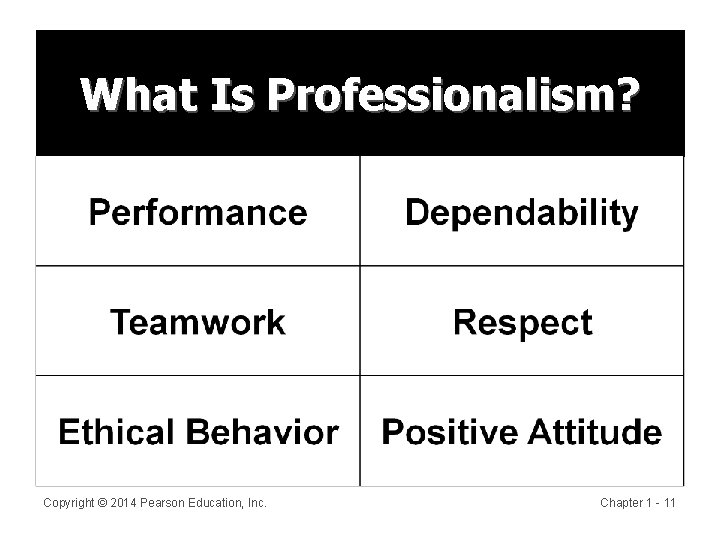
What Is Professionalism? Copyright © 2014 Pearson Education, Inc. Chapter 1 - 11
What Employers Expect • Organizing ideas and information • Expressing yourself coherently • Constructing compelling narratives • Evaluating data and information • Listening actively to others Copyright © 2014 Pearson Education, Inc. Chapter 1 - 12
What Employers Expect • Communicating with diverse audiences • Using communication technologies • Using standard grammar and spelling • Adapting messages and styles • Communicating in a civilized manner Copyright © 2014 Pearson Education, Inc. Chapter 1 - 13
What Employers Expect • Communicating ethically • Respecting company information • Following laws and regulations • Managing time and resources • Improving your skills over time Copyright © 2014 Pearson Education, Inc. Chapter 1 - 14
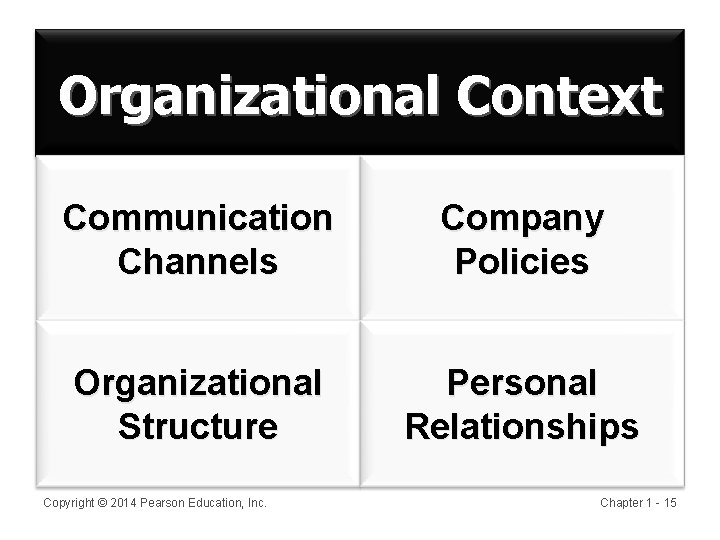
Organizational Context Communication Channels Company Policies Organizational Structure Personal Relationships Copyright © 2014 Pearson Education, Inc. Chapter 1 - 15
Center on the Audience Copyright © 2014 Pearson Education, Inc. Chapter 1 - 16
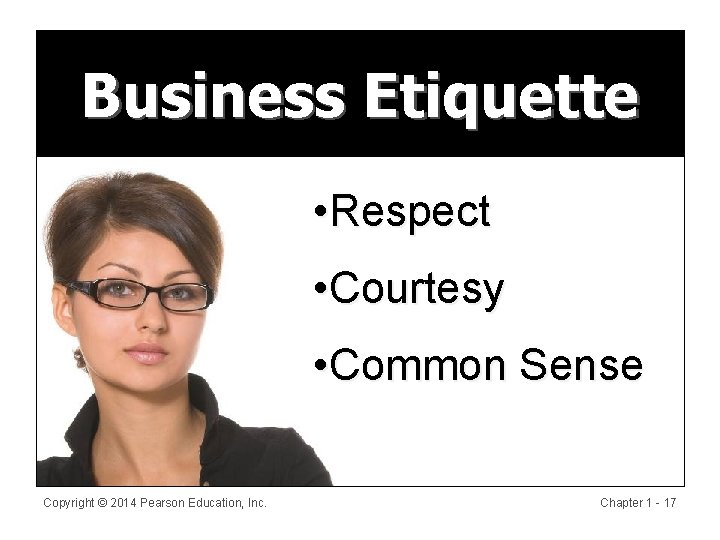
Business Etiquette • Respect • Courtesy • Common Sense Copyright © 2014 Pearson Education, Inc. Chapter 1 - 17

Summary of Discussion Copyright © 2014 Pearson Education, Inc. Chapter 1 - 18
Exploring the Communication Process Copyright © 2014 Pearson Education, Inc. Chapter 1 - 19
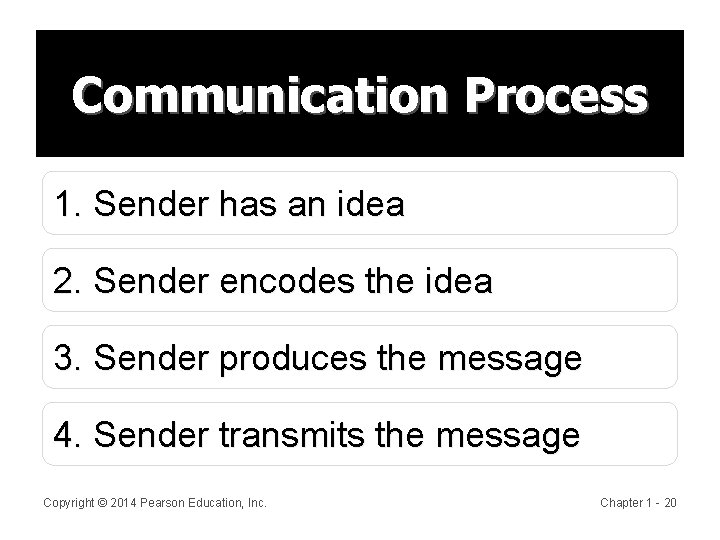
Communication Process 1. Sender has an idea 2. Sender encodes the idea 3. Sender produces the message 4. Sender transmits the message Copyright © 2014 Pearson Education, Inc. Chapter 1 - 20
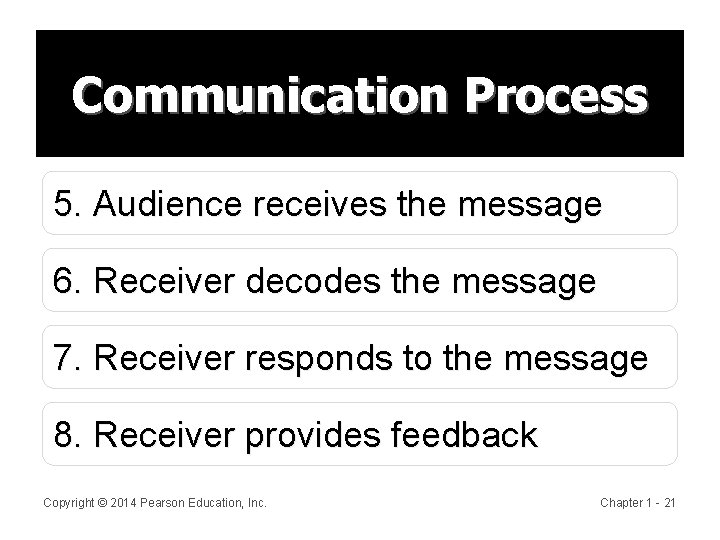
Communication Process 5. Audience receives the message 6. Receiver decodes the message 7. Receiver responds to the message 8. Receiver provides feedback Copyright © 2014 Pearson Education, Inc. Chapter 1 - 21
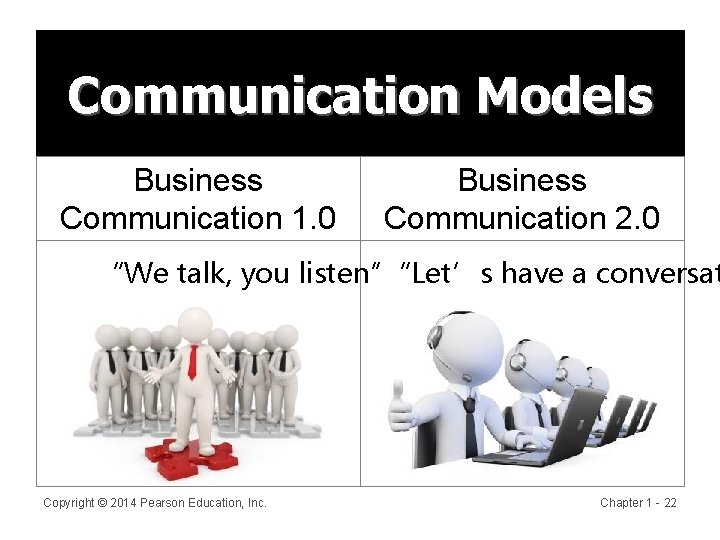
Communication Models Business Communication 1. 0 Business Communication 2. 0 “We talk, you listen” “Let’s have a conversat Copyright © 2014 Pearson Education, Inc. Chapter 1 - 22

Business Communication 2. 0 Model Traditiona l Approach Strategi c Plans Hybrid Method Policies Copyright © 2014 Pearson Education, Inc. Custom er Support Social Media Approach Project Updates Chapter 1 - 23

Summary of Discussion Copyright © 2014 Pearson Education, Inc. Chapter 1 - 24
Committing to Ethical Communication Copyright © 2014 Pearson Education, Inc. Chapter 1 - 25
Unethical Messages • Plagiarism • Omission • Misquoting • Distortion • Privacy Copyright © 2014 Pearson Education, Inc. Chapter 1 - 26
Ethical Questions • Dilemmas • Lapses Copyright © 2014 Pearson Education, Inc. Chapter 1 - 27
Make Ethical Choices • Have you defined the situation? • Why are you communicating? • What impact will your message have? • What good or harm will be achieved? • Will your assumptions change? • Are you comfortable with the decision? Copyright © 2014 Pearson Education, Inc. Chapter 1 - 28

Summary of Discussion Copyright © 2014 Pearson Education, Inc. Chapter 1 - 29
Communicating in a World of Diversity Copyright © 2014 Pearson Education, Inc. Chapter 1 - 30
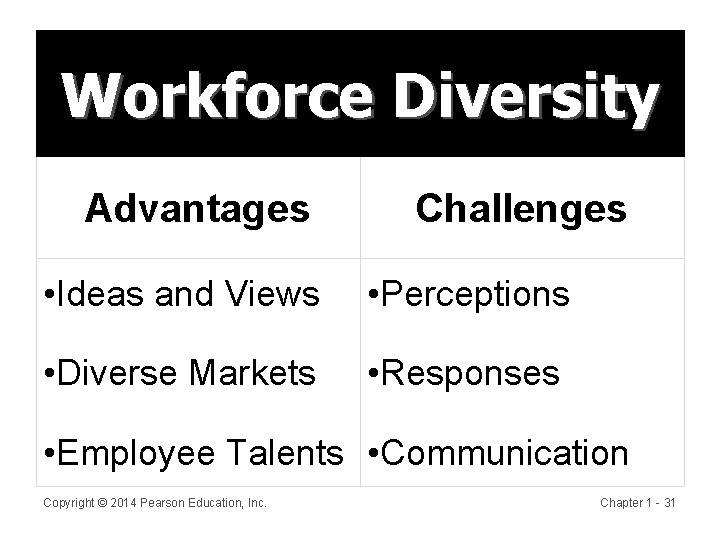
Workforce Diversity Advantages Challenges • Ideas and Views • Perceptions • Diverse Markets • Responses • Employee Talents • Communication Copyright © 2014 Pearson Education, Inc. Chapter 1 - 31
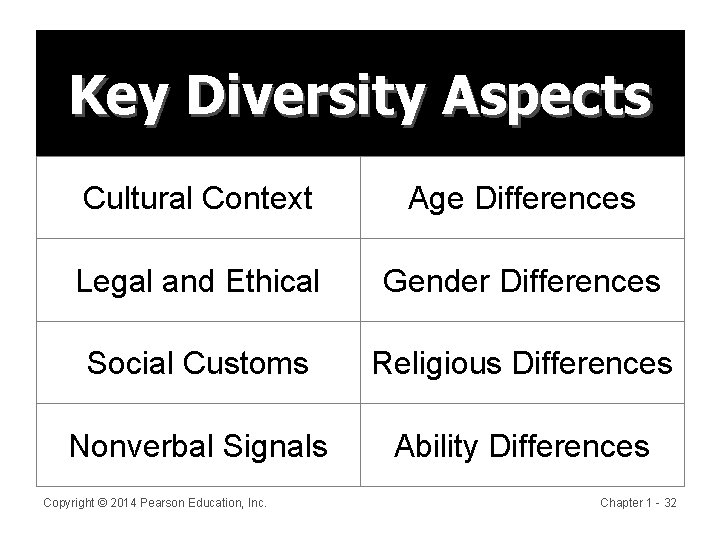
Key Diversity Aspects Cultural Context Age Differences Legal and Ethical Gender Differences Social Customs Religious Differences Nonverbal Signals Ability Differences Copyright © 2014 Pearson Education, Inc. Chapter 1 - 32

Cultural Context Copyright © 2014 Pearson Education, Inc. Chapter 1 - 33
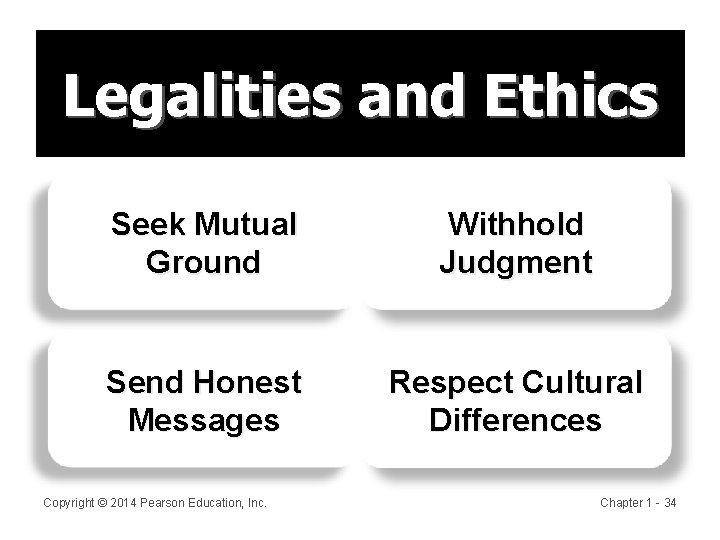
Legalities and Ethics Seek Mutual Ground Withhold Judgment Send Honest Messages Respect Cultural Differences Copyright © 2014 Pearson Education, Inc. Chapter 1 - 34

Social Customs Formal Rules Copyright © 2014 Pearson Education, Inc. Informal Rules Chapter 1 - 35
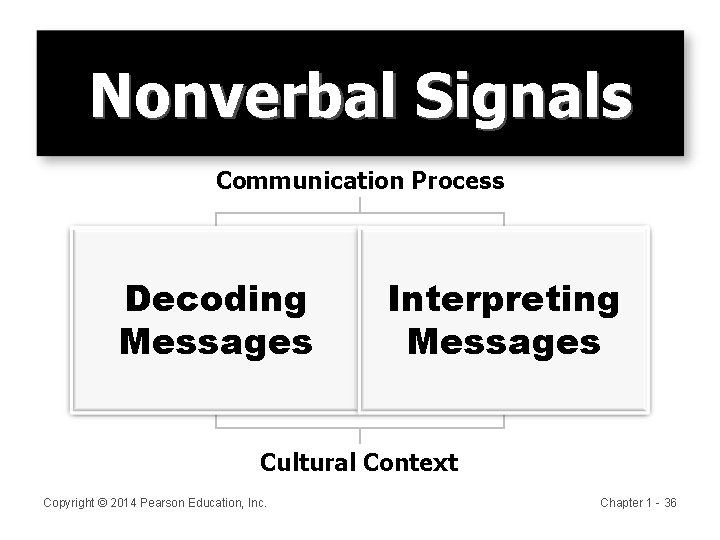
Nonverbal Signals Communication Process Decoding Messages Interpreting Messages Cultural Context Copyright © 2014 Pearson Education, Inc. Chapter 1 - 36

Age Differences Copyright © 2014 Pearson Education, Inc. Chapter 1 - 37
Gender Differences Copyright © 2014 Pearson Education, Inc. Chapter 1 - 38
Religious Differences Personal Beliefs Copyright © 2014 Pearson Education, Inc. Workplace Issues Chapter 1 - 39
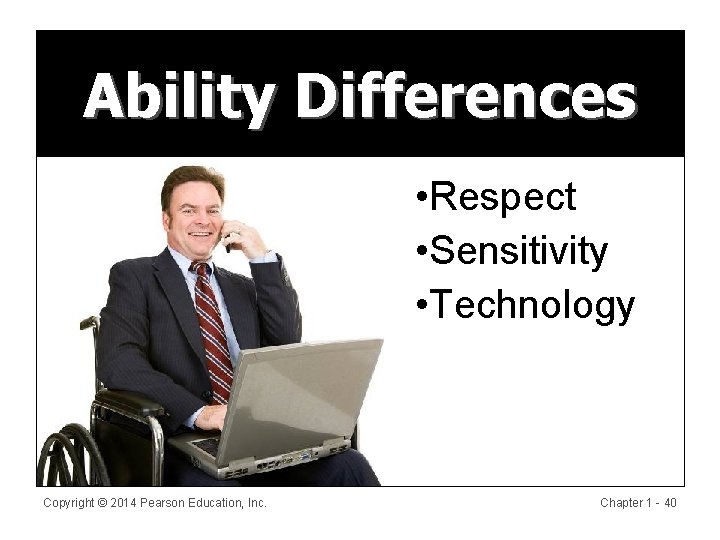
Ability Differences • Respect • Sensitivity • Technology Copyright © 2014 Pearson Education, Inc. Chapter 1 - 40

Improving Intercultural Communication • Avoid ethnocentrism • Avoid stereotyping • Don’t assume others are like you • Avoid being judgmental • Respect other cultures Copyright © 2014 Pearson Education, Inc. Chapter 1 - 41
Improving Intercultural Communication • Tolerate ambiguity • Look beyond superficial factors • Recognize your own biases • Be flexible and prepared to change • Observe and learn Copyright © 2014 Pearson Education, Inc. Chapter 1 - 42
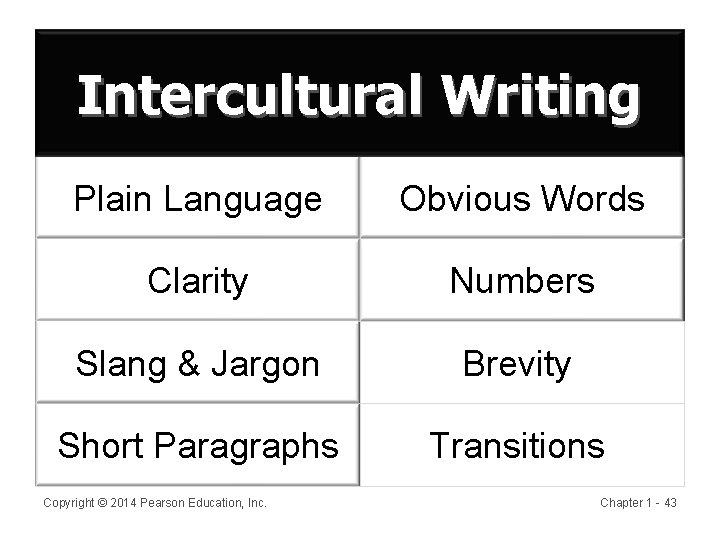
Intercultural Writing Plain Language Obvious Words Clarity Numbers Slang & Jargon Brevity Short Paragraphs Transitions Copyright © 2014 Pearson Education, Inc. Chapter 1 - 43
Speaking with Multilingual Audiences • Speak clearly and simply • Look for feedback • Rephrase as needed • Clarify your meaning • Do not “talk down” to others Copyright © 2014 Pearson Education, Inc. Chapter 1 - 44
Speaking with Multilingual Audiences • Learn important phrases • Listen with care and respect • Adapt your conversation style • Check for comprehension • Clarify what will happen next Copyright © 2014 Pearson Education, Inc. Chapter 1 - 45

Summary of Discussion Copyright © 2014 Pearson Education, Inc. Chapter 1 - 46
Using Communication Technology Effectively Copyright © 2014 Pearson Education, Inc. Chapter 1 - 47
Using Technology Maintain Perspective Be Productive Copyright © 2014 Pearson Education, Inc. Chapter 1 - 48
Using Technology Stop Information Overload Reconnect with People Copyright © 2014 Pearson Education, Inc. Chapter 1 - 49

Summary of Discussion Copyright © 2014 Pearson Education, Inc. Chapter 1 - 50
Understanding Business Communication in Today’s Workplace Copyright © 2014 Pearson Education, Inc. Chapter 1 - 51
Copyright © 2014 Pearson Education, Inc. Chapter 1 - 52
- Slides: 52