
Chapter 1 Theories of Leadership Briana H Brianna
Chapter 1 Theories of Leadership Briana H. , Brianna B. , Marylou, Tia, Olivia L. , Olivia P. , Charlotte, Will, Breia, and Sam
What is Leadership? “The Strength of the group is in the strength of the leader” - Vince Lombardi ● Leadership is a vital link between a group and a goal ● Leaders help groups set goals, envision possibilities and make commitments to pursue them ● Leaders employ a wide range of skills & strategies to facilitate achieving goals ● Leadership can also be viewed as having a positive influence on the lives and behaviours of others ● Our study of leadership will focus more on leadership within groups of
Questions to Think About 1. What is leadership and explain? 2. What skills/qualities make you a leader? 3. List 3 Canadian Leaders and at least 2 facts about each 4. What traits are used to distinguish a leader and a peer? 5. How does a leader's personality affect the kind of leader they are? 6. List 3 points of a supportive leader 7. Describe the difference between the 3 styles of situational theory
Leadership VS. Management Leadership is the ability to influence other towards achieving goals, and much more than managing and supervising Leaders set an overall vision for a group and inspire members to achieve it On the other hand, managers direct or control the operation or performance A leader may also show management abilities or may delegate the group in minor details Leadership emphasizes interpersonal relationships and has an impact on motivation, where managers do not

Leadership VS. Supervision Leadership is also often confused with supervision Supervisor’s oversee or inspects a group performing a task Supervisors have the role of passing judgement on to the group’s members Although leaders may function as supervisors at times, they also encourage group members to set and achieve their own personal standards
The Person at the Top Sometimes leaders find themselves in the “ top position” because of their assigned status, such as team captain, student council president, or coach In these cases, the leadership label comes along with the position for which they have been appointed, elected, hired or volunteered to fill Most people acquire or earn their status as leaders because of their actions or reputations “Unofficial” leaders, ones who lack the title, may be a source or either support or irritation to the official group leaders
Comprehensive Theory of Leadership
Comprehensive Theory of Leadership While researching about leadership, it is clear that predicting leadership success is far more complex than isolating a few traits or preferable behaviours In leadership theory, you have to consider the context in which leadership occurs in and look at the personalities, characteristics, dispositions, and behaviours of group members and situation factors such as environment, barriers and time constraints
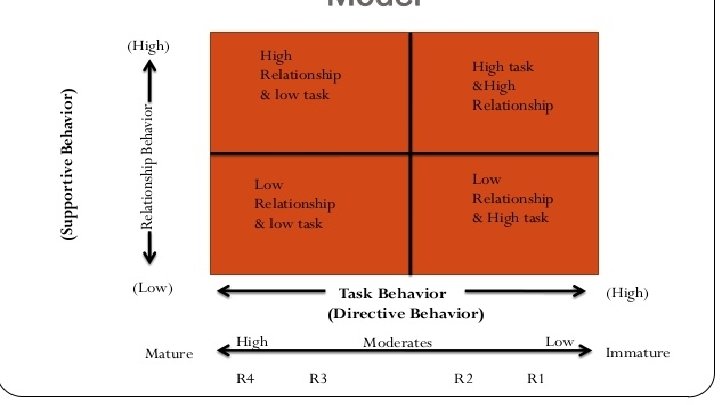
Comprehensive Theory of Leadership Continued Eventually all these observations and conclusions are merged to form a comprehensive theory of leadership A group leader needs to be sensitive to the characteristics of each group member, because in most cases there will be differences between group members But also in most cases, a leader will need to select appropriate ways to work with each member on personal basis
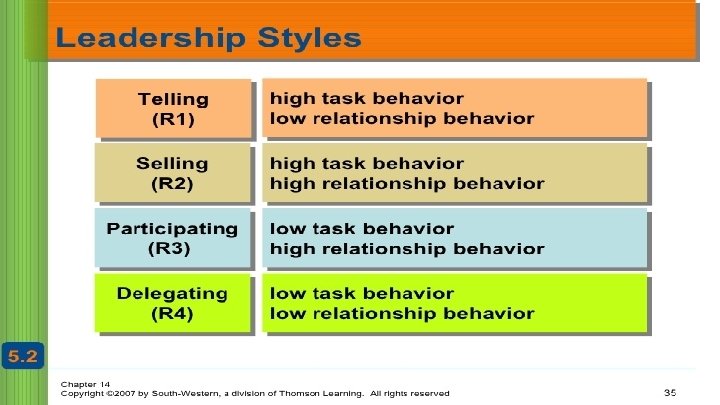
Comprehensive Theory of Leadership Continued When a leader recognizes that there are group members who lack the necessary skills to complete the project and also appear to be disinterested in being a part of the group leader needs to be persuasive (selling) To interact effectively with group members who are committed to the group, but lack background knowledge and experience, the leader must give directions, and be more of a teacher (telling) For members of a group who are not working together, leaders need to be more like a cheerleader. Enthusiasm is catching, and the leader must do the
Comprehensive Theory of Leadership Continued Finally, if group members are working cohesively, the leader may need to only assign tasks necessary for completion of the specific project (delegating)
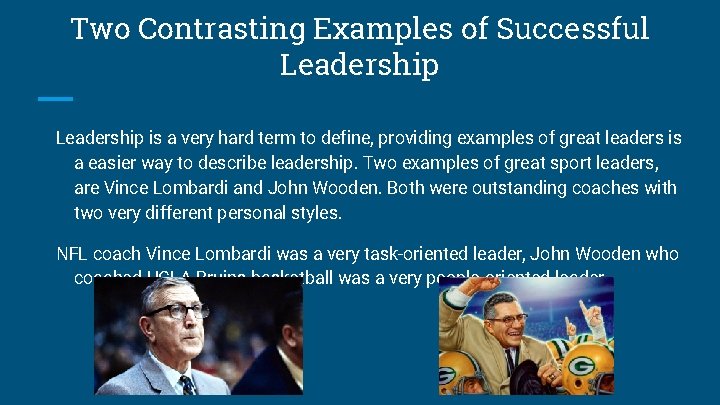
Two Contrasting Examples of Successful Leadership is a very hard term to define, providing examples of great leaders is a easier way to describe leadership. Two examples of great sport leaders, are Vince Lombardi and John Wooden. Both were outstanding coaches with two very different personal styles. NFL coach Vince Lombardi was a very task-oriented leader, John Wooden who coached UCLA Bruins basketball was a very people-oriented leader.
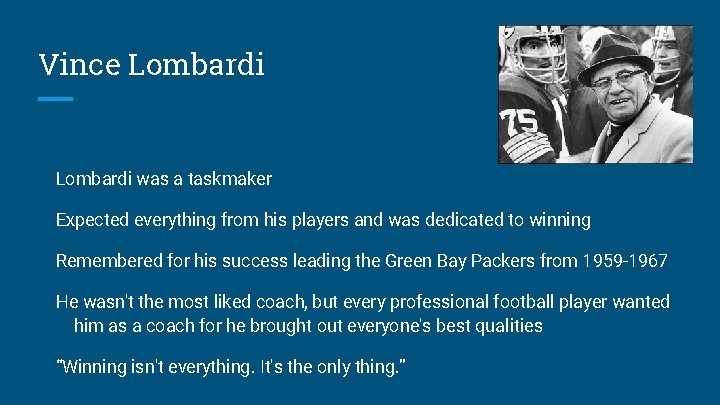
Vince Lombardi was a taskmaker Expected everything from his players and was dedicated to winning Remembered for his success leading the Green Bay Packers from 1959 -1967 He wasn't the most liked coach, but every professional football player wanted him as a coach for he brought out everyone's best qualities “Winning isn't everything. It's the only thing. ”
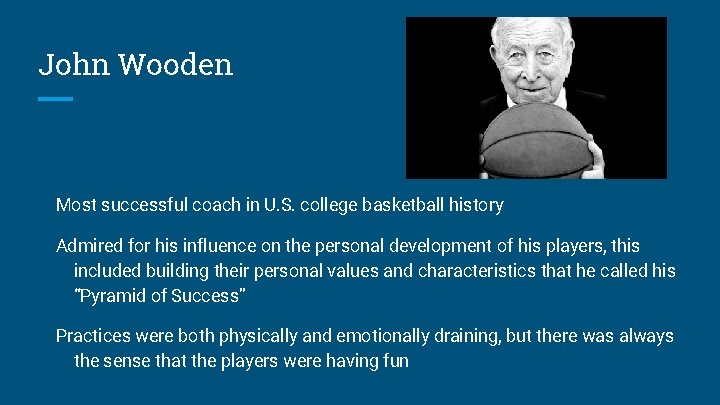
John Wooden Most successful coach in U. S. college basketball history Admired for his influence on the personal development of his players, this included building their personal values and characteristics that he called his “Pyramid of Success” Practices were both physically and emotionally draining, but there was always the sense that the players were having fun
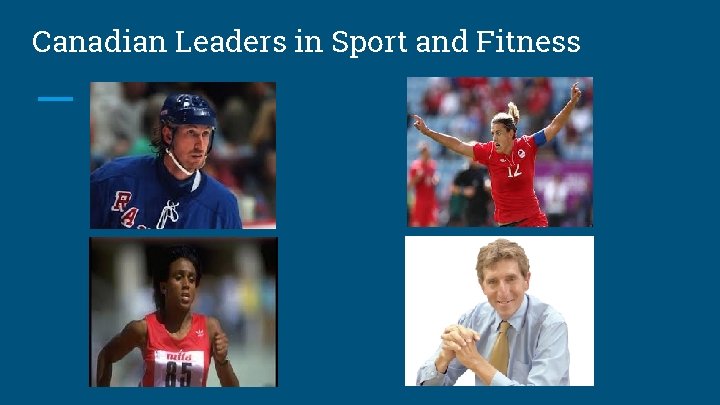
Canadian Leaders in Sport and Fitness
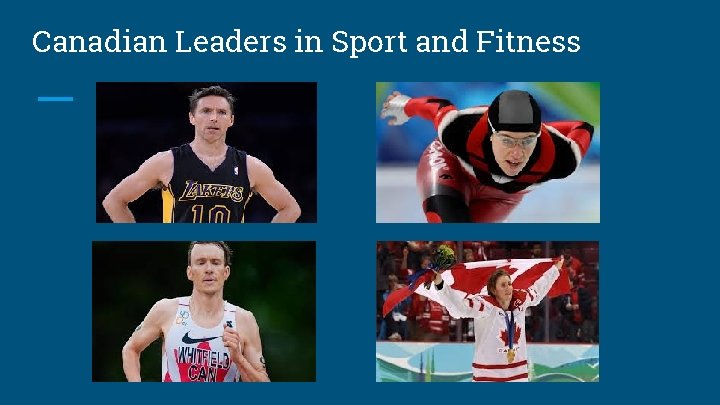
Canadian Leaders in Sport and Fitness
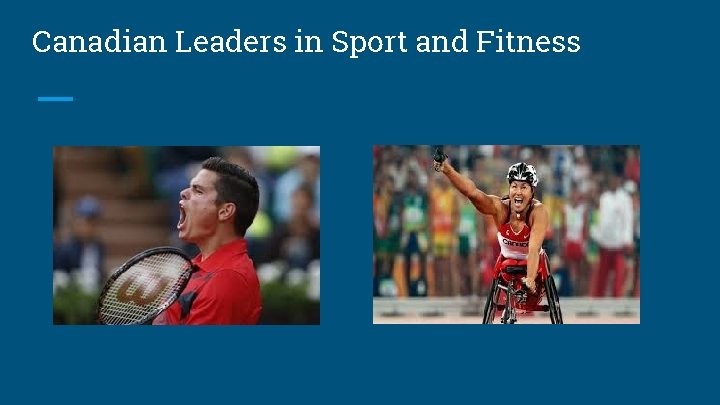
Canadian Leaders in Sport and Fitness
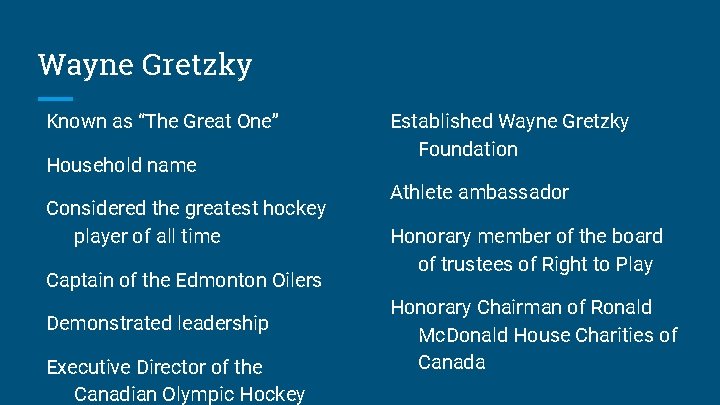
Wayne Gretzky Known as “The Great One” Household name Considered the greatest hockey player of all time Captain of the Edmonton Oilers Demonstrated leadership Executive Director of the Canadian Olympic Hockey Established Wayne Gretzky Foundation Athlete ambassador Honorary member of the board of trustees of Right to Play Honorary Chairman of Ronald Mc. Donald House Charities of Canada
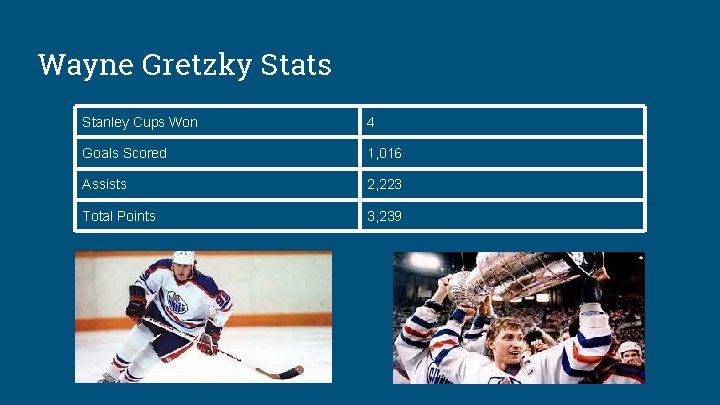
Wayne Gretzky Stats Stanley Cups Won 4 Goals Scored 1, 016 Assists 2, 223 Total Points 3, 239
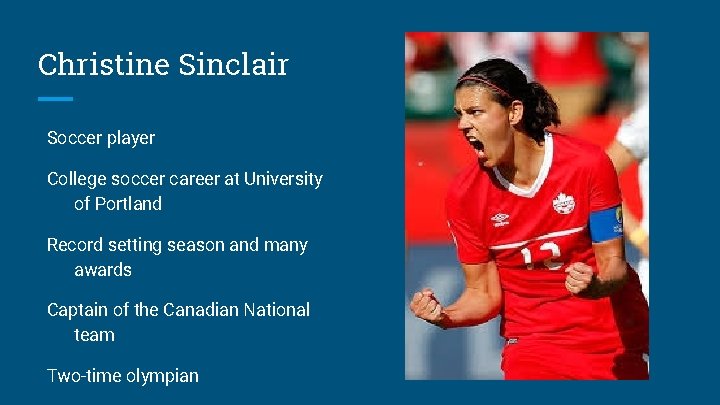
Christine Sinclair Soccer player College soccer career at University of Portland Record setting season and many awards Captain of the Canadian National team Two-time olympian
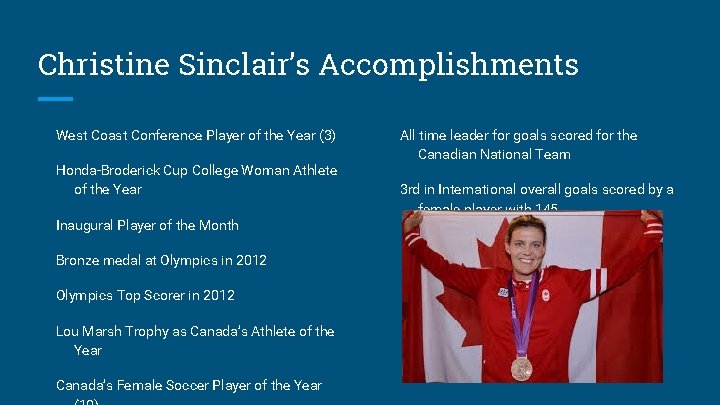
Christine Sinclair’s Accomplishments West Coast Conference Player of the Year (3) Honda-Broderick Cup College Woman Athlete of the Year Inaugural Player of the Month Bronze medal at Olympics in 2012 Olympics Top Scorer in 2012 Lou Marsh Trophy as Canada’s Athlete of the Year Canada’s Female Soccer Player of the Year All time leader for goals scored for the Canadian National Team 3 rd in International overall goals scored by a female player with 145
David Patchell - Evans “Patch” started off as a champion rower and unfortunately got in a body crushing accident along with debilitating arthritis. After enduring many painful hours of physiotherapy, Patch realized the importance of staying fit. He now owns over 300 Goodlife Fitness clubs across the country and is known as the “key person” in establishing the Canadian Fitness Professionals Inc. in 1993.
David Patchell - Evans Can-Fit-Pro offers certification courses, publishes a bi-monthly magazine, and 400 activity and lecture sessions. He has an annual event in Toronto that is the largest in the world and also attracts over 7000 professionals per year. Patch is an inspiration for everyone in the fitness field today.
Charmaine Crooks Has competed at 5 olympics and is a silver medalist. Was elected to the International Olympic Committee (IOC) Athletes’ Commission in 1996, one year before she decided to retire. Ever since she has served on the IOC Press Commission, the IOC Culture and Education Commission, the IOC 2000 Reform Commission, and the World Anti-Doping Agency Foundation Board. Charmaine is a Founding member of the IOC Ethics Commission, which developed the IOC Code of ethics. As a member of the Executive Board of the Canadian Olympic Committee
Charmaine Crooks She is the president of the Olympians Canada and the Chair of the COC Awards and Recognition Committee. In 1994, Crooks founded NGU consultants, a sports Marketing, promotion, and production company. With her life already consumed with all of these foundations and committees, she still has made time to volunteer for Canadian and Global Charities focussing on youth, women, and sports. She is a founding international board member of Right to Play and a global athlete ambassador for Peace and Sport.
Steve Nash Known for his shooting, playmaking and is ranked as one of the top players in NBA history in several statistical categories. Three- time winner of the Lionel Conacher Award as Canada’s male athlete and was named an Officer of the Order of Canada in 2007. In 2001, he formed the Steve Nash Foundation, which assists children affected by poverty, illness, abuse, or neglect and creates opportunities for education, play, and personal development. In 2006, Time magazine named Nash as one of the 100 most influential people in the world.
Clara Hughes Multitalented athlete, only person to win multiple medals in both the Summer and Winter Olympics. Hughes is more than just an elite athlete, she is a public speaker, a television commentator, and a humanitarian. She sits on the international board of directors for Right to Play and is involved with a school program that introduces Canadian children to the benefits of sport and physical activity. She is also the spokesperson for Bell Canada’s Let’s Talk campaign, part of the company’s mental health initiative.
Simon Whitfield ➔Ran his first Triathlon when he was 11 ➔Was known as a true sport hero ➔In the 2000 summer Olympics Simons overcame a multi-athlete bike crash, slowly working his way to the front of the pack and winning a gold medal in an ➔ Captured a silver medal in 2008 ➔ Made his final appearance in the London 2012 games, as he crashed early in the bike position in the race, breaking his collarbone. This time he would not come back. ➔ Once quitting the Triathlon he started to focus on long distance racing ➔ At the end of career he had the commonwealth games Gold, 12 national championships, and 14 world cups. ➔ Sinon proudly represented canadians in his career. He loves to visit schools and tell his story.
Hayley Wickenheiser Greatest female hockey player in the world. In 2003, she made history, suiting up with Finland's HC salamat and became the first remain to notch a point in a men's professional game. 3 Olympic gold medals, and multiple world championships in her credit Number 20 out of 25 on the toughest athletes in the world. Joined the canadian women's team at the age of 15 in 1994 Among the top 10 greatest female athletes in the history of sports Also played softball at the 2000 summer Olympics in Sydney Australia. Hayley's passion and derivation for the sport has helped raise the profile for women's hockey. Her support of organizations such as Kids. Sport and Right to Play and her mentoring of young athletes through the Wickenheiser International Women's Hockey Festival ensuring that the game of women's hockey will continue to grow.
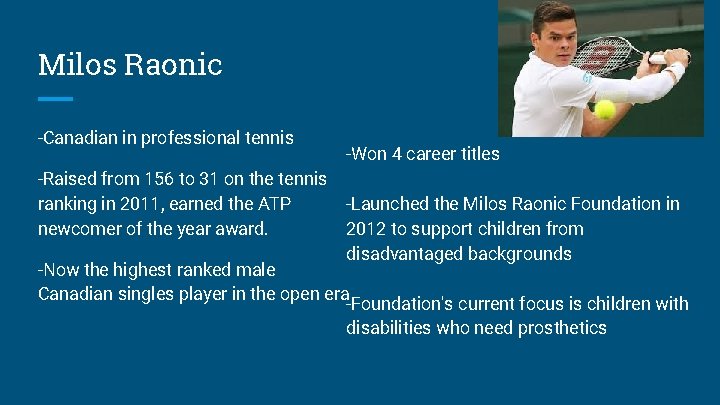
Milos Raonic -Canadian in professional tennis -Raised from 156 to 31 on the tennis ranking in 2011, earned the ATP newcomer of the year award. -Won 4 career titles -Launched the Milos Raonic Foundation in 2012 to support children from disadvantaged backgrounds -Now the highest ranked male Canadian singles player in the open era -Foundation's current focus is children with disabilities who need prosthetics
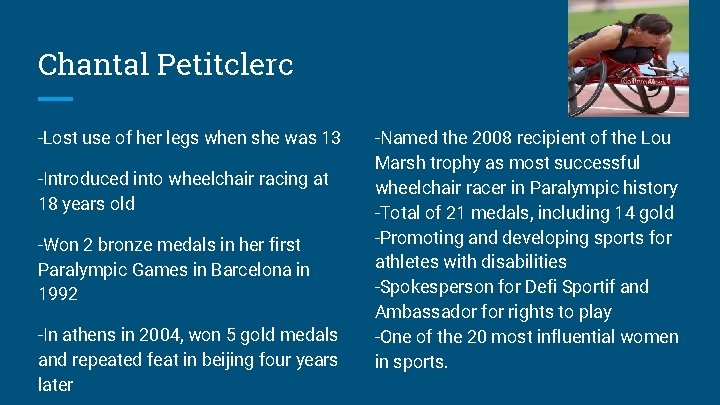
Chantal Petitclerc -Lost use of her legs when she was 13 -Introduced into wheelchair racing at 18 years old -Won 2 bronze medals in her first Paralympic Games in Barcelona in 1992 -In athens in 2004, won 5 gold medals and repeated feat in beijing four years later -Named the 2008 recipient of the Lou Marsh trophy as most successful wheelchair racer in Paralympic history -Total of 21 medals, including 14 gold -Promoting and developing sports for athletes with disabilities -Spokesperson for Defi Sportif and Ambassador for rights to play -One of the 20 most influential women in sports.
Trait Theories of Leadership
Trait Theories of Leadership ● Trait Theory ○ Also known as the great man theory which states how great men in the past used their intelligence and abilities to be influential and have an impact on society. ● Characteristics most commonly thought about are those that come easier than other such as; intelligence, enthusiasm, bravery, strength, and self confidence.
Trait Theories in Leadership ● It was proven that leaders do have different personality traits than their peer and they can be seen through different outcomes. ● The following traits are the ways you can decide between a leader and a peer , ○ Drive and Ambition ○ The desire to lead and influence others ○ Honesty and Integrity ○ Self-confidence ○ Technical knowledge relating to their area of expertise
Personality Theory of Leadership
Personality Theory of Leadership Suggests improving awareness of one’s own strengths and preferred behaviours in group situations can help you know when and how to lead properly. This is done by completing a personality investigation such as Myers-Briggs, True Colors, or Personality dimensions. These tests will give you insight into your own behaviour in a group and the behaviour of others.
Personality Theory of Leadership ● For centuries, researchers have attempted to categorize people into groups, this is referenced in Shakespeare with the four humours. Hippocrates, an Ancient Greek physician developed this interpretation of someone's personality and health based on quantities of different bodily fluids. ● Participants in a personality dimensions try to determine how much of four main personality types they possess. Participants find their primary and secondary “Colors”
Personality Theory of Leadership Golds- Organized, like structure and rules, and are very dependable Greens- curious, innovative problem solvers Oranges- active, fun loving, adventuresome Blue- Warm, empathetic individuals who have good communication skills when in groups These four groups are equal and are meant to work in harmony. Ex: a group of four with each personality type would be a perfect group
Behaviour Theory of Leadership
Two researchers at Ohio State University used a statistical technique known as factor analysis, and they narrowed a list of more than a thousand leader behaviours down to two distinct leadership dimensions: Task Relationship
Leadership based on Task Orientation is characterized by an emphasis on achieving performance tasks or goals. Behaviours typical of this leadership style include the following: Achieving goals and overcoming barriers that prevent success Concentrating on defining and achieving performance goals Assigning responsibilities for individual performance Establishing a well-defined authority hierarchy Viewing group members predominantly in terms of what they can do to accomplish the goals Providing explicit instructions
Leadership based on Relationship Orientation is characterized by an emphasis on interpersonal relationships, with less attention devoted to achieving performance outcomes. Also called supportive leadership, it includes the following key attributes: A genuine personal interest in the individual team member's’ feelings The tendency to be friendly and approachable Respect for the team members’ opinions Encouragement of group members to express their feelings and concerns in a nonthreatening environment A striving for harmony within the environment The provision of security
Situational Theory of Leadership ● Situational Theory of Leadership has been included in leadership training programs at more than 400 of the Fortune 500 companies, and over 1 million managers a year are being taught its basic premises. ● Just as a parent needs to give up control as a child matures and becomes more responsible, leaders must also learn to relinquish some of their normal control. ● Implicit in this theory is the notion that leadership styles range from highly autocratic through democratic to highly laissez- faire. ● This suggests that the most effective leadership behaviour depends on the
Democratic (Participative) Leadership Style The democratic form of leadership is often referred to as a team management because the leader empowers the group members to contribute to the overall organizational objectives. Key attributes to this style include: The utilization of goal setting Open negotiation of problems or differences of opinion The delegation of control over their own performance Sharing team’s success & failures
Democratic (Participative) Leadership Style An important feature of this style is the value it places of group consensus. Group consensus is when every group member agrees with the group’s decisions. When a group can’t reach an agreement the leader has the right to make the final decision This explains how democratic does’nt always refer to taking a vote. Voting isn’t always because those who disagree with the plan may only believe in it half heartedly or self-righteously
Laissez-Faire Leadership Style -Likes to be kept informed but steps back from decision making -Prefers acting as a recourse -Provides support or direction when appropriate or when asked -Effective when the group becomes competent and is functioning well -Tends to foster leadership developments in the group members -Not threatened by emerging leadership -Must not make the mistake of abandoning the group but instead retain responsibility to see function continuers and react to changing situations -Exact opposite of the autocratic style of leadership discussed previously
Autocratic (Directive) Leadership Style Characteristics of an Autocrat Leader When should this style be used? Makes all decisions When group needs complete direction Feels no need to justify them to group When group members respect their authority “In charge” Directs group by command or polite request When a group is unable to work through a decision process When in times of crisis and decisions need to be made quickly Suited for military or police forces
Benevolent Dictator Non-recommended style of leadership. This leader goes out of their way to ask group members for advice, puts on a show of considering their feelings and opinions, but then will make administrative decisions without taking their people’s opinions into consideration. This person becomes favourably viewed by members because they feel they are included in decisions made. Over a short period of time, members soon realize what is happening and this leads to resentment because they feel they have been treated with complete disrespect.
Can Leadership Be Learned? Leadership can be learned through experience. Many institutions depend on the assumption that leadership can be learned in this way. Many people have experienced leadership training within recreation or religious organizations to have belonging. However, developing as a leader is a lifelong day-by-day learning process that is built on continued self-examination, introspection, and selfsearching honesty. As a person pursues the goal of becoming a leader, they learn from their mistakes, acknowledges wrong turns, and makes amends when necessary. It is a learning process that begins and ends with one's self. Although many leadership skills can be learned in the class room, practical experience followed by personal and group reflection offer a better and more lasting avenue for learning.
Answers What is leadership and explain Leadership is the vital link between a group and a goal. Leadership is those people who help set a goal and pursue possibilities. What skills/qualities make a good leader? ● ● ● Genuine interest of another's feelings Tendency to be friendly and appropriate Respect for team opinions Encourage members to express feelings and concerns Emphasis positive rewards instead of negativity
Answers List 3 Canadian leaders and at least 2 facts about each All answers will vary but, as long as you pick someone that you can remember. How does a leader's personality affect the kind of leader they are? A leader’s personality can affect how they are because personality changes everything. Some people have more active personalities while others tend to be more calm and relaxed ones. By being aware of your behaviour it can result in better leadership skills and better outcomes with groups, while many people are aware of their personality it is good to know how to obtain positive outcomes regardless if you are active or calm, either of these can demonstrate great leaders but with different ways of completing a task.
Answers What traits are used to distinguish between a leader and a peer ● ● ● Many traits can distinguish between a leader and a peer, some of them are; Drive and ambition The desire to lead and influence others Honesty and Integrity Self-confidence Knowledge relating to area of expertise List 3 points of a supportive leader ● Genuine interest in a person’s feelings ● Respect for opinions ● Sense of security
Answers Describe the difference between the 3 styles of situational theory Mainly the difference is how they are organized and how the group reaches their outcome. The Democratic style if often referred to a team management where the leader is there to empower the group, while Laissez-Faire style is a style where the leader likes to be informed about decisions but keeps back and watches everyone do their job. These two types are the most common and have better benefits for the group as a whole. There is also Benevolent Dictator style which the leader asks group members for advice and puts on a show for attention. These all have good qualities and the first two are more common and beneficial to the group as a whole. We see all three styles but the first two are more common and have a better outcome.
Answers Do you think leadership is something that can be learned? Explain yes or no. Yes, becoming a leader is something that can be learned because when getting involved in a group allows you to take on tasks and show others your abilities you often find new ways to do something that can also be demonstrated to others. Many people experience leadership training as they participate in organized events and group activities, it is at this time that a leader in the group will come forward and be a demonstrator. Those who become leaders are constantly learning and they learn by making mistakes and correcting the mistakes that have been made. Being a leader means learning at a different pace that allows you to teach others so yes leadership is something that people learn about and improve on each day.
- Slides: 56