
Chapter 1 The Science of Life Student Learning
- Slides: 57
Chapter 1 The Science of Life
Student Learning Goals - Biology Science and Life SC. 912. N. 1. 1 Goal: Define a problem based on a specific body of knowledge, for example: biology, chemistry, physics, & earth/space science. Students will: 4 – Define and solve a problem based on a specific body of knowledge, for example: biology, chemistry, physics, & earth/space science. 3 - Define a problem based on a specific body of knowledge, for example: biology, chemistry, physics, & earth/space science. 2 – Explain a problem based on a specific body of knowledge, for example: biology, chemistry, physics, & earth/space science. 1 – Recognize a problem based on a specific body of knowledge, for example: biology, chemistry, physics, & earth/space science.
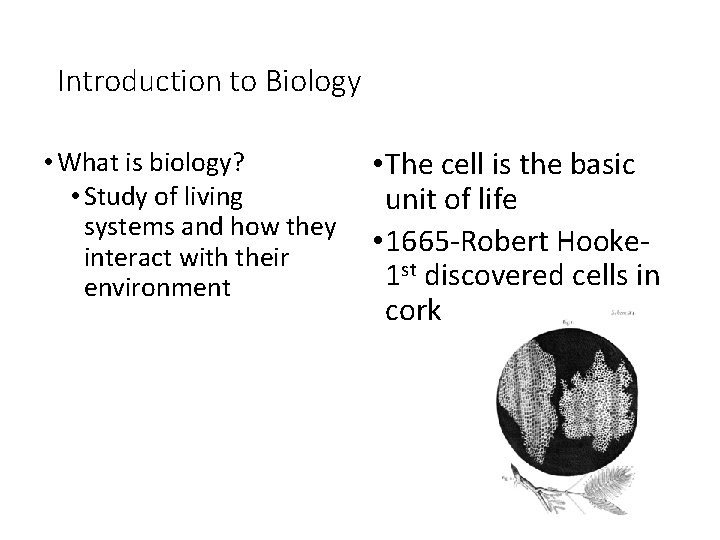
Introduction to Biology • What is biology? • Study of living systems and how they interact with their environment • The cell is the basic unit of life • 1665 -Robert Hooke 1 st discovered cells in cork
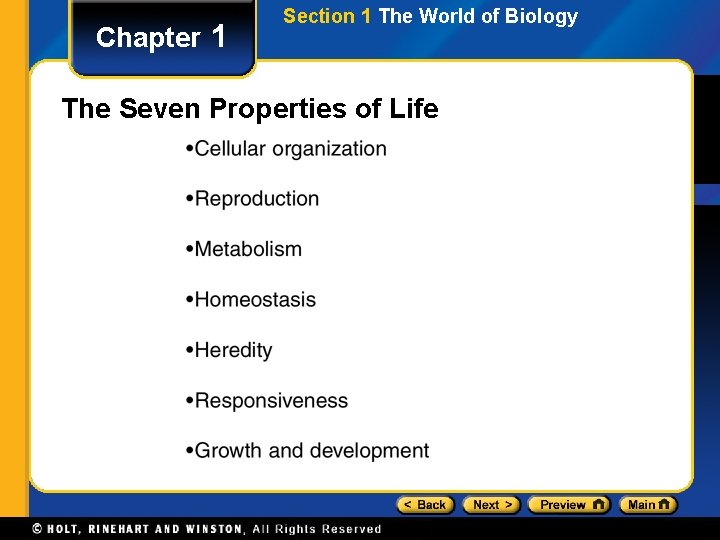
Chapter 1 Section 1 The World of Biology The Seven Properties of Life
Chapter 1 Section 1 The World of Biology Characteristics of Life, continued • Organization and Cells – Organization is the high degree of order within an organism’s internal and external parts and in its interactions with the living world. – A cell is the smallest unit of an organism that can perform all life’s processes.
Chapter 1 Section 1 The World of Biology Characteristics of Life, continued • Organization and Cells – Multicellular organisms are made up of many cells and show a hierarchy of organization going from the organism to the atom.
Chapter 1 Section 1 The World of Biology Characteristics of Life, continued • Response to Stimuli – Another characteristic of life is that an organism can respond to a stimulus—a physical or chemical change in the internal or external environment.
Chapter 1 Section 1 The World of Biology Characteristics of Life, continued • Homeostasis – All living things have mechanisms that allow them to maintain stable internal conditions. Homeostasis is the maintenance of a stable level of internal conditions even though environmental conditions are constantly changing.
Chapter 1 Section 1 The World of Biology Characteristics of Life, continued • Metabolism – Metabolism is the sum of all the chemical reactions that take in and transform energy and materials from the environment.
Chapter 1 Section 1 The World of Biology Characteristics of Life, continued • Growth and Development – The growth of living things results from the division and enlargement of cells. – Development is the process by which an organism becomes a mature adult.
Chapter 1 Section 1 The World of Biology Characteristics of Life, continued • Reproduction – Living organisms pass on hereditary information from parents to offspring, also called reproduction.
Chapter 1 Section 1 The World of Biology Characteristics of Life, continued • Change Through Time – Populations of living organisms evolve or change through time.
Chapter 1 Section 2 Themes in Biology Diversity and Unity of Life • Unity in the Diversity of Life – Life is so diverse, or full of variety. Yet, life is also characterized by unity, or features that all living things have in common.
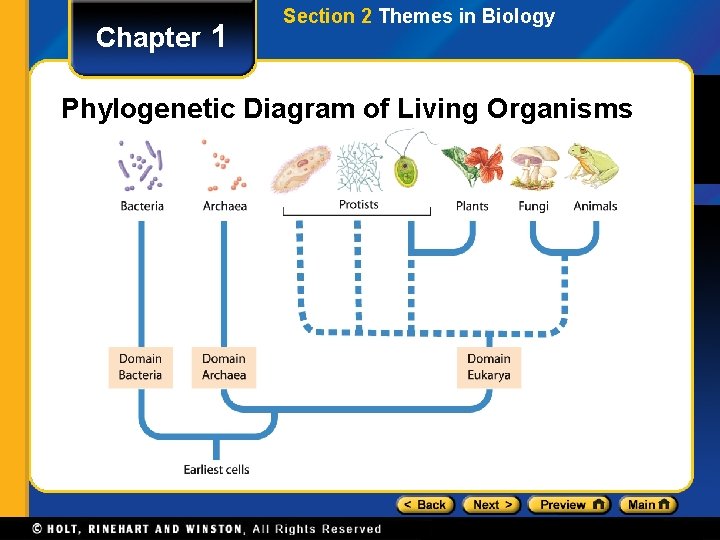
Chapter 1 Section 2 Themes in Biology Diversity and Unity of Life, continued • Unity in the Diversity of Life – The tree of life shows that all living things have descended with modification from a single common ancestor. Yet, there are many different lineages, or branches, representing different species.
Chapter 1 Section 2 Themes in Biology Phylogenetic Diagram of Living Organisms
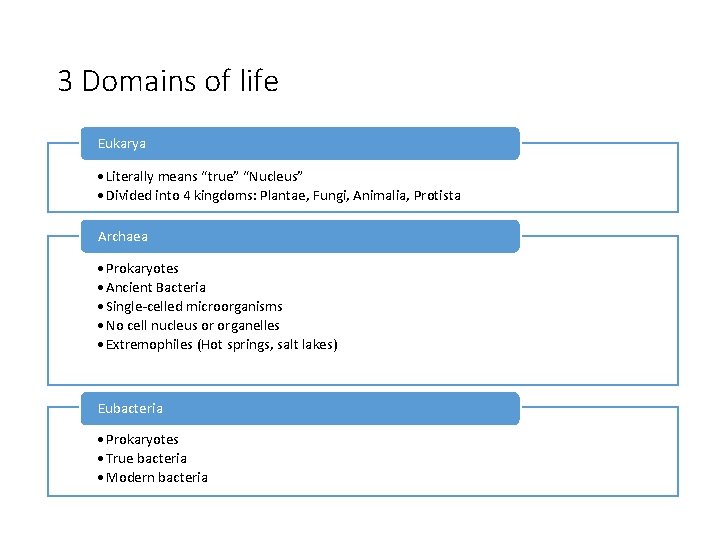
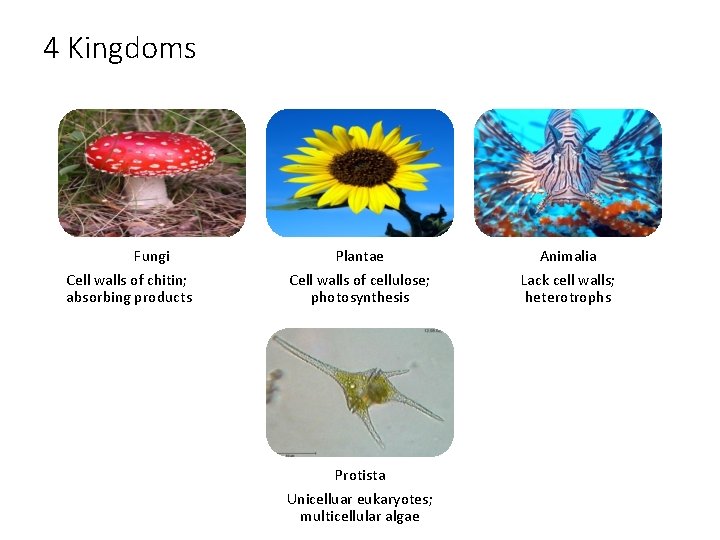
Chapter 1 Section 2 Themes in Biology Diversity and Unity of Life, continued • Three Domains of Life – The three domains of life are Bacteria, Archaea, and Eukarya. – The six kingdoms include Archaea, Bacteria, Protista, Fungi, Plantae, and Animalia.
Chapter 1 Section 2 Themes in Biology Interdependence of Organisms • Organisms live in interdependent communities and interact with both organisms and the environment.
Chapter 1 Section 2 Themes in Biology Evolution of Life • Evolution, or descent with modification, is the process in which the inherited characteristics within populations change over generations. • Evolution helps to explain how species came to exist, have changed over time, and adapt to their environment.
Chapter 1 Section 2 Themes in Biology Evolution of Life, continued • Natural Selection – Natural selection is a process by which organisms that have certain favorable traits are better able to survive and reproduce successfully than organisms that lack these traits. – Natural selection can lead to the evolution of populations.
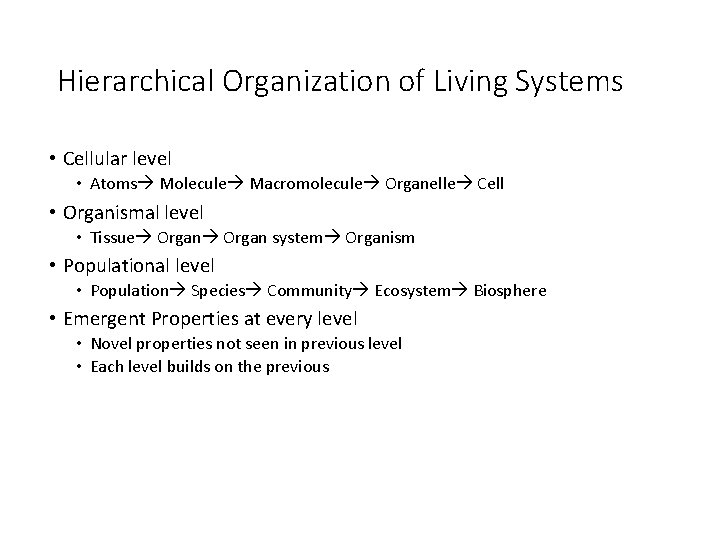
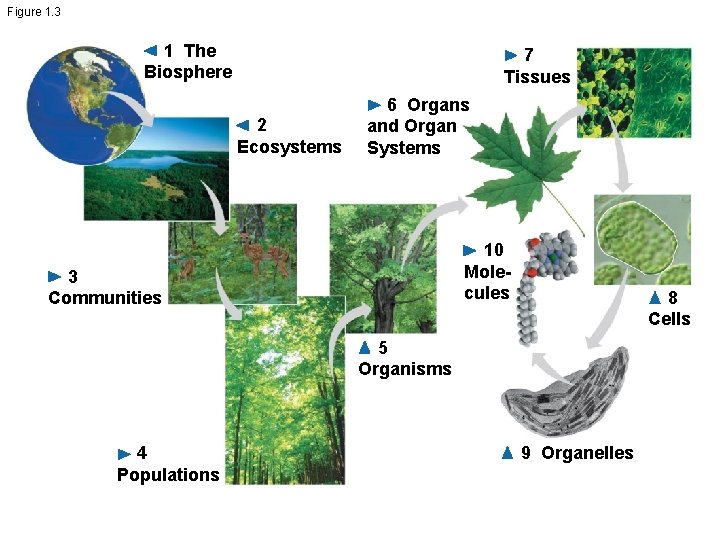
Hierarchical Organization of Living Systems • Cellular level • Atoms Molecule Macromolecule Organelle Cell • Organismal level • Tissue Organ system Organism • Populational level • Population Species Community Ecosystem Biosphere • Emergent Properties at every level • Novel properties not seen in previous level • Each level builds on the previous
Figure 1. 3 1 The Biosphere 7 Tissues 2 Ecosystems 6 Organs and Organ Systems 10 Molecules 3 Communities 8 Cells 5 Organisms 4 Populations 9 Organelles
3 Domains of life Eukarya • Literally means “true” “Nucleus” • Divided into 4 kingdoms: Plantae, Fungi, Animalia, Protista Archaea • Prokaryotes • Ancient Bacteria • Single-celled microorganisms • No cell nucleus or organelles • Extremophiles (Hot springs, salt lakes) Eubacteria • Prokaryotes • True bacteria • Modern bacteria
4 Kingdoms Fungi Cell walls of chitin; absorbing products Plantae Cell walls of cellulose; photosynthesis Protista Unicelluar eukaryotes; multicellular algae Animalia Lack cell walls; heterotrophs
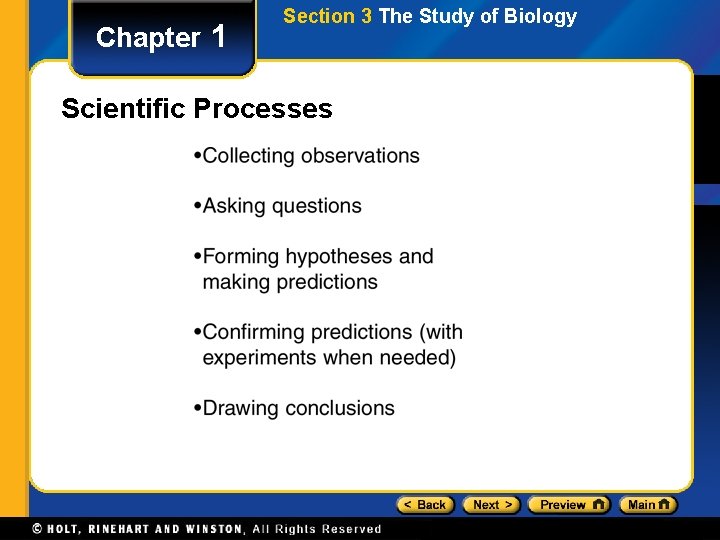
Chapter 1 Section 3 The Study of Biology Science as a Process • Steps of the Scientific Method – The scientific method involves making observations, asking questions, forming hypotheses, making predictions, designing experiments, analyzing data, and drawing conclusions.
Chapter 1 Section 3 The Study of Biology Scientific Processes
Chapter 1 Section 3 The Study of Biology Observing and Asking Questions • The process of science begins with an observation. • An observation is the act of perceiving a natural occurrence that causes someone to pose a question.
Chapter 1 Section 3 The Study of Biology Forming a Hypothesis • A hypothesis is a proposed explanation for the way a particular aspect of the natural world functions.
Chapter 1 Section 3 The Study of Biology Forming a Hypothesis, continued • Predicting – To test a hypothesis, scientists make a prediction that logically follows from the hypothesis.
Chapter 1 Section 3 The Study of Biology Designing an Experiment • Performing the Experiment – A controlled experiment compares an experimental group and a control group and only has one variable.
Chapter 1 Section 3 The Study of Biology Designing an Experiment, continued • Performing the Experiment – The control group provides a normal standard against which the biologist can compare results of the experimental group. – The experimental group is identical to the control group except for one factor.
Chapter 1 Section 3 The Study of Biology Designing an Experiment, continued • Performing the Experiment – The experimenter manipulates the independent variable. – The experimenter measures the dependent variable because it is is affected by the independent variable.
Chapter 1 Section 3 The Study of Biology Designing an Experiment, continued • Testing the Experiment – Experiments should be conducted without bias and they should be repeated.
Chapter 1 Section 3 The Study of Biology Collecting and Analyzing Data • Analyzing and Comparing Data – Scientists analyze data to draw conclusions about the experiment performed.
Chapter 1 Section 3 The Study of Biology Drawing Conclusions • Making Inferences – An inference is a conclusion made on the basis of facts and previous knowledge rather than on direct observations.
Chapter 1 Section 3 The Study of Biology Drawing Conclusions, continued • Applying Results and Building Models – Scientists often apply their findings about the natural world to solve practical problems.
Chapter 1 Section 3 The Study of Biology Constructing a Theory • A theory is a set of related hypotheses confirmed to be true many times, and it can explain a great amount of data.
Chapter 1 Section 3 The Study of Biology Communicating Ideas • Publishing a Paper – Scientists submit research papers to scientific journals for publication. – In peer review, the editors of a journal will send submitted papers out to experts in the field who anonymously read and critique the paper.
Chapter 1 Section 3 The Study of Biology Honesty and Bias • Communication between scientists about their methods and results helps prevent dishonesty and bias in science.
Chapter 1 Section 3 The Study of Biology Honesty and Bias • Conflict of Interest – The threat of a potential scandal based on misleading data or conclusions is a powerful force in science that helps keep scientists honest and fair.
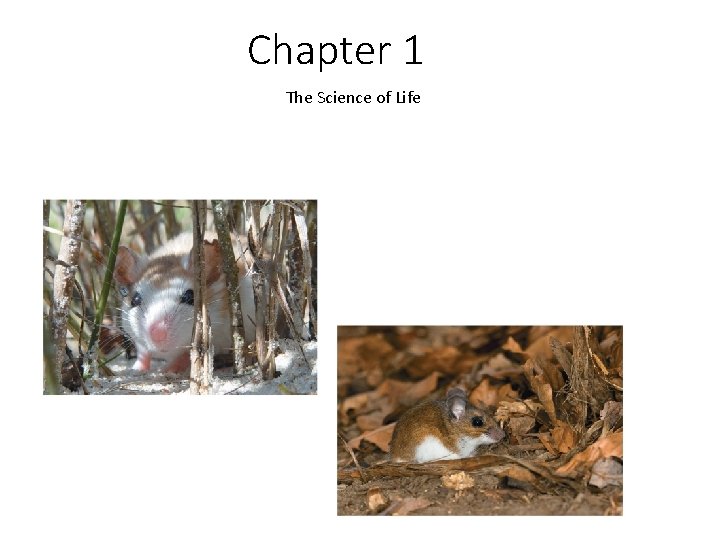
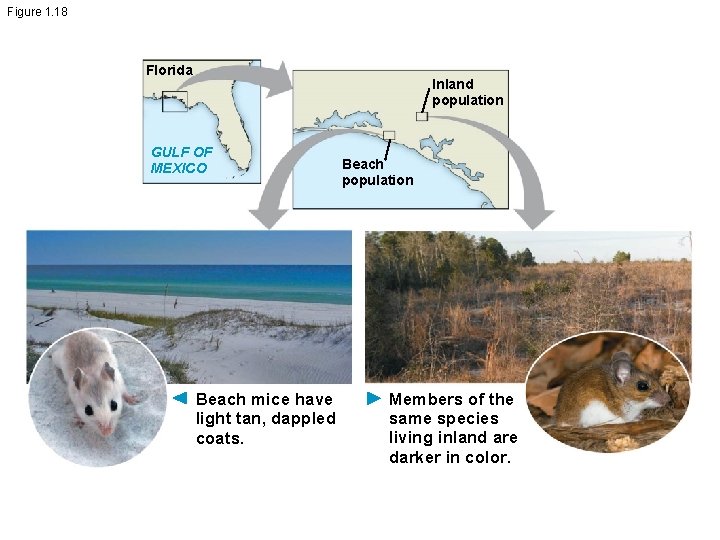
A Case Study in Scientific Inquiry: Investigating Coat Coloration in Mouse Populations • Color patterns in animals vary widely in nature • Two mouse populations that reside in different habitats have different coat colors • What accounts for the “match” between the coat colors of the mice and the color of the sand or soil in their habitats?
Figure 1. 18 Florida Inland population GULF OF MEXICO Beach mice have light tan, dappled coats. Beach population Members of the same species living inland are darker in color.
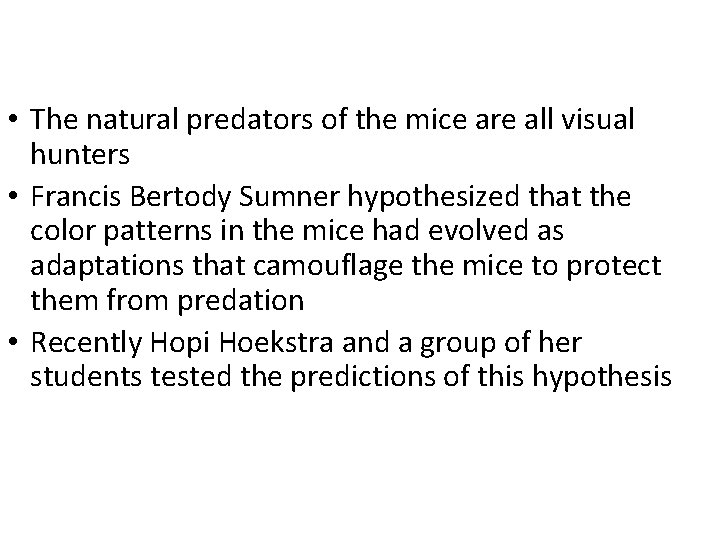
• The natural predators of the mice are all visual hunters • Francis Bertody Sumner hypothesized that the color patterns in the mice had evolved as adaptations that camouflage the mice to protect them from predation • Recently Hopi Hoekstra and a group of her students tested the predictions of this hypothesis
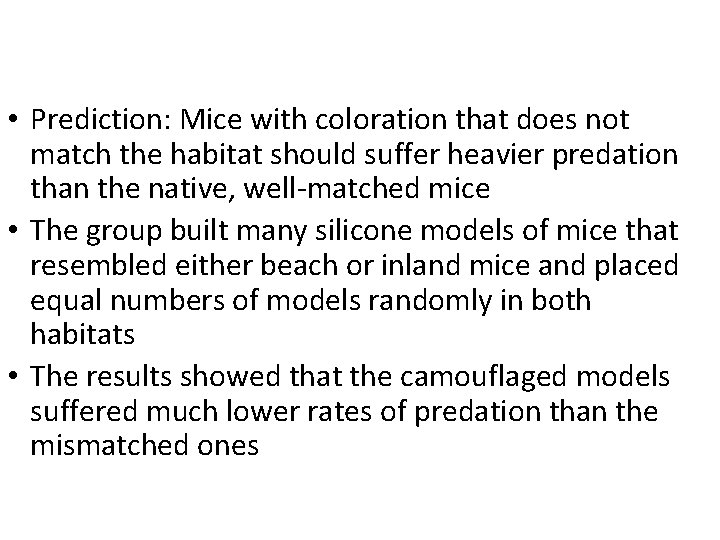
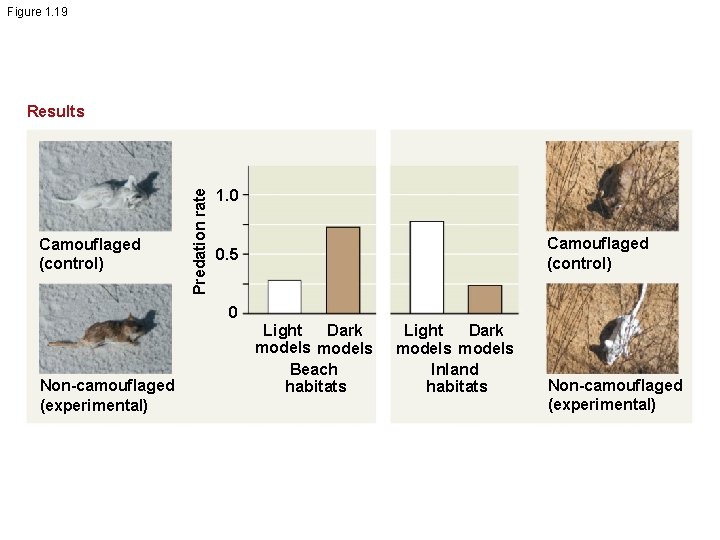
• Prediction: Mice with coloration that does not match the habitat should suffer heavier predation than the native, well-matched mice • The group built many silicone models of mice that resembled either beach or inland mice and placed equal numbers of models randomly in both habitats • The results showed that the camouflaged models suffered much lower rates of predation than the mismatched ones
Figure 1. 19 Camouflaged (control) Predation rate Results 1. 0 Camouflaged (control) 0. 5 0 Non-camouflaged (experimental) Light Dark models Beach habitats Light Dark models Inland habitats Non-camouflaged (experimental)
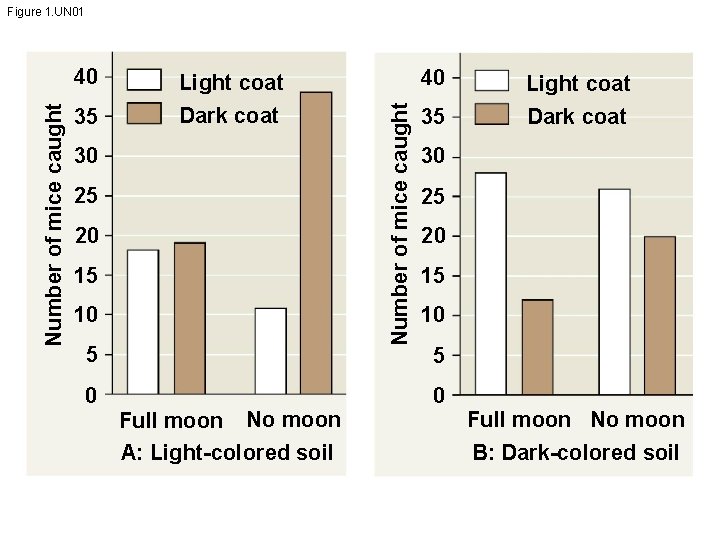
Experimental Controls • A controlled experiment compares an experimental group (the non-camouflaged mice) with a control group (the camouflaged mice) • Ideally, only the variable of interest (the effect of coloration on the behavior of predators) differs between the control and experimental groups • A controlled experiment means that control groups are used to cancel the effects of unwanted variables • A controlled experiment does not mean that all unwanted variables are kept constant
Figure 1. UN 01 35 Light coat Dark coat 30 25 20 15 10 5 0 Full moon No moon A: Light-colored soil 40 Number of mice caught 40 35 Light coat Dark coat 30 25 20 15 10 5 0 Full moon No moon B: Dark-colored soil
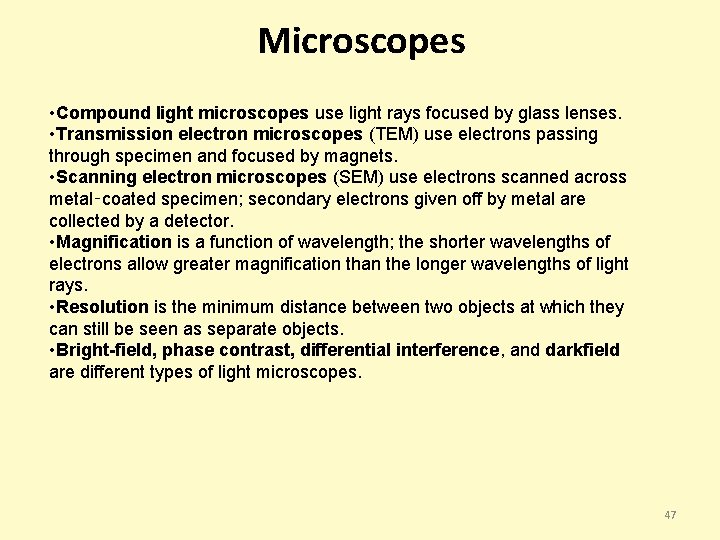
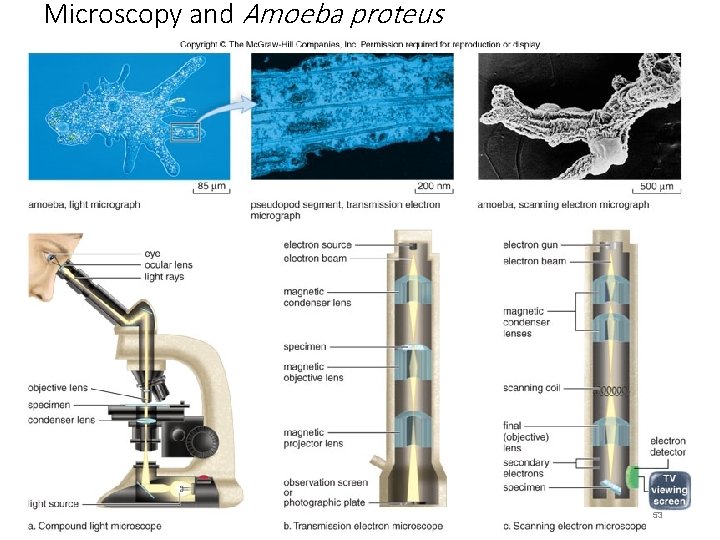
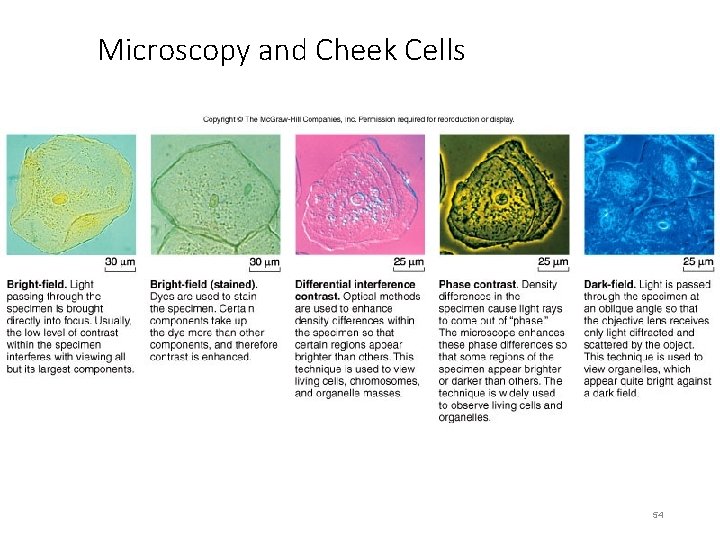
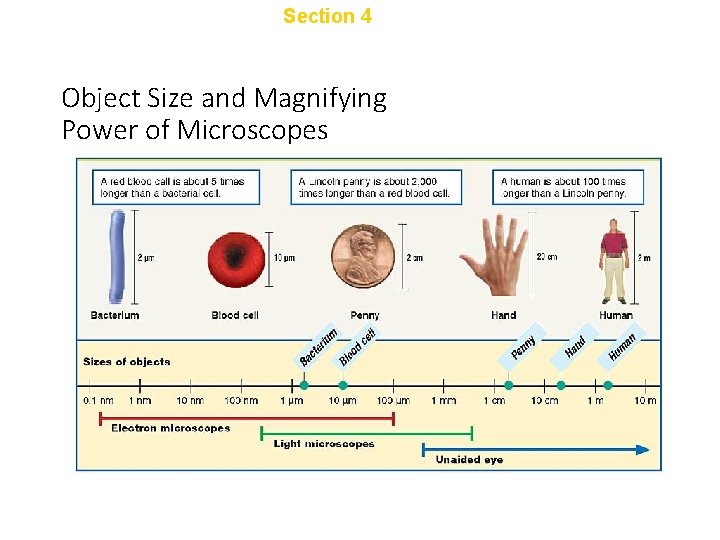
Microscopes • Compound light microscopes use light rays focused by glass lenses. • Transmission electron microscopes (TEM) use electrons passing through specimen and focused by magnets. • Scanning electron microscopes (SEM) use electrons scanned across metal‑coated specimen; secondary electrons given off by metal are collected by a detector. • Magnification is a function of wavelength; the shorter wavelengths of electrons allow greater magnification than the longer wavelengths of light rays. • Resolution is the minimum distance between two objects at which they can still be seen as separate objects. • Bright-field, phase contrast, differential interference, and darkfield are different types of light microscopes. 47
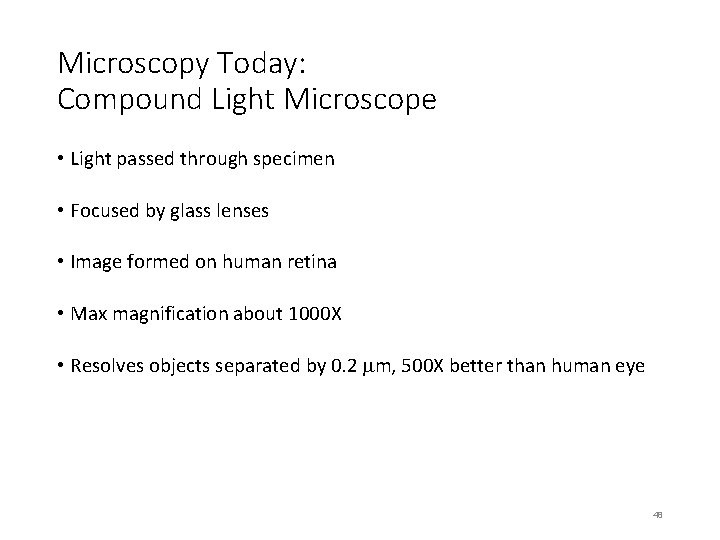
Microscopy Today: Compound Light Microscope • Light passed through specimen • Focused by glass lenses • Image formed on human retina • Max magnification about 1000 X • Resolves objects separated by 0. 2 mm, 500 X better than human eye 48
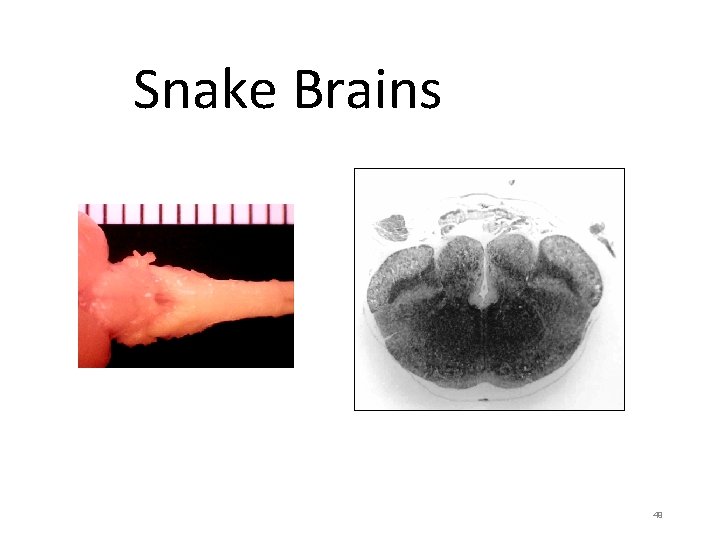
Snake Brains 49
Microscopy Today: Transmission Electron Microscope • Abbreviated T. E. M. • Electrons passed through specimen • Focused by magnetic lenses • Image formed on fluorescent screen – Similar to TV screen – Image is then photographed • Max magnification 1000, 000 s X • Resolves objects separated by 0. 00002 mm, 100, 000 X better than human eye 50
Microscopy Today: Scanning Electron Microscope • Abbreviated S. E. M. • Specimen sprayed with thin coat of metal – Electron beam scanned across surface of specimen – Metal emits secondary electrons • Emitted electrons focused by magnetic lenses • Image formed on fluorescent screen – Similar to TV screen – Image is then photographed 51
Microscopy Today: Phase Contrast Microscopy • Great for transparent specimens with low contrast, like living cells • Some organelles have higher density than others – Speed of light is affected by density – Light passes more slowly through high density than low density – Light waves entering a specimen “in phase” exit some parts of the specimen out of phase • Microscope shows only light that is slower or faster • Causes transparent organelles to “glow” 52
Microscopy and Amoeba proteus 53
Microscopy and Cheek Cells 54
Chapter 1 Section 4 Tools and Techniques Object Size and Magnifying Power of Microscopes
Chapter 1 Section 4 Tools and Techniques Units of Measurement • Base and Other Units – Scientists use a single, standard system of measurement, called the metric system. The official name of the metric system is Système International d’Unités or SI.
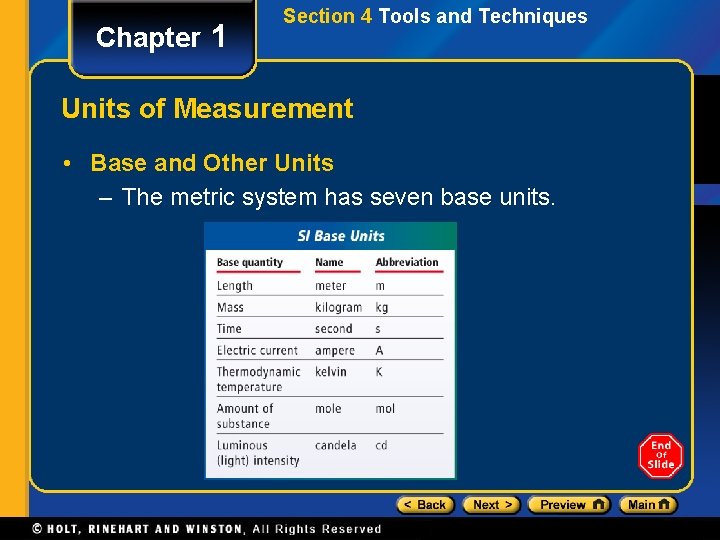
Chapter 1 Section 4 Tools and Techniques Units of Measurement • Base and Other Units – The metric system has seven base units.