
Chapter 1 The Science of Biology What were
Chapter 1 The Science of Biology
What were your first questions? WHY? What? How?
What is Science? Science asks the same questions you did as a young child. Science investigates and attempts to understand explain events in nature.
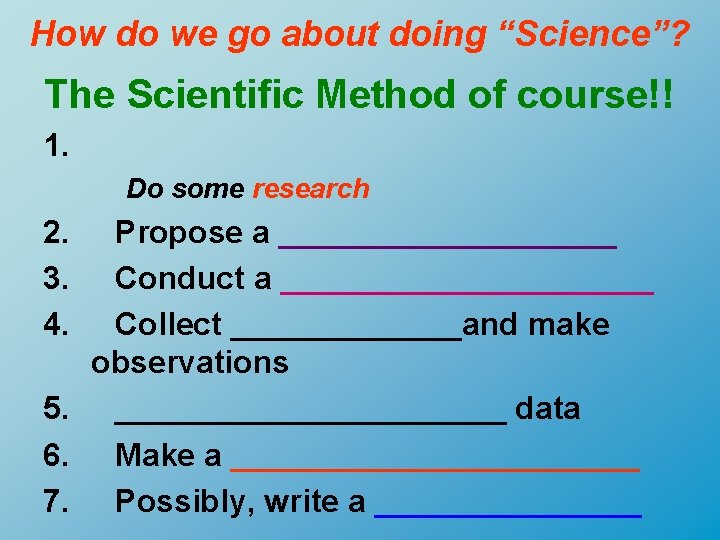
How do we go about doing “Science”? The Scientific Method of course!! 1. Do some research 2. 3. 4. Propose a __________ Conduct a ___________ Collect _______and make observations 5. ___________ data 6. Make a ____________ 7. Possibly, write a ________
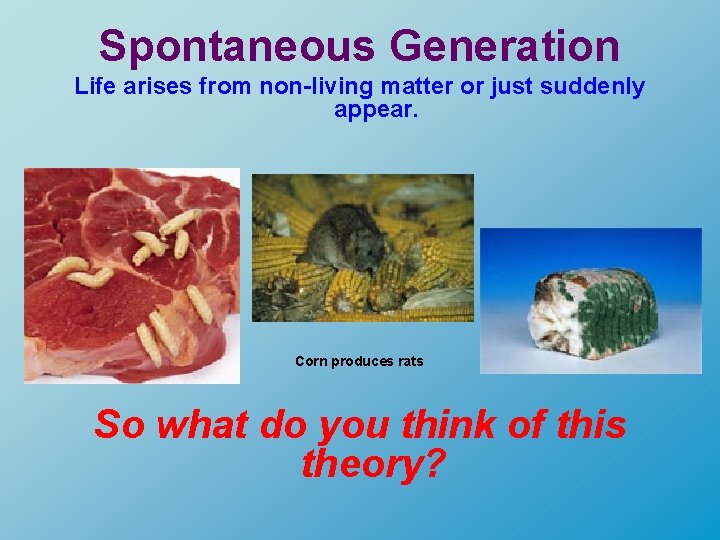
Spontaneous Generation Life arises from non-living matter or just suddenly appear. Meat grows maggots Corn produces rats Bread breeds mold So what do you think of this theory?
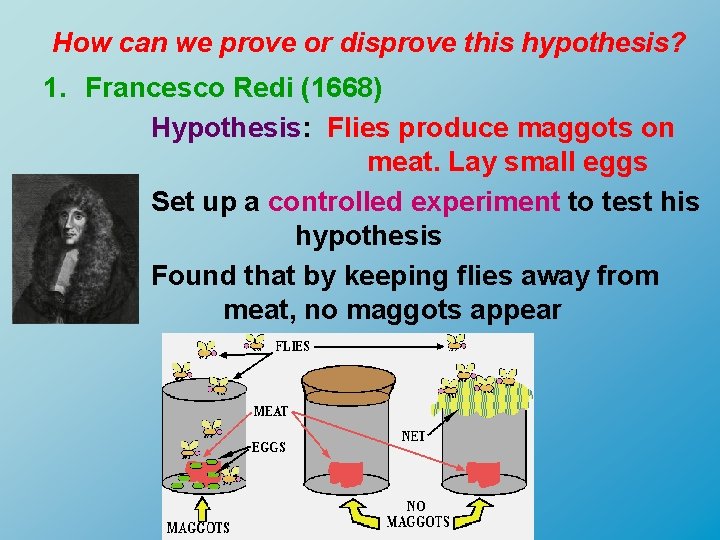
How can we prove or disprove this hypothesis? 1. Francesco Redi (1668) Hypothesis: Flies produce maggots on meat. Lay small eggs Set up a controlled experiment to test his hypothesis Found that by keeping flies away from meat, no maggots appear

Variables 1. Controlled variable: Jar, meat, location, temperature, time 2. Independent or Manipulative variable: Gauze covering the meat jars 3. Dependant (responding) variable: Whether maggots appear
John Needham – 1745 Hypothesized that spontaneous generation occurs under the right conditions – Boiled chicken broth and then sealed flask (thought heat would kill) – “Animalcules” swarmed after a few days – Therefore, he felt his hypothesis was right.
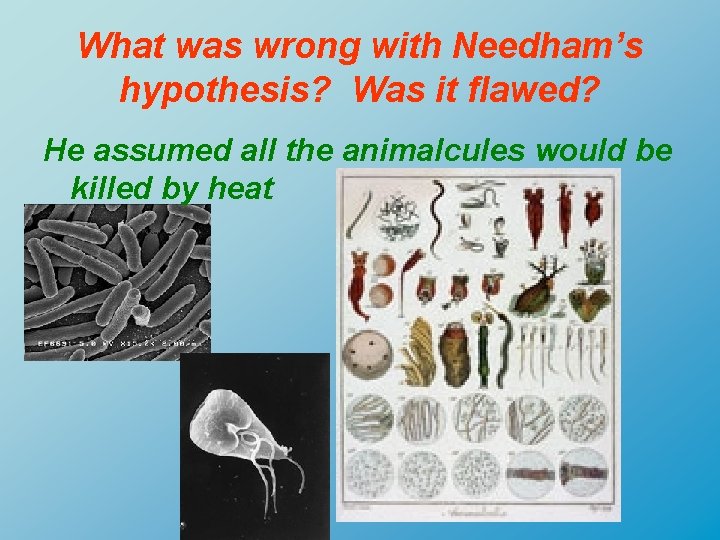
What was wrong with Needham’s hypothesis? Was it flawed? He assumed all the animalcules would be killed by heat
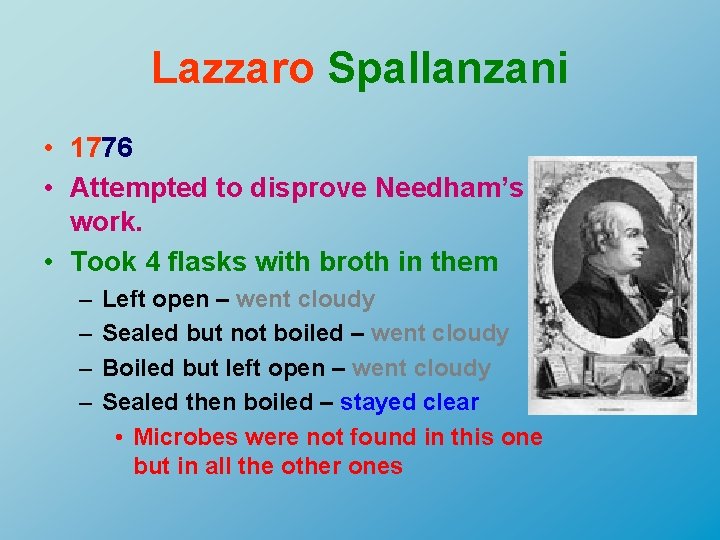
Lazzaro Spallanzani • 1776 • Attempted to disprove Needham’s work. • Took 4 flasks with broth in them – – Left open – went cloudy Sealed but not boiled – went cloudy Boiled but left open – went cloudy Sealed then boiled – stayed clear • Microbes were not found in this one but in all the other ones
What would have been Spallanzani’s hypothesis?
What was wrong with what Spallanzani assumed?
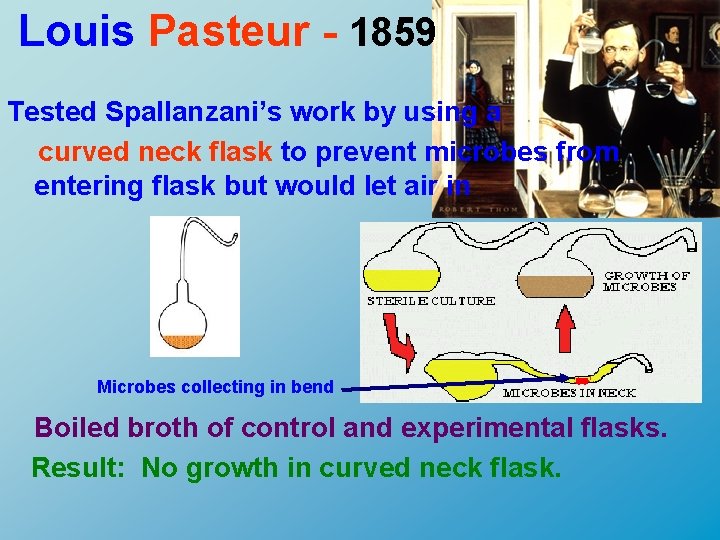
Louis Pasteur - 1859 Tested Spallanzani’s work by using a curved neck flask to prevent microbes from entering flask but would let air in Microbes collecting in bend Boiled broth of control and experimental flasks. Result: No growth in curved neck flask.

Pasteur’s broth in the curved necked flask stayed sterile for years until he tilted it and the airflow carried the microbes into the broth
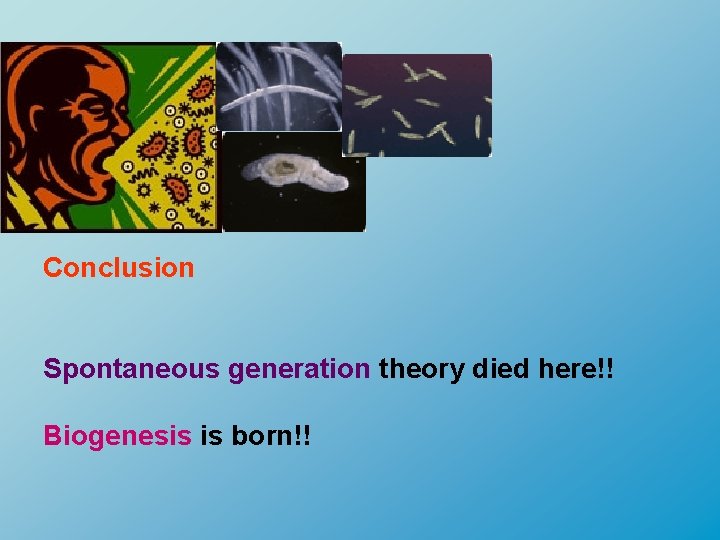
Conclusion Spontaneous generation theory died here!! Biogenesis is born!!
What is Biology? Biology is
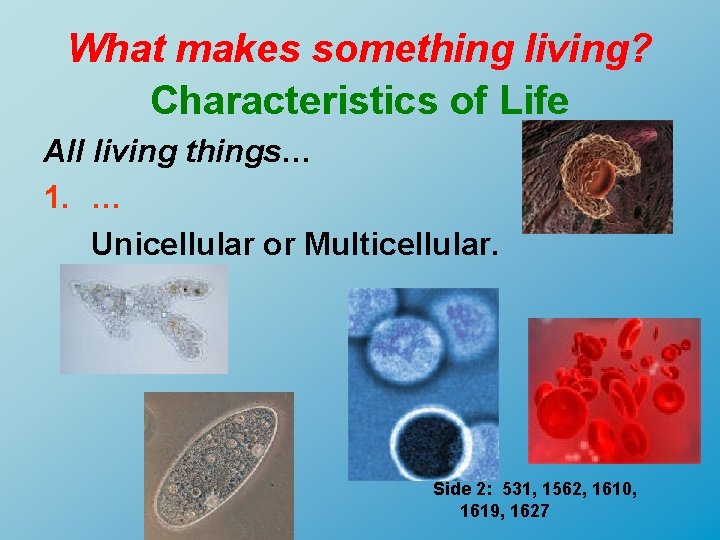
What makes something living? Characteristics of Life All living things… 1. … Unicellular or Multicellular. Side 2: 531, 1562, 1610, 1619, 1627
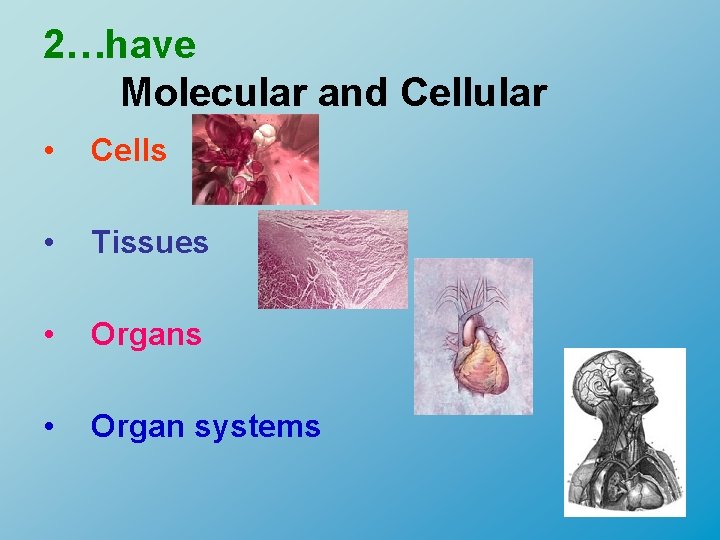
2…have Molecular and Cellular • Cells • Tissues • Organ systems
3…need Necessary for Metabolism - all the chemical processes taking place in the organism. Some make their own food from raw materials (Autotrophic), others need to process organic matter (heterotrophic) to obtain energy.
4…are Maintain an internal steady state – Homeostasis. Ex. Increased heart rate when stressed, goosebumps and shivering. Process leads to Evolution (a change in a species over time) 1302, 1525, 1333, 1425
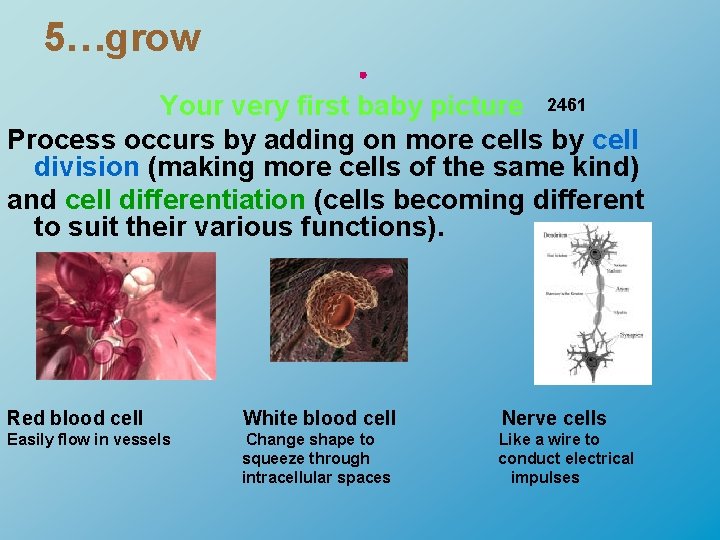
5…grow Your very first baby picture 2461 Process occurs by adding on more cells by cell division (making more cells of the same kind) and cell differentiation (cells becoming different to suit their various functions). Red blood cell White blood cell Nerve cells Easily flow in vessels Change shape to squeeze through intracellular spaces Like a wire to conduct electrical impulses
6. . . Passing on of genetic information (DNA and genes) 539, 1111 Not a necessary life process but needed for the continuation of the species. Sexual (involves the fusion of two cells) and Asexual (involves only 1 cell dividing) reproduction. 767, 761, 573 1499, 1506
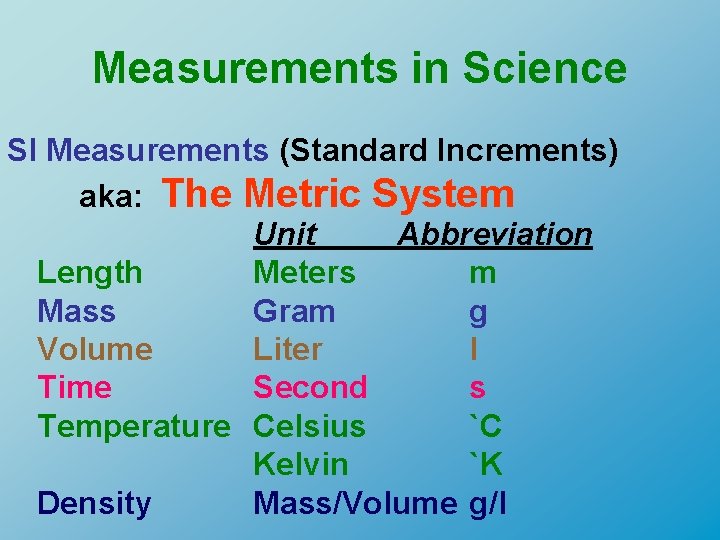
Measurements in Science SI Measurements (Standard Increments) aka: The Metric System Unit Abbreviation Length Meters m Mass Gram g Volume Liter l Time Second s Temperature Celsius `C Kelvin `K Density Mass/Volume g/l
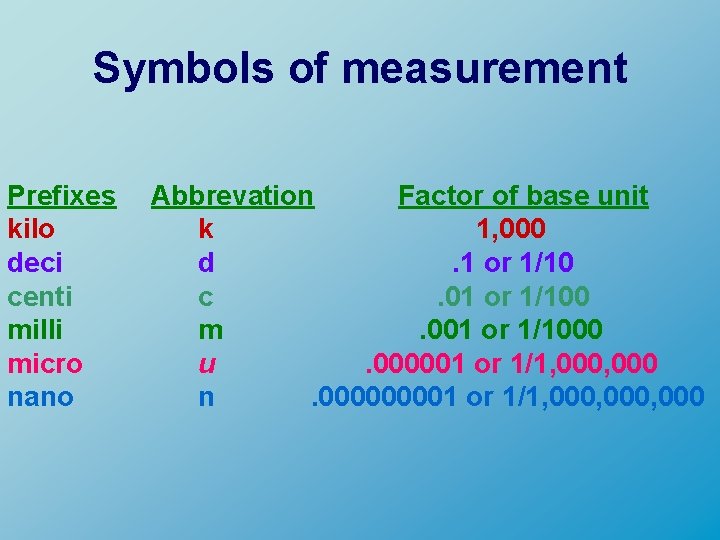
Symbols of measurement Prefixes kilo deci centi milli micro nano Abbrevation Factor of base unit k 1, 000 d. 1 or 1/10 c. 01 or 1/100 m. 001 or 1/1000 u. 000001 or 1/1, 000 n. 00001 or 1/1, 000, 000
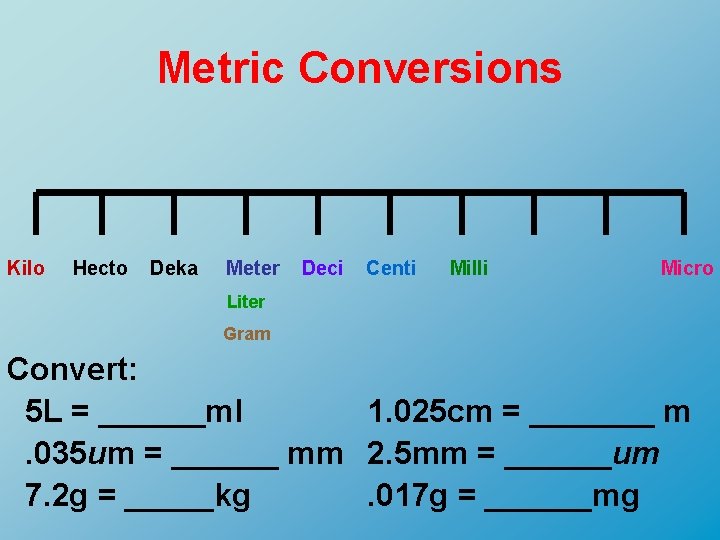
Metric Conversions Kilo Hecto Deka Meter Deci Centi Milli Micro Liter Gram Convert: 5 L = ______ml 1. 025 cm = _______ m. 035 um = ______ mm 2. 5 mm = ______um 7. 2 g = _____kg. 017 g = ______mg
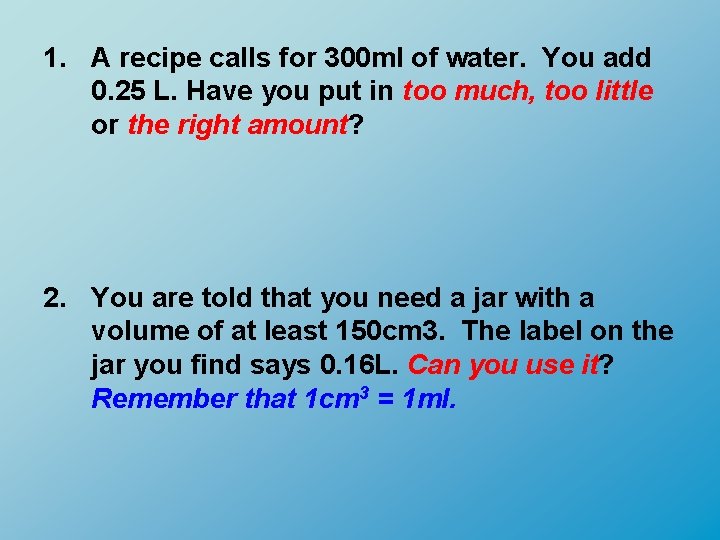
1. A recipe calls for 300 ml of water. You add 0. 25 L. Have you put in too much, too little or the right amount? 2. You are told that you need a jar with a volume of at least 150 cm 3. The label on the jar you find says 0. 16 L. Can you use it? Remember that 1 cm 3 = 1 ml.
- Slides: 26