
CHAPTER 1 THE SCIENCE OF BIOLOGY Lesson 2
CHAPTER 1 THE SCIENCE OF BIOLOGY Lesson 2 Characteristics of Life
Essential Questions: q q What is biology? What characteristics do all living things share?
Bell Ringer: Is It Living? Listed below are examples of living (which includes once -living) and nonliving things. Put an X next to the things that could be considered living. ___ tree ___ rock ___ fire ___ boy ___ wind ___ rabbit ___ cloud ___ feather ___ grass ___ seed ___ egg ___ bacteria ___ cell ___ molecule ___ Sun ___ mushroom ___ potato ___ leaf ___ butterfly ___ pupae ___ fossil ___ hibernating bear ___ mitochondria ___ river Explain your thinking. What “rule” or reasoning did you use to decide if something could be considered living?
Biology is the scientific study of life Biologists ask questions such as � How does a single cell develop into an organism? � How does the human mind work? � How do living things interact in communities? Life defies a simple, one-sentence definition Life is recognized by what living things do
Level in the Biological Hierarchy Life can be studied at different levels, from molecules to the entire living planet The study of life can be divided into different levels of biological organization
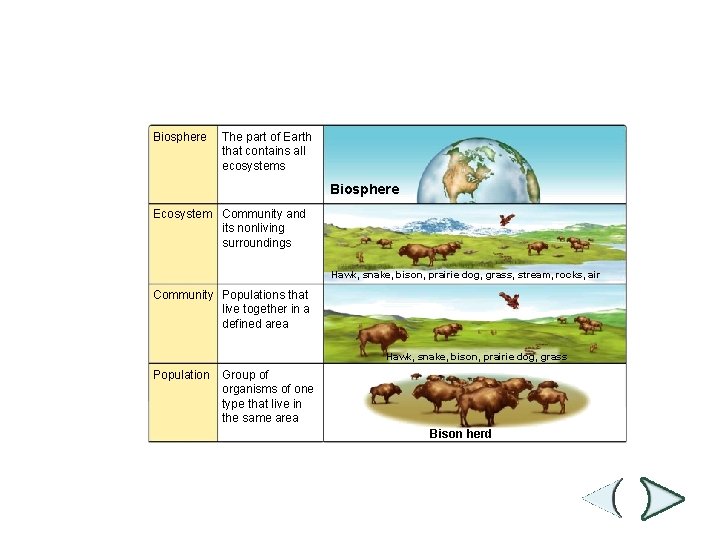
Figure 1 -21 Levels of Organization Section 1 -3 Biosphere The part of Earth that contains all ecosystems Biosphere Ecosystem Community and its nonliving surroundings Hawk, snake, bison, prairie dog, grass, stream, rocks, air Community Populations that live together in a defined area Hawk, snake, bison, prairie dog, grass Population Group of organisms of one type that live in the same area Bison herd
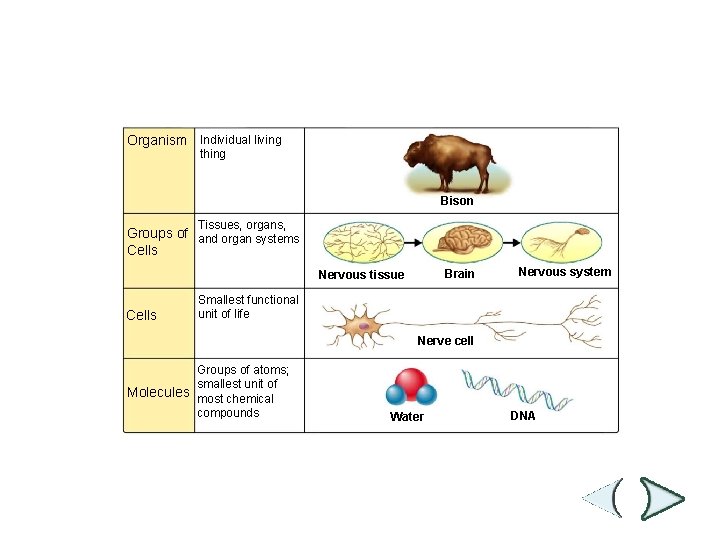
Figure 1 -21 Levels of Organization continued Section 1 -3 Organism Individual living thing Bison Tissues, organs, Groups of and organ systems Cells Brain Nervous tissue Cells Nervous system Smallest functional unit of life Nerve cell Groups of atoms; smallest unit of Molecules most chemical compounds Water DNA
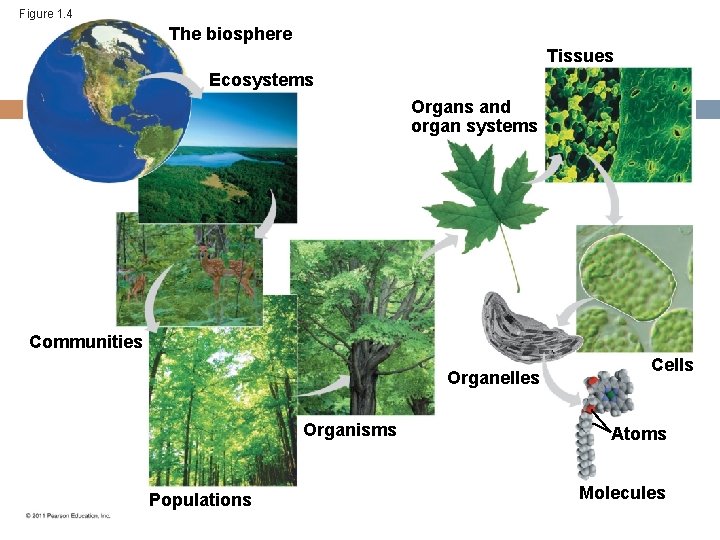
Figure 1. 4 The biosphere Tissues Ecosystems Organs and organ systems Communities Organelles Organisms Populations Cells Atoms Molecules
Characteristics of Life 1. 2. 3. 4. 5. 6. 7. 8. Living things are made up of units called cells. Living things reproduce. Living things are based on a universal genetic code Living things grow and develop Living things obtain and use materials and energy. Living things respond to their environment Living things maintain a stable internal environment. Taken as a group, living things change over time.
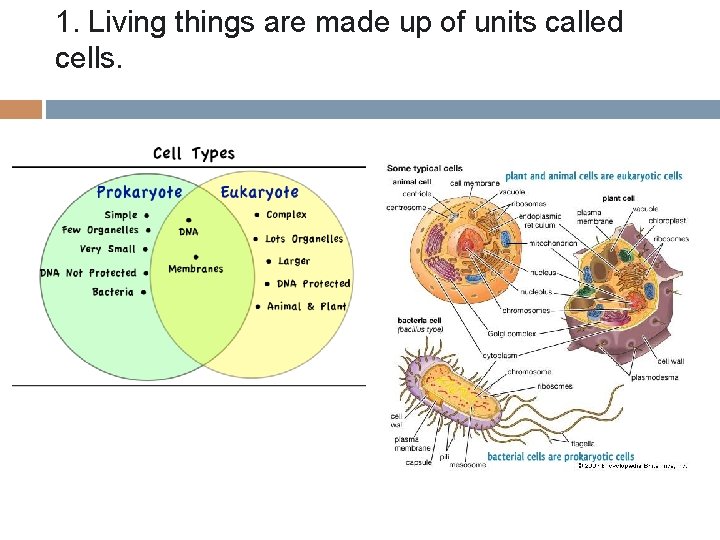
1. Living things are made up of units called cells.
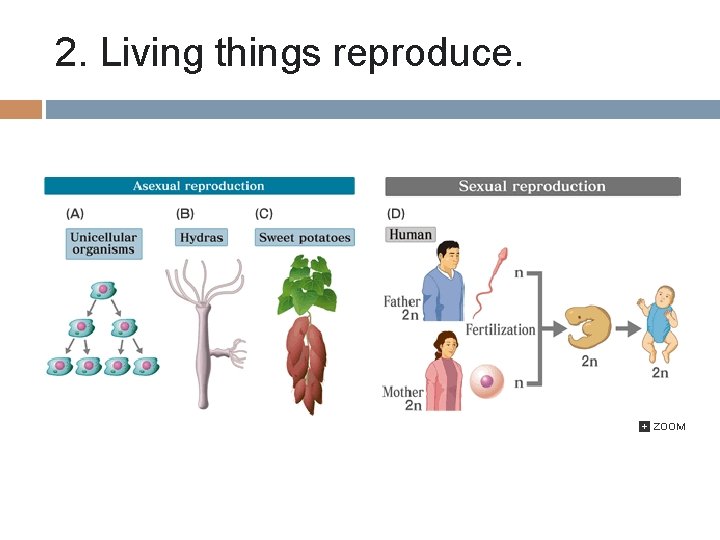
2. Living things reproduce.
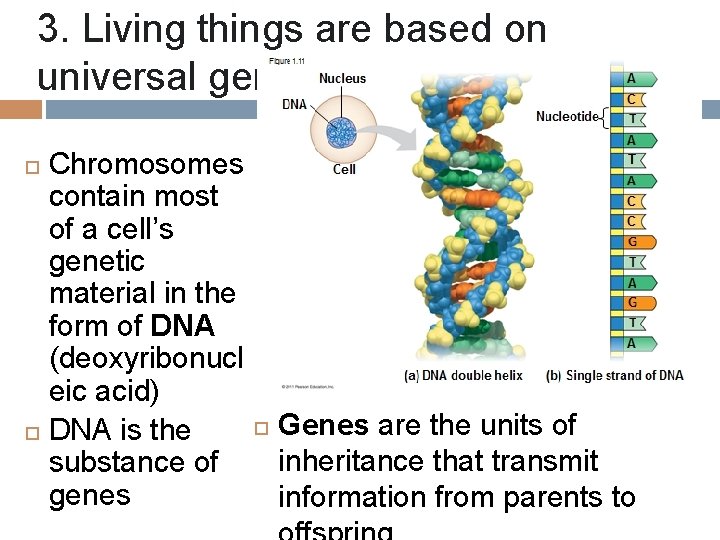
3. Living things are based on universal genetic code Chromosomes contain most of a cell’s genetic material in the form of DNA (deoxyribonucl eic acid) DNA is the substance of genes Genes are the units of inheritance that transmit information from parents to
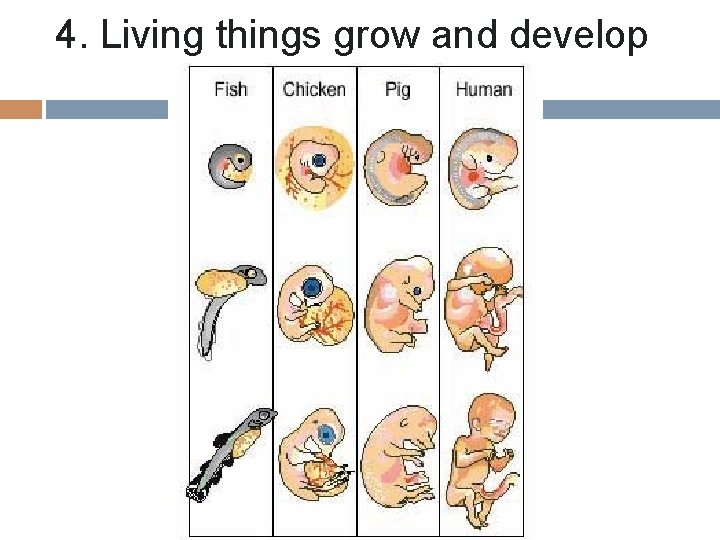
4. Living things grow and develop
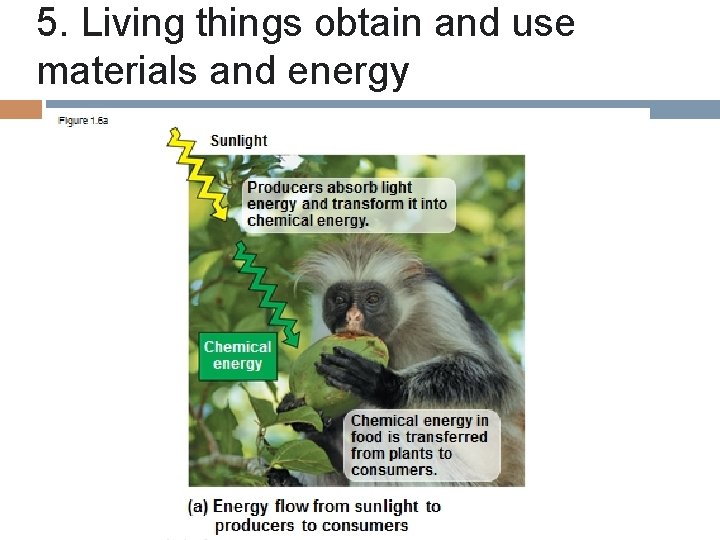
5. Living things obtain and use materials and energy
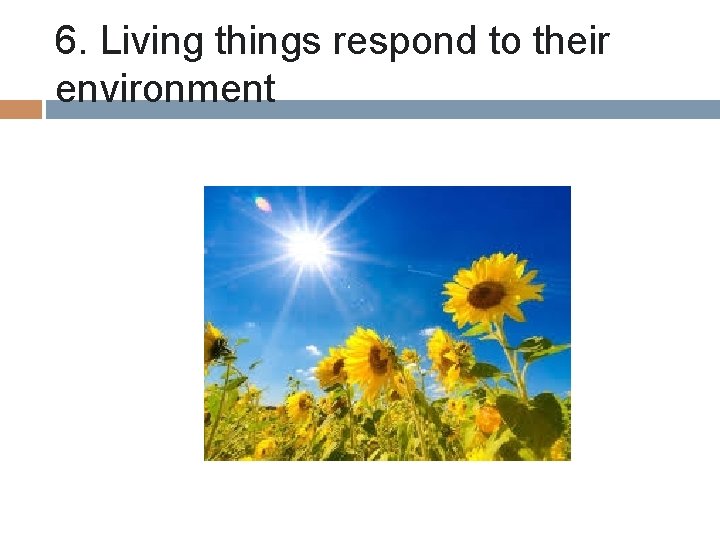
6. Living things respond to their environment
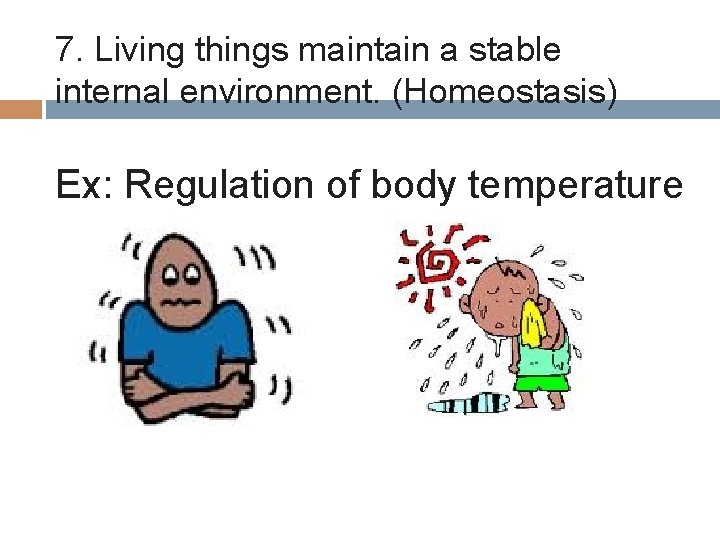
7. Living things maintain a stable internal environment. (Homeostasis) Ex: Regulation of body temperature
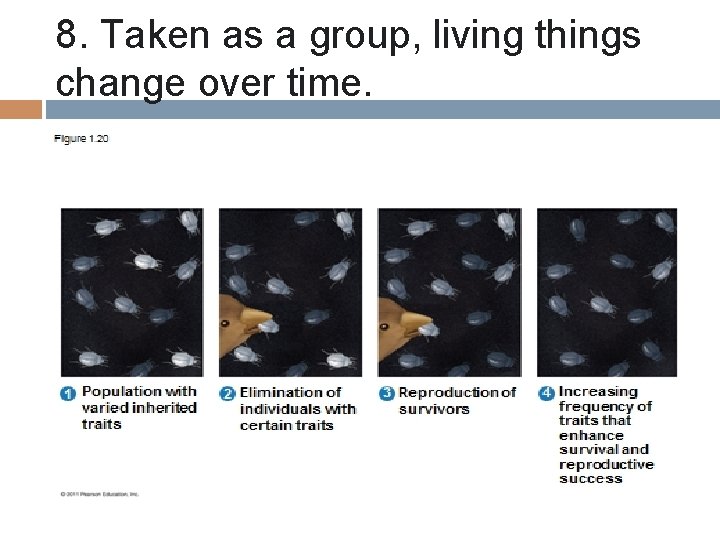
8. Taken as a group, living things change over time.
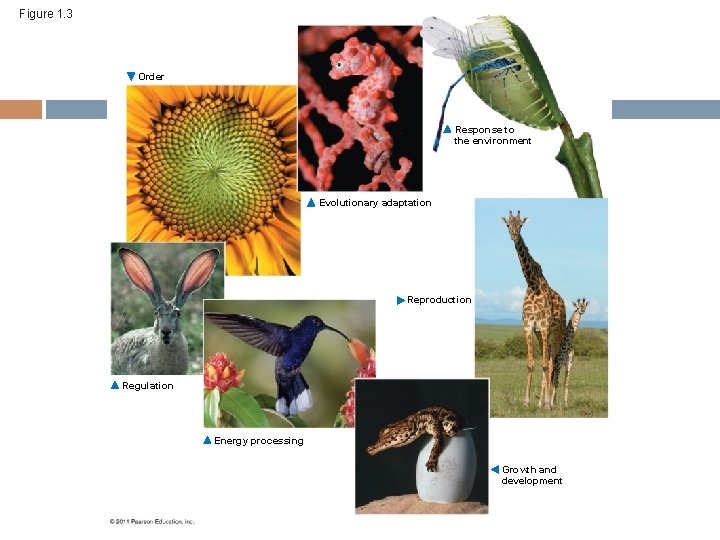
Figure 1. 3 Order Response to the environment Evolutionary adaptation Reproduction Regulation Energy processing Growth and development
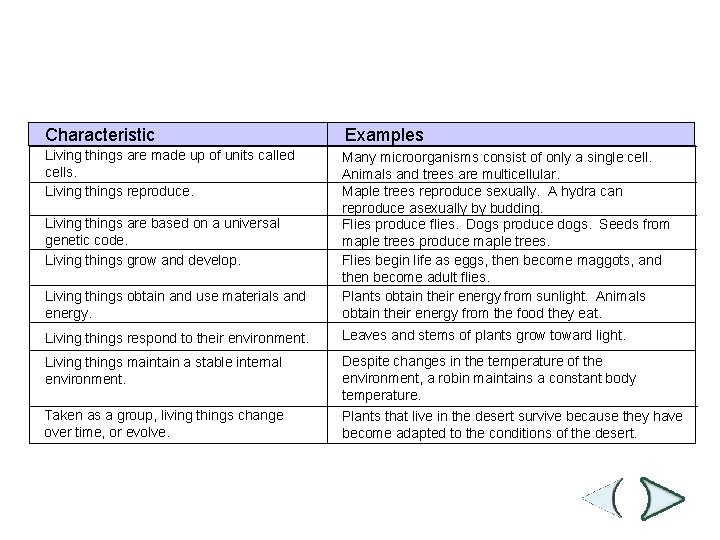
Characteristics of Living Things Section 1 -3 Characteristic Examples Living things are made up of units called cells. Living things reproduce. Living things obtain and use materials and energy. Many microorganisms consist of only a single cell. Animals and trees are multicellular. Maple trees reproduce sexually. A hydra can reproduce asexually by budding. Flies produce flies. Dogs produce dogs. Seeds from maple trees produce maple trees. Flies begin life as eggs, then become maggots, and then become adult flies. Plants obtain their energy from sunlight. Animals obtain their energy from the food they eat. Living things respond to their environment. Leaves and stems of plants grow toward light. Living things maintain a stable internal environment. Despite changes in the temperature of the environment, a robin maintains a constant body temperature. Taken as a group, living things change over time, or evolve. Plants that live in the desert survive because they have become adapted to the conditions of the desert. Living things are based on a universal genetic code. Living things grow and develop.
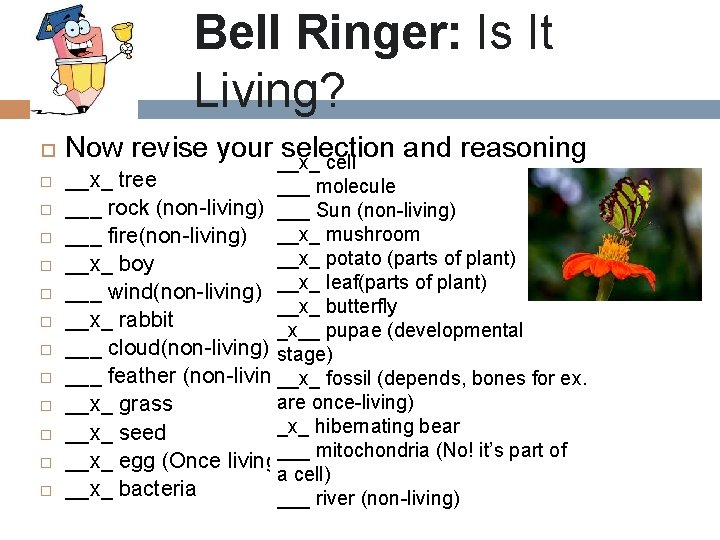
Bell Ringer: Is It Living? Now revise your __x_ selection and reasoning cell __x_ tree ___ molecule ___ rock (non-living) ___ Sun (non-living) ___ fire(non-living) __x_ mushroom __x_ potato (parts of plant) __x_ boy ___ wind(non-living) __x_ leaf(parts of plant) __x_ butterfly __x_ rabbit _x__ pupae (developmental ___ cloud(non-living) stage) ___ feather (non-living) __x_ fossil (depends, bones for ex. are once-living) __x_ grass _x_ hibernating bear __x_ seed __x_ egg (Once living)___ mitochondria (No! it’s part of a cell) __x_ bacteria ___ river (non-living)
- Slides: 20