
Chapter 1 The Nature of Strategic Management Strategic



- Slides: 17
Chapter 1 The Nature of Strategic Management
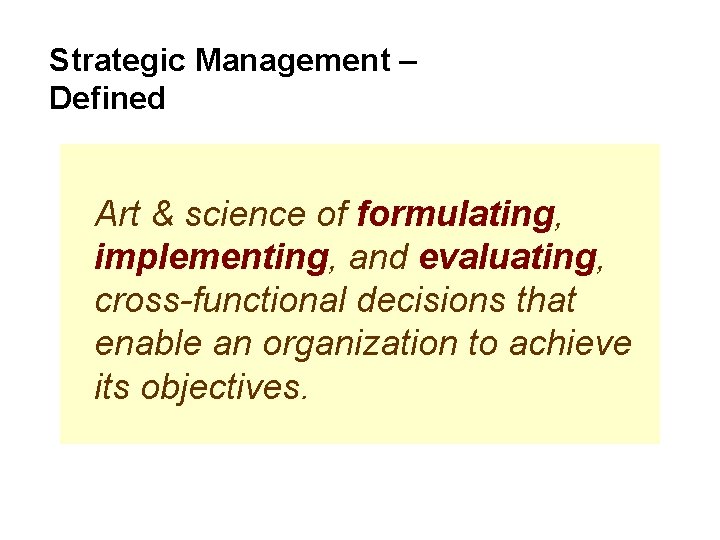
Strategic Management – Defined Art & science of formulating, implementing, and evaluating, cross-functional decisions that enable an organization to achieve its objectives.
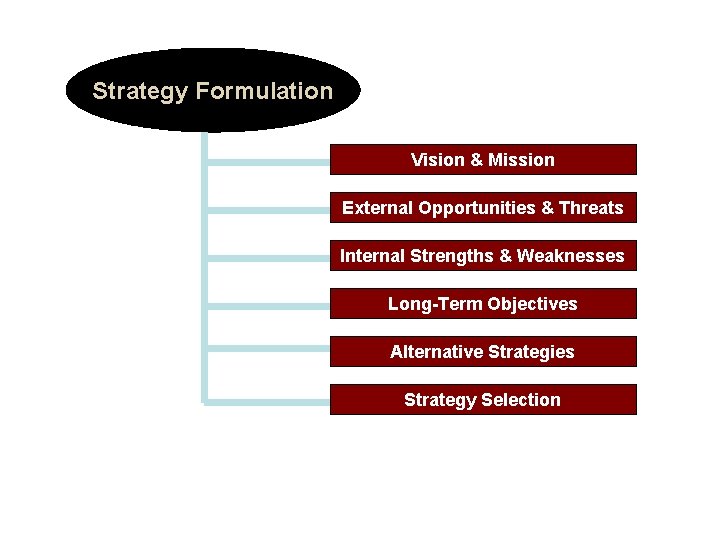
Strategy Formulation Vision & Mission External Opportunities & Threats Internal Strengths & Weaknesses Long-Term Objectives Alternative Strategies Strategy Selection
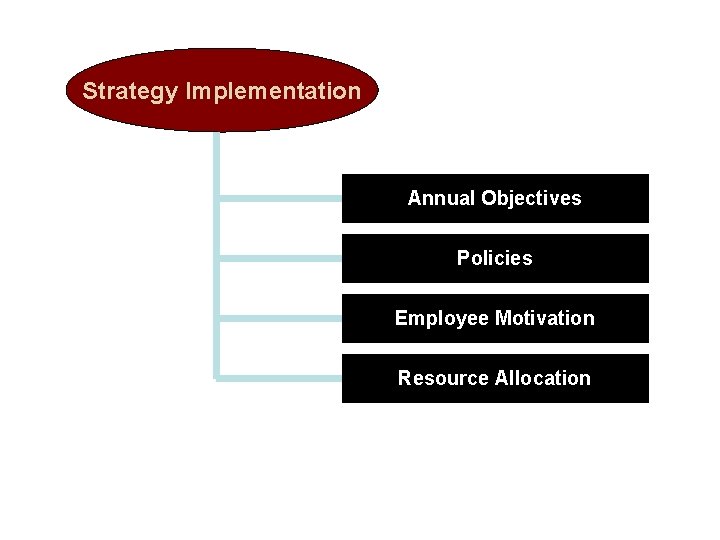
Strategy Implementation Annual Objectives Policies Employee Motivation Resource Allocation
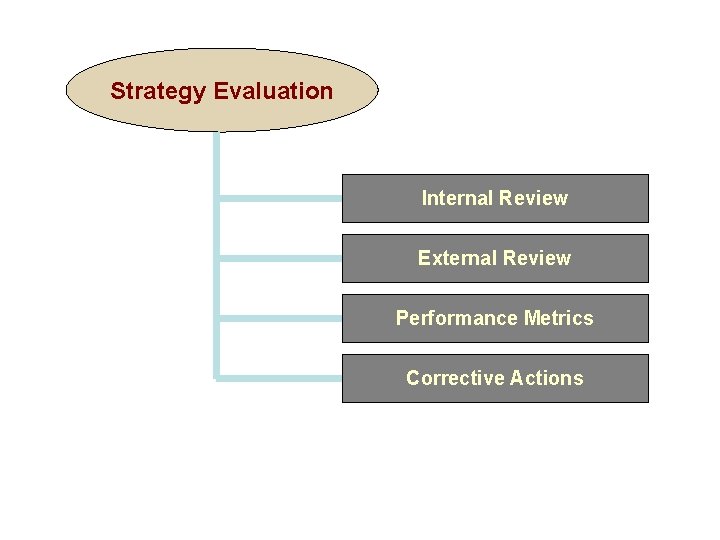
Strategy Evaluation Internal Review External Review Performance Metrics Corrective Actions
Achieving Sustained Competitive Advantage 1. Adapting to change in external trends, internal capabilities and resources 2. Effectively formulating, implementing & evaluating strategies
Adapting to Change – Key Strategic Management Questions • What kind of business should we become? • Are we in the right fields • Are there new competitors • What strategies should we pursue? • How are our customers changing?
Key Terms Vision Statement – What do we want to become? Mission Statement – What is our business?
Key Terms Opportunities & Threats (External) Analysis of Trends: • Economic • Social • Cultural • Demographic/Environmental • Political, Legal, Governmental • Technological • Competitors
Key Terms Strengths & Weaknesses (Internal) Typically located in functional areas of the firm • Management • Marketing • Finance/Accounting • Production/Operations • Research & Development • Computer Information Systems
Key Terms Strategies q. Means by which long-term objectives are achieved
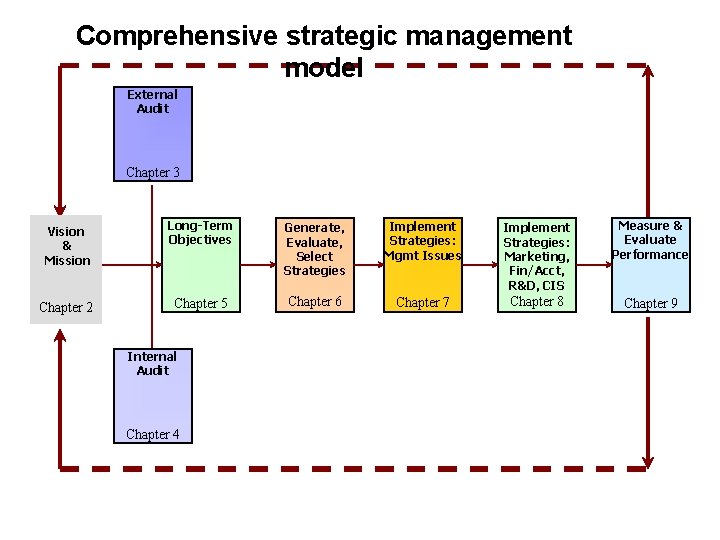
Comprehensive strategic management model External Audit Chapter 3 Vision & Mission Chapter 2 Long-Term Objectives Generate, Evaluate, Select Strategies Implement Strategies: Mgmt Issues Implement Strategies: Marketing, Fin/Acct, R&D, CIS Measure & Evaluate Performance Chapter 5 Chapter 6 Chapter 7 Chapter 8 Chapter 9 Internal Audit Chapter 4
Benefits of Strategic Management Financial Benefits • Improvement in sales • Improvement in profitability • Productivity improvement
Benefits of Strategic Management Non-Financial Benefits • Improved understanding of competitors strategies • Enhanced awareness of threats • Reduced resistance to change • Enhanced problem-prevention capabilities
Business Ethics & Strategic Management Code of business ethics – q. Provides basis on which policies can be devised to guide daily behavior and decisions in the workplace
Advantages of International Operations ØAbsorb excess capacity ØReduce unit costs ØSpread risk over wider markets ØLow-cost production facilities
Disadvantages of International Operations ØDifficult communications ØUnderestimate foreign competition ØCultural barriers to effective management ØComplications arising from currency differences