
Chapter 1 The Molecular Biotechnology Revolution The Relationship
Chapter 1. The Molecular Biotechnology Revolution
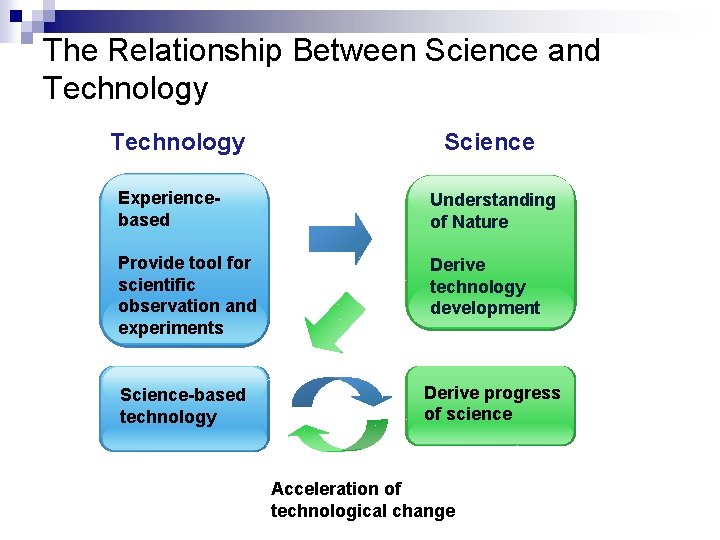
The Relationship Between Science and Technology Science Experiencebased Understanding of Nature Provide tool for scientific observation and experiments Derive technology development Science-based technology Title Add your text Derive progress of science Acceleration of technological change
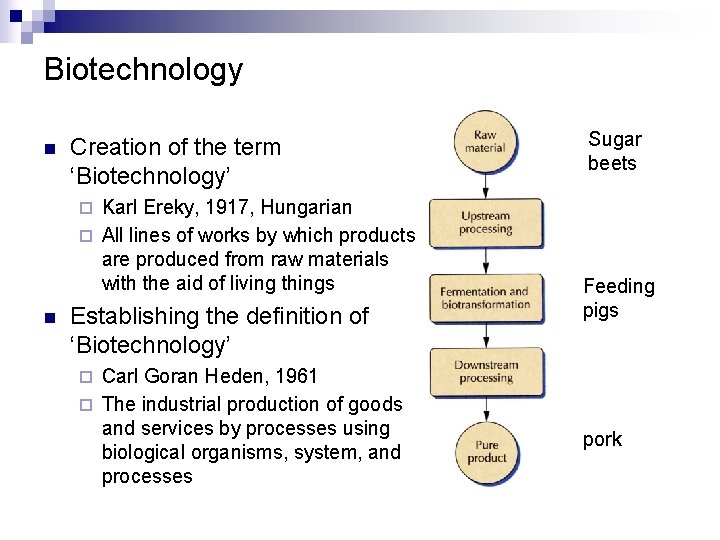
Biotechnology n Creation of the term ‘Biotechnology’ Karl Ereky, 1917, Hungarian ¨ All lines of works by which products are produced from raw materials with the aid of living things Sugar beets ¨ n Establishing the definition of ‘Biotechnology’ Carl Goran Heden, 1961 ¨ The industrial production of goods and services by processes using biological organisms, system, and processes Feeding pigs ¨ pork
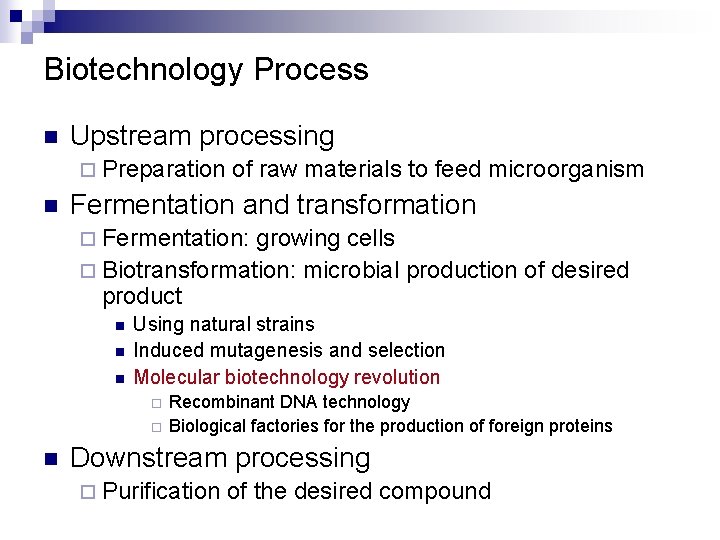
Biotechnology Process n Upstream processing ¨ Preparation n of raw materials to feed microorganism Fermentation and transformation ¨ Fermentation: growing cells ¨ Biotransformation: microbial production of desired product n n n Using natural strains Induced mutagenesis and selection Molecular biotechnology revolution ¨ ¨ n Recombinant DNA technology Biological factories for the production of foreign proteins Downstream processing ¨ Purification of the desired compound

Molecular Biotechnology
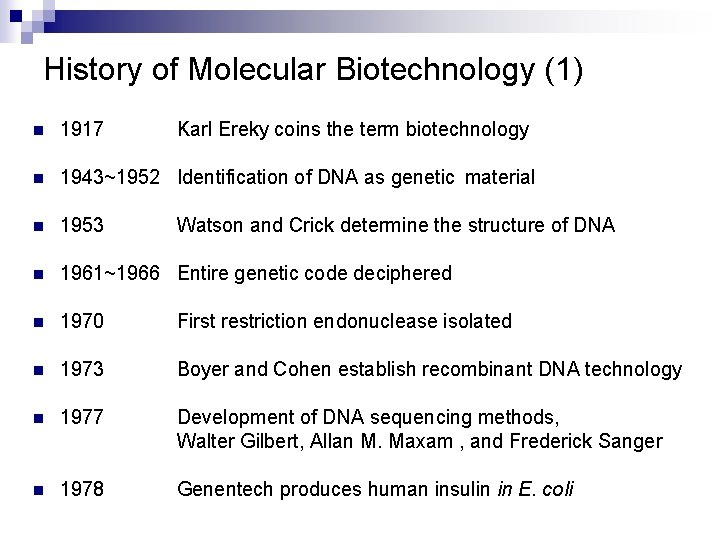
History of Molecular Biotechnology (1) n 1917 Karl Ereky coins the term biotechnology n 1943~1952 Identification of DNA as genetic material n 1953 n 1961~1966 Entire genetic code deciphered n 1970 First restriction endonuclease isolated n 1973 Boyer and Cohen establish recombinant DNA technology n 1977 Development of DNA sequencing methods, Walter Gilbert, Allan M. Maxam , and Frederick Sanger n 1978 Genentech produces human insulin in E. coli Watson and Crick determine the structure of DNA
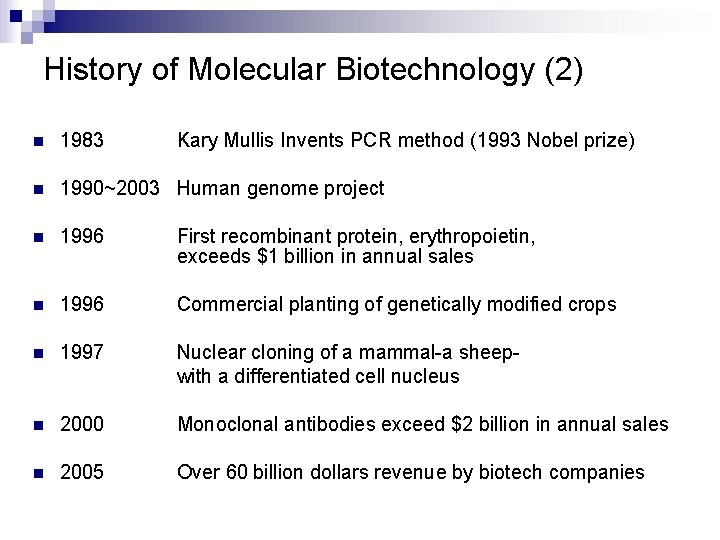
History of Molecular Biotechnology (2) n 1983 Kary Mullis Invents PCR method (1993 Nobel prize) n 1990~2003 Human genome project n 1996 First recombinant protein, erythropoietin, exceeds $1 billion in annual sales n 1996 Commercial planting of genetically modified crops n 1997 Nuclear cloning of a mammal-a sheepwith a differentiated cell nucleus n 2000 Monoclonal antibodies exceed $2 billion in annual sales n 2005 Over 60 billion dollars revenue by biotech companies
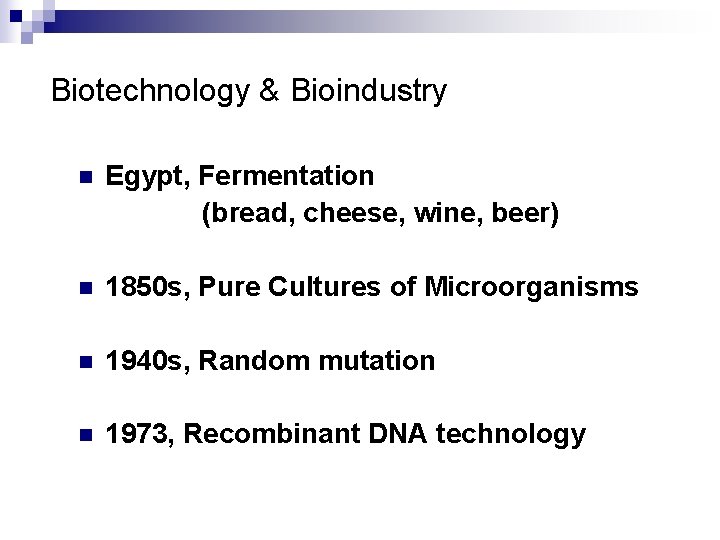
Biotechnology & Bioindustry n Egypt, Fermentation (bread, cheese, wine, beer) n 1850 s, Pure Cultures of Microorganisms n 1940 s, Random mutation n 1973, Recombinant DNA technology
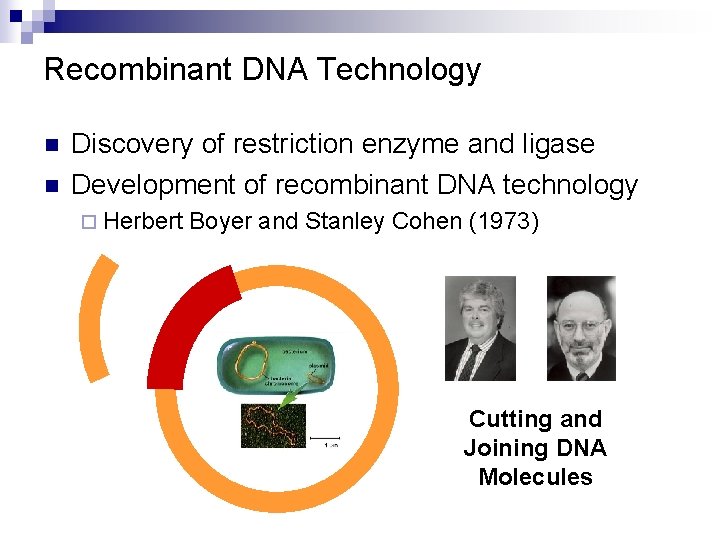
Recombinant DNA Technology n n Discovery of restriction enzyme and ligase Development of recombinant DNA technology ¨ Herbert Boyer and Stanley Cohen (1973) Cutting and Joining DNA Molecules
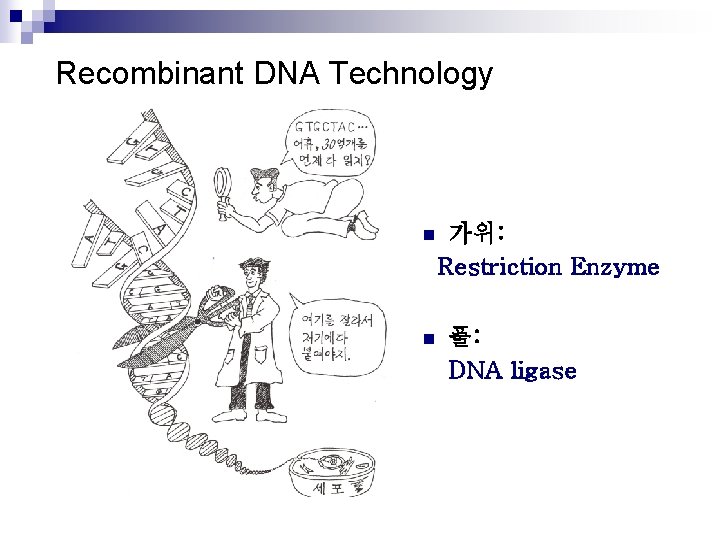
Recombinant DNA Technology n n 가위: Restriction Enzyme 풀: DNA ligase
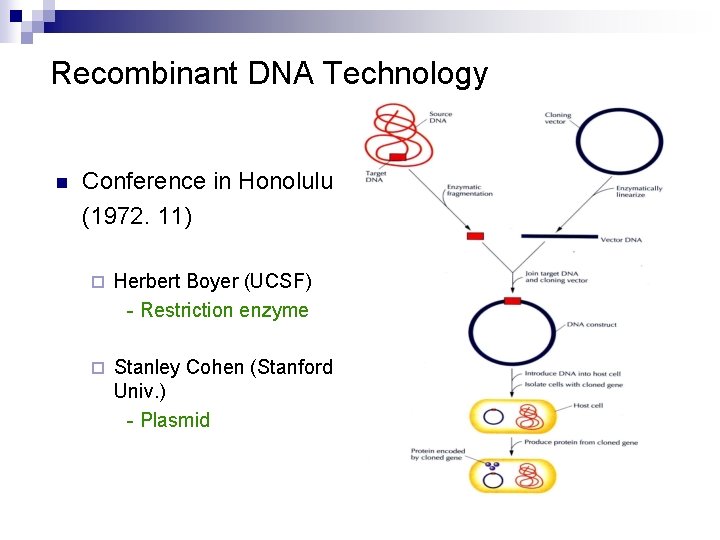
Recombinant DNA Technology n Conference in Honolulu (1972. 11) ¨ Herbert Boyer (UCSF) - Restriction enzyme ¨ Stanley Cohen (Stanford Univ. ) - Plasmid
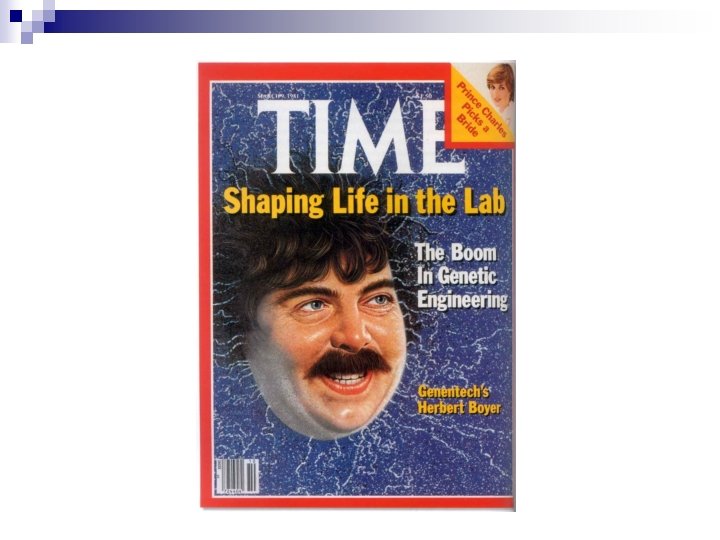
San Francisco, 1976 § Bob Swanson -- venture capitalist, 27세 § Herbert Boyer를 설득 § 1976. 4, Genentech 설립 § Insulin
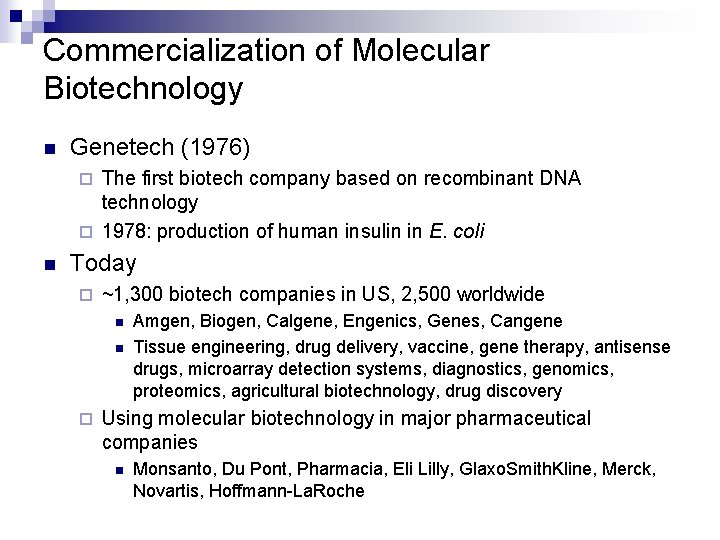
Commercialization of Molecular Biotechnology n Genetech (1976) The first biotech company based on recombinant DNA technology ¨ 1978: production of human insulin in E. coli ¨ n Today ¨ ~1, 300 biotech companies in US, 2, 500 worldwide n n ¨ Amgen, Biogen, Calgene, Engenics, Genes, Cangene Tissue engineering, drug delivery, vaccine, gene therapy, antisense drugs, microarray detection systems, diagnostics, genomics, proteomics, agricultural biotechnology, drug discovery Using molecular biotechnology in major pharmaceutical companies n Monsanto, Du Pont, Pharmacia, Eli Lilly, Glaxo. Smith. Kline, Merck, Novartis, Hoffmann-La. Roche
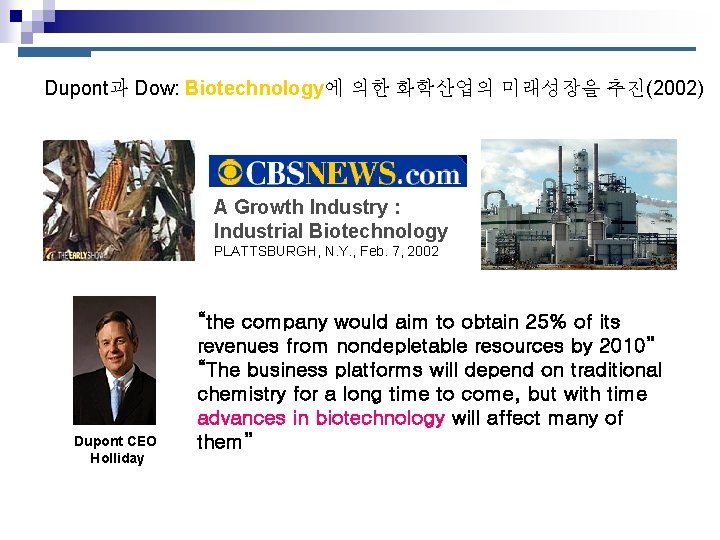
Dupont과 Dow: Biotechnology에 의한 화학산업의 미래성장을 추진(2002) A Growth Industry : Industrial Biotechnology PLATTSBURGH, N. Y. , Feb. 7, 2002 Dupont CEO Holliday “the company would aim to obtain 25% of its revenues from nondepletable resources by 2010” “The business platforms will depend on traditional chemistry for a long time to come, but with time advances in biotechnology will affect many of them”
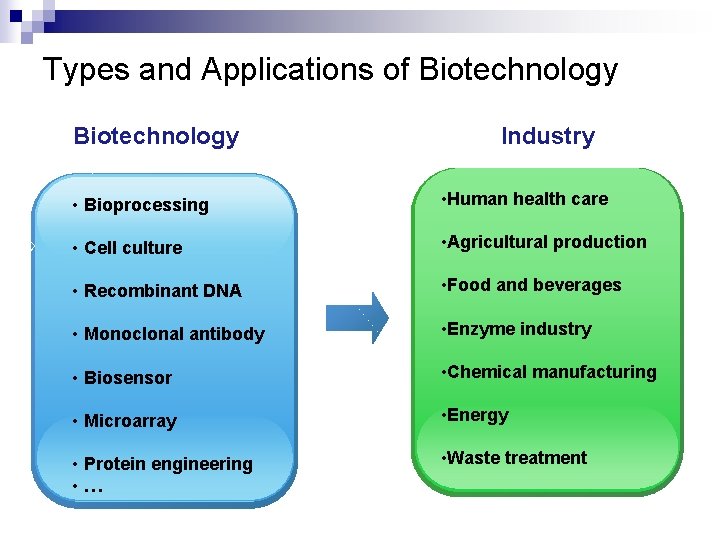
Types and Applications of Biotechnology • Bioprocessing • Cell culture • Recombinant DNA • Monoclonal antibody Industry • Human health care Understanding of Nature Title • Agricultural production Add your text Derive • Food and beverages technology development • Enzyme industry • Biosensor • Chemical manufacturing • Microarray • Energy • Protein engineering • … • Waste treatment
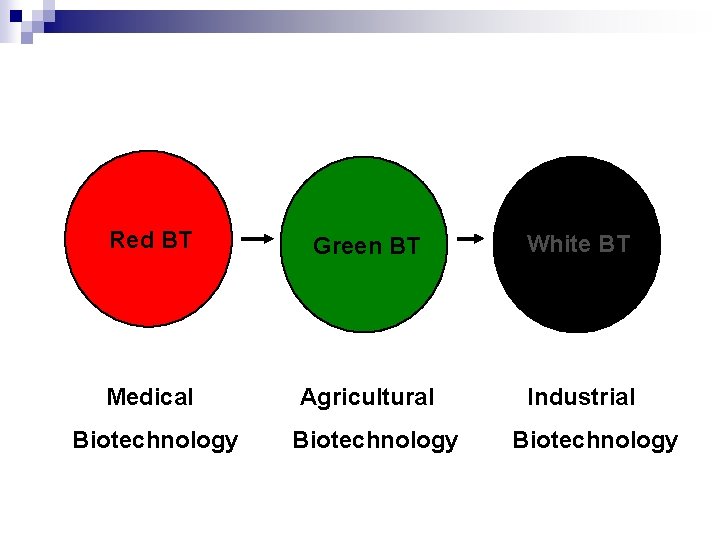
Red BT Green BT White BT Medical Agricultural Industrial Biotechnology
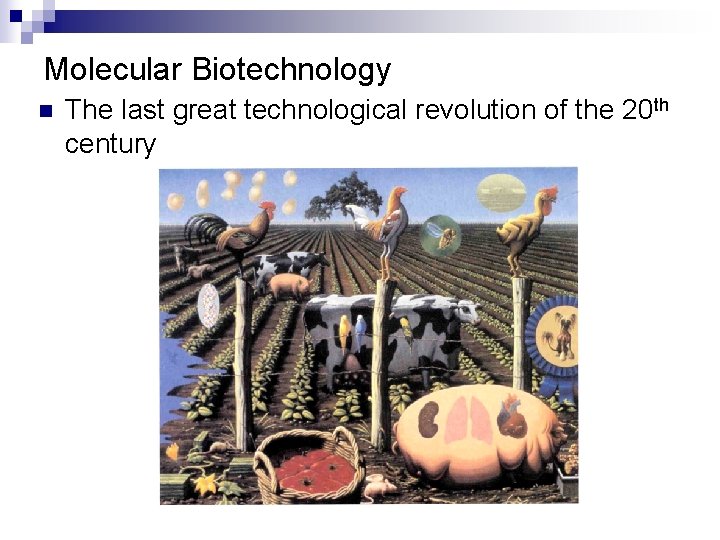
Molecular Biotechnology n The last great technological revolution of the 20 th century
- Slides: 20