
Chapter 1 The Microbial World You Microbes in
Chapter 1: The Microbial World & You
Microbes in Our Lives Learning Objectives 1 -1 List several ways in which microbes affect our lives.
Microbes in Our Lives § Microorganisms are organisms that are too small to be seen with the unaided eye § Germ refers to a rapidly growing cell
Microbes in Our Lives § § A few are pathogenic (disease-causing) Decompose organic waste Are producers in the ecosystem by photosynthesis Produce industrial chemicals such as ethanol and acetone § Produce fermented foods such as vinegar, cheese, and bread § Produce products used in manufacturing (e. g. , cellulase) and disease treatment (e. g. , insulin)
Microbes in Our Lives § Knowledge of microorganisms § Allows humans to § Prevent food spoilage § Prevent disease occurrence § Led to aseptic techniques to prevent contamination in medicine and in microbiology laboratories
Naming and Classifying Microorganisms Learning Objectives 1 -2 Recognize the system of scientific nomenclature that uses two names: a genus and a specific epithet. 1 -3 Differentiate the major characteristics of each group of microorganisms. 1 -4 List the three domains.
Naming and Classifying Microorganisms § Linnaeus established the system of scientific nomenclature § Each organism has two names: the genus and specific epithet
Scientific Names § Are italicized or underlined § The genus is capitalized; the specific epithet is lowercase § Are “Latinized” and used worldwide § May be descriptive or honor a scientist
Scientific Names § After the first use, scientific names may be abbreviated with the first letter of the genus and the specific epithet: § Escherichia coli and Staphylococcus aureus are found in the human body § E. coli is found in the large intestine, and S. aureus is on skin
Types of Microorganisms § § § § Bacteria Archaea Fungi Protozoa Algae Viruses Multicellular animal parasites
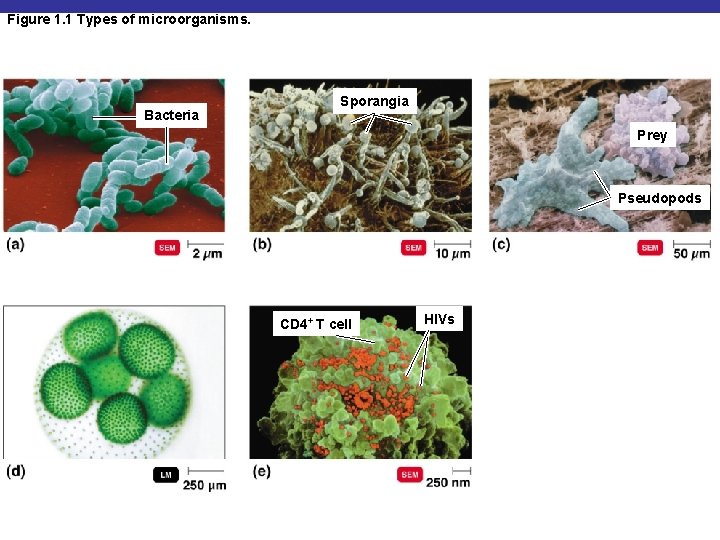
Figure 1. 1 Types of microorganisms. Bacteria Sporangia Prey Pseudopods CD 4+ T cell HIVs
Bacteria § § Prokaryotes Peptidoglycan cell walls Binary fission For energy, use organic chemicals, inorganic chemicals, or photosynthesis
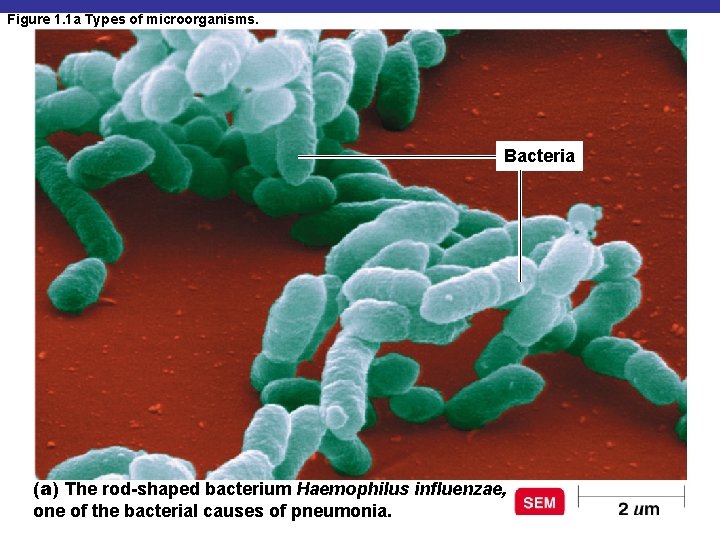
Figure 1. 1 a Types of microorganisms. Bacteria (a) The rod-shaped bacterium Haemophilus influenzae, one of the bacterial causes of pneumonia.
Archaea § § Prokaryotic Lack peptidoglycan Live in extreme environments Include: § Methanogens § Extreme halophiles § Extreme thermophiles
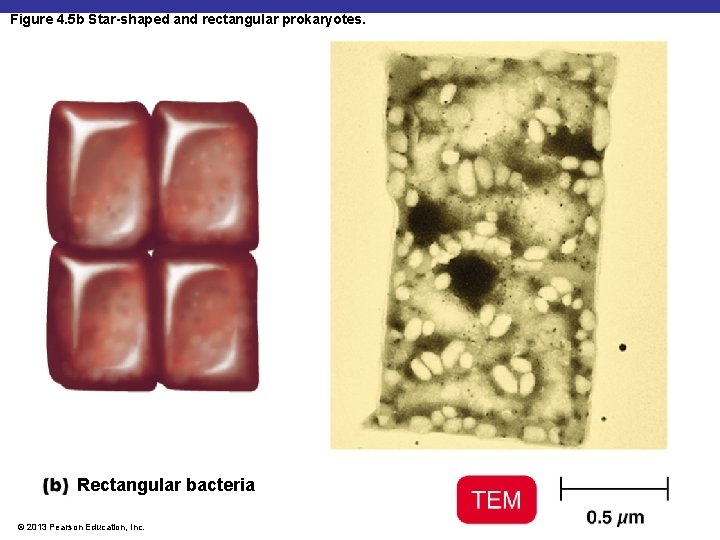
Figure 4. 5 b Star-shaped and rectangular prokaryotes. Rectangular bacteria © 2013 Pearson Education, Inc.
Fungi § § Eukaryotes Chitin cell walls Use organic chemicals for energy Molds and mushrooms are multicellular, consisting of masses of mycelia, which are composed of filaments called hyphae § Yeasts are unicellular
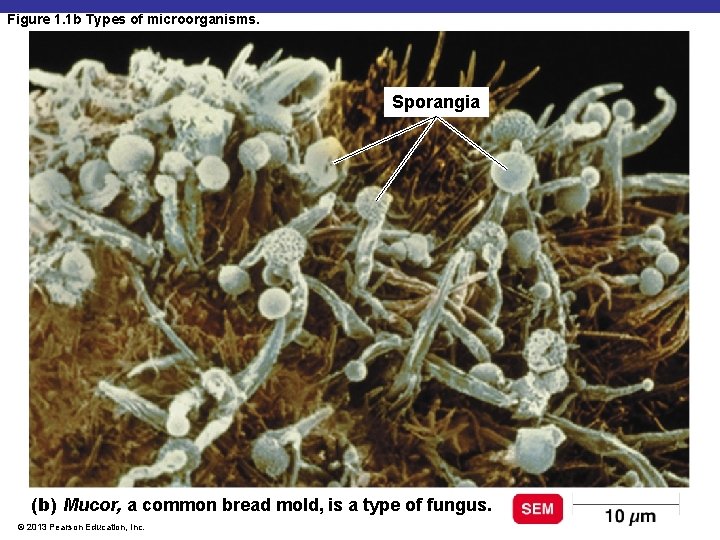
Figure 1. 1 b Types of microorganisms. Sporangia (b) Mucor, a common bread mold, is a type of fungus. © 2013 Pearson Education, Inc.
Protozoa § Eukaryotes § Absorb or ingest organic chemicals § May be motile via pseudopods, cilia, or flagella
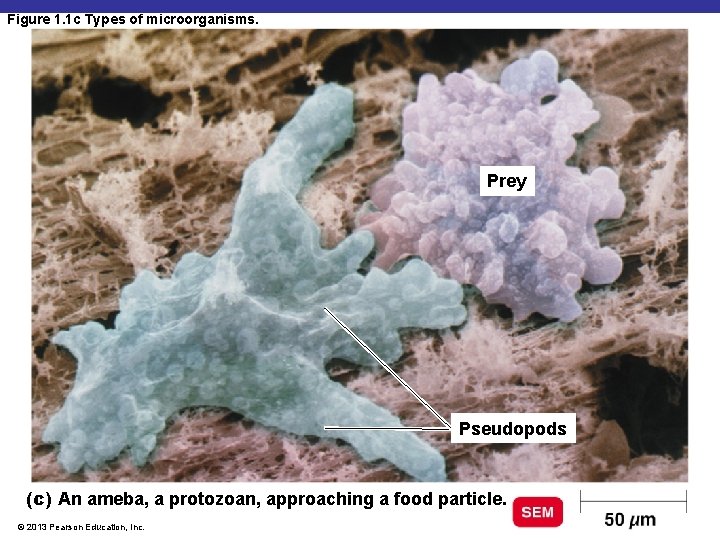
Figure 1. 1 c Types of microorganisms. Prey Pseudopods (c) An ameba, a protozoan, approaching a food particle. © 2013 Pearson Education, Inc.
Algae § § Eukaryotes Cellulose cell walls Use photosynthesis for energy Produce molecular oxygen and organic compounds
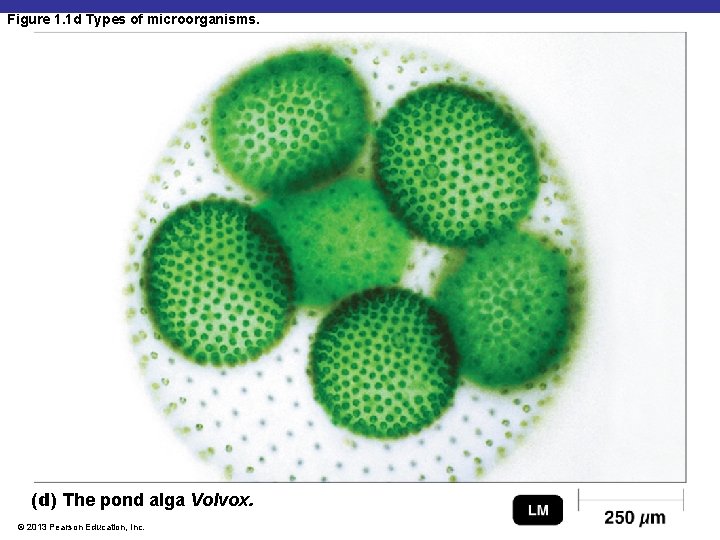
Figure 1. 1 d Types of microorganisms. (d) The pond alga Volvox. © 2013 Pearson Education, Inc.
Viruses § § § Acellular Consist of DNA or RNA core Core is surrounded by a protein coat Coat may be enclosed in a lipid envelope Are replicated only when they are in a living host cell
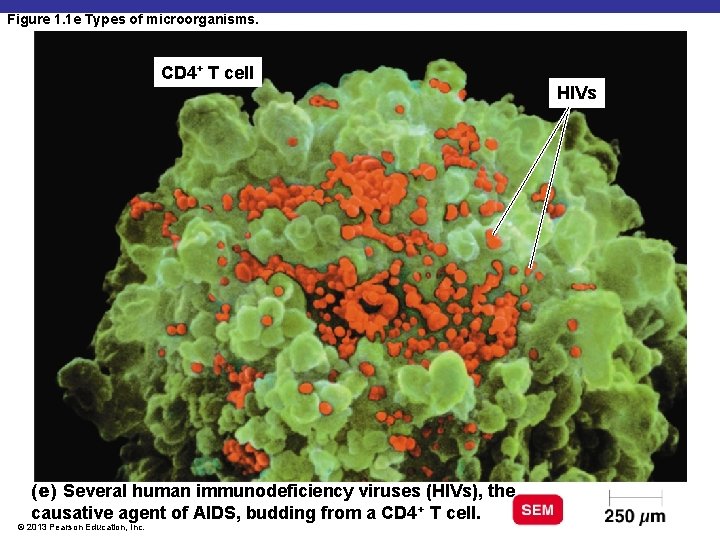
Figure 1. 1 e Types of microorganisms. CD 4+ T cell HIVs (e) Several human immunodeficiency viruses (HIVs), the causative agent of AIDS, budding from a CD 4+ T cell. © 2013 Pearson Education, Inc.
Multicellular Animal Parasites § Eukaryotes § Multicellular animals § Parasitic flatworms and roundworms are called helminths § Microscopic stages in life cycles
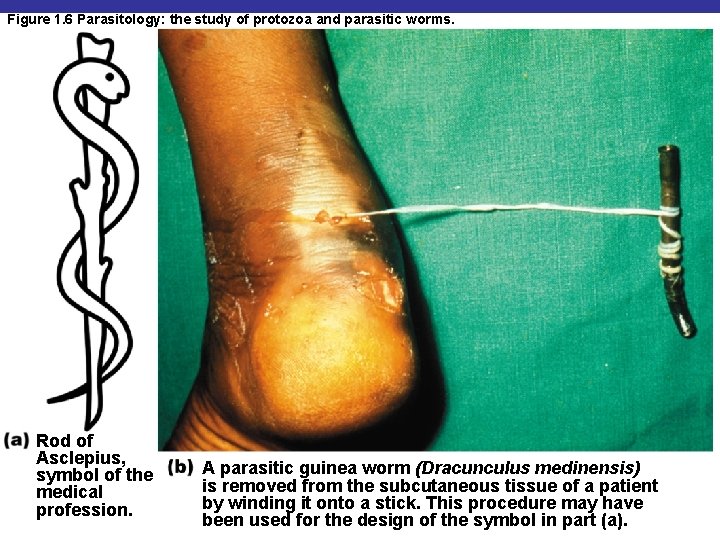
Figure 1. 6 Parasitology: the study of protozoa and parasitic worms. Rod of Asclepius, symbol of the medical profession. A parasitic guinea worm (Dracunculus medinensis) is removed from the subcutaneous tissue of a patient by winding it onto a stick. This procedure may have been used for the design of the symbol in part (a).
Classification of Microorganisms § Three domains § Bacteria § Archaea § Eukarya Protists Fungi Plants Animals
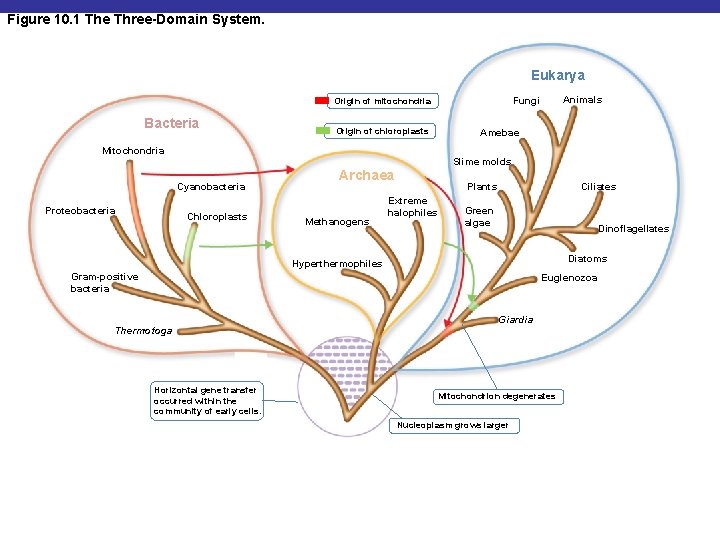
Figure 10. 1 The Three-Domain System. Eukarya Bacteria Origin of chloroplasts Mitochondria Amebae Slime molds Cyanobacteria Proteobacteria Animals Fungi Origin of mitochondria Chloroplasts Archaea Methanogens Plants Extreme halophiles Ciliates Green algae Dinoflagellates Diatoms Hyperthermophiles Gram-positive bacteria Euglenozoa Thermotoga Horizontal gene transfer occurred within the community of early cells. Giardia Mitochondrion degenerates Nucleoplasm grows larger
The Germ Theory of Disease § 1835: Agostino Bassi showed that a silkworm disease was caused by a fungus § 1865: Pasteur believed that another silkworm disease was caused by a protozoan § 1840 s: Ignaz Semmelweis advocated handwashing to prevent transmission of puerperal fever from one obstetrical patient to another
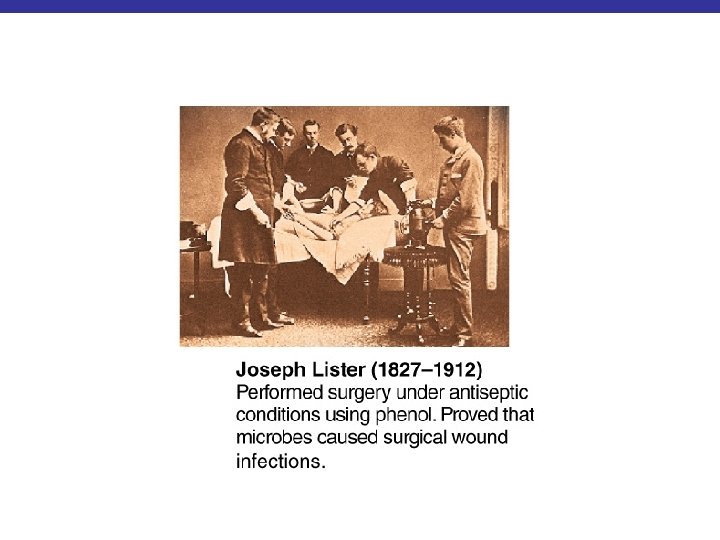
The Germ Theory of Disease § 1860 s: Applying Pasteur’s work showing microbes are in the air, can spoil food, and cause animal diseases, Joseph Lister used a chemical disinfectant to prevent surgical wound infections
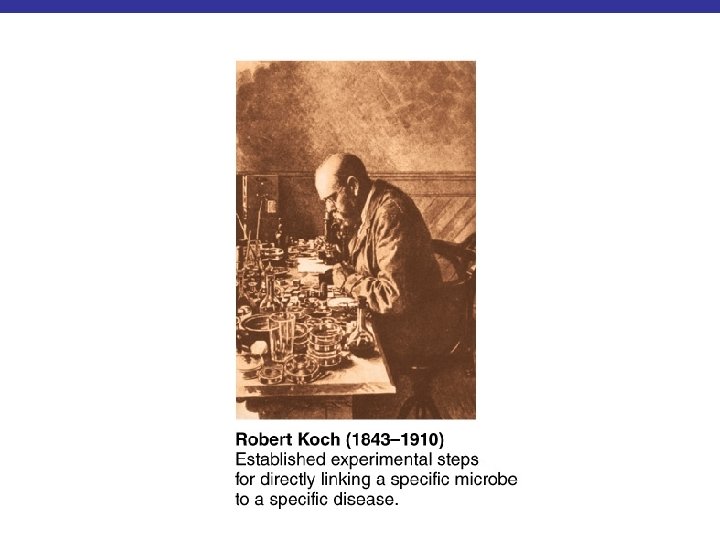
The Germ Theory of Disease § 1876: Robert Koch proved that a bacterium causes anthrax and provided the experimental steps, Koch’s postulates, to prove that a specific microbe causes a specific disease
Vaccination § 1796: Edward Jenner inoculated a person with cowpox virus, who was then protected from smallpox § Vaccination is derived from vacca, for cow § The protection is called immunity
The Birth of Modern Chemotherapy § Treatment with chemicals is chemotherapy § Chemotherapeutic agents used to treat infectious disease can be synthetic drugs or antibiotics § Antibiotics are chemicals produced by bacteria and fungi that inhibit or kill other microbes
The First Synthetic Drugs § Quinine from tree bark was long used to treat malaria § Paul Ehrlich speculated about a “magic bullet” that could destroy a pathogen without harming the host § 1910: Ehrlich developed a synthetic arsenic drug, salvarsan, to treat syphilis § 1930 s: sulfonamides were synthesized
A Fortunate Accident—Antibiotics § 1928: Alexander Fleming discovered the first antibiotic § Fleming observed that Penicillium fungus made an antibiotic, penicillin, that killed S. aureus § 1940 s: Penicillin was tested clinically and mass produced
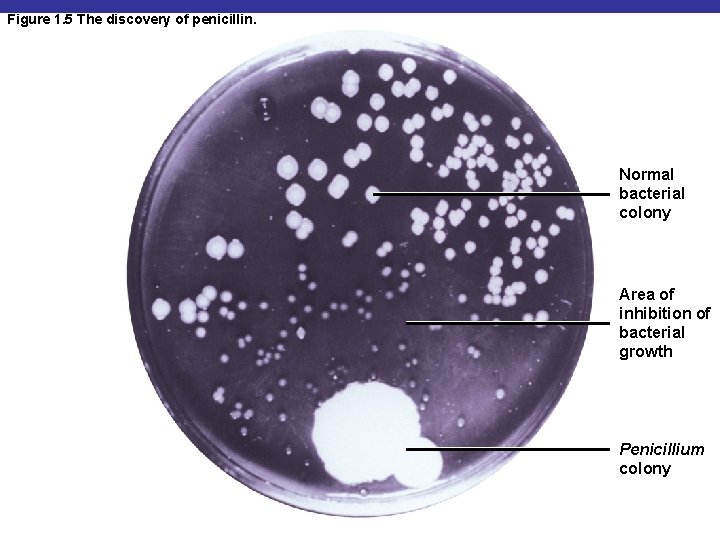
Figure 1. 5 The discovery of penicillin. Normal bacterial colony Area of inhibition of bacterial growth Penicillium colony
Modern Developments in Microbiology § § Bacteriology is the study of bacteria Mycology is the study of fungi Virology is the study of viruses Parasitology is the study of protozoa and parasitic worms
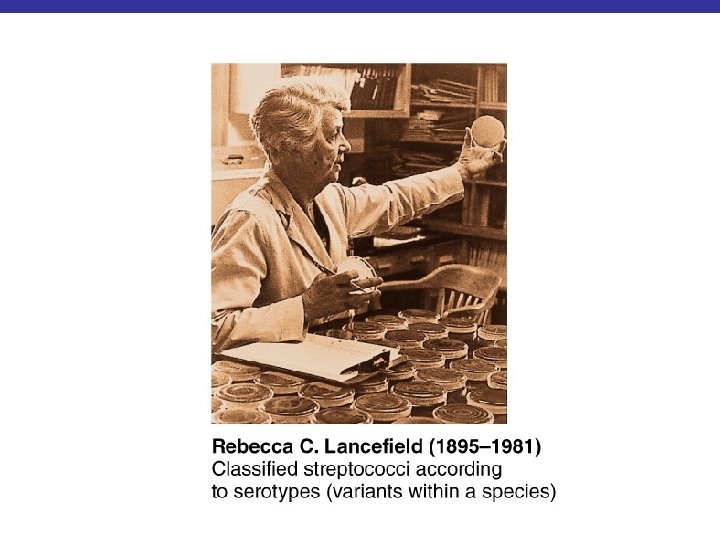
Modern Developments in Microbiology § Immunology is the study of immunity § Vaccines and interferons are being investigated to prevent and cure viral diseases § The use of immunology to identify some bacteria according to serotypes was proposed by Rebecca Lancefield in 1933
Recombinant DNA Technology § Microbial genetics: the study of how microbes inherit traits § Molecular biology: the study of how DNA directs protein synthesis § Genomics: the study of an organism’s genes; has provided new tools for classifying microorganisms § Recombinant DNA: DNA made from two different sources § In the 1960 s, Paul Berg inserted animal DNA into bacterial DNA, and the bacteria produced an animal protein
Recombinant DNA Technology § 1941: George Beadle and Edward Tatum showed that genes encode a cell’s enzymes § 1944: Oswald Avery, Colin Mac. Leod, and Maclyn Mc. Carty showed that DNA is the hereditary material § 1961: François Jacob and Jacques Monod discovered the role of m. RNA in protein synthesis
Nobel Prizes for Microbiology Research § * The first Nobel Prize in Physiology or Medicine 1901* 1902 1905 1908 1945 1952 1969 1997 2005 2008 von Bering Ross Koch Metchnikoff Fleming, Chain, Florey Waksman Delbrück, Hershey, Luria Prusiner Marshall & Warren zur Hausen Barré-Sinoussi & Montagnier Diphtheria antitoxin Malaria transmission TB bacterium Phagocytes Penicillin Streptomycin Viral replication Prions H. pylori & ulcers HPV & cancer HIV
Microbial Ecology § Bacteria recycle carbon, nutrients, sulfur, and phosphorus that can be used by plants and animals
Bioremediation § Bacteria degrade organic matter in sewage § Bacteria degrade or detoxify pollutants such as oil and mercury
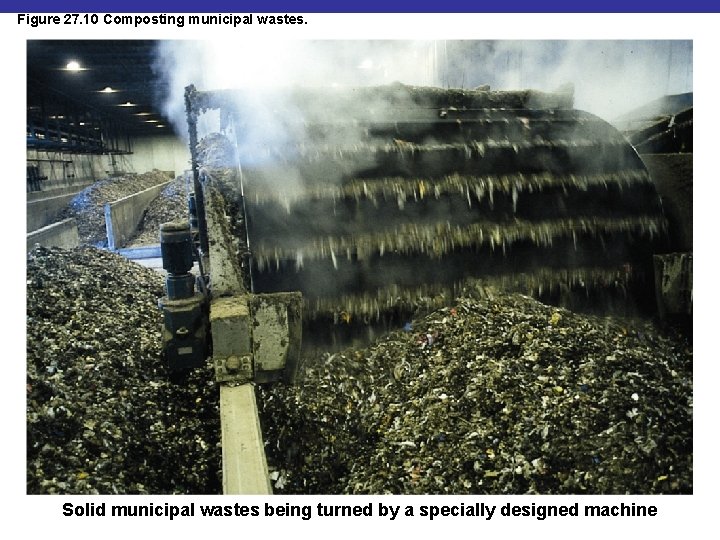
Figure 27. 10 Composting municipal wastes. Solid municipal wastes being turned by a specially designed machine
Biological Insecticides § Microbes that are pathogenic to insects are alternatives to chemical pesticides in preventing insect damage to agricultural crops and disease transmission § Bacillus thuringiensis infections are fatal in many insects but harmless to other animals, including humans, and to plants
Biotechnology § Biotechnology, the use of microbes to produce foods and chemicals, is centuries old
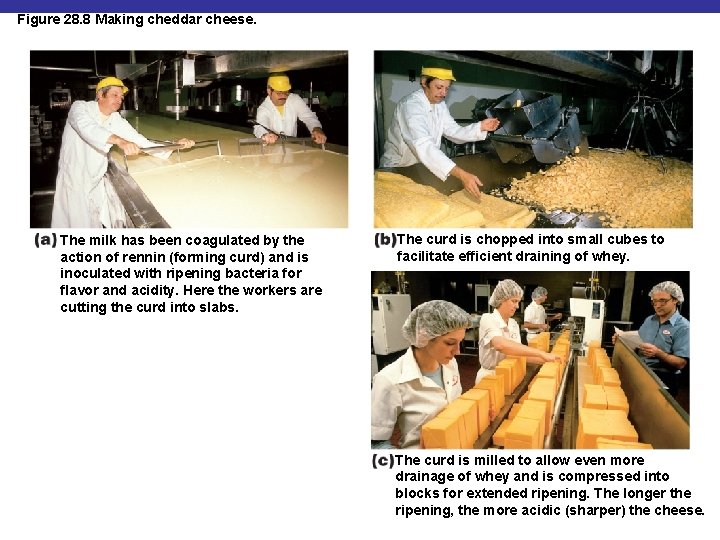
Figure 28. 8 Making cheddar cheese. The milk has been coagulated by the action of rennin (forming curd) and is inoculated with ripening bacteria for flavor and acidity. Here the workers are cutting the curd into slabs. The curd is chopped into small cubes to facilitate efficient draining of whey. The curd is milled to allow even more drainage of whey and is compressed into blocks for extended ripening. The longer the ripening, the more acidic (sharper) the cheese.
Biotechnology § Recombinant DNA technology, a new technique for biotechnology, enables bacteria and fungi to produce a variety of proteins, including vaccines and enzymes § Missing or defective genes in human cells can be replaced in gene therapy § Genetically modified bacteria are used to protect crops from insects and from freezing
Normal Microbiota § Bacteria were once classified as plants, giving rise to use of the term flora for microbes § This term has been replaced by microbiota § Microbes normally present in and on the human body are called normal microbiota
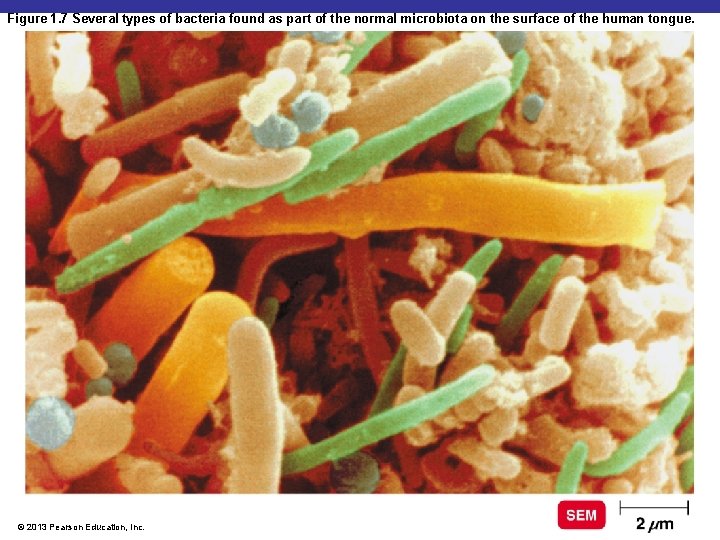
Figure 1. 7 Several types of bacteria found as part of the normal microbiota on the surface of the human tongue. © 2013 Pearson Education, Inc.
Normal Microbiota § Normal microbiota prevent growth of pathogens § Normal microbiota produce growth factors, such as folic acid and vitamin K § Resistance is the ability of the body to ward off disease § Resistance factors include skin, stomach acid, and antimicrobial chemicals
Biofilms § Microbes attach to solid surfaces and grow into masses § They will grow on rocks, pipes, teeth, and medical implants
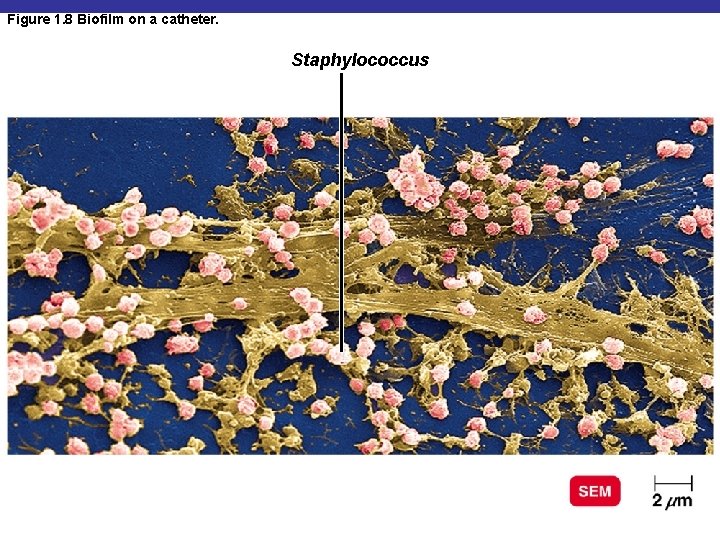
Figure 1. 8 Biofilm on a catheter. Staphylococcus
Infectious Diseases § When a pathogen overcomes the host’s resistance, disease results § Emerging infectious diseases (EIDs): new diseases and diseases increasing in incidence
Drug Resistance – The New Threat in Microbiology (i. e. MRSA) § § Methicillin-resistant Staphylococcus aureus 1950 s: Penicillin resistance developed 1980 s: Methicillin resistance 1990 s: MRSA resistance to vancomycin reported § VISA: vancomycin-intermediate-resistant S. aureus § VRSA: vancomycin-resistant S. aureus
- Slides: 57