
Chapter 1 The Knowledge Context 1 Introduction Technological


- Slides: 19
Chapter 1 The Knowledge Context 1
Introduction • Technological and social change have reshaped our world and the way we work • We have shifted from an industrial economy (focusing on commercial products) to a knowledge economy (focusing on services and expertise) • This has affected most workplaces and most workers 2
External Influences on Organizations (1/2) • Globalization – Access to more customers from far-flung areas – Greater awareness of international practice • Increased competition • Increased pressure to be innovative and responsive • Shareholder expectations – Pressure to achieve economies of scale 3
External Influences on Organizations (2/2) • Technological change • Competition for high performing staff • Forward planning and analysis – Review of emerging trends – Learning from competitors Organizations are dynamic, vulnerable and volatile…. 4
The Changing Nature of Organizations (1/3) • The workplace has changed: – Series of career paths – Workforce composition – Evolving roles and responsibilities – Teamwork: complex and dynamic interactions – Strong focus on relationship building 5
The Changing Nature of Organizations (2/3) • Communication • Leadership – Many people fill leadership roles – Good leadership is expected in most workplaces • Decision making – More people participate in decision-making – Many sources of information guide decisions 6
The Changing Nature of Organizations (3/3) • Change management – Ongoing process improvement • Worker motivation – Self-managing employees anticipate challenging and fulfilling work – Desire positive and constructive workplaces • Infrastructure – Systems and services which support the organization 7
Types of Organizations • Organizations differ according to: – Their purpose and long-term goals – Who funds and directs their activities – The stakeholders • Types of organizations include: – Private – Public – Not-for-profit 8
Private Enterprises • Focus on profit • Likely to have shareholders, or may be privately owned • Anticipate ongoing growth and development, but with a healthy short-term return • Chief Executive Officer (CEO) is the public face of the firm 9
Public Enterprises • • Sponsored and funded by government Linked to ministerial portfolios Provide service or govern the community Increasing efforts to collaborate and work together 10
Not-for-profit agencies • Provide specialized support for community members • Funding may be derived from different sources including government, sponsors and members of the community • Frequently have higher demand than capacity to deliver • Strong staff loyalty and commitment 11
What is Knowledge? (1/2) • Knowledge is the process of translating information and past experience into a meaningful set of relationships which can be applied by an individual • Knowledge is an organizational asset: it should be identified, managed and valued to the same degree as other assets 12
What is Knowledge? (2/2) • Explicit knowledge can be documented, categorized, transmitted, demonstrated… It can be accessed by other people even if the knowledge source is absent • Tacit knowledge draws on the accumulated experience and learning of an individual. It is hard to reproduce or share with others 13
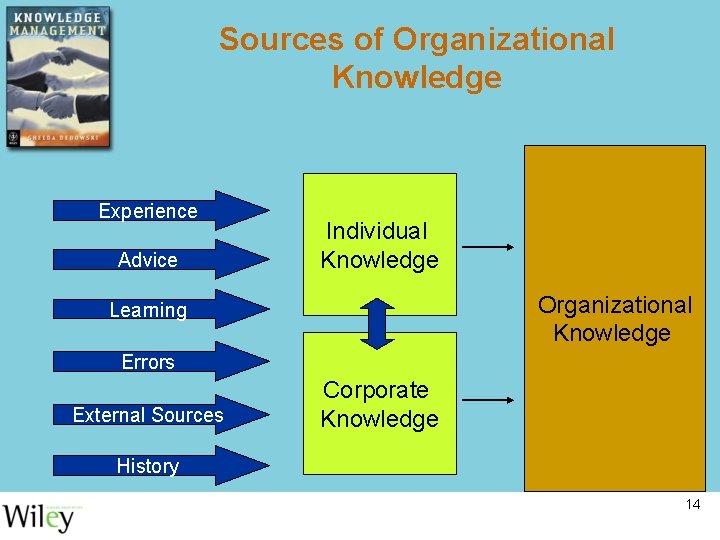
Sources of Organizational Knowledge Experience Advice Individual Knowledge Organizational Knowledge Learning Errors External Sources Corporate Knowledge History 14
Strategic Knowledge • Strategic Knowledge helps to take the organization toward its desired future goals • Closely linked to the organizational focus • May be different in each organization 15
Knowledge Management • The management of knowledge to enable its definition, identification, capture, organization and dissemination across the organizational community • Knowledge management is dependent on effective leadership and a collaborative culture 16
Knowledge Organizations • The Learning Organization – Encourages learning, growth and development of individuals and the community • The Developmental Organization – Undertakes regular review, adaptation and re-orientation to maintain strategic focus • Asset-based corporate development – Recognition and capitalizing on knowledge assets of value to the organization 17
Concluding Points • Knowledge is an essential asset • Organizational knowledge draws on the collective knowledge held by both individuals and within corporate sources • A strategic focus helps to preserve the knowledge which is necessary for long-term viability • Knowledge management is the method of reaching these outcomes 18
Today’s focus questions: • How is our working world changing? • What is knowledge and how does it impact on organizational practice? • What is knowledge management? • Why does knowledge management vary across different organizations? – Lecture Reference: Debowski, Chapter 1 19