
Chapter 1 The Human Body An Orientation Slides
Chapter 1 The Human Body: An Orientation Slides 1. 1 – 1. 8
The Human Body – An Orientation • Anatomy – study of the structure and shape of the body and its parts • Physiology – study of how the body and its parts work or function
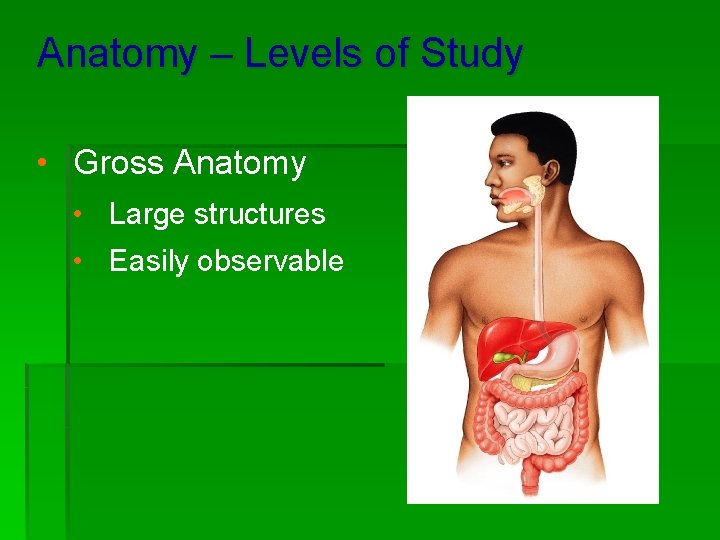
Anatomy – Levels of Study • Gross Anatomy • Large structures • Easily observable
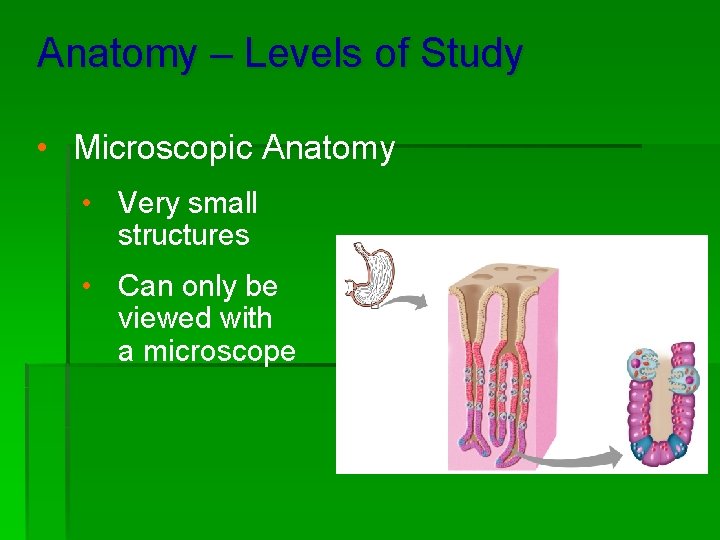
Anatomy – Levels of Study • Microscopic Anatomy • Very small structures • Can only be viewed with a microscope
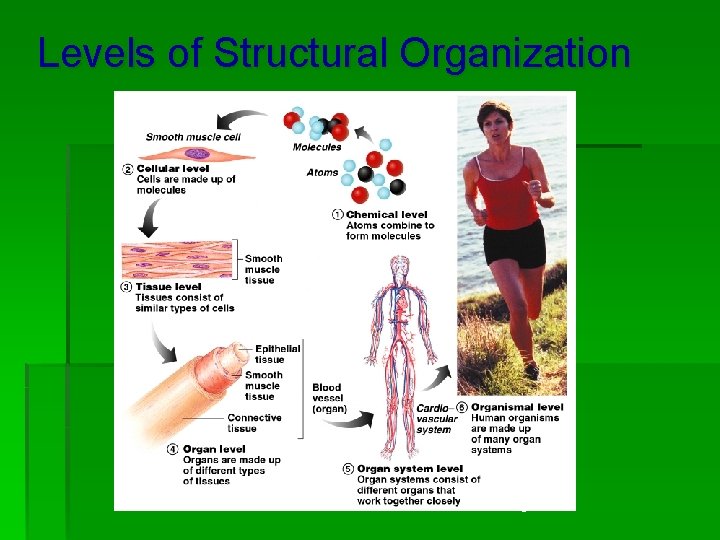
Levels of Structural Organization Figure 1. 1
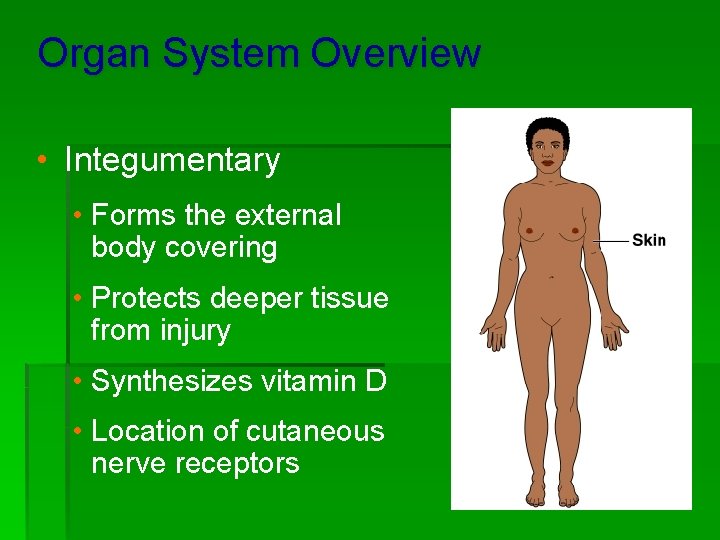
Organ System Overview • Integumentary • Forms the external body covering • Protects deeper tissue from injury • Synthesizes vitamin D • Location of cutaneous nerve receptors
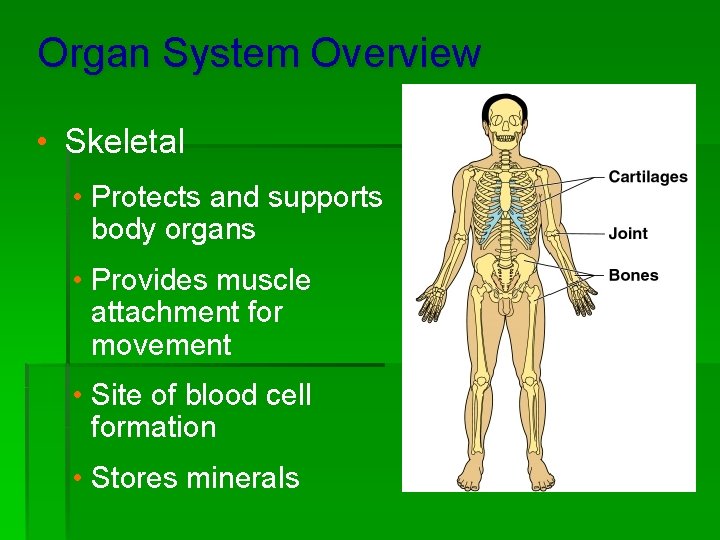
Organ System Overview • Skeletal • Protects and supports body organs • Provides muscle attachment for movement • Site of blood cell formation • Stores minerals
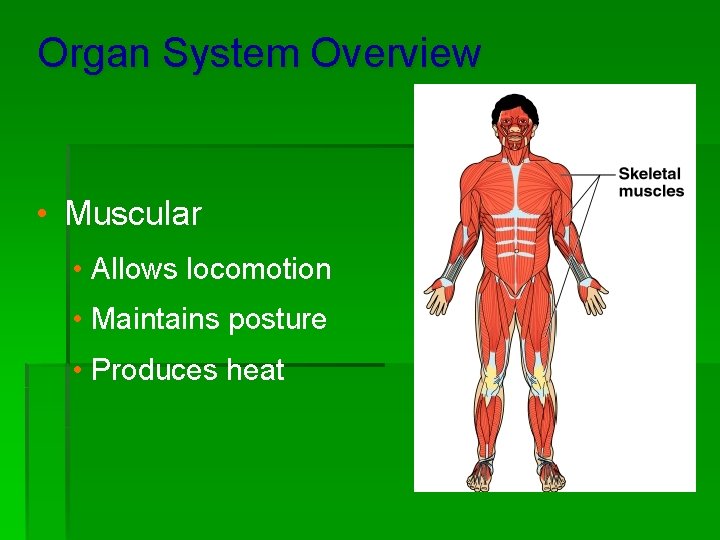
Organ System Overview • Muscular • Allows locomotion • Maintains posture • Produces heat
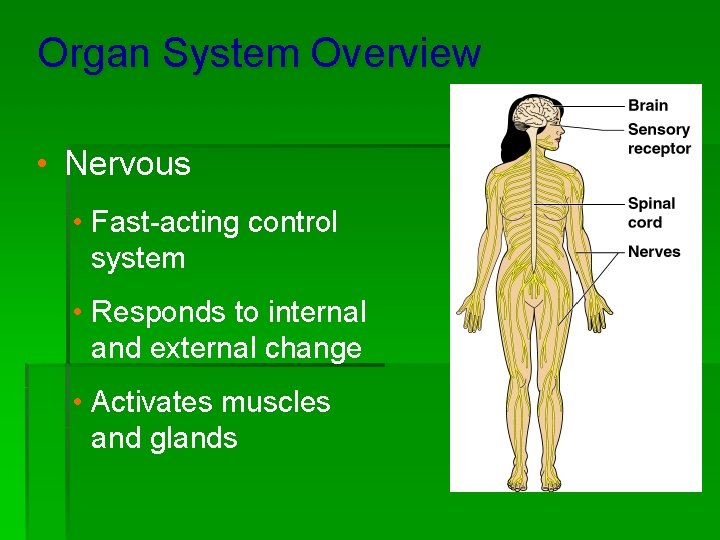
Organ System Overview • Nervous • Fast-acting control system • Responds to internal and external change • Activates muscles and glands
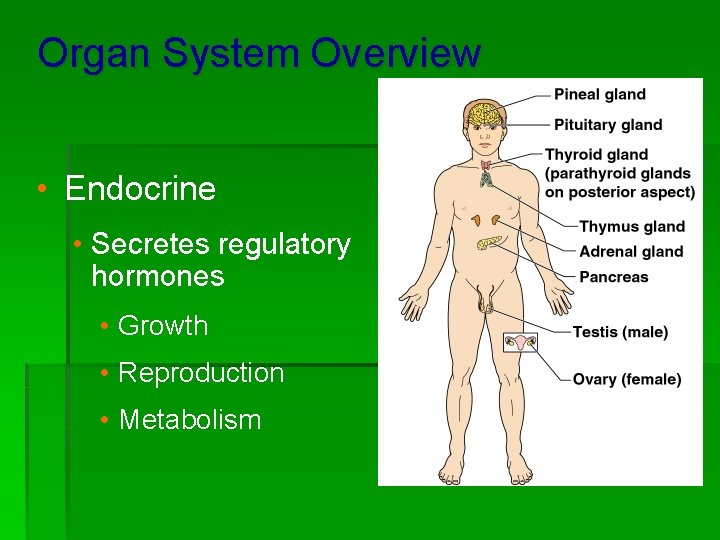
Organ System Overview • Endocrine • Secretes regulatory hormones • Growth • Reproduction • Metabolism
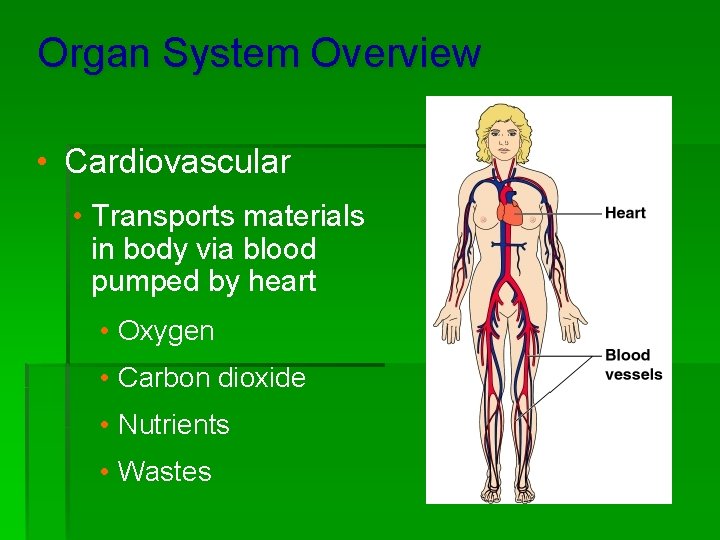
Organ System Overview • Cardiovascular • Transports materials in body via blood pumped by heart • Oxygen • Carbon dioxide • Nutrients • Wastes
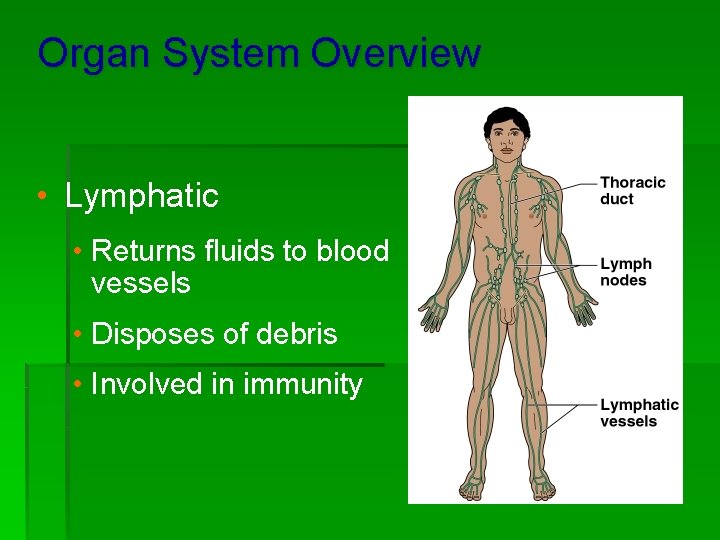
Organ System Overview • Lymphatic • Returns fluids to blood vessels • Disposes of debris • Involved in immunity
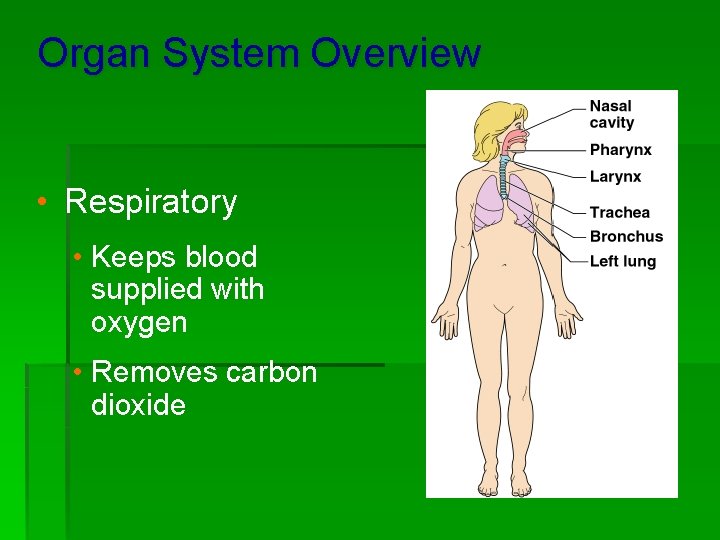
Organ System Overview • Respiratory • Keeps blood supplied with oxygen • Removes carbon dioxide
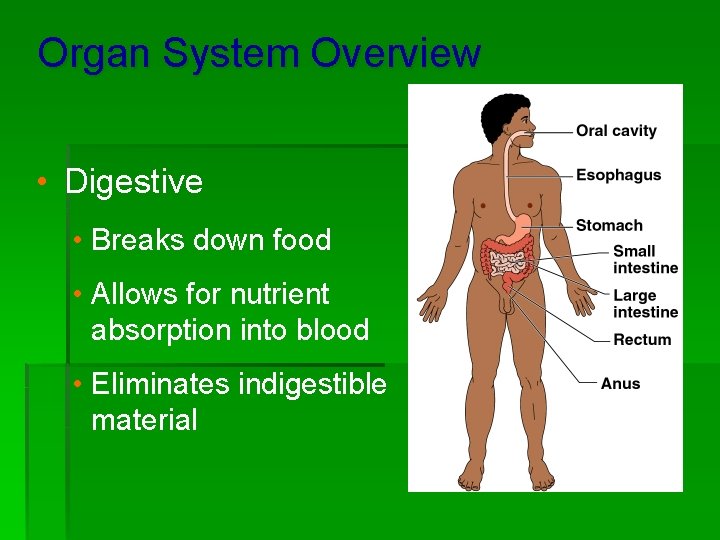
Organ System Overview • Digestive • Breaks down food • Allows for nutrient absorption into blood • Eliminates indigestible material
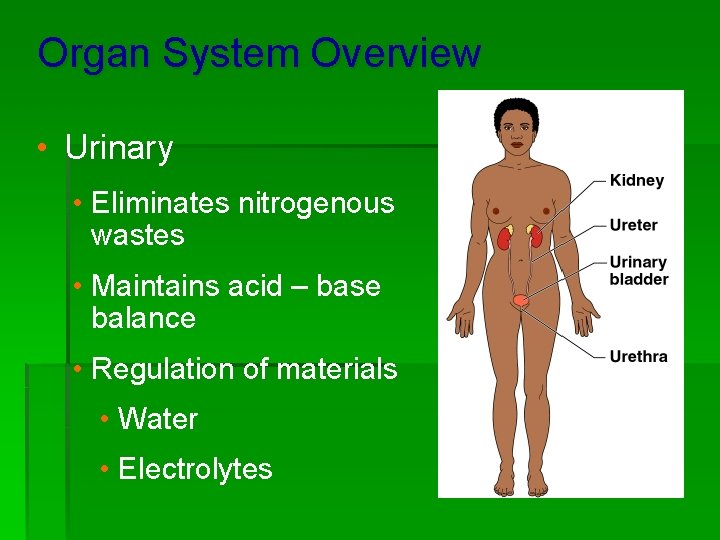
Organ System Overview • Urinary • Eliminates nitrogenous wastes • Maintains acid – base balance • Regulation of materials • Water • Electrolytes
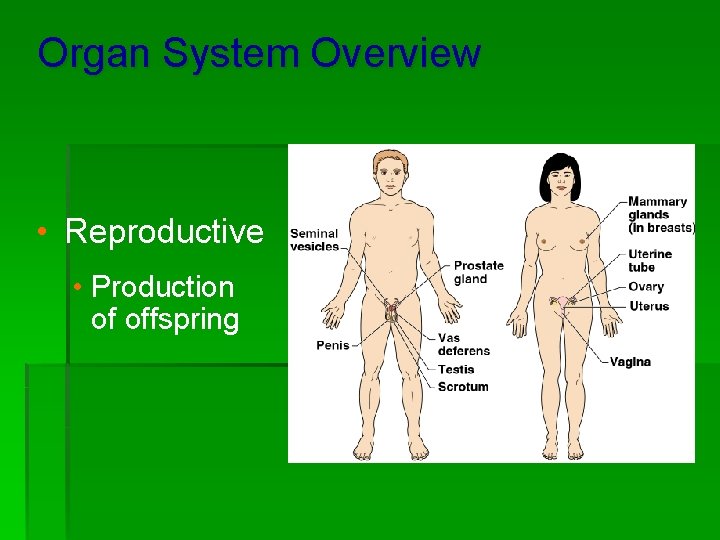
Organ System Overview • Reproductive • Production of offspring
Necessary Life Functions • Maintain Boundaries • Movement • Locomotion • Movement of substances • Responsiveness • Ability to sense changes and react • Digestion • Break-down and delivery of nutrients
Necessary Life Functions • Metabolism – chemical reactions within the body • Production of energy • Making body structures • Excretion • Elimination of waste from metabolic reactions
Necessary Life Functions • Reproduction • Production of future generation • Growth • Increasing of cell size and number
Survival Needs • Nutrients • Chemicals for energy and cell building • Includes carbohydrates, proteins, lipids, vitamins, and minerals • Oxygen • Required for chemical reactions
Survival Needs • Water • 60– 80% of body weight • Provides for metabolic reaction • Stable body temperature • Atmospheric pressure must be appropriate
Homeostasis • Maintenance of a stable internal environment = a dynamic state of equilibrium • Homeostasis must be maintained for normal body functioning and to sustain life • Homeostatic imbalance – a disturbance in homeostasis resulting in disease
Maintaining Homeostasis • The body communicates through neural and hormonal control systems 1. Receptor • Responds to changes in the environment (stimuli) • Sends information to control center
Maintaining Homeostasis 2. Control center • Determines set point • Analyzes information • Determines appropriate response 3. Effector • Provides a means for response to the stimulus
Feedback Mechanisms • Negative feedback • Includes most homeostatic control mechanisms • Shuts off the original stimulus, or reduces its intensity • Works like a household thermostat
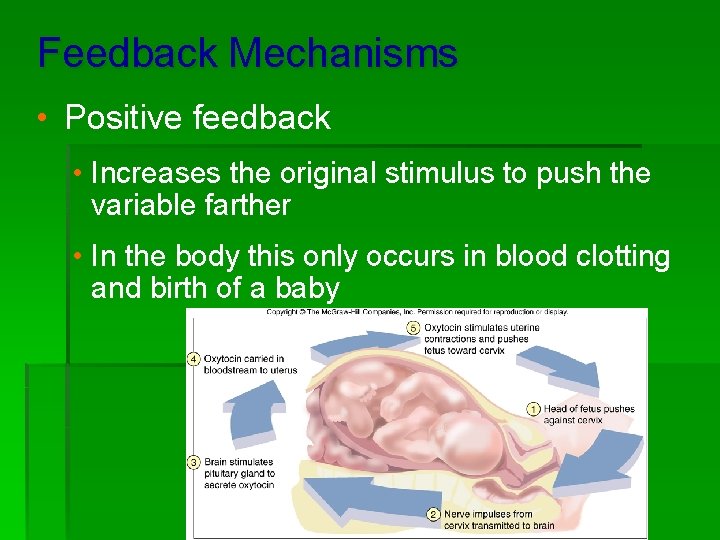
Feedback Mechanisms • Positive feedback • Increases the original stimulus to push the variable farther • In the body this only occurs in blood clotting and birth of a baby
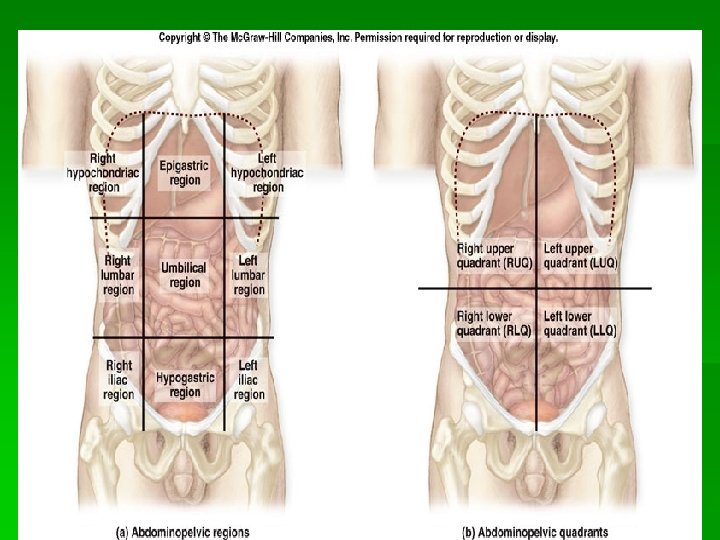
The Language of Anatomy § Special terminology is used to prevent misunderstanding § Exact terms are used for: § Position § Direction § Regions § Structures
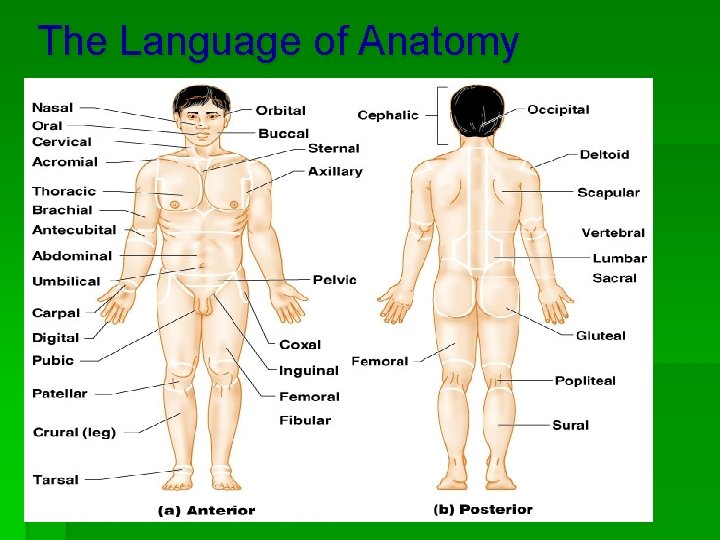
The Language of Anatomy
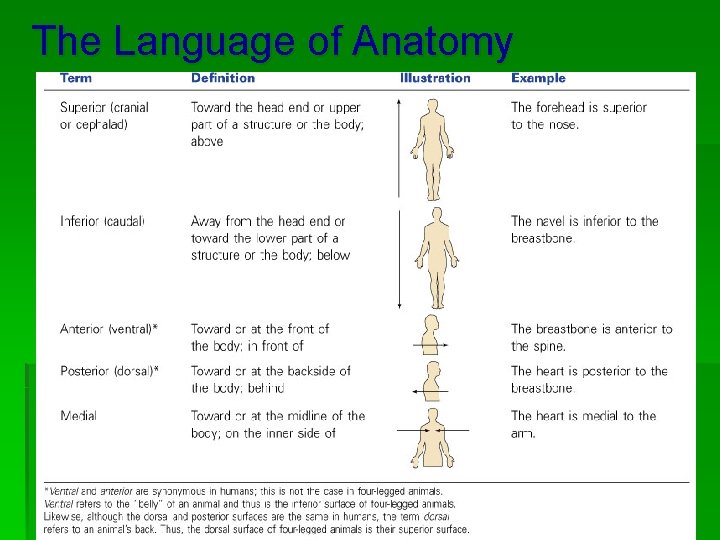
The Language of Anatomy
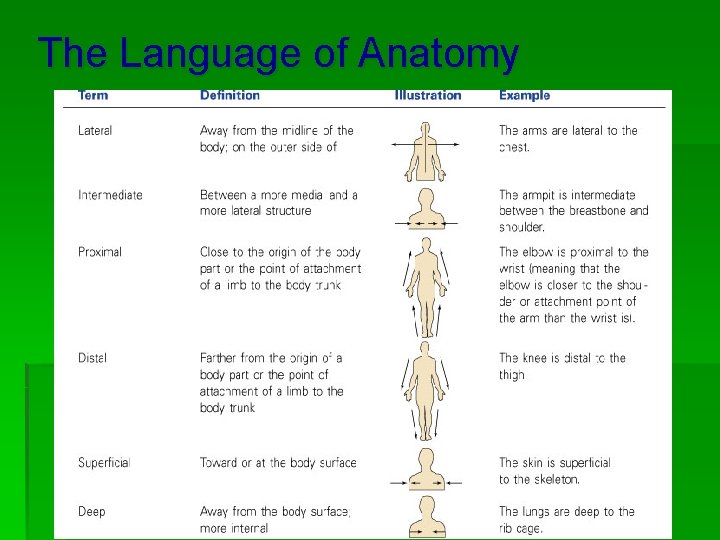
The Language of Anatomy
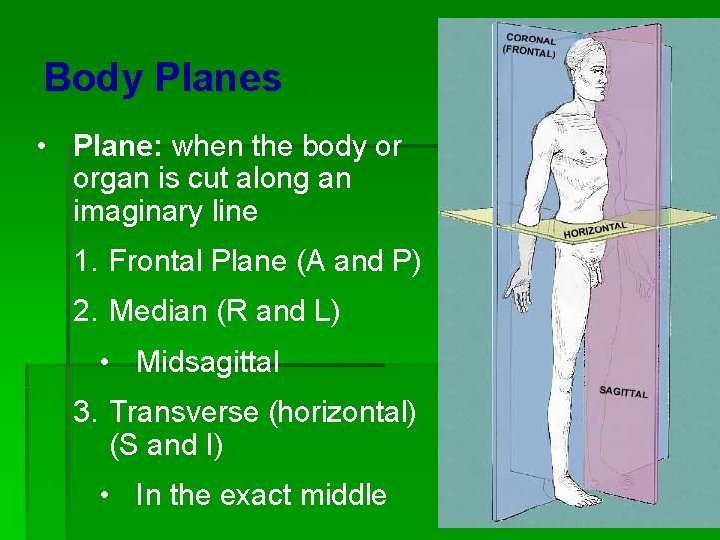
Body Planes • Plane: when the body or organ is cut along an imaginary line 1. Frontal Plane (A and P) 2. Median (R and L) • Midsagittal 3. Transverse (horizontal) (S and I) • In the exact middle
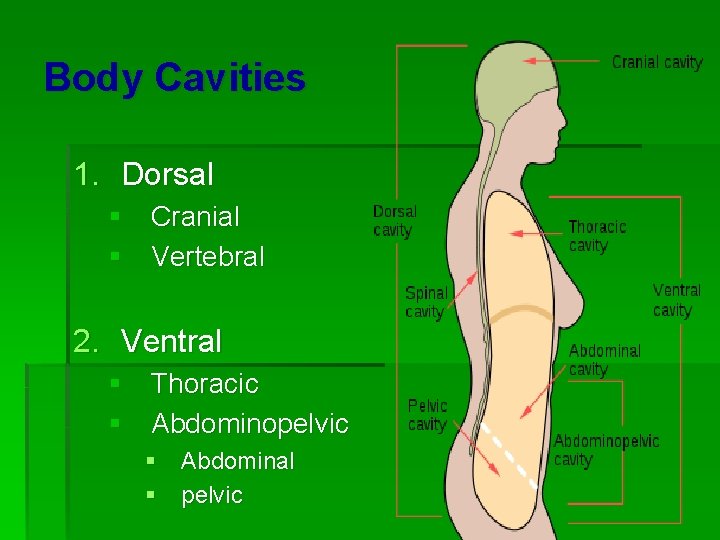
Body Cavities 1. Dorsal § Cranial § Vertebral 2. Ventral § Thoracic § Abdominopelvic § Abdominal § pelvic
- Slides: 33