
CHAPTER 1 THE HUMAN BODY AN ORIENTATION OVERVIEW

CHAPTER 1: THE HUMAN BODY: AN ORIENTATION
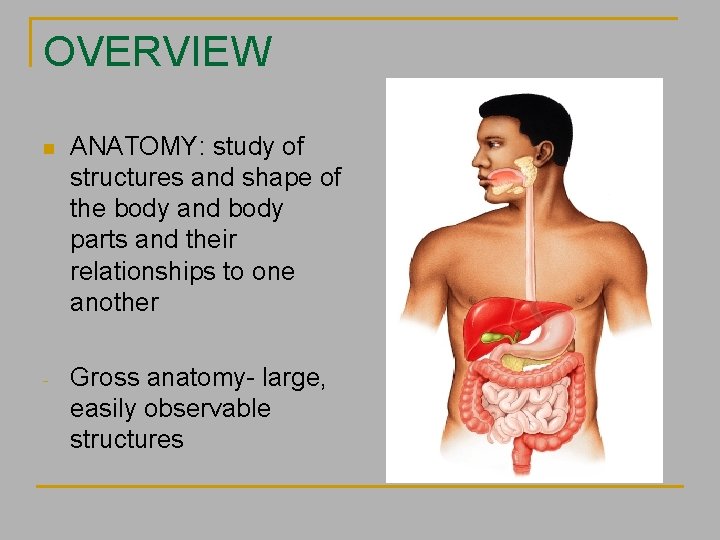
OVERVIEW n ANATOMY: study of structures and shape of the body and body parts and their relationships to one another - Gross anatomy- large, easily observable structures
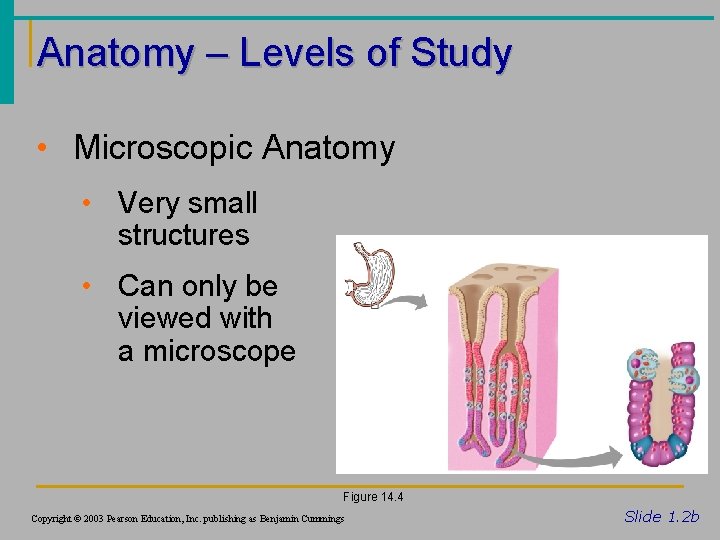
Anatomy – Levels of Study • Microscopic Anatomy • Very small structures • Can only be viewed with a microscope Figure 14. 4 Copyright © 2003 Pearson Education, Inc. publishing as Benjamin Cummings Slide 1. 2 b
n - n PHYSIOLOGY: study of how body and its parts function Sub divisions according to body system Neurophysiology, cardiac physiology Anatomy & physiology always related… structure is always related to function
CHECK YOUR UNDERSTANDING n On your notes, do the webbing and summary statement
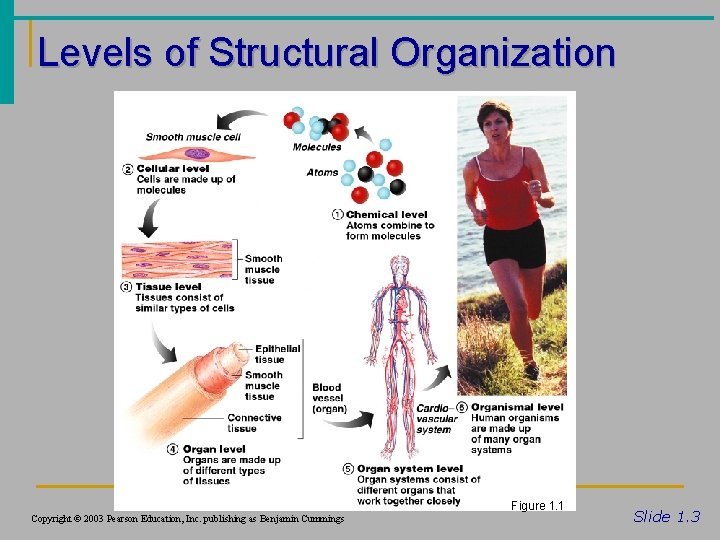
Levels of Structural Organization Figure 1. 1 Copyright © 2003 Pearson Education, Inc. publishing as Benjamin Cummings Slide 1. 3
LEVELS OF STRUCTURAL ORGANIZATION 1. 2. 3. 4. 5. 6. Chemical level – atoms, molecules, Cells Tissues – groups of similar cells that have common function Organ – structure composed of 2 or more tissue types that perform specific function Organ system – group of organs that cooperate to accomplish a common purpose Organism – living body made of organ systems
CHECK YOUR UNDERSTANDING n On your notes, do the webbing and summary statement
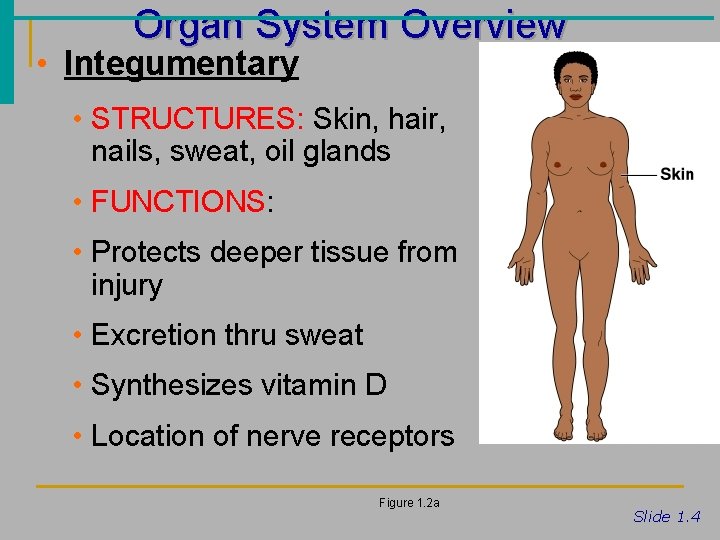
Organ System Overview • Integumentary • STRUCTURES: Skin, hair, nails, sweat, oil glands • FUNCTIONS: • Protects deeper tissue from injury • Excretion thru sweat • Synthesizes vitamin D • Location of nerve receptors Figure 1. 2 a Slide 1. 4
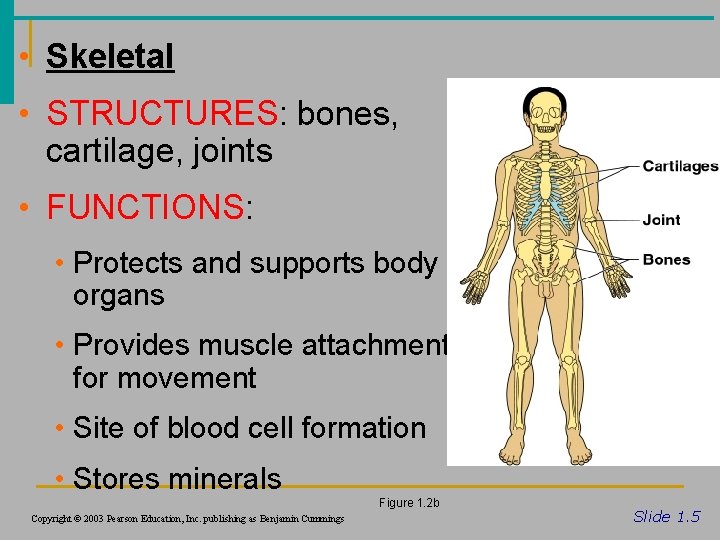
• Skeletal • STRUCTURES: bones, cartilage, joints • FUNCTIONS: • Protects and supports body organs • Provides muscle attachment for movement • Site of blood cell formation • Stores minerals Figure 1. 2 b Copyright © 2003 Pearson Education, Inc. publishing as Benjamin Cummings Slide 1. 5
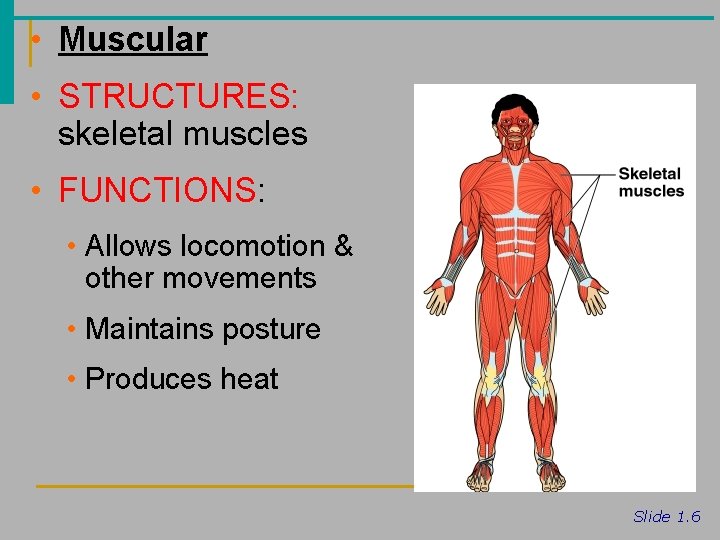
• Muscular • STRUCTURES: skeletal muscles • FUNCTIONS: • Allows locomotion & other movements • Maintains posture • Produces heat Slide 1. 6
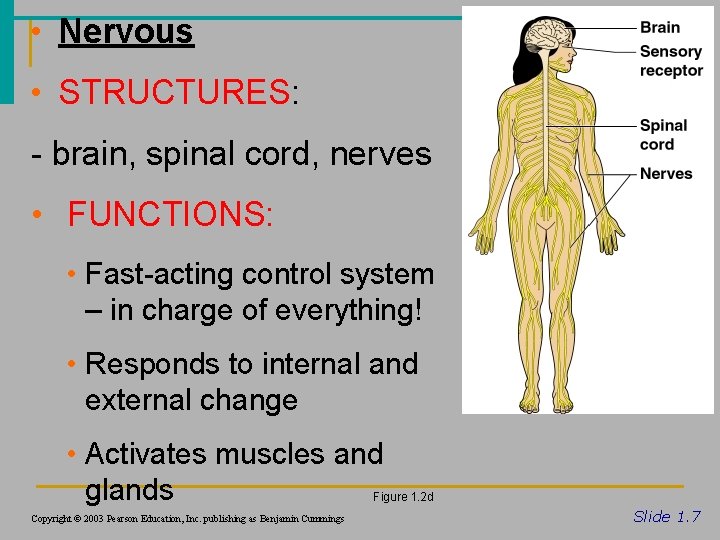
• Nervous • STRUCTURES: - brain, spinal cord, nerves • FUNCTIONS: • Fast-acting control system – in charge of everything! • Responds to internal and external change • Activates muscles and glands Figure 1. 2 d Copyright © 2003 Pearson Education, Inc. publishing as Benjamin Cummings Slide 1. 7
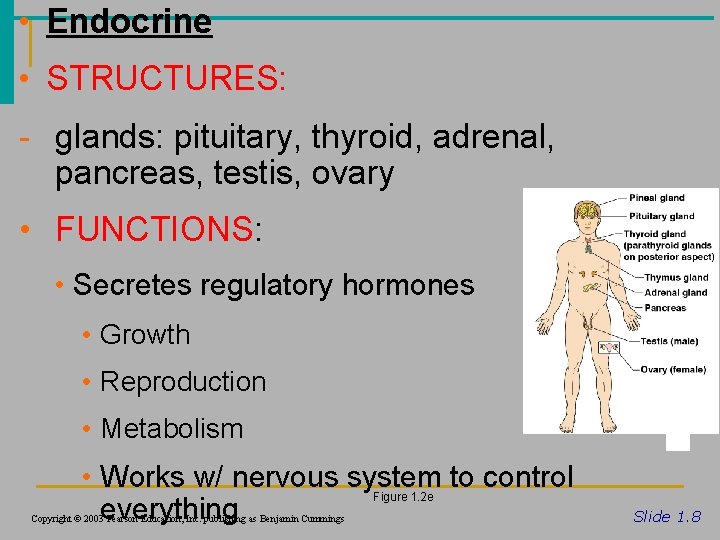
• Endocrine • STRUCTURES: - glands: pituitary, thyroid, adrenal, pancreas, testis, ovary • FUNCTIONS: • Secretes regulatory hormones • Growth • Reproduction • Metabolism • Works w/ nervous system to control everything Figure 1. 2 e Copyright © 2003 Pearson Education, Inc. publishing as Benjamin Cummings Slide 1. 8
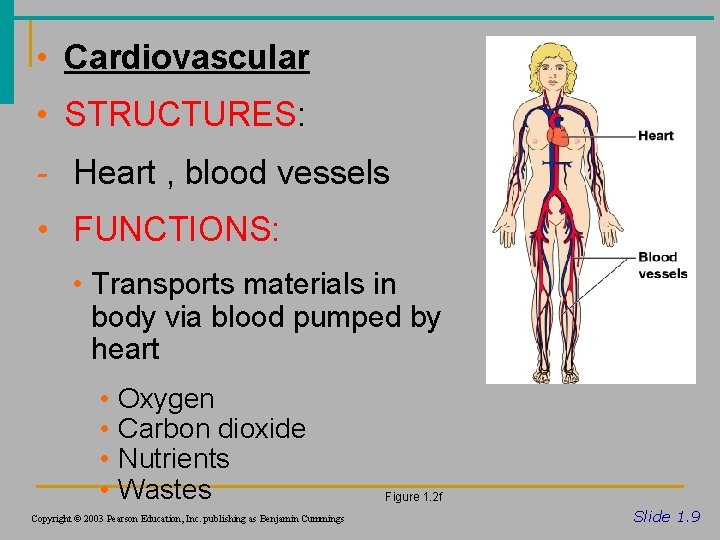
• Cardiovascular • STRUCTURES: - Heart , blood vessels • FUNCTIONS: • Transports materials in body via blood pumped by heart • Oxygen • Carbon dioxide • Nutrients • Wastes Copyright © 2003 Pearson Education, Inc. publishing as Benjamin Cummings Figure 1. 2 f Slide 1. 9
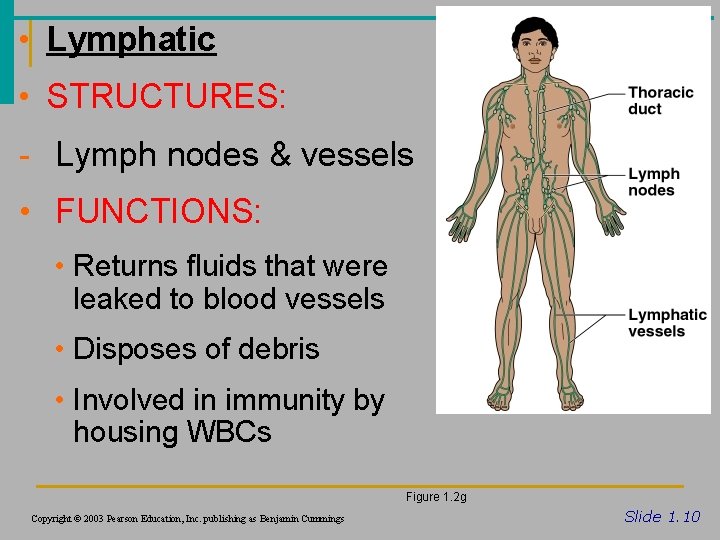
• Lymphatic • STRUCTURES: - Lymph nodes & vessels • FUNCTIONS: • Returns fluids that were leaked to blood vessels • Disposes of debris • Involved in immunity by housing WBCs Figure 1. 2 g Copyright © 2003 Pearson Education, Inc. publishing as Benjamin Cummings Slide 1. 10
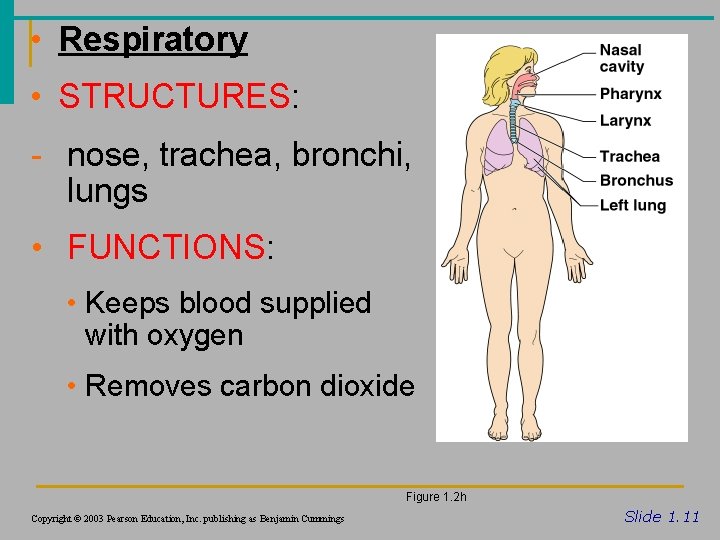
• Respiratory • STRUCTURES: - nose, trachea, bronchi, lungs • FUNCTIONS: • Keeps blood supplied with oxygen • Removes carbon dioxide Figure 1. 2 h Copyright © 2003 Pearson Education, Inc. publishing as Benjamin Cummings Slide 1. 11
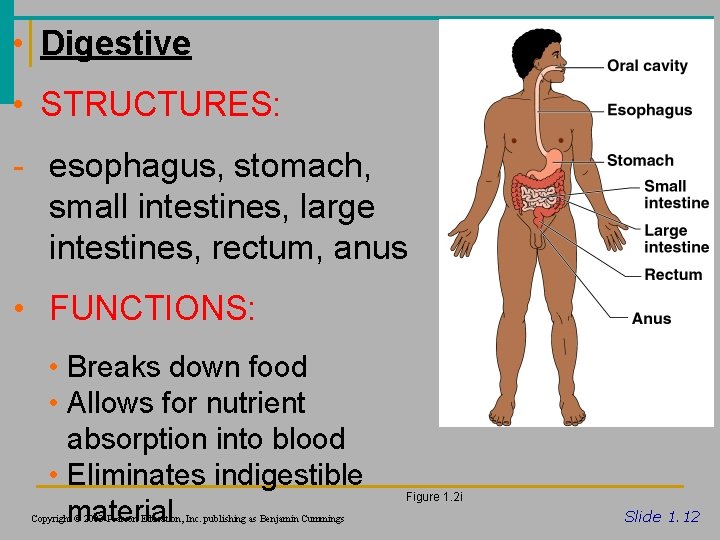
• Digestive • STRUCTURES: - esophagus, stomach, small intestines, large intestines, rectum, anus • FUNCTIONS: • Breaks down food • Allows for nutrient absorption into blood • Eliminates indigestible material Copyright © 2003 Pearson Education, Inc. publishing as Benjamin Cummings Figure 1. 2 i Slide 1. 12
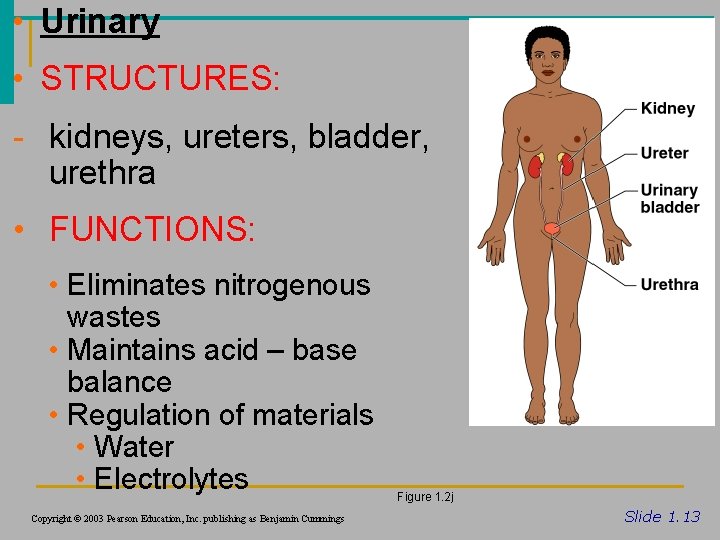
• Urinary • STRUCTURES: - kidneys, ureters, bladder, urethra • FUNCTIONS: • Eliminates nitrogenous wastes • Maintains acid – base balance • Regulation of materials • Water • Electrolytes Copyright © 2003 Pearson Education, Inc. publishing as Benjamin Cummings Figure 1. 2 j Slide 1. 13
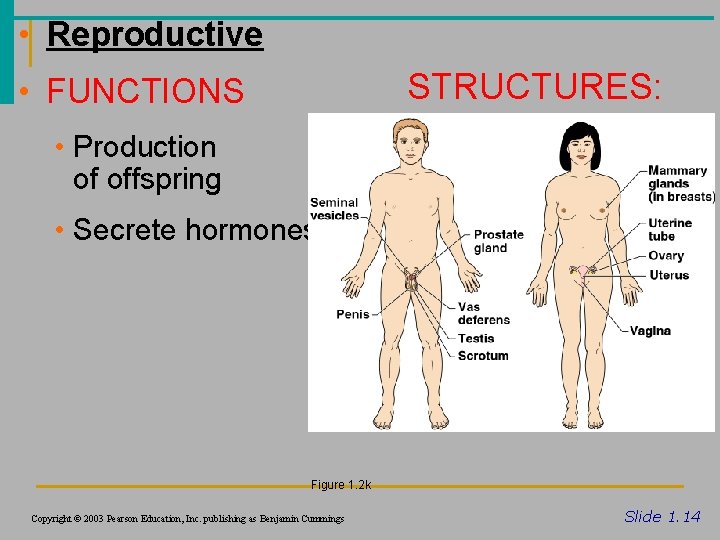
• Reproductive STRUCTURES: • FUNCTIONS • Production of offspring • Secrete hormones Figure 1. 2 k Copyright © 2003 Pearson Education, Inc. publishing as Benjamin Cummings Slide 1. 14
CHECK YOUR UNDERSTANDING n On your notes, do the webbing and summary statement
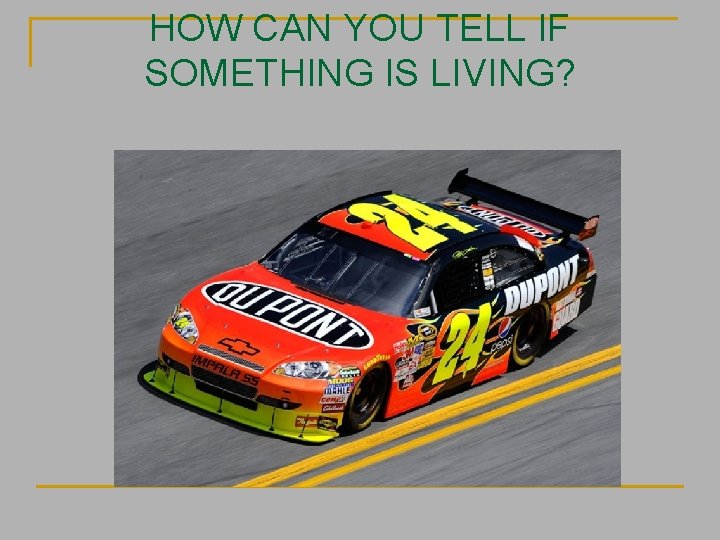
HOW CAN YOU TELL IF SOMETHING IS LIVING?
Necessary Life Functions • Maintain Boundaries • Movement • Locomotion • Movement of substances • Responsiveness • Ability to sense changes and react • Digestion • Break-down and delivery of nutrients Copyright © 2003 Pearson Education, Inc. publishing as Benjamin Cummings Slide 1. 15
Necessary Life Functions • Metabolism – chemical reactions within the body • Production of energy • Making body structures • Excretion • Elimination of waste from metabolic reactions Copyright © 2003 Pearson Education, Inc. publishing as Benjamin Cummings Slide 1. 16 a
Necessary Life Functions • Reproduction • Production of future generation • Growth • Increasing of cell size and number Copyright © 2003 Pearson Education, Inc. publishing as Benjamin Cummings Slide 1. 16 b
CHECK YOUR UNDERSTANDING n On your notes, do the webbing and summary statement
Survival Needs • Nutrients • Chemicals for energy and cell building • Includes carbohydrates, proteins, lipids, vitamins, and minerals • Oxygen • Required for chemical reactions Copyright © 2003 Pearson Education, Inc. publishing as Benjamin Cummings Slide 1. 17 a
Survival Needs • Water • 60– 80% of body weight • Provides for metabolic reaction • Stable body temperature • Atmospheric pressure must be appropriate Copyright © 2003 Pearson Education, Inc. publishing as Benjamin Cummings Slide 1. 17 b
CHECK YOUR UNDERSTANDING n On your notes, do the webbing and summary statement
Homeostasis • Maintenance of a stable internal environment = a dynamic state of equilibrium • Homeostasis must be maintained for normal body functioning and to sustain life • Homeostatic imbalance – a disturbance in homeostasis resulting in disease Copyright © 2003 Pearson Education, Inc. publishing as Benjamin Cummings Slide 1. 18
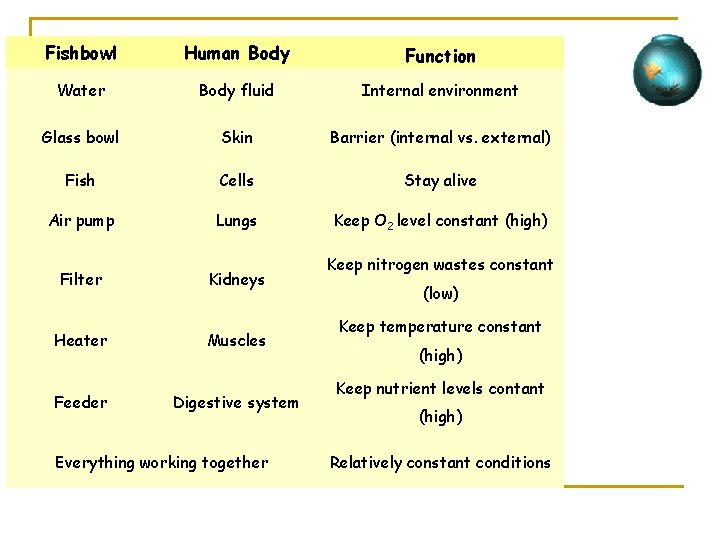
Fishbowl Human Body Function Water Body fluid Internal environment Glass bowl Skin Barrier (internal vs. external) Fish Cells Stay alive Air pump Lungs Keep O 2 level constant (high) Filter Kidneys Heater Muscles Feeder Digestive system Everything working together Keep nitrogen wastes constant (low) Keep temperature constant (high) Keep nutrient levels contant (high) Relatively constant conditions
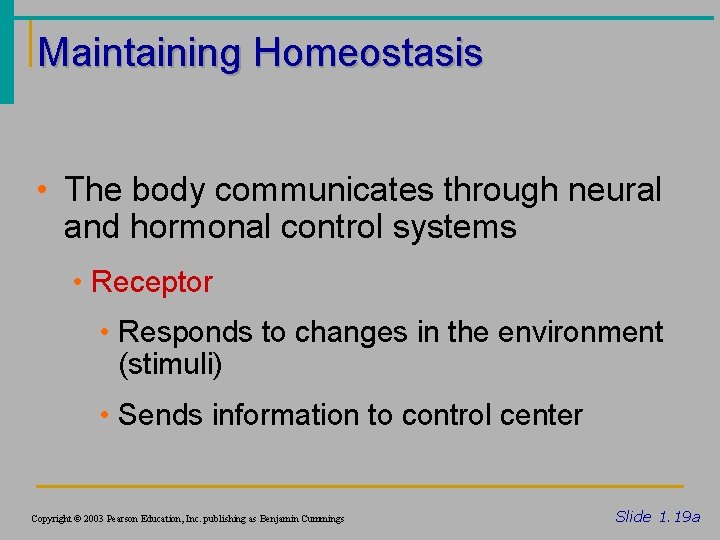
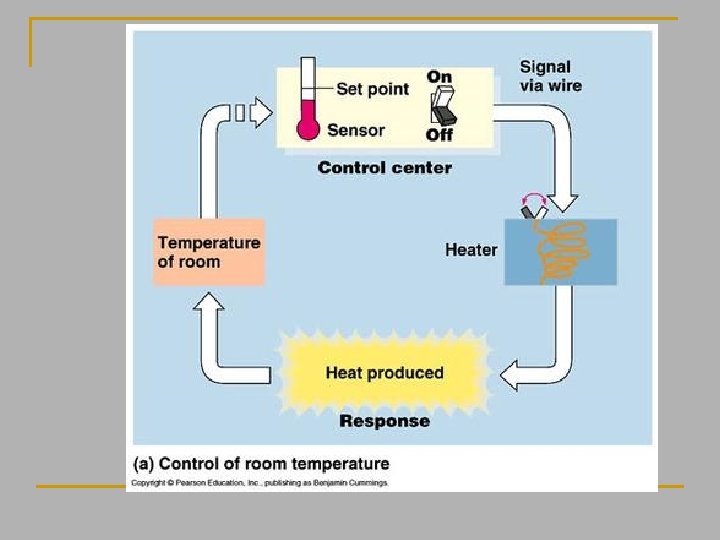
Maintaining Homeostasis • The body communicates through neural and hormonal control systems • Receptor • Responds to changes in the environment (stimuli) • Sends information to control center Copyright © 2003 Pearson Education, Inc. publishing as Benjamin Cummings Slide 1. 19 a
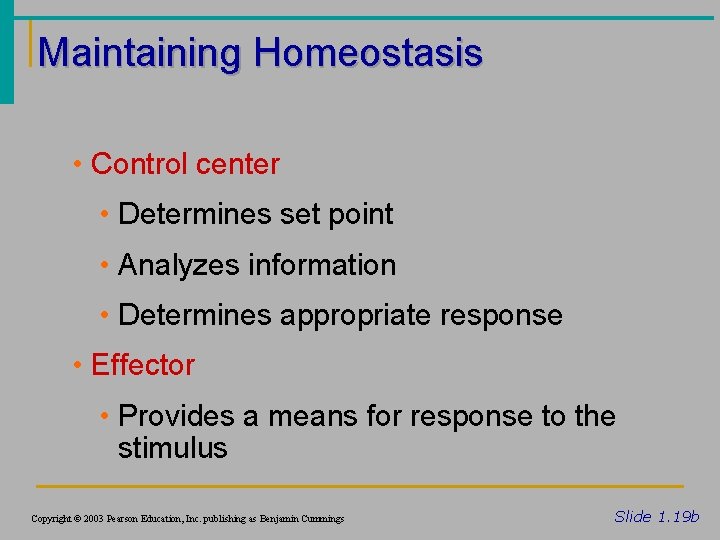
Maintaining Homeostasis • Control center • Determines set point • Analyzes information • Determines appropriate response • Effector • Provides a means for response to the stimulus Copyright © 2003 Pearson Education, Inc. publishing as Benjamin Cummings Slide 1. 19 b
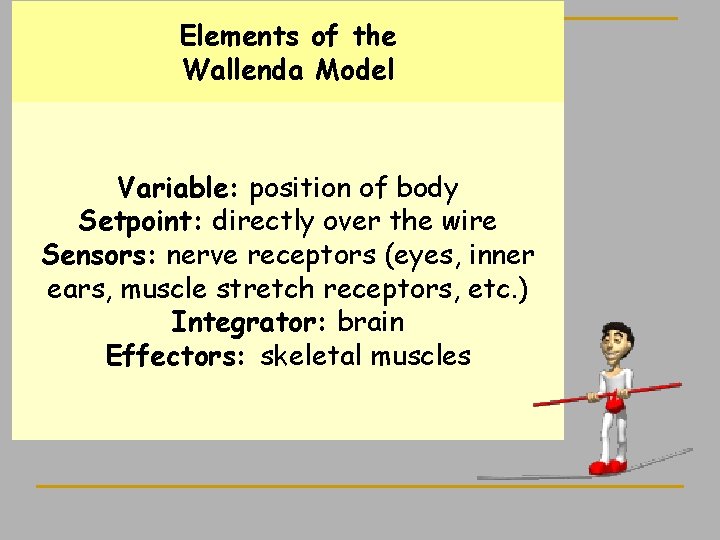
Elements of the Wallenda Model Variable: position of body Setpoint: directly over the wire Sensors: nerve receptors (eyes, inner ears, muscle stretch receptors, etc. ) Integrator: brain Effectors: skeletal muscles
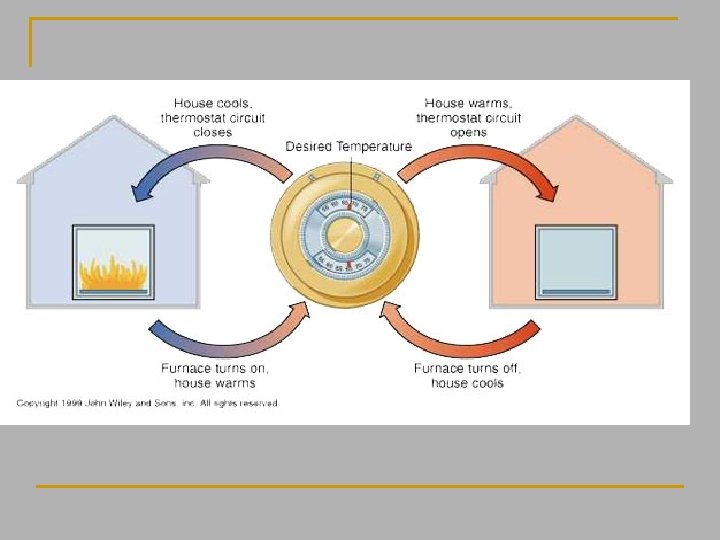
Feedback Mechanisms • Negative feedback • Includes most homeostatic control mechanisms • Shuts off the original stimulus, or reduces its intensity • Works like a household thermostat Copyright © 2003 Pearson Education, Inc. publishing as Benjamin Cummings Slide 1. 20 a
Feedback Mechanisms • Positive feedback • Increases the original stimulus to push the variable farther • In the body this only occurs in blood clotting and birth of a baby Copyright © 2003 Pearson Education, Inc. publishing as Benjamin Cummings Slide 1. 20 b
HOMEOSTATIC CONTROL MECHANISMS n Pg. 10 n Communication within body is crucial –mostly by nervous & endocrine systems
CHECK YOUR UNDERSTANDING n On your notes, do the webbing and summary statement
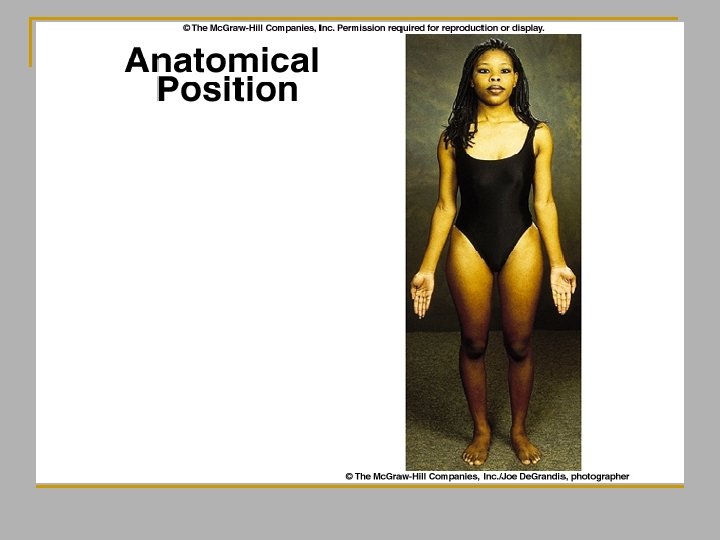
LANGUAGE OF ANATOMY n n Anatomists have adopted set of terms that allow body structures to be located and identified Anatomical position – standard position used as reference point Face-front diagrams pg. 12 DO THIS: Stand up and assume anatomical position
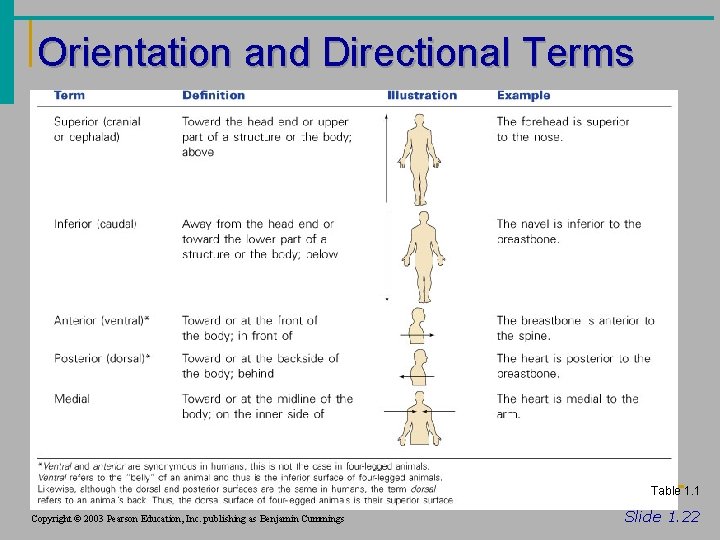
Orientation and Directional Terms Table 1. 1 Copyright © 2003 Pearson Education, Inc. publishing as Benjamin Cummings Slide 1. 22
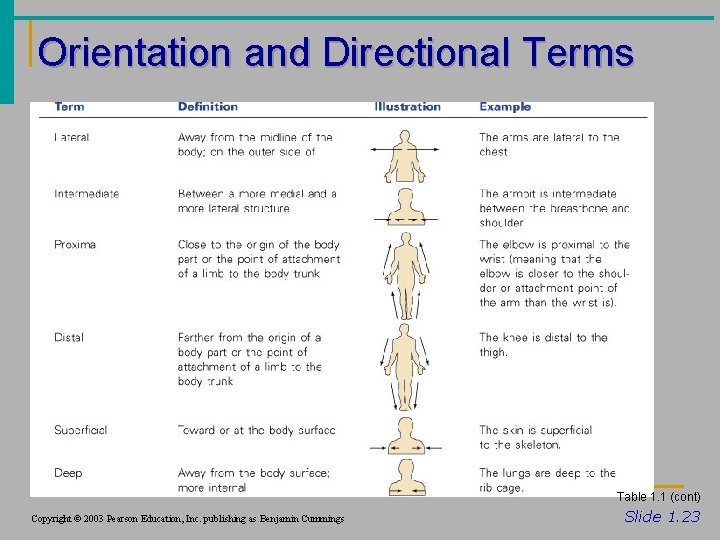
Orientation and Directional Terms Table 1. 1 (cont) Copyright © 2003 Pearson Education, Inc. publishing as Benjamin Cummings Slide 1. 23
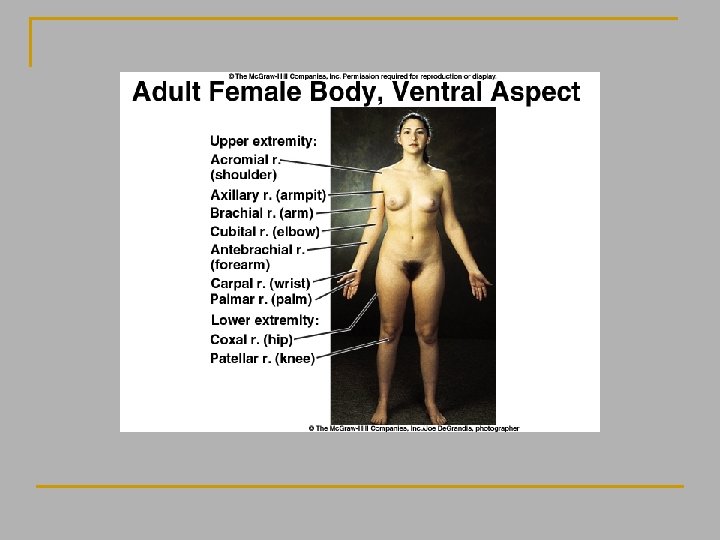
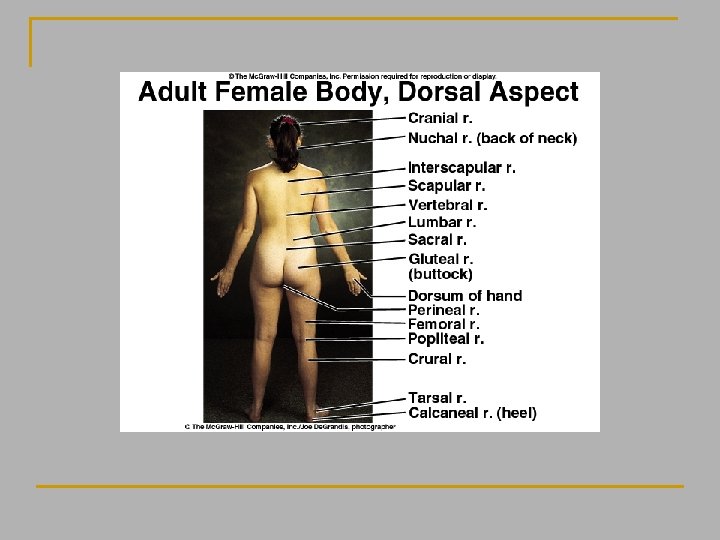
REGIONAL TERMS n Visible landmarks on surface of body n Pg. 12 – Anterior & Posterior Landmarks
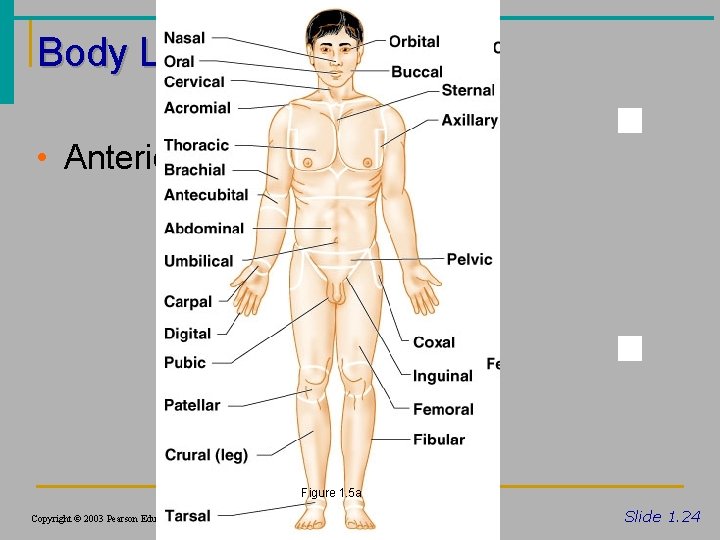
Body Landmarks • Anterior Figure 1. 5 a Copyright © 2003 Pearson Education, Inc. publishing as Benjamin Cummings Slide 1. 24
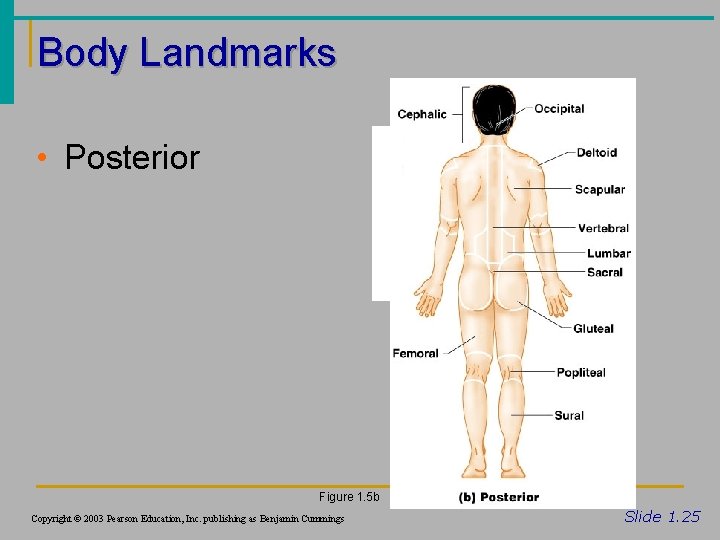
Body Landmarks • Posterior Figure 1. 5 b Copyright © 2003 Pearson Education, Inc. publishing as Benjamin Cummings Slide 1. 25
BODY PLANES & SECTIONS n n Section – a cut made thru the body wall or organ Plane – imaginary line
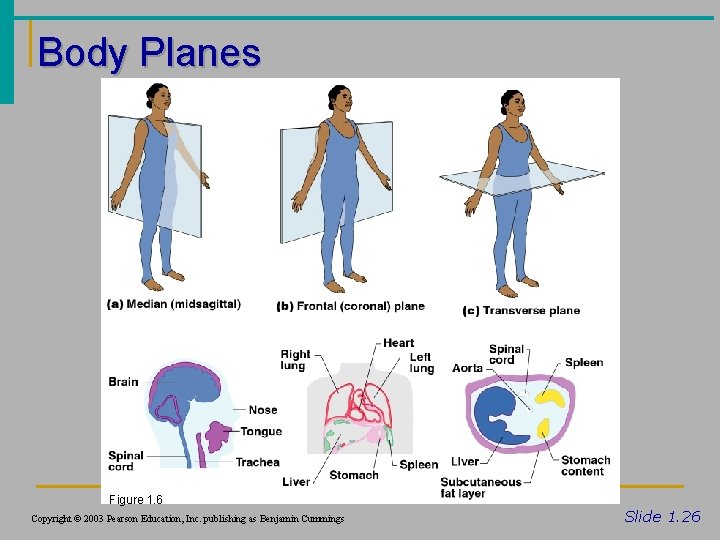
Body Planes Figure 1. 6 Copyright © 2003 Pearson Education, Inc. publishing as Benjamin Cummings Slide 1. 26
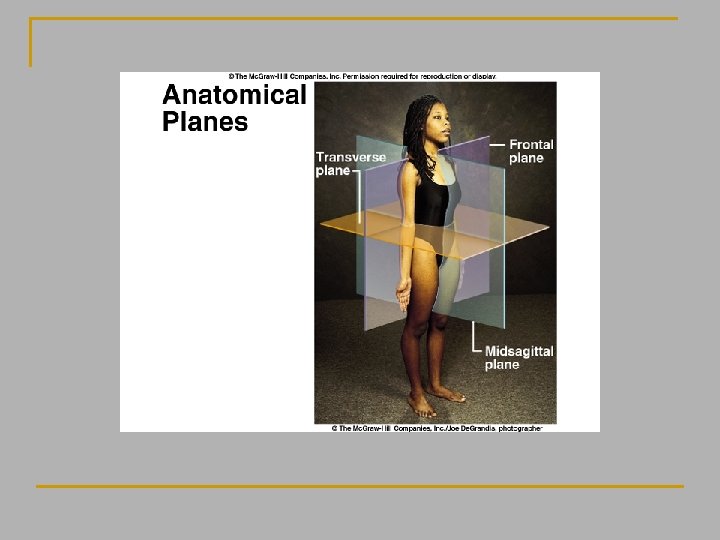
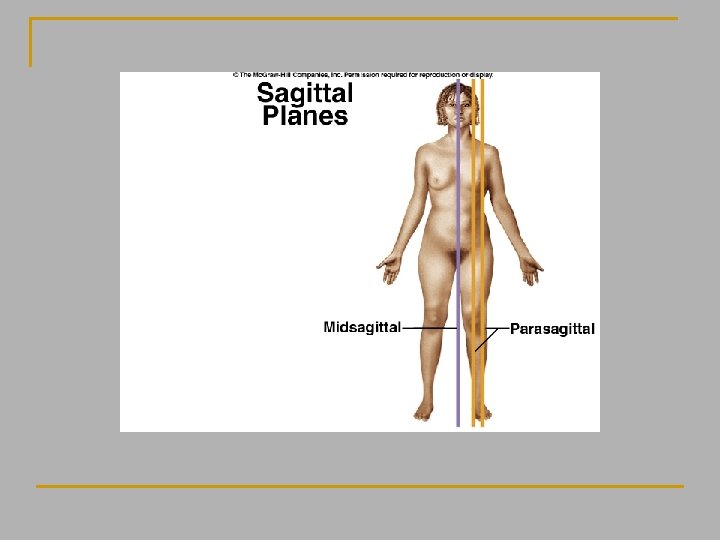
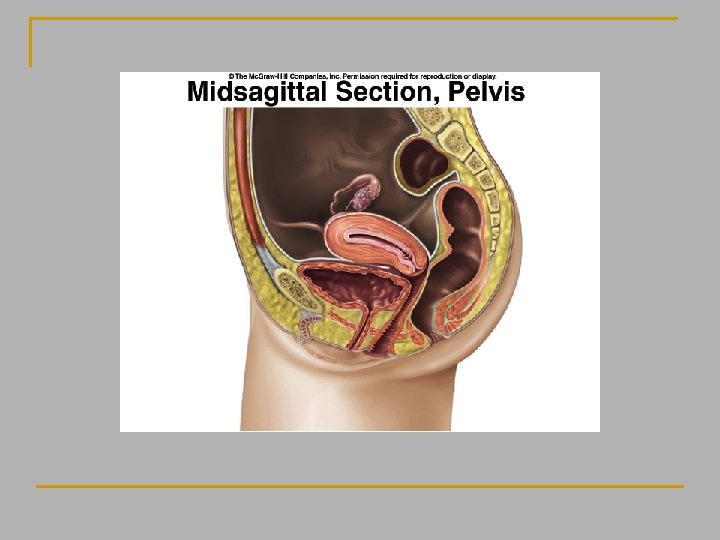
n SAGITTAL SECTION – cut made along the lengthwise (longitudinal) plane - Divides body into right & left sides - Midsagittal – cut made down median plane; r & l sides are equal
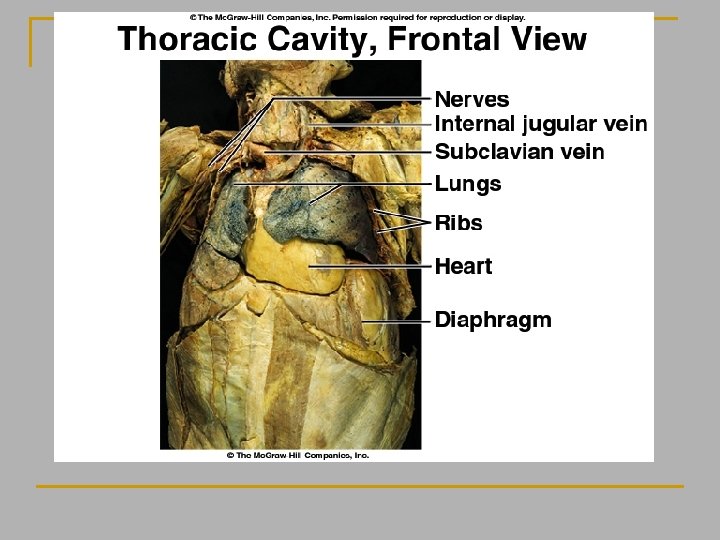
n FRONTAL (coronal) SECTION: cut made along lengthwise plane that divides body into anterior & posterior parts
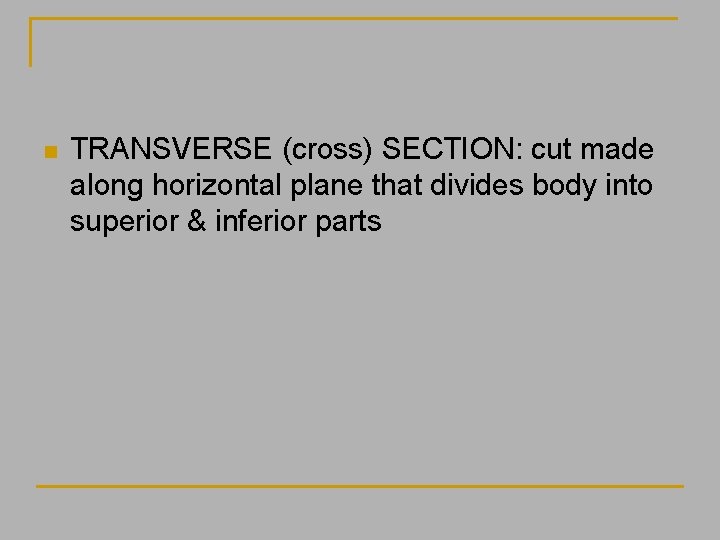
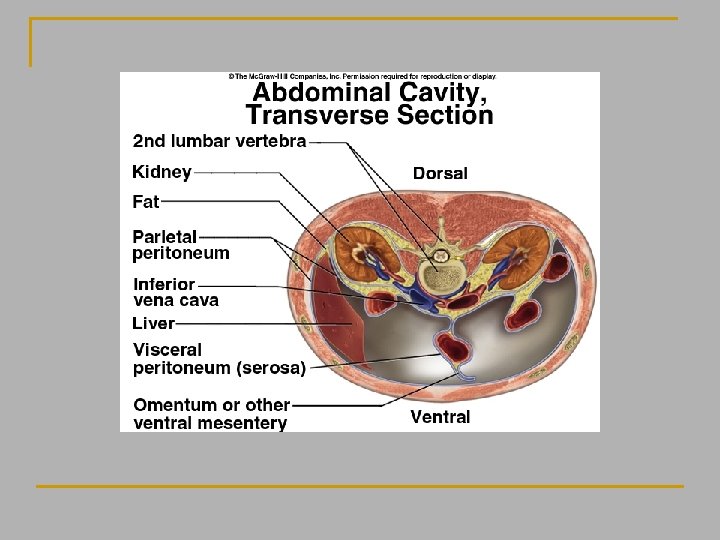
n TRANSVERSE (cross) SECTION: cut made along horizontal plane that divides body into superior & inferior parts
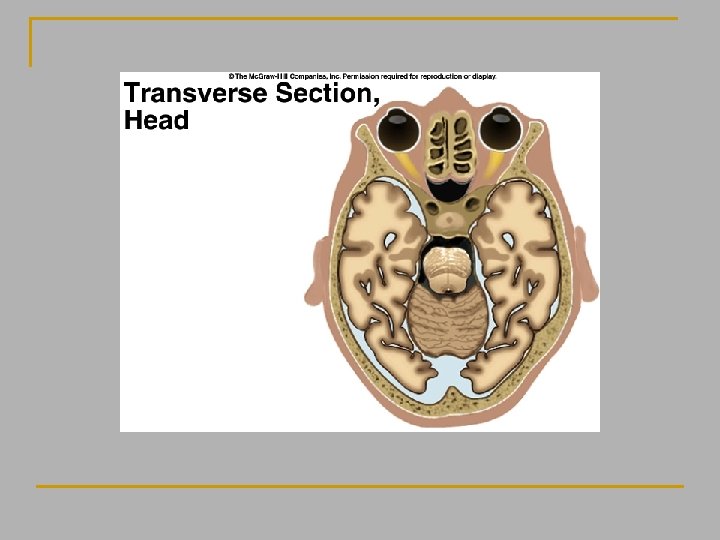
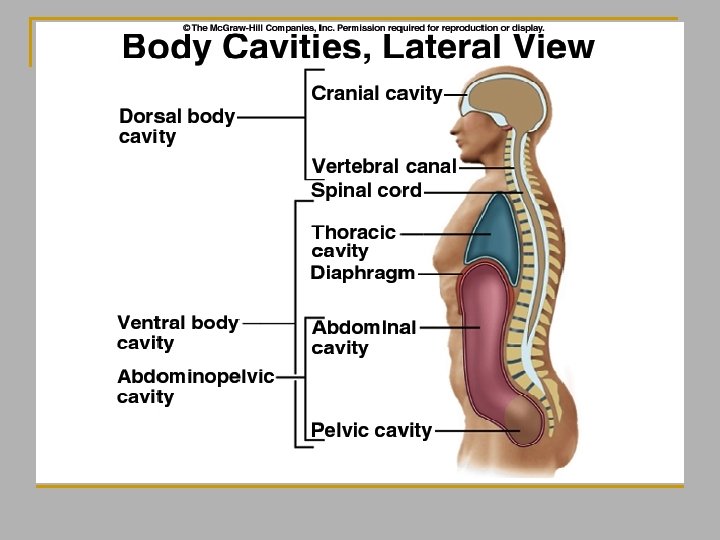
BODY CAVITIES n 2 SETS: n DORSAL BODY CAVITYCranial cavity: space inside bony skull Spinal cavity: from cranium to end of vertebral column -
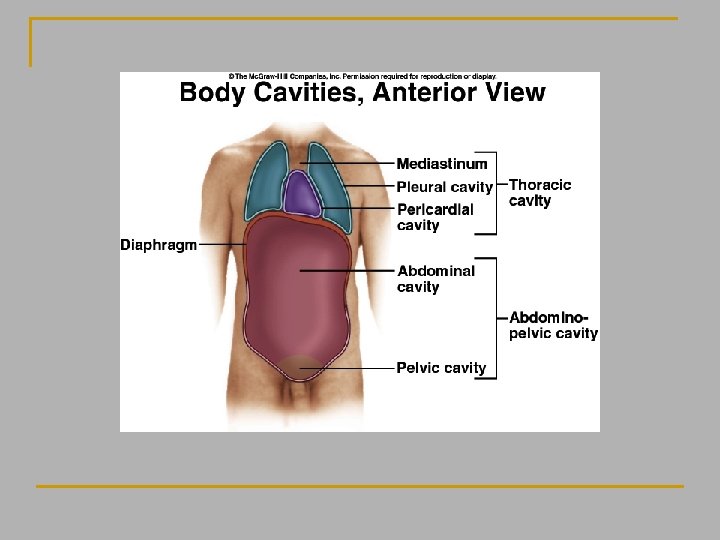
n VENTRAL BODY CAVITY- n Contains all structures within chest & abdomen Thoracic cavity: separated from rest by diaphragm Abdominopelvic cavity: inferior to diaphragm Pg. 17 - -
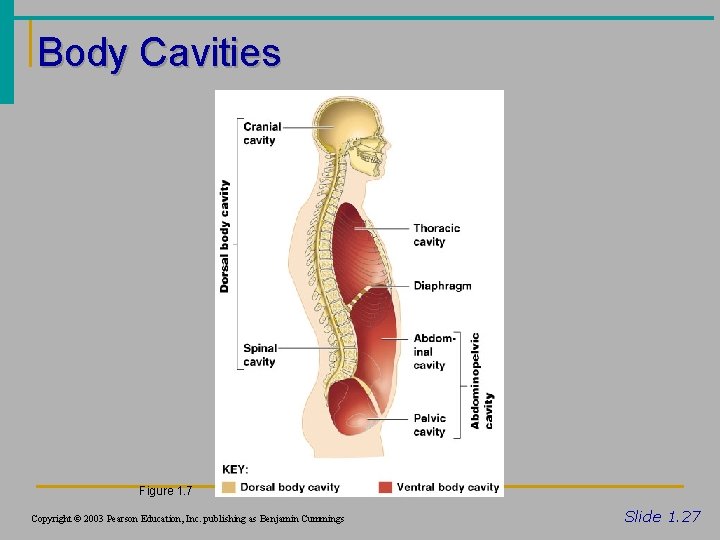
Body Cavities Figure 1. 7 Copyright © 2003 Pearson Education, Inc. publishing as Benjamin Cummings Slide 1. 27
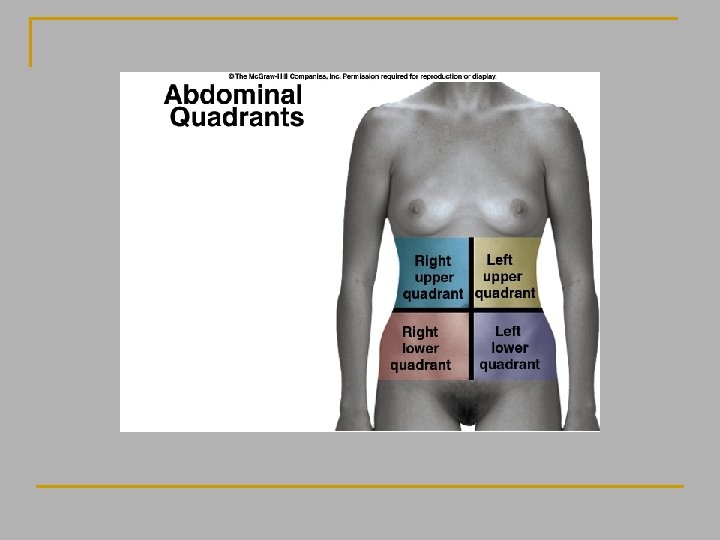
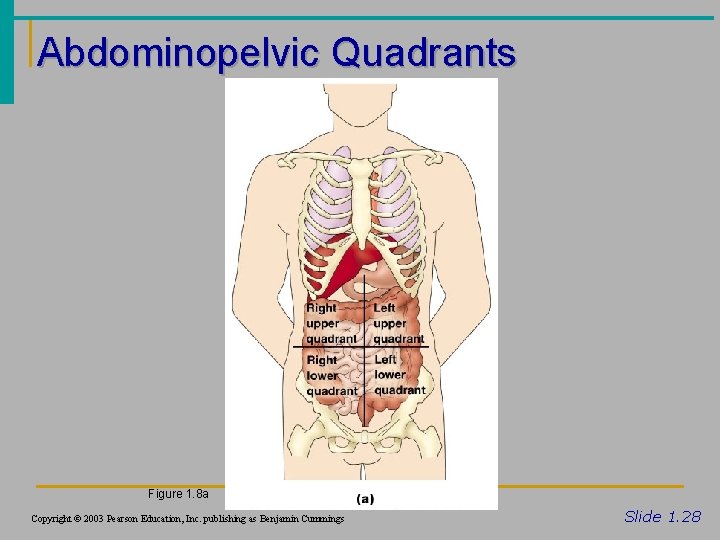
Abdominopelvic Quadrants Figure 1. 8 a Copyright © 2003 Pearson Education, Inc. publishing as Benjamin Cummings Slide 1. 28
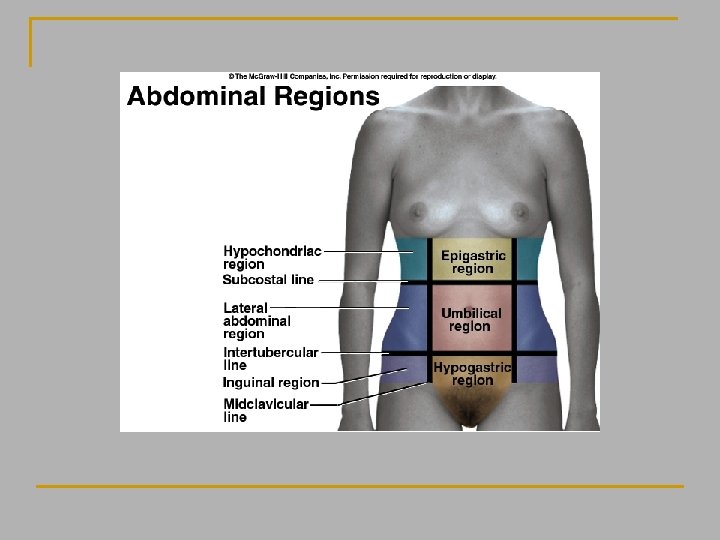
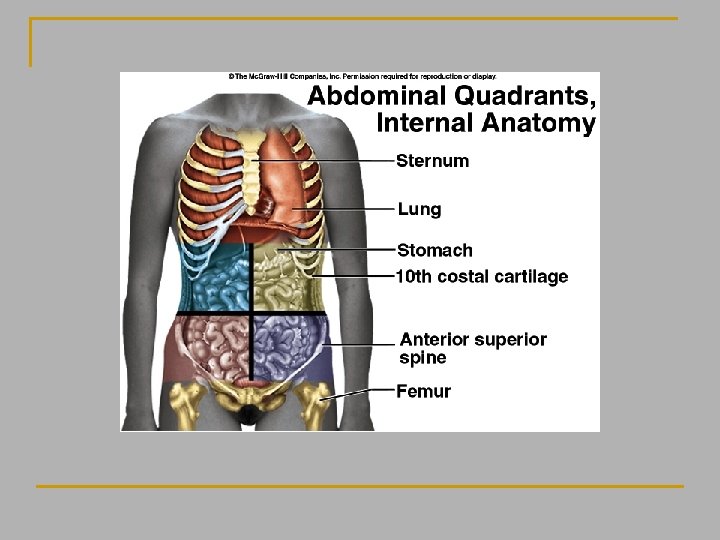
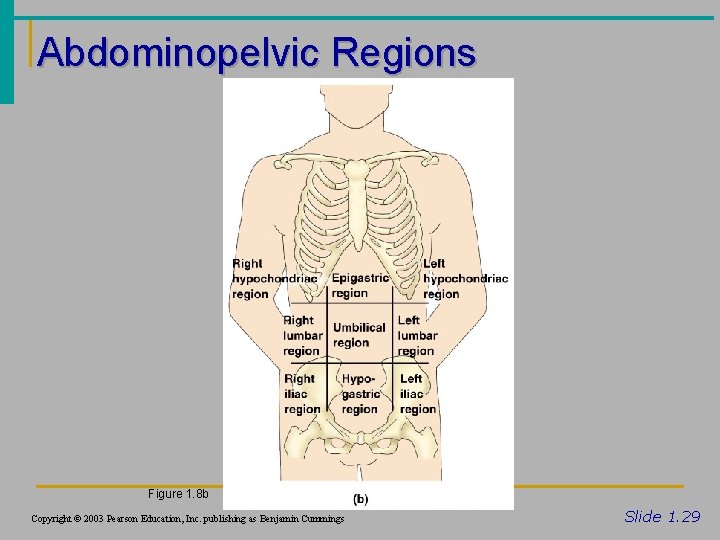
Abdominopelvic Regions Figure 1. 8 b Copyright © 2003 Pearson Education, Inc. publishing as Benjamin Cummings Slide 1. 29
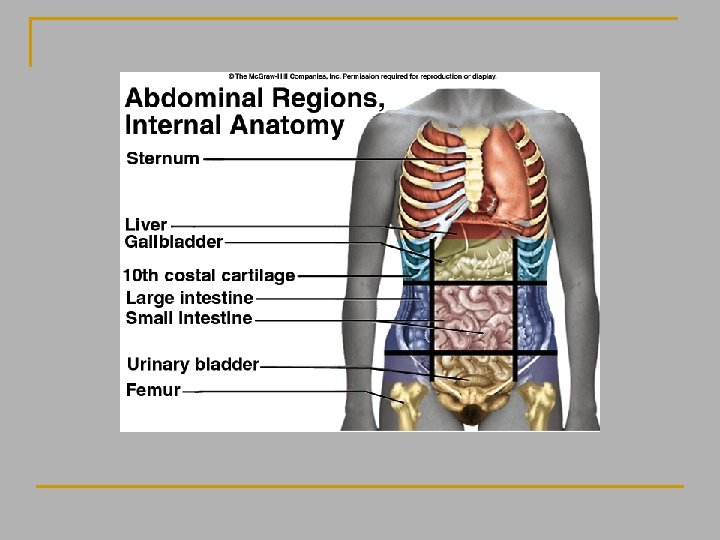
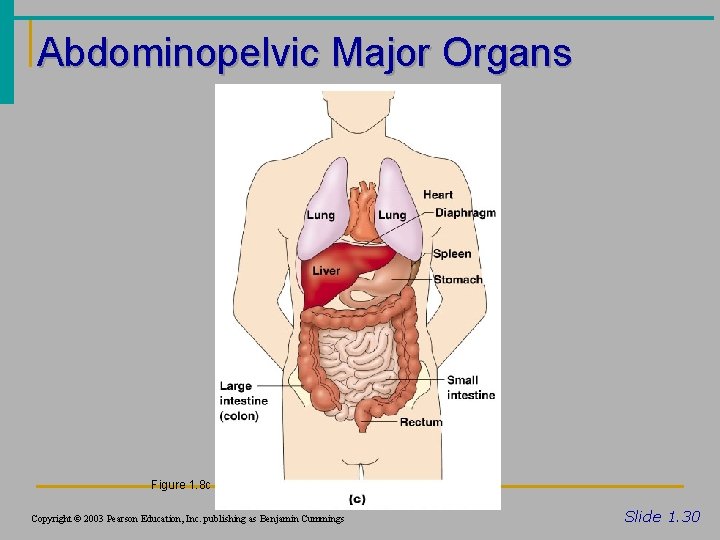
Abdominopelvic Major Organs Figure 1. 8 c Copyright © 2003 Pearson Education, Inc. publishing as Benjamin Cummings Slide 1. 30
- Slides: 71