
Chapter 1 The Human Body An Orientation Lecture

Chapter 1 The Human Body: An Orientation Lecture Presentation by Patty Bostwick-Taylor Florence-Darlington Technical College © 2018 Pearson Education, Inc.
Anatomy • Study of the structure and shape of the body and its parts • Observation is used to see sizes and relationships of parts © 2018 Pearson Education, Inc.
Anatomy • Gross anatomy • Large structures • Easily observable © 2018 Pearson Education, Inc.
Anatomy • Let’s look at an example of gross anatomy using the digestive system organs © 2018 Pearson Education, Inc.
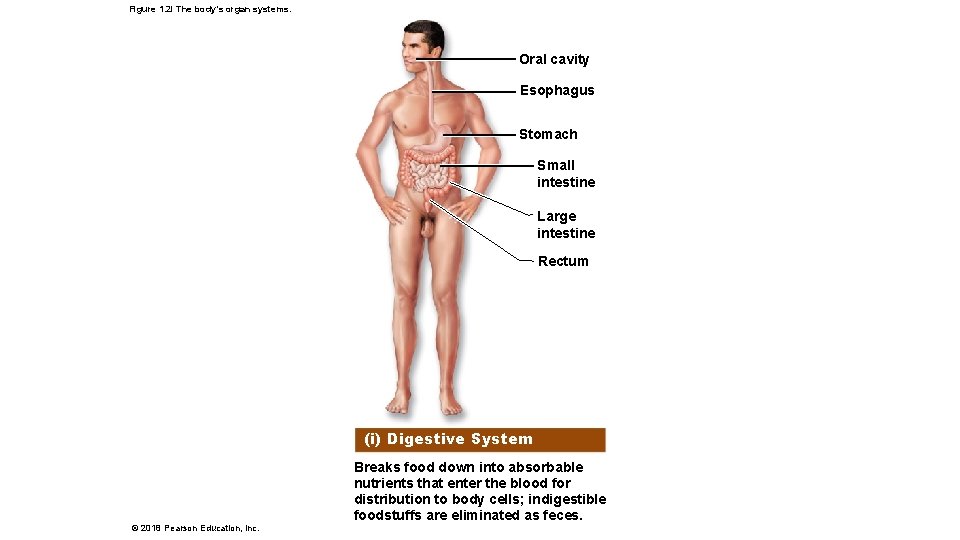
Figure 1. 2 i The body’s organ systems. Oral cavity Esophagus Stomach Small intestine Large intestine Rectum (i) Digestive System Breaks food down into absorbable nutrients that enter the blood for distribution to body cells; indigestible foodstuffs are eliminated as feces. © 2018 Pearson Education, Inc.
Anatomy • Microscopic anatomy • Structures are too small to be seen with the naked eye • Cells and tissues can be viewed only with a microscope © 2018 Pearson Education, Inc.
Anatomy • Let’s look at an example of microscopic anatomy using a digestive system organ, the stomach © 2018 Pearson Education, Inc.
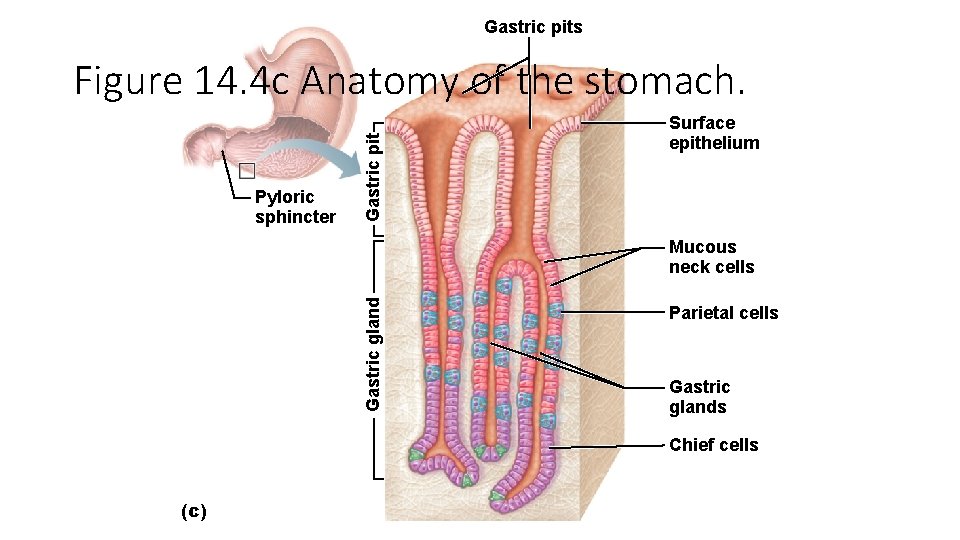
Gastric pits Pyloric sphincter Gastric pit Figure 14. 4 c Anatomy of the stomach. Surface epithelium Gastric gland Mucous neck cells Parietal cells Gastric glands Chief cells (c)
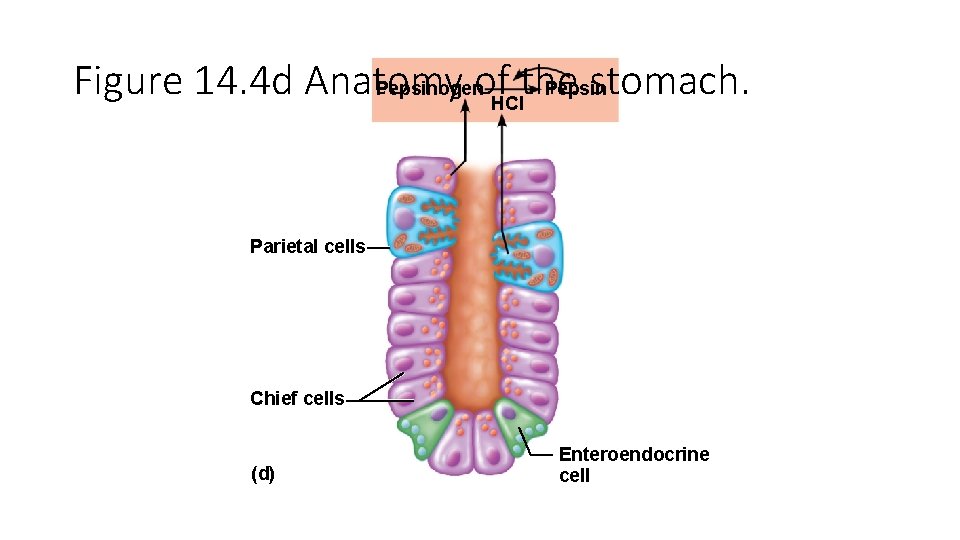
Figure 14. 4 d Anatomy of. HClthe stomach. Pepsinogen Pepsin Parietal cells Chief cells (d) Enteroendocrine cell
Physiology • Study of how the body and its parts work or function © 2018 Pearson Education, Inc.
Physiology • Structure determines what functions can occur • For example, the air sacs of the lungs have very thin walls, a feature that enables them to exchange gases and provide oxygen to the body © 2018 Pearson Education, Inc.
- Slides: 12