
Chapter 1 The History of the World Prehistory

- Slides: 26
Chapter 1: The History of the World: Pre-history – 2500 B. C. Humans Try to Control Nature Aim: How did the Stone Age transform life for early humans? Do Now : Answer the following question: Which of the following would you rate as the most important to your survival? a. Fire , b. Language, c. Tool making. ? Explain your answer.
Humans Try to Control Nature
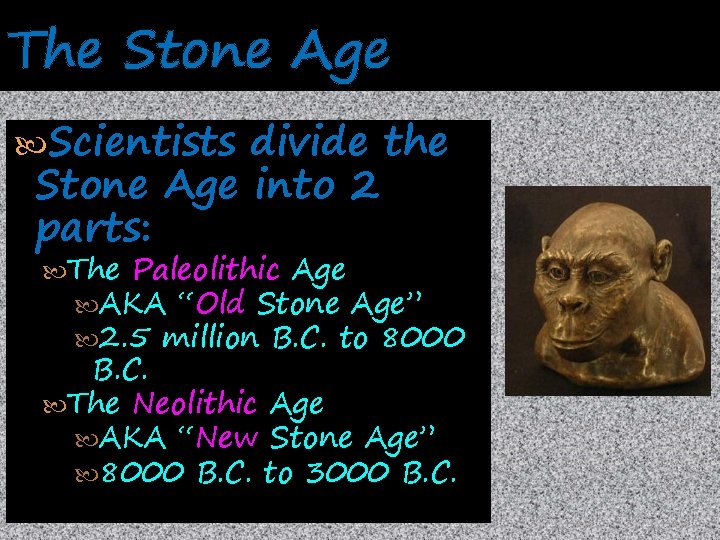
The Stone Age Scientists divide the Stone Age into 2 parts: The Paleolithic Age AKA “Old Stone Age” 2. 5 million B. C. to 8000 B. C. The Neolithic Age AKA “New Stone Age” 8000 B. C. to 3000 B. C.
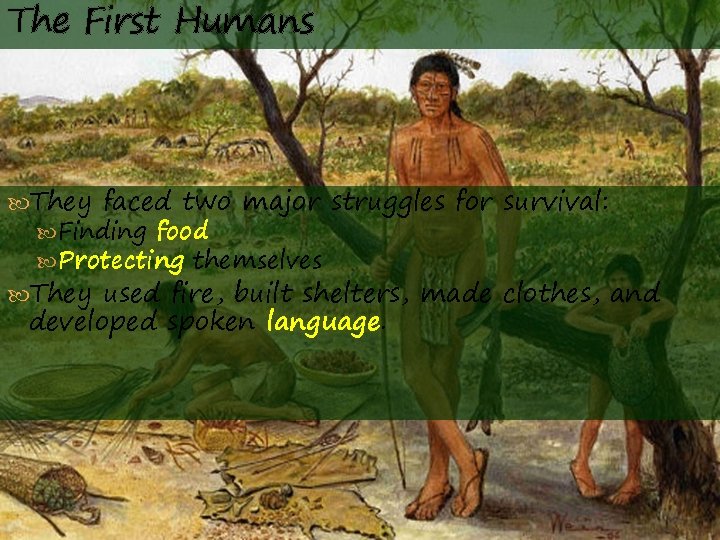
The First Humans They faced two major struggles for survival: Finding food Protecting themselves They used fire, built shelters, made clothes, and developed spoken language.
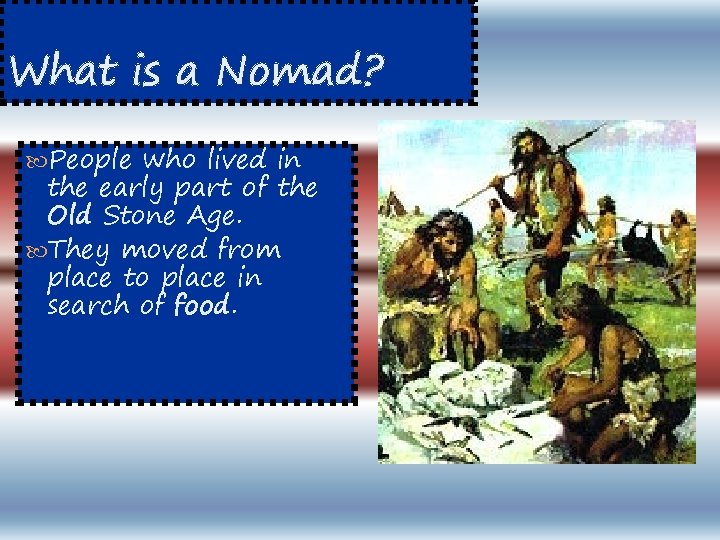
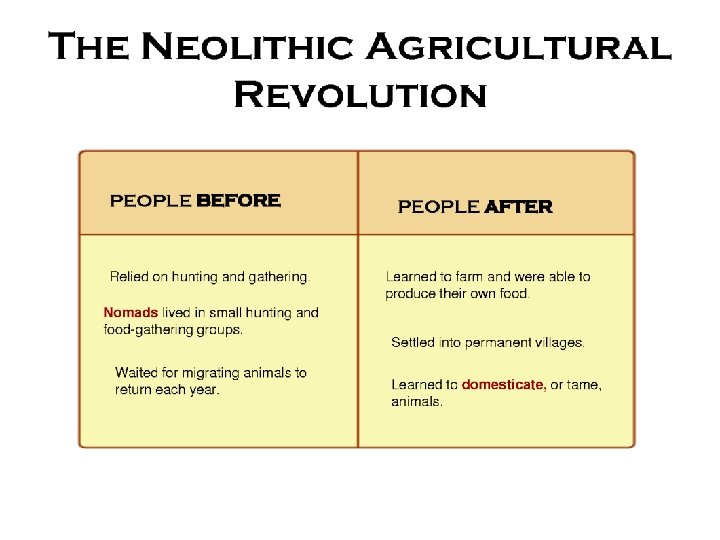
What is a Nomad? People who lived in the early part of the Old Stone Age. They moved from place to place in search of food.
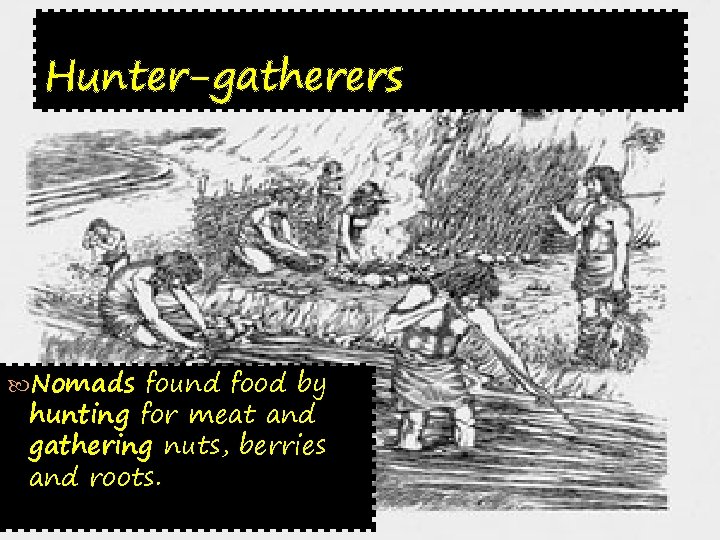
Hunter-gatherers Nomads found food by hunting for meat and gathering nuts, berries and roots.
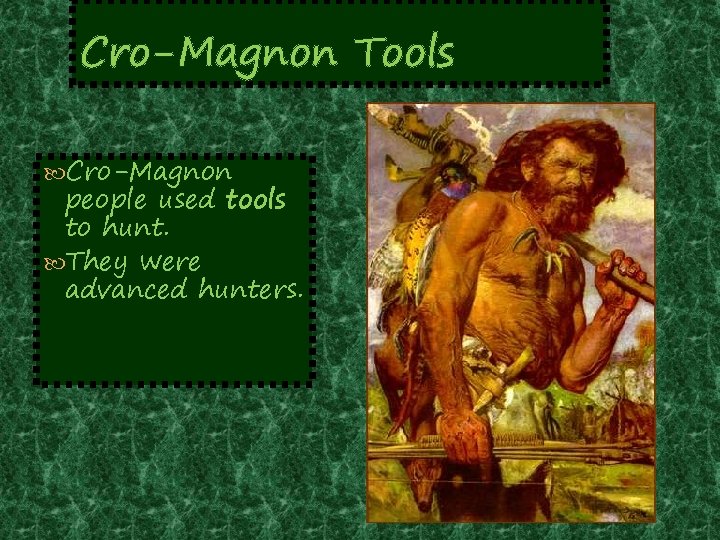
Cro-Magnon Tools Cro-Magnon people used tools to hunt. They were advanced hunters.
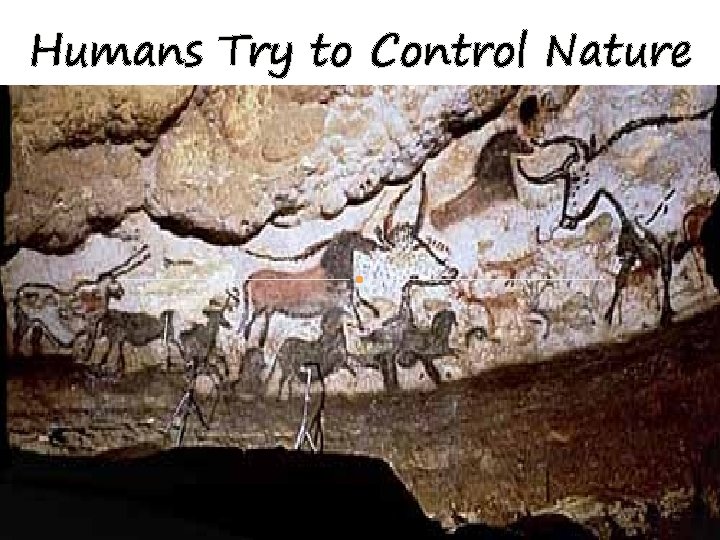
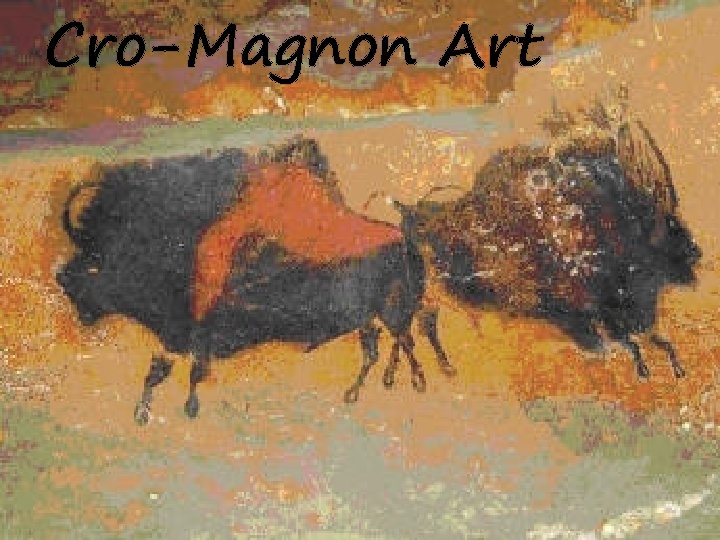
Cro-Magnon Art
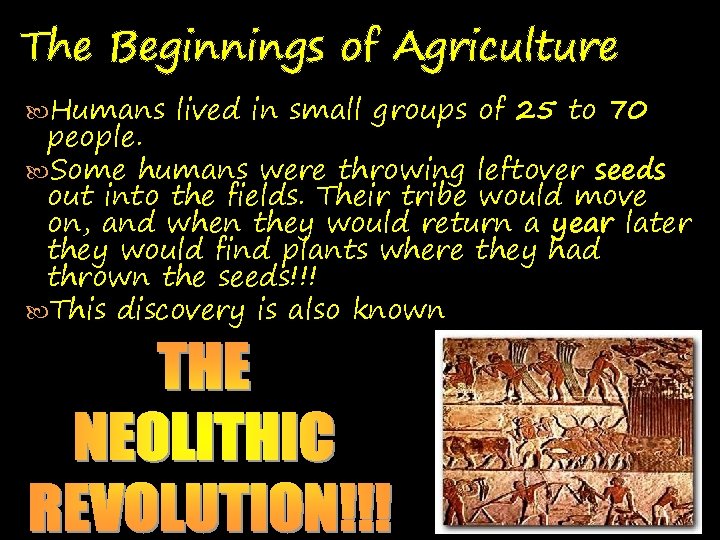
The Beginnings of Agriculture Humans lived in small groups of 25 to 70 people. Some humans were throwing leftover seeds out into the fields. Their tribe would move on, and when they would return a year later they would find plants where they had thrown the seeds!!! This discovery is also known as…
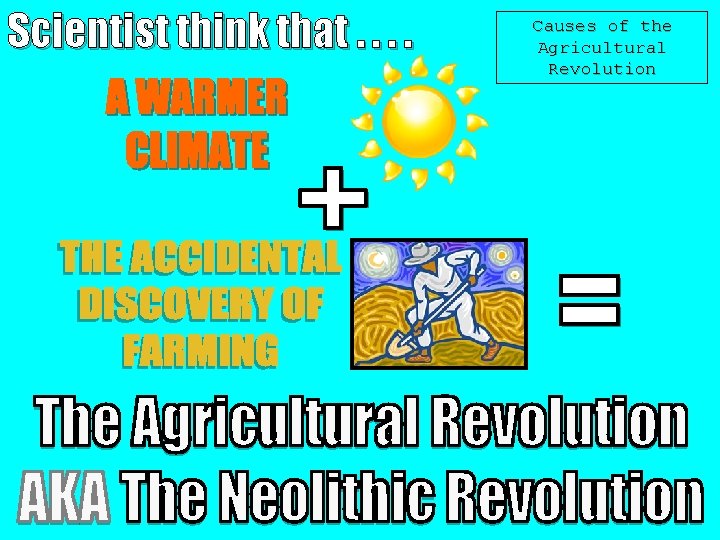
Scientist think that. . Causes of the Agricultural Revolution
More Causes of the Neolithic Revolution A rich supply of grain helped support a small population boom. As populations slowly rose, hunter-gatherers felt pressure to find new food sources. Farming offered an attractive alternative. Unlike hunting, it provided a steady source of food.
So what? Who cares? EVERYONE!!!! Finally, instead of relying on GATHERING food, people began to PRODUCE their own food. Now they don’t have to live the nomadic lifestyle anymore!! They can SETTLE!!!! <iframe width="640" height="390" src="//www. youtube. com/embed/NTg. IDO 1 h. LQ 4" frameborder="0" allowfullscreen></iframe>
How did life change after the Neolithic Revolution?
Farming Villages Grow into Cities New advanced farming tools were created to make farming more efficient and less time consuming…. . Whenever food can be produced at a faster rate, the POPULATION will INCREASE!!! More food = More people!!! Example – Slash and Burn Farming!!!
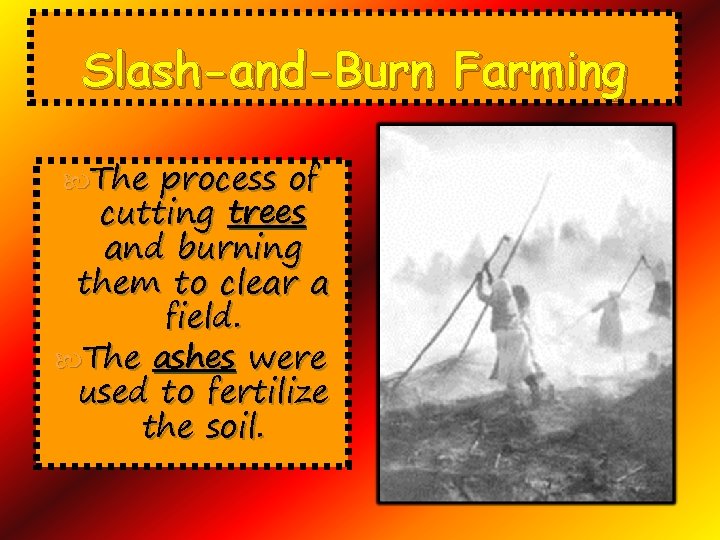
Slash-and-Burn Farming The process of cutting trees and burning them to clear a field. The ashes were used to fertilize the soil.
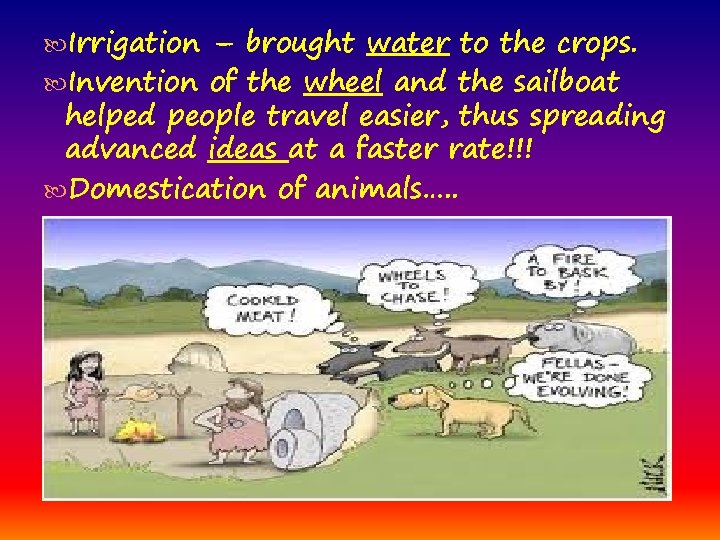
Irrigation – brought water to the crops. Invention of the wheel and the sailboat helped people travel easier, thus spreading advanced ideas at a faster rate!!! Domestication of animals…. .
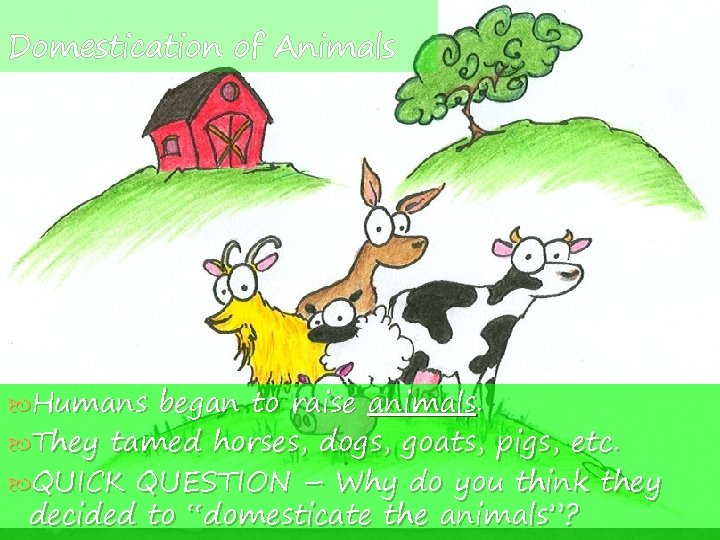
Domestication of Animals Humans began to raise animals. They tamed horses, dogs, goats, pigs, etc. QUICK QUESTION – Why do you think they decided to “domesticate the animals”?
Cities Form Civilizations What is a “civilization”? A CIVILIZATION is defined as a complex CULTURE with these FIVE CHARACTERISTICS: 1. Advanced cities 2. Specialized workers 3. Complex institutions 4. Record keeping 5. Improved technology
Civilization – 1. Advanced Cities Large POPULATION that serves as a CENTER OF TRADE for the surrounding area.
Civilization – 2. Specialized Workers QUICK QUESTION – Are people still spending their ENTIRE day “hunting & gathering”? Specialization: The development of skills needed for one specific kind of work. Artisans: Skilled workers who make goods by hand Name 3 examples….
Civilization – 3. Complex Institutions GOVERNMENT. SCHOOLS. RELIGIOUS INSTITUTIONS. ECONOMIC INSTITUTIONS.
Civilization – 4. Record Keeping POPULATION RECORDS births, deaths, etc. ECONOMIC RECORDS debts, payments, how much is sold, inventory. GOVERNMENT RECORDS elected officials, historical events, laws, calendars, etc. Scribes: People who used writing to keep records. Most highly educated in the city.
Civilization – 5. Improved Technology Improved technology provided new tools and methods to solve problems. Sail, plow, wheel, slash and burn farming, irrigation systems, etc.