
Chapter 1 The Evolution of Psychology The Science



- Slides: 34
Chapter 1 The Evolution of Psychology
The Science of Psychology n. Empiricism n. Scientific method n. Research methodology Table of Contents
Psychology Scientific study of behavior and mental processes –Basic research –Applied fields Table of Contents
Basic research Developmental 2. Social 3. Experimental 4. Physiological 1. Table of Contents
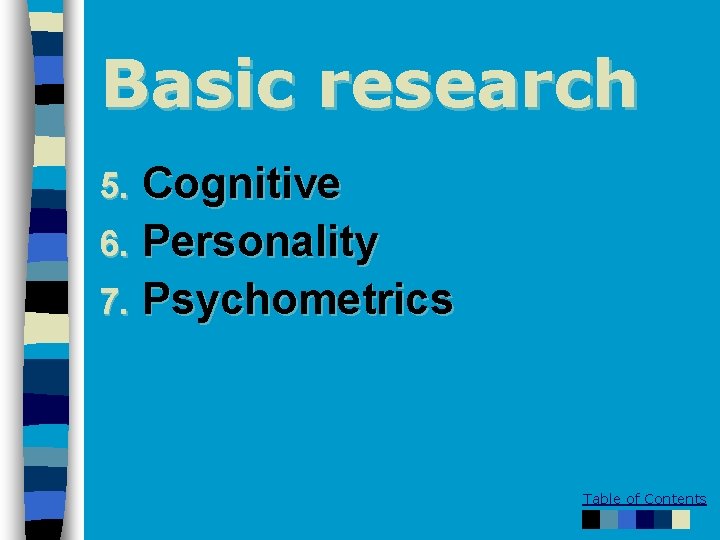
Basic research Cognitive 6. Personality 7. Psychometrics 5. Table of Contents
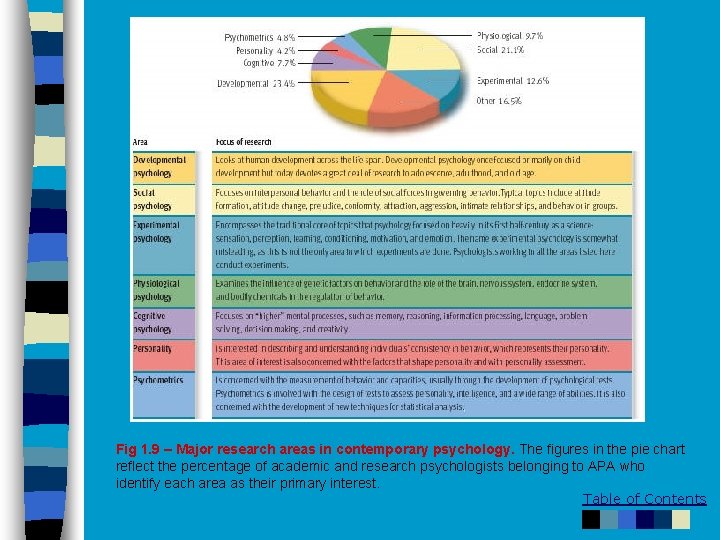
Fig 1. 9 – Major research areas in contemporary psychology. The figures in the pie chart reflect the percentage of academic and research psychologists belonging to APA who identify each area as their primary interest. Table of Contents
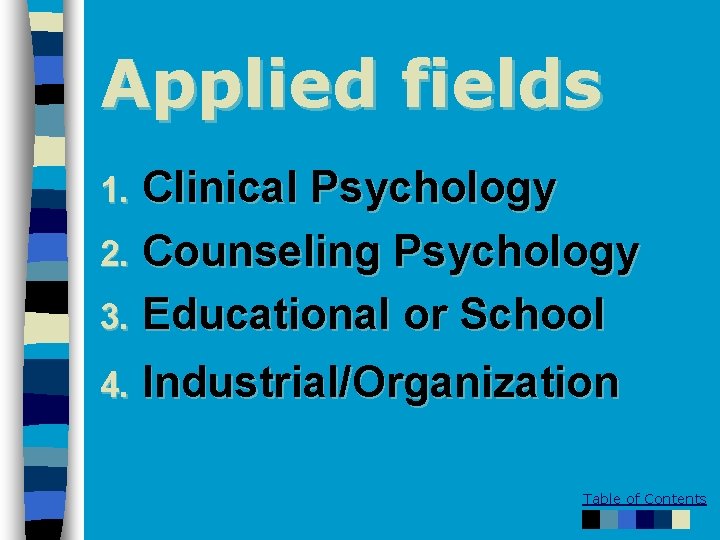
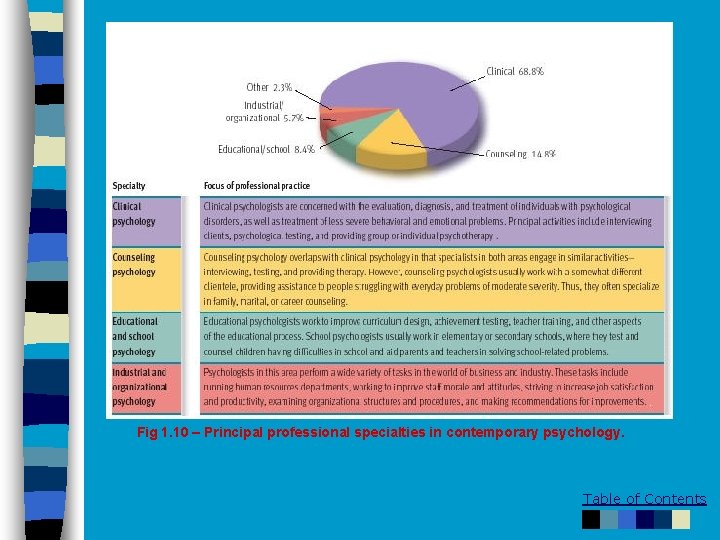
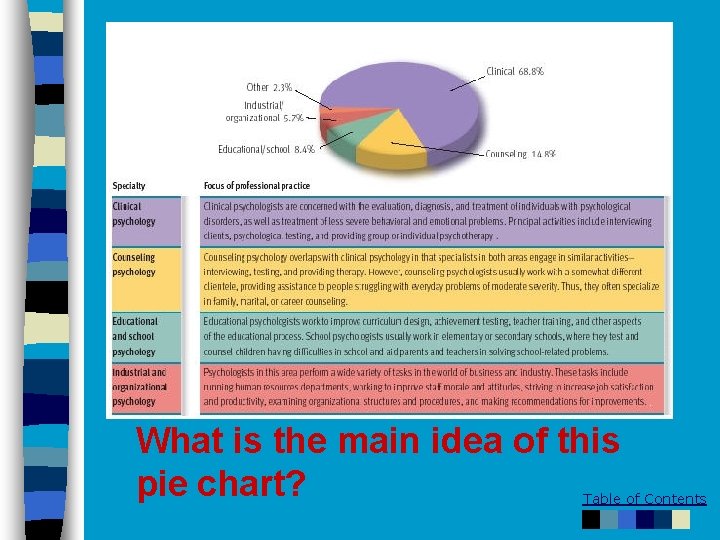
Applied fields Clinical Psychology 2. Counseling Psychology 3. Educational or School 1. 4. Industrial/Organization Table of Contents
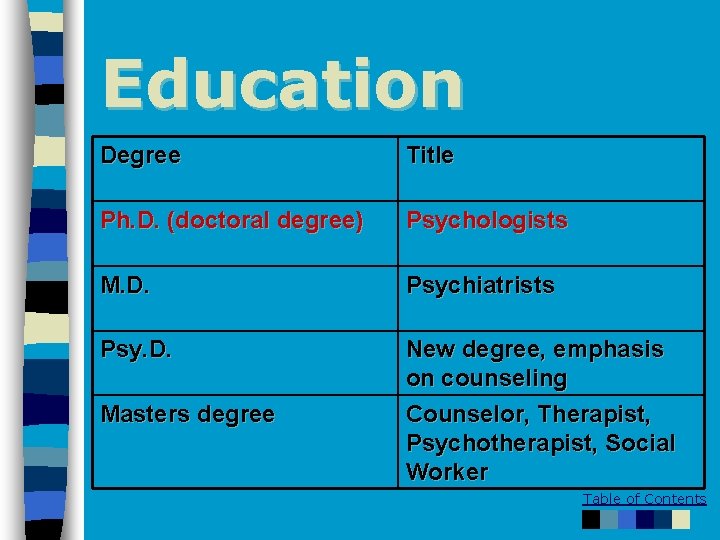
Education Degree Title Ph. D. (doctoral degree) Psychologists M. D. Psychiatrists Psy. D. New degree, emphasis on counseling Counselor, Therapist, Psychotherapist, Social Worker Masters degree Table of Contents
Fig 1. 10 – Principal professional specialties in contemporary psychology. Table of Contents
Important Tips These numbers are not up to date. You are responsible for the main idea, not the specific numbers. Table of Contents
What is the main idea of this pie chart? Table of Contents
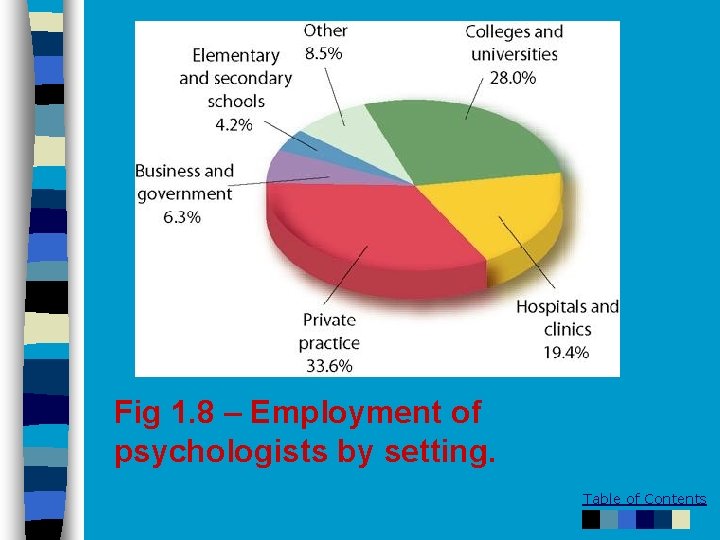
Fig 1. 8 – Employment of psychologists by setting. Table of Contents
Is this for me? www. psy. miami. edu n Internship for high school students n Come see me for details n Table of Contents
Psychology: Seven Organizing Themes 1. Empirical 2. Theoretically diverse 3. Sociohistorical context 4. Multiple causality 5. Shaped by cultural heritage 6. Heredity and environment 7. Subjective Table of Contents
The Science of Psychology n. Roots –Physiology –Philosophy n. Distinct discipline emerges Launch Video Table of Contents
First Laboratories n Wundt – 1832 -1920 – Germany n G. Stanley Hall – 1846 -1924 – United States at Johns Hopkins University (not just good at Lacrosse!) Table of Contents
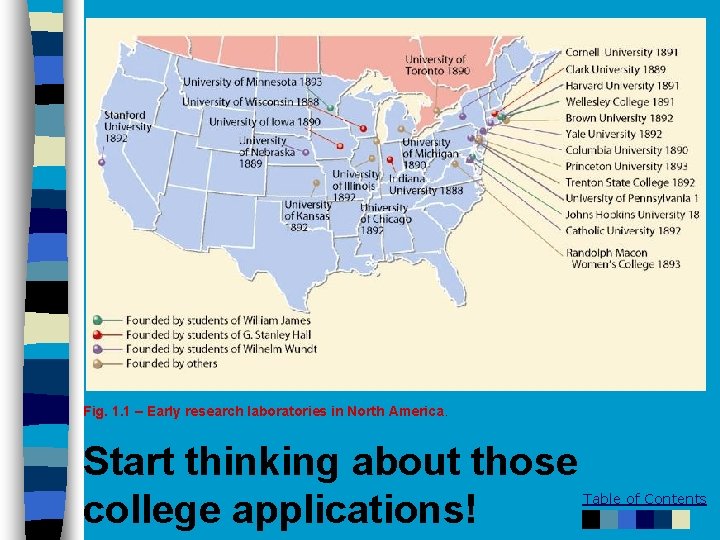
Fig. 1. 1 – Early research laboratories in North America. Start thinking about those college applications! Table of Contents
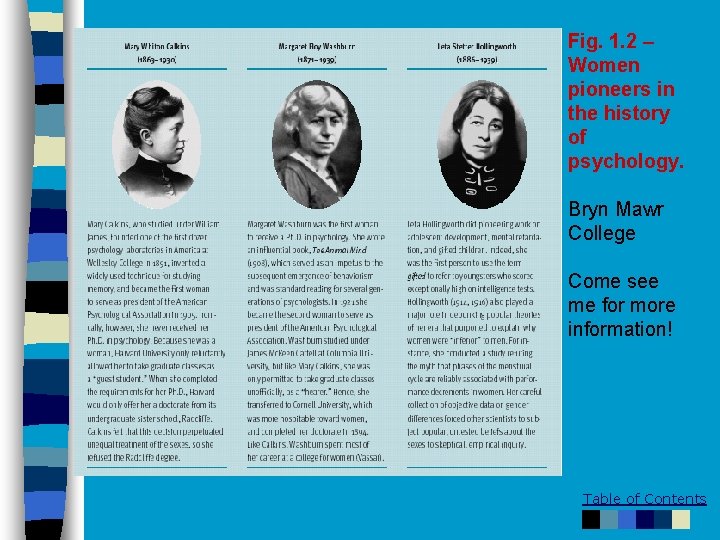
Fig. 1. 2 – Women pioneers in the history of psychology. Bryn Mawr College Come see me for more information! Table of Contents
Historical approaches n Structuralism –Edward Titchener –Introspection n Functionalism –William James –Focused on the function or purpose of consciousness Table of Contents
Contemporary approaches 1. 2. 3. 4. 5. 6. Behaviorism Psychoanalytic Humanistic Cognitive Biological Evolutionary Table of Contents
Behaviorism n. John B. Watson –(1878 -1958) –Founder n. Observable responses only Table of Contents
Behaviorism n. Nature over nurture n. Environment over heredity n. Important quotation, pg 6 Table of Contents
Psychoanalytic n. Sigmund Freud –(1856 -1939) –Austria n. Emphasis on unconscious processes Table of Contents
Controversy over Freud n Don’t throw the baby out with the bathwater – Introduced role of unconscious – Developmental approach – Emphasized the role of early childhood n Significant influence on the field of psychology Table of Contents
Controversy over Freud n In reaction to behaviorist n Psychodynamic versus Psychanalytic (strict) Table of Contents
Humanistic n Abraham Maslow (1908 -1970) n Carl Rogers (1902 -1987) n “Be all that you can be!” n Personal growth n Unconditional positive regard Table of Contents
Cognition n 1950’s and 60’s n. Piaget & Chomsky n. Internal mental processes n. Acquisition of knowledge Table of Contents
Biological Psychology Physiological processes –Brain, nervous system –Development –Anatomy of eye and ear –Role in psychopathology Table of Contents
Evolutionary Psychology n. Natural selection n. Darwin Table of Contents
Cultural Diversity n. Values, norms, beliefs n. Ethnocentrism – viewing one’s own group as superior and as the standard for judging Table of Contents
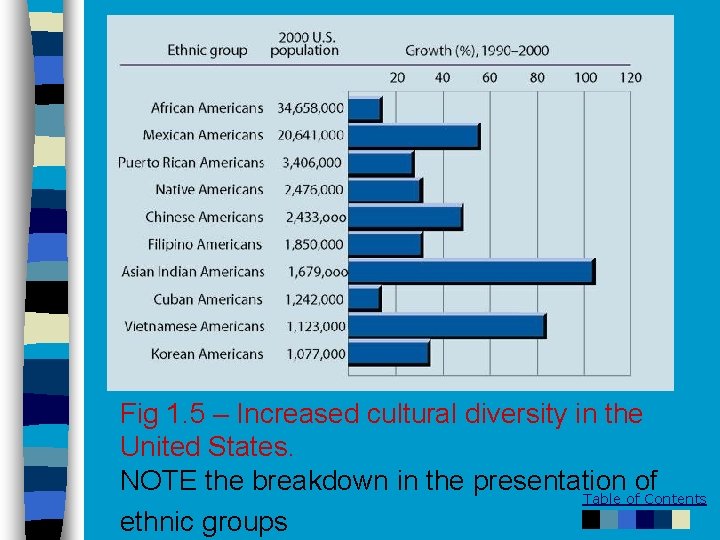
Fig 1. 5 – Increased cultural diversity in the United States. NOTE the breakdown in the presentation of Table of Contents ethnic groups
Cultural Diversity n. Major emphasis of –Research –Clinical work n. Be mindful! Table of Contents
Don’t skip n. Improving academic performance n. Developing critical thinking Table of Contents
Review n. Recap, page 34 n. Practice test, page 35 n. Website resources n. Study guide n. Princeton Review Table of Contents