
Chapter 1 THE EARTH AND ITS ATMOSPHERE Overview
- Slides: 47
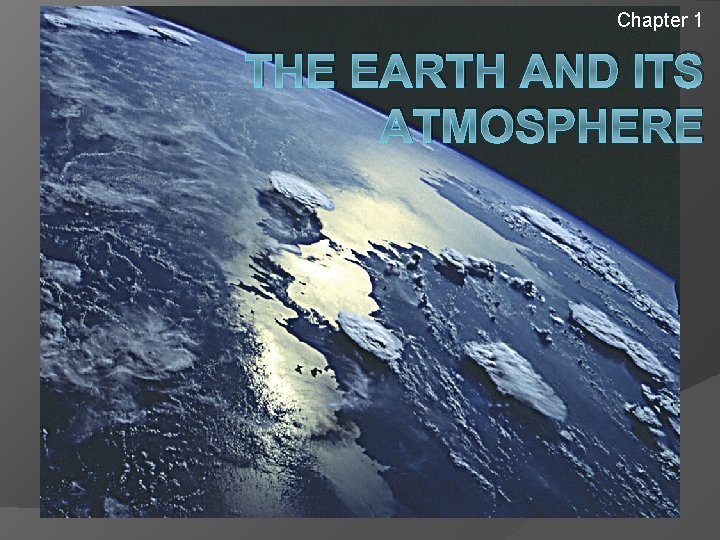
Chapter 1 THE EARTH AND ITS ATMOSPHERE
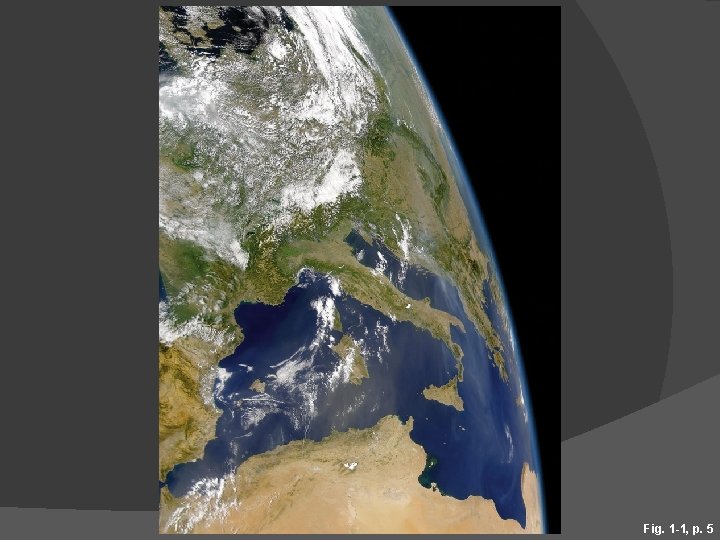
Overview of the Earth’s Atmosphere The atmosphere is a delicate life-giving blanket of air surrounding the Earth. Without the atmosphere the Earth would not have lakes or oceans. Radiant energy from the sun energizes the atmosphere driving day to day weather.
Fig. 1 -1, p. 5
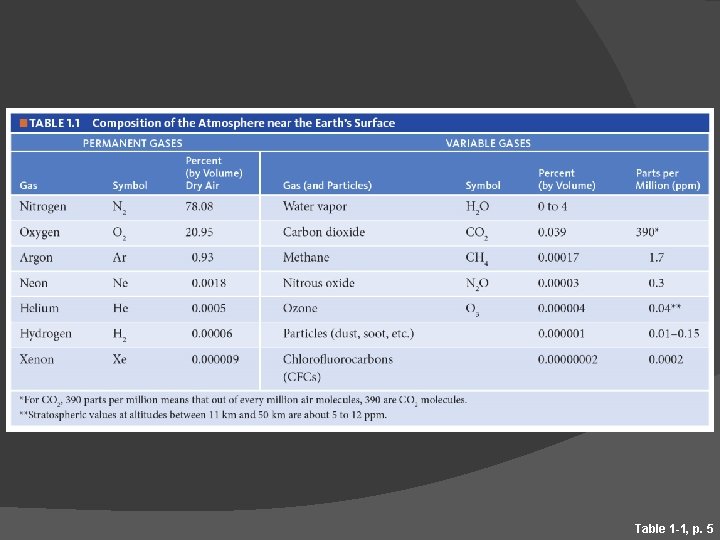
Overview of the Earth’s Atmosphere Composition 99% of the atmosphere is within 30 km of the Earth’s surface. N 2 78% and O 2 21% The percentages represent a constant amount of gas but cycles of destruction and production are constantly maintaining this amount.
Table 1 -1, p. 5
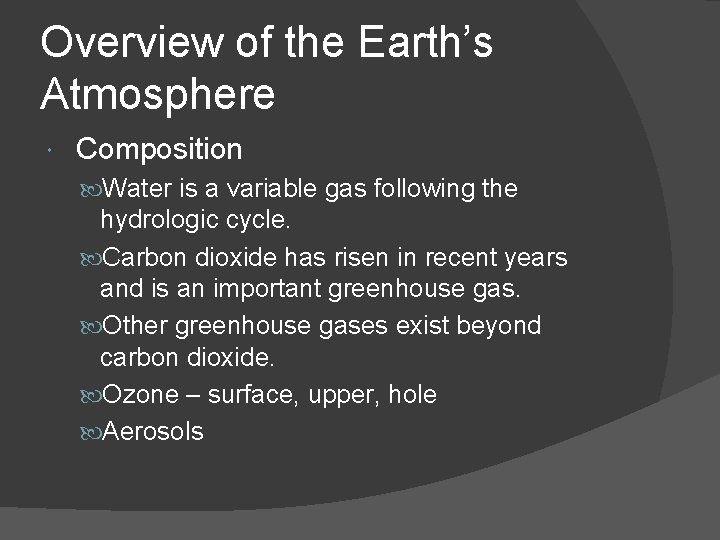
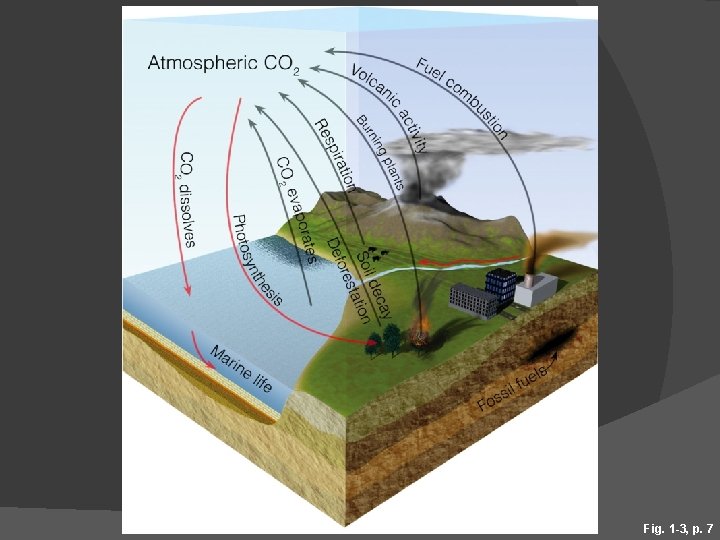
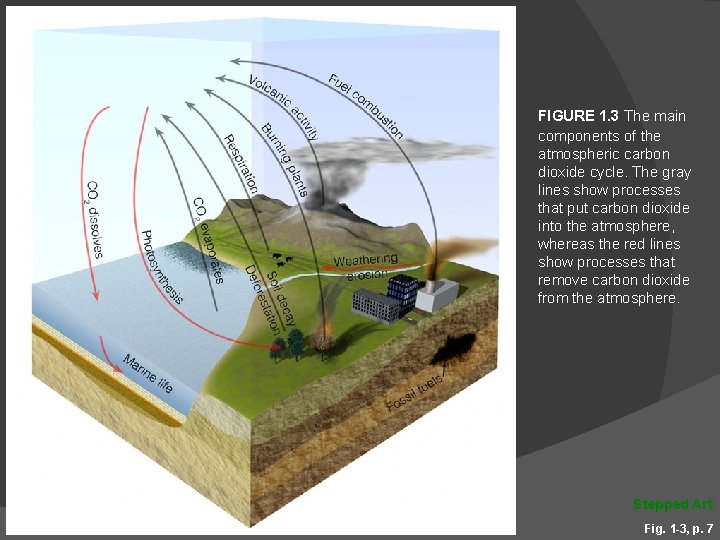
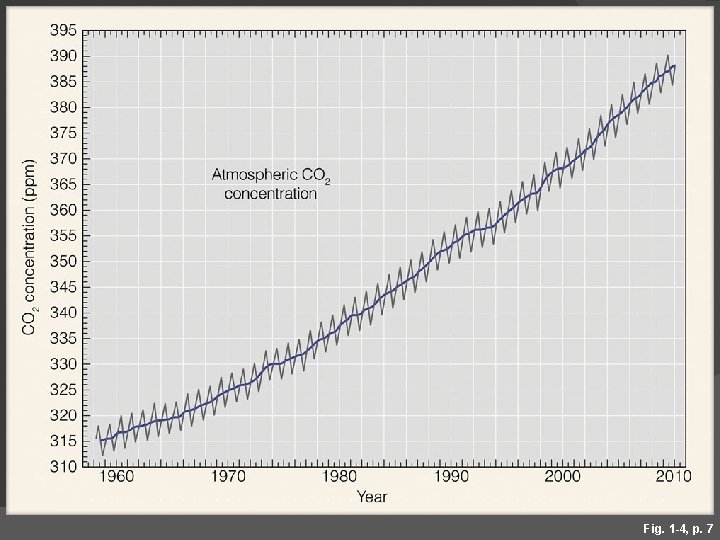
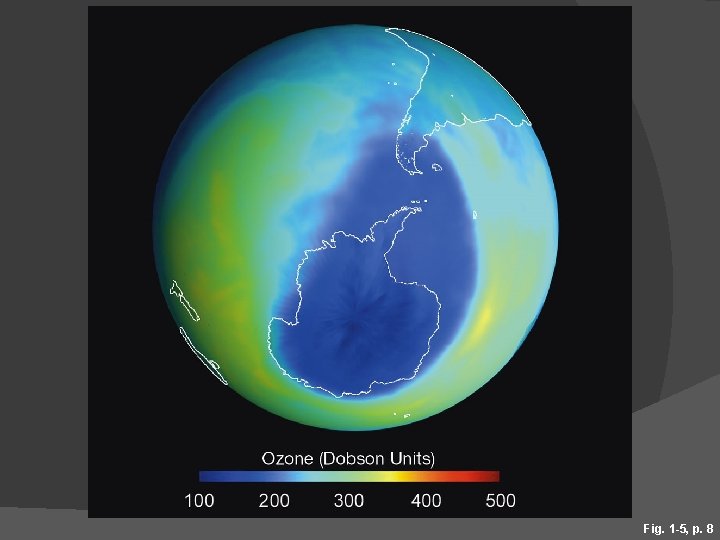
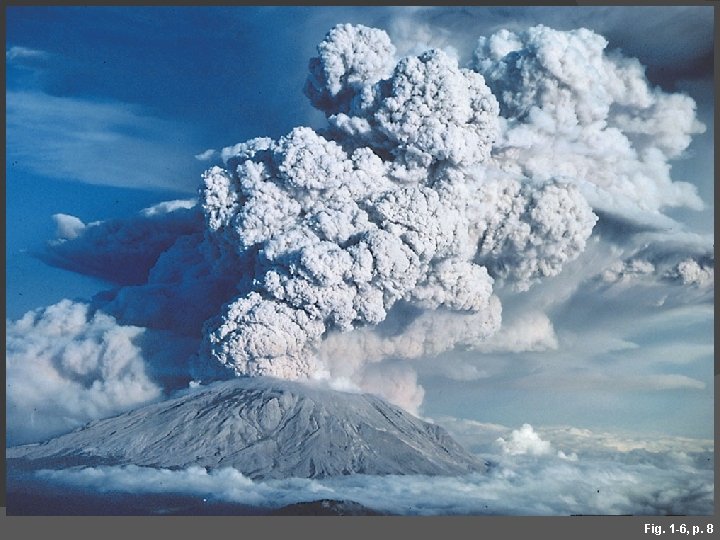
Overview of the Earth’s Atmosphere Composition Water is a variable gas following the hydrologic cycle. Carbon dioxide has risen in recent years and is an important greenhouse gas. Other greenhouse gases exist beyond carbon dioxide. Ozone – surface, upper, hole Aerosols
Fig. 1 -3, p. 7
FIGURE 1. 3 The main components of the atmospheric carbon dioxide cycle. The gray lines show processes that put carbon dioxide into the atmosphere, whereas the red lines show processes that remove carbon dioxide from the atmosphere. Stepped Art Fig. 1 -3, p. 7
Fig. 1 -4, p. 7
Fig. 1 -5, p. 8
Fig. 1 -6, p. 8
Overview of the Earth’s Atmosphere The Early Atmosphere The Earth’s first atmosphere was composed mostly of hydrogen and helium (most abundant gases in the universe). The atmosphere evolved due to outgassing of CO 2 and H 2 O from the cooling center of the Earth causing rain and eventually lakes and oceans. Lakes and oceans acted as a sink, absorbing CO 2 from atmosphere. Plants evolved producing oxygen to form our current atmosphere several 100 million ybp.
Overview of the Earth’s Atmosphere This video shows someone’s overview of the change in composition of earth’s atmosphere through time. The presenter shows what changed and lists reasons why it changed. Is it successful? Is it fun? http: //www. youtube. com/watch? v=Upvs. Uwx. Jg. YY&feature=pla yer_detailpage
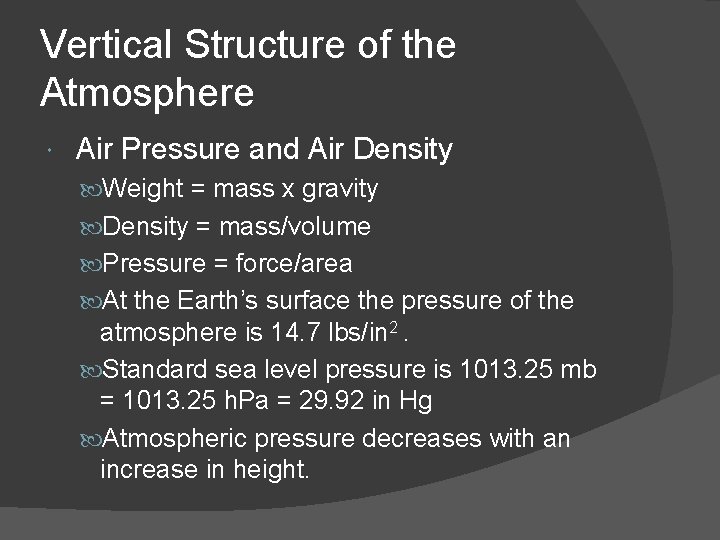
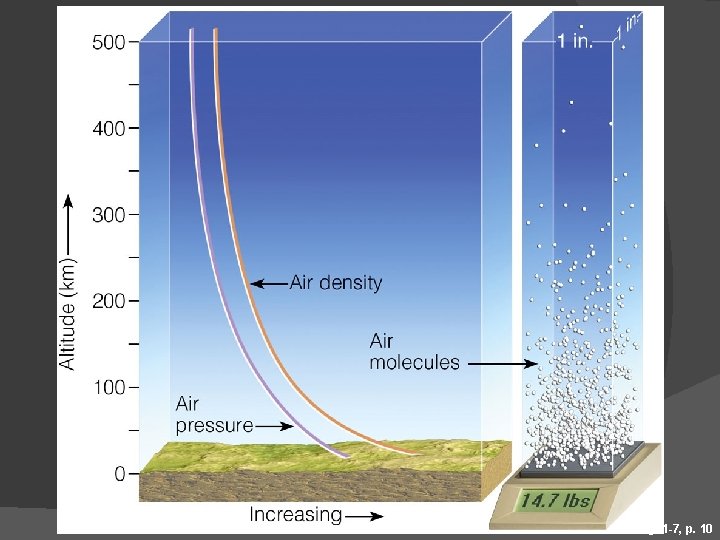
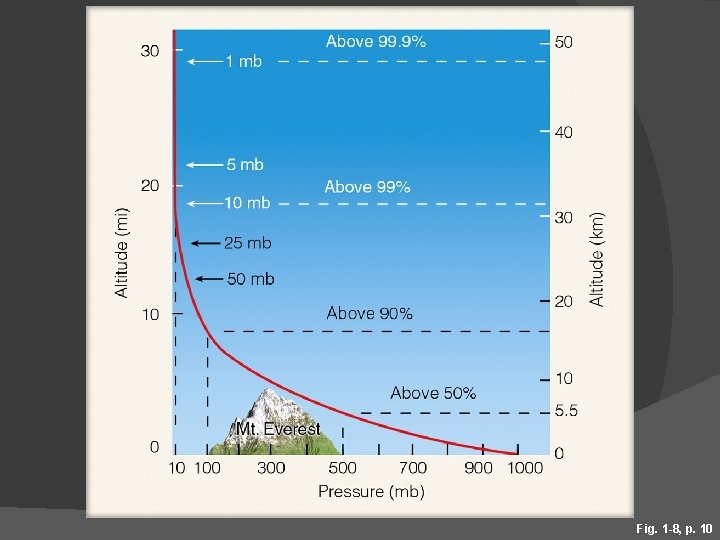
Vertical Structure of the Atmosphere Air Pressure and Air Density Weight = mass x gravity Density = mass/volume Pressure = force/area At the Earth’s surface the pressure of the atmosphere is 14. 7 lbs/in 2. Standard sea level pressure is 1013. 25 mb = 1013. 25 h. Pa = 29. 92 in Hg Atmospheric pressure decreases with an increase in height.
Fig. 1 -7, p. 10
Fig. 1 -8, p. 10
Vertical Structure of the Atmosphere This video describes why it is colder on top of mountains and warmer closer to sea level. Is it successful? Is it fun? http: //www. youtube. com/watch? v=g. GNx. Yt. T_36 I&list =FLA 8 rzat. Zrvu. FZS 5 jkp 0 Xv. Ig&index=3&feature=plpp _video
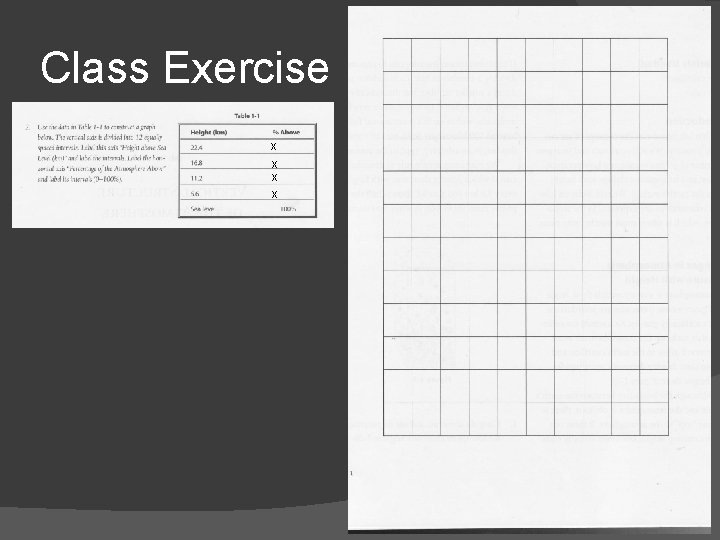
Class Exercise 1 Complete Table 1 -1 and then plot the data on the graph. Here is the “rule of thumb” you can use to complete the table: “For every 5. 6 km you ascend, there is half the atmospheric mass above you as when you started. ”
Class Exercise 1 X X
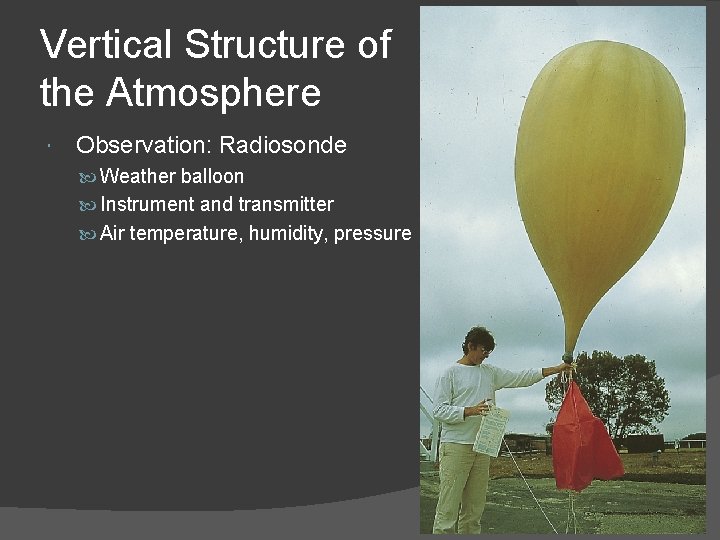
Vertical Structure of the Atmosphere Observation: Radiosonde Weather balloon Instrument and transmitter Air temperature, humidity, pressure
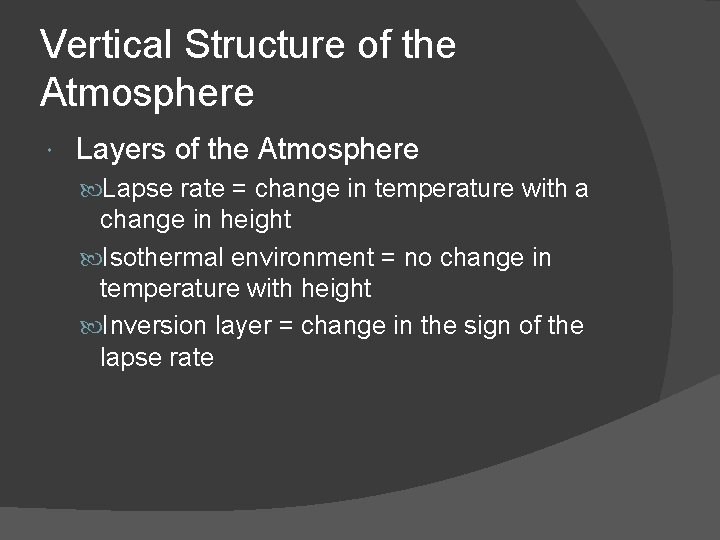
Vertical Structure of the Atmosphere Layers of the Atmosphere Lapse rate = change in temperature with a change in height Isothermal environment = no change in temperature with height Inversion layer = change in the sign of the lapse rate
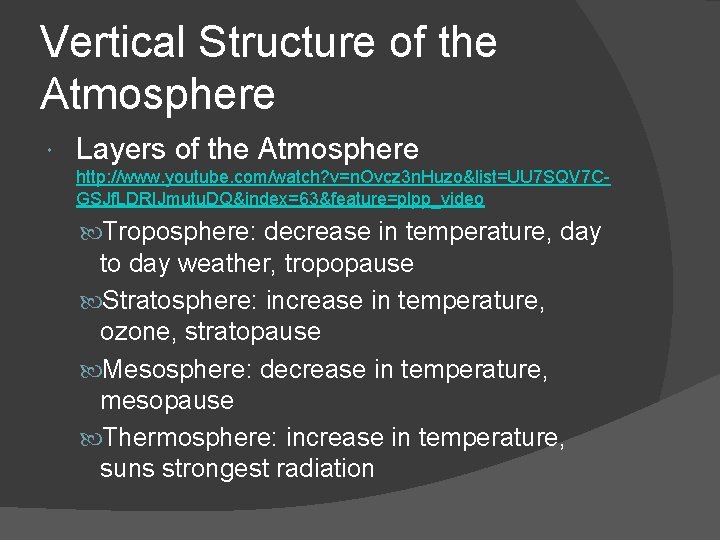
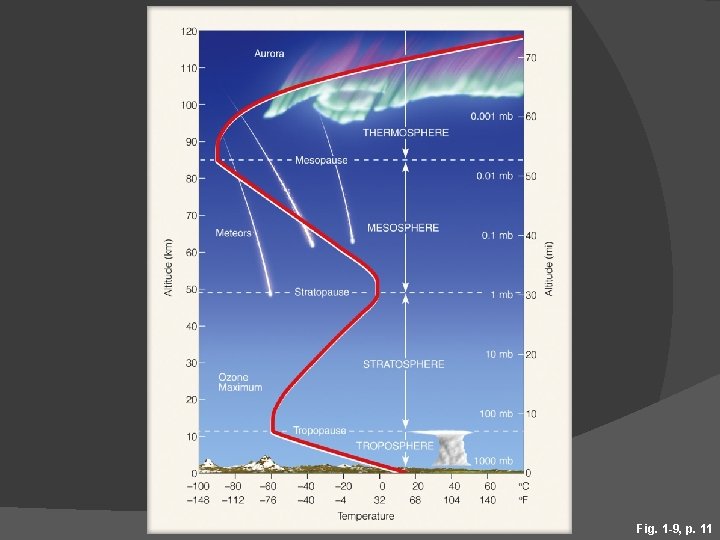
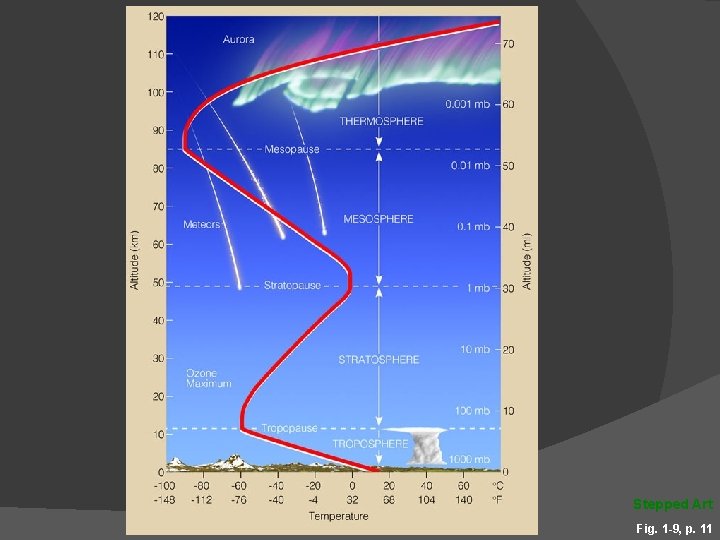
Vertical Structure of the Atmosphere Layers of the Atmosphere http: //www. youtube. com/watch? v=n. Ovcz 3 n. Huzo&list=UU 7 SQV 7 CGSJf. LDRIJmutu. DQ&index=63&feature=plpp_video Troposphere: decrease in temperature, day to day weather, tropopause Stratosphere: increase in temperature, ozone, stratopause Mesosphere: decrease in temperature, mesopause Thermosphere: increase in temperature, suns strongest radiation
Fig. 1 -9, p. 11
Stepped Art Fig. 1 -9, p. 11
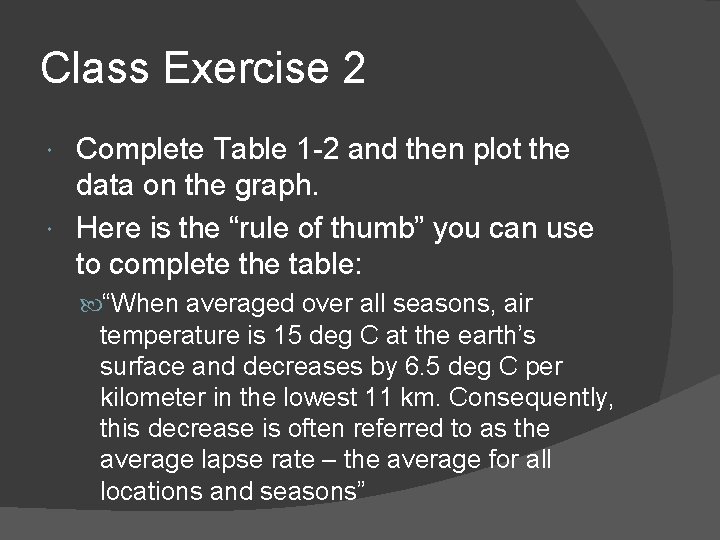
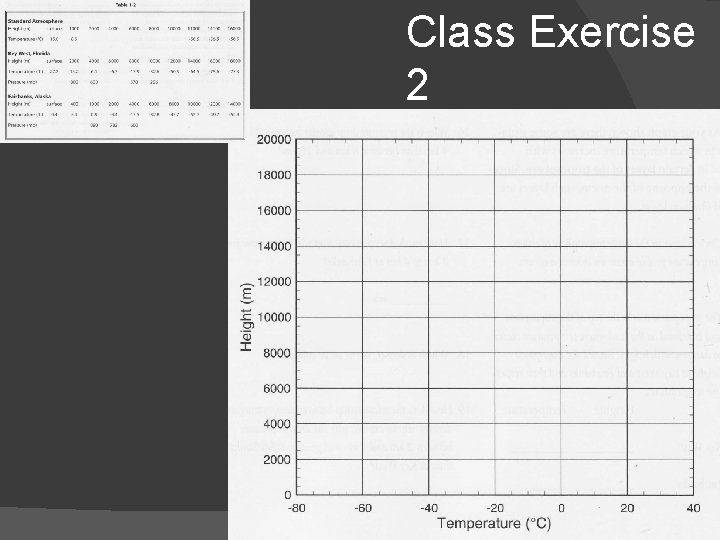
Class Exercise 2 Complete Table 1 -2 and then plot the data on the graph. Here is the “rule of thumb” you can use to complete the table: “When averaged over all seasons, air temperature is 15 deg C at the earth’s surface and decreases by 6. 5 deg C per kilometer in the lowest 11 km. Consequently, this decrease is often referred to as the average lapse rate – the average for all locations and seasons”
Class Exercise 2
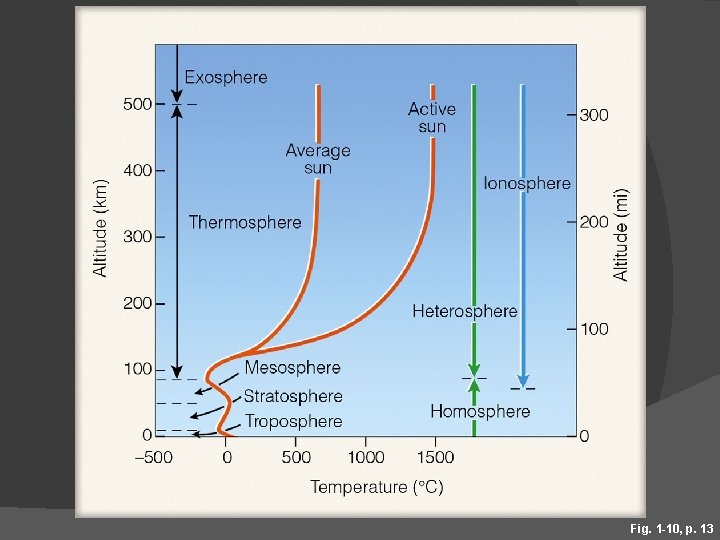
Fig. 1 -10, p. 13
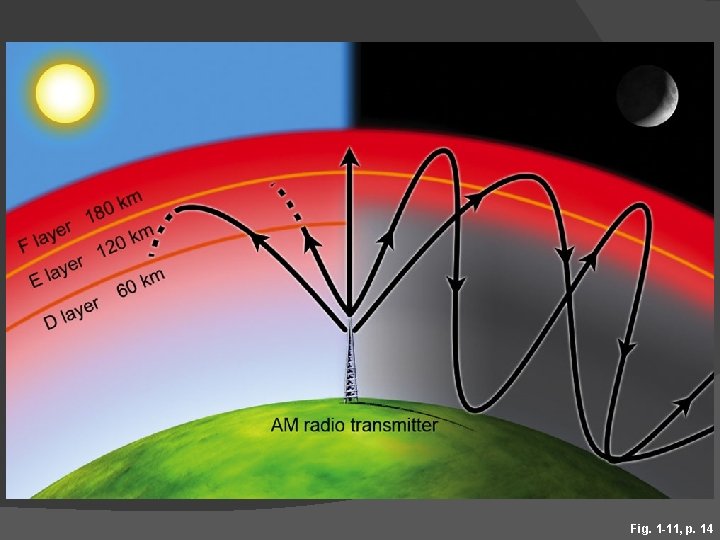
Vertical Structure of the Atmosphere The Ionosphere Not a true layer but an electrified region Ions = molecule with an additional or minus an electron Exists at the top of the atmosphere in thermosphere F, E, D layer Sun light creates layers, D disappears at night and less interference with AM radio transmissions
Fig. 1 -11, p. 14
BREAK TIME!, then…. Weather and Climate Weather: short term air temperature, air pressure, humidity, clouds, precipitation, visibility, and wind Climate: long term patterns and average weather; not just magnitude but also frequency
Weather and Climate Satellite’s View Geostationary satellite Meridians measure longitude (W-E) Parallels measure latitude (N-S) Weather maps: pressure cells, fronts, surface stations
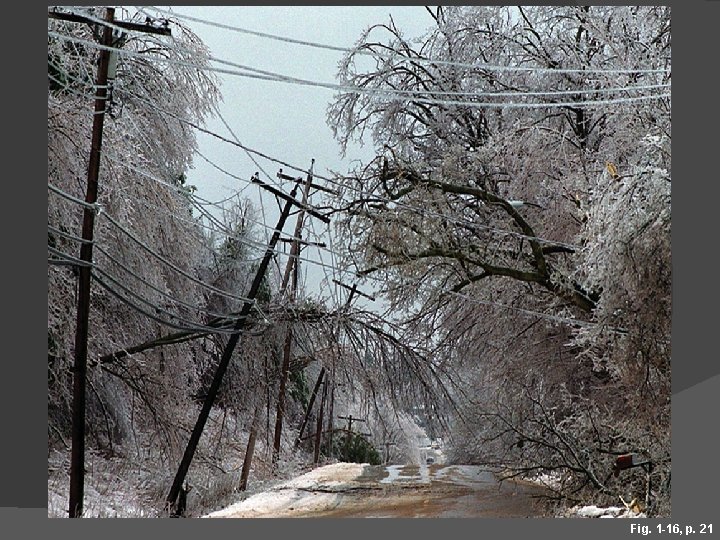
Fig. 1 -16, p. 21
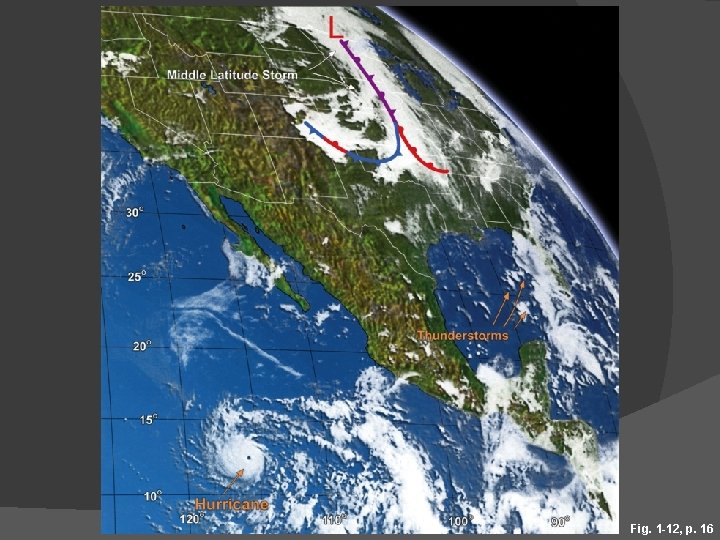
Weather and Climate Storms of All Sizes Middle-latitude cyclone Hurricane Thunderstorms Tornadoes
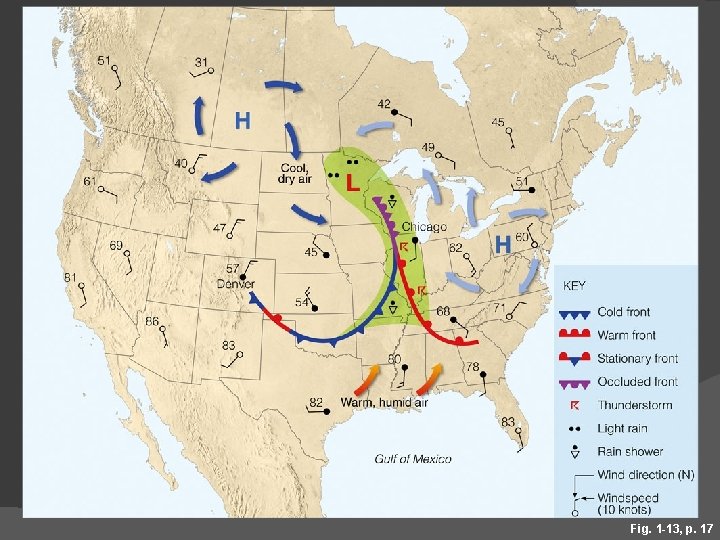
Weather and Climate A Look at the Weather Map Wind direction Wind speed Front
Fig. 1 -12, p. 16
“Fronts” A cold front is defined as the leading edge of a cooler mass of air, replacing (at ground level) a warmer mass of air, which lies within a fairly sharp surface trough of low pressure.
Fig. 1 -13, p. 17
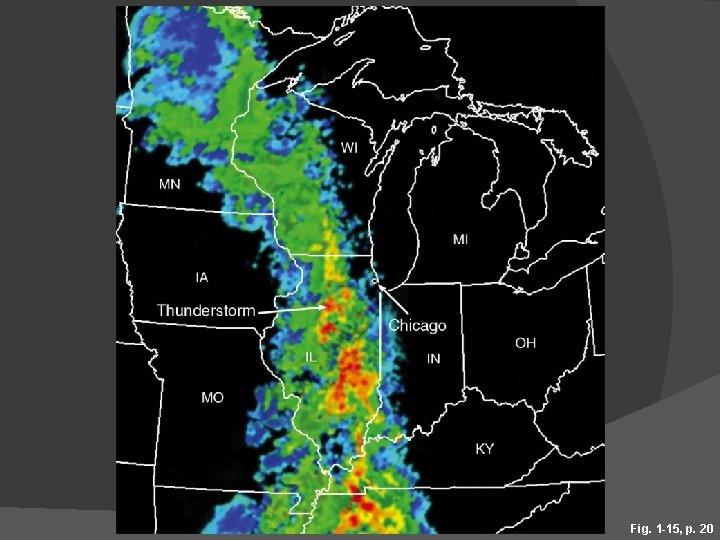
Fig. 1 -15, p. 20
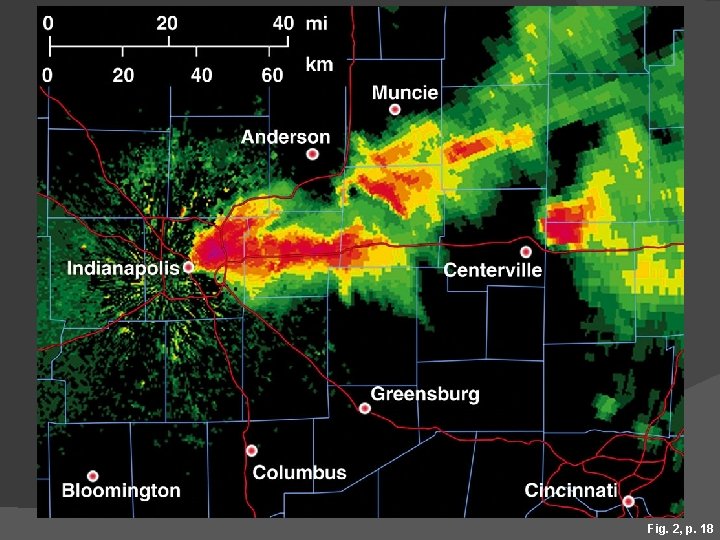
Fig. 2, p. 18
Weather and Climate Meteorology Study of the atmosphere and its phenomena Aristotle 340 B. C. Meterologica, meteoros: high in air 1843 telegraph 1920 s air masses 1940 s upper air 1950 s radar and computers 1960 s satellite
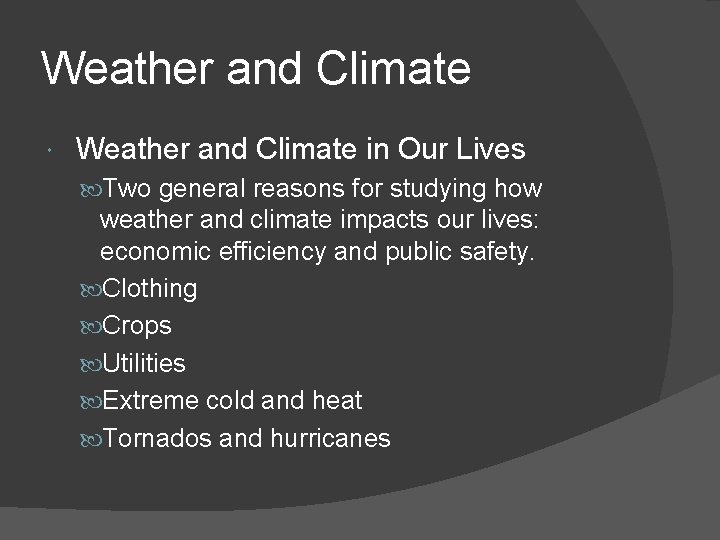
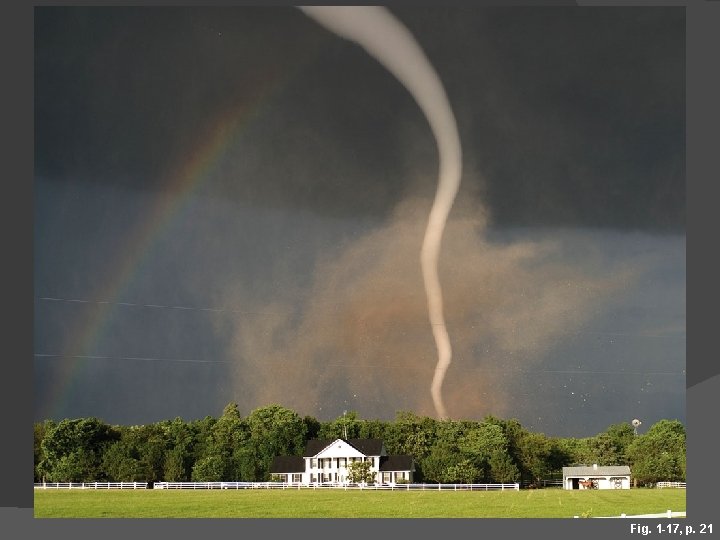
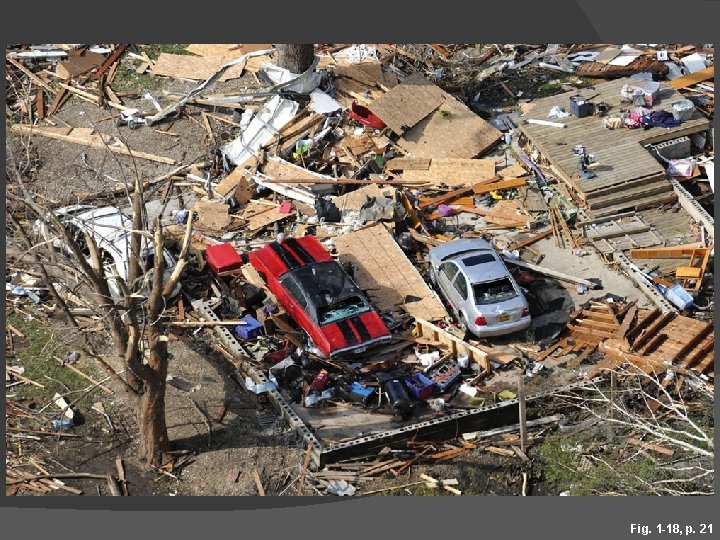
Weather and Climate in Our Lives Two general reasons for studying how weather and climate impacts our lives: economic efficiency and public safety. Clothing Crops Utilities Extreme cold and heat Tornados and hurricanes
Fig. 1 -17, p. 21
Fig. 1 -18, p. 21
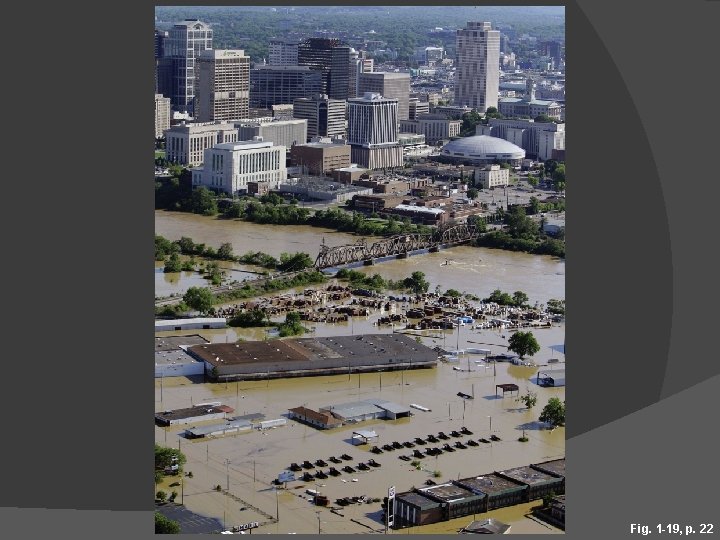
Fig. 1 -19, p. 22
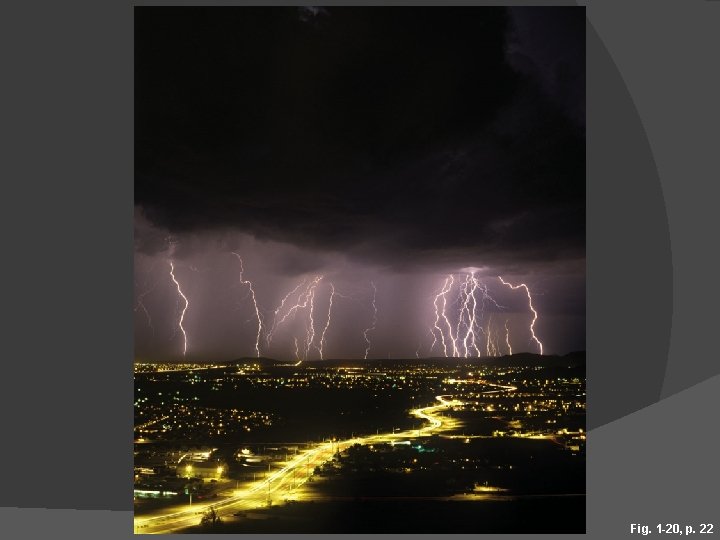
Fig. 1 -20, p. 22
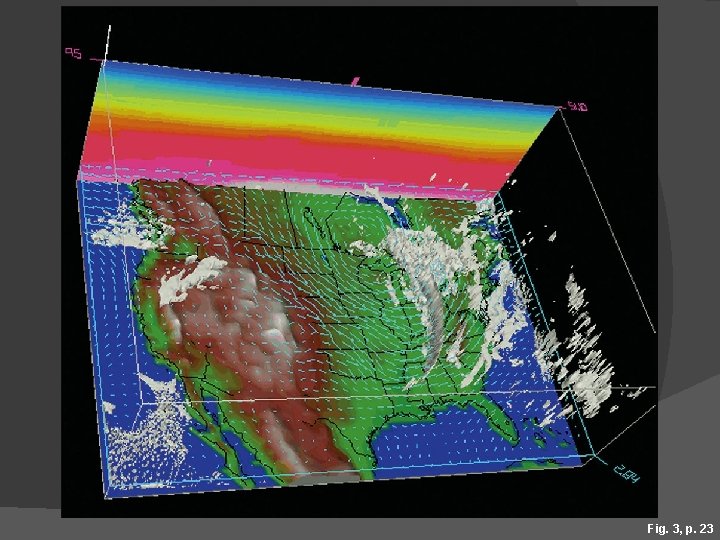
Fig. 3, p. 23
Weather and Climate Career: Meteorologist Any person with a college degree in meteorology or atmospheric science; not just the TV weather person Half of 9000 meteorologists employed by the US National Weather Service Researchers and operational meteorologists What is happening today in the southeastern United States? http: //weather. gov