
Chapter 1 Synthesis Gas and Methanol Synthesis Gas
- Slides: 18
Chapter 1 Synthesis Gas and Methanol • • Synthesis Gas CO H 2 Methanol 1
Petrochemical Products • 95% based upon oil or natural gas 2
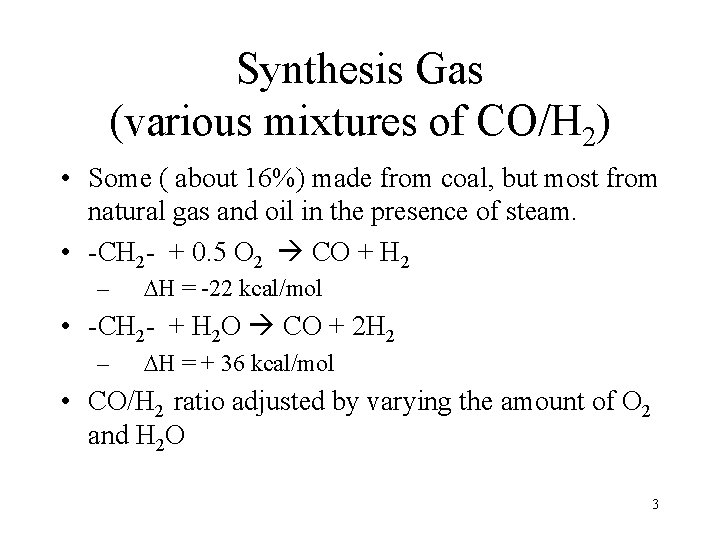
Synthesis Gas (various mixtures of CO/H 2) • Some ( about 16%) made from coal, but most from natural gas and oil in the presence of steam. • -CH 2 - + 0. 5 O 2 CO + H 2 – H = -22 kcal/mol • -CH 2 - + H 2 O CO + 2 H 2 – H = + 36 kcal/mol • CO/H 2 ratio adjusted by varying the amount of O 2 and H 2 O 3
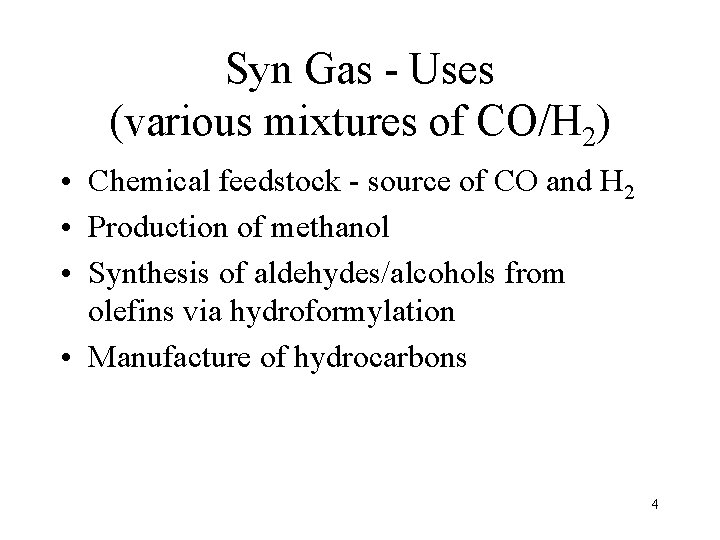
Syn Gas - Uses (various mixtures of CO/H 2) • Chemical feedstock - source of CO and H 2 • Production of methanol • Synthesis of aldehydes/alcohols from olefins via hydroformylation • Manufacture of hydrocarbons 4
CO separated from Syn Gas • One of three ways – Low temperature separation – Cu. Cl solution – Semipermeable membranes 5
Carbon Monoxide Separated from Syn Gas • By low temperature separation – CO 2 removed to 50 ppm by scrubbing with ethanolamine – CO 2 and H 2 O removed by molecular sieve adsorbents – Condense to separate CH 4 and CO from mixture ( -180 C, pressure) – Depressurize to distill the CO overhead 6
Carbon Monoxide Separated from Syn Gas • By CO absorption in Cu. Cl solution under pressure followed by desorption under reduced pressure. • By semipermeable membranes 7
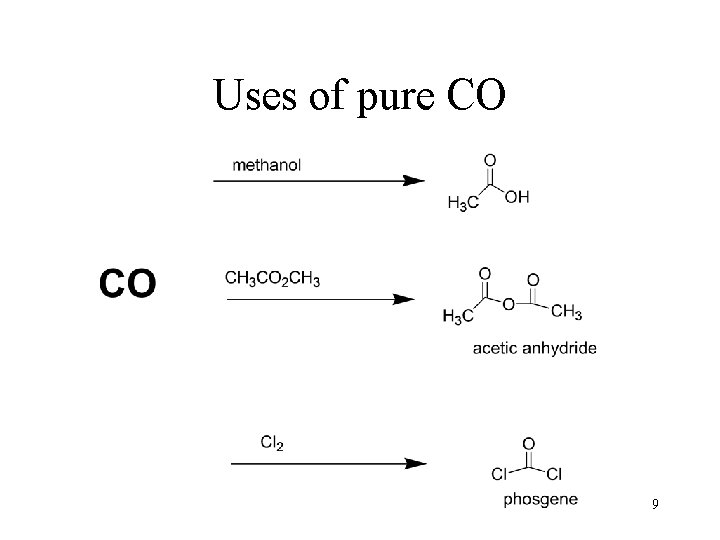
Uses of pure CO • Carbonylation of methanol to acetic acid • Carbonylaton of methyl acetate to acetic anhydride • Reaction with Cl 2 to produce phosgene. 8
Uses of pure CO 9
H 2 • About 50 million tons manufactured worldwide 10
H 2 • About 50 million tons manufactured worldwide Think about this!!! 11
H 2 • About 50 million tons manufactured worldwide Think about this!!! At a U. S. population of 285 million, that is as if every man, woman and child in the U. S. each produced about 400 pounds each year. 12
H 2 • About 50 million tons manufactured worldwide • From syn gas by any of: – Low temperature fractional condensation – Pressure swing absorption of impurities on zeolite – Separation with semipermeable membranes 13
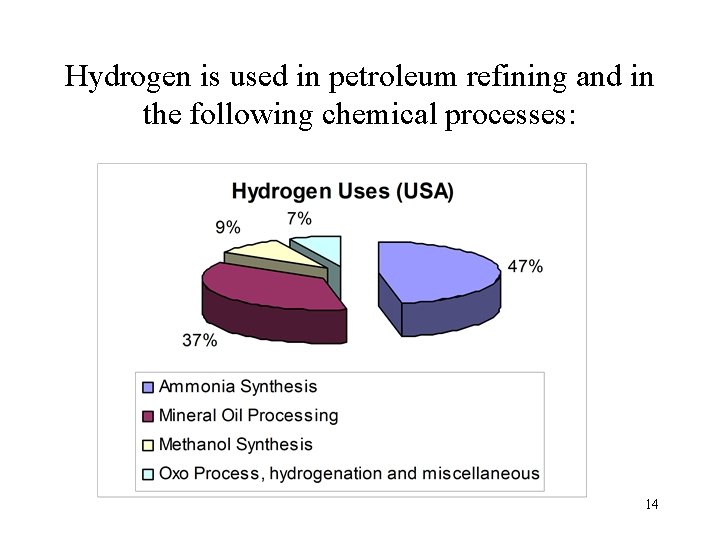
Hydrogen is used in petroleum refining and in the following chemical processes: 14
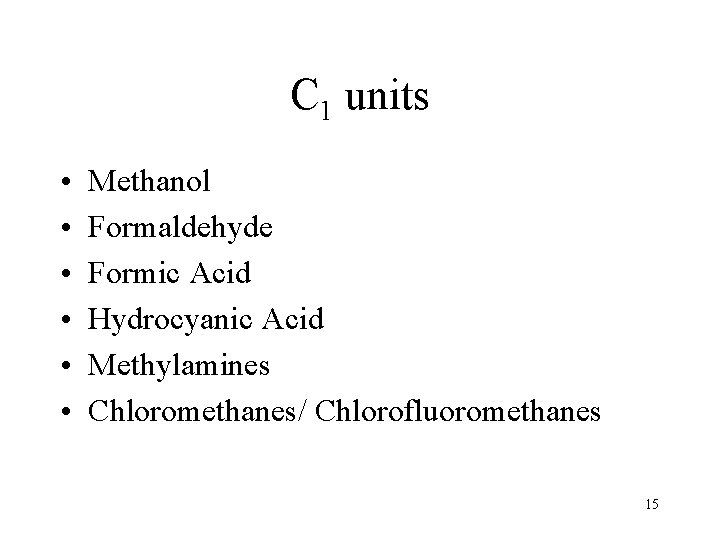
C 1 units • • • Methanol Formaldehyde Formic Acid Hydrocyanic Acid Methylamines Chloromethanes/ Chlorofluoromethanes 15
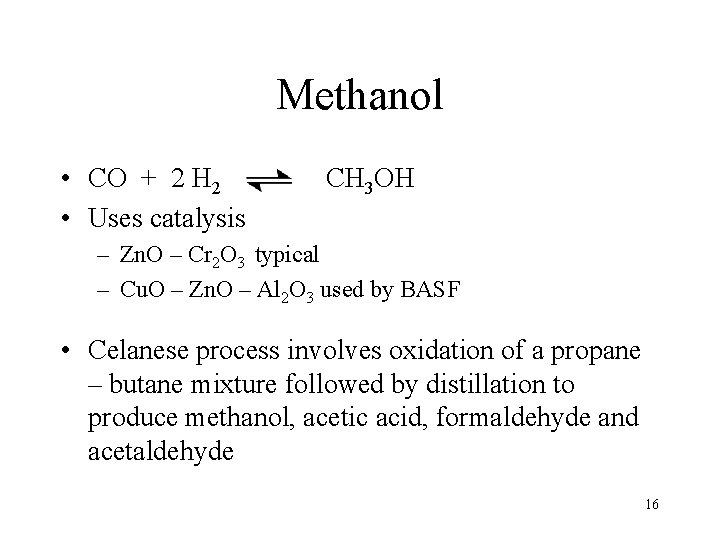
Methanol • CO + 2 H 2 • Uses catalysis CH 3 OH – Zn. O – Cr 2 O 3 typical – Cu. O – Zn. O – Al 2 O 3 used by BASF • Celanese process involves oxidation of a propane – butane mixture followed by distillation to produce methanol, acetic acid, formaldehyde and acetaldehyde 16
Methanol • 2. 8 billion gallons per year produced in the U. S. • http: //www. the-innovationgroup. com/chemprofile. htm • Check out this web site! 17
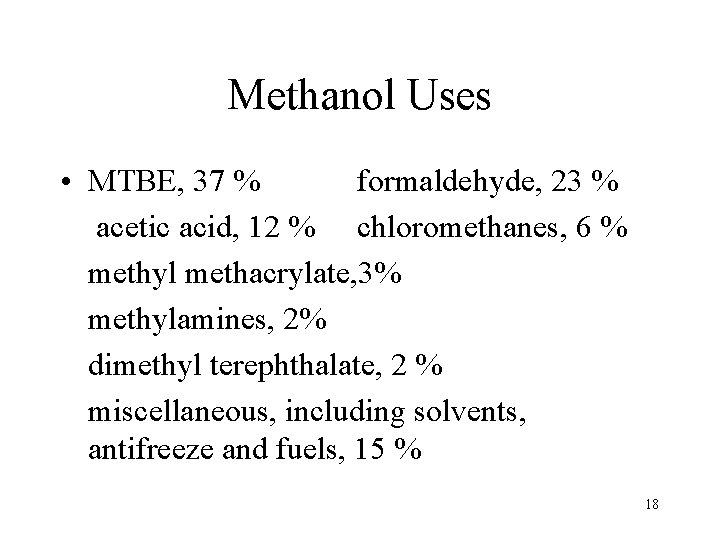
Methanol Uses • MTBE, 37 % formaldehyde, 23 % acetic acid, 12 % chloromethanes, 6 % methyl methacrylate, 3% methylamines, 2% dimethyl terephthalate, 2 % miscellaneous, including solvents, antifreeze and fuels, 15 % 18