
Chapter 1 Sovereign debt Percentage of GDP Chart

Chapter 1
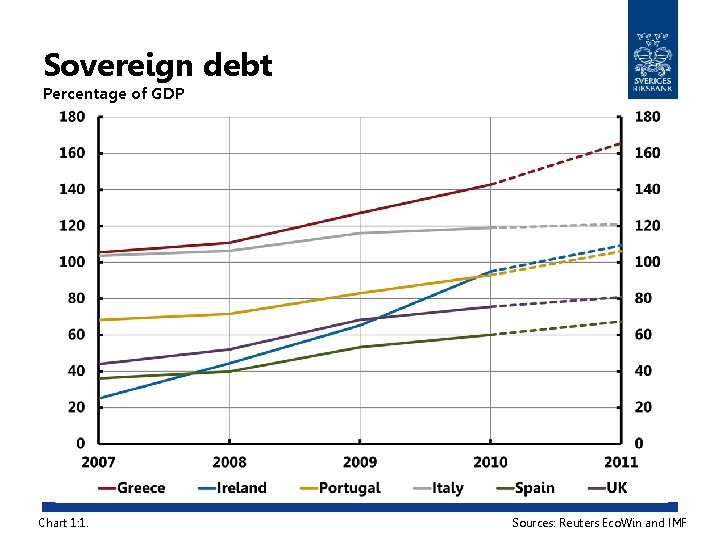
Sovereign debt Percentage of GDP Chart 1: 1. Sources: Reuters Eco. Win and IMF

Public finance deficits Percentage of GDP Chart 1: 2. Source: Reuters Ecowin
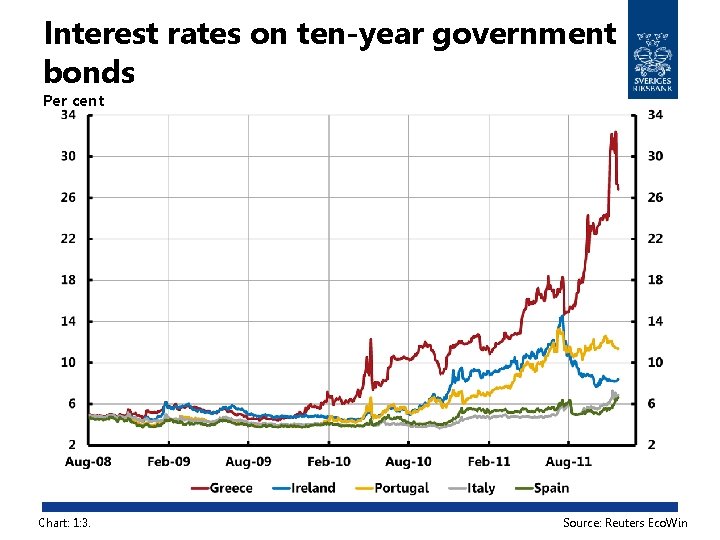
Interest rates on ten-year government bonds Per cent Chart: 1: 3. Source: Reuters Eco. Win
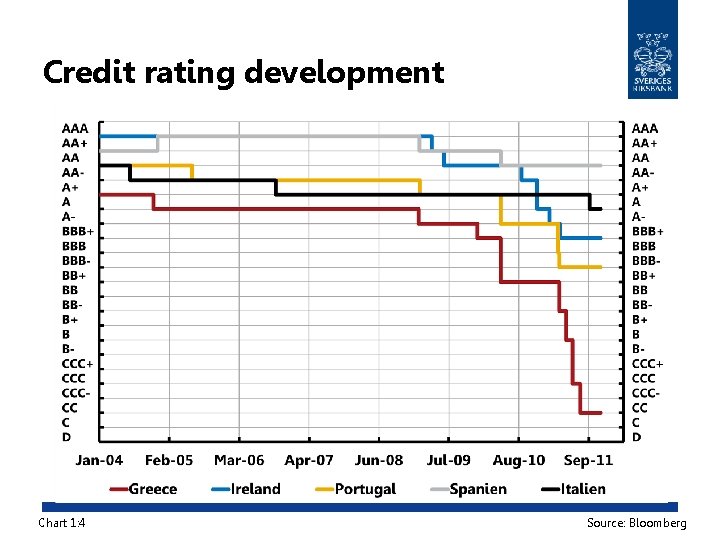
Credit rating development Chart 1: 4 Source: Bloomberg
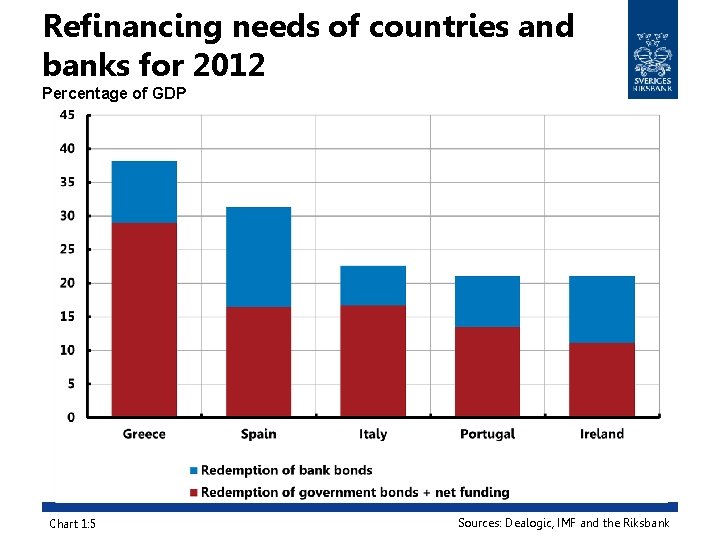
Refinancing needs of countries and banks for 2012 Percentage of GDP Chart 1: 5 Sources: Dealogic, IMF and the Riksbank
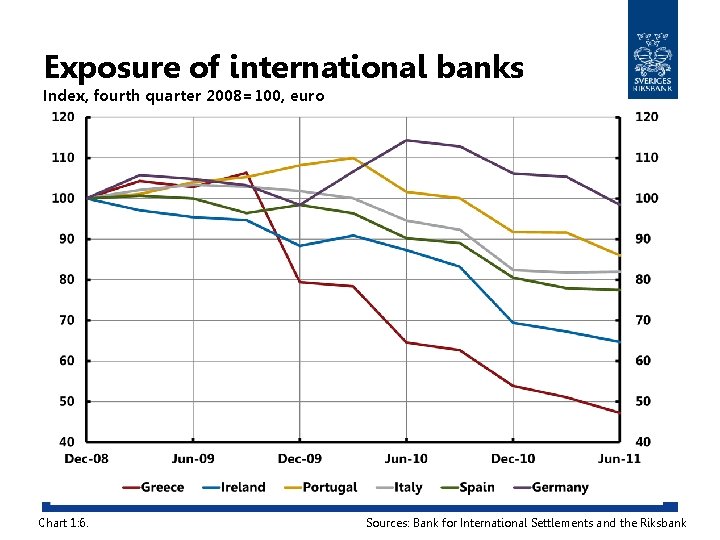
Exposure of international banks Index, fourth quarter 2008=100, euro Chart 1: 6. Sources: Bank for International Settlements and the Riksbank
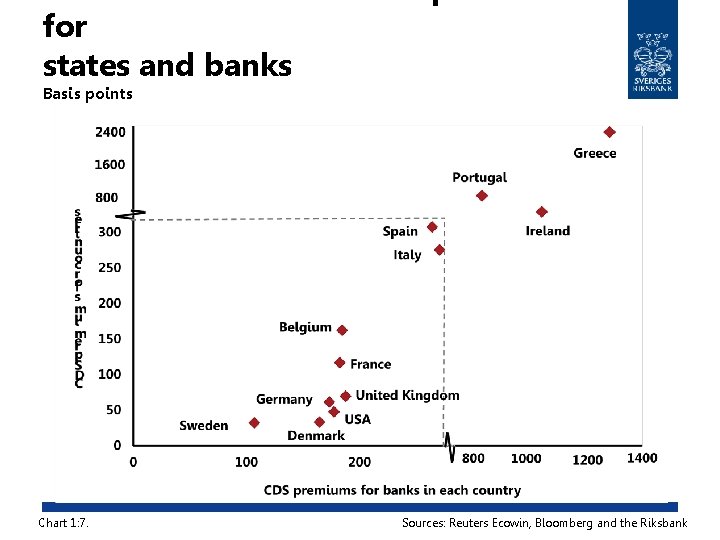
for states and banks Basis points Chart 1: 7. Sources: Reuters Ecowin, Bloomberg and the Riksbank
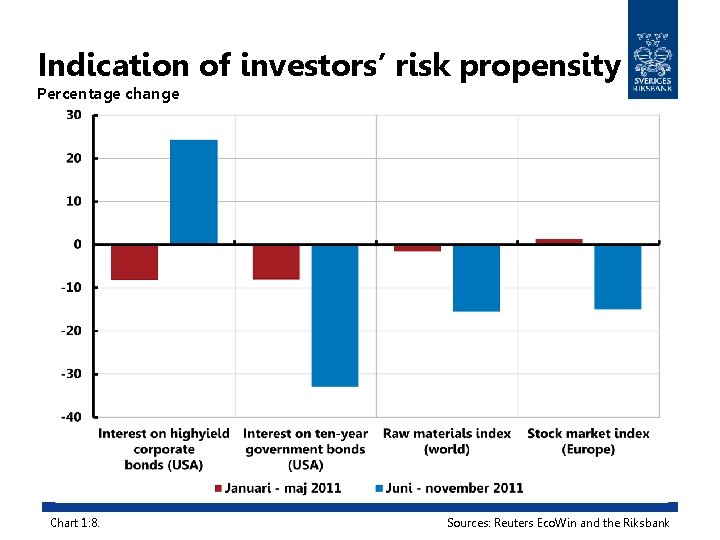
Indication of investors’ risk propensity Percentage change Chart 1: 8. Sources: Reuters Eco. Win and the Riksbank
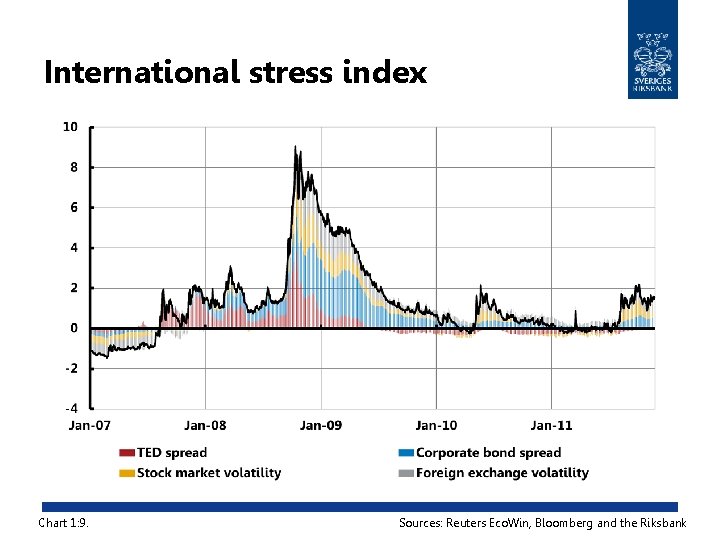
International stress index Chart 1: 9. Sources: Reuters Eco. Win, Bloomberg and the Riksbank
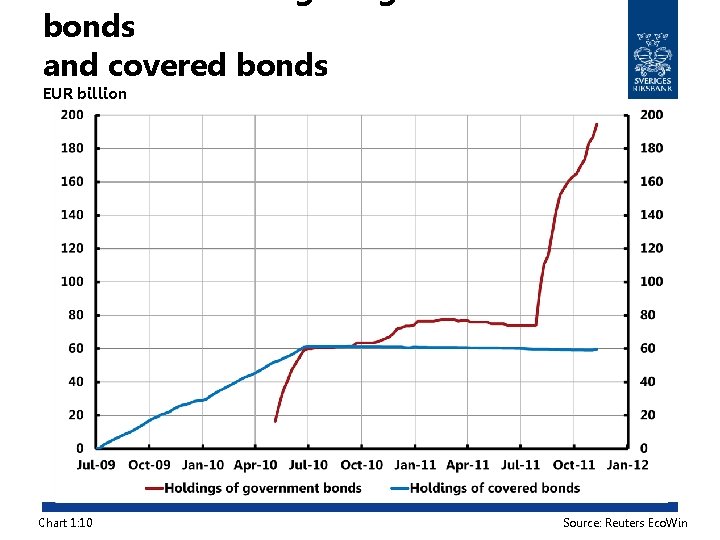
bonds and covered bonds EUR billion Chart 1: 10 Source: Reuters Eco. Win
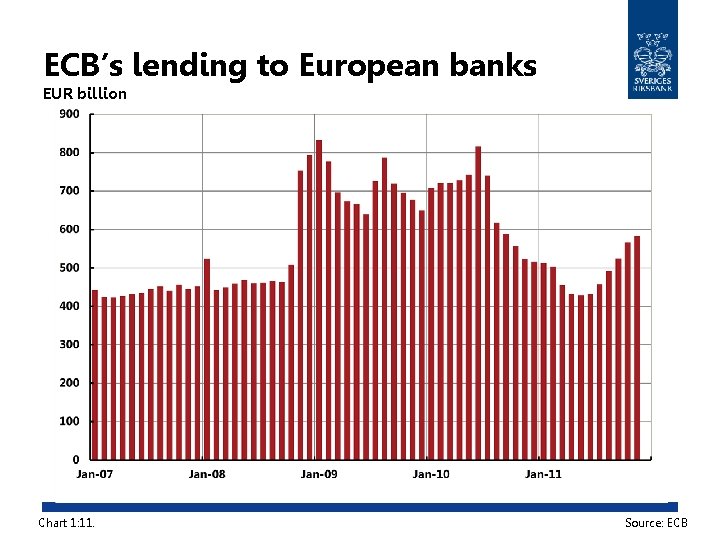
ECB’s lending to European banks EUR billion Chart 1: 11. Source: ECB
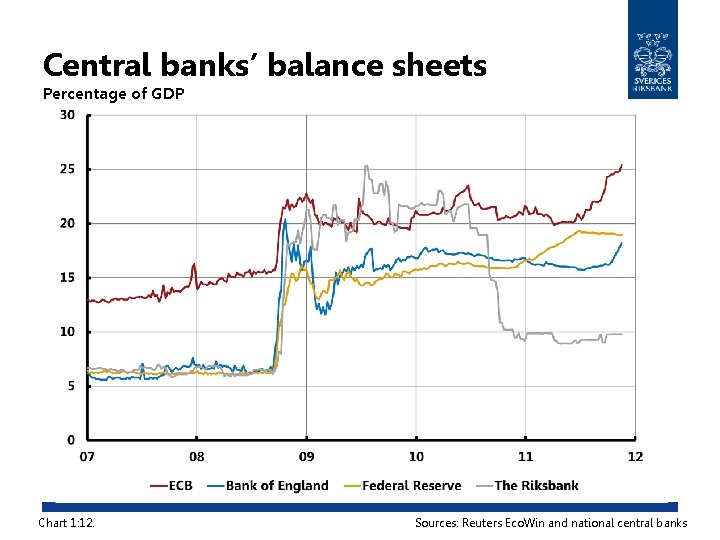
Central banks’ balance sheets Percentage of GDP Chart 1: 12. Sources: Reuters Eco. Win and national central banks
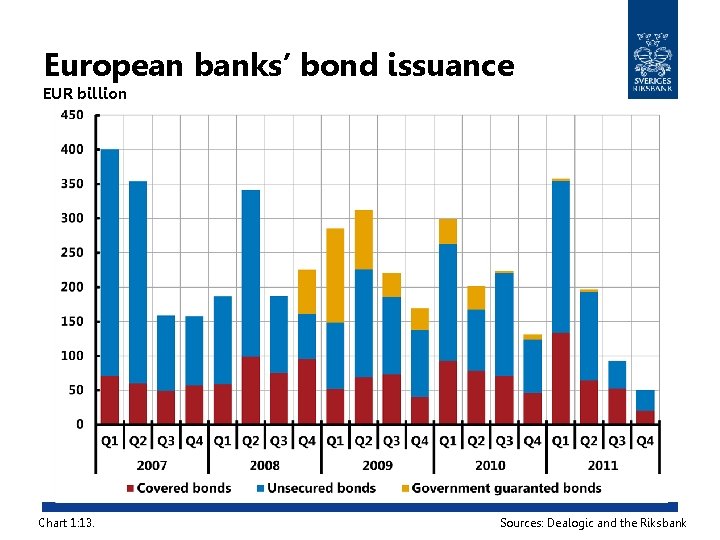
European banks’ bond issuance EUR billion Chart 1: 13. Sources: Dealogic and the Riksbank
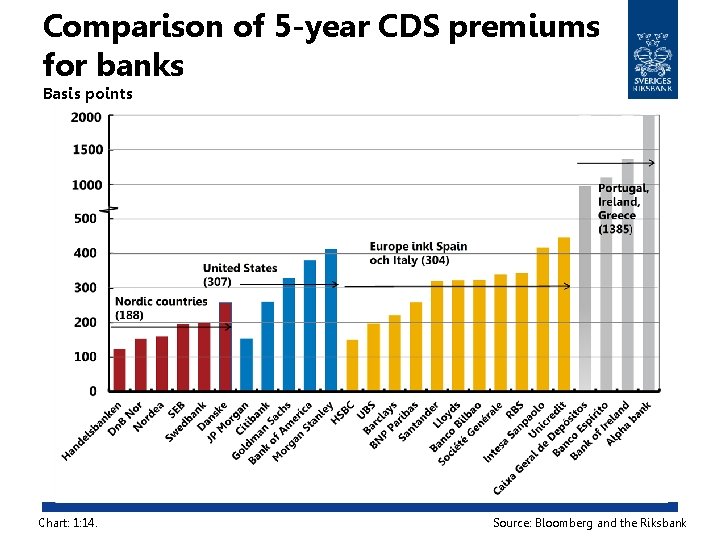
Comparison of 5 -year CDS premiums for banks Basis points Chart: 1: 14. Source: Bloomberg and the Riksbank
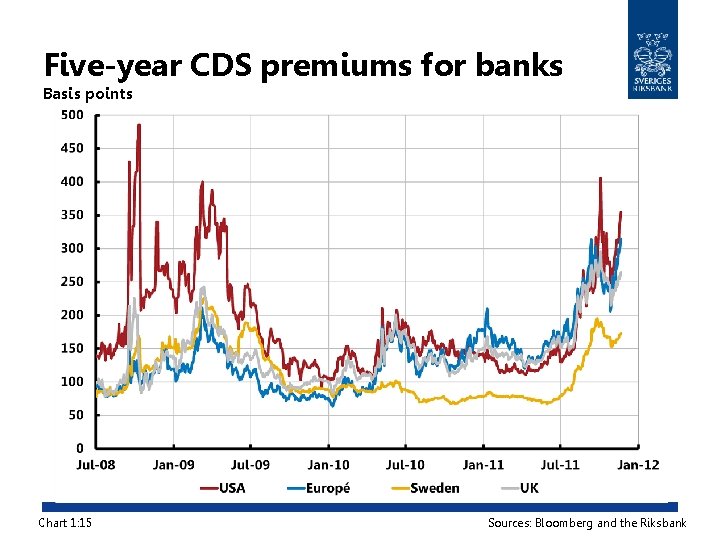
Five-year CDS premiums for banks Basis points Chart 1: 15 Sources: Bloomberg and the Riksbank
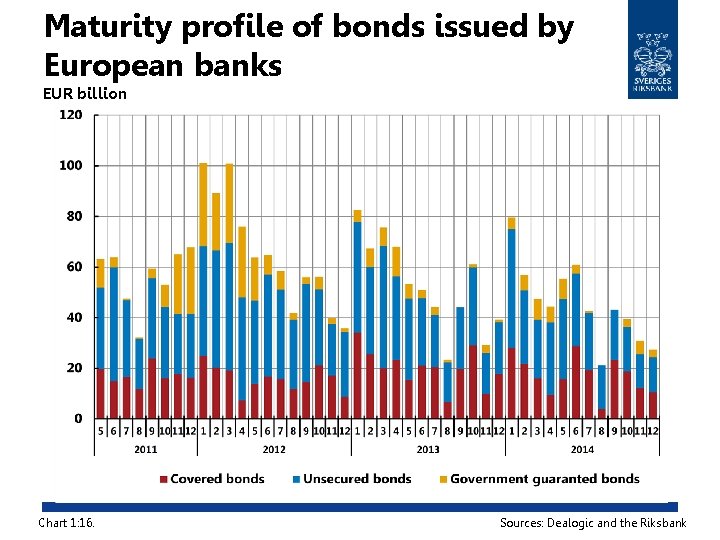
Maturity profile of bonds issued by European banks EUR billion Chart 1: 16. Sources: Dealogic and the Riksbank
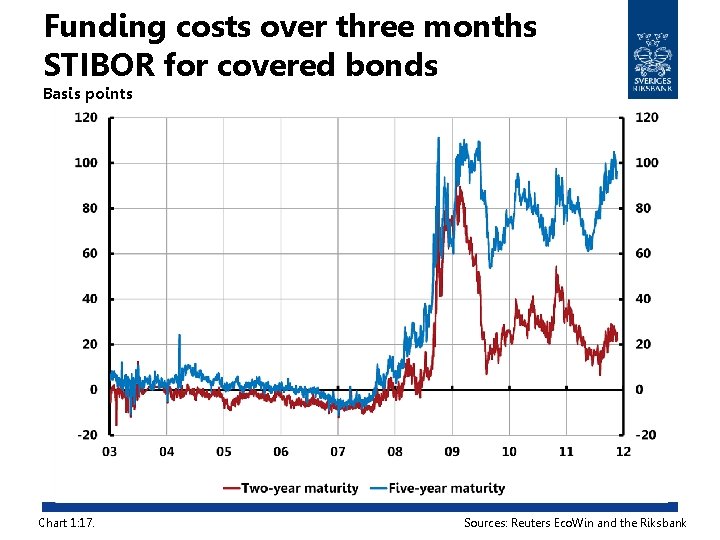
Funding costs over three months STIBOR for covered bonds Basis points Chart 1: 17. Sources: Reuters Eco. Win and the Riksbank
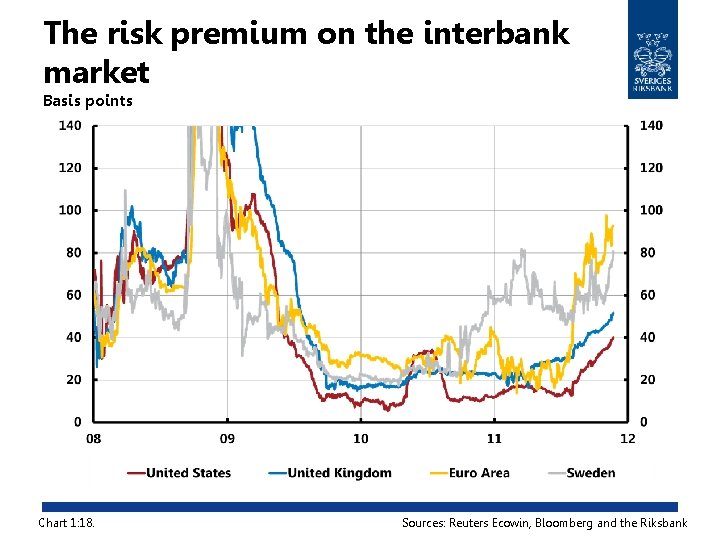
The risk premium on the interbank market Basis points Chart 1: 18. Sources: Reuters Ecowin, Bloomberg and the Riksbank
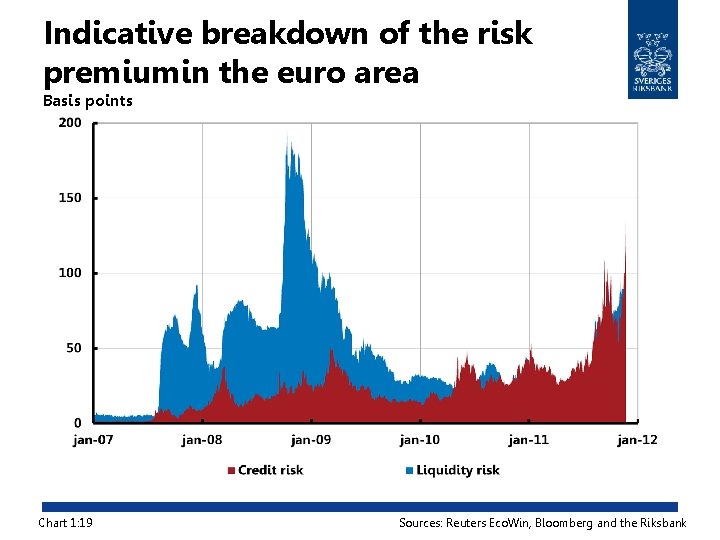
Indicative breakdown of the risk premiumin the euro area Basis points Chart 1: 19 Sources: Reuters Eco. Win, Bloomberg and the Riksbank
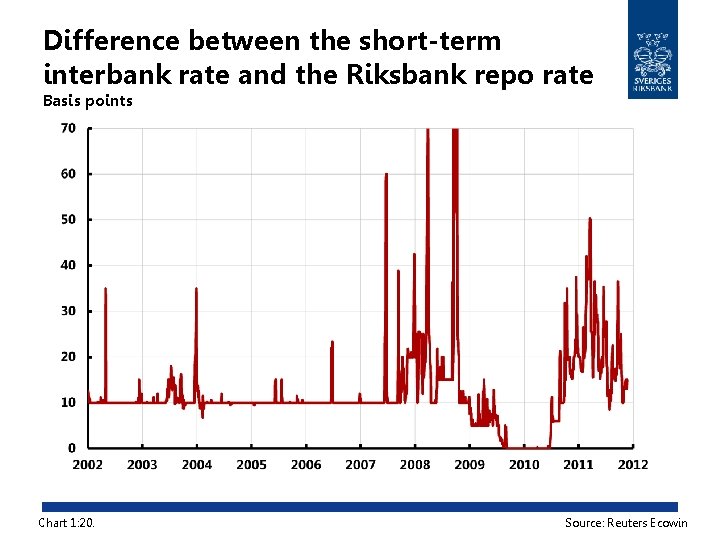
Difference between the short-term interbank rate and the Riksbank repo rate Basis points Chart 1: 20. Source: Reuters Ecowin
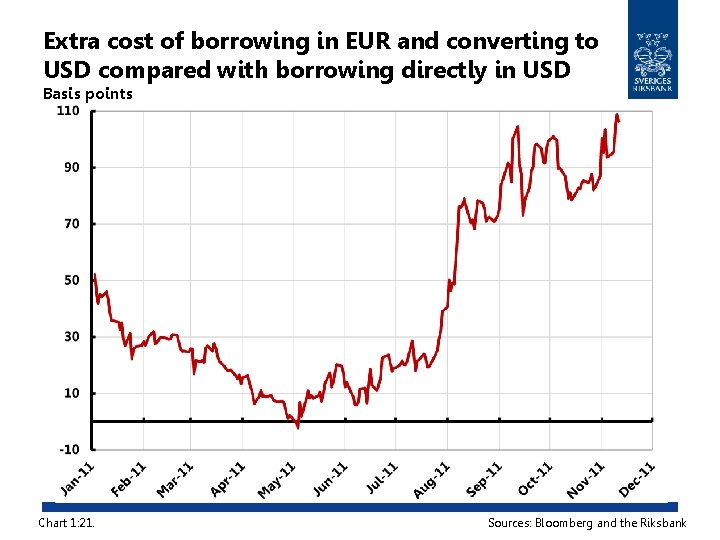
Extra cost of borrowing in EUR and converting to USD compared with borrowing directly in USD Basis points Chart 1: 21. Sources: Bloomberg and the Riksbank
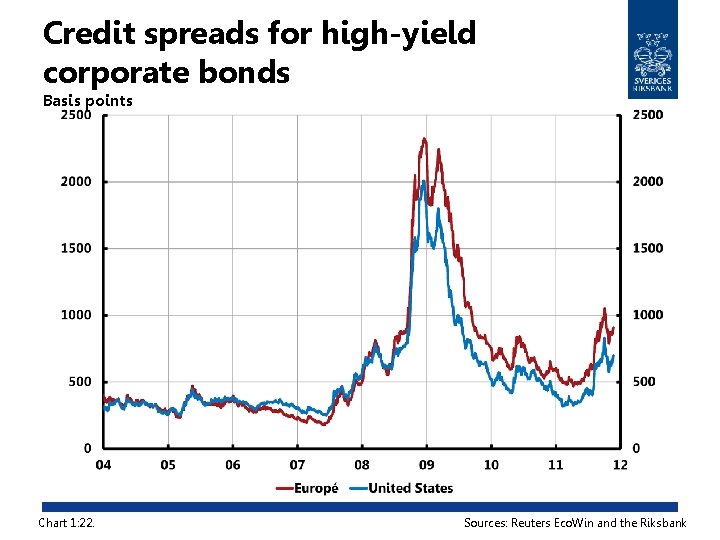
Credit spreads for high-yield corporate bonds Basis points Chart 1: 22. Sources: Reuters Eco. Win and the Riksbank

Chapter 2
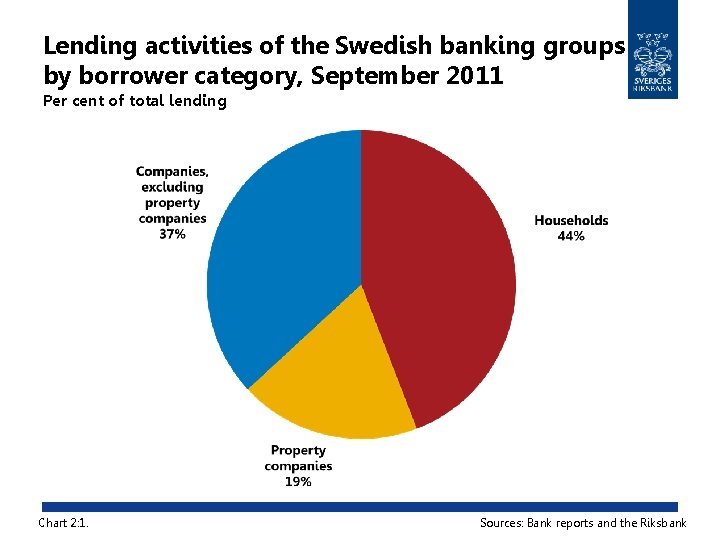
Lending activities of the Swedish banking groups by borrower category, September 2011 Per cent of total lending Chart 2: 1. Sources: Bank reports and the Riksbank
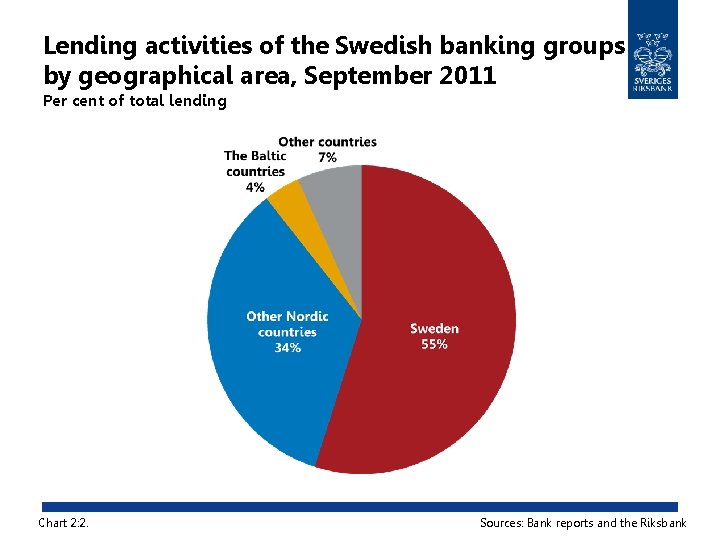
Lending activities of the Swedish banking groups by geographical area, September 2011 Per cent of total lending Chart 2: 2. Sources: Bank reports and the Riksbank
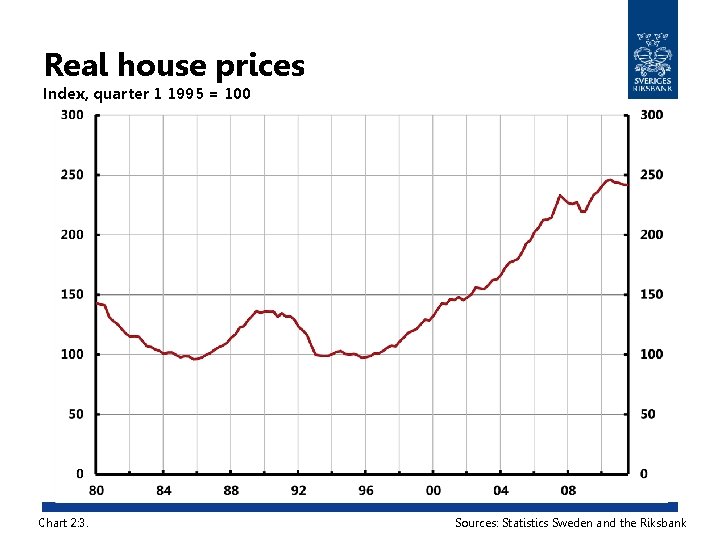
Real house prices Index, quarter 1 1995 = 100 Chart 2: 3. Sources: Statistics Sweden and the Riksbank
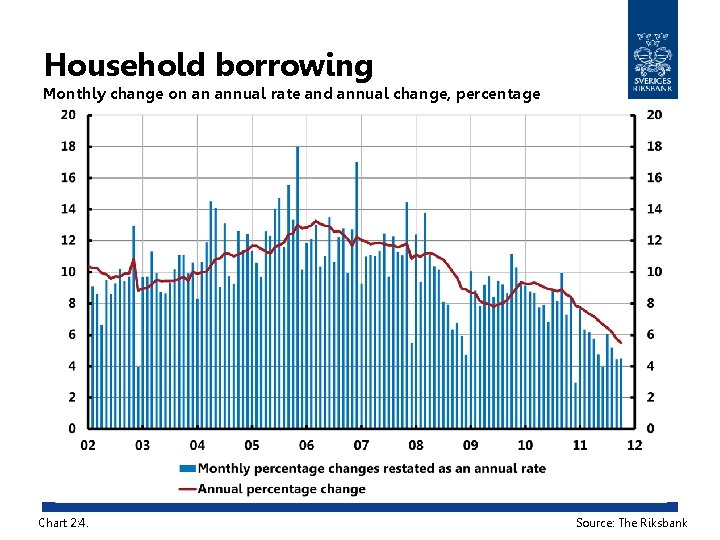
Household borrowing Monthly change on an annual rate and annual change, percentage Chart 2: 4. Source: The Riksbank
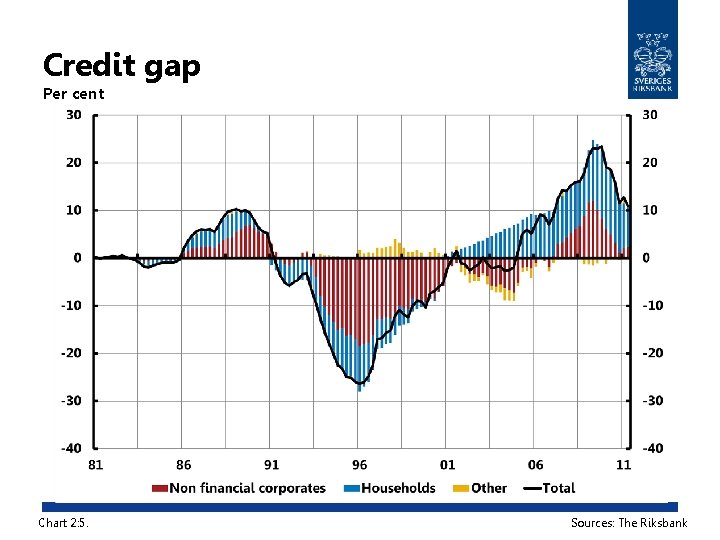
Credit gap Per cent Chart 2: 5. Sources: The Riksbank
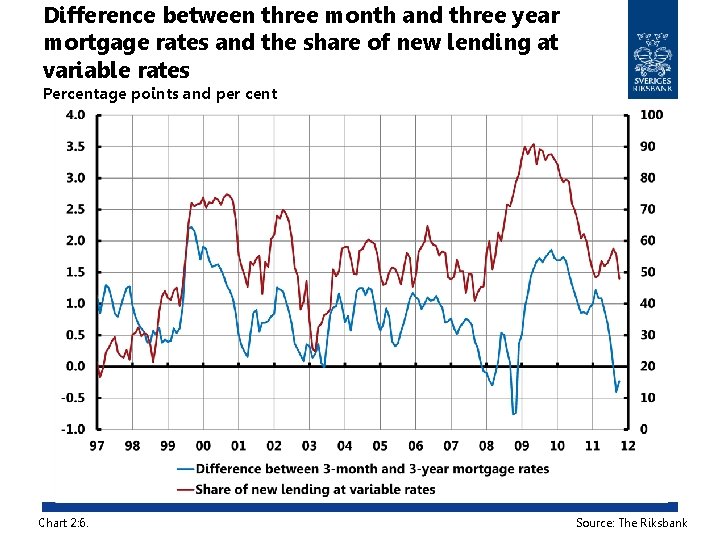
Difference between three month and three year mortgage rates and the share of new lending at variable rates Percentage points and per cent Chart 2: 6. Source: The Riksbank
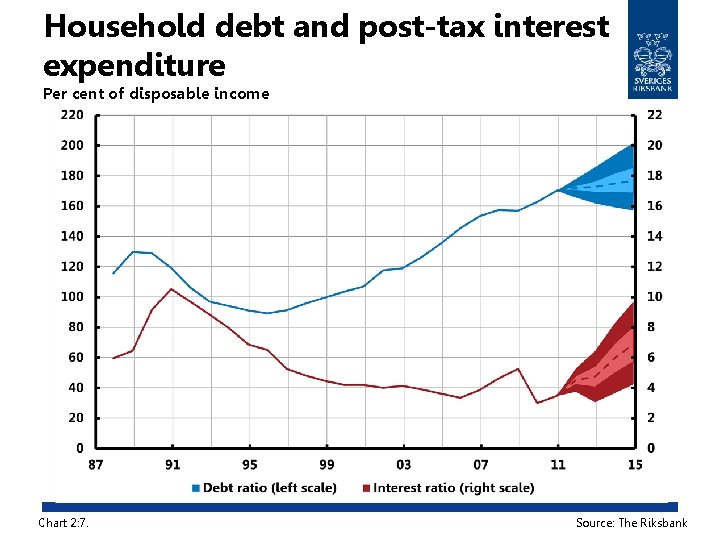
Household debt and post-tax interest expenditure Per cent of disposable income Chart 2: 7. Source: The Riksbank
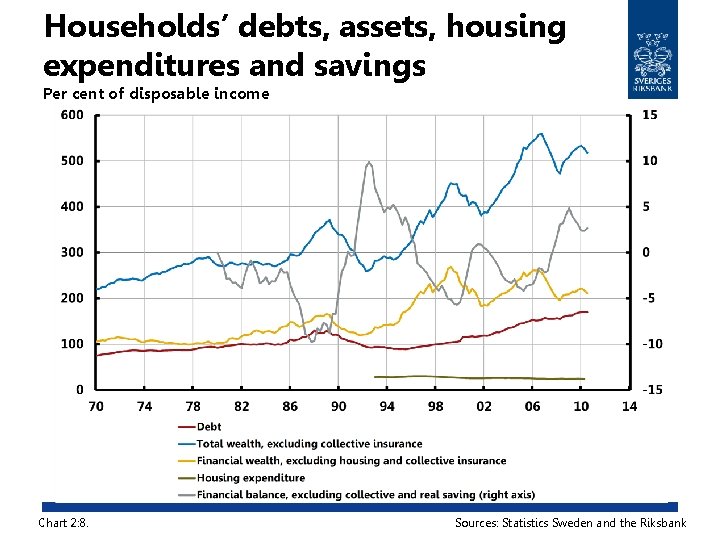
Households’ debts, assets, housing expenditures and savings Per cent of disposable income Chart 2: 8. Sources: Statistics Sweden and the Riksbank
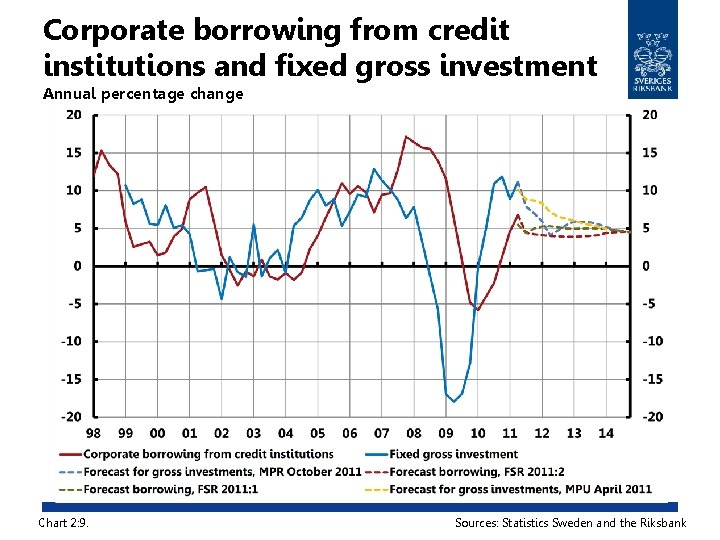
Corporate borrowing from credit institutions and fixed gross investment Annual percentage change Chart 2: 9. Sources: Statistics Sweden and the Riksbank
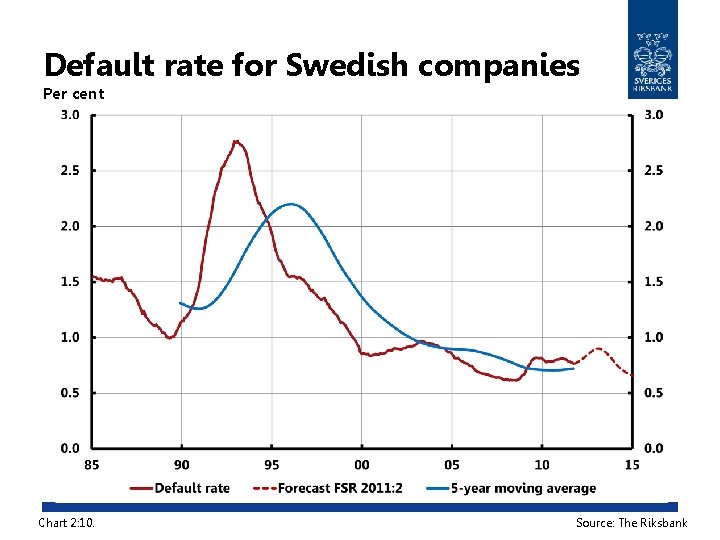
Default rate for Swedish companies Per cent Chart 2: 10. Source: The Riksbank
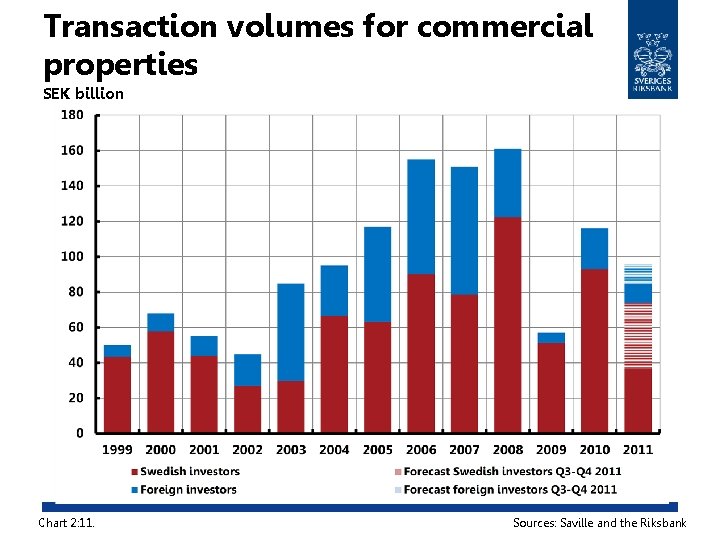
Transaction volumes for commercial properties SEK billion Chart 2: 11. Sources: Saville and the Riksbank
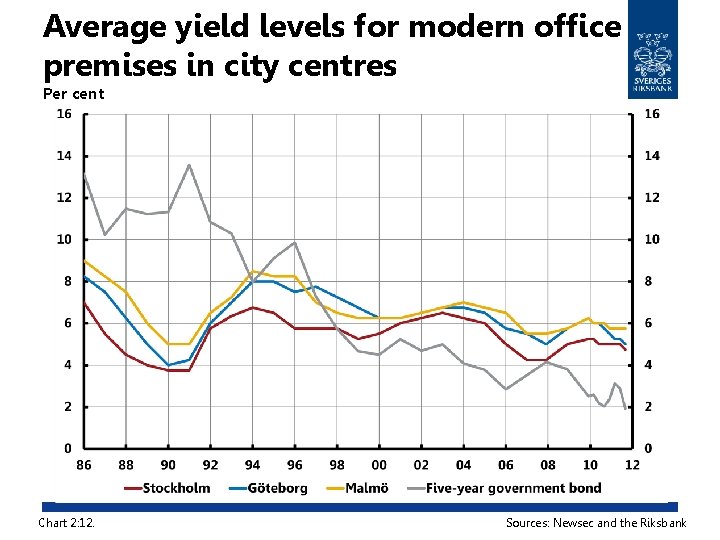
Average yield levels for modern office premises in city centres Per cent Chart 2: 12. Sources: Newsec and the Riksbank
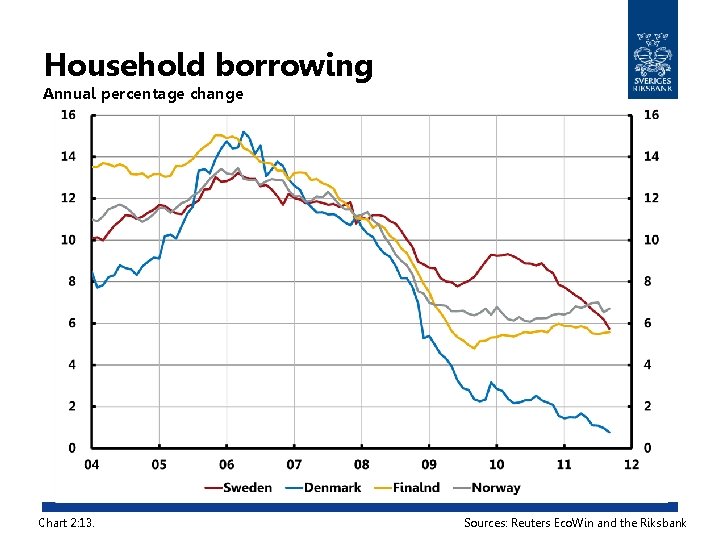
Household borrowing Annual percentage change Chart 2: 13. Sources: Reuters Eco. Win and the Riksbank
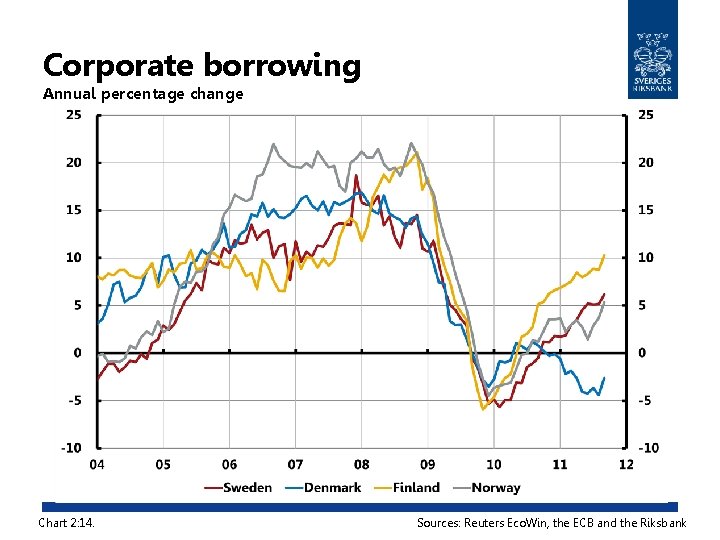
Corporate borrowing Annual percentage change Chart 2: 14. Sources: Reuters Eco. Win, the ECB and the Riksbank
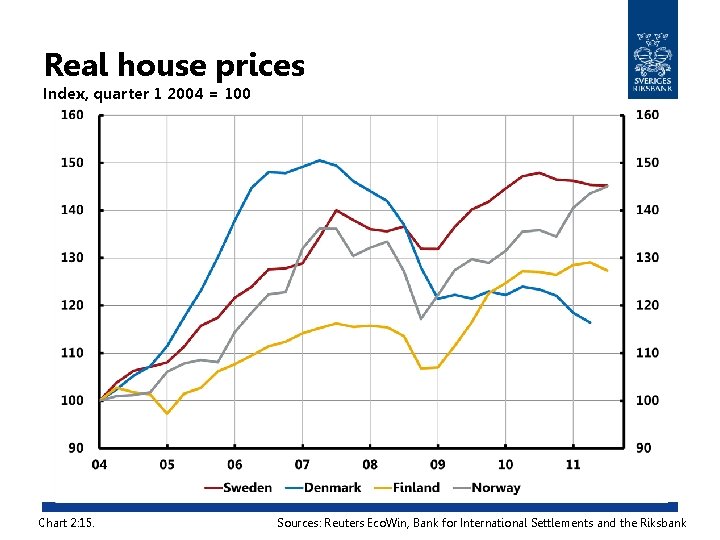
Real house prices Index, quarter 1 2004 = 100 Chart 2: 15. Sources: Reuters Eco. Win, Bank for International Settlements and the Riksbank
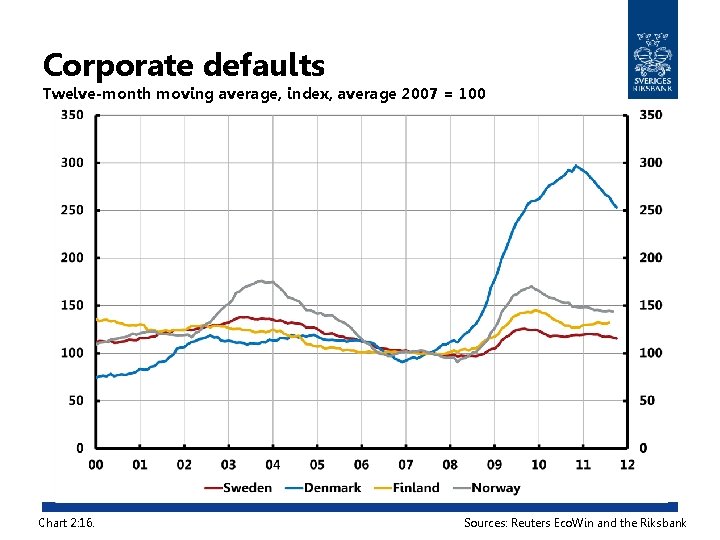
Corporate defaults Twelve-month moving average, index, average 2007 = 100 Chart 2: 16. Sources: Reuters Eco. Win and the Riksbank
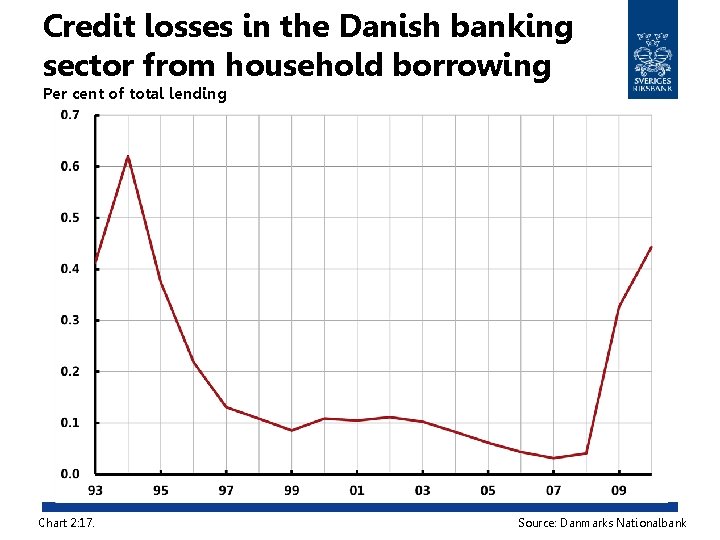
Credit losses in the Danish banking sector from household borrowing Per cent of total lending Chart 2: 17. Source: Danmarks Nationalbank
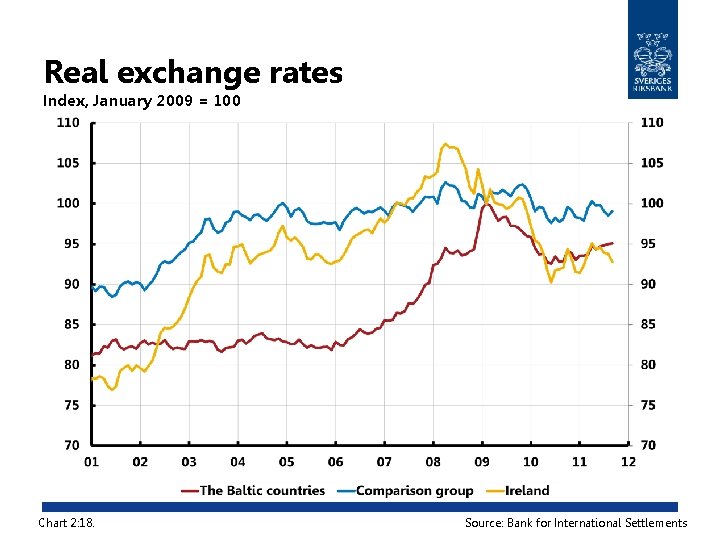
Real exchange rates Index, January 2009 = 100 Chart 2: 18. Source: Bank for International Settlements
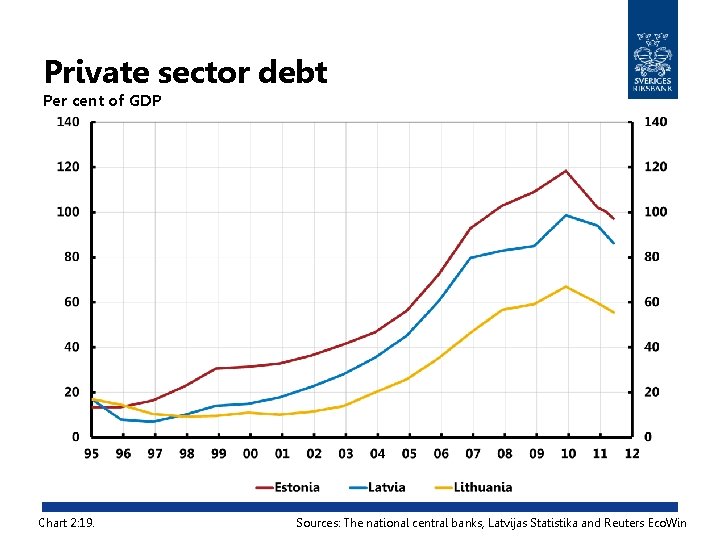
Private sector debt Per cent of GDP Chart 2: 19. Sources: The national central banks, Latvijas Statistika and Reuters Eco. Win
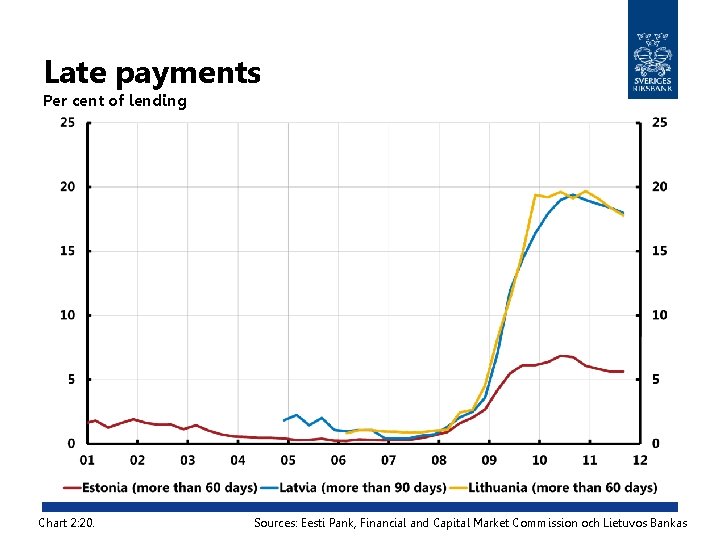
Late payments Per cent of lending Chart 2: 20. Sources: Eesti Pank, Financial and Capital Market Commission och Lietuvos Bankas
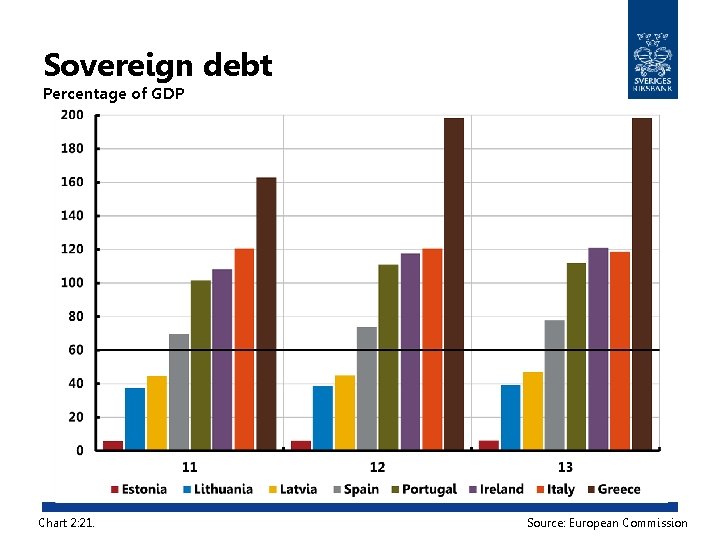
Sovereign debt Percentage of GDP Chart 2: 21. Source: European Commission
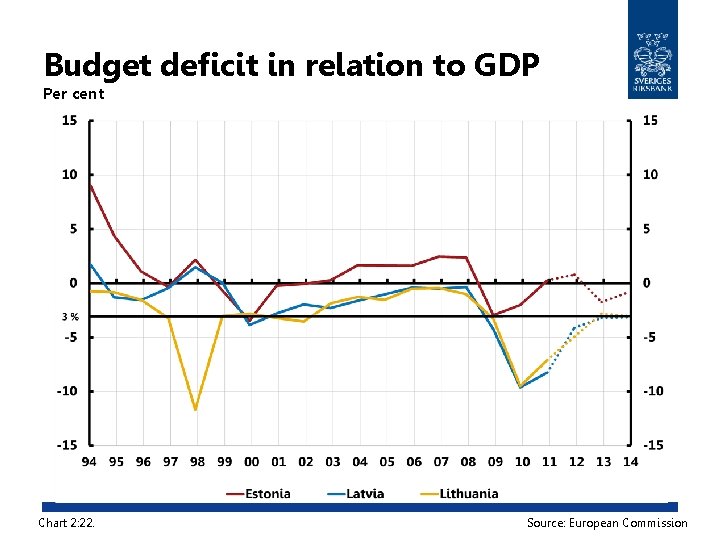
Budget deficit in relation to GDP Per cent Chart 2: 22. Source: European Commission
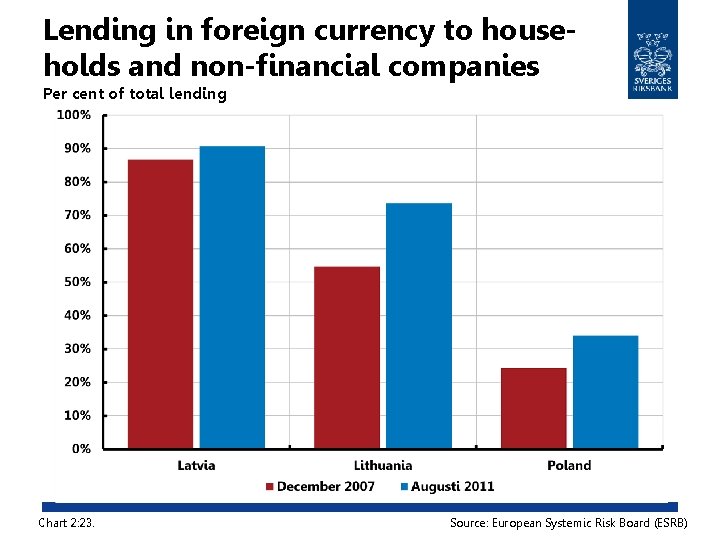
Lending in foreign currency to households and non-financial companies Per cent of total lending Chart 2: 23. Source: European Systemic Risk Board (ESRB)

Chapter 3
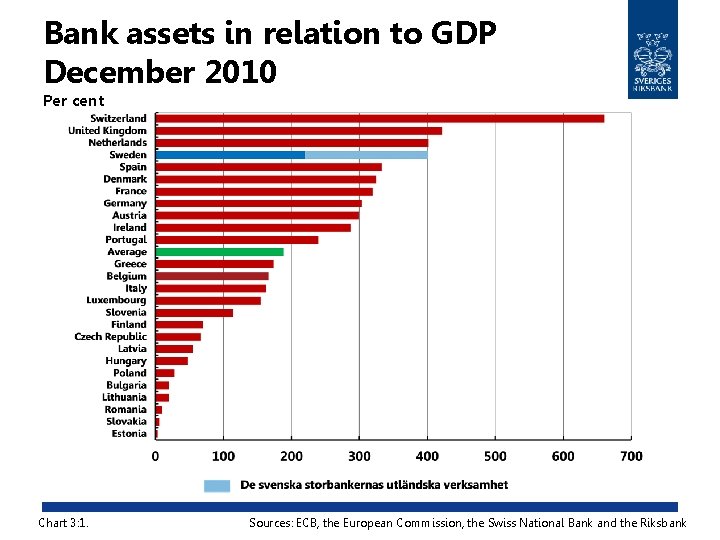
Bank assets in relation to GDP December 2010 Per cent Chart 3: 1. Sources: ECB, the European Commission, the Swiss National Bank and the Riksbank
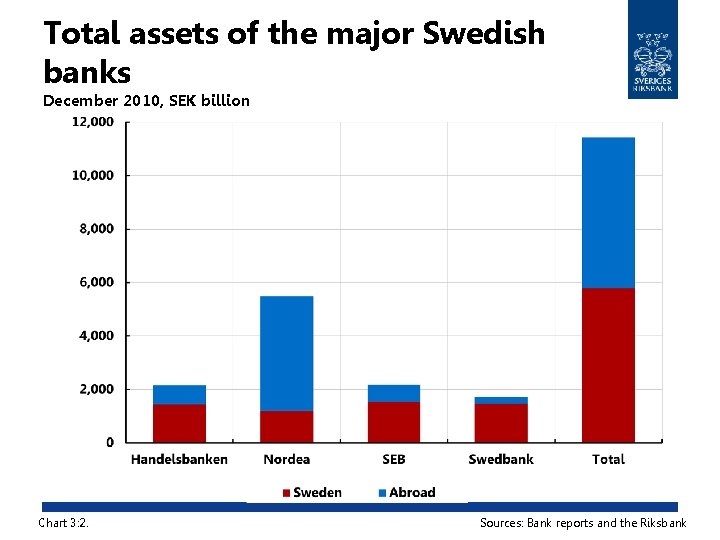
Total assets of the major Swedish banks December 2010, SEK billion Chart 3: 2. Sources: Bank reports and the Riksbank
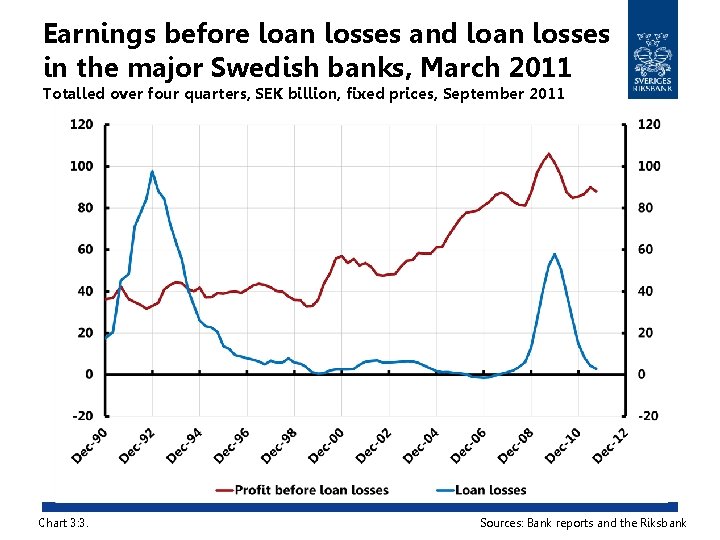
Earnings before loan losses and loan losses in the major Swedish banks, March 2011 Totalled over four quarters, SEK billion, fixed prices, September 2011 Chart 3: 3. Sources: Bank reports and the Riksbank
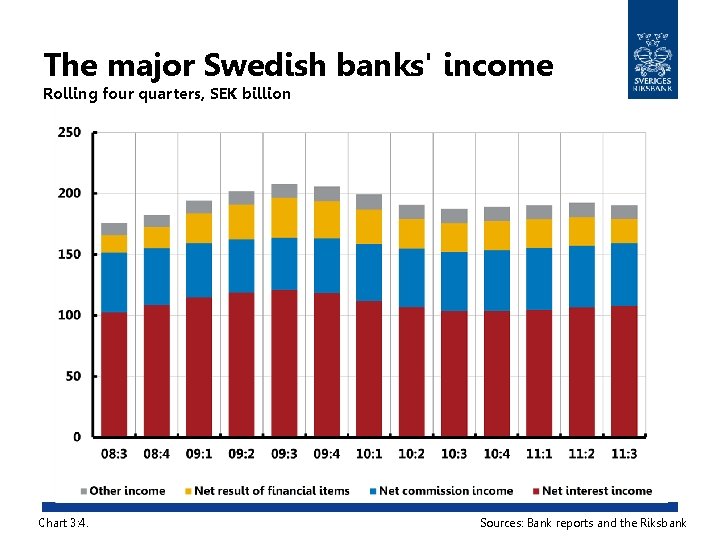
The major Swedish banks' income Rolling four quarters, SEK billion Chart 3: 4. Sources: Bank reports and the Riksbank
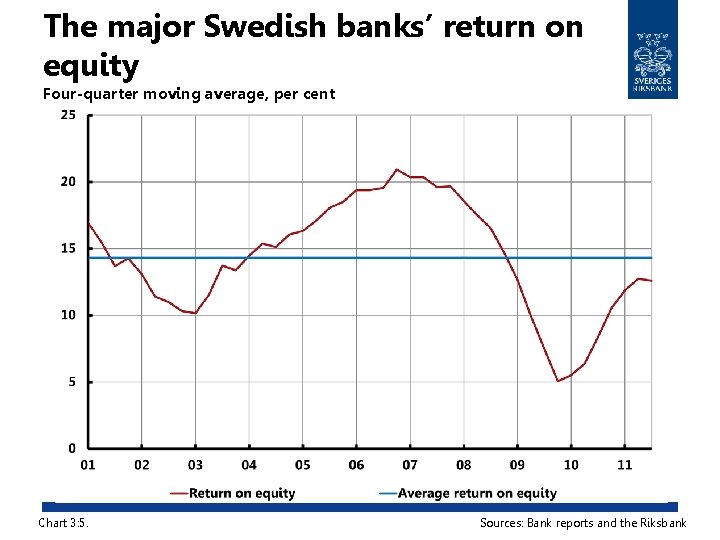
The major Swedish banks’ return on equity Four-quarter moving average, per cent Chart 3: 5. Sources: Bank reports and the Riksbank
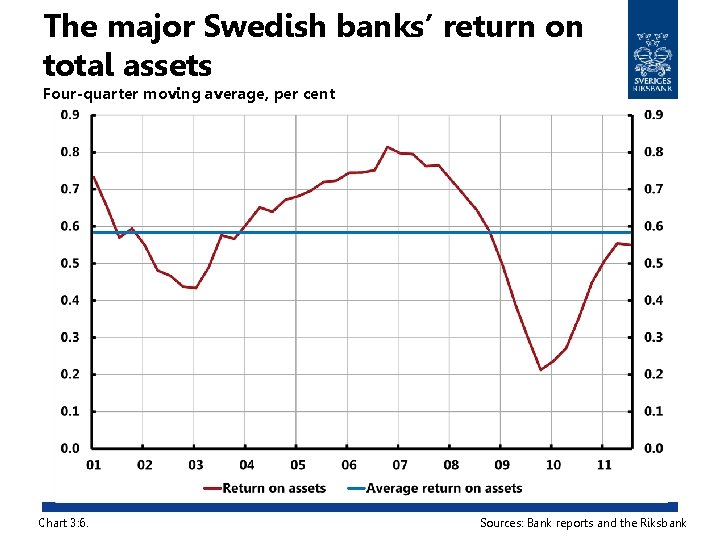
The major Swedish banks’ return on total assets Four-quarter moving average, per cent Chart 3: 6. Sources: Bank reports and the Riksbank
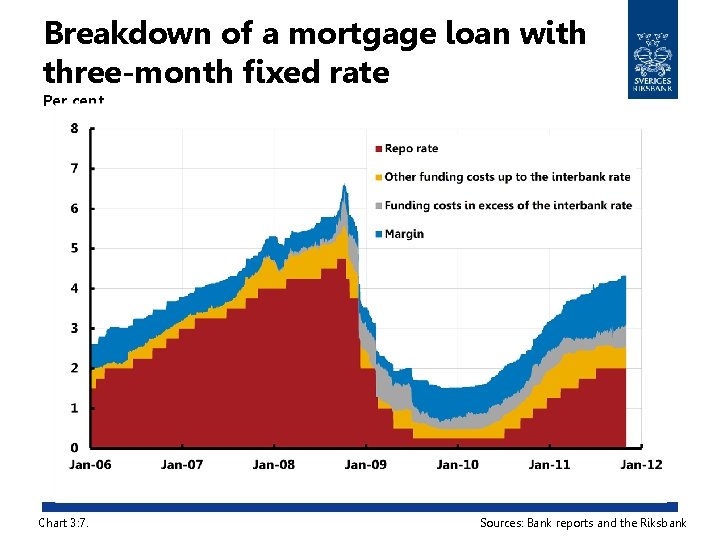
Breakdown of a mortgage loan with three-month fixed rate Per cent Chart 3: 7. Sources: Bank reports and the Riksbank
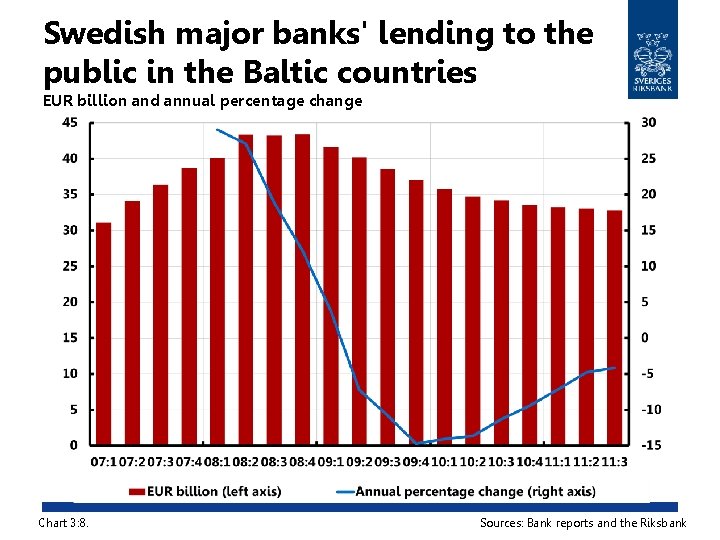
Swedish major banks' lending to the public in the Baltic countries EUR billion and annual percentage change Chart 3: 8. Sources: Bank reports and the Riksbank
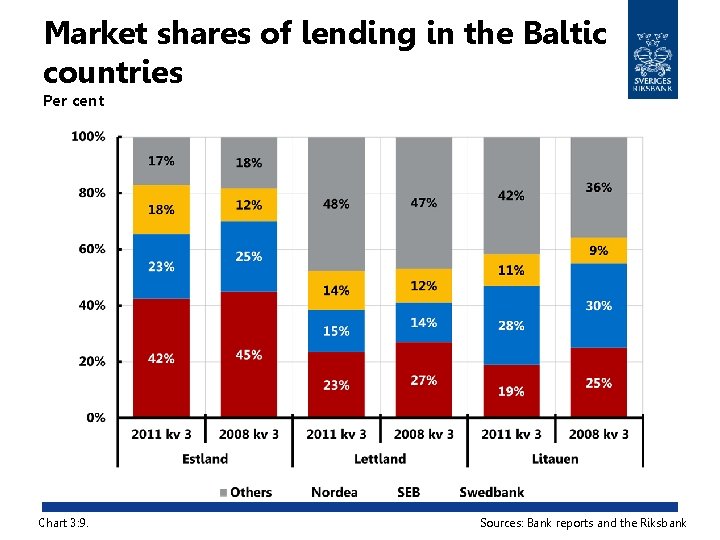
Market shares of lending in the Baltic countries Per cent Chart 3: 9. Sources: Bank reports and the Riksbank
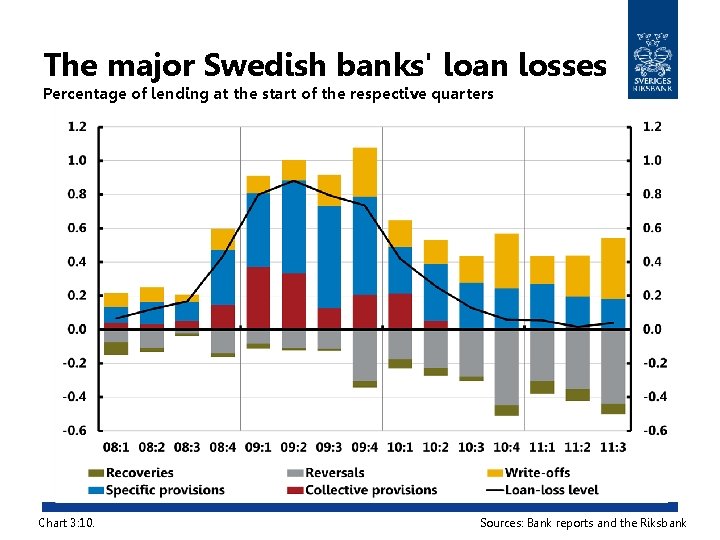
The major Swedish banks' loan losses Percentage of lending at the start of the respective quarters Chart 3: 10. Sources: Bank reports and the Riksbank
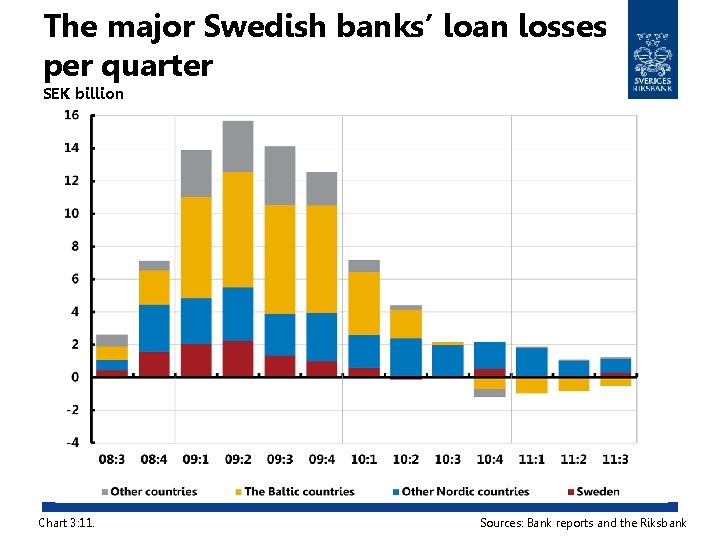
The major Swedish banks’ loan losses per quarter SEK billion Chart 3: 11. Sources: Bank reports and the Riksbank
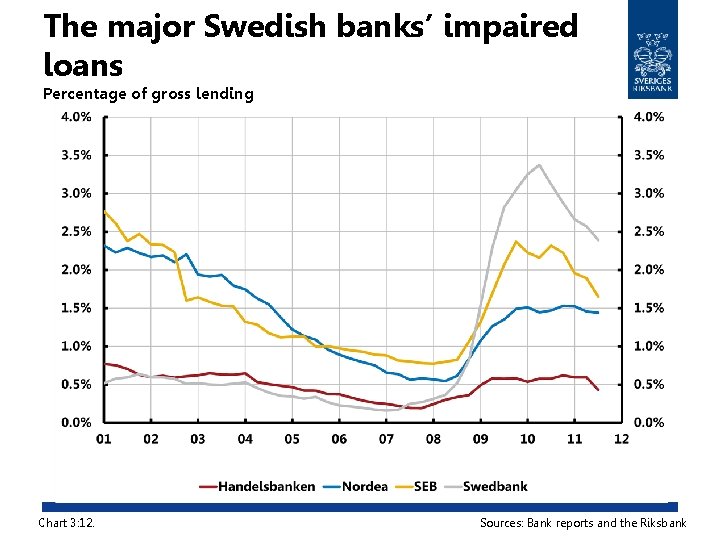
The major Swedish banks’ impaired loans Percentage of gross lending Chart 3: 12. Sources: Bank reports and the Riksbank
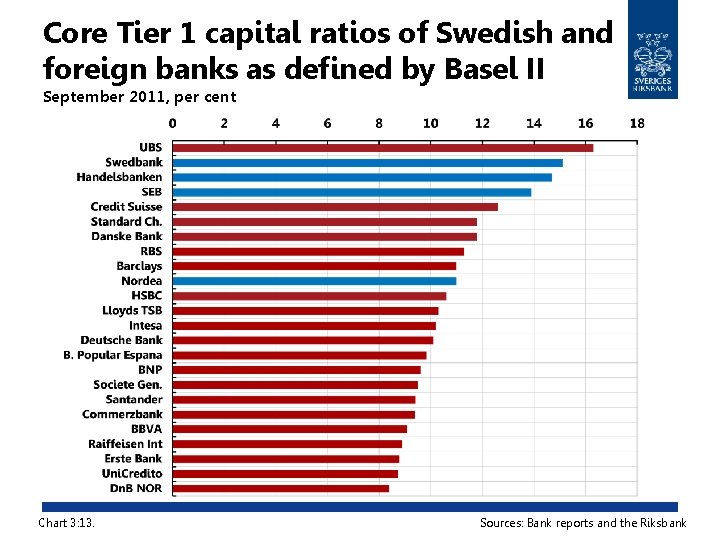
Core Tier 1 capital ratios of Swedish and foreign banks as defined by Basel II September 2011, per cent Chart 3: 13. Sources: Bank reports and the Riksbank
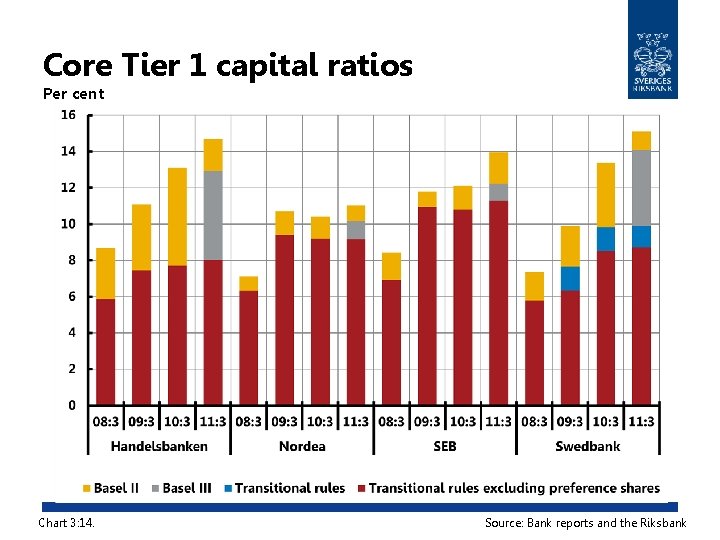
Core Tier 1 capital ratios Per cent Chart 3: 14. Source: Bank reports and the Riksbank
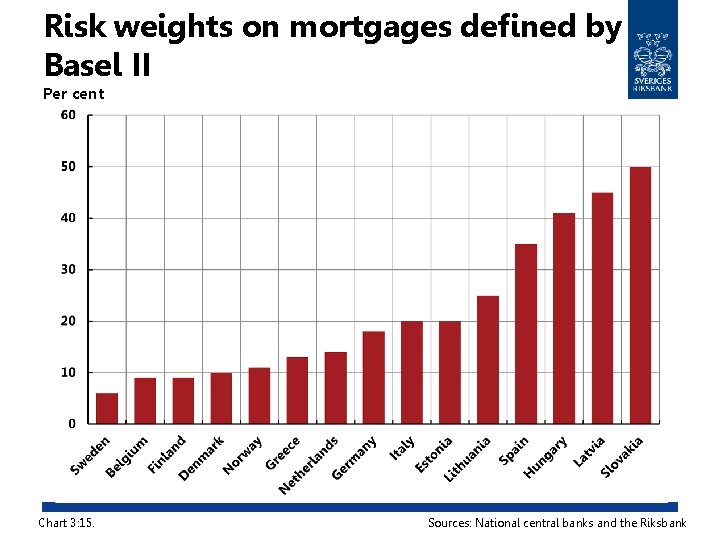
Risk weights on mortgages defined by Basel II Per cent Chart 3: 15. Sources: National central banks and the Riksbank
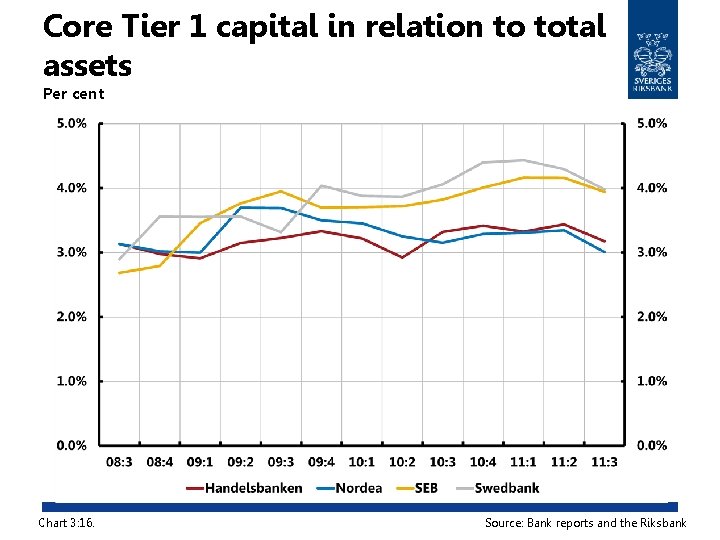
Core Tier 1 capital in relation to total assets Per cent Chart 3: 16. Source: Bank reports and the Riksbank
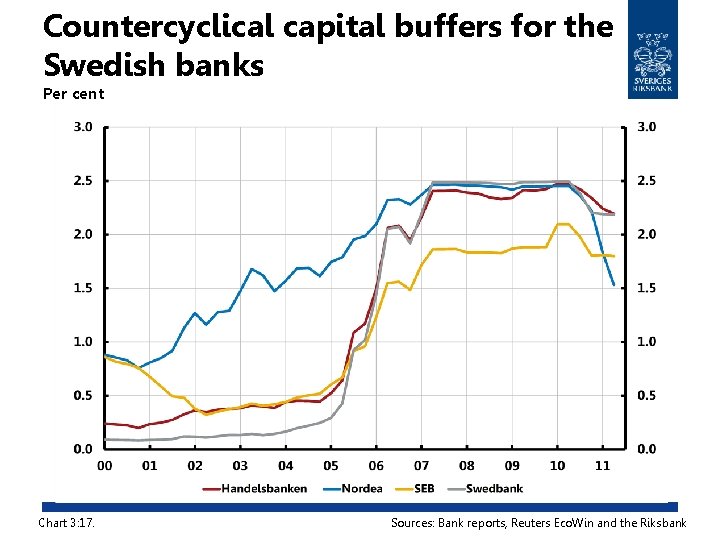
Countercyclical capital buffers for the Swedish banks Per cent Chart 3: 17. Sources: Bank reports, Reuters Eco. Win and the Riksbank
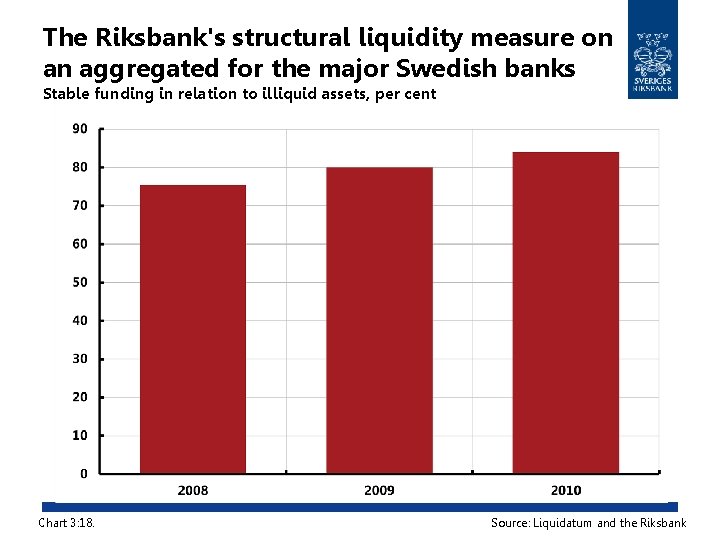
The Riksbank's structural liquidity measure on an aggregated for the major Swedish banks Stable funding in relation to illiquid assets, per cent Chart 3: 18. Source: Liquidatum and the Riksbank
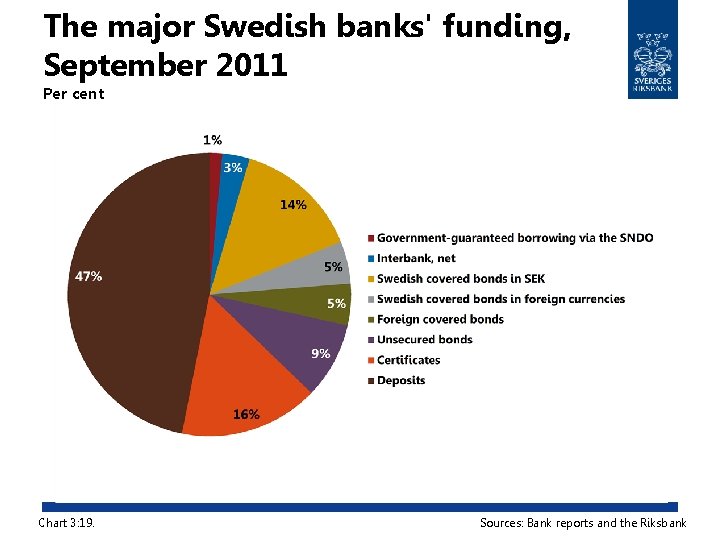
The major Swedish banks' funding, September 2011 Per cent Chart 3: 19. Sources: Bank reports and the Riksbank
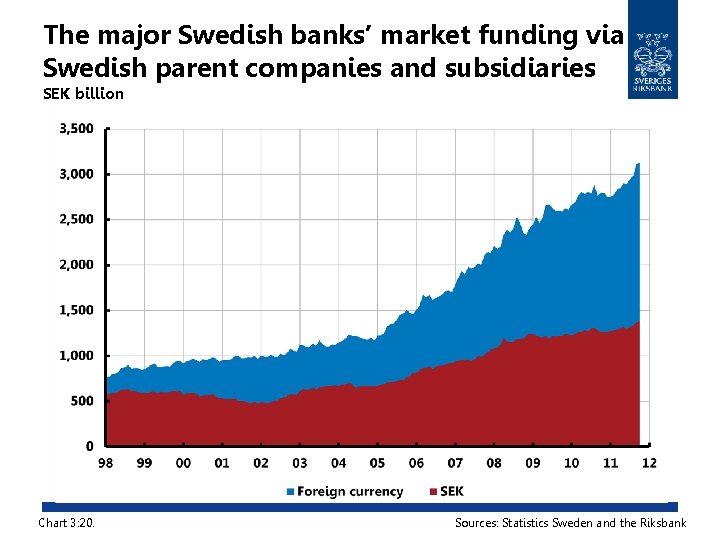
The major Swedish banks’ market funding via Swedish parent companies and subsidiaries SEK billion Chart 3: 20. Sources: Statistics Sweden and the Riksbank
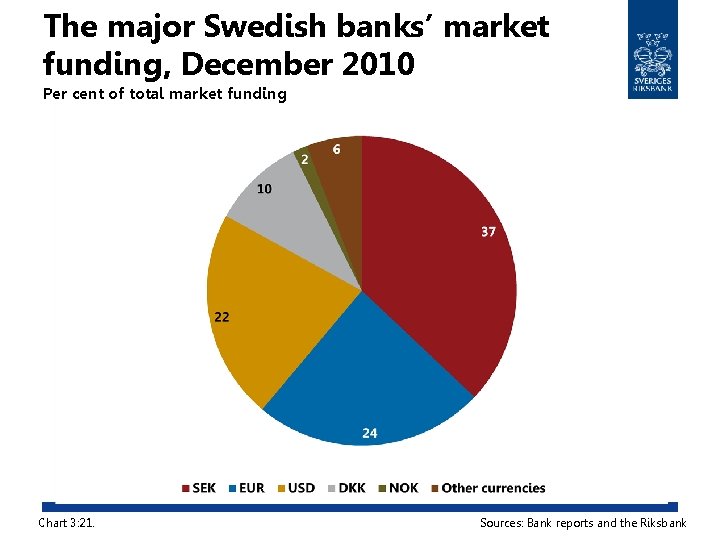
The major Swedish banks’ market funding, December 2010 Per cent of total market funding Chart 3: 21. Sources: Bank reports and the Riksbank
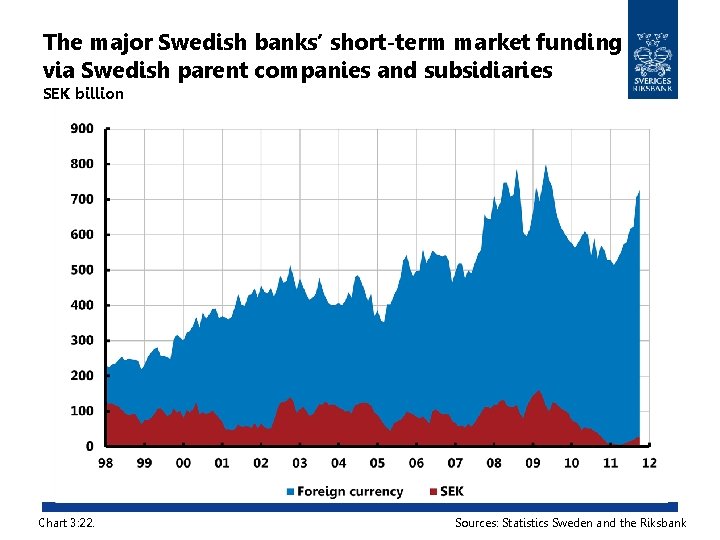
The major Swedish banks’ short-term market funding via Swedish parent companies and subsidiaries SEK billion Chart 3: 22. Sources: Statistics Sweden and the Riksbank
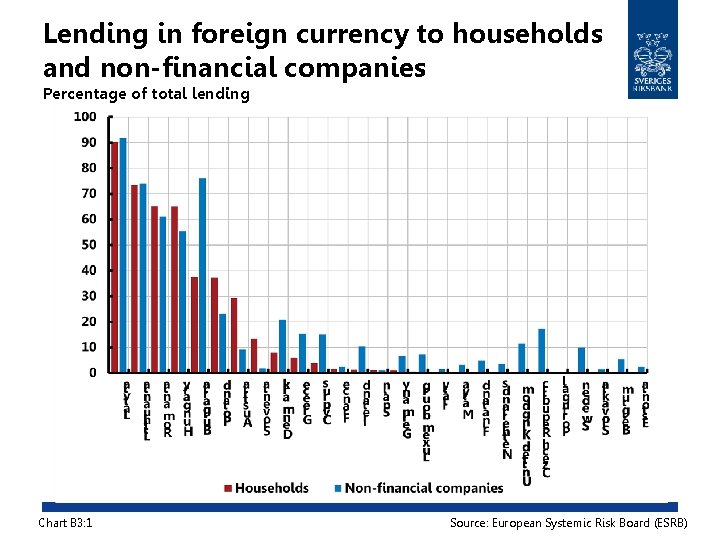
Lending in foreign currency to households and non-financial companies Percentage of total lending Chart B 3: 1 Source: European Systemic Risk Board (ESRB)
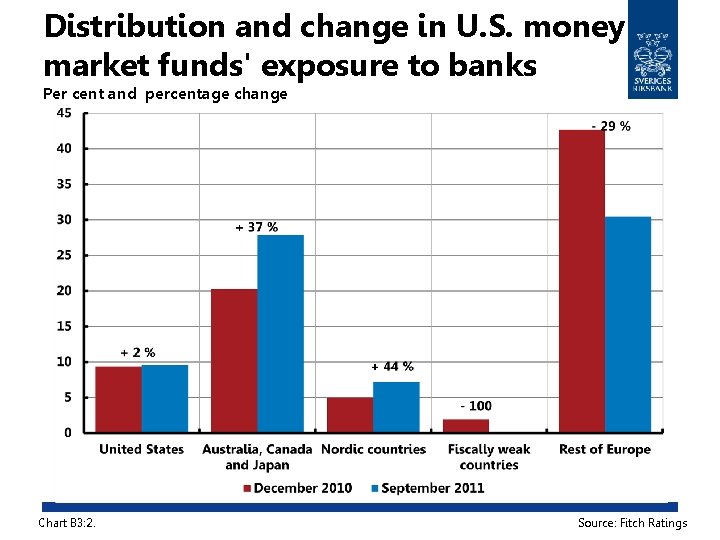
Distribution and change in U. S. money market funds' exposure to banks Per cent and percentage change Chart B 3: 2. Source: Fitch Ratings
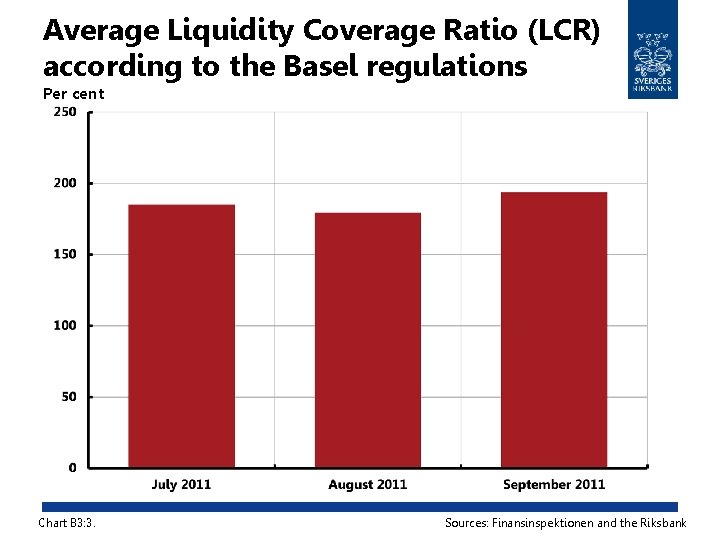
Average Liquidity Coverage Ratio (LCR) according to the Basel regulations Per cent Chart B 3: 3. Sources: Finansinspektionen and the Riksbank
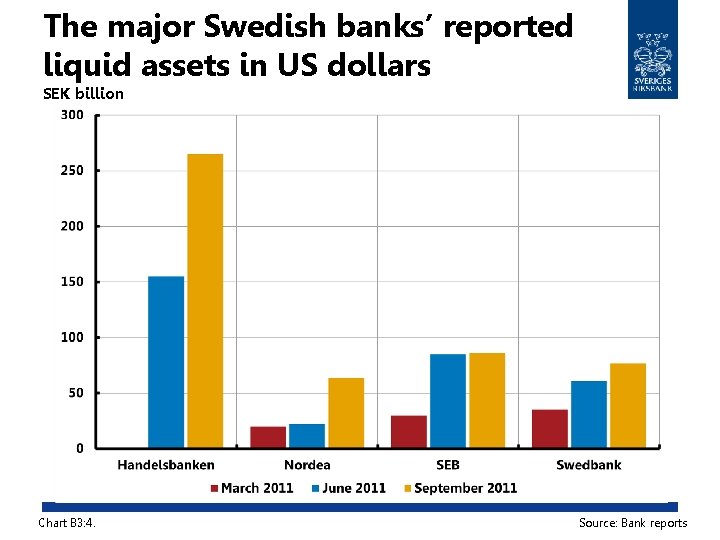
The major Swedish banks’ reported liquid assets in US dollars SEK billion Chart B 3: 4. Source: Bank reports
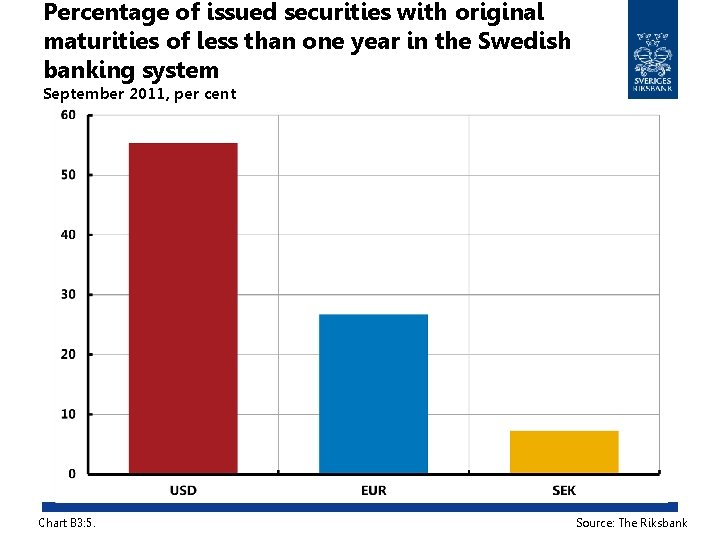
Percentage of issued securities with original maturities of less than one year in the Swedish banking system September 2011, per cent Chart B 3: 5. Source: The Riksbank
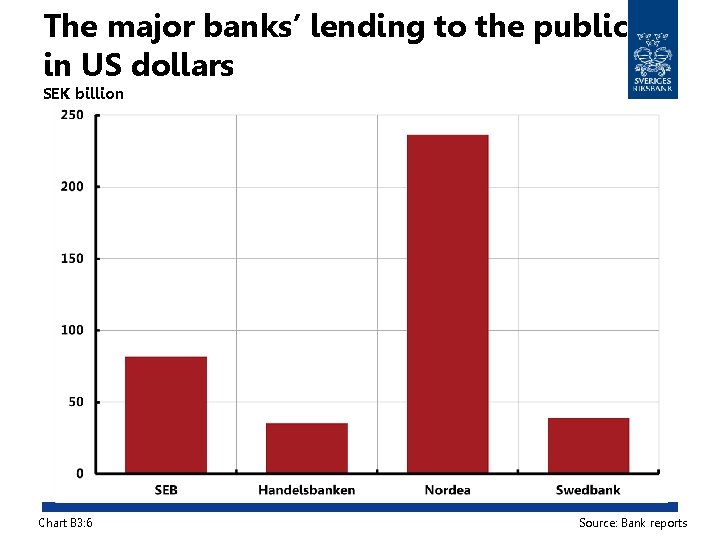
The major banks’ lending to the public in US dollars SEK billion Chart B 3: 6 Source: Bank reports
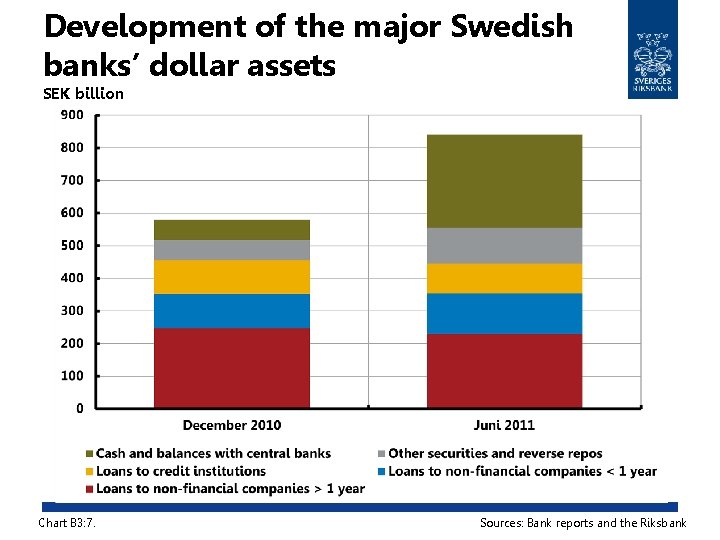
Development of the major Swedish banks’ dollar assets SEK billion Chart B 3: 7. Sources: Bank reports and the Riksbank
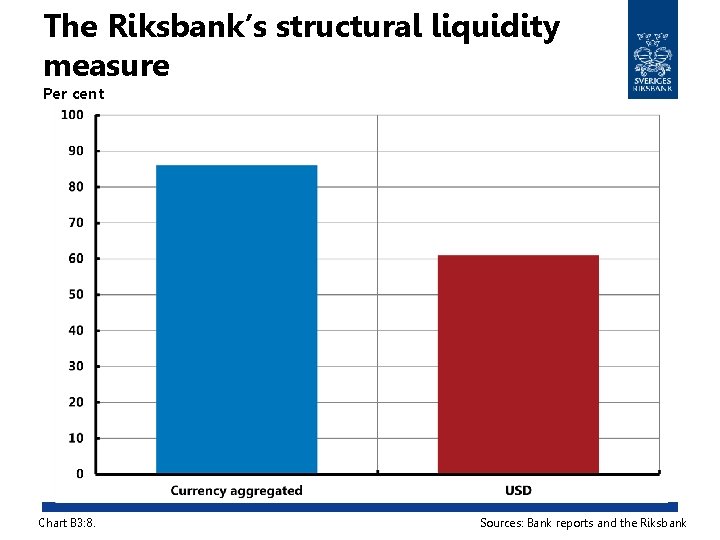
The Riksbank’s structural liquidity measure Per cent Chart B 3: 8. Sources: Bank reports and the Riksbank

Chapter 4
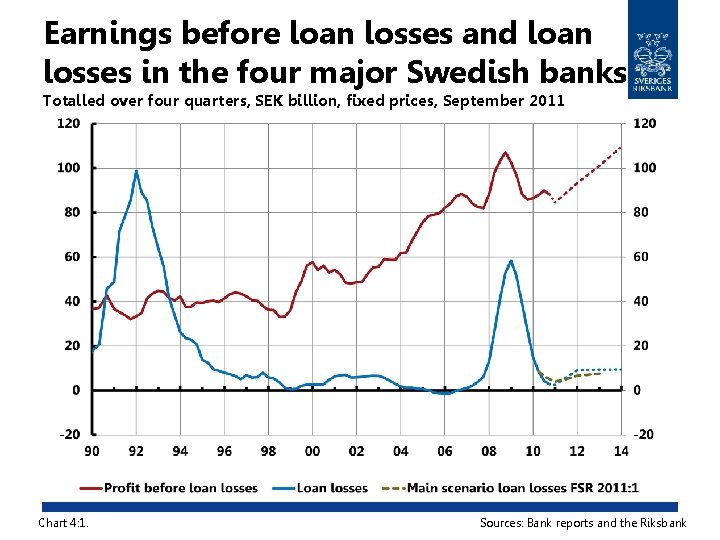
Earnings before loan losses and loan losses in the four major Swedish banks Totalled over four quarters, SEK billion, fixed prices, September 2011 Chart 4: 1. Sources: Bank reports and the Riksbank
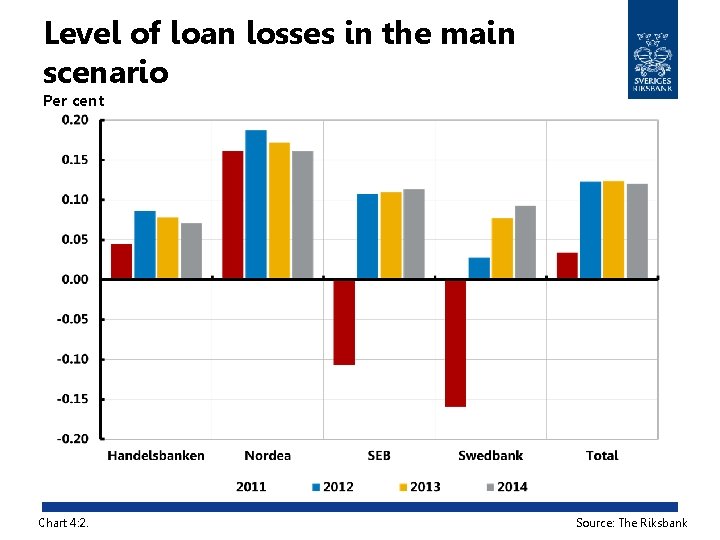
Level of loan losses in the main scenario Per cent Chart 4: 2. Source: The Riksbank
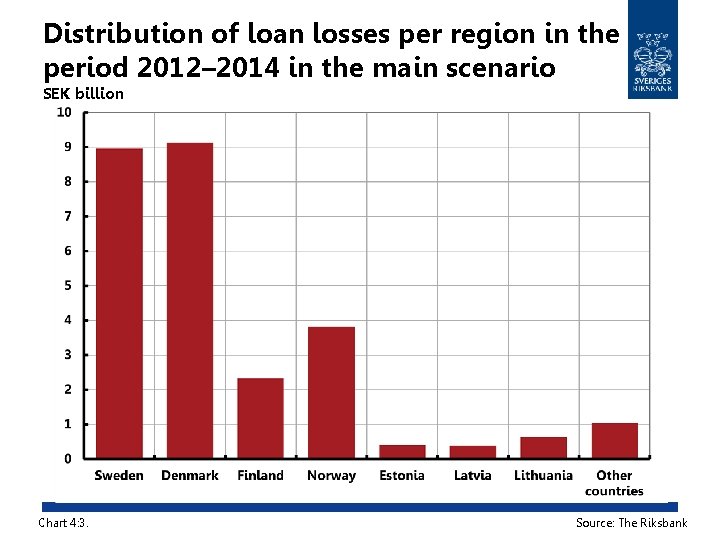
Distribution of loan losses per region in the period 2012– 2014 in the main scenario SEK billion Chart 4: 3. Source: The Riksbank
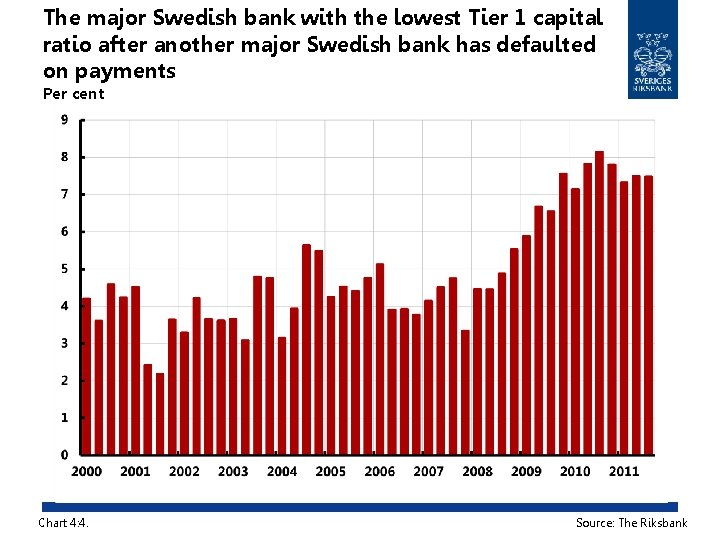
The major Swedish bank with the lowest Tier 1 capital ratio after another major Swedish bank has defaulted on payments Per cent Chart 4: 4. Source: The Riksbank
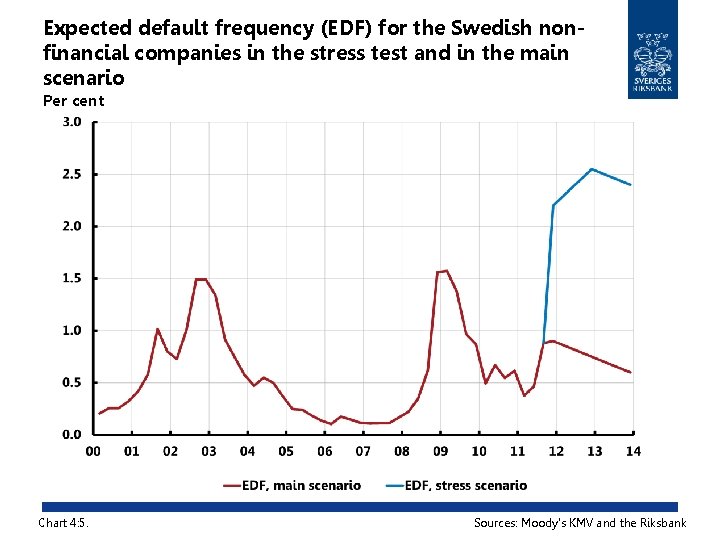
Expected default frequency (EDF) for the Swedish nonfinancial companies in the stress test and in the main scenario Per cent Chart 4: 5. Sources: Moody's KMV and the Riksbank
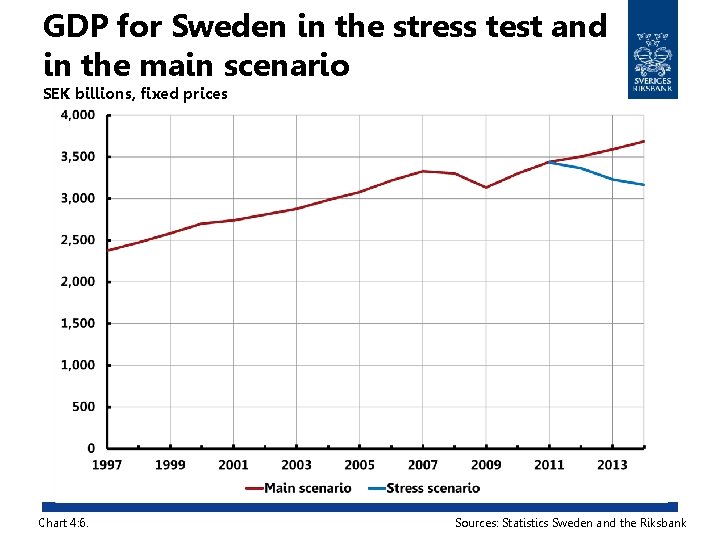
GDP for Sweden in the stress test and in the main scenario SEK billions, fixed prices Chart 4: 6. Sources: Statistics Sweden and the Riksbank
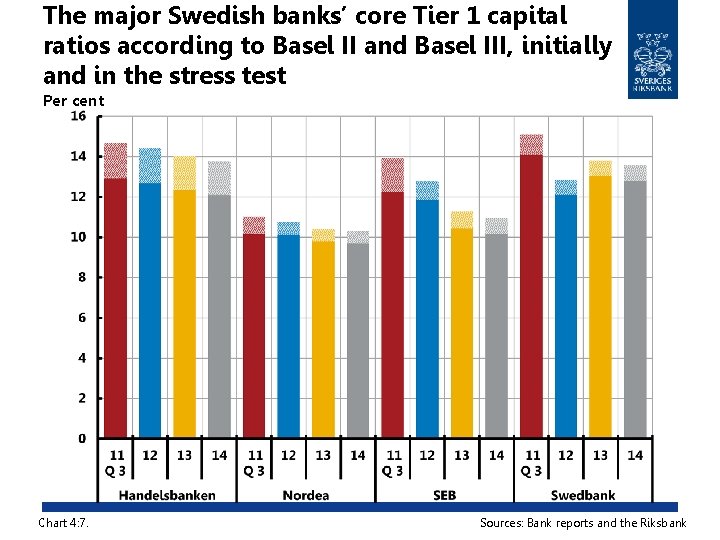
The major Swedish banks’ core Tier 1 capital ratios according to Basel II and Basel III, initially and in the stress test Per cent Chart 4: 7. Sources: Bank reports and the Riksbank
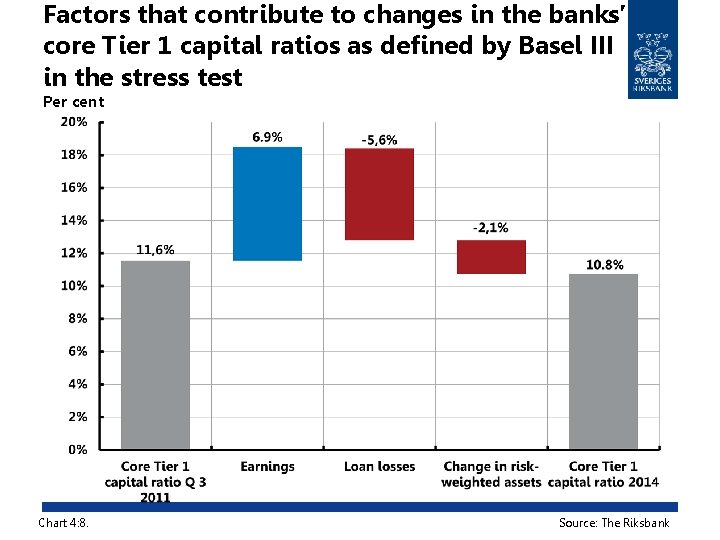
Factors that contribute to changes in the banks’ core Tier 1 capital ratios as defined by Basel III in the stress test Per cent Chart 4: 8. Source: The Riksbank
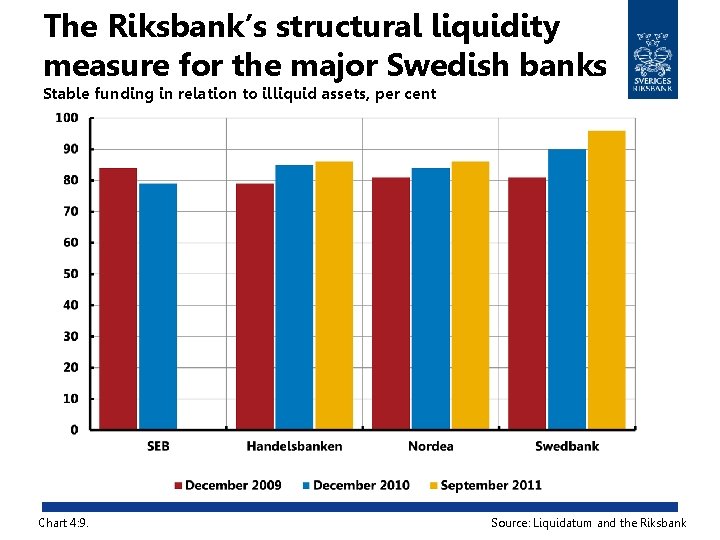
The Riksbank’s structural liquidity measure for the major Swedish banks Stable funding in relation to illiquid assets, per cent Chart 4: 9. Source: Liquidatum and the Riksbank
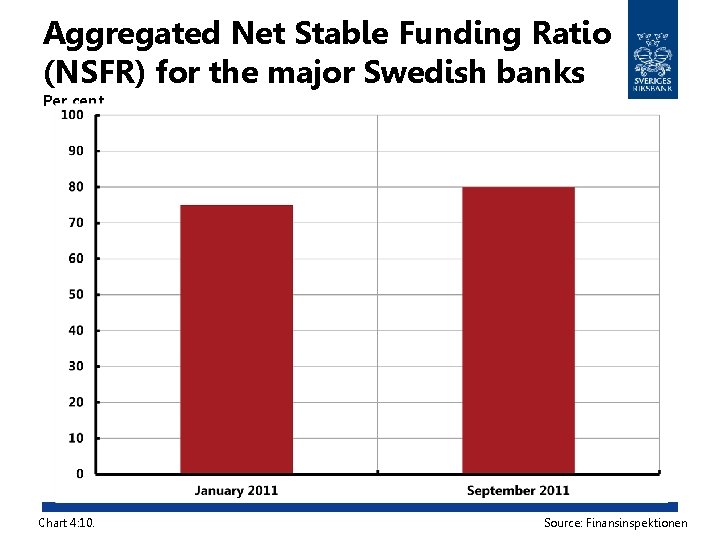
Aggregated Net Stable Funding Ratio (NSFR) for the major Swedish banks Per cent Chart 4: 10. Source: Finansinspektionen
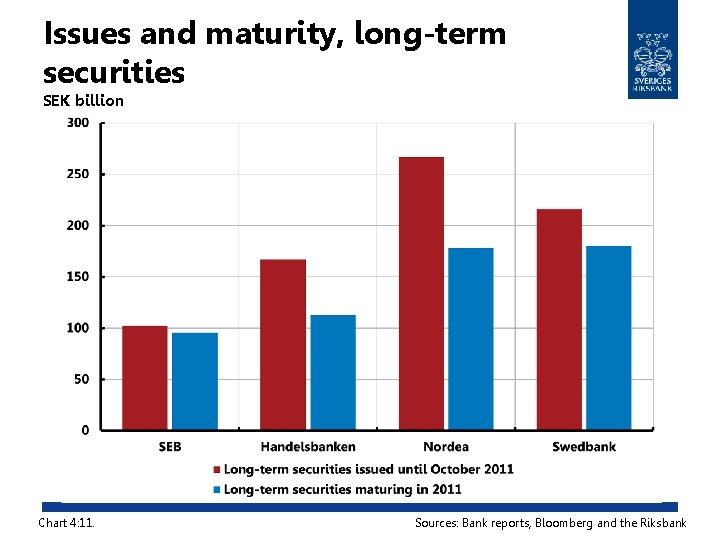
Issues and maturity, long-term securities SEK billion Chart 4: 11. Sources: Bank reports, Bloomberg and the Riksbank
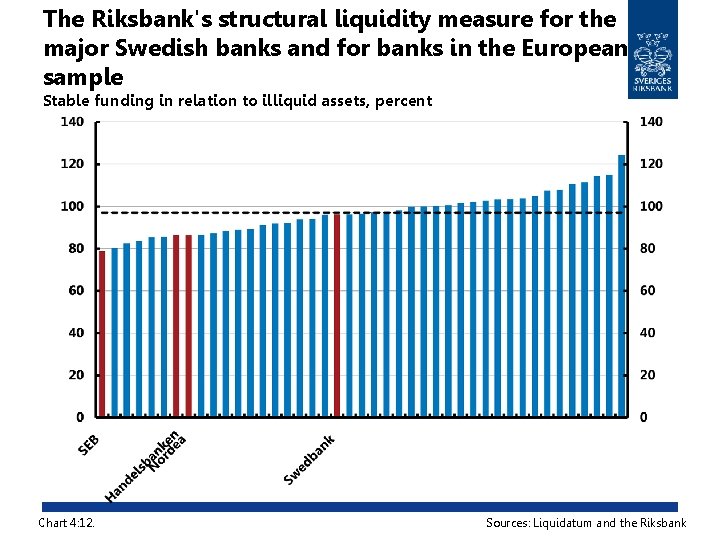
The Riksbank's structural liquidity measure for the major Swedish banks and for banks in the European sample Stable funding in relation to illiquid assets, percent Chart 4: 12. Sources: Liquidatum and the Riksbank
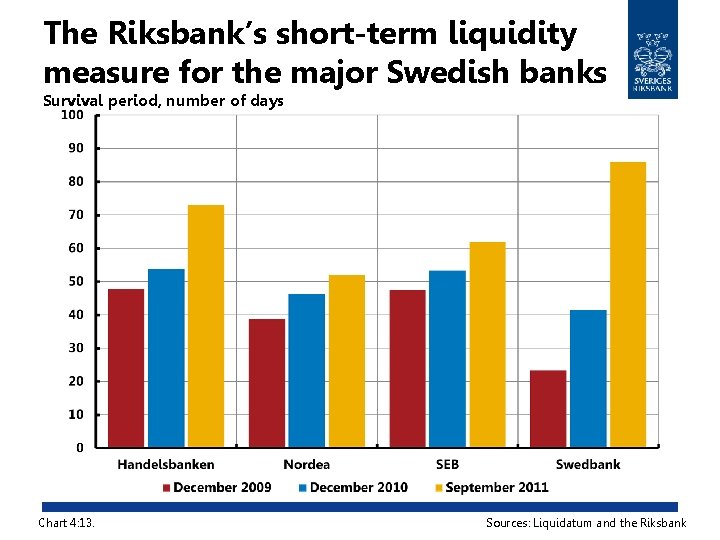
The Riksbank’s short-term liquidity measure for the major Swedish banks Survival period, number of days Chart 4: 13. Sources: Liquidatum and the Riksbank
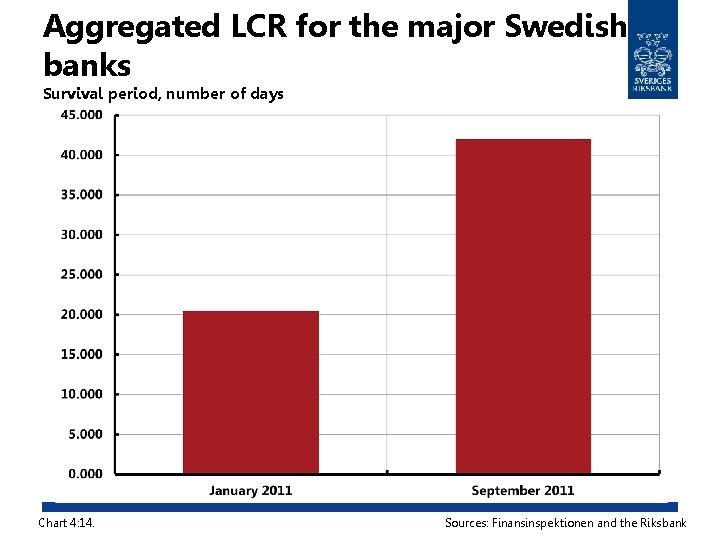
Aggregated LCR for the major Swedish banks Survival period, number of days Chart 4: 14. Sources: Finansinspektionen and the Riksbank
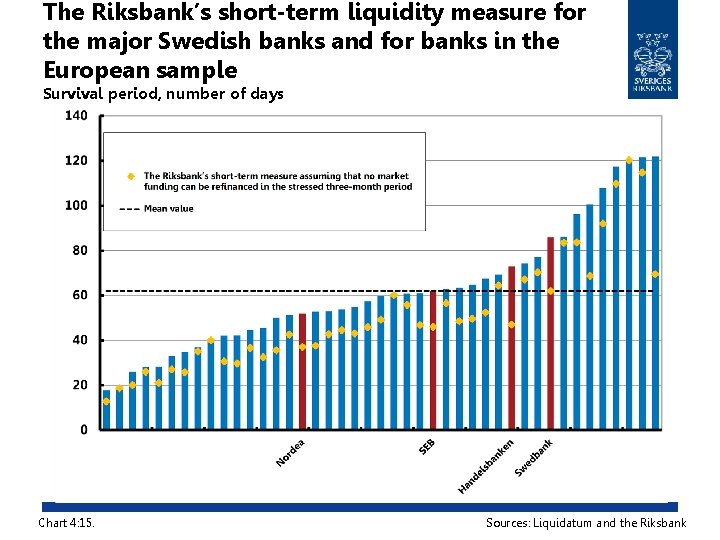
The Riksbank’s short-term liquidity measure for the major Swedish banks and for banks in the European sample Survival period, number of days Chart 4: 15. Sources: Liquidatum and the Riksbank
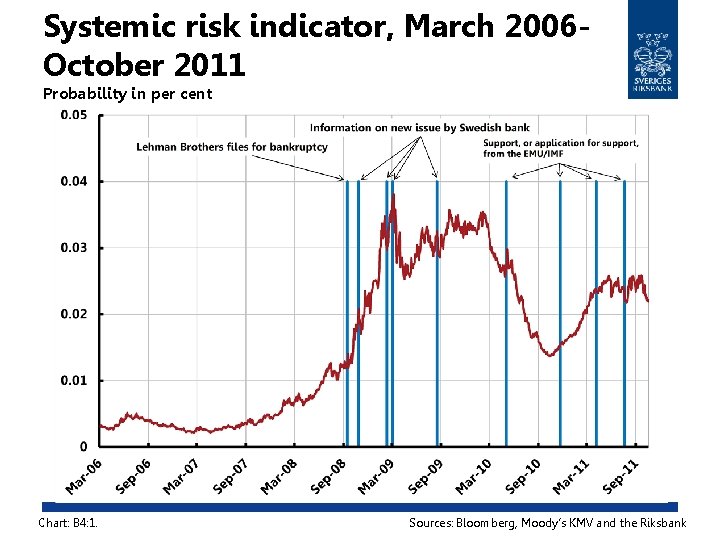
Systemic risk indicator, March 2006 October 2011 Probability in per cent Chart: B 4: 1. Sources: Bloomberg, Moody’s KMV and the Riksbank

Chapter 5
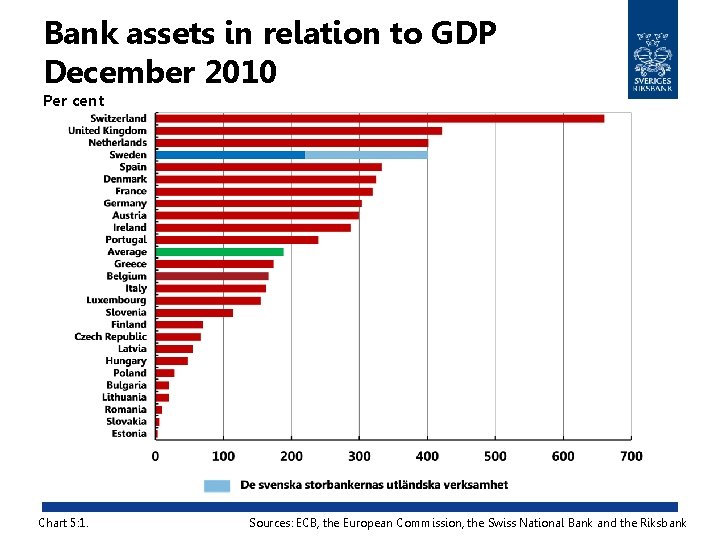
Bank assets in relation to GDP December 2010 Per cent Chart 5: 1. Sources: ECB, the European Commission, the Swiss National Bank and the Riksbank
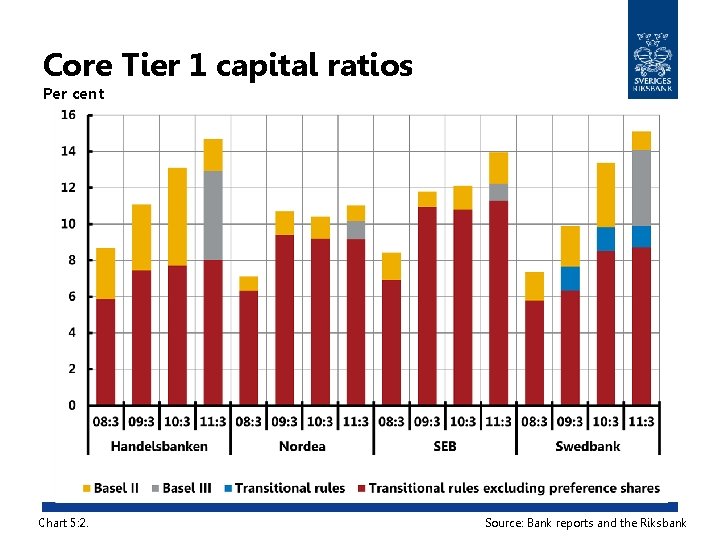
Core Tier 1 capital ratios Per cent Chart 5: 2. Source: Bank reports and the Riksbank
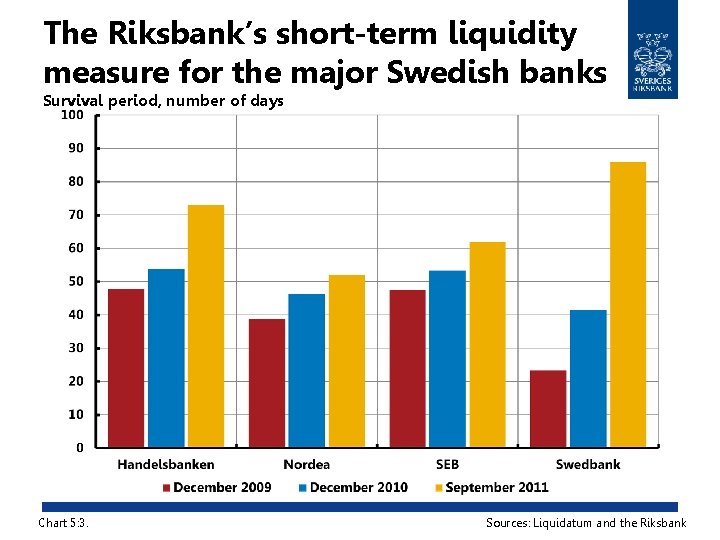
The Riksbank’s short-term liquidity measure for the major Swedish banks Survival period, number of days Chart 5: 3. Sources: Liquidatum and the Riksbank
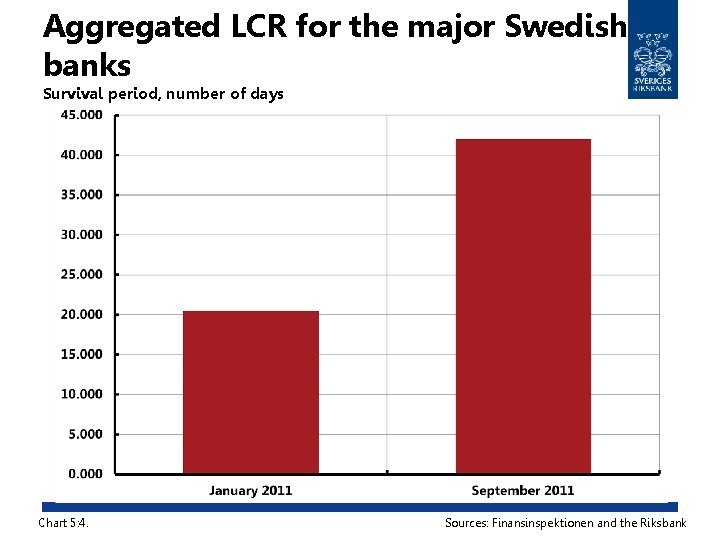
Aggregated LCR for the major Swedish banks Survival period, number of days Chart 5: 4. Sources: Finansinspektionen and the Riksbank
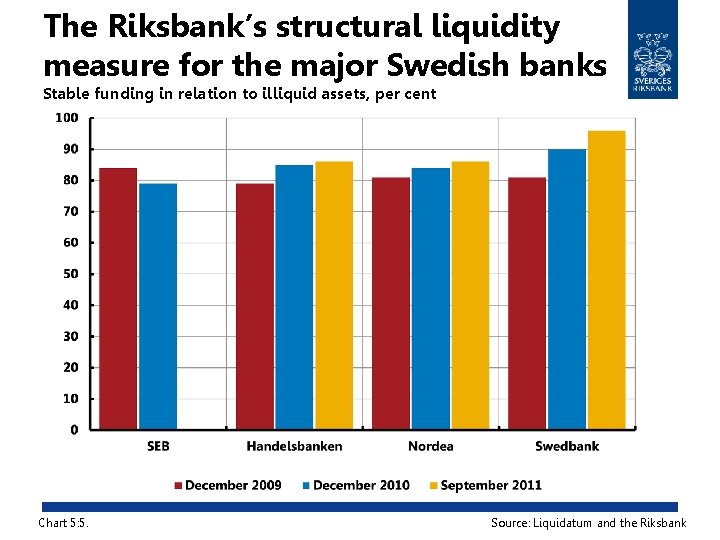
The Riksbank’s structural liquidity measure for the major Swedish banks Stable funding in relation to illiquid assets, per cent Chart 5: 5. Source: Liquidatum and the Riksbank
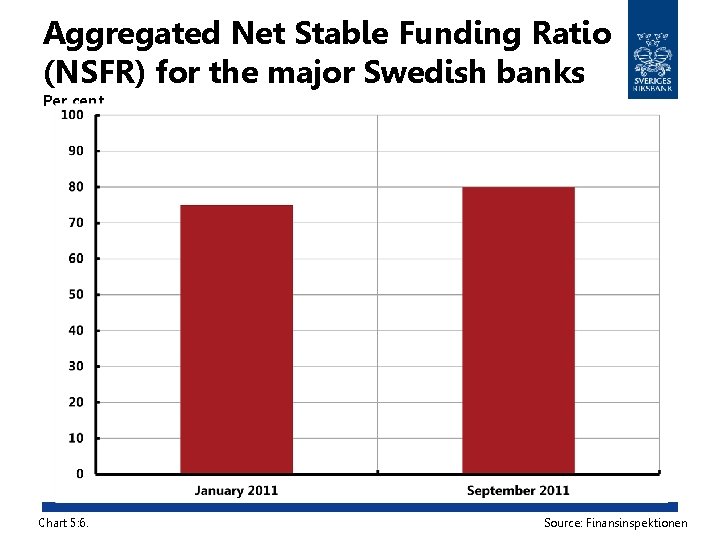
Aggregated Net Stable Funding Ratio (NSFR) for the major Swedish banks Per cent Chart 5: 6. Source: Finansinspektionen
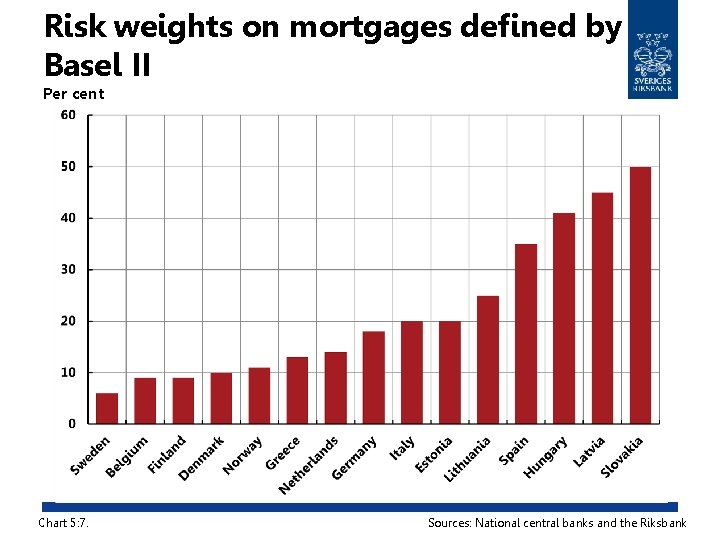
Risk weights on mortgages defined by Basel II Per cent Chart 5: 7. Sources: National central banks and the Riksbank
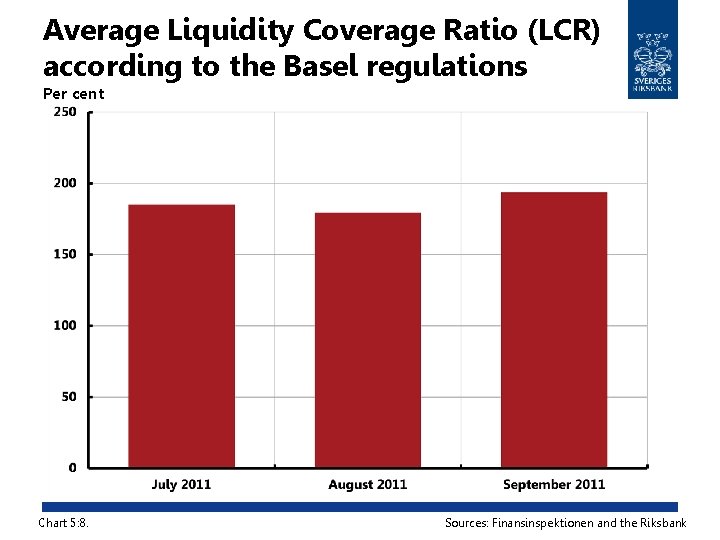
Average Liquidity Coverage Ratio (LCR) according to the Basel regulations Per cent Chart 5: 8. Sources: Finansinspektionen and the Riksbank
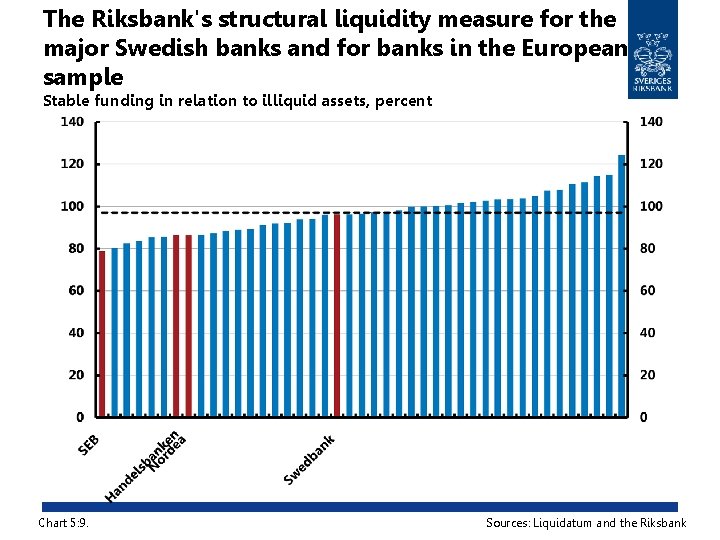
The Riksbank's structural liquidity measure for the major Swedish banks and for banks in the European sample Stable funding in relation to illiquid assets, percent Chart 5: 9. Sources: Liquidatum and the Riksbank
- Slides: 105