
Chapter 1 Skeletal System Chapter 1 Muscular Chapter
- Slides: 51
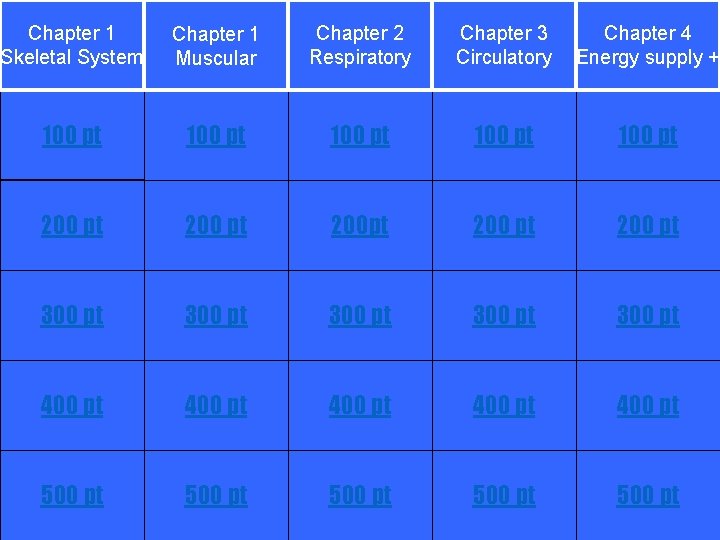
Chapter 1 Skeletal System Chapter 1 Muscular Chapter 2 Respiratory Chapter 3 Circulatory Chapter 4 Energy supply + 100 pt 100 pt 200 pt 200 pt 300 pt 300 pt 400 pt 400 pt 500 pt 500 pt
Skeletal - 100 Point Question: What is the role of a ligament?
Answer A ligament holds bones together
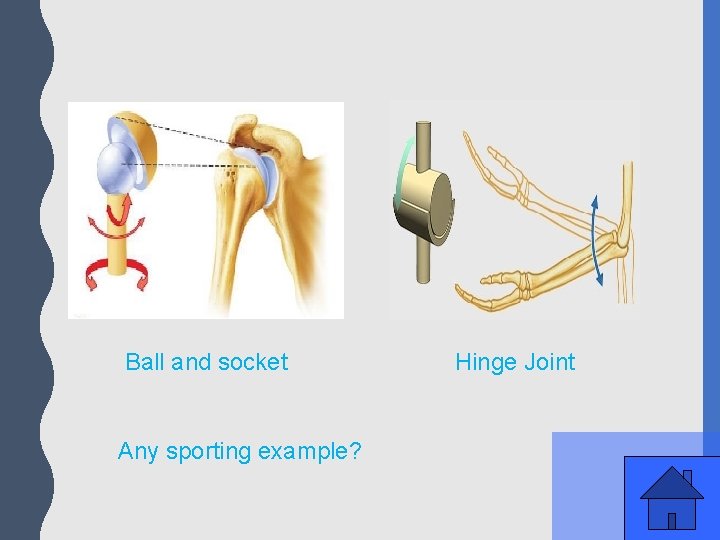
Skeletal - 200 Point Question: Name the two key freely moveable joints 100 bp - if you can provide a sporting example for each one
Ball and socket Any sporting example? Hinge Joint
Skeletal - 300 Point Question: State the 4 functions of the skeleton 100 bonus points if you can provide an example of each function + 25 for each
Answer 1. Shape and support: The backbone enables us to stay upright 2. Movement: The bicep muscle connects to the shoulder and elbow creating movement 3. Protection: The cranium protects the brain 4. Blood production: The pelvis and femur are both important for blood production
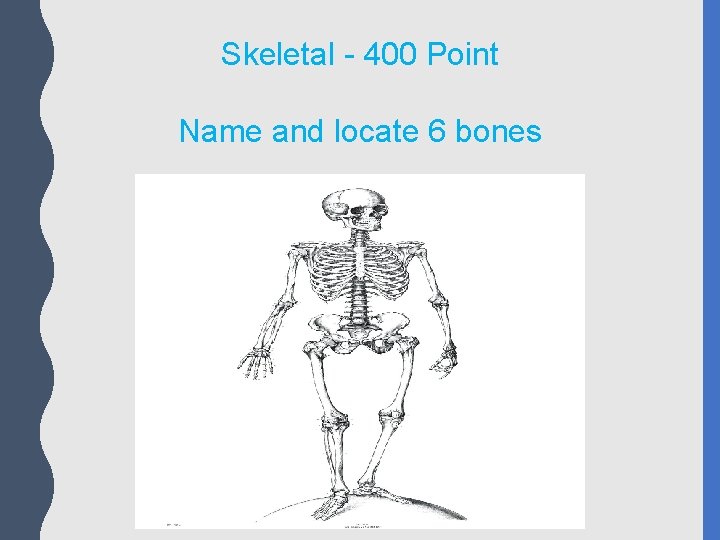
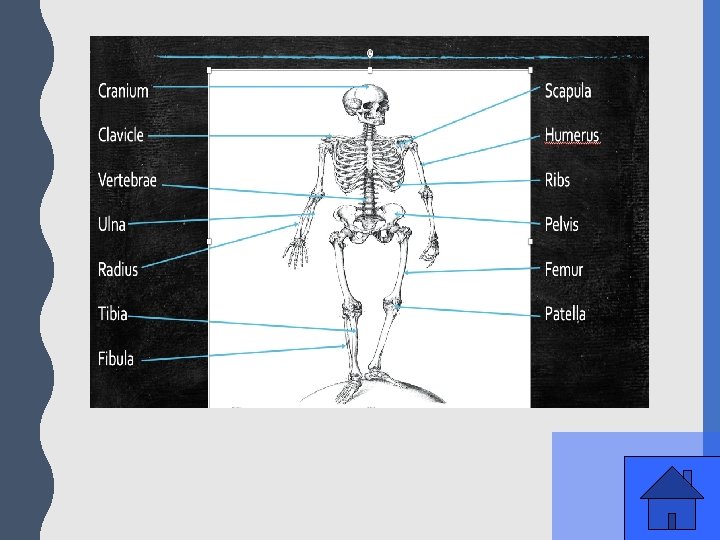
Skeletal - 400 Point Name and locate 6 bones
Skeletal - 500 Points Name the 8 types of movement. 200 Bonus points if you can also provide 2 sporting examples for any chosen movement.
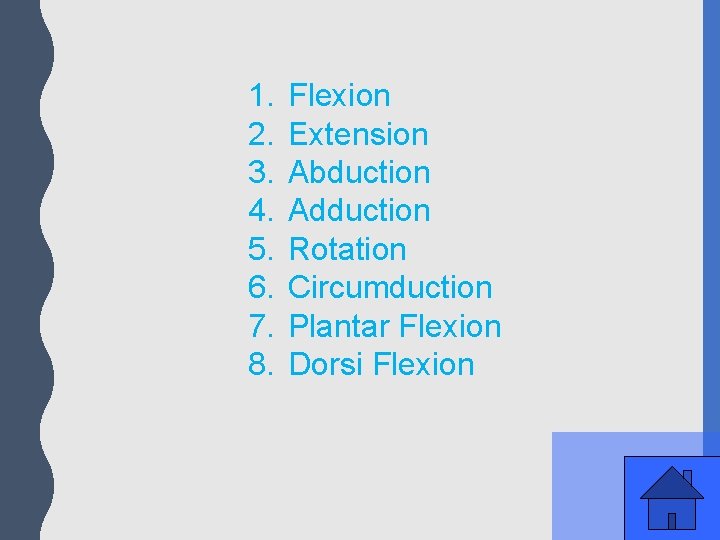
1. 2. 3. 4. 5. 6. 7. 8. Flexion Extension Abduction Adduction Rotation Circumduction Plantar Flexion Dorsi Flexion
Muscular - 100 Point What is the role of a tendon?
A tendon is a tough band of fibrous tissue that attaches muscle to bone and allows movement to take place
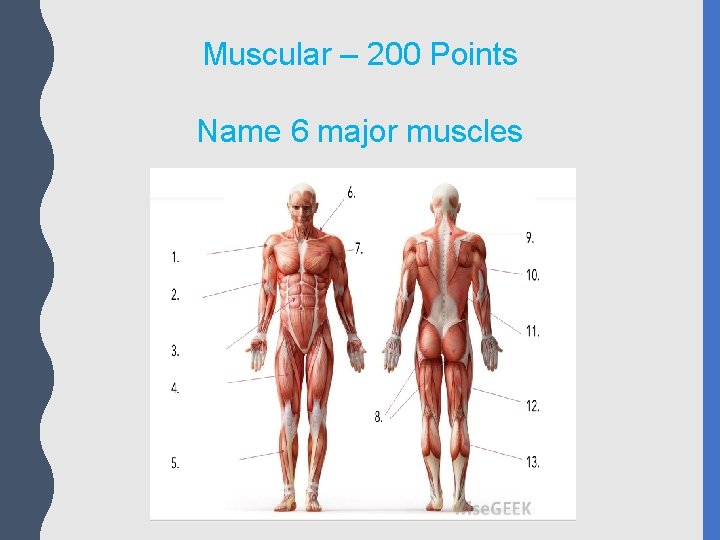
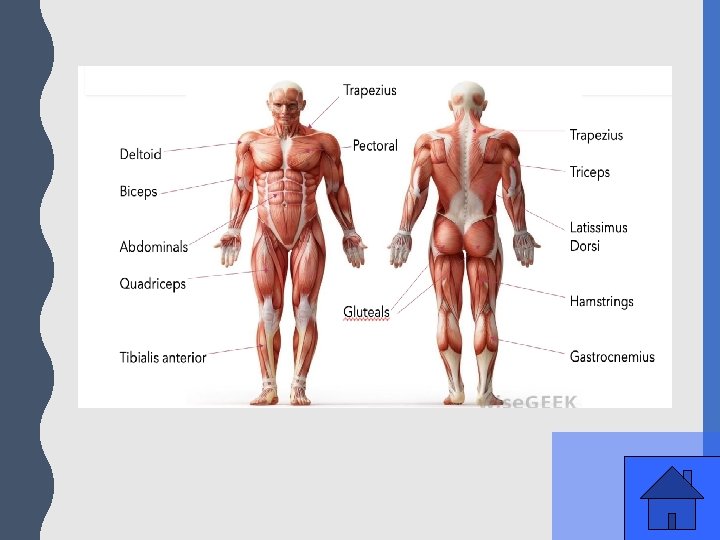
Muscular – 200 Points Name 6 major muscles
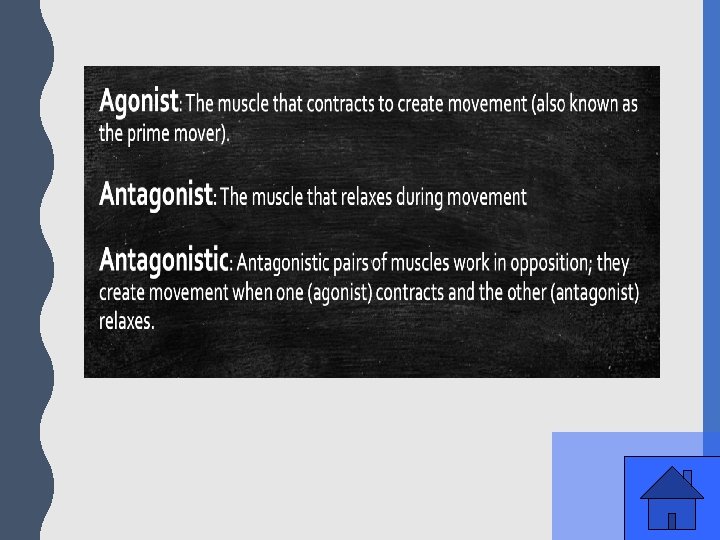
Muscular – 300 Points Explain what an agonist, antagonist and antagonistic mover is and provide an example of one found in the body.
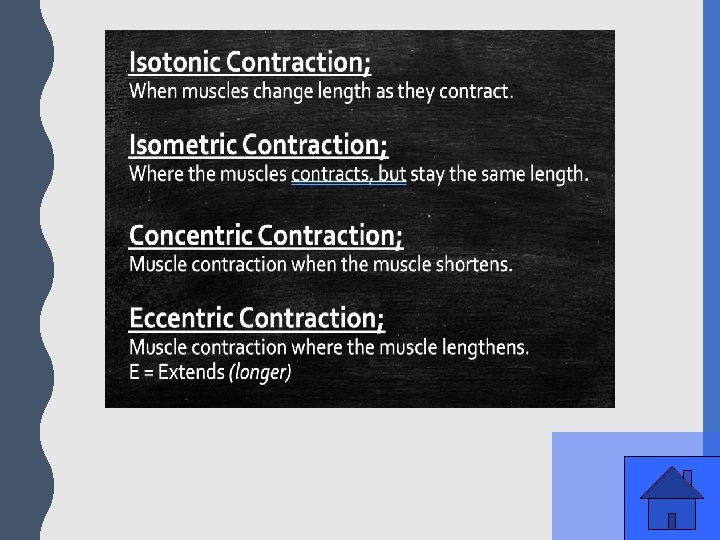
Muscular – 400 Points Name the 4 main muscle contractions. Bonus points (25 each) if you can explain what happens to the muscle with each contraction.
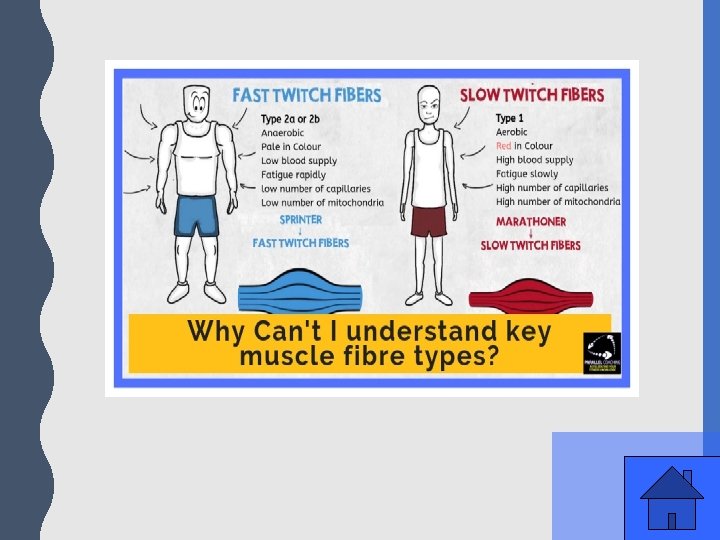
Muscular – 500 Points There are 2 main muscle fibers found in the body; Name them both Provide 3 characteristics of each one
Respiratory – 100 Points What process takes place in the Alveoli.
Alveoli: Small air sacs in the lungs where gaseous exchange take place Bonus Point + 100 What is gaseous exchange? Process in the lungs whereby oxygen is delivered to the bloodstream, while carbon dioxide is removed.
Respiratory – 200 Points Define the term tidal volume
Tidal Volume: the volume of air you inhale with each breath during normal breathing
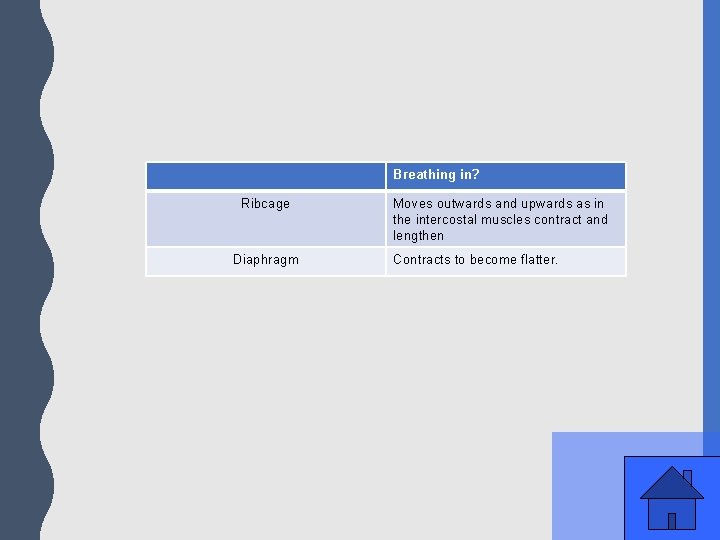
Respiratory – 300 Points What happens to the ribcage and diaphragm when breathing (in) Breathing in? Ribcage Diaphragm
Breathing in? Ribcage Diaphragm Moves outwards and upwards as in the intercostal muscles contract and lengthen Contracts to become flatter.
Respiratory – 400 Points What happens to your lung volume, tidal volume and minute ventilation when you are exercising?
They all increase Minute ventilation: the volume of air, in liters, that you breathe per minute.
Respiratory – 500 Points List some short-term and long-term effects of exercise on the respiratory system and breathing
Short-term; increase in breathing rate, tidal volume, increase in oxygen intake and carbon dioxide removal, Long term; increased tidal volume (TV), minute ventilation (TE) and vital capacity; increased number of functioning alveoli; increased strength of the respiratory muscles (intercostals and diaphragm)
Circulatory – 100 Points What is Haemoglobin?
Hemoglobin: a dark red chemical responsible for transporting oxygen in the blood.
Circulatory – 200 Points Describe the characteristics of arteries and veins. Explain their structures and how they support its role on the human body
Arteries: transport oxygenated blood away from the heart. Thick muscular wall surronds a small lumen, to withstand the high pressure of the blood being pumped from the heart Veins: carry deoxygenated blood to the heart. They carry blood at low pressure and therefore have smaller walls and a larger lumen. Veins also have valves to prevent blood flowing backwards
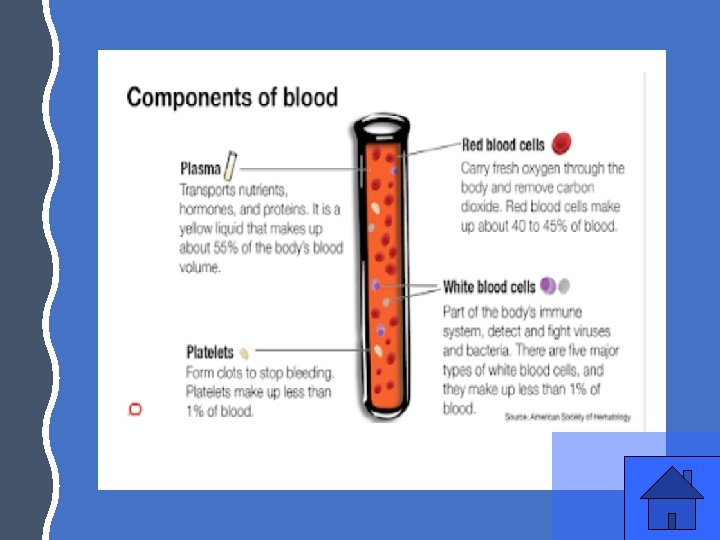
Circulatory – 300 Points Name the 4 components of blood, Bonus point +25 if you can also state its function
Circulatory – 400 Points What is the equation to work out Cardiac output?
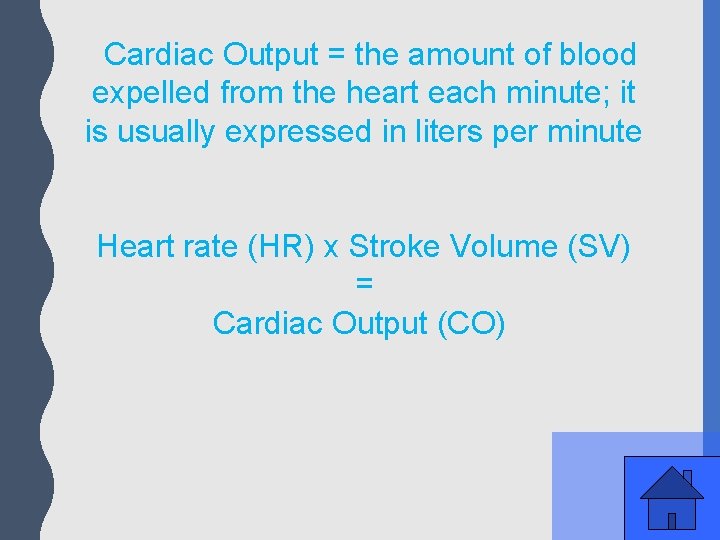
Cardiac Output = the amount of blood expelled from the heart each minute; it is usually expressed in liters per minute Heart rate (HR) x Stroke Volume (SV) = Cardiac Output (CO)
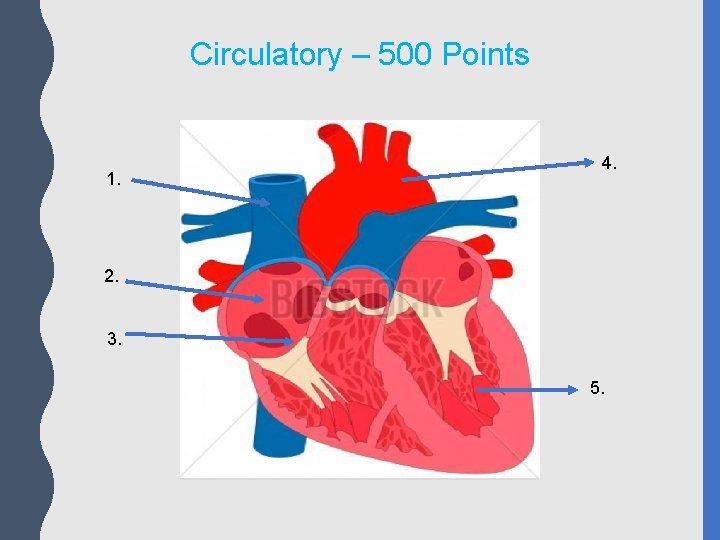
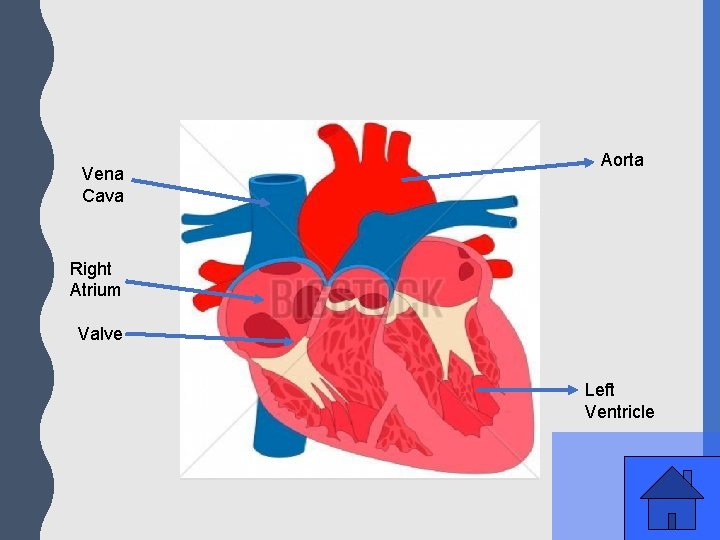
Circulatory – 500 Points 1. 4. 2. 3. 5.
Vena Cava Aorta Right Atrium Valve Left Ventricle
Energy Supply – 100 Points Define the term aerobic and anaerobic Respiration.
Aerobic Respiration: is a respiration that takes place in the presence of oxygen. Anaerobic respiration: Is the process of Converting glucose into energy without oxygen.
Energy Supply + – 200 Points What is lactic acid and why can it be negative on sports performances?
Lactic Acid: A waste product formed in the muscles during anaerobic respiration, causin muscle fatigue
Energy Supply + – 300 Points There are many factors that influence how quickly someone can recover after exercise, can you list 3? – (100 points for each orrect answer)
1. Overall Strength and Fitness: The stronger your muscles ar the quicker they will be at absorbing the oxygen needed to remove lactic. 2. Genetics: Some people inherit the ability to recover quickly from exercise from their parents. 3. Age: As you get older, you generally need longer to recove 4. Gender: Research has found physical fit women have a gre resistance to fatigue than their male counterparts. 5. Sleep: Good quality sleep helps your body recover faster physically and mentally, poor, short or interrupted sleep has the opposite effect.
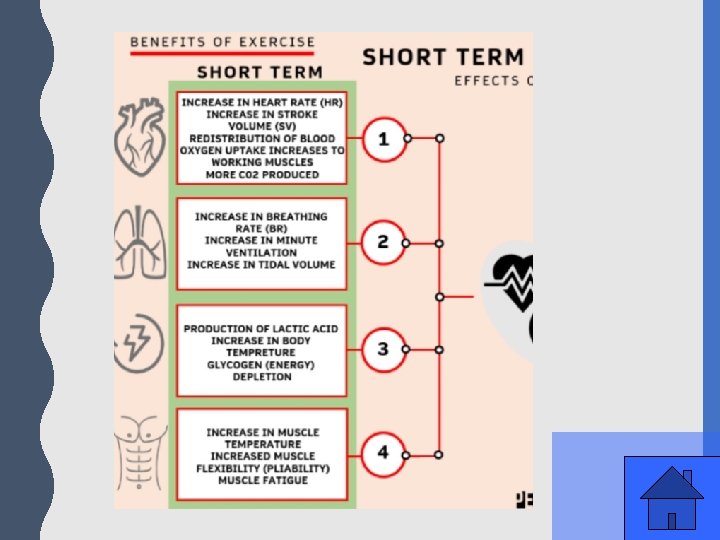
Energy Supply – 400 Points Provide 4 short term effects of exercise on the body, along with descriptions
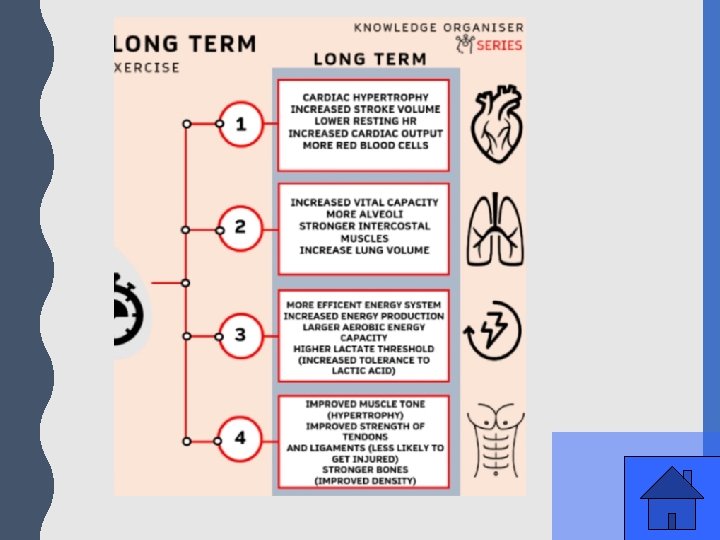
Energy Supply – 500 Points Provide 5 long-term effects of exercise on the body, along with descriptions