
Chapter 1 Section World Geography Chapter 1 Exploring

- Slides: 19
Chapter 1 , Section World Geography Chapter 1 Exploring Geography Copyright © 2003 by Pearson Education, Inc. , publishing as Prentice Hall, Upper Saddle River, NJ. All rights reserved.
Chapter 1 , Section 2 Changes Within the Earth • How do scientists classify the earth’s major physical characteristics? • What physical processes affect the earth’s crust? • What theories help scientists understand the earth’s past?
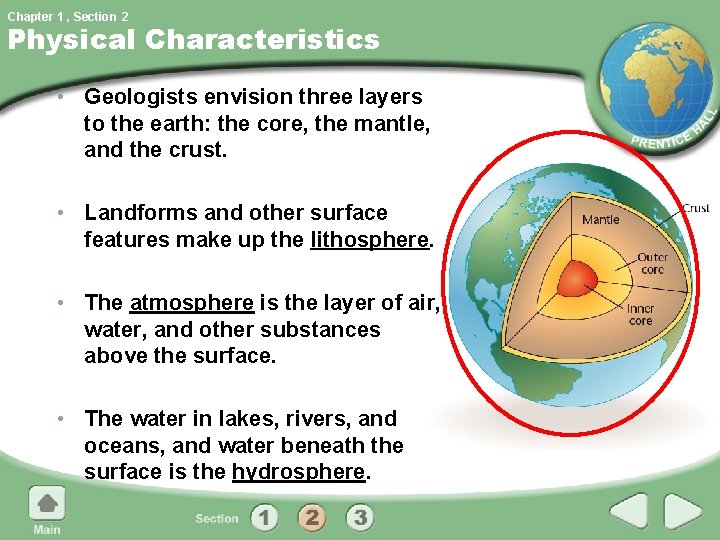
Chapter 1 , Section 2 Physical Characteristics • Geologists envision three layers to the earth: the core, the mantle, and the crust. • Landforms and other surface features make up the lithosphere. • The atmosphere is the layer of air, water, and other substances above the surface. • The water in lakes, rivers, and oceans, and water beneath the surface is the hydrosphere.
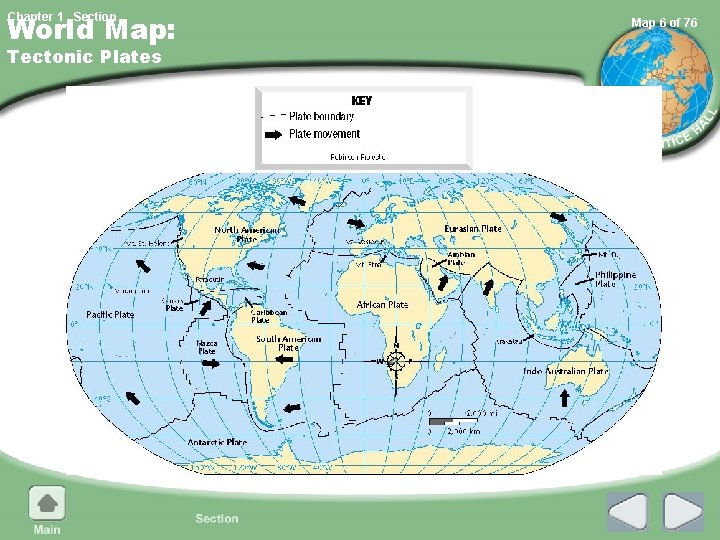
World Map: Chapter 1 , Section Tectonic Plates Map 6 of 76
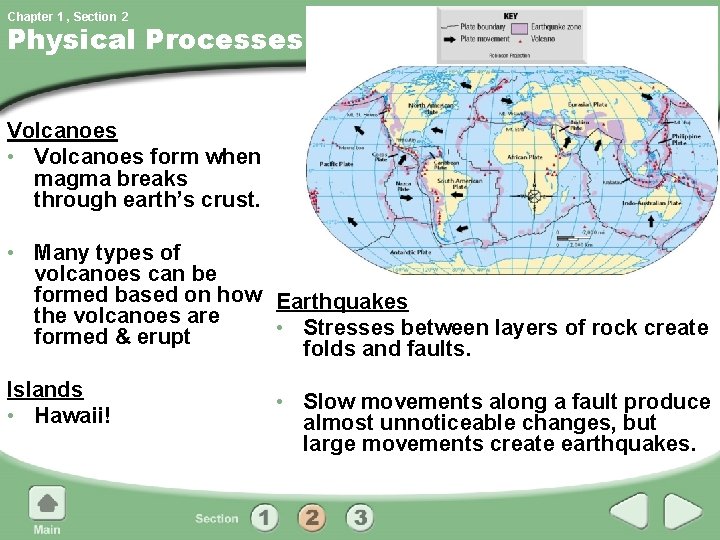
Chapter 1 , Section 2 Physical Processes Volcanoes • Volcanoes form when magma breaks through earth’s crust. • Many types of volcanoes can be formed based on how Earthquakes the volcanoes are • Stresses between layers of rock create formed & erupt folds and faults. Islands • Hawaii! • Slow movements along a fault produce almost unnoticeable changes, but large movements create earthquakes.
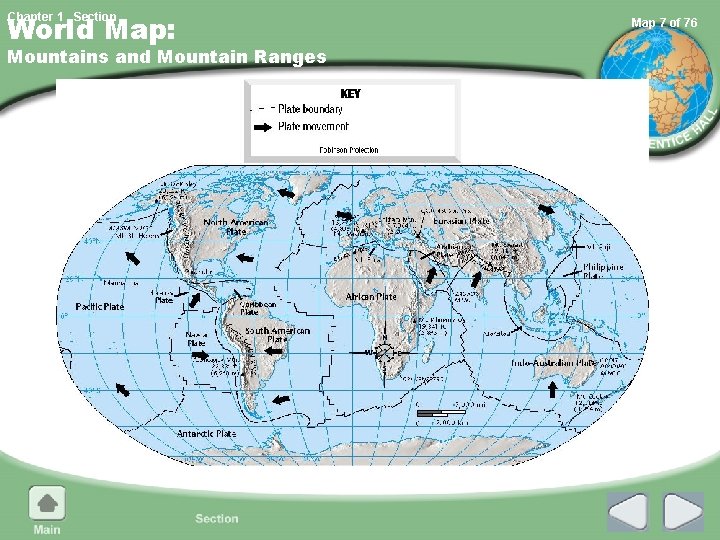
World Map: Chapter 1 , Section Mountains and Mountain Ranges Map 7 of 76
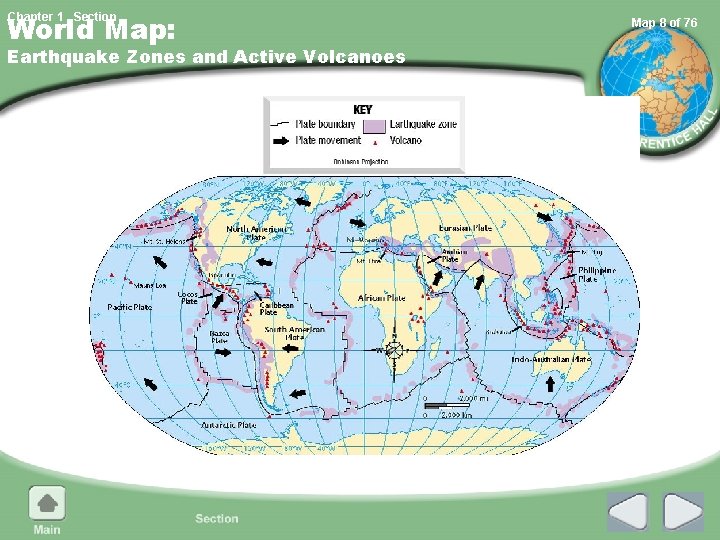
World Map: Chapter 1 , Section Earthquake Zones and Active Volcanoes Map 8 of 76
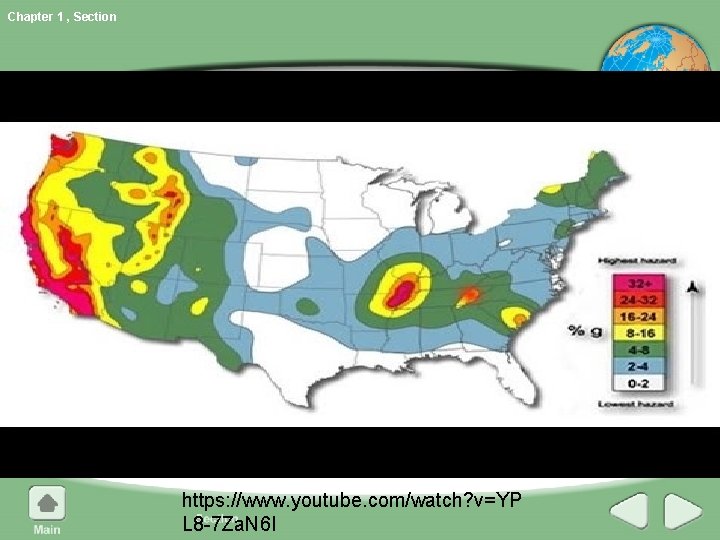
Chapter 1 , Section https: //www. youtube. com/watch? v=YP L 8 -7 Za. N 6 I
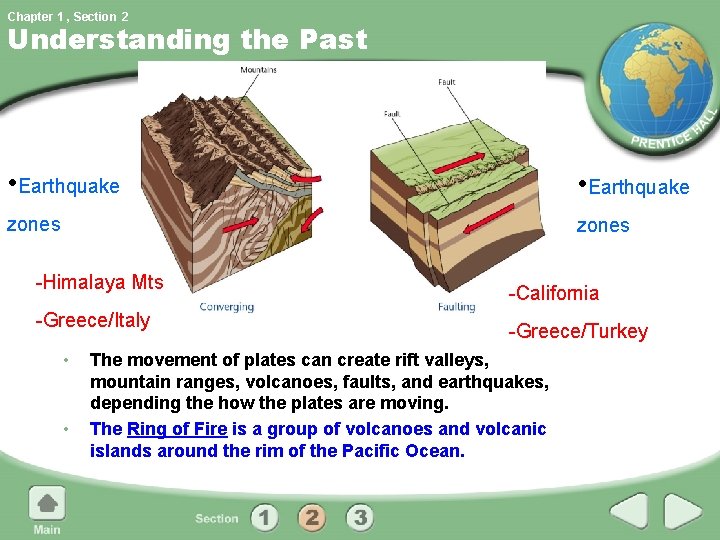
Chapter 1 , Section 2 Understanding the Past • Earthquake zones -Himalaya Mts -Greece/Italy • • -California -Greece/Turkey The movement of plates can create rift valleys, mountain ranges, volcanoes, faults, and earthquakes, depending the how the plates are moving. The Ring of Fire is a group of volcanoes and volcanic islands around the rim of the Pacific Ocean.
Chapter 1 , Section 2 Review What term is used to describe the water on and below the surface? a) lithosphere b) atmosphere c) hydrosphere d) biosphere Which process is used to describe the movements of tectonic plates? a) subduction b) convergence c) faulting d) convection Want to connect to the World Geography link for this section? Click Here!
Chapter 1 , Section 2 Review What term is used to describe the water on and below the surface? a) lithosphere b) atmosphere c) hydrosphere d) biosphere Which process is used to describe the movements of tectonic plates? a) subduction b) convergence c) faulting d) convection Want to connect to the World Geography link for this section? Click Here!
Chapter 1 , Section 3 Changes on the Earth’s Surface • What are the lasting effects of the two kinds of weathering — mechanical and chemical — on the physical landscape of a place? • How do the three most common causes of erosion — water, wind, and glaciers — alter the physical landscape of a place?
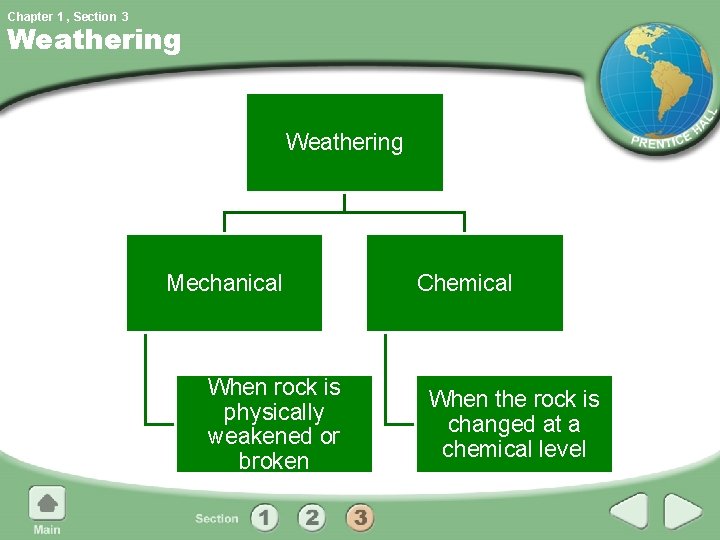
Chapter 1 , Section 3 Weathering Mechanical When rock is physically weakened or broken Chemical When the rock is changed at a chemical level
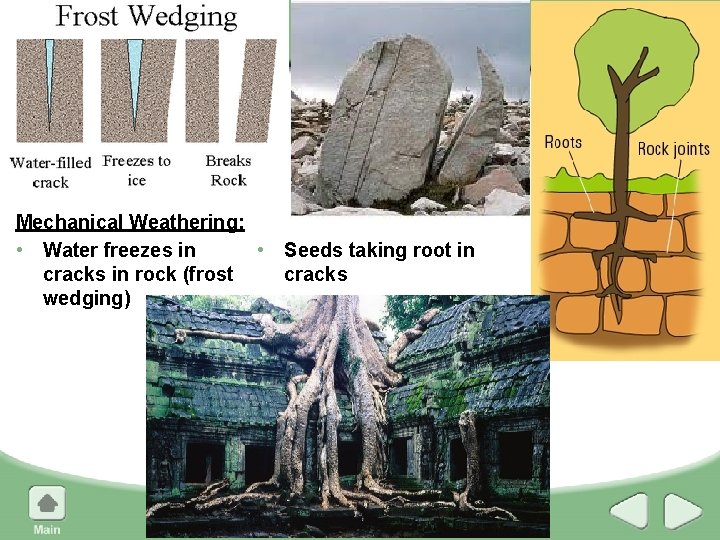
Chapter 1 , Section Mechanical Weathering: • Water freezes in • Seeds taking root in cracks in rock (frost cracks wedging)
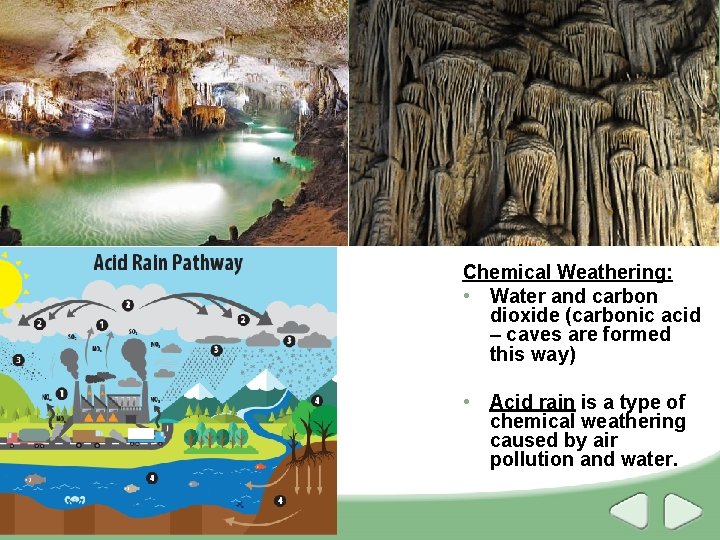
Chapter 1 , Section Chemical Weathering: • Water and carbon dioxide (carbonic acid – caves are formed this way) • Acid rain is a type of chemical weathering caused by air pollution and water.
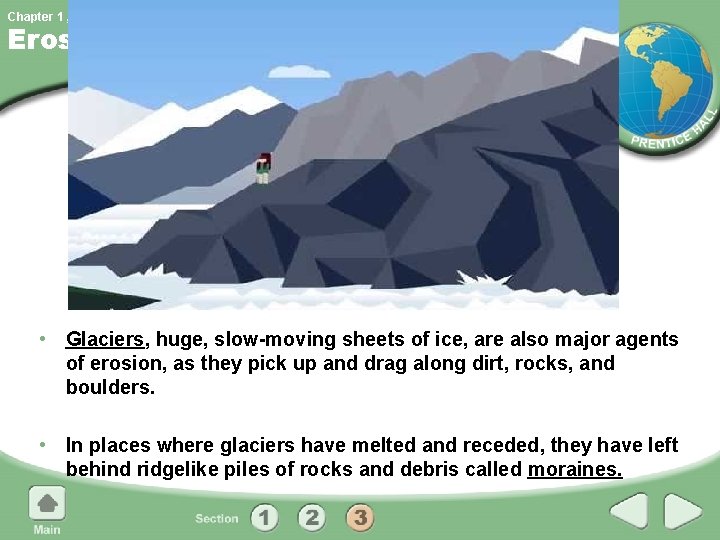
Chapter 1 , Section 3 Erosion • Glaciers, huge, slow-moving sheets of ice, are also major agents of erosion, as they pick up and drag along dirt, rocks, and boulders. • In places where glaciers have melted and receded, they have left behind ridgelike piles of rocks and debris called moraines.
Chapter 1 , Section Erosion is the movement of weathered material such as gravel, soil, and sand. Moving water is the single greatest cause of erosion, especially when carrying sediment. Wind, the second major cause of erosion, can strip away exposed soil, but windblown deposits of loess, mineral-rich dust and silt, can also benefit farmers.
Chapter 1 , Section 3 Review Acid rain is a) a type of sediment. b) a type of mechanical weathering. c) wind-blown dust and silt. d) a type of chemical weathering. How can wind be a force of erosion? a) It can deposit silt on an alluvial plain or delta. b) It can quickly carve out valleys and canyons from solid rock. c) It can carry away dry soil and sand. d) It can act as a form of chemical weathering. Want to connect to the World Geography link for this section? Click Here!
Chapter 1 , Section 3 Review Acid rain is a) a type of sediment. b) a type of mechanical weathering. c) wind-blown dust and silt. d) a type of chemical weathering. How can wind be a force of erosion? a) It can deposit silt on an alluvial plain or delta. b) It can quickly carve out valleys and canyons from solid rock. c) It can carry away dry soil and sand. d) It can act as a form of chemical weathering. Want to connect to the World Geography link for this section? Click Here!