
Chapter 1 Section 1 Notes CHAPTER 1 The





















- Slides: 58
Chapter 1 Section 1 Notes
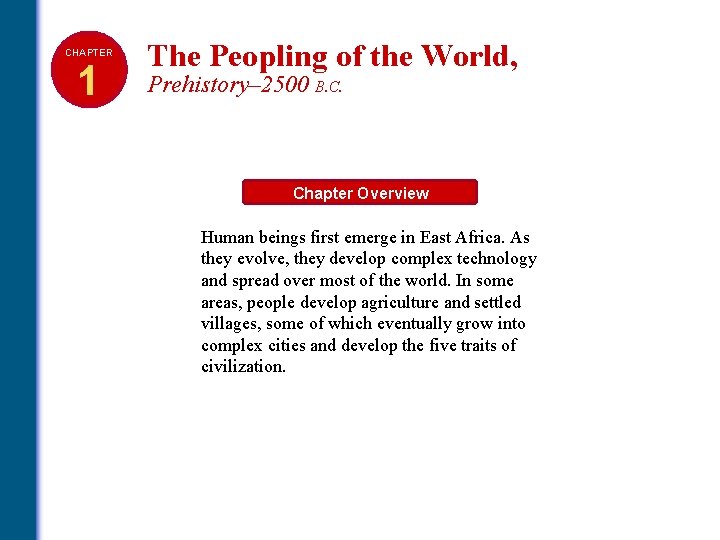
CHAPTER 1 The Peopling of the World, Prehistory– 2500 B. C. Chapter Overview Human beings first emerge in East Africa. As they evolve, they develop complex technology and spread over most of the world. In some areas, people develop agriculture and settled villages, some of which eventually grow into complex cities and develop the five traits of civilization.
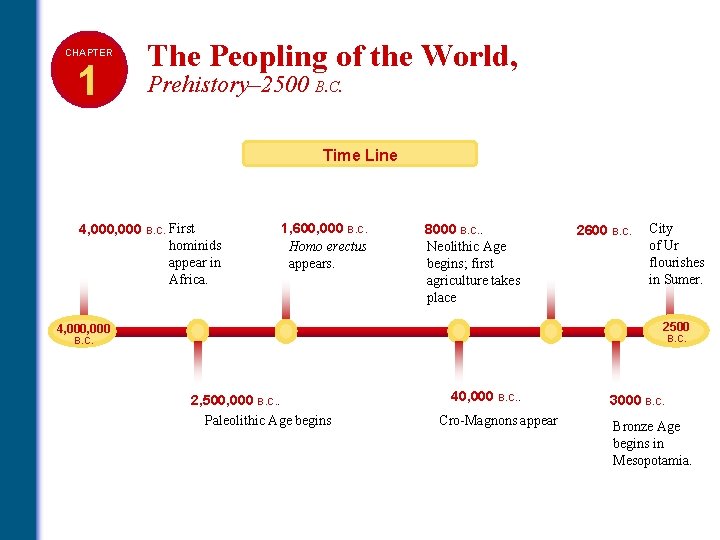
CHAPTER 1 The Peopling of the World, Prehistory– 2500 B. C. Time Line 4, 000 B. C. First hominids appear in Africa. 1, 600, 000 B. C. Homo erectus appears. 8000 B. C. . Neolithic Age begins; first agriculture takes place 2600 B. C. City of Ur flourishes in Sumer. 2500 4, 000 B. C. 2, 500, 000 B. C. . Paleolithic Age begins 40, 000 B. C. . Cro-Magnons appear 3000 B. C. Bronze Age begins in Mesopotamia.
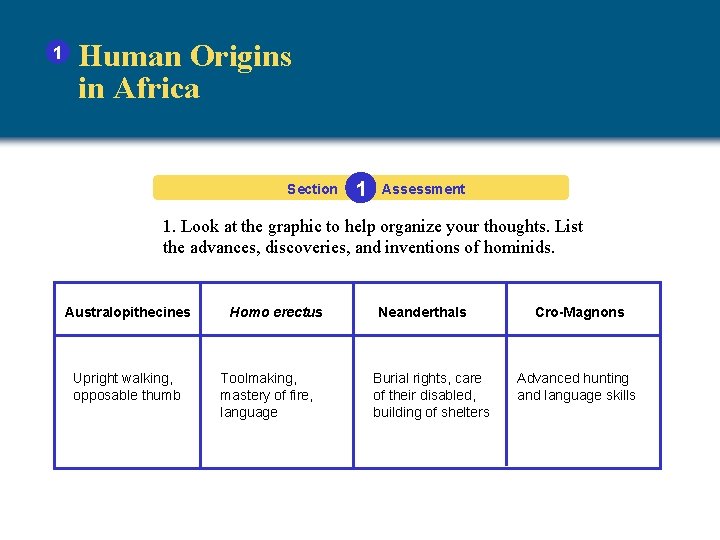
1 Human Origins in Africa Section 1 Assessment 1. Look at the graphic to help organize your thoughts. List the advances, discoveries, and inventions of hominids. Australopithecines Upright walking, opposable thumb Homo erectus Toolmaking, mastery of fire, language Neanderthals Burial rights, care of their disabled, building of shelters Cro-Magnons Advanced hunting and language skills
I. Scientists Search for Human Remains
A. Prehistory- time before written records 3000 B. C. and before
B. History – time after written records
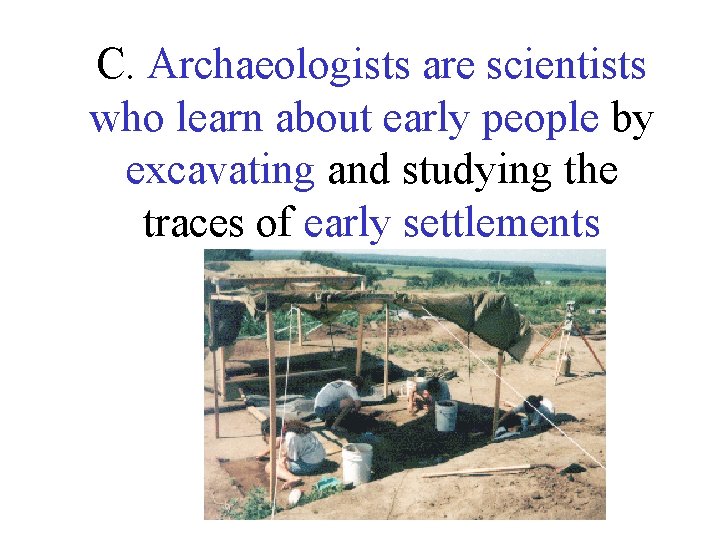
C. Archaeologists are scientists who learn about early people by excavating and studying the traces of early settlements
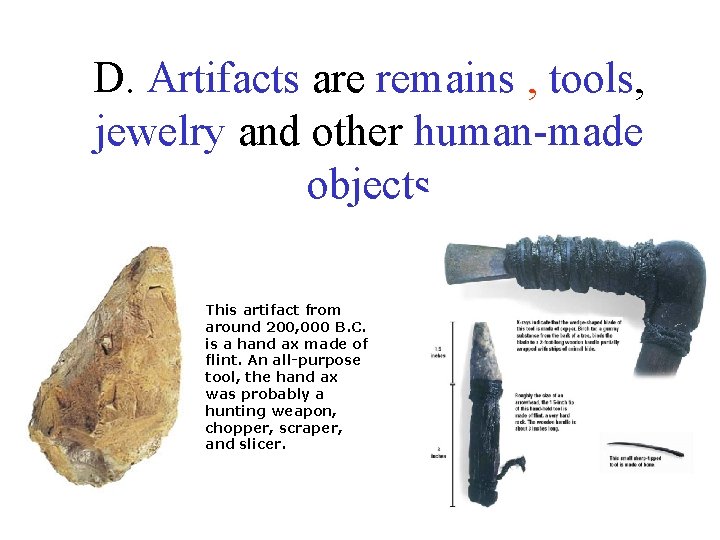
D. Artifacts are remains , tools, jewelry and other human-made objects This artifact from around 200, 000 B. C. is a hand ax made of flint. An all-purpose tool, the hand ax was probably a hunting weapon, chopper, scraper, and slicer.
E. Anthropologists study culture of humans
F. Culture is, the unique way of life of people
G. Paleontologists study fossils.
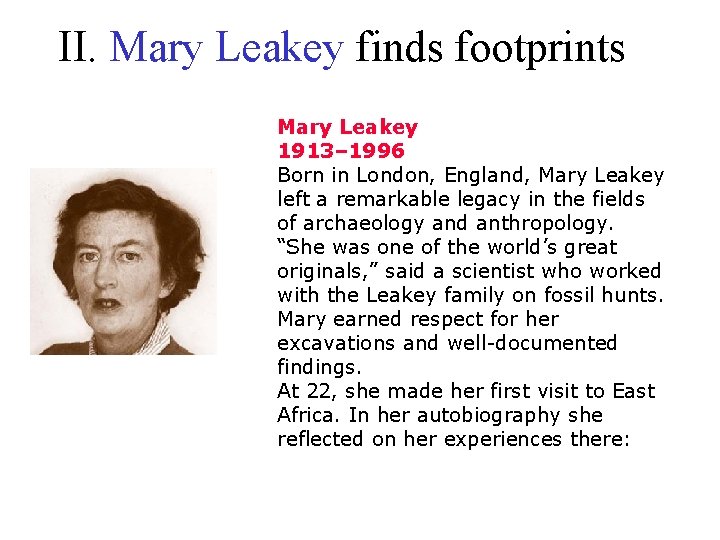
II. Mary Leakey finds footprints Mary Leakey 1913– 1996 Born in London, England, Mary Leakey left a remarkable legacy in the fields of archaeology and anthropology. “She was one of the world’s great originals, ” said a scientist who worked with the Leakey family on fossil hunts. Mary earned respect for her excavations and well-documented findings. At 22, she made her first visit to East Africa. In her autobiography she reflected on her experiences there:
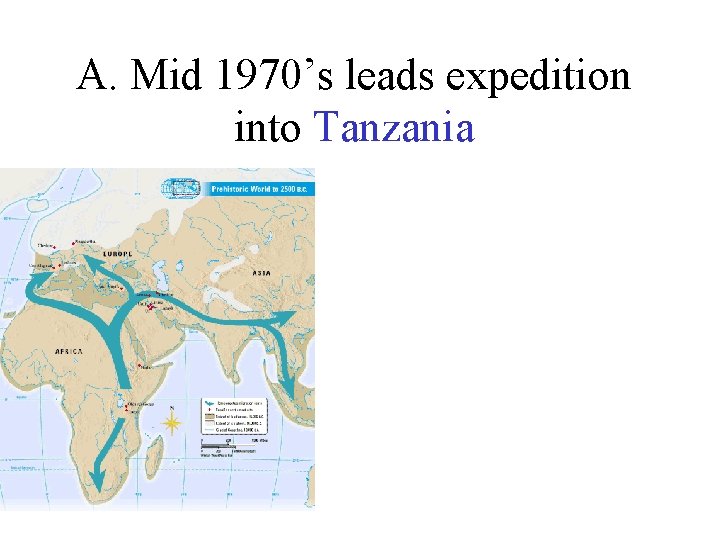
A. Mid 1970’s leads expedition into Tanzania
1. Find prehistoric footprints of human like creatures called austalopithecines, also called hominids
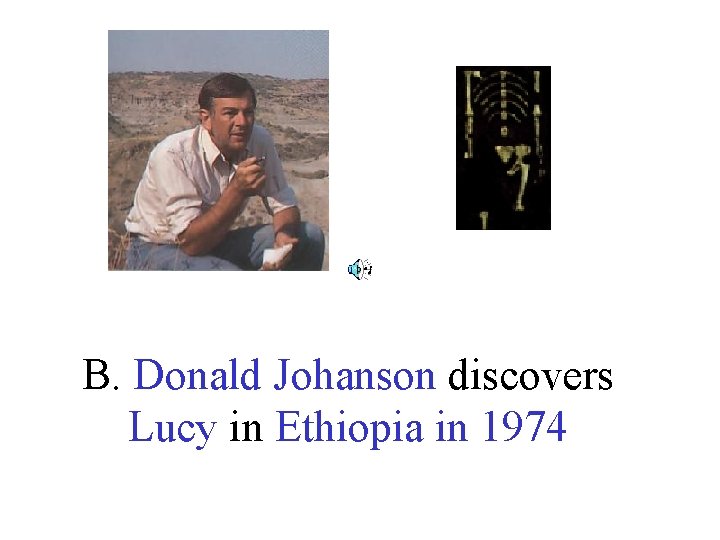
B. Donald Johanson discovers Lucy in Ethiopia in 1974
1. Lucy was an almost complete adult female hominid living around 3. 5 million years ago
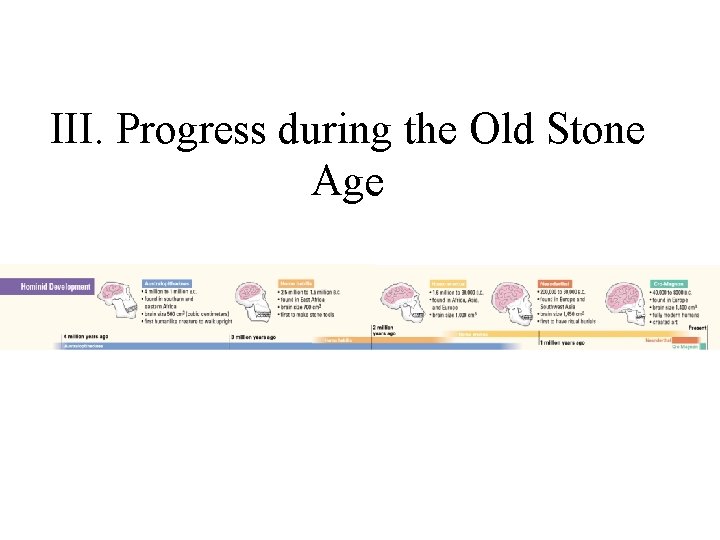
III. Progress during the Old Stone Age
A. Stone Age had two parts.
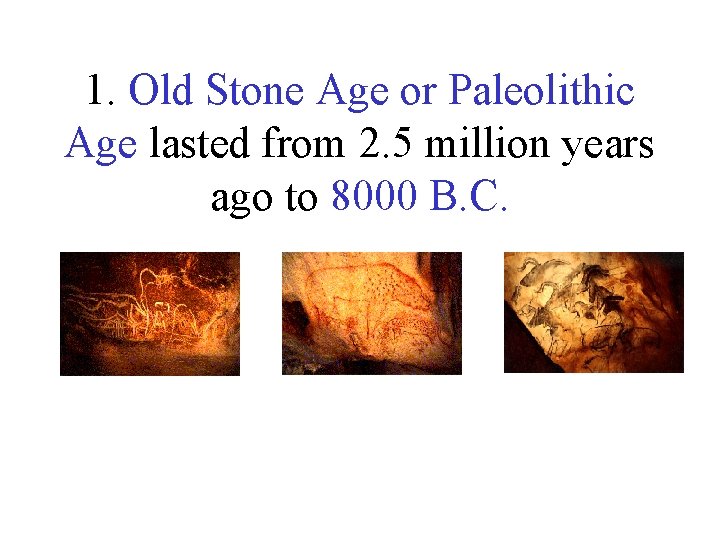
1. Old Stone Age or Paleolithic Age lasted from 2. 5 million years ago to 8000 B. C.
a. Ice Age glaciers advanced and retreated as many as 18 times.
2. New Stone Age or Neolithic Age began about 8000 B. C. and ended around 3000 B. C.
a. Polish stone tools b. Make Pottery c. Grow crops d. Domesticate animals
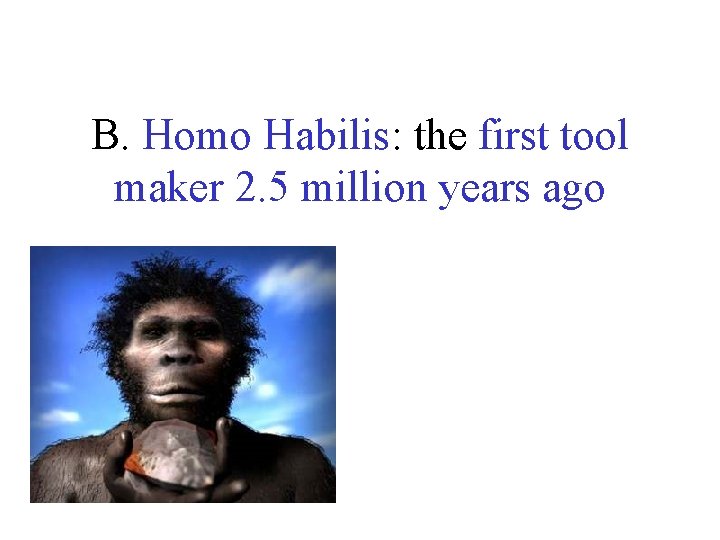
B. Homo Habilis: the first tool maker 2. 5 million years ago
1. Means man of Skill
2. Discovered in Tanzania by the Leakeys
3. Made tools of lava.
a. Cut meat b. Crack bones open
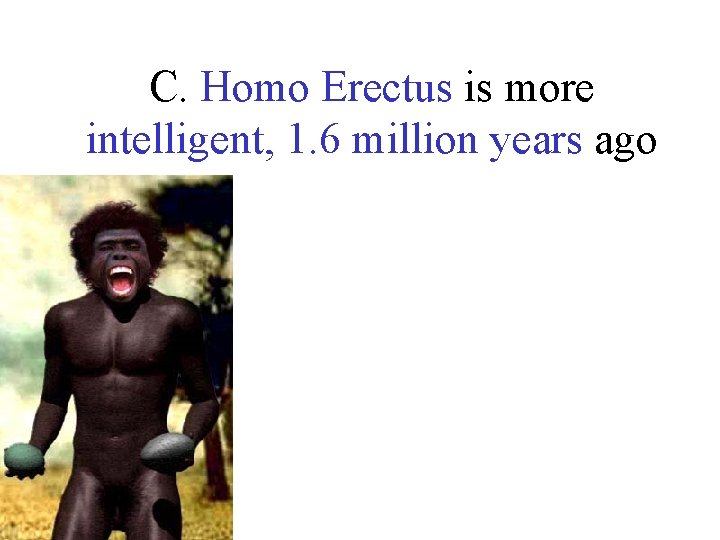
C. Homo Erectus is more intelligent, 1. 6 million years ago
1. Upright man 2. Developed technlogy
a. Ways of applying knowledge
3. Skillful hunters
4. Tools for digging, scraping, and cutting
5. Began to migrate
6. First to use fire
7. First to use spoken language
8. May have named objects, plants, and animals
IV. The Dawn of Modern Humans
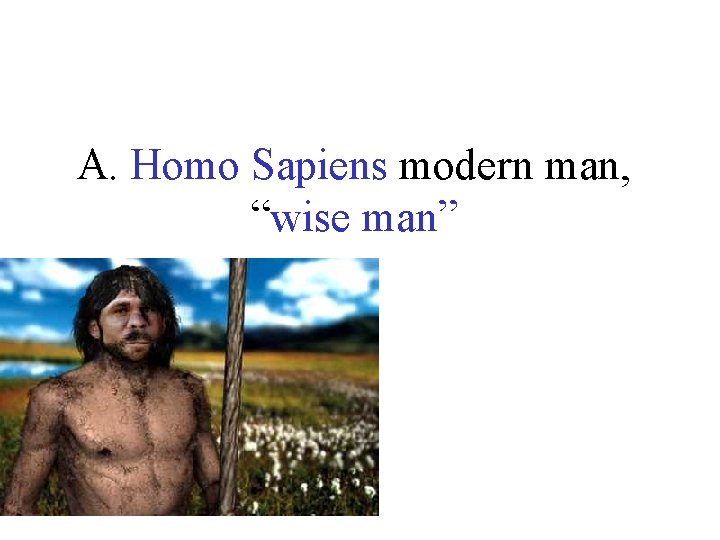
A. Homo Sapiens modern man, “wise man”
1. Larger brains
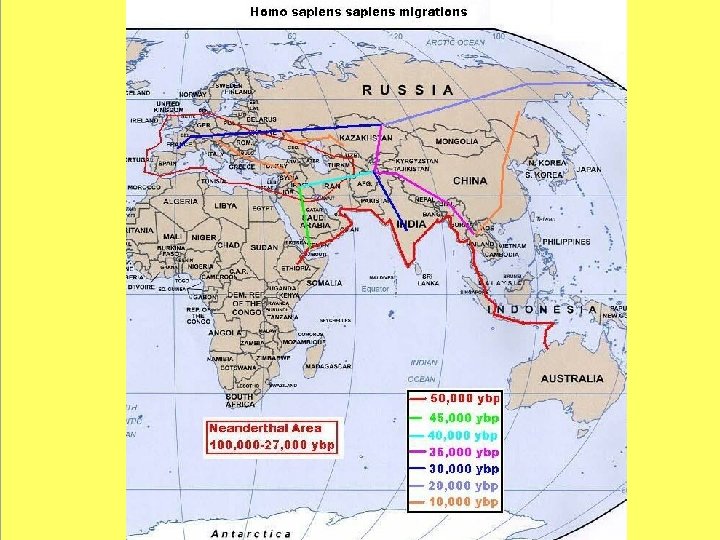
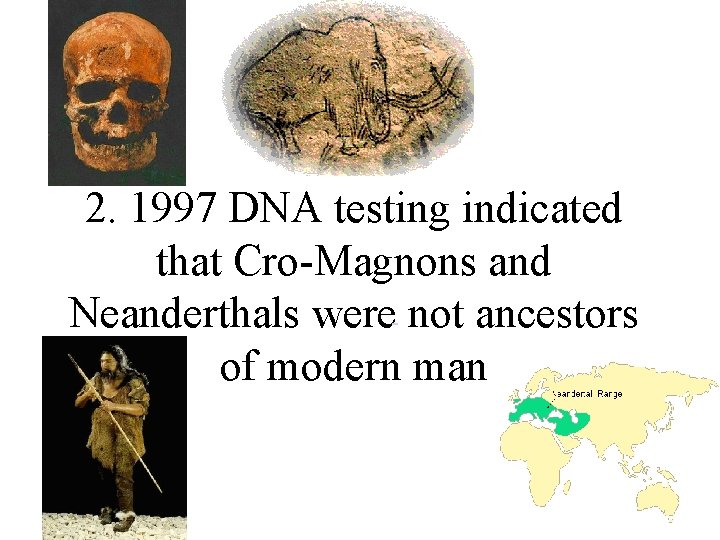
2. 1997 DNA testing indicated that Cro-Magnons and Neanderthals were not ancestors of modern man
B. Neanderthals way of life
1. First found in Germany in a valley called Neander
2. Powerfully built
3. Lived between 200, 000 and 30, 000 years ago
4. Tried to explain world
5. Developed religious beliefs
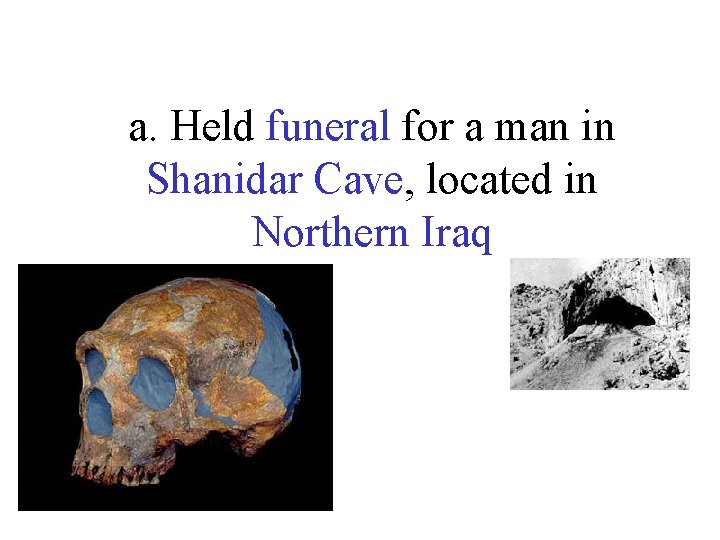
a. Held funeral for a man in Shanidar Cave, located in Northern Iraq
6. Made shelters wood animal skins
7. Made tools
C. Cro-Magnons Emerge
1. Arrive about 40, 000 years ago
2. Remains show that they were identical to modern humans
3. Planned hunts
4. Advanced spoken language
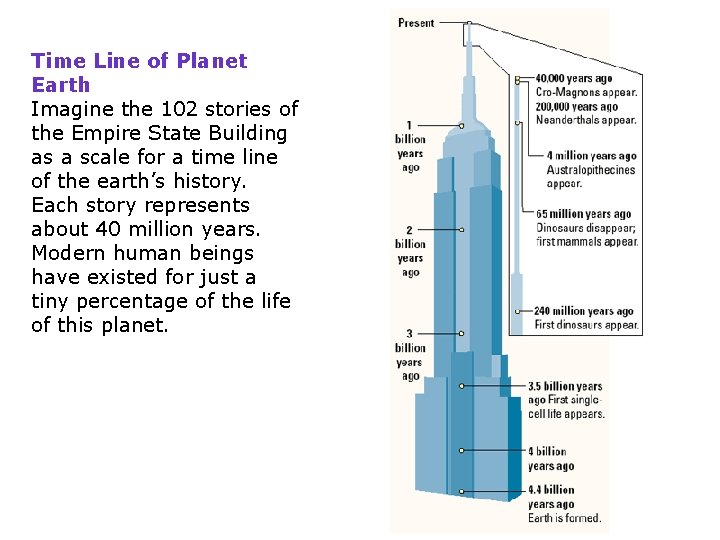
Time Line of Planet Earth Imagine the 102 stories of the Empire State Building as a scale for a time line of the earth’s history. Each story represents about 40 million years. Modern human beings have existed for just a tiny percentage of the life of this planet.
1=C 3=D 2=H 4=G