
CHAPTER 1 Section 1 Methods of Science What
- Slides: 17
CHAPTER 1 Section 1 Methods of Science
What is Science? A method for studying the natural world A process that uses observation and investigation to gain knowledge about events in nature
Major categories of science Life Science Living Earth Science Earth things and space Physical Science Matter and energy
Investigations are used to learn new information Observations Experiments Models Often, scientists will use all three investigations to learn about the natural world
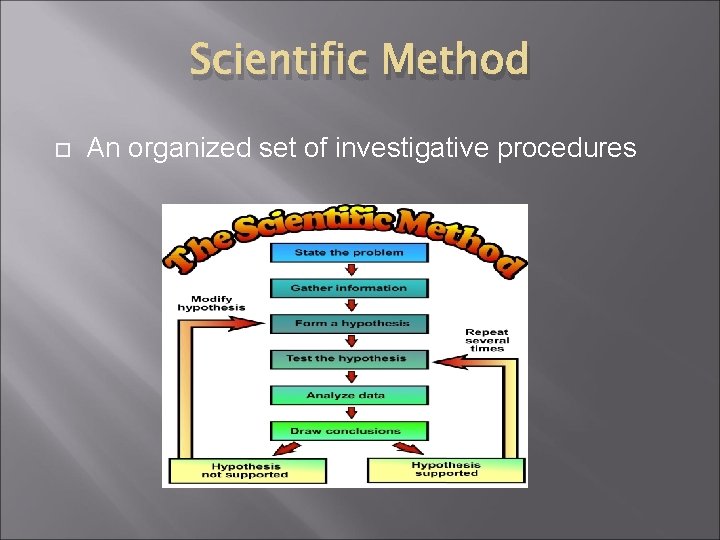
Scientific Method An organized set of investigative procedures
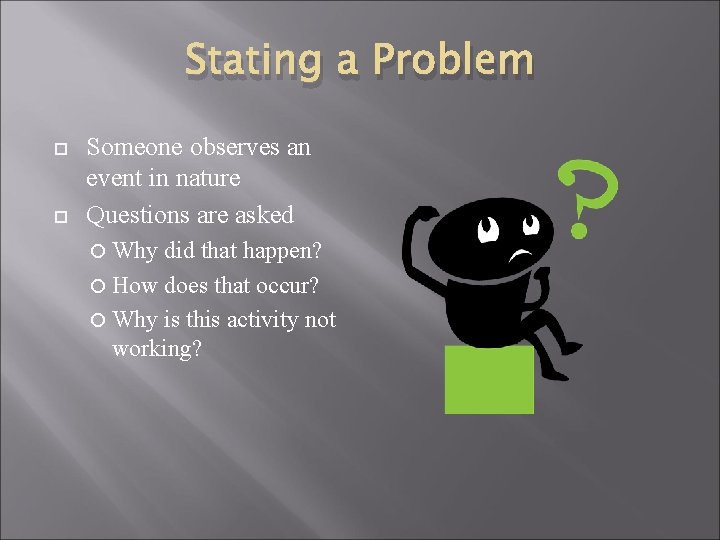
Stating a Problem Someone observes an event in nature Questions are asked Why did that happen? How does that occur? Why is this activity not working?
Researching and Gathering Information Learn about the background of the problem Has anyone else found out information about the problem that will be useful?
Forming a Hypothesis A hypothesis is a possible explanation for a problem When writing a hypothesis, use an if/then statement.
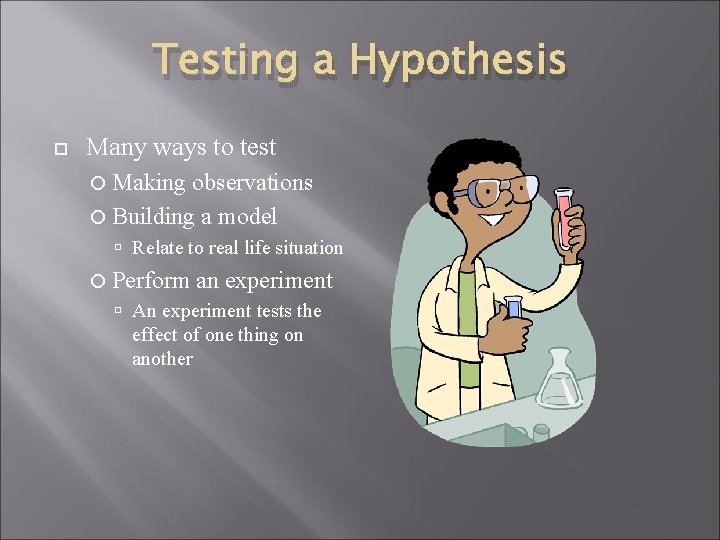
Testing a Hypothesis Many ways to test Making observations Building a model Relate to real life situation Perform an experiment An experiment tests the effect of one thing on another
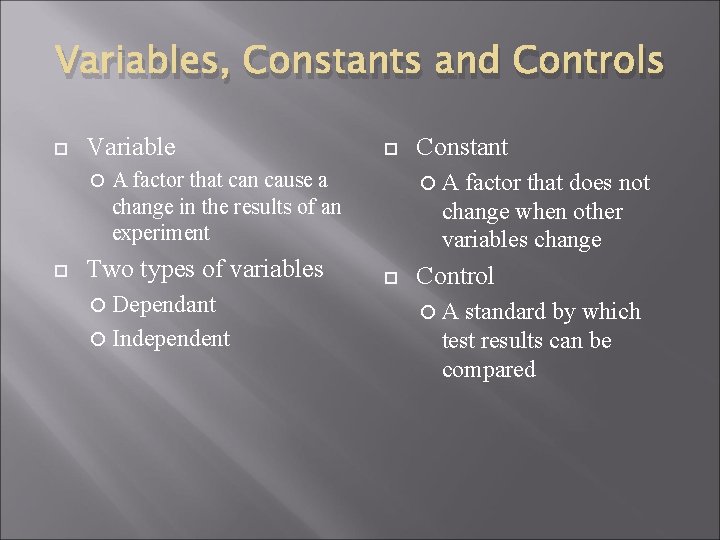
Variables, Constants and Controls Variable A factor that can cause a change in the results of an experiment Two types of variables Dependant Independent Constant A factor that does not change when other variables change Control A standard by which test results can be compared
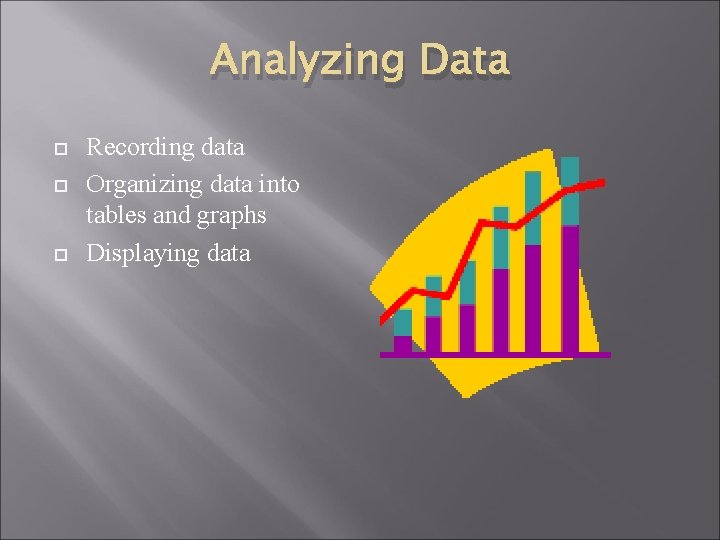
Analyzing Data Recording data Organizing data into tables and graphs Displaying data
Drawing Conclusions Using data, was your hypothesis supported or not? be widely accepted, experiment must result in the same data every time it is repeated If not supported, you should reconsider your hypothesis Scientists need to reduce bias A bias occurs when what the scientist expects changes how the results are viewed To Reduce bias by running as many trials as possible Experiments must be repeatable
Visualizing with Models A model represents an idea, event or object to help people better understand it Models have been used throughout history Lord Kelvin was famous for his models in the 1800’s He modeled how light moves through space by putting balls in a bowl of jelly Some models are high tech NASA uses computer models Simulators Pilots use an airplane simulator to practice different emergencies before flying a real plane
Scientific Theories A theory is an explanation of things or events based on knowledge gained from many observations It is not a guess If scientists have investigations that constantly support a hypothesis, then it can become a theory Just because there is a lot of supporting evidence, it doesn’t mean a theory will never change
Scientific Laws A statement about what happens in nature and that seems true all of the time Laws tell you what is going to happen, but not necessarily why it is happening
Limitations of Science can explain many things, but not everything It is up to the scientist to make a good hypothesis that can be tested Emotions and values are not scientific questions
Using Science and Technology is not the same as science Technology is using the application of science to help people Science and technology do not always have positive results Pollution Nuclear technology Safe disposal