
Chapter 1 Psychology as a Science Research Methods
- Slides: 35
Chapter 1 Psychology as a Science Research Methods
Scientific Methods • - are a set of procedures used to gather, analyze, and interpret information. • - their purpose is to minimize error and Lead to dependable generalizations.
Critical Thinking • - is the process of: – deciding what to believe and how to act – based on a careful evaluation of the evidence – and ruling out alternative explanations.
What makes a good theory? 1. Predictive accuracy—Can theory reliably predict behavior? 2. Internal coherence—Are there logical inconsistencies between theoretical ideas?
What makes a good theory? 3. Being economical—Does theory include only what is necessary to explain the phenomenon in question? 4. Fertility—Does theory generate research, and can it be used to explain a wide variety of behavior?
Research: Three basic techniques of data collection • Three basic techniques of data collection are: • self-reports (interviews, surveys, tests) • direct observations • archival information (records)
Research: Basic Methods • Observation – Case Study • Survey • Experimentation
Observational Research – Case study: in-depth analysis of a single subject – Naturalistic observation: investigating behavior in its natural environment – Laboratory observation
Advantages of Observational Research – Researchers can: • Watch behavior in its “wholeness, ” providing the full context in which to understand it. • Record rare events that may never occur in a controlled laboratory environment. • Systematically record events previously observed only by nonscientists. • Observe events that would be too risky, dangerous, or unethical to create in the laboratory. • One advantage of case study research is that it involves in-depth analysis of a single subject.
Problems of Observational Research – Observation of events can alter the participants’ behavior and taint the data – Ethical problems involving invasion of others’ privacy – One problem with case study research is that researchers must be extremely cautious when generalizing from a single case to the entire population.
Survey Research • A survey is a structured set of questions or statements to measure people’s attitudes, beliefs, values, or behavioral tendencies.
Survey Research • Questions that are too vague, misdirected or biased will not yield the intended information. • Questions asked to people who do not represent the population of interest will yield biased or incorrect results.
Survey Sampling –Shere Hite • Sampled 100, 000 people • received 4500 returns • reported that 70 % of women were having affairs –(Other surveys found only 1/7)
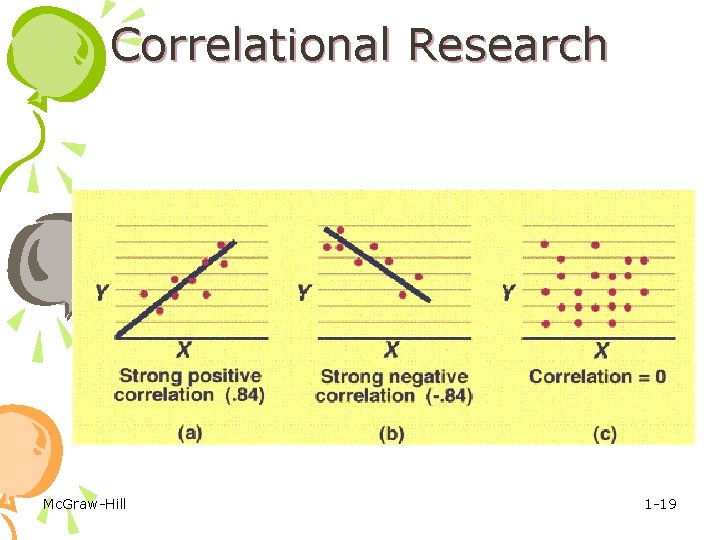
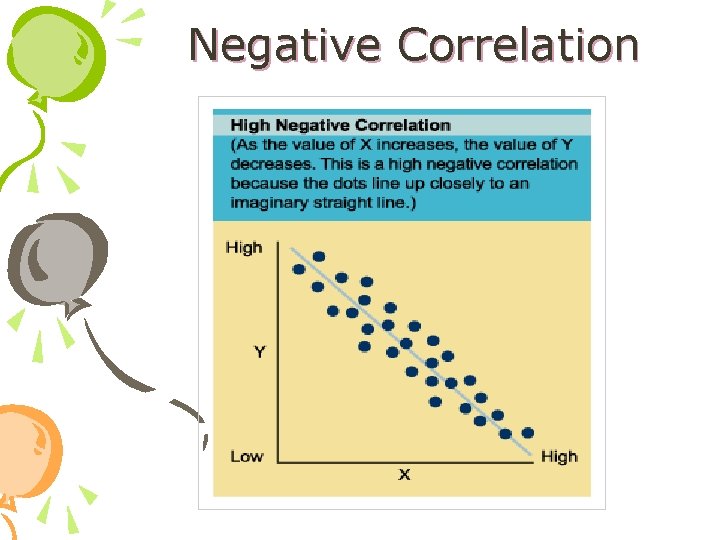
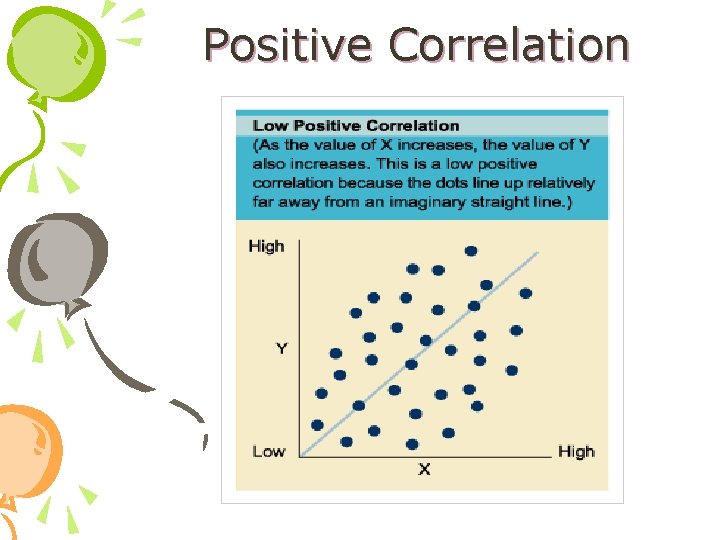
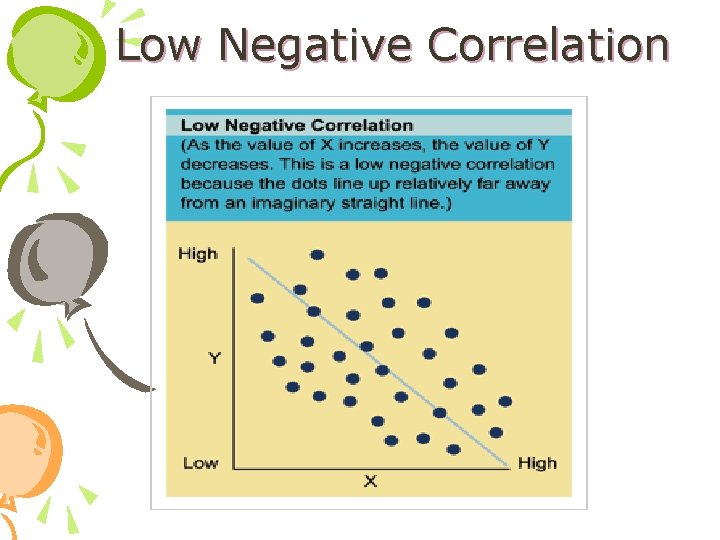
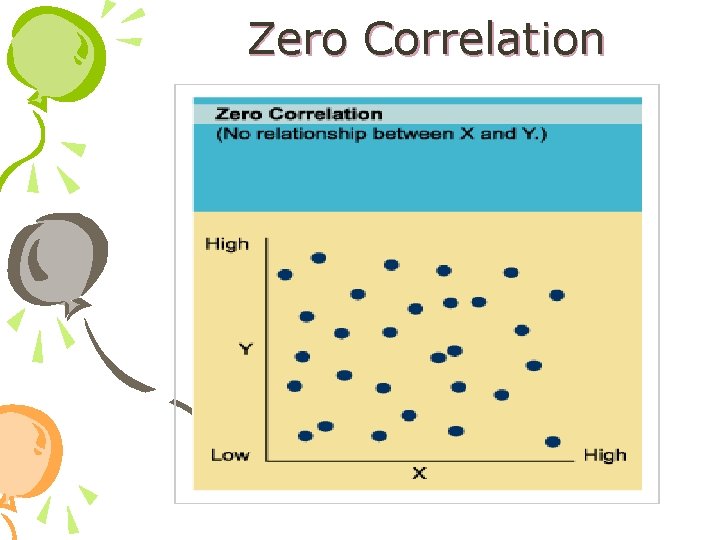
The Scientific Method • Correlation Coefficient –a statistical measure that indicates the extent to which two factors vary together and thus how well either factor predicts the other
The Scientific Method • Correlation Coefficient – Ranges from +1 to -1 (0=no relationship) – Shows strength & direction of relationship – Can be used to predict one variable from another
The Scientific Method • Correlation Coefficient cannot be used as evidence of causality!! –A caused B ? –B caused A ? –C caused both ?
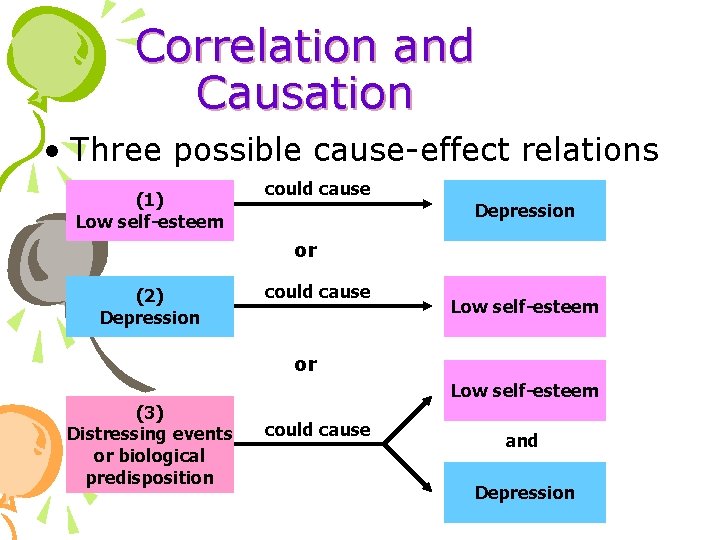
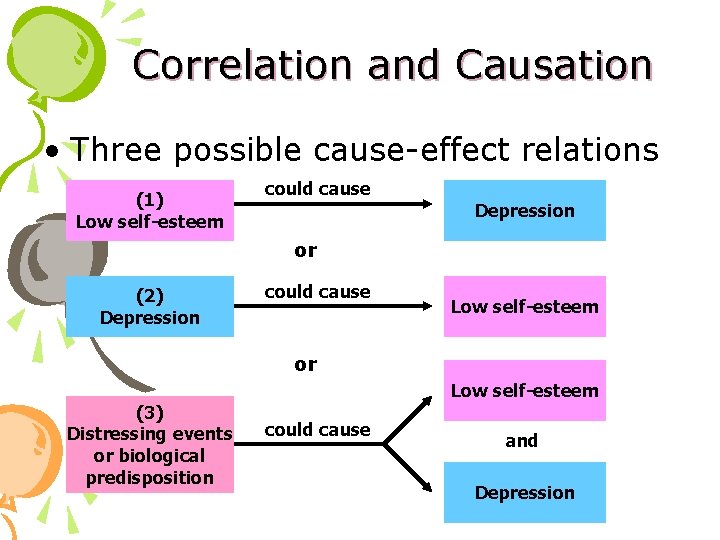
Correlation and Causation • Three possible cause-effect relations (1) Low self-esteem could cause Depression or (2) Depression could cause Low self-esteem or (3) Distressing events or biological predisposition Low self-esteem could cause and Depression
Correlational Research • The variables in correlational research are not controlled by the researcher. • However, the measures yield numbers that can be analyzed using correlational statistics.
Correlational Research Mc. Graw-Hill 1 -19
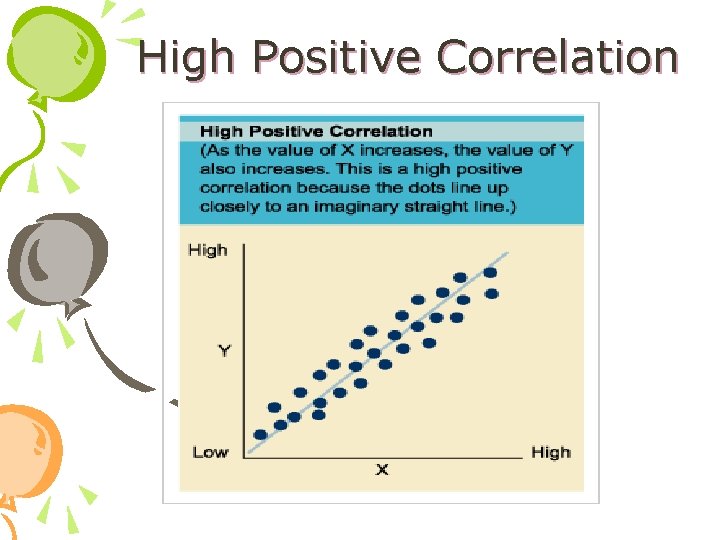
High Positive Correlation
Negative Correlation
Positive Correlation
Low Negative Correlation
Zero Correlation
Correlation and Causation • Three possible cause-effect relations (1) Low self-esteem could cause Depression or (2) Depression could cause Low self-esteem or (3) Distressing events or biological predisposition Low self-esteem could cause and Depression
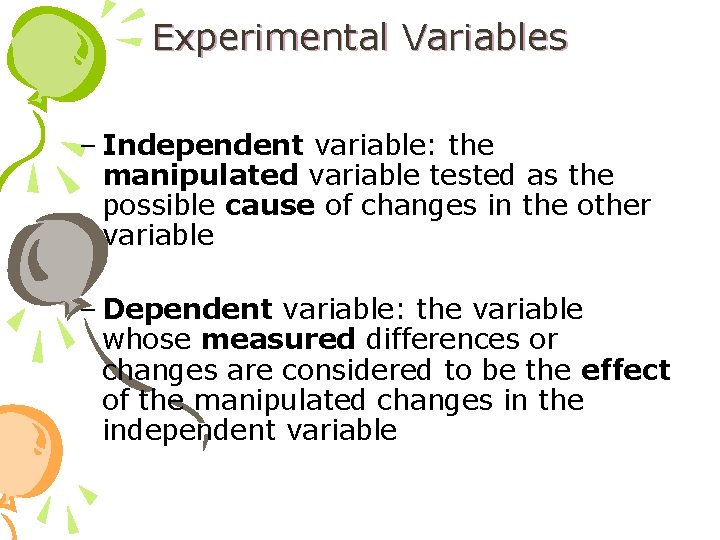
Experimental Variables – Independent variable: the manipulated variable tested as the possible cause of changes in the other variable – Dependent variable: the variable whose measured differences or changes are considered to be the effect of the manipulated changes in the independent variable
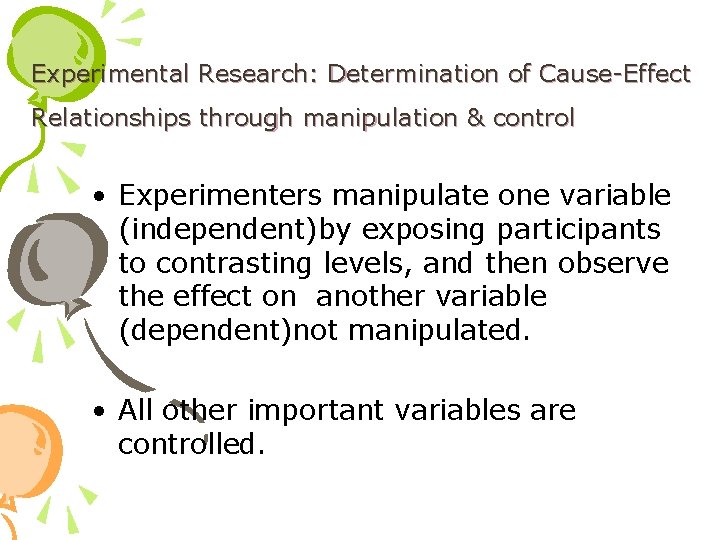
Experimental Research: Determination of Cause-Effect Relationships through manipulation & control • Experimenters manipulate one variable (independent)by exposing participants to contrasting levels, and then observe the effect on another variable (dependent)not manipulated. • All other important variables are controlled.
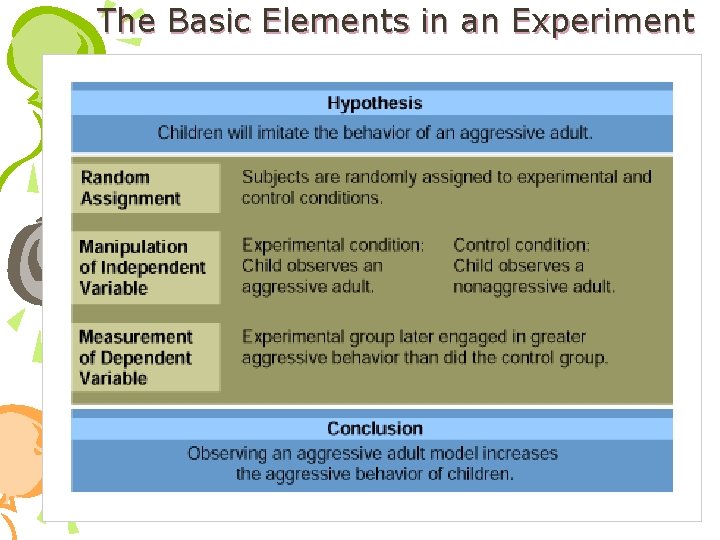
The Basic Elements in an Experiment
The Experiment • Independent Variable – manipulated (different in each group) – cause of the change in the dependent variable • Dependent Variable – measured effect – may change in response to manipulations of the independent variable
Experimental Manipulation • Experimental Condition – exposes participants to the treatment version of the independent variable • Control Condition – Exposes participants to no treatment or a placebo version of the independent variable – – serves as a comparison for evaluating the effect of the treatment
Random Assignment –assigning participants to experimental and control conditions by chance –Purpose: to minimize the influence of preexisting differences on the different groups
Placebo Controls • Placebo – A treatment that looks like the real one, but lacking the active agent • Placebo Effect – any effect on behavior caused by a placebo, usually those caused from believing one has experienced genuine treatment
Double-blind Procedure – an experimental procedure in which both the research participants and the research staff are ignorant (blind) about whether the research participants have received the treatment or a placebo – commonly used in drug-evaluation studies
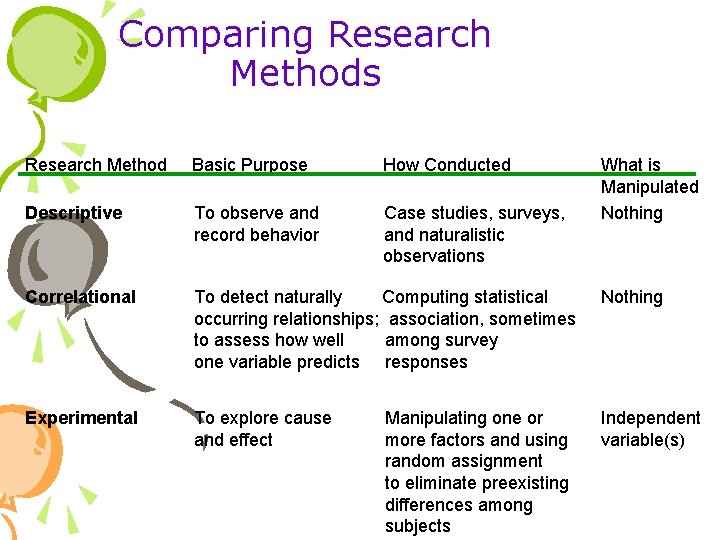
Comparing Research Methods Research Method Basic Purpose How Conducted Descriptive To observe and record behavior Case studies, surveys, and naturalistic observations Correlational To detect naturally Computing statistical occurring relationships; association, sometimes to assess how well among survey one variable predicts responses Nothing Experimental To explore cause and effect Independent variable(s) Manipulating one or more factors and using random assignment to eliminate preexisting differences among subjects What is Manipulated Nothing
The Scientific Method –Replication – repeating the essence of a research study to see whether the basic finding generalizes to other participants and circumstances – usually with different subjects in different situations (by different researchers)