
Chapter 1 Properties of Electricity 1 Overview What
- Slides: 24
Chapter 1 Properties of Electricity 1
Overview • • • What is Electricity Ohm’s Law Boat Circuit Problems Multimeters Magnetic Lines of Force 2
What is Electricity • Electricity consists of electrons § Negatively charged § Electrons actually flow from negative to positive • Current “flow”, by convention, from positive to negative • Conductors have electrons that readily move § e. g. silver, copper, metal and liquids (salt water) • Insulation has tightly bonded electrons § Charges do NOT move § e. g. plastic, rubber, glass and ceramics 3
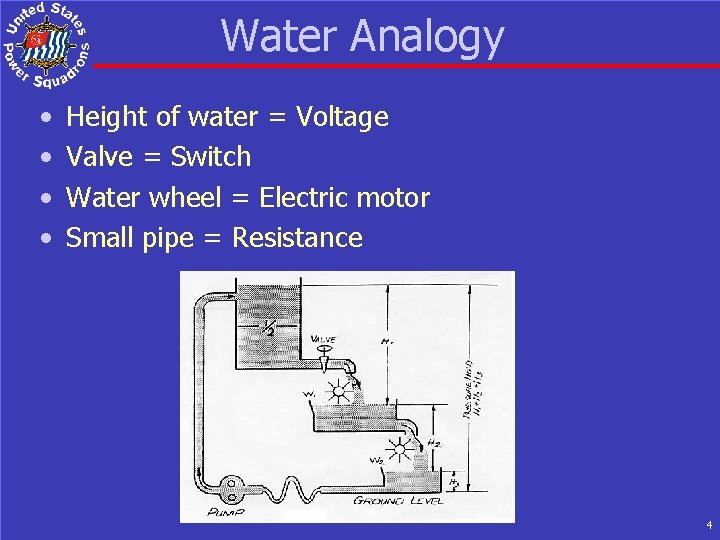
Water Analogy • • Height of water = Voltage Valve = Switch Water wheel = Electric motor Small pipe = Resistance 4
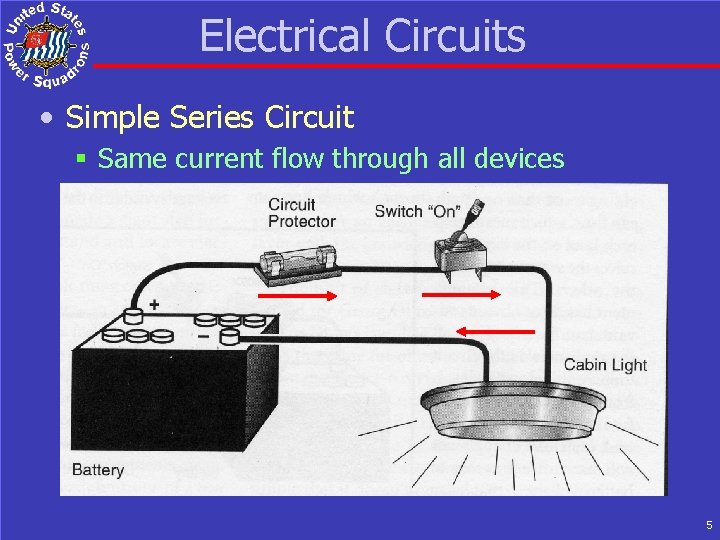
Electrical Circuits • Simple Series Circuit § Same current flow through all devices 5
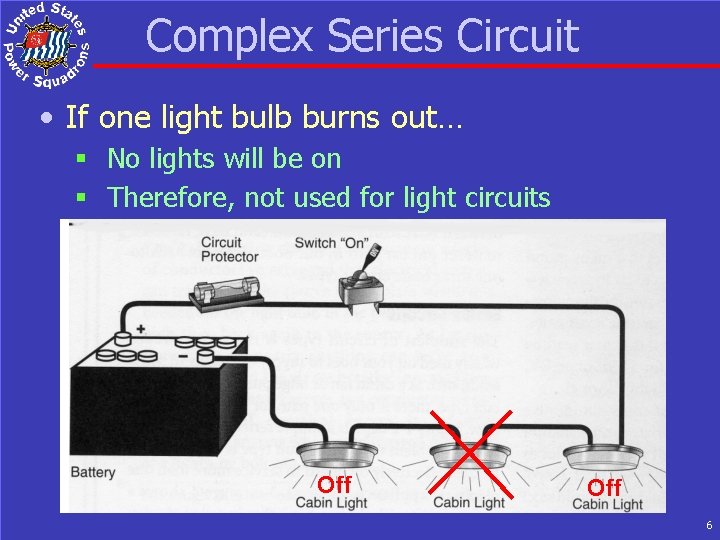
Complex Series Circuit • If one light bulb burns out… § No lights will be on § Therefore, not used for light circuits Off 6
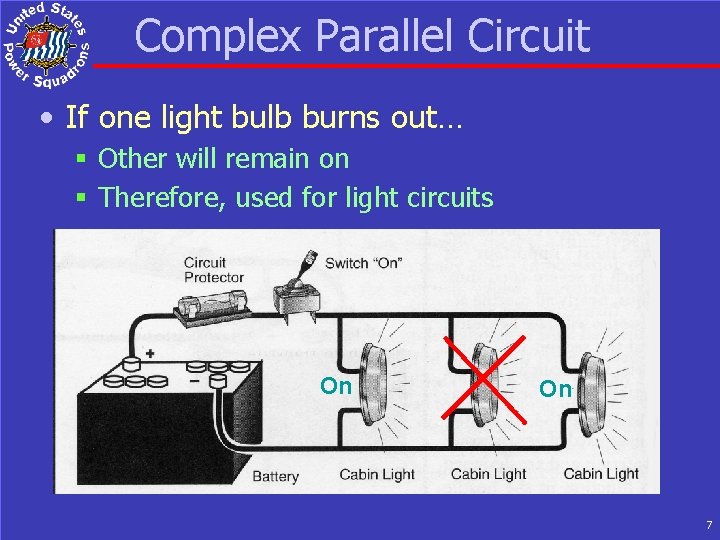
Complex Parallel Circuit • If one light bulb burns out… § Other will remain on § Therefore, used for light circuits On On 7
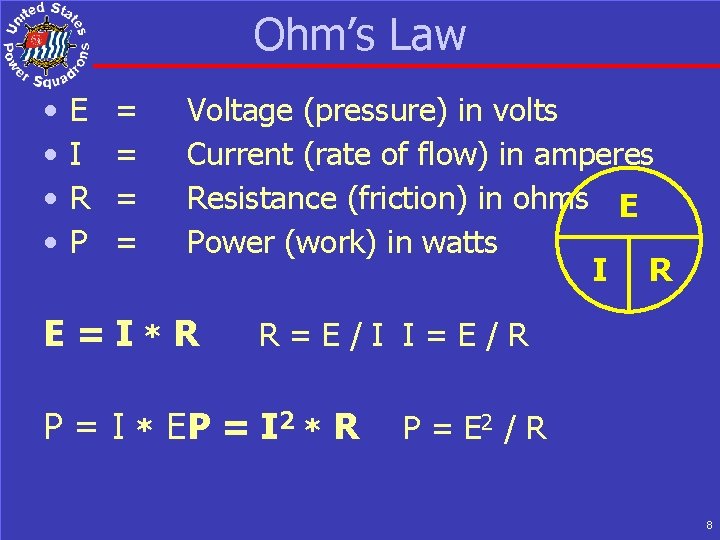
Ohm’s Law • • E I R P = = Voltage (pressure) in volts Current (rate of flow) in amperes Resistance (friction) in ohms E Power (work) in watts I R E=I*R R=E/I I=E/R P = I * EP = I 2 * R P = E 2 / R 8
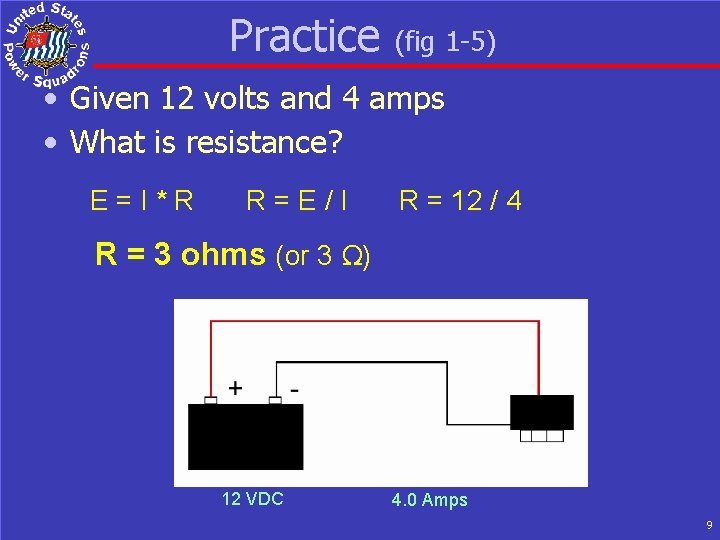
Practice (fig 1 -5) • Given 12 volts and 4 amps • What is resistance? E=I*R R=E/I R = 12 / 4 R = 3 ohms (or 3 Ω) 12 VDC 4. 0 Amps 9
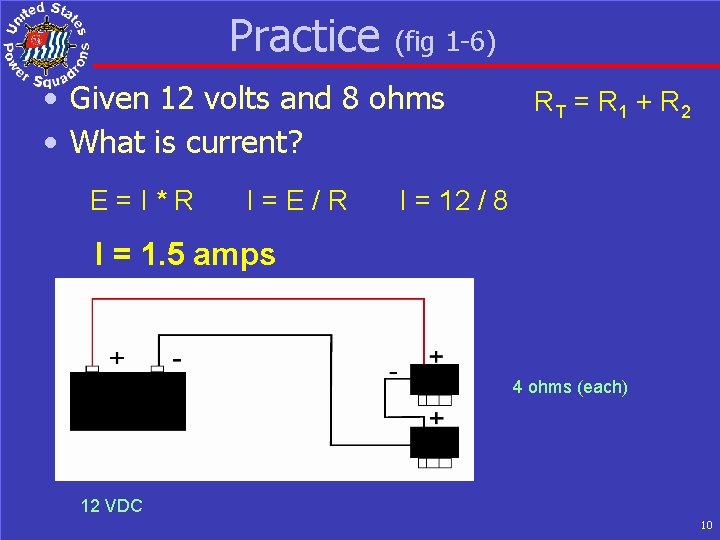
Practice (fig 1 -6) • Given 12 volts and 8 ohms • What is current? E=I*R I=E/R RT = R 1 + R 2 I = 12 / 8 I = 1. 5 amps 4 ohms (each) 12 VDC 10
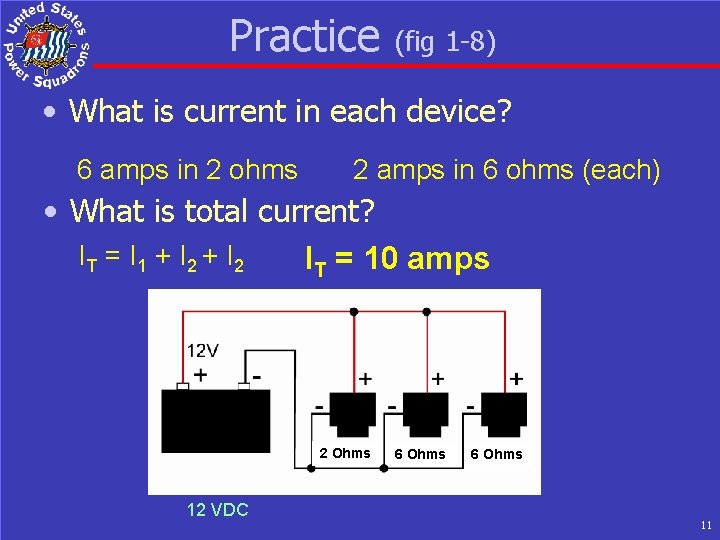
Practice (fig 1 -8) • What is current in each device? 6 amps in 2 ohms 2 amps in 6 ohms (each) • What is total current? IT = I 1 + I 2 IT = 10 amps 2 Ohms 12 VDC 6 Ohms 11
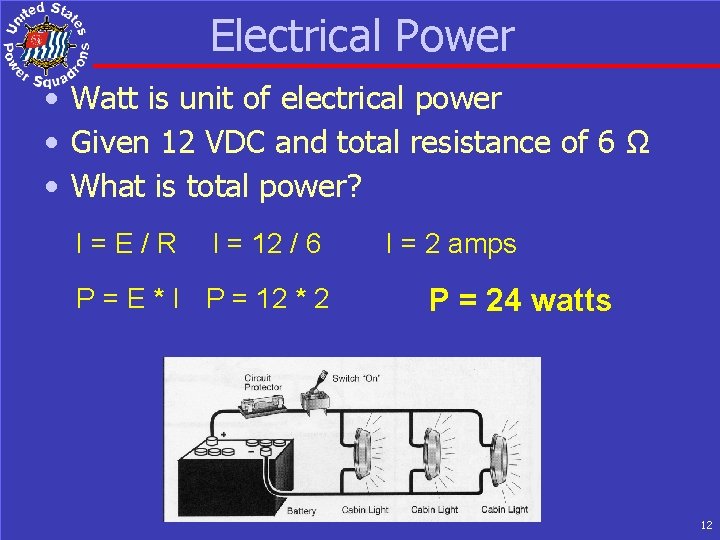
Electrical Power • Watt is unit of electrical power • Given 12 VDC and total resistance of 6 Ω • What is total power? I=E/R I = 12 / 6 P = E * I P = 12 * 2 I = 2 amps P = 24 watts 12
What We Have Learned So Far • Electricity is the negatively charged electrons that have been freed from the structure of an atom • For electricity to perform some useful function it must flow in a circuit • There are two basic types of electrical circuits § The Series Circuit § The Parallel Circuit • Using Ohm's Law we can calculate three electrical values in a circuit, i. e. Voltage, Amperage, and Resistance • The fourth electrical value is Power § Power is measured in Watts § Using the PIE equation we can calculate Power § Using Ohm's Law and PIE equation if we know any two values we can find the other two 13
Boat Circuit Problems • Open Circuit is “break” in electrical wiring § Current flow (path) is interrupted • Sometimes deliberately by switch • Short circuit is electrical wiring shortened from original length § Shorts to ground § Interwiring short § Internal short 14
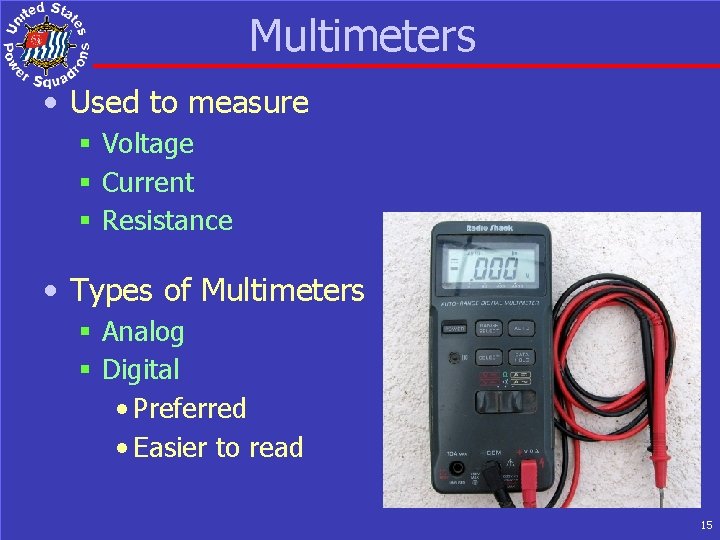
Multimeters • Used to measure § Voltage § Current § Resistance • Types of Multimeters § Analog § Digital • Preferred • Easier to read 15
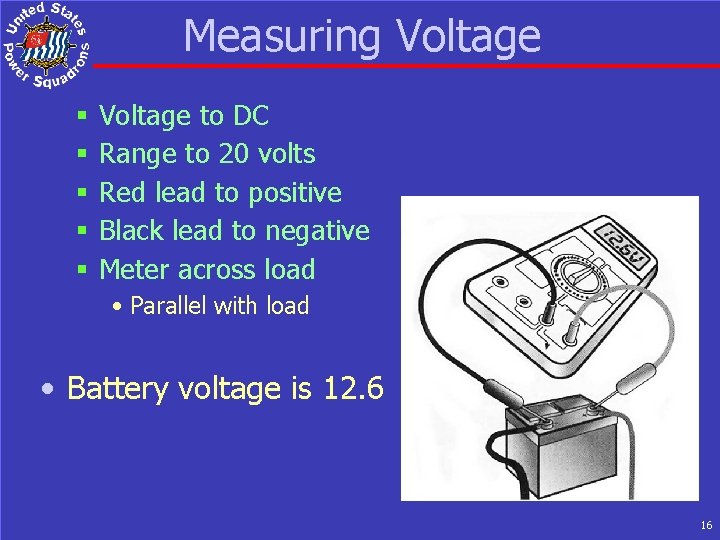
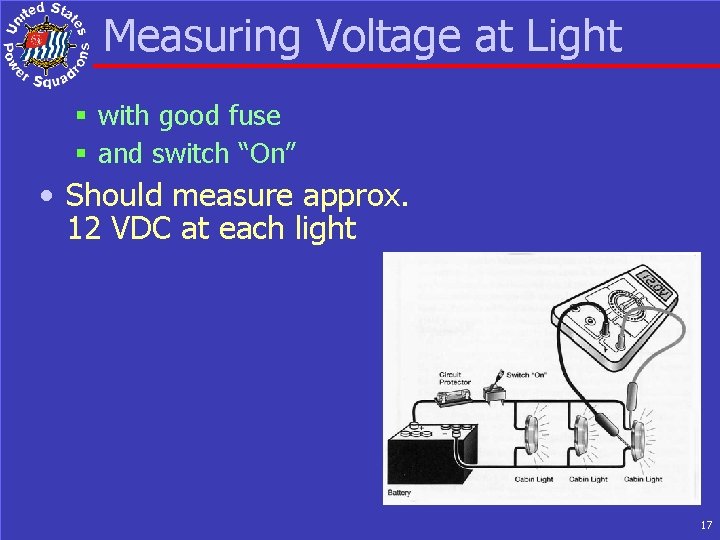
Measuring Voltage § § § Voltage to DC Range to 20 volts Red lead to positive Black lead to negative Meter across load • Parallel with load • Battery voltage is 12. 6 16
Measuring Voltage at Light § with good fuse § and switch “On” • Should measure approx. 12 VDC at each light 17
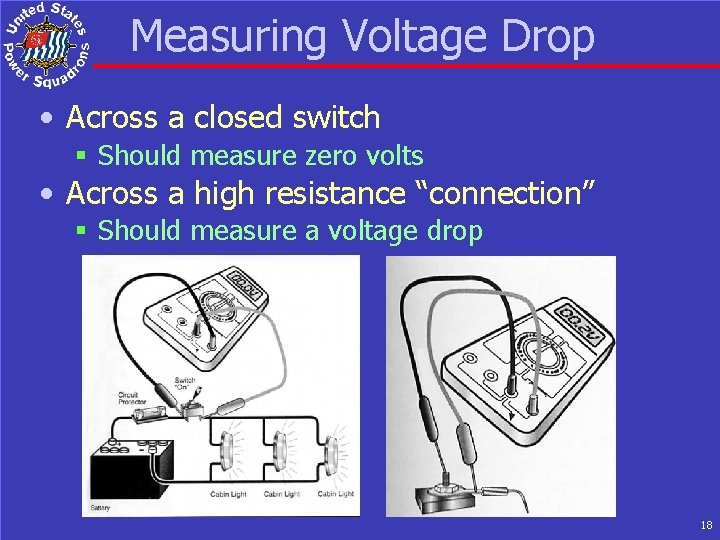
Measuring Voltage Drop • Across a closed switch § Should measure zero volts • Across a high resistance “connection” § Should measure a voltage drop 18
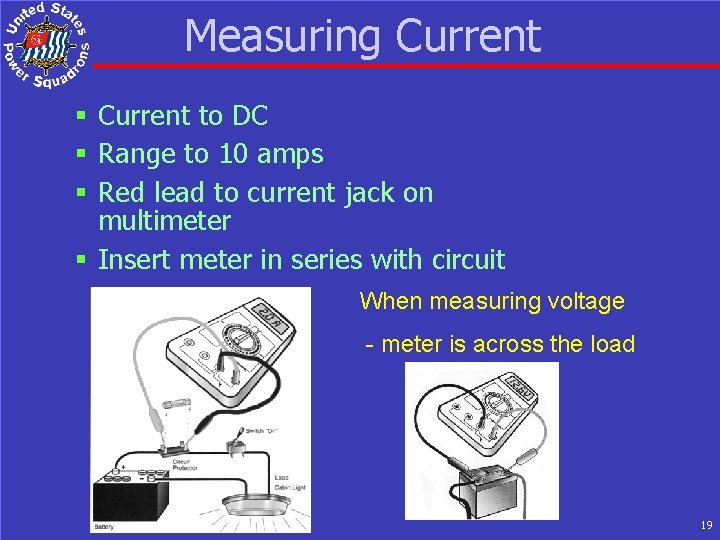
Measuring Current § Current to DC § Range to 10 amps § Red lead to current jack on multimeter § Insert meter in series with circuit When measuring voltage - meter is across the load 19
Measuring Resistance § § Function to resistance Touch test leads together Adjust resistance to zero (0. 0) ohms Place test leads across device to be measured • Continuity measurement § When test leads are across low resistance (Good circuit or device) § Will hear a buzz indicating continuity 20
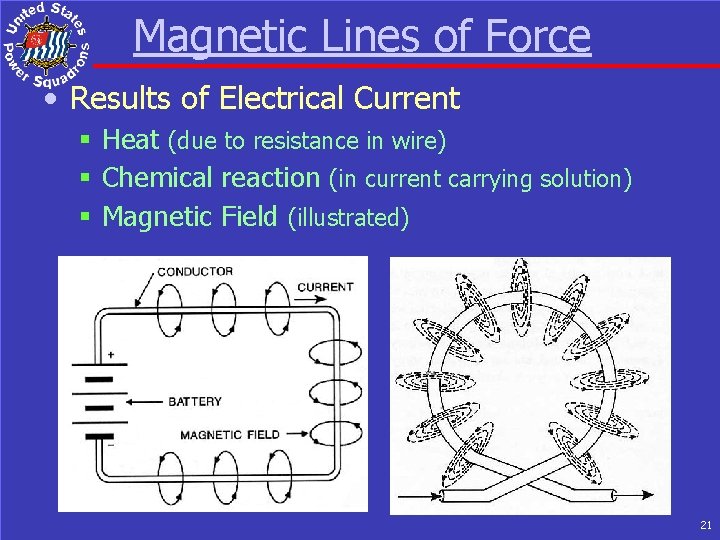
Magnetic Lines of Force • Results of Electrical Current § Heat (due to resistance in wire) § Chemical reaction (in current carrying solution) § Magnetic Field (illustrated) 21
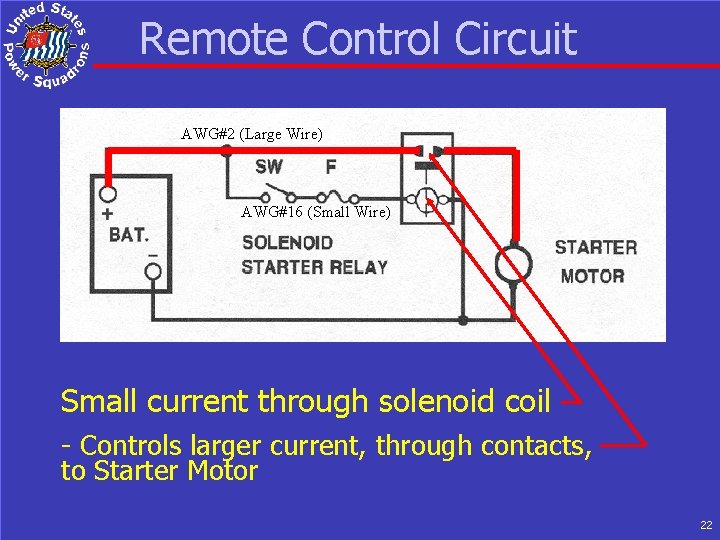
Remote Control Circuit AWG#2 (Large Wire) AWG#16 (Small Wire) Small current through solenoid coil - Controls larger current, through contacts, to Starter Motor 22
Summary • Electricity is negatively charged electrons • Current flows from positive to negative • Types of circuits § Series (one path for current flow) § Parallel (multiple paths for current flow) • Ohm’s Law § E=I*R § P=E*I • Boat Circuit Problems § Open Circuits § Short Circuits 23
Summary - 2 • Multimeter § Digital preferred § Measure voltage across (parallel to) load • Can also measure voltage drop § Measure current in series with load • Magnetic Lines of Force § Concentrated in coil § Solenoids use in remote control circuits • Small current controls large current 24