
Chapter 1 Power Electronic Devices Outline 1 1
- Slides: 43
Chapter 1 Power Electronic Devices Outline 1. 1 An introductory overview of power electronic devices 1. 2 Uncontrolled device—power diode 1. 3 Half- controlled device—thyristor 1. 4 Typical fully- controlled devices 1. 5 Other new power electronic devices
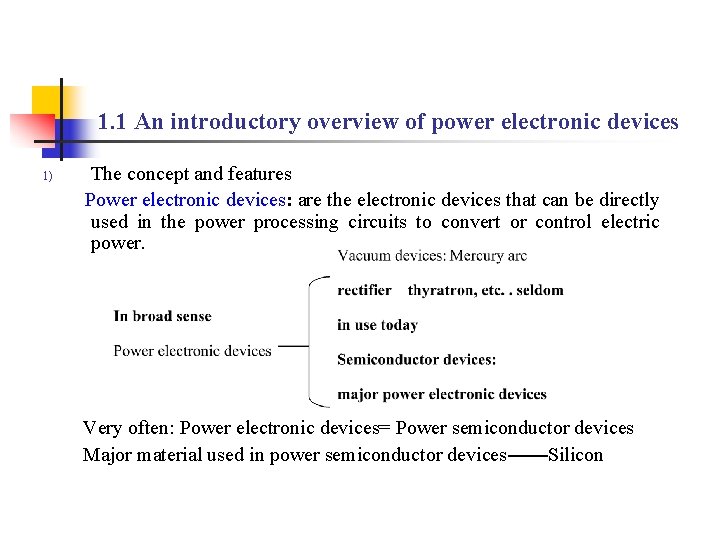
1. 1 An introductory overview of power electronic devices 1) The concept and features Power electronic devices: are the electronic devices that can be directly used in the power processing circuits to convert or control electric power. Very often: Power electronic devices= Power semiconductor devices Major material used in power semiconductor devices——Silicon
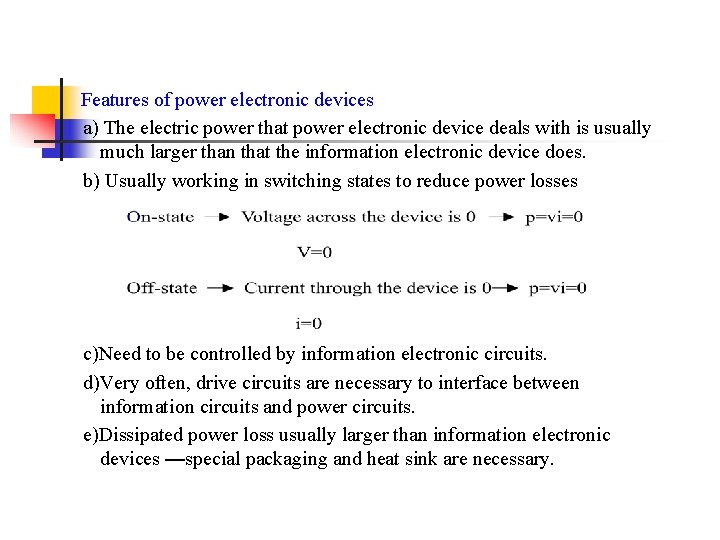
Features of power electronic devices a) The electric power that power electronic device deals with is usually much larger than that the information electronic device does. b) Usually working in switching states to reduce power losses c)Need to be controlled by information electronic circuits. d)Very often, drive circuits are necessary to interface between information circuits and power circuits. e)Dissipated power loss usually larger than information electronic devices —special packaging and heat sink are necessary.
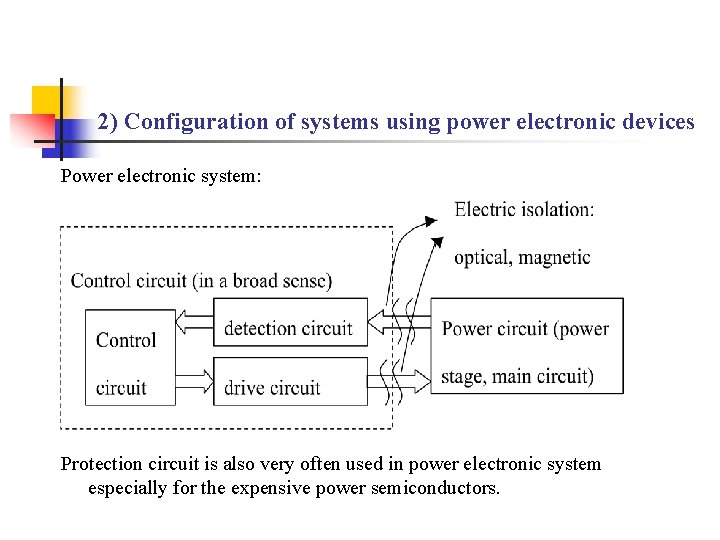
2) Configuration of systems using power electronic devices Power electronic system: Protection circuit is also very often used in power electronic system especially for the expensive power semiconductors.
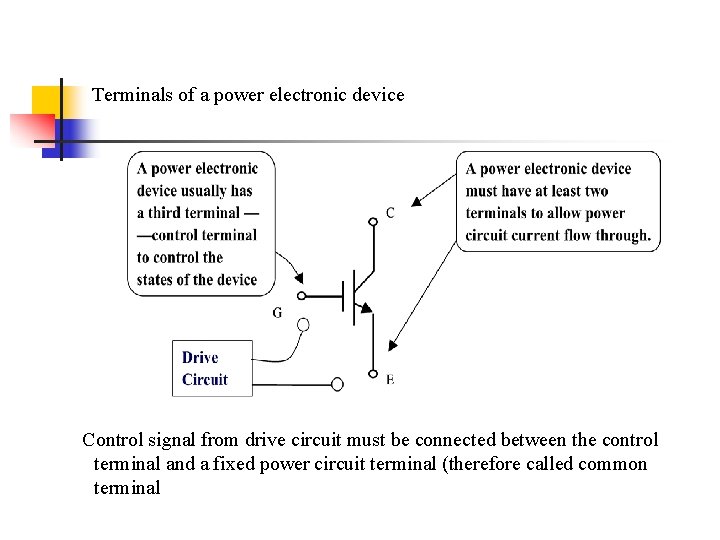
Terminals of a power electronic device Control signal from drive circuit must be connected between the control terminal and a fixed power circuit terminal (therefore called common terminal
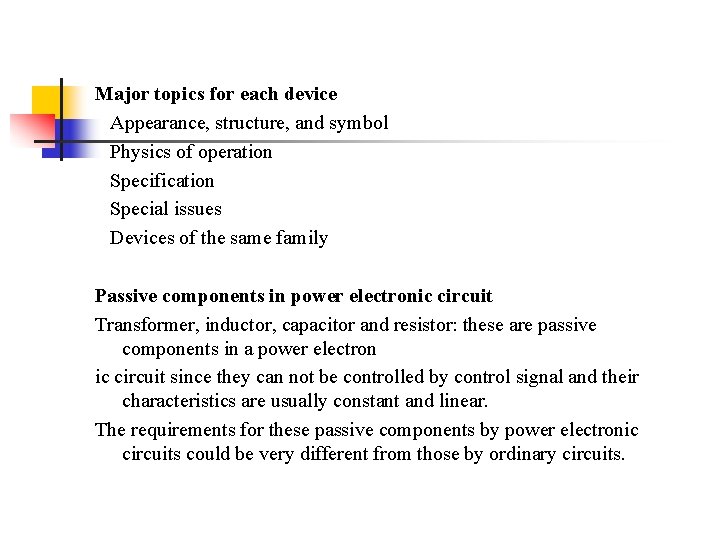
Major topics for each device Appearance, structure, and symbol Physics of operation Specification Special issues Devices of the same family Passive components in power electronic circuit Transformer, inductor, capacitor and resistor: these are passive components in a power electron ic circuit since they can not be controlled by control signal and their characteristics are usually constant and linear. The requirements for these passive components by power electronic circuits could be very different from those by ordinary circuits.
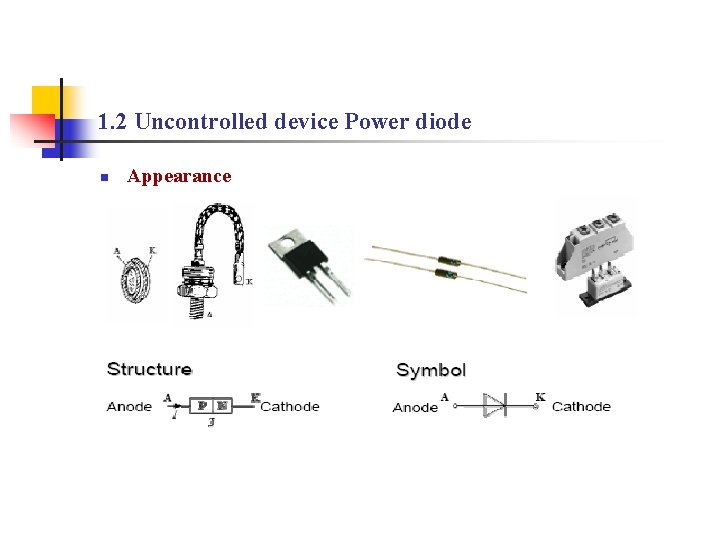
1. 2 Uncontrolled device Power diode n Appearance
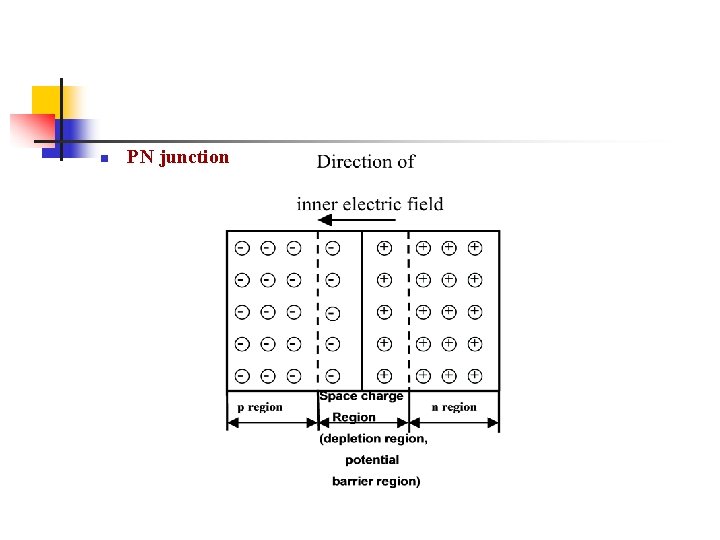
n PN junction
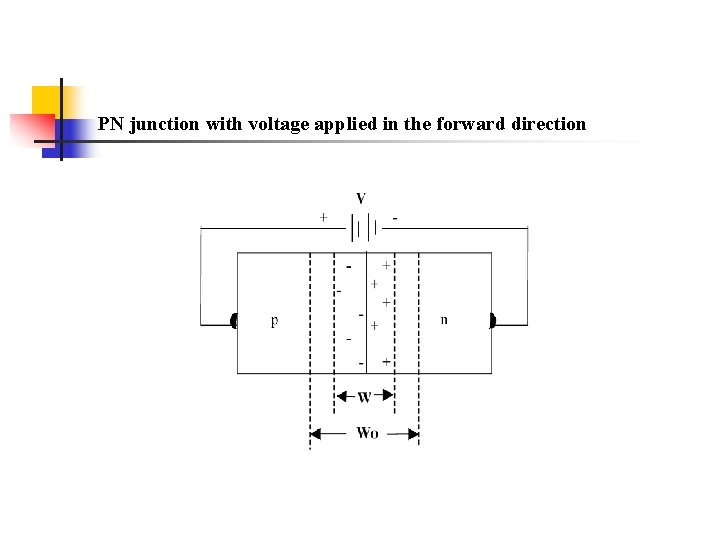
PN junction with voltage applied in the forward direction
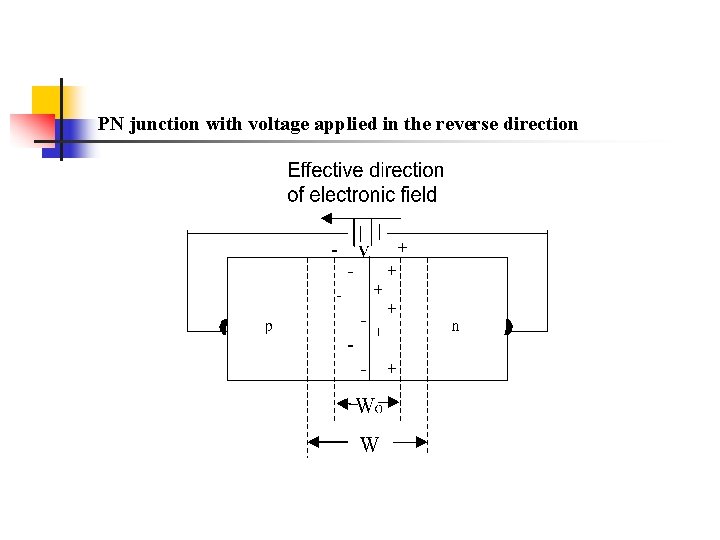
PN junction with voltage applied in the reverse direction
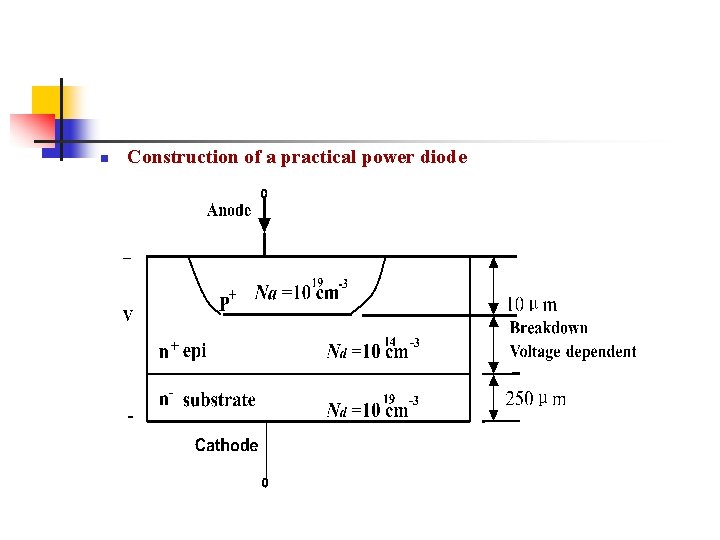
n Construction of a practical power diode
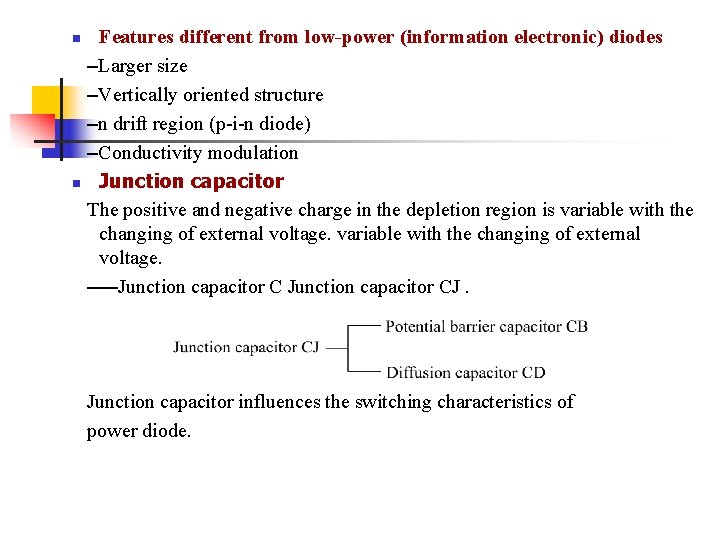
Features different from low-power (information electronic) diodes –Larger size –Vertically oriented structure –n drift region (p-i-n diode) –Conductivity modulation n Junction capacitor The positive and negative charge in the depletion region is variable with the changing of external voltage. —–Junction capacitor CJ. n Junction capacitor influences the switching characteristics of power diode.
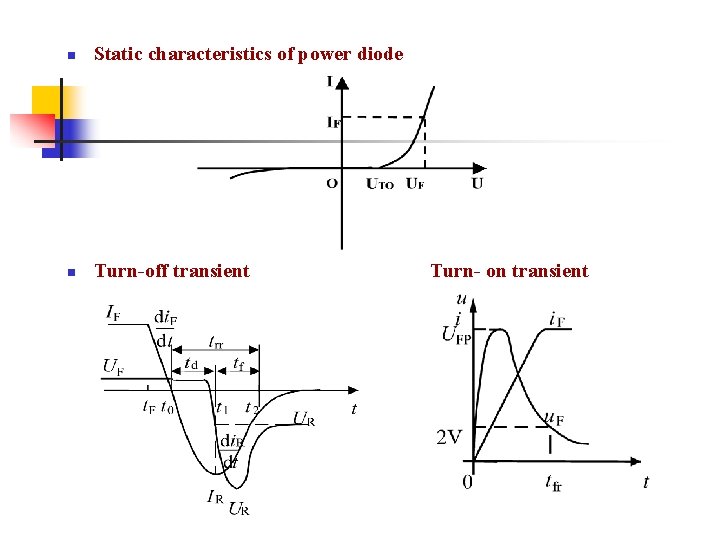
n Static characteristics of power diode n Turn-off transient Turn- on transient
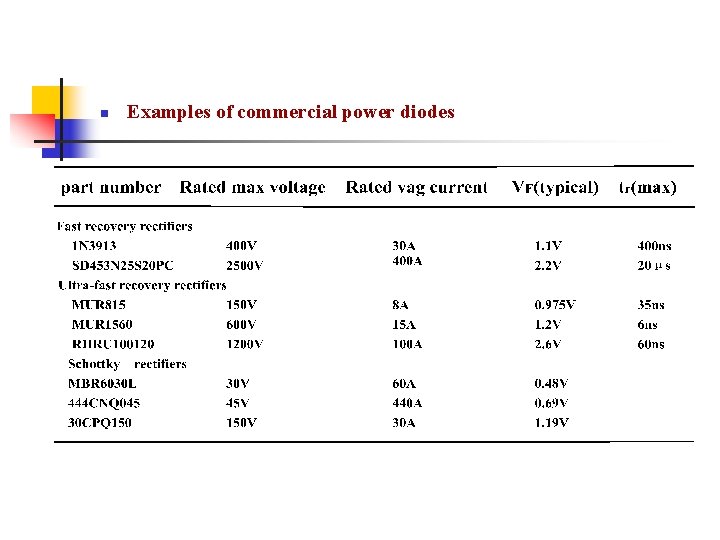
n Examples of commercial power diodes
1. 3 Half- controlled device—Thyristor Another name: SCR—silicon controlled rectifier Thyristor Opened the power electronics era – 1956, invention, Bell Laboratories – 1957, development of the 1 st product, GE – 1958, 1 st commercialized product, GE –Thyristor replaced vacuum devices in almost every power processing area. Still in use in high power situation. Thyristor till has the highest power-handling capability.
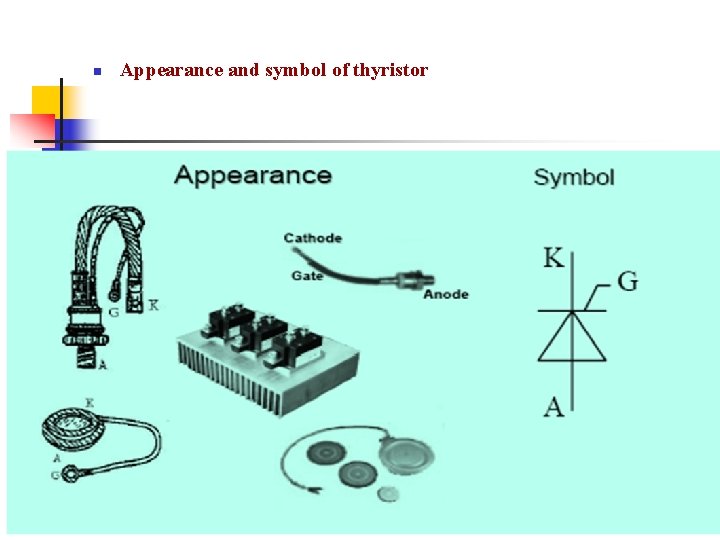
n Appearance and symbol of thyristor
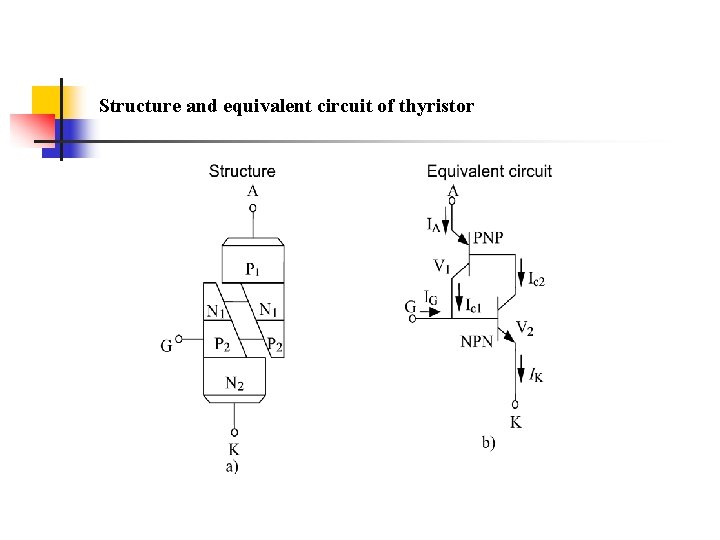
Structure and equivalent circuit of thyristor
Physics of thyristor operation
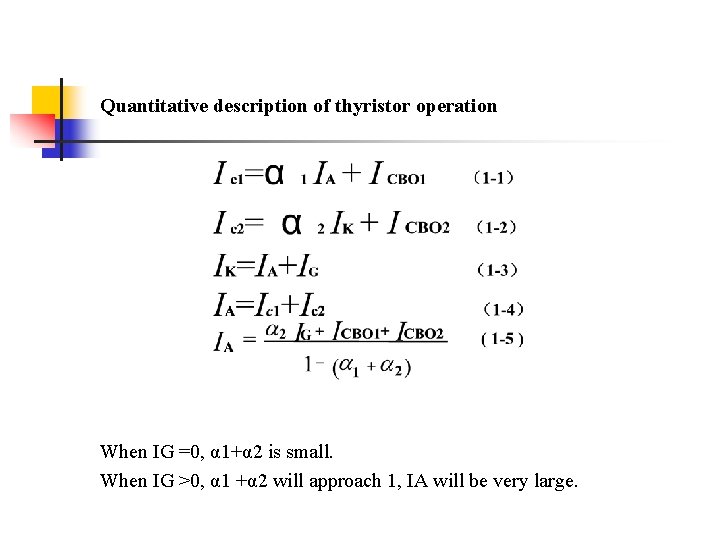
Quantitative description of thyristor operation When IG =0, α 1+α 2 is small. When IG >0, α 1 +α 2 will approach 1, IA will be very large.
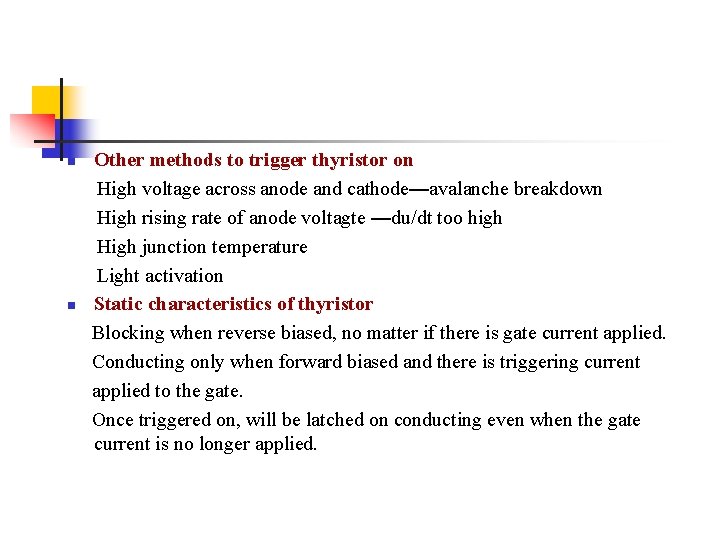
n n Other methods to trigger thyristor on High voltage across anode and cathode—avalanche breakdown High rising rate of anode voltagte —du/dt too high High junction temperature Light activation Static characteristics of thyristor Blocking when reverse biased, no matter if there is gate current applied. Conducting only when forward biased and there is triggering current applied to the gate. Once triggered on, will be latched on conducting even when the gate current is no longer applied.
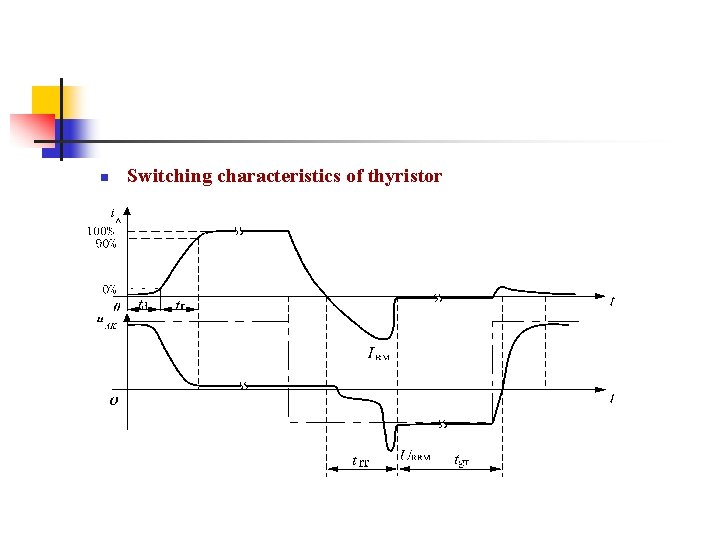
n Switching characteristics of thyristor
1. 4 Typical fully- controlled devices n Features –IC fabrication technology, fully- controllable, high frequency Applications –Begin to be used in large amount in 1980 s –GTR is obsolete and GTO is also seldom used today. –IGBT and power MOSFET are the two major power semiconductor devices nowadays. n
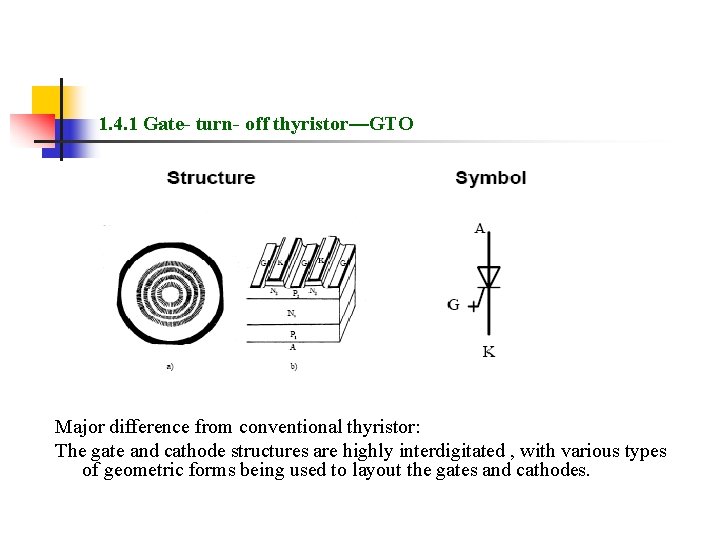
1. 4. 1 Gate- turn- off thyristor—GTO Major difference from conventional thyristor: The gate and cathode structures are highly interdigitated , with various types of geometric forms being used to layout the gates and cathodes.
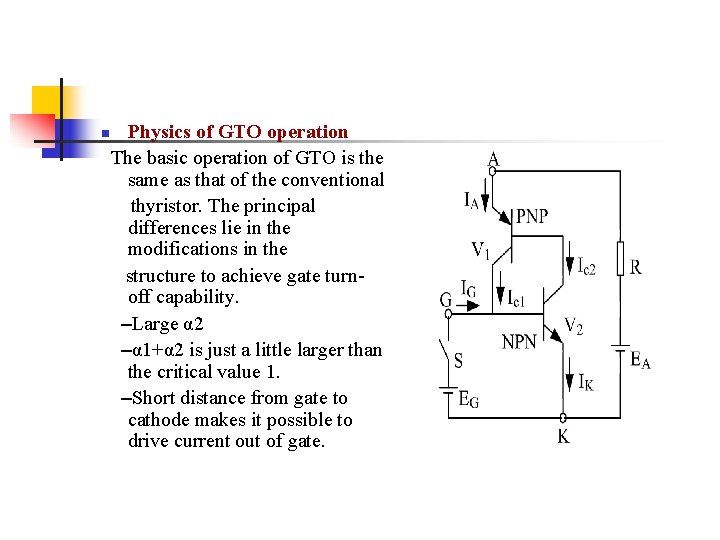
n Physics of GTO operation The basic operation of GTO is the same as that of the conventional thyristor. The principal differences lie in the modifications in the structure to achieve gate turnoff capability. –Large α 2 –α 1+α 2 is just a little larger than the critical value 1. –Short distance from gate to cathode makes it possible to drive current out of gate.
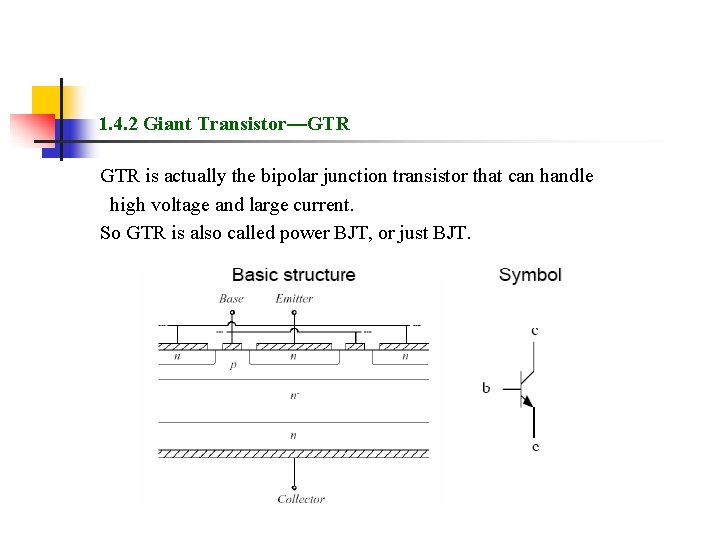
1. 4. 2 Giant Transistor—GTR is actually the bipolar junction transistor that can handle high voltage and large current. So GTR is also called power BJT, or just BJT.
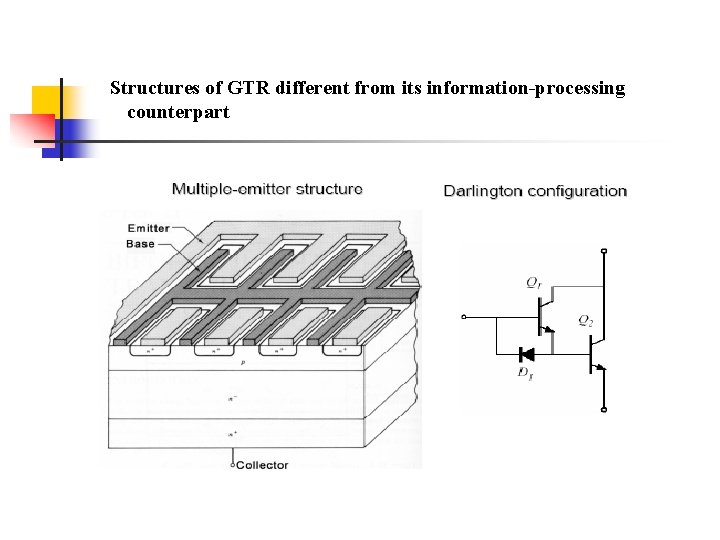
Structures of GTR different from its information-processing counterpart
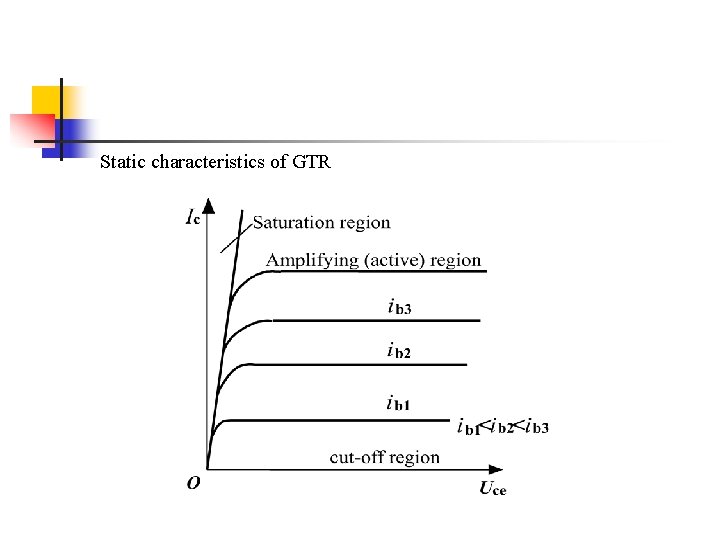
Static characteristics of GTR
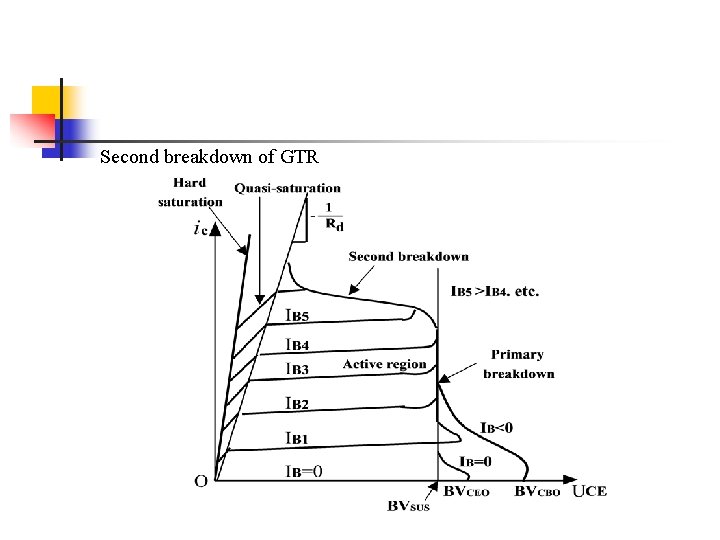
Second breakdown of GTR
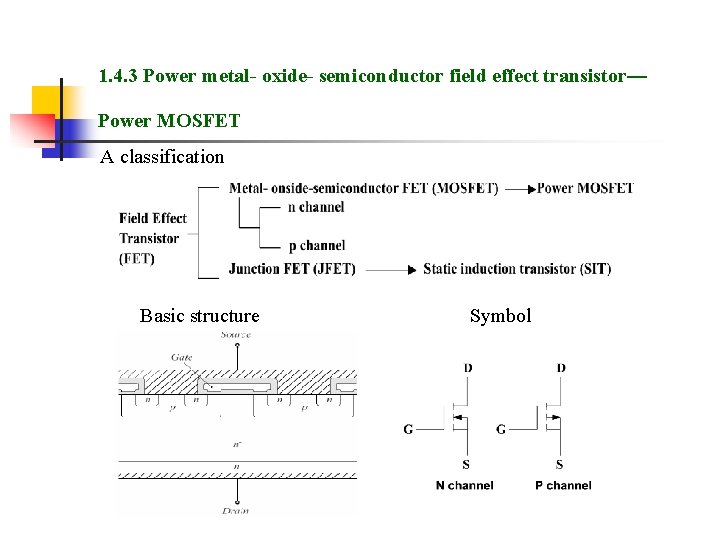
1. 4. 3 Power metal- oxide- semiconductor field effect transistor— Power MOSFET A classification Basic structure Symbol
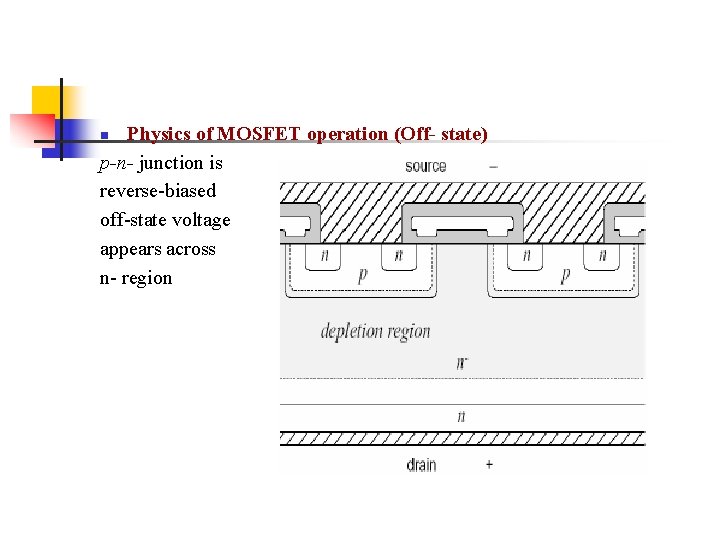
Physics of MOSFET operation (Off- state) p-n- junction is reverse-biased off-state voltage appears across n- region n
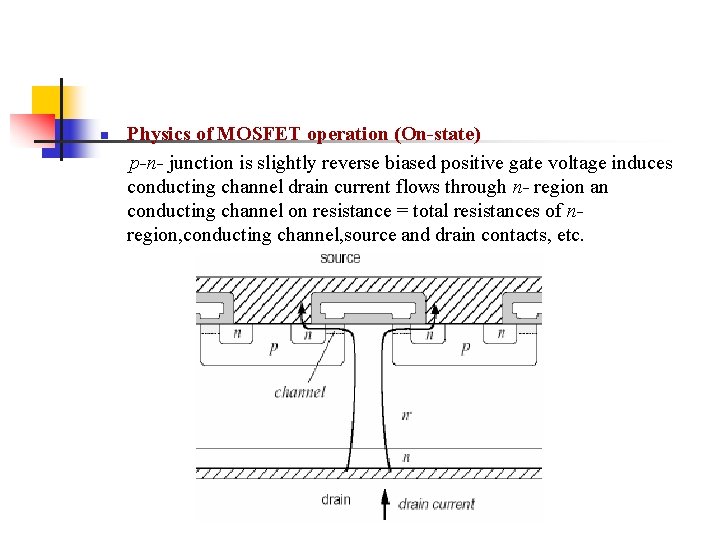
n Physics of MOSFET operation (On-state) p-n- junction is slightly reverse biased positive gate voltage induces conducting channel drain current flows through n- region an conducting channel on resistance = total resistances of nregion, conducting channel, source and drain contacts, etc.
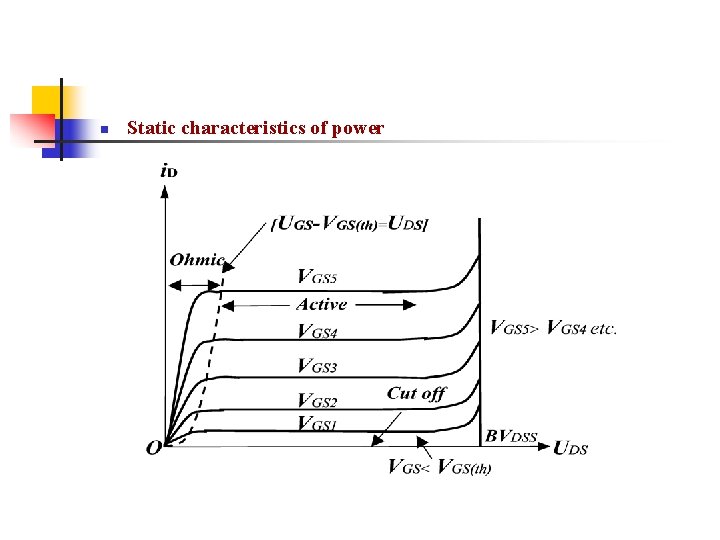
n Static characteristics of power
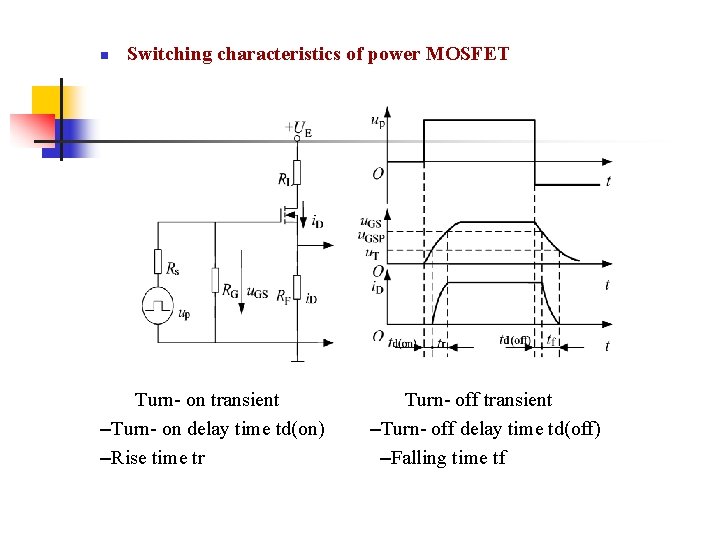
n Switching characteristics of power MOSFET Turn- on transient –Turn- on delay time td(on) –Rise time tr Turn- off transient –Turn- off delay time td(off) –Falling time tf
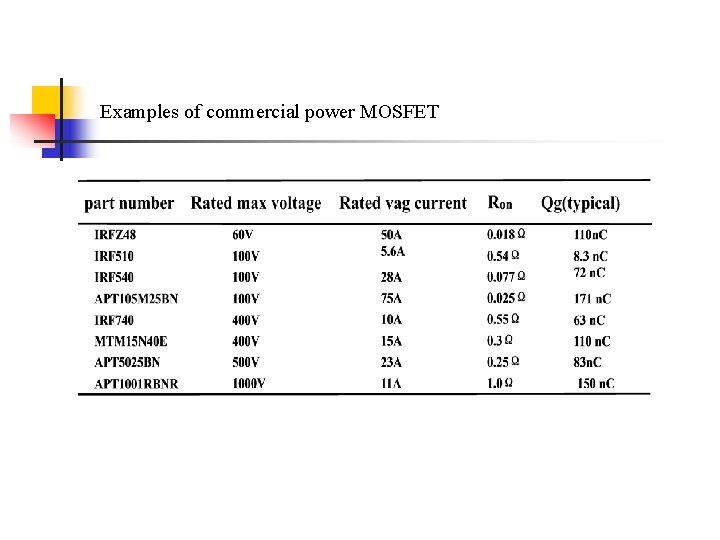
Examples of commercial power MOSFET
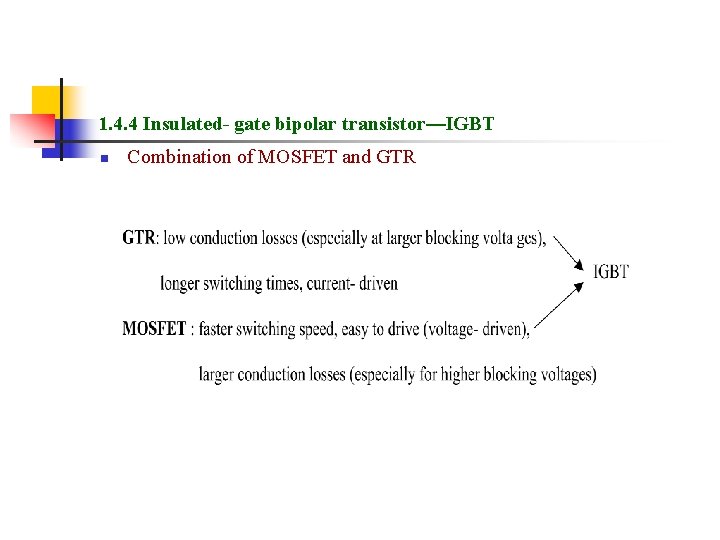
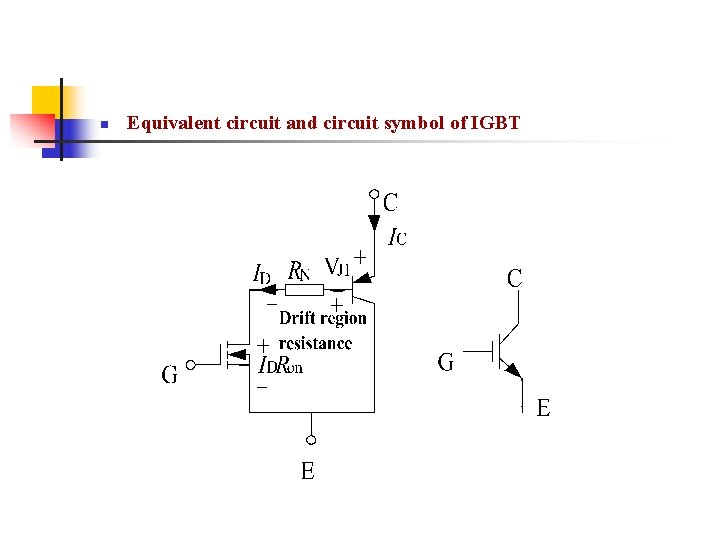
1. 4. 4 Insulated- gate bipolar transistor—IGBT n Combination of MOSFET and GTR
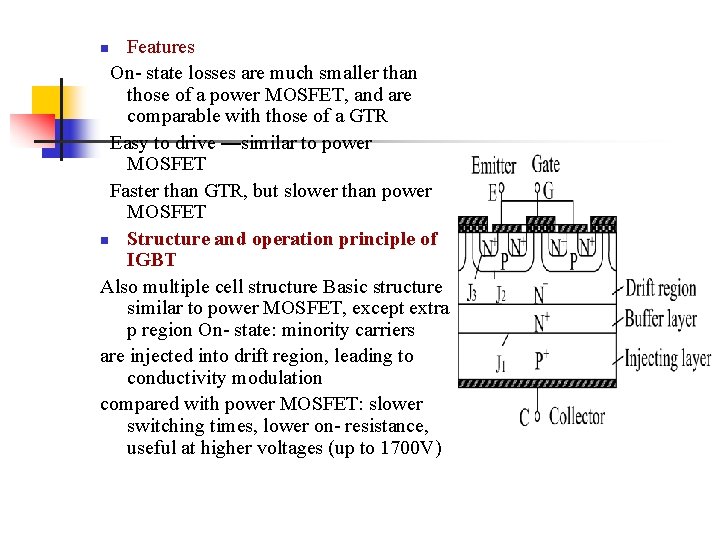
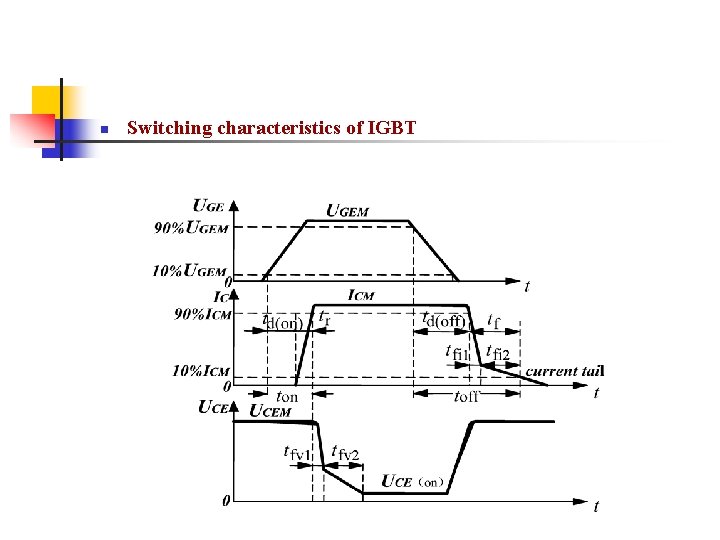
Features On- state losses are much smaller than those of a power MOSFET, and are comparable with those of a GTR Easy to drive —similar to power MOSFET Faster than GTR, but slower than power MOSFET n Structure and operation principle of IGBT Also multiple cell structure Basic structure similar to power MOSFET, except extra p region On- state: minority carriers are injected into drift region, leading to conductivity modulation compared with power MOSFET: slower switching times, lower on- resistance, useful at higher voltages (up to 1700 V) n
n Equivalent circuit and circuit symbol of IGBT
n Switching characteristics of IGBT
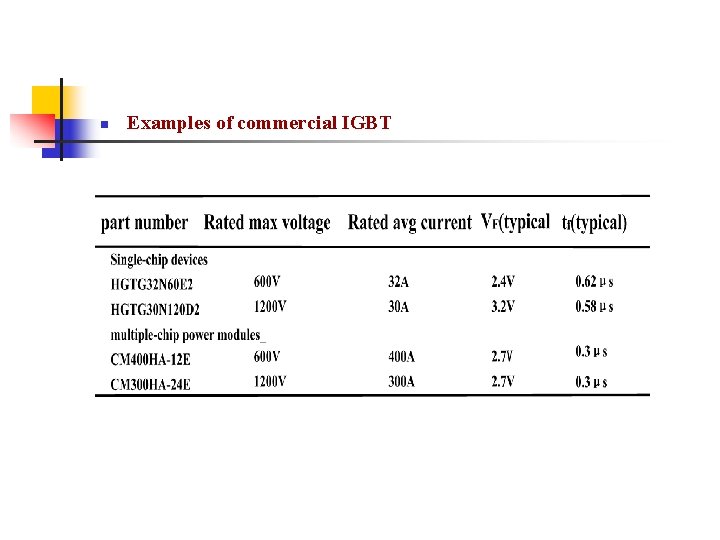
n Examples of commercial IGBT
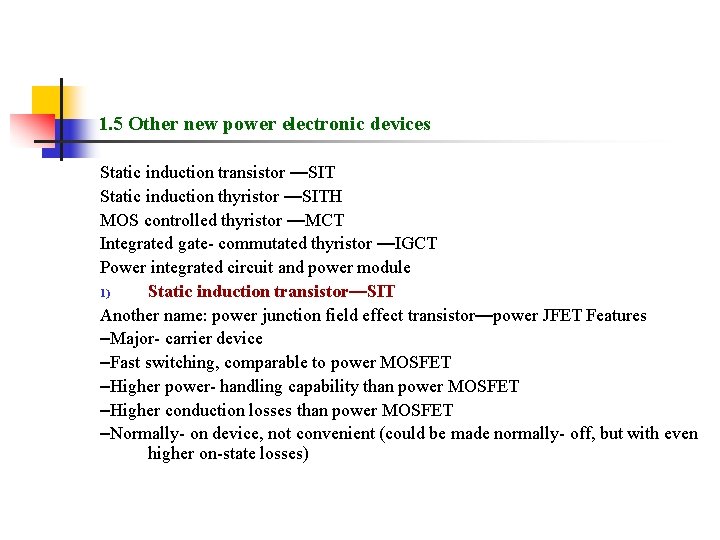
1. 5 Other new power electronic devices Static induction transistor —SIT Static induction thyristor —SITH MOS controlled thyristor —MCT Integrated gate- commutated thyristor —IGCT Power integrated circuit and power module 1) Static induction transistor—SIT Another name: power junction field effect transistor—power JFET Features –Major- carrier device –Fast switching, comparable to power MOSFET –Higher power- handling capability than power MOSFET –Higher conduction losses than power MOSFET –Normally- on device, not convenient (could be made normally- off, but with even higher on-state losses)
2) Static induction thyristor—SITH other names –Field controlled thyristor—FCT –Field controlled diode Features –Minority- carrier device, a JFET structure with an additional injecting layer –Power- handling capability similar to GTO –Faster switching speeds than GTO –Normally- on device, not convenient (could be made normally- off, but with even higher on- state losses)
3) MOS controlled thyristor—MCT Essentially a GTO with integrated MOS- driven gates controlling both turn- on and turn- off that potentially will significantly simply the design of circuits using GTO. The difficulty is how to design a MCT that can be turned on and turned off equally well. Once believed as the most promising device, but still not commercialized in a large scale. The future remains uncertain. 4) Integrated gate- commutated thyristor — IGCT The newest member of the power semiconductor family, introduced in 1997 by ABB Actually the close integration of GTO and the gate drive circuit with multiple MOSFETs in parallel providing the gate currents Short name: GCT Conduction drop, gate driver loss, and switching speed are superior to GTO Competing with IGBT and other new devices to replace GTO
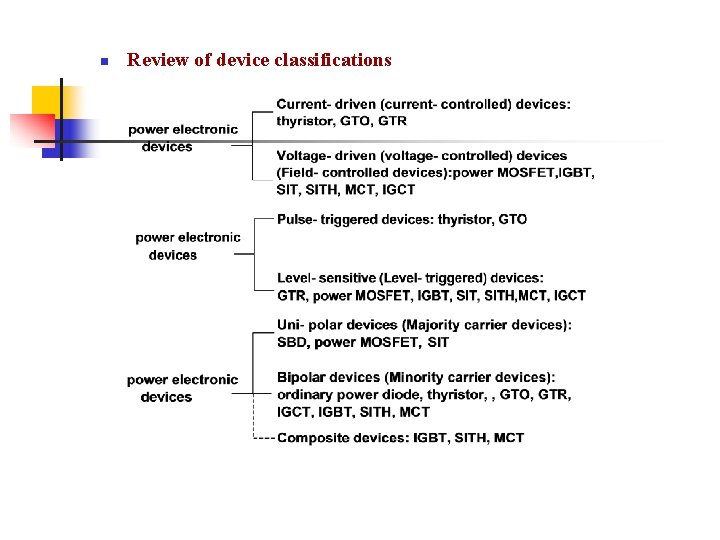
n Review of device classifications