
Chapter 1 Peopling the Western Hemisphere Lesson 1
- Slides: 21
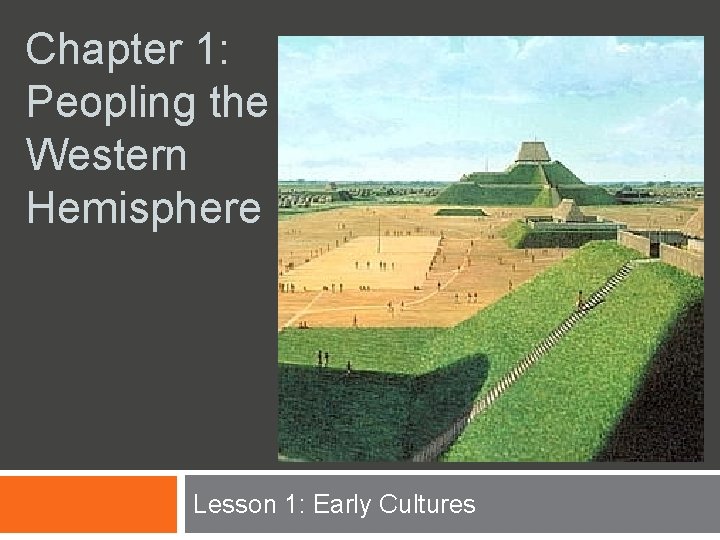
Chapter 1: Peopling the Western Hemisphere Lesson 1: Early Cultures
Indian Groups in Chapter 1 Lesson 2 Olmec Aztec Maya Inca Mound Builders Anasazi Click on an Indian tribe name to learn more about that tribe. Once on the page, click on the Indian tribe page again to return to this page, or click anywhere on the page to continue the slideshow.
Vocabulary Click on the vocabulary term to reveal the definition. Term Ice Age glacier specialize Definition civilization irrigation A period of extreme cold during which much of Earth’s water was frozen into glaciers. A huge sheet of ice. To spend most of one’s time doing one kind of job. A culture that has complex systems of government, education, religion, and often many people living in cities. A method of supplying dry land with water through a series of ditches or pipes.
THE FIRST AMERICANS Click on the picture to learn more about the Ice Age, glaciers, Beringia, and the first Americans.
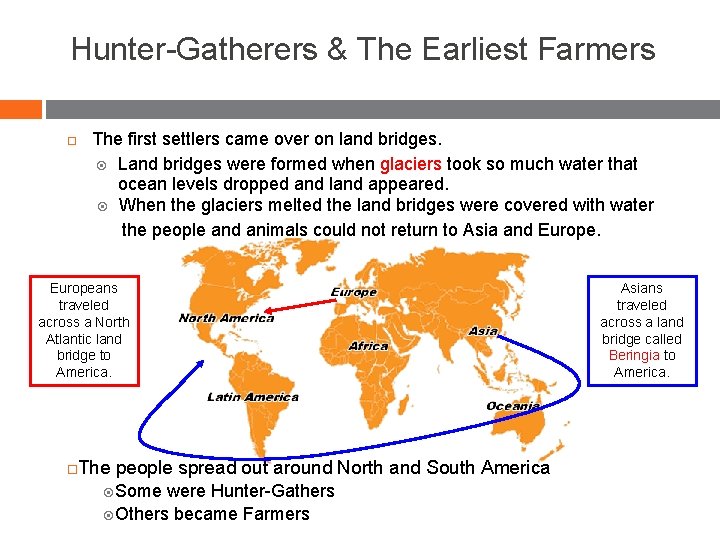
Hunter-Gatherers & The Earliest Farmers The first settlers came over on land bridges. Land bridges were formed when glaciers took so much water that ocean levels dropped and land appeared. When the glaciers melted the land bridges were covered with water the people and animals could not return to Asia and Europeans traveled across a North Atlantic land bridge to America. The people spread out around North and South America Some were Hunter-Gathers Others became Farmers Asians traveled across a land bridge called Beringia to America.
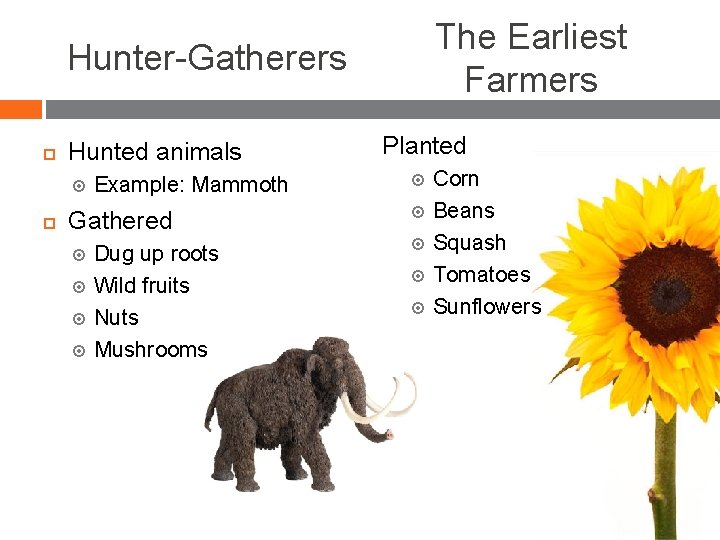
The Earliest Farmers Hunter-Gatherers Hunted animals Example: Mammoth Gathered Dug up roots Wild fruits Nuts Mushrooms Planted Corn Beans Squash Tomatoes Sunflowers
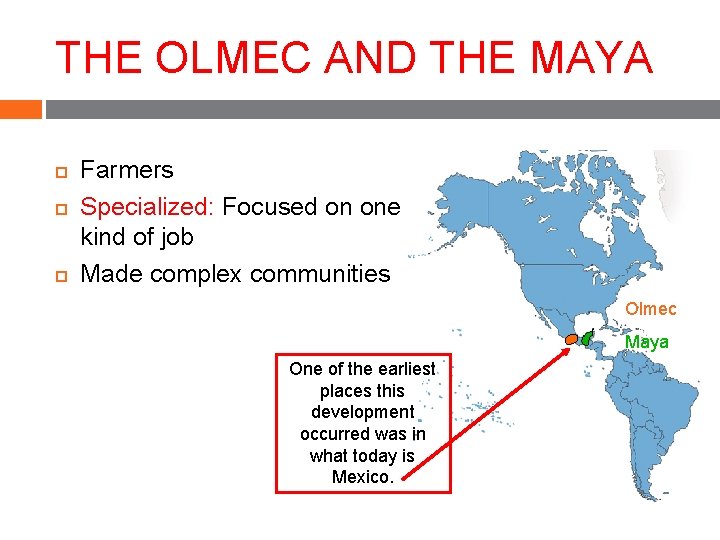
THE OLMEC AND THE MAYA Farmers Specialized: Focused on one kind of job Made complex communities Olmec Maya One of the earliest places this development occurred was in what today is Mexico.
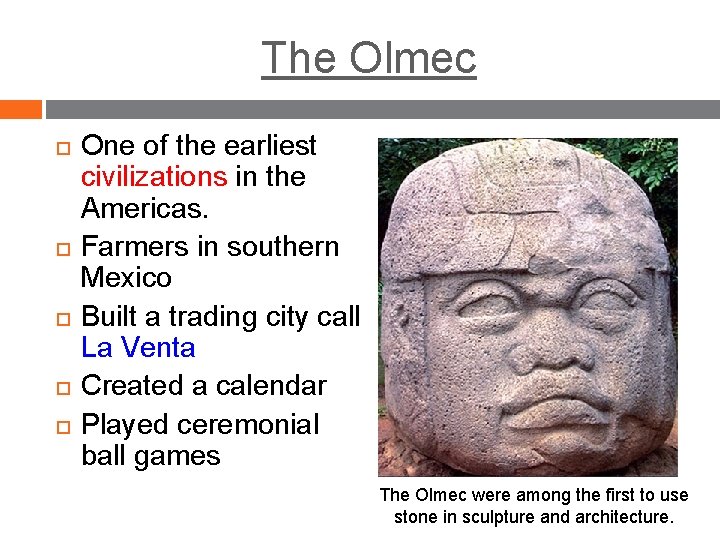
The Olmec One of the earliest civilizations in the Americas. Farmers in southern Mexico Built a trading city call La Venta Created a calendar Played ceremonial ball games The Olmec were among the first to use stone in sculpture and architecture.
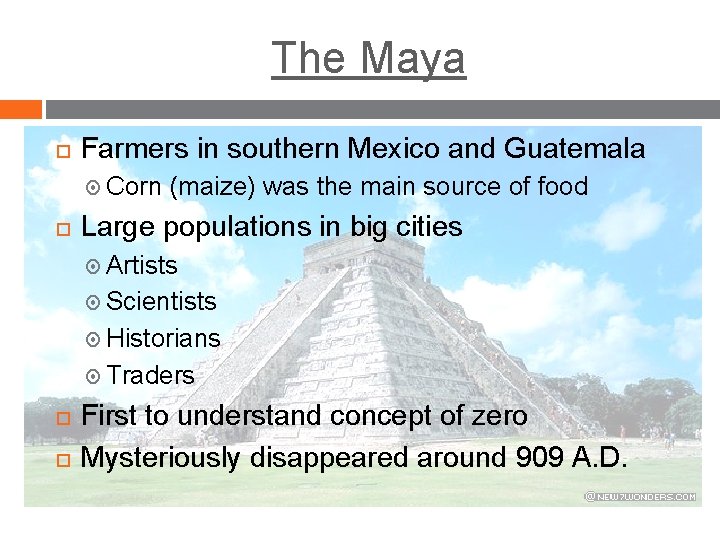
The Maya Farmers in southern Mexico and Guatemala Corn (maize) was the main source of food Large populations in big cities Artists Scientists Historians Traders First to understand concept of zero Mysteriously disappeared around 909 A. D.
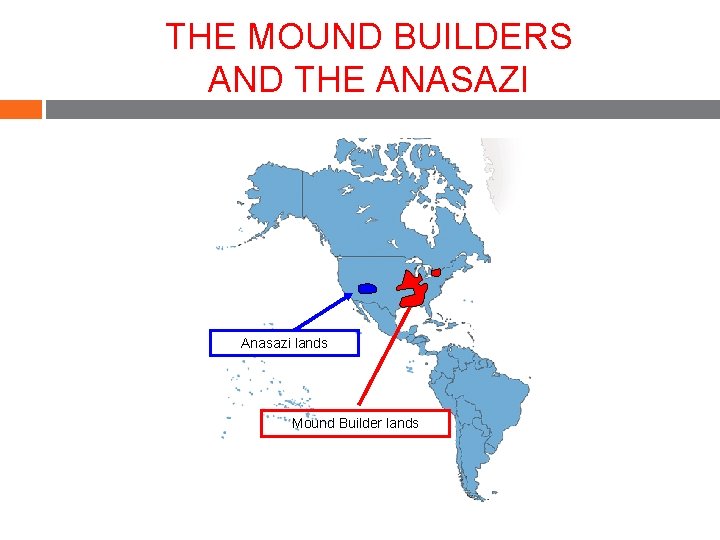
THE MOUND BUILDERS AND THE ANASAZI Anasazi lands Mound Builder lands
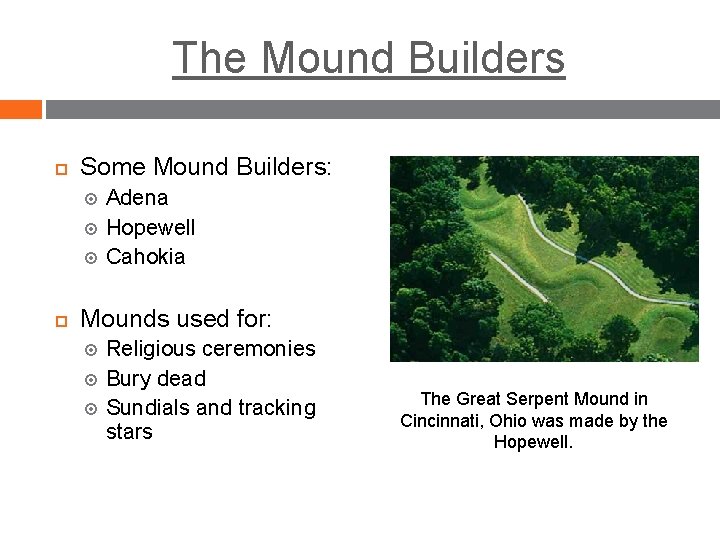
The Mound Builders Some Mound Builders: Adena Hopewell Cahokia Mounds used for: Religious ceremonies Bury dead Sundials and tracking stars The Great Serpent Mound in Cincinnati, Ohio was made by the Hopewell.
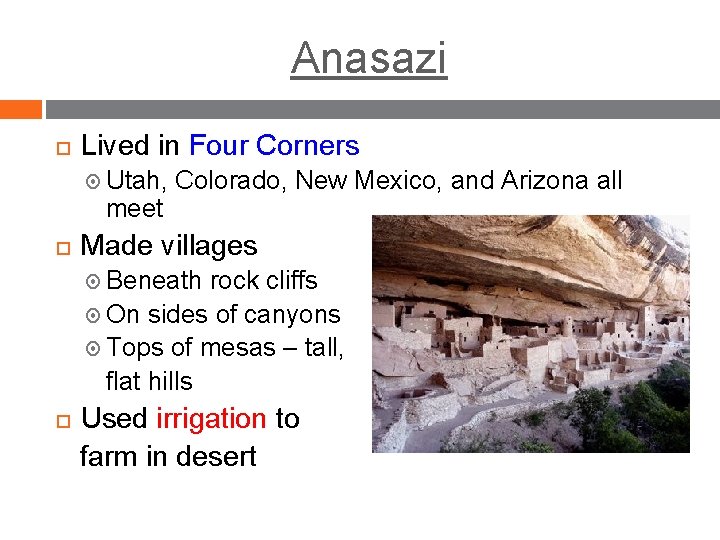
Anasazi Lived in Four Corners Utah, meet Colorado, New Mexico, and Arizona all Made villages Beneath rock cliffs On sides of canyons Tops of mesas – tall, flat hills Used irrigation to farm in desert
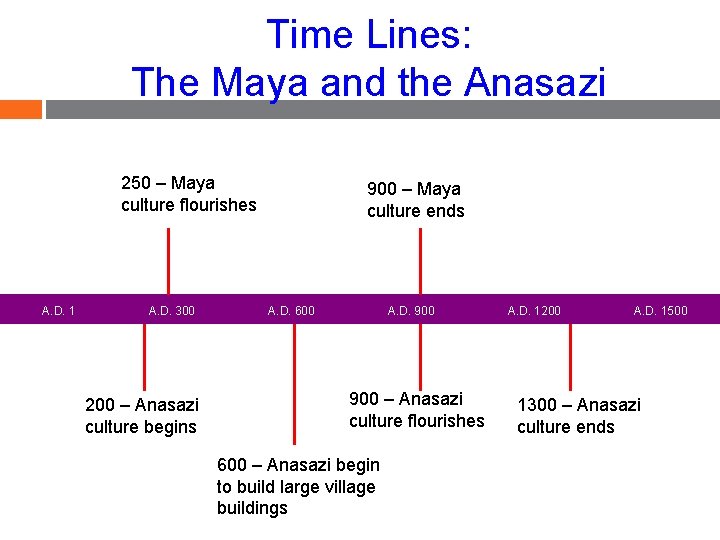
Time Lines: The Maya and the Anasazi 250 – Maya culture flourishes A. D. 1 A. D. 300 200 – Anasazi culture begins 900 – Maya culture ends A. D. 600 A. D. 900 – Anasazi culture flourishes 600 – Anasazi begin to build large village buildings A. D. 1200 A. D. 1500 1300 – Anasazi culture ends
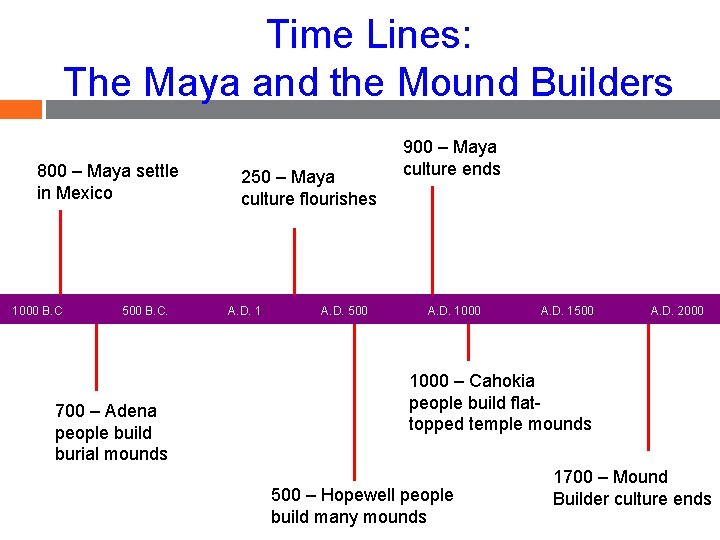
Time Lines: The Maya and the Mound Builders 800 – Maya settle in Mexico 1000 B. C 500 B. C. 700 – Adena people build burial mounds 250 – Maya culture flourishes A. D. 1 A. D. 500 900 – Maya culture ends A. D. 1000 A. D. 1500 A. D. 2000 1000 – Cahokia people build flattopped temple mounds 500 – Hopewell people build many mounds 1700 – Mound Builder culture ends
Chapter 1: Peopling the Western Hemisphere Lesson 2: Aztec and Inca
Vocabulary and People Click on the vocabulary term to reveal the definition. Term empire slavery Pachakuti Inca Definition A large area where different people are controlled by one ruler or government. The practice of people owning other people and focing them to work. . 1400 s Emperor who enlarged the Inca Empire.
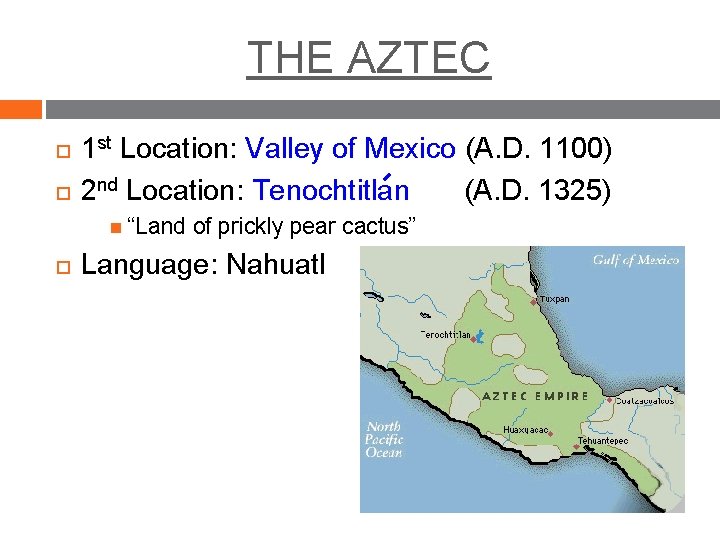
THE AZTEC 1 st Location: Valley of Mexico (A. D. 1100) 2 nd Location: Tenochtitlan (A. D. 1325) “Land of prickly pear cactus” Language: Nahuatl
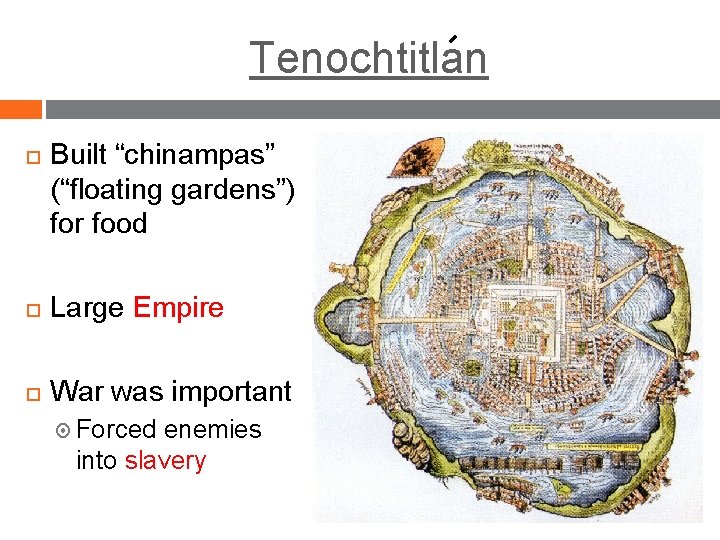
Tenochtitlan Built “chinampas” (“floating gardens”) for food Large Empire War was important Forced enemies into slavery
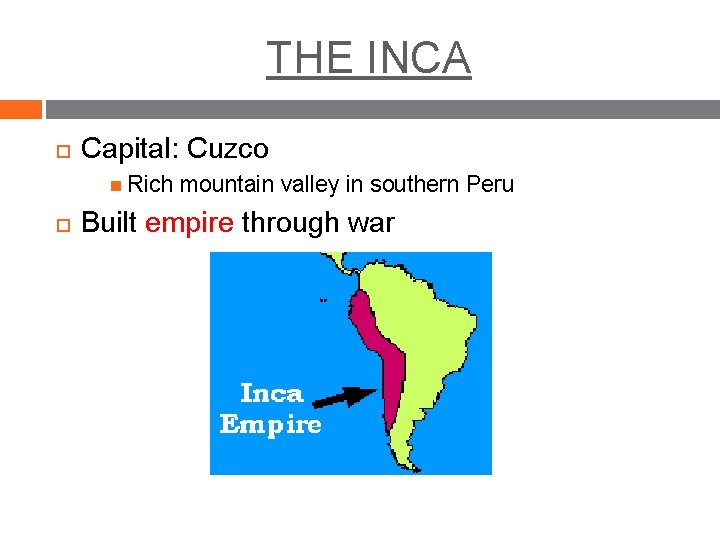
THE INCA Capital: Cuzco Rich mountain valley in southern Peru Built empire through war
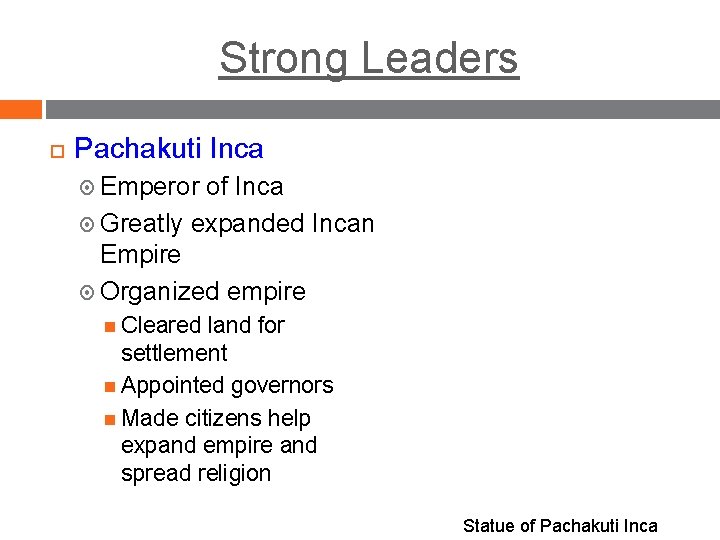
Strong Leaders Pachakuti Inca Emperor of Inca Greatly expanded Incan Empire Organized empire Cleared land for settlement Appointed governors Made citizens help expand empire and spread religion Statue of Pachakuti Inca
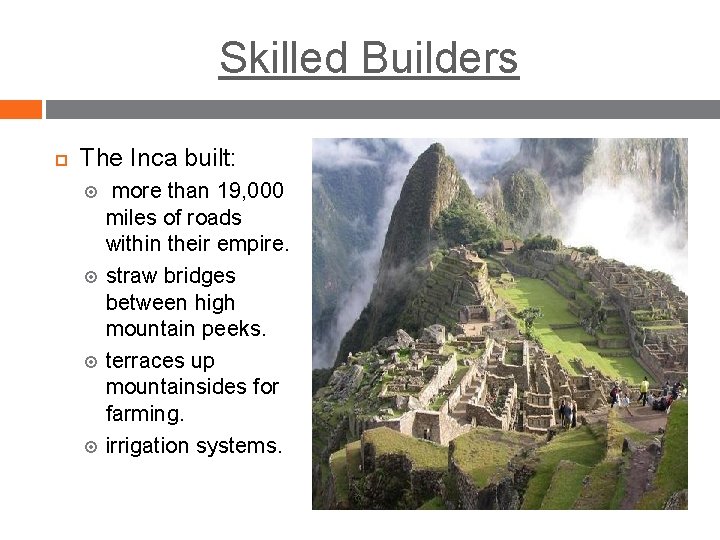
Skilled Builders The Inca built: more than 19, 000 miles of roads within their empire. straw bridges between high mountain peeks. terraces up mountainsides for farming. irrigation systems.