
Chapter 1 Part 1 What is interaction design
- Slides: 30
Chapter 1 - Part 1 What is interaction design? www. id-book. com 1 © 2011
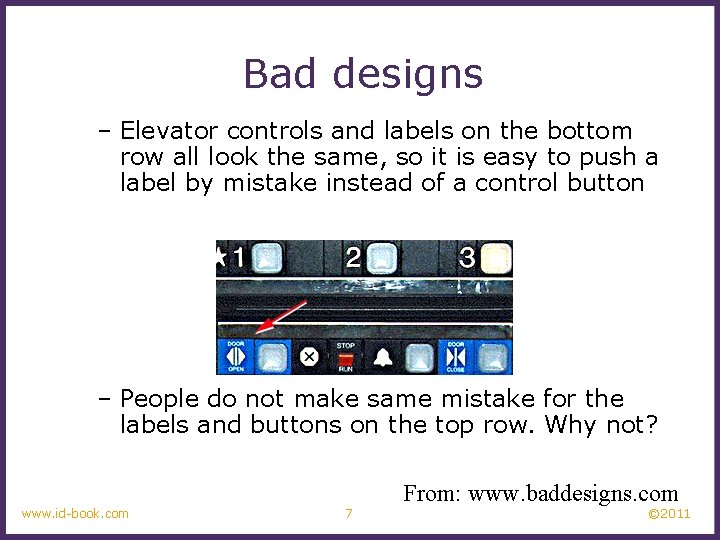
Bad designs – Elevator controls and labels on the bottom row all look the same, so it is easy to push a label by mistake instead of a control button – People do not make same mistake for the labels and buttons on the top row. Why not? www. id-book. com 7 From: www. baddesigns. com © 2011
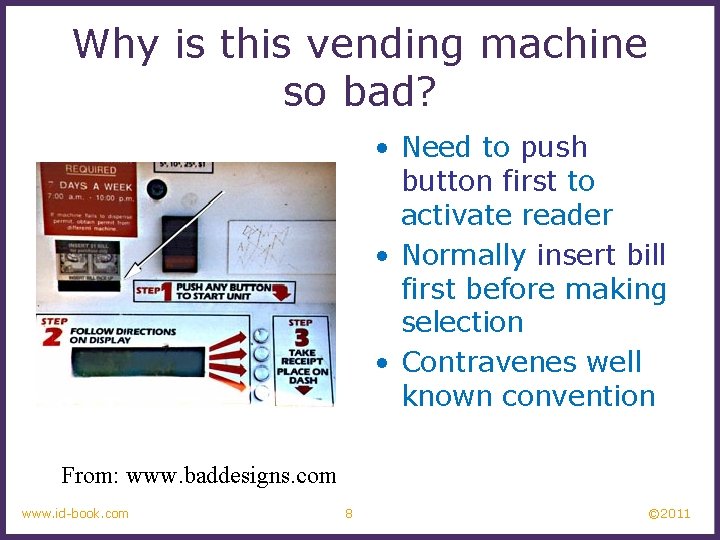
Why is this vending machine so bad? • Need to push button first to activate reader • Normally insert bill first before making selection • Contravenes well known convention From: www. baddesigns. com www. id-book. com 8 © 2011
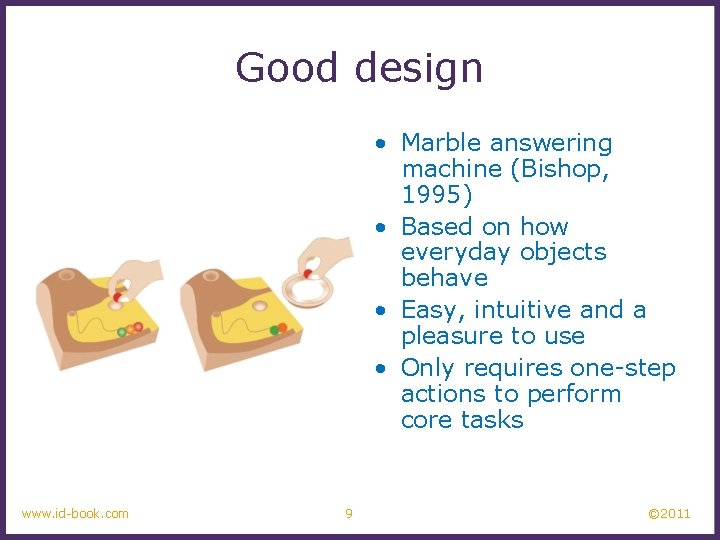
Good design • Marble answering machine (Bishop, 1995) • Based on how everyday objects behave • Easy, intuitive and a pleasure to use • Only requires one-step actions to perform core tasks www. id-book. com 9 © 2011
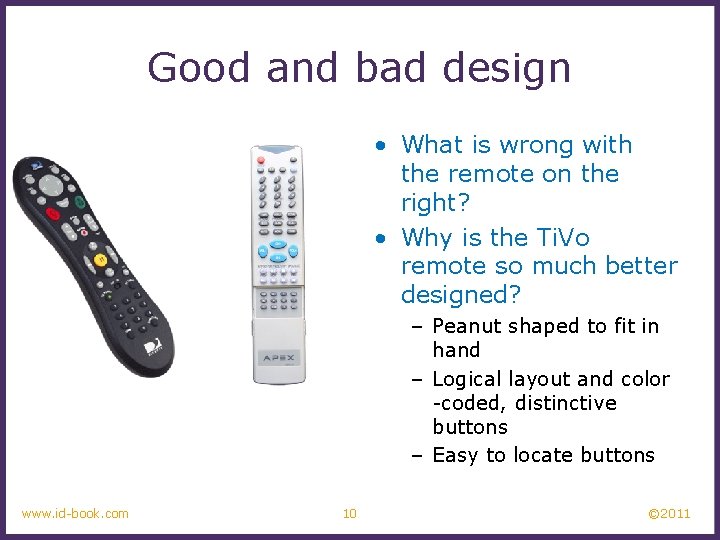
Good and bad design • What is wrong with the remote on the right? • Why is the Ti. Vo remote so much better designed? – Peanut shaped to fit in hand – Logical layout and color -coded, distinctive buttons – Easy to locate buttons www. id-book. com 10 © 2011
What to design • Need to take into account: – Who the users are – What activities are being carried out – Where the interaction is taking place • Need to optimize the interactions users have with a product – So that they match the users’ activities and needs www. id-book. com 11 © 2011
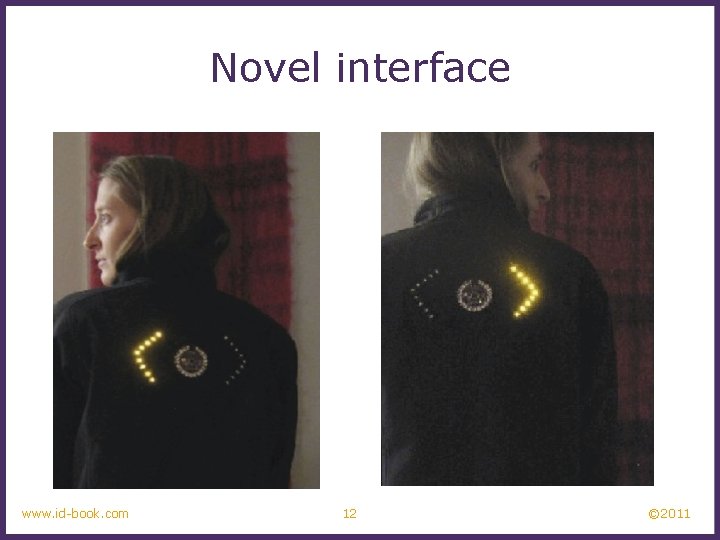
Novel interface www. id-book. com 12 © 2011
Understanding users’ needs • Need to take into account what people are good and bad at • Consider what might help people in the way they currently do things • Think through what might provide quality user experiences • Listen to what people want and get them involved • Use tried and tested user-centered methods www. id-book. com 13 © 2011
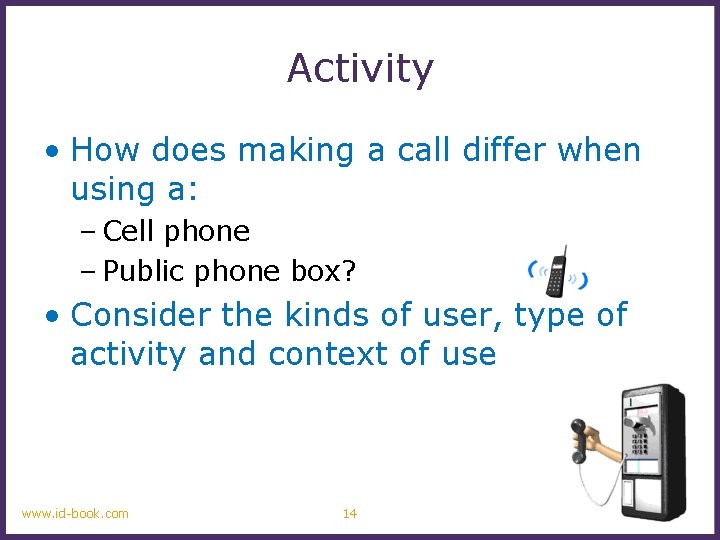
Activity • How does making a call differ when using a: – Cell phone – Public phone box? • Consider the kinds of user, type of activity and context of use www. id-book. com 14 © 2011
What is interaction design? • Designing interactive products to support the way people communicate and interact in their everyday and working lives – Sharp, Rogers and Preece (2011) • The design of spaces for human communication and interaction – Winograd (1997) www. id-book. com 15 © 2011
Goals of interaction design • Develop usable products – Usability means easy to learn, effective to use and provide an enjoyable experience • Involve users in the design process www. id-book. com 16 © 2011
Which kind of design? • Number of other terms used emphasizing what is being designed, e. g. – user interface design, software design, user-centered design, product design, web design, experience design (UX) • Interaction design is the umbrella term covering all of these aspects – fundamental to all disciplines, fields, and approaches concerned with researching and designing computerbased systems for people www. id-book. com 21 © 2011
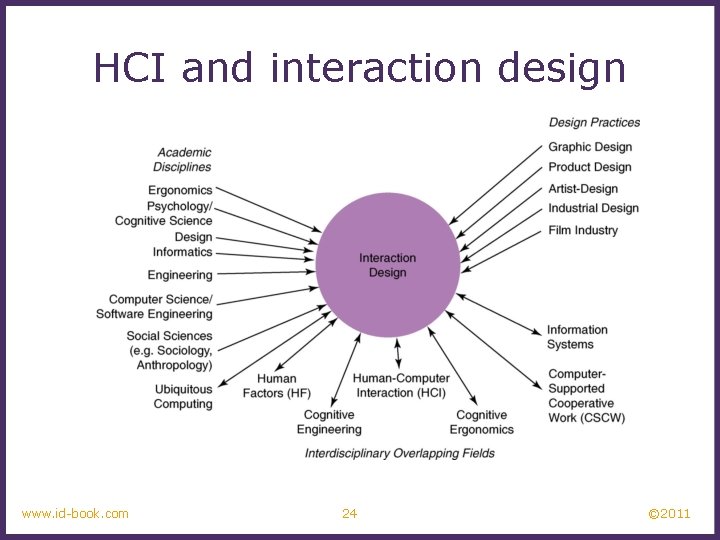
HCI and interaction design www. id-book. com 24 © 2011
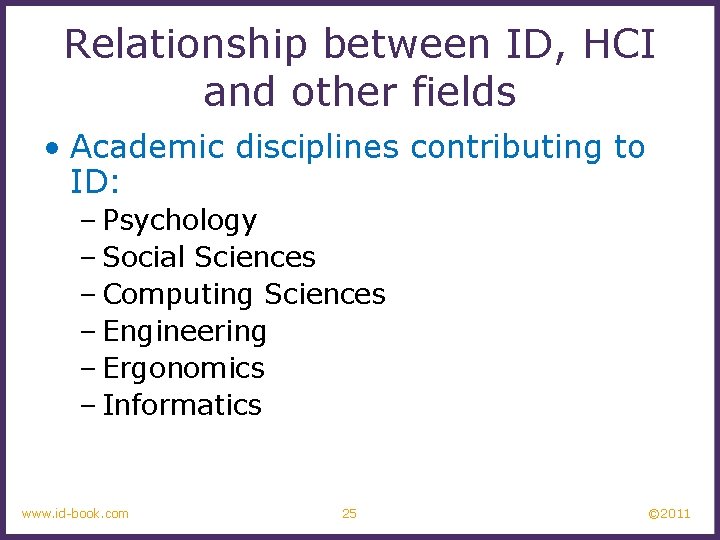
Relationship between ID, HCI and other fields • Academic disciplines contributing to ID: – Psychology – Social Sciences – Computing Sciences – Engineering – Ergonomics – Informatics www. id-book. com 25 © 2011
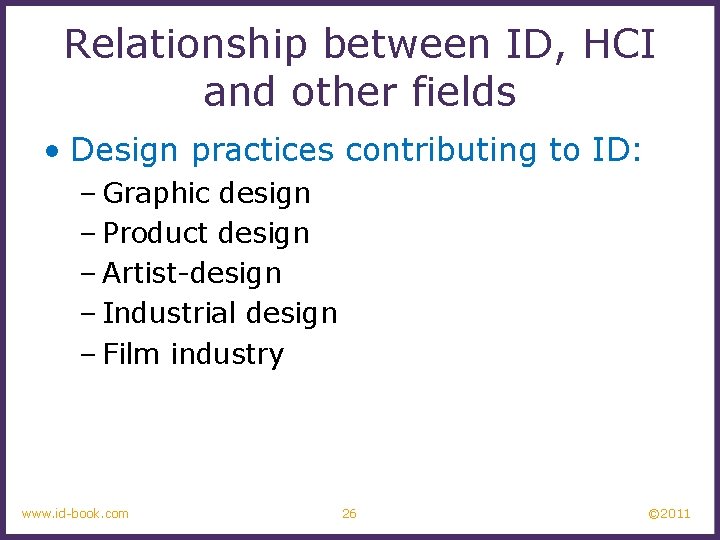
Relationship between ID, HCI and other fields • Design practices contributing to ID: – Graphic design – Product design – Artist-design – Industrial design – Film industry www. id-book. com 26 © 2011
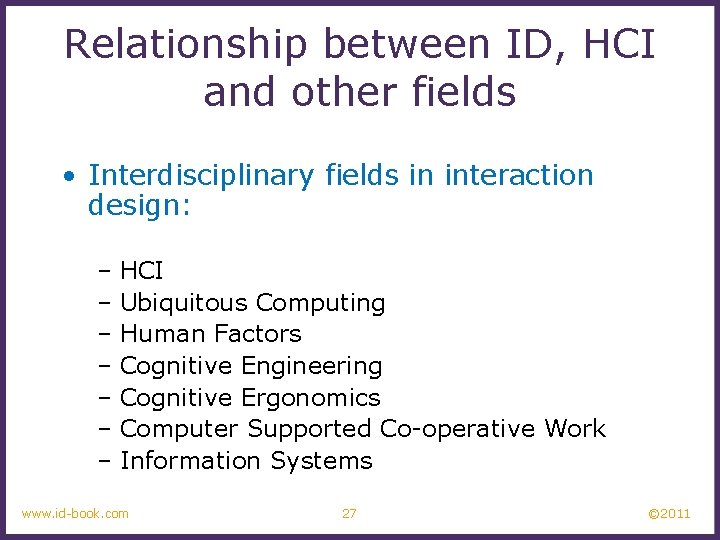
Relationship between ID, HCI and other fields • Interdisciplinary fields in interaction design: – HCI – Ubiquitous Computing – Human Factors – Cognitive Engineering – Cognitive Ergonomics – Computer Supported Co-operative Work – Information Systems www. id-book. com 27 © 2011
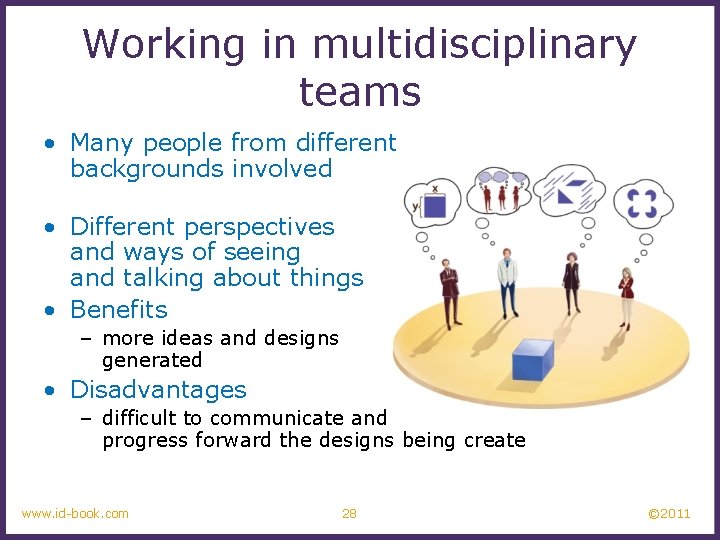
Working in multidisciplinary teams • Many people from different backgrounds involved • Different perspectives and ways of seeing and talking about things • Benefits – more ideas and designs generated • Disadvantages – difficult to communicate and progress forward the designs being create www. id-book. com 28 © 2011
Interaction design in business • Increasing number of ID consultancies, examples of well known ones include: – Nielsen Norman Group: “help companies enter the age of the consumer, designing human-centered products and services” – Cooper: ”From research and product to goal-related design” – Swim: “provides a wide range of design services, in each case targeted to address the product development needs at hand” – IDEO: “creates products, services and environments for companies pioneering new ways to provide value to their customers” www. id-book. com 29 © 2011
What do professionals do in the ID business? • interaction designers - people involved in the design of all the interactive aspects of a product • usability engineers - people who focus on evaluating products, using usability methods and principles • web designers - people who develop and create the visual design of websites, such as layouts • information architects - people who come up with ideas of how to plan and structure interactive products • user experience designers (UX) - people who do all the above but who may also carry out field studies to inform the design of products www. id-book. com 30 © 2011