
Chapter 1 Observation Skills Chapter 1 Observation Skills
Chapter 1 Observation Skills
Chapter 1 Observation Skills By the end of this chapter you will be able to: �Define observation and describe what changes occur in the brain �Describe examples of factors influencing eyewitness accounts of events �Compare the reliability of eyewitness testimony with what actually happened �Relate observation skills to their use in forensic science �Define forensic science �Practice and improve your observation skills 2 Forensic Science: Fundamentals & Investigations, Chapter 1
Introduction �One of the most important _______of the forensic investigator is the ability to __________________ clearly. �The forensic examiner must be able to 1. _____ — identify the evidence 2. _____— record the evidence 3. _____ — accurately determine the significance of the evidence
�The trained investigator collects _____ available evidence, __________about its potential importance. That comes later! �Knowing which evidence is significant requires the ________________preceding the crime.
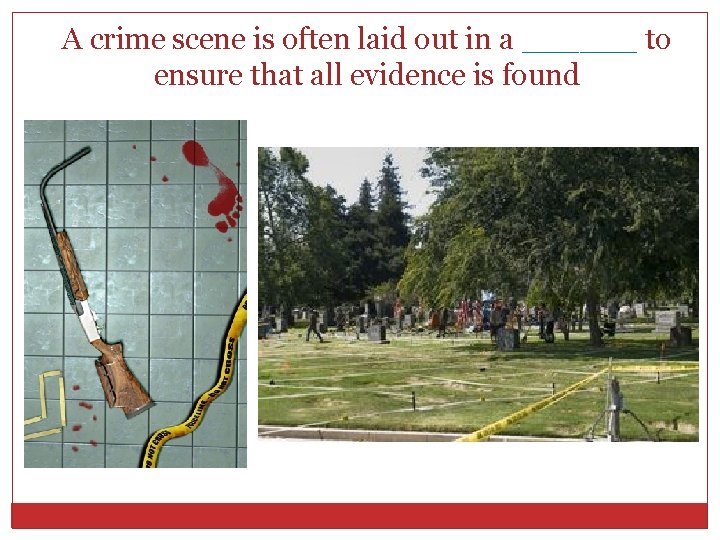
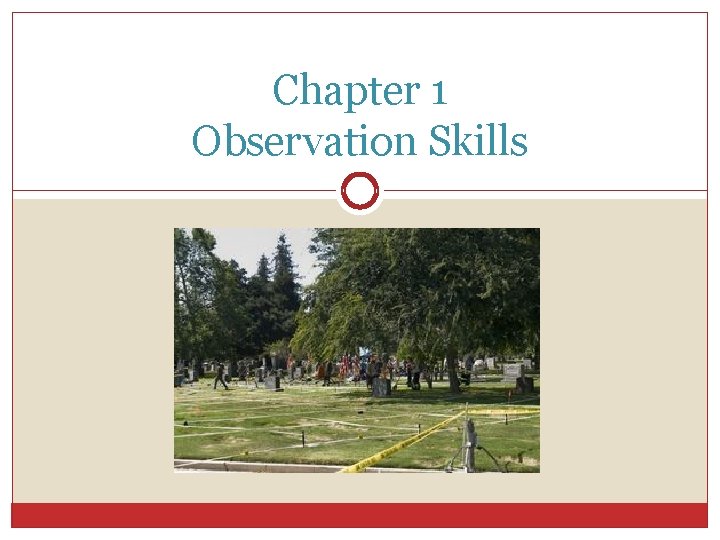
A crime scene is often laid out in a ______ to ensure that all evidence is found
What is Observation? �-What a person perceives using his or her five senses �We are constantly collecting information through observations : sight, hearing, smell, taste, and touch. We cannot pay attention to everything all at once. �We pay attention to things likely to be important like changes in the environment: new movement, sound, etc. �Filtering is an unconscious process that helps the brain deal with all the stimuli and information that bombards it.
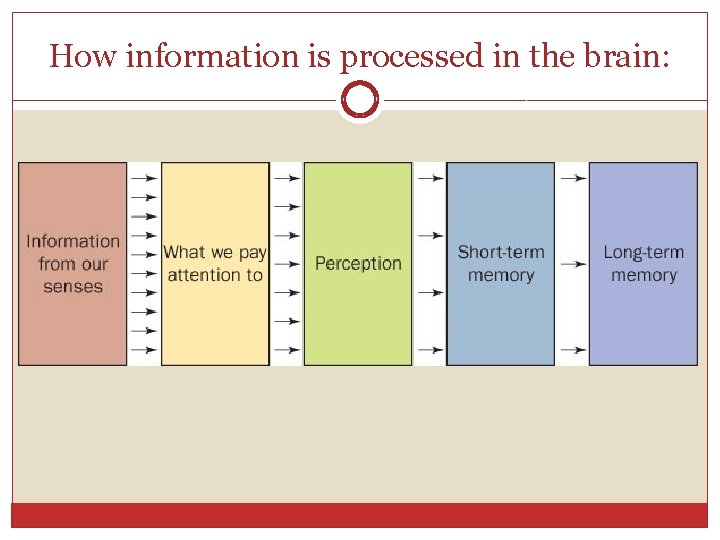
How information is processed in the brain:
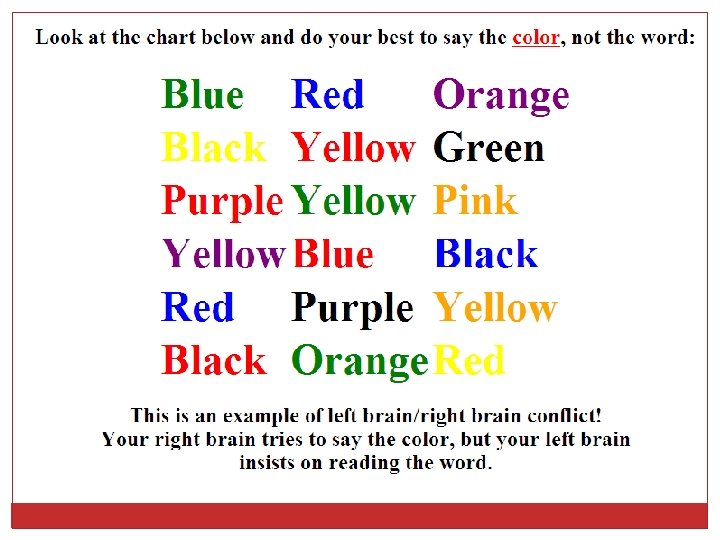
Our brains play tricks! �________ (interpreting information received from the senses) is faulty! Not always accurate Doesn’t always reflect reality �We _______________that isn’t there.
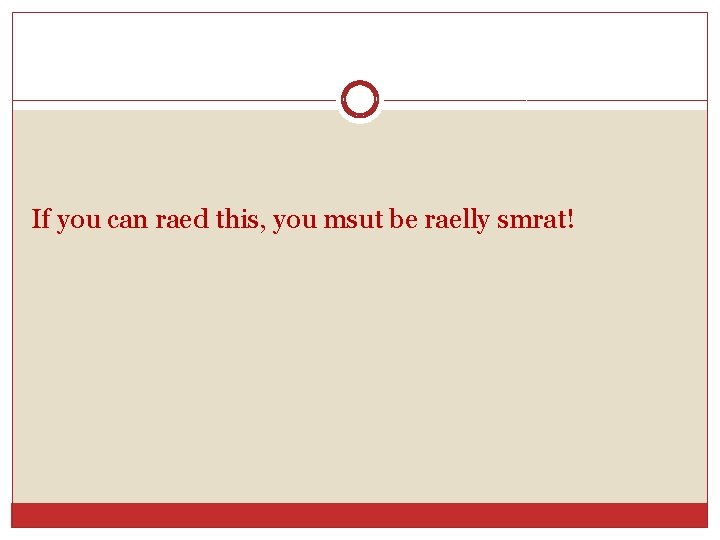
If you can raed this, you msut be raelly smrat!
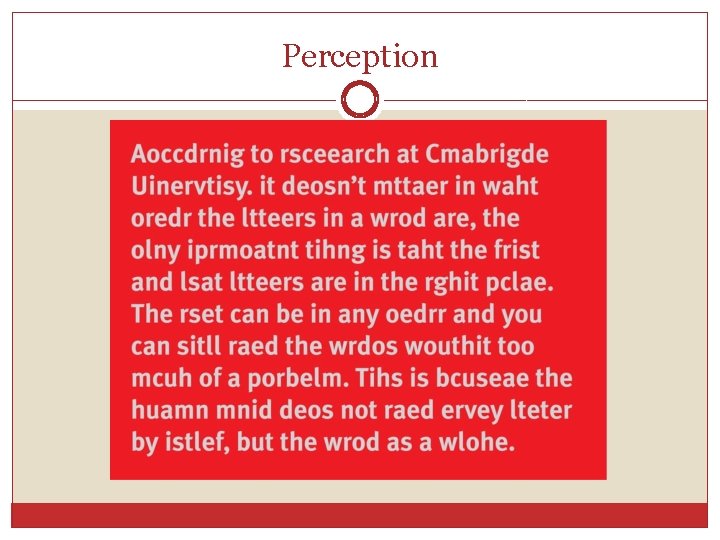
Perception

Observations by Witnesses Many things _________ a witness and, therefore, impact his or her _______ and _______ of the situation. �Focus and Concentration �Observations are affected by: ___________ �Very upset, happy, or depressed – less likely to notice things �Stress Ex. and fear interfere with an accurate memory Descriptions during a bank robbery
Observations are affected by Whether they were _____, part of a____ , or near others What type of and how much ______ was going on around them Our ability to observe is actually heightened during _________________. �Ex. Where were you during the attack on the World Trade Center Towers, 9/11/2001?
Eyewitness Accounts �Eyewitness accounts of crime scene events __________________from one person to another. �Crime-scene reports often vary, due to: _________ stress concentration amount and kind of distractions present prejudices _________ motives any lap_______ since the event
The Innocence Project �Created by Barry C. Scheck and Peter J. Neufeld at the Benjamin N. Cardozo School of Law, �Beginning in 1992, used DNA to examine postconviction cases �Faulty eyewitness identifications accounted for up to 87% of the wrongful convictions http: //www. cbsnews. com/videos/eyewitne ss-part-1/
Observation vs. Inference �Making observations Using your five senses: �Sight, Hearing, Smell, Touch, and Taste You learn data – facts, figures, and other evidence �Making inferences (inferring) A logical _________ based on _______ or prior knowledge
Eyewitness Testimony �When evaluating eyewitness testimony, the investigator must discriminate between _______________. It is necessary to ignore any inferences the witness makes. �After the witness examination, the examiner tries to ________________(facts) into a logical pattern, then determine if this pattern is _______ by the evidence.

How to be a Good Observer �Observe systematically Start at one part of a crime scene and run your eyes slowly over every space Look carefully at details of each piece of evidence Do not assume you will remember everything �Turn off filters Consciously pay attention to all details Do not pay attention to just what you think is important All details are potentially important

How to be a Good Observer �Collect information first, interpret data later Look for patterns and make connections More information yields better interpretations Prejudices exist everywhere— �eyewitness accounts �your own thinking processes �Documentation, Documentation Write down and photograph as much information as possible Be aware that memory is faulty Remember that our brains tend to fill in gaps in our perception
- Slides: 20